• Skip to primary navigation
  • Skip to main content

International Salsa Magazine

  • Home
  • Previous editions
    • 2026
      • ISM / January 2026
      • ISM / February 2026
    • 2025
      • ISM / December 2025
      • ISM / November 2025
      • ISM / October 2025
      • ISM / September 2025
      • ISM / August 2025
      • ISM / July 2025
      • ISM / June 2025
      • ISM / May2025
      • ISM / April 2025
      • ISM / March 2025
      • ISM / February 2025
      • ISM / January 2025
    • 2024
      • ISM / December 2024
      • ISM / November 2024
      • ISM / October 2024
      • ISM / September 2024
      • ISM / August 2024
      • ISM / July 2024
      • ISM / June 2024
      • ISM / May 2024
      • ISM / April 2024
      • ISM / March 2024
      • ISM / February 2024
      • ISM / January 2024
    • 2023
      • ISM / December 2023
      • ISM / November 2023
      • ISM / October 2023
      • ISM – September 2023
      • ISM – August 2023
      • ISM July 2023
      • ISM Edition June 2023
      • ISM – May 2023
      • ISM April 2023
      • ISM March 2023
      • ISM February 2023
      • ISM January 2023
    • 2022
      • ISM December 2022
      • ISM November 2022
      • ISM October 2022
      • ISM September 2022
      • ISM August 2022
      • ISM July 2022
      • ISM June 2022
      • ISM May 2022
      • ISM February 2022
      • ISM January 2022
    • 2021
      • ISM December 2021
      • ISM November 2021
      • ISM October – 2021
      • ISM September 2021
      • ISM August 2021
      • ISM July 2021
      • ISM May 2021
      • ISM April 2021
      • ISM June 2021
      • ISM March 2021
      • ISM February 2021
      • ISM January 2021
    • 2020
      • ISM December 2020
      • ISM November 2020
      • ISM October 2020
      • ISM September 2020
      • ISM August 2020
      • ISM July 2020
      • ISM June 2020
      • ISM May 2020
      • ISM April 2020
      • ISM March 2020
      • ISM February 2020
      • ISM January 2020
    • 2019
      • ISM December 2019
      • ISM November 2019
      • ISM October 2019
      • ISM Septembre 2019
      • ISM August 2019
      • ISM July 2019
      • ISM June 2019
      • ISM May 2019
      • ISM April 2019
      • ISM March 2019
      • ISM February 2019
      • ISM January 2019
    • 2018
      • ISM December 2018
      • ISM November 2018
      • ISM October 2018
      • ISM September 2018
      • ISM August 2018
      • ISM July 2018
      • ISM June 2018
      • ISM May 2018
      • ISM April 2018
      • ISM March 2018
      • ISM February 2018
      • ISM January 2018
    • 2017
      • ISM December 2017
      • ISM November 2017
      • ISM October 2017
      • ISM September 2017
      • ISM August 2017
      • ISM July 2017
      • ISM June 2017
      • ISM May 2017
      • ISM April 2017
      • ISM March 2017
      • ISM February 2017
      • ISM January 2017
  • Download Salsa App
    • Android
    • Apple
  • Spanish

Search Results for: salsa

Roberto Rodríguez was a Cuban trumpet player and composer, author of Ray Barreto’s hit song “Que viva la Música” (Long Live Music)

Roberto Reimundo Rodríguez (Cienfuegos, January 23, 1936 – April 18, 1988), was a Cuban trumpeter and composer, who belonged to Ray Barreto’s orchestra, which he would later leave to belong to Fania All-Stars, as lead trumpet player.

Roberto is the author of Ray Barreto’s hit “Que viva la música”.

Roberto was born in 1938, in Cienfuegos (Cuba). He began his musical career at the age of 12, in his native province; cradle of the world famous Orquesta Aragón.
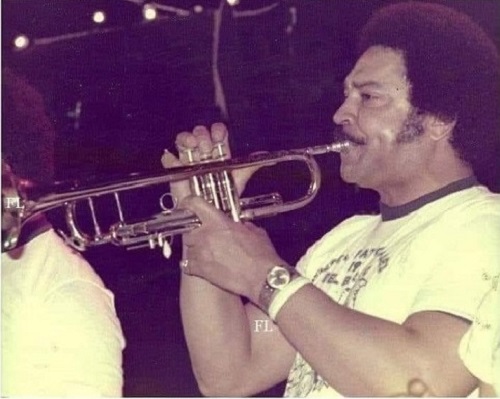
 

Roberto Rodríguez
Roberto Rodríguez

From an early age he participated in “Las Comparsas de Cuba” and with the orchestra “La Unión Fraternal de Cienfuegos”.

In 1955, he emigrated to the United States and in 1957 he married Nancy Zayas, with whom he had three sons: Roberto Jr., William and Richard.

While growing as an artist, Roberto co-founded the orchestra “Los Jóvenes Estrellas de Cuba” with his long-time friend Ernie Stairs. He later moved on to Wilfredo Figueroa’s orchestra and “Ritmo Swing”.

In 1965, Roberto was recommended to Ray Barreto by Eddie Martinez. Eddie was a pianist for both the TataVazquez and Ray Barretto orchestras.

After listening to Roberto, Ray Barretto recognized that he was in contract with Vivar, one of his former colleagues and musicians, and brought him on board. Roberto remained in Ray’s orchestra for 11 years.

His performance as first trumpet soloist was extraordinary. While in Ray’s orchestra, Roberto composed several famous songs such as: “Yo Soy La Candela”, “Fuego y Pa’Lante”, “Invitación al Son”, “Cienfuegos, Perla del Sur”, “Se Traba”, “El Tiempo lo Dirá”, “O’Elefante”, and the worldwide hit: “Que Viva la Música”.

Roberto Rodríguez
Que viva la música

In 1972, Roberto became a member of the Fania All-Stars as first trumpet and soloist. The documentary “Our Latin Thing” launched Roberto along with the other members of the All-Stars to international fame.

Our Latin Thing

On August 26, 1971 New York City gave birth to a sound that would change Latin music forever. That night at the renowned Cheetah nightclub, the Fania All Stars took the stage with their unique sound that echoed across all borders and reached every country. Fania Records re-releases “Our Latin Thing” on DVD, the film that sparked the salsa movement of the seventies.

Roberto Rodríguez
Our Latin Thing (Nuestra Cosa)

From the concert came a double LP entitled “Live At The Cheetah” and the historic film “Our Latin Thing”. Its director, Leon Gast, documented the events at the Cheetah with the addition of footage of the musicians in the recording studio and scenes of New York’s Spanish Harlem.

The 40th anniversary edition of “Our Latin Thing” includes a DVD with the remastered film, and two CDs with the music from the film and some additional tracks, which can be purchased on the label’s official website.

In 1975, Ray decided to take a turn towards a new musical facet and Roberto became part of the group “Los Kimbos”.
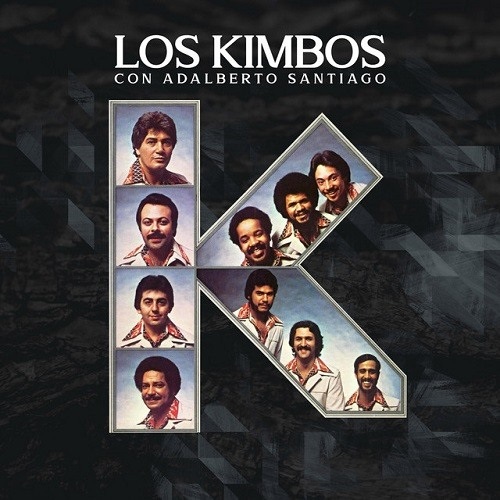
Roberto Rodríguez
Los Kimbos

Two years later, in 1977, Roberto joined the charanga band “Orquesta Broadway”. In this group he not only excelled as a trumpet soloist but also as a vocalist. Here he composed new hits, including: “No Se Va a Poder” and “Como Nueva York no Hay”.

In 1982, Roberto decided to assist his sons in their desire to continue their musical journey and produced the album: “Roberto Rodríguez Presenta a Los Rodríguez”, under the “Combo Records” label.
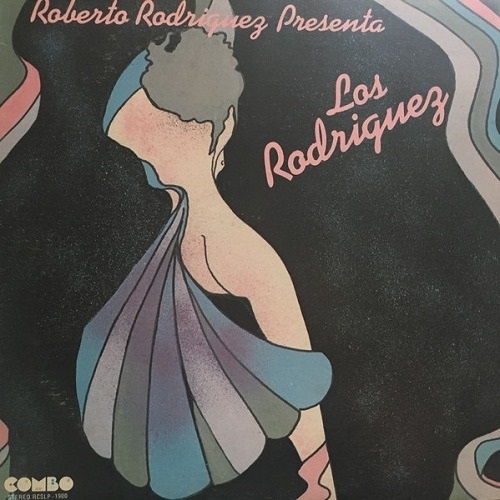
Roberto Rodrígue
Roberto Rodríguez Presenta a Los Rodríguez

In 1983, Roberto joined the “Los Rodriguez” Orchestra, to perform with his sons Roberto Jr (trumpet player) and Willie (bass player).

His health deteriorated in early 1988, and he finally passed away in April of that year, victim of skin cancer. His son Roberto Rodriguez Jr. followed in his footsteps and has excelled in salsa orchestras in New York.

 Roberto Rodríguez was a Cuban trumpet player and composer

Read Also: Miguelito Cuní recognized among the best soneros of Cuba

 

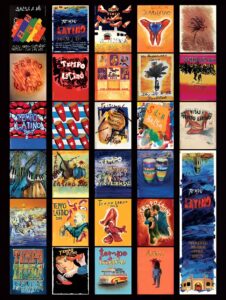
Tempo Latino 2023

Tempo Latino 2023
Tempo Latino 2023

Tempo Latino is a music festival held in Vic-Fezensac, France, in the region of Gers in Gascony it is the first and the greatest Latin American and Afro-Cuban music festival of the summer in Europe. The festival was founded in 1994 and has been held annually since then.

“In 2020 and 2021, the festival was only interrupted for two consecutive years due to the containment of the new crown pneumonia (COVID-19) epidemic.”

With around 600 volunteers from all over the city for four days of intense activities and an audience of around 60,000 people from all over the world.

Tempo Latino offers a variety of Latin American and Afro-Cuban music, including Salsa, Bachata, Kizomba, Cumbia, Merengue, Rumba, Latin-jazz, Reggaeton and more. The festival also features dance workshops, food stalls and other cultural events.

International performers and instructors from Cuba, Puerto Rico, Colombia, Venezuela, Panama, Africa, the United States (primarily New York, Miami, and California), and Europe have participated in a number of concerts and workshops

Tempo Latino has grown from a small festival to one of the most important Latin American music festivals in Europe. The festival hosts some of the biggest names in Latin music, including Celia Cruz, Ruben Blades,  Eddie Palmieri, Oscar D’ León, Johnny Pacheco, Adalberto Álvarez, El Gran Combo de Puerto Rico, Kassav, Totó la Momposina,  and Los Van Van. Tempo Latino has also helped advance the careers of many new artists.

Here’s more information on Tempo Latino:

  • The festival takes place in a beautiful setting in the heart of the French countryside.
  • The festival is family friendly and has activities for all ages.
  • The festival is a great opportunity to experience a different culture and learn about Latin American and Afro-Cuban music.

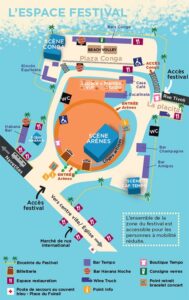
A festival of concerts takes place in the square and, at the same time, many free outdoor events for those who want to discover music in the city’s dance halls in the afternoon and evening. In the second edition, they have integrated dance, music, and percussion lessons.

The 28th edition of Tempo Latino will take place from July 27-30, 2023.

The lineup includes:

La Conga

27 July – Ana Tijoux (France)

Les Arenes

28 July 2023

21:00 – Orchestra Baobab (Senegal)

23:00 – Grupo Compay Segundo (Cuba)

29 July 2023

21:00 – Lila Downs (Mexico)

23:00 – Cimafunk (Cuba)

30 July 2023

21:00 – Bernard Lavilliers (France)

23:00 – La Excelencia (USA)

and many more!

Pass Concert: 

On the official website, tickets for four days are available for 120 € (during the festival, they cost 150 €).

Eric Duffau

The current director of Tempo Latino is Eric Duffau from Toulouse, France. He is also the founder of the music festival which he started in 1994. A passionate lover of Latin American and Afro-Cuban music, Dufour devoted his life to promoting this music to a wider audience and serves on the board of the French Association for the Promotion of Latin Music (AFMPL).

Director of Tempo Latino is Eric Duffau from Toulouse

Dufoe was a tireless promoter of Latin American and Afro-Cuban music. He travels the world in search of new talent and works hard to make Tempo Latino a major cultural event. He is a passionate advocate of Latin music and works to bring this music to a wider audience.

Dufour graduated from the National School of Arts and Crafts (ENSAM) in Paris. In the early 1980s he worked as a DJ, during which time he became interested in Latin American and Afro-Cuban music. In 1989, he decided to create a festival to showcase this music and Tempo Latino was born.

https://www.tempo-latino.com/

https://www.youtube.com/user/TempoLatinoFestival

The Tempo Latino Festival is Back

Antonio Cartagena is an acclaimed artist, leaving the name of Peru on high all over the world

Antonio Cartagena is one of our best bastions who was born artistically in 1990 from a humble family with Afro-Peruvian roots.

Born in the Constitutional province of Callao (Bellavista) and having studied higher education in the National Police of Peru and half of career in the course of Psychology at the University San Martin.

Being able more the art is consecrated presenting his first success “Sin Ti” belonging in that instant to the Orchestra Peru Salsa All Star at the same time is invited to record songs like Niña and Tengo Todo Execto a Ti by the Orchestra of the Prestigious Oscar “Pitín” Sanchez La Sensual 990 achieving a greater acceptance the demands of work.

Antonio Cartagena
Antonio Cartagena is an acclaimed artist, leaving the name of Peru on high all over the world.

They were not made to wait in all the Peruvian literal for such reason is that Antonio Cartagena is traced important goals as the conquest of other countries reason others so that in 1991 produces his first album as a soloist with 10 songs where they highlighted songs like; Sedúceme and Necesito un Amor.

Becoming known in countries such as Colombia, Venezuela and part of the United States.

In 1992 he launches to the market a fresh and romantic Salsa where he highlights songs like Y que Tiene el and M Dueña; from there he reaffirms the internationalization being hired for a tour in the United States with all his group visiting places like New York, Los Angeles, Atlanta, Virginia, Dallas, Texas, San Diego, among others.

Then in 1993 he is hired by the prestigious international record company RMM of Mr. Ralph Mercado, one of the biggest salsa producers in the world; recording his first international album entitled Dime Que Si, where the most outstanding songs are Apaga La Luz and Perdone Querida.

Antonio Cartagena
Antonio Cartagena, is one of our best bastions.

To perform in dream stages such as Carnegie Hall, Madison Square Garden and Miami Arenas, alternating with many stars such as Oscar Leon, Van Lester, India, Marc Anthony, Tito Puente, Cheo Feliciano, Ismael Miranda, Celia Cruz, Domingo Quiñonez, Ray de la Paz, Tony Vega, Ray Sepulveda, Johnny Rivera, Tito Nieves, Jose Alberto el Canario, Luis “Perico” Ortiz, Giovanni Hidalgo, and an innumerable list of the greats of the firmament of the salsa market. The tour continued to include Canada, Panama, Venezuela, Colombia, Santo Domingo, Puerto Rico and Argentina.

These were events that marked a milestone in the vertiginous career of the artist; who arrives in his country after three years of coming and going; with a production titled Punto de Vista (1996), where he consecrates himself with the songs Si Tu No Estas and Pídele Perdón, successfully placing himself at the threshold of his career in his own country.

Already in 1997 he wants to impose the criollismo converting famous and traditional waltzes of our country in salsa; Disc that made him known all over the world even in Europe, presenting himself in stages of Germany, France, Holland, Italy, Switzerland, Spain among others.

In the year 2000 and without stopping touring nationally and internationally, Antonio Cartagena produced a new album which highlights the theme Nadie Quien te Quiera como Yo.

Then in 2001 he travels to New York to produce an album titled Volveré, with songs such as Ni Siquiera, giving much to talk about in that country and in Latin America, visiting countries such as the United States, Colombia, Venezuela, Ecuador, etc.

Antonio Cartegega
Cartagena y Baloa

In 2005 he presents a renewed and updated product imposing themes such as Salsa Regaee, titled No Me Digas Que No, placing himself in the first places of our musical environment.

Antonio Cartagena, is one of our best internationally recognized bastions, who is going through his best moment, considered in salsa as the best exponent of music in his genre and winner for this year of a number of awards such as: Nominated for Best Interpreter of the year in the salsa music genre.

Cartagena is an acclaimed artist, leaving the name of Peru on high all over the world.

Antonio Cartagena

Read Also: Fanny Almenara better known in the salsa environment as “La Sonera del Callao”

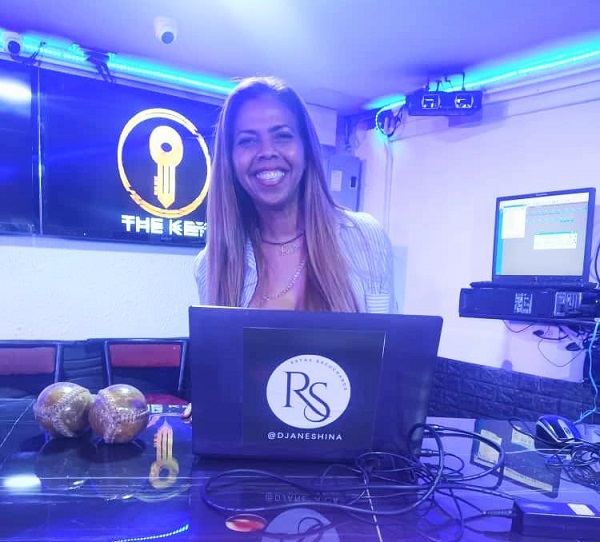
“Djane Shina” a passion turned into reality

Since I can remember my passion is music expressed in all its forms, I was always surrounded by family and friends musicians, who contributed to increase my love for it, said Djane Shina.

My surnames Rojas Salazar, both symbolize flavor; rumba; happiness; love; humility and dedication, with my families I learned everything I know about the rhythms especially Salsa, my parents Jaime and Ligia, my 5 brothers, my uncles and cousins are a part of what I am today …. “Djane Shina, the queen of Salsa.

Djane Shina a Passion Turned into Reality

Shinaury Thais, the queen, because that’s what my mother called me (R.I.P), the queen of the house, the little monkey among her monkeys.

I was born on October 28th, caraqueña and caraquista, I am from the most beautiful parish “23 de Enero” in the Mirador sector, and even though I only lived there for 2 years I always kept its essence, in February of 73 we moved to my beloved town ‘La Victoria’ in Aragua State, to the urbanization Las Mercedes, in the most salsa area that exists “Madera 15”, named after the Madera Group of San Agustin.

I grew up surrounded by neighbors all music lovers and parties, almost all organized by my brothers at home, Vinyl parties, which scratched so much to put them and to leave them out of their cover, a girl surrounded by people with different orchestral tastes but all of Salsa, there I learned to dance, sing and play instruments, were unique moments, to see those gatherings and end up picking up and cleaning everything so my parents would not be upset.

As soon as I grew up and became a teenager I took charge of the parties as Djane Shina inviting my people and their friends, who became my brothers in life and now my fans.The sound systems were several, one better than the other as the years passed, and manipulated by me, I began to share my tastes and my ability to put people to enjoy a whole night, the “Pioneer” equipment was everyone’s, I took it to every house I could, along with my LPs and cassettes, and at the time the CD case.

Djane Shina the Salsa Queen

A very nice experience as a Djane because people knew that when I was one of the guests at their meetings I took control of the music, always as a contribution to the celebration, there was never any charge, as I said at the beginning this is my passion and I do it from my heart.

When I was a child I practiced the cuatro, I was in the show band of my school “Unidad Educativa Colegio Brito” directed by the teacher Carlos Gonzalez, I started with the cymbal, followed by the grenadier, then the redoblante to finish with the trombone.I

Received lessons with my teacher Williams Puchi (R.I.P), it should be noted that my greatest inspiration to play this instrument was my brother Oscar Bauter Salazar, military musician, and for me, the best trombonist in Venezuela.

Djane Shina de La Victoria para el Mundo

When I was 18 years old, apart from sports (athletics, cycling, aerobics and power), I practiced percussion with my friends and teachers Humberto Rodriguez and Boris Pedra, playing the congas, bongo, timbal, and minor percussion clave, maracas, güiro, among others, here my inspiration was my beautiful uncle Oscarcito Rojas, for me the best conguero in the country.

Throughout my life I saw the formation of different orchestras and salsa groups by my brothers and neighboring friends, in them I participated in rehearsals and learned a lot to sing, over the years I could participate and organize groups of Christmas music and bagpipe as a soloist and with the minor percussion in the companies where I worked.

My life has always revolved around music and art and in the midst of that, wanting to be a professional musician I became a graduate in Business Administration, I had two beautiful daughters Yaima and Victoria, which are my greatest pride and motivation to move forward bringing happiness to the world with my talent.

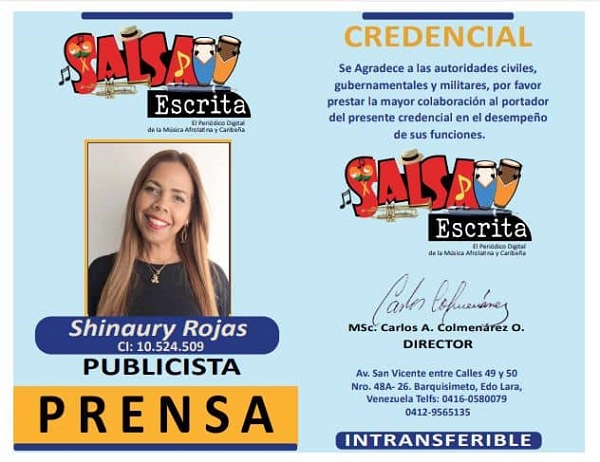
Currently Shinaury Thais Rojas Salaza Lcda. in Business Administration works as a Publicist in the digital newspaper “Salsa Escrita”.

Currently Shinaury Thais Rojas Salaza Lcda. in Business Administration works as a Publicist in the digital newspaper "Salsa Escrita".
Currently Shinaury Thais Rojas Salazar Lcda. in Business Administration works as a Publicist in the digital newspaper “Salsa Escrita”.

Shinaury Rojas

Contact: +058 4244009655

Shinaury Rojas (shina

Read also: Salsa and its detractors “Caiga quien Caiga”

Cali Fairs 2019

What you should know before arriving in Cali

Cali is the capital of the department of Valle del Cauca, located on the Colombian Pacific. Located at 1,018 meters above sea level, its average temperature is 32 degrees, with a dry climate for most of the year.

The climate of the city is hot most of the day, so it is advisable to wear fresh clothing and elements to protect yourself from the sun.

The city is one of the main economic and industrial centers of Colombia, in addition to being the main urban, cultural, economic, industrial and agrarian center in the southwest of the country and the third nationally.

Cali Fairs - Flyer
Cali 2019 Fairs Flyer

The number of inhabitants according to the result of the last census is 2,420,013 inhabitants, which makes it the third most populous city in the country.

The Alfonso Bonilla Aragón International Airport is located just 35 minutes from the city center.

Salsa is the musical genre that is most listened to in the city; but there are places for all kinds of musical tastes.

The dancers from Cali are recognized for the speed of their movements and there are academies where classes are taught for tourists.

Aguardiente is the typical drink of the region. To consume it, it is recommended to eat first and hydrate well.

A variety of beers, local rum and imported spirits are also available.

It is essential to try the local delicacies: Lulada, marranitas, pandebonos, cholados, chontaduros and shampoos.

If you arrive in Cali at the time of the Fair, it is best that you prepare to live six of the best days of your entire life; where the music, the dance, the gastronomy and the warmth of the Caleños will make you fall in love with this city which they call “La Sucursal del Cielo”.

Cali has a massive transportation system called MIO, which has routes designed to cover the entire city; but you can also get around in taxis. The minimum race has a cost of $4,700. ($1.5)


Places to visit in Cali:

1. Calima Gold Museum

It is an archaeological museum dedicated to the Calima culture located in the historic center of Cali.

2. Boulevard of Colombia Avenue

Also known as the River Boulevard for being located on the banks of the Cali River.

It is a boulevard located in the historic center of the city, in whose surroundings are the Ermita Church, the Coltabaco Building (architectural heritage), the Municipal Administrative Center, CAM; the Puente España, the Jorge Isaacs Theater, among others.

This pedestrian space has become one of the most visited sectors of the city due to its traveling art shows.

3. The Tertulia Museum

It is a museum of modern art and has the most important collection of works on paper in the country.

4. Alameda Park

It is a space for family integration that has become a great cluster of gastronomy, music and dance.

5. Caliwood Museum of Cinematography

It stands out for its emblematic collection of cinematographic, photographic and phonographic devices, which show the evolution of the filming and film exhibition equipment used in Colombia.

6. La Merced Religious Complex

Religious complex located in the place of foundation of the city of Santiago de Cali.

It is made up of the main nave of the church dedicated to Our Lady of Mercy (patron saint of the city), the auxiliary chapels dedicated to Our Lady of Remedies and the Lateran Christ, the religious convent, the museum of religious art and the archaeological museum.

7. Pance River and Health Park

It is one of the most frequented natural places by the inhabitants of Cali.

From the town of Pance to the area known as the Vorágine there are a good number of restaurants and recreational parks.

8. Sebastian de Belalcázar viewpoint

It has a monument that pays homage to the conqueror Sebastián de Belalcázar, who founded the city in 1536.

9. San Antonio neighborhood

Its richness lies in its urban landscape and in the daily expression of its inhabitants, custodians of the oral traditions that gave the city its identity.

It is the cradle of a varied gastronomic offer and fashion shops, as well as religious devotion and the sweet tradition of flower pots on the last weekend of June when the Flower Pot Festival is celebrated.

10. Christ the King

It is the monument that dominates and protects the city with open arms. It is 26 meters high and is located on Cerro Los Cristales.

11. Granada and El Peñon

These neighborhoods are renowned for their hotels, shops, restaurants, bars and nightclubs, with something for everyone.

12. The Cat of the River

It is one of the sculptural works of different artists located on the banks of the Cali River.

The Cat is the work of Hernando Tejada. A series of complementary sculptures can also be found accompanying the cat, called Las Novias del Gato.

Cali fairs - events
Other events in Cali

Events to return to Cali

Macetas  festival

It is part of a local tradition that celebrates the bond between godparents and godchildren. Every year, during the last days of June, cultural activities, exhibitions and sales of pots, made with sugar candies, are held.

Dance Biennale

It is a festival dedicated to the music of Pacific folklore that takes place in the month of August. It seeks to highlight composers, musical groups and music researchers of Afro-Colombian origin. Gastronomy, clothing and handicrafts are some of the components of this multicultural meeting.

Cali Fairs Flyer
Multiple free events in Cali

Petronio Álvarez Pacific Music Festival

Event that aims to stage theater shows at a local, national and international level, during the month of October.

World Salsa Festival

National and international companies arrive in the dance capital in November to show the country the best of contemporary, urban and folkloric expression.

Cali fairs - event flyer
Other events at the Cali Fairs

Cali International Theater Festival

It takes place in Cali every year in the month of September and recognized orchestras and all the salsa schools in the city participate, accompanied by dance academies from other cities and abroad that are represented by around 5,000 dancers.

During the festival, workshops, talks and academic meetings are held around salsa.

Cali Exposhow

It is the most important beauty, health and fashion event in Colombia, it takes place annually in the month of October and brings together important local and international designers and exhibitors.

Cali fairs - free
Free events in Cali
  • Information: https://feriadecali.com.co/sobre-cali

  • « Go to Previous Page
  • Page 1
  • Interim pages omitted …
  • Page 242
  • Page 243
  • Page 244
  • Page 245
  • Page 246
  • Interim pages omitted …
  • Page 393
  • Go to Next Page »

International Salsa Magazine (ISM) is a monthly publication about Salsa activities around the world, that has been publishing since 2007. It is a world network of volunteers coordinated by ISM Magazine. We are working to strengthen all the events by working together.