• Skip to primary navigation
  • Skip to main content

International Salsa Magazine

  • Home
  • Previous editions
    • 2026
      • ISM / January 2026
      • ISM / February 2026
    • 2025
      • ISM / December 2025
      • ISM / November 2025
      • ISM / October 2025
      • ISM / September 2025
      • ISM / August 2025
      • ISM / July 2025
      • ISM / June 2025
      • ISM / May2025
      • ISM / April 2025
      • ISM / March 2025
      • ISM / February 2025
      • ISM / January 2025
    • 2024
      • ISM / December 2024
      • ISM / November 2024
      • ISM / October 2024
      • ISM / September 2024
      • ISM / August 2024
      • ISM / July 2024
      • ISM / June 2024
      • ISM / May 2024
      • ISM / April 2024
      • ISM / March 2024
      • ISM / February 2024
      • ISM / January 2024
    • 2023
      • ISM / December 2023
      • ISM / November 2023
      • ISM / October 2023
      • ISM – September 2023
      • ISM – August 2023
      • ISM July 2023
      • ISM Edition June 2023
      • ISM – May 2023
      • ISM April 2023
      • ISM March 2023
      • ISM February 2023
      • ISM January 2023
    • 2022
      • ISM December 2022
      • ISM November 2022
      • ISM October 2022
      • ISM September 2022
      • ISM August 2022
      • ISM July 2022
      • ISM June 2022
      • ISM May 2022
      • ISM February 2022
      • ISM January 2022
    • 2021
      • ISM December 2021
      • ISM November 2021
      • ISM October – 2021
      • ISM September 2021
      • ISM August 2021
      • ISM July 2021
      • ISM May 2021
      • ISM April 2021
      • ISM June 2021
      • ISM March 2021
      • ISM February 2021
      • ISM January 2021
    • 2020
      • ISM December 2020
      • ISM November 2020
      • ISM October 2020
      • ISM September 2020
      • ISM August 2020
      • ISM July 2020
      • ISM June 2020
      • ISM May 2020
      • ISM April 2020
      • ISM March 2020
      • ISM February 2020
      • ISM January 2020
    • 2019
      • ISM December 2019
      • ISM November 2019
      • ISM October 2019
      • ISM Septembre 2019
      • ISM August 2019
      • ISM July 2019
      • ISM June 2019
      • ISM May 2019
      • ISM April 2019
      • ISM March 2019
      • ISM February 2019
      • ISM January 2019
    • 2018
      • ISM December 2018
      • ISM November 2018
      • ISM October 2018
      • ISM September 2018
      • ISM August 2018
      • ISM July 2018
      • ISM June 2018
      • ISM May 2018
      • ISM April 2018
      • ISM March 2018
      • ISM February 2018
      • ISM January 2018
    • 2017
      • ISM December 2017
      • ISM November 2017
      • ISM October 2017
      • ISM September 2017
      • ISM August 2017
      • ISM July 2017
      • ISM June 2017
      • ISM May 2017
      • ISM April 2017
      • ISM March 2017
      • ISM February 2017
  • Download Salsa App
    • Android
    • Apple
  • Spanish

Search Results for: salsa

Colombian dancer and instructor Camila Cepeda takes salsa caleña to Canada

Every day there are more Latinos who, with their talent, are gradually taking over various cities in Canada and the hearts of many of its inhabitants. Colombian instructor and dancer Camila Cepeda shows us that she and several of her compatriots have managed to break into the aforementioned North American country and shares with us a little bit of her interesting story.
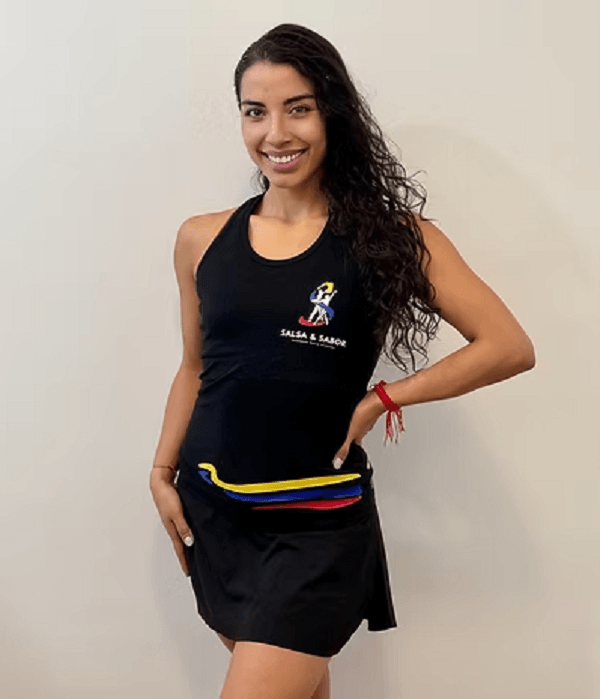
Dancer and instructor Camila Cepeda
Colombian dancer and salsa caleña instructor Camila Cepeda

Camila’s interest in dance

Camila has danced through life, and since she was a little kid, dance has been very important to her. One genre in particular that caught her attention was salsa caleña, especially since she saw it for the first time with dance groups on the TV show “Colombia’s Got Talent”. From there, more specifically in 2011, she looked for a dance academy where she could learn to dance and imitate what she saw on the screen.

Almost immediately, she realized that it was a very demanding style that required stunts and movements that were not common in more classic versions of salsa. After training in dancing, she did not want to be just an expert in salsa caleña, but many more people learned how to dance it as well, which led her to create a folk dancing group with which she would take her first steps towards teaching.

In addition to salsa caleña, Camila also danced salsa choka, champeta, bachata, merengue, and Colombian folklore. 
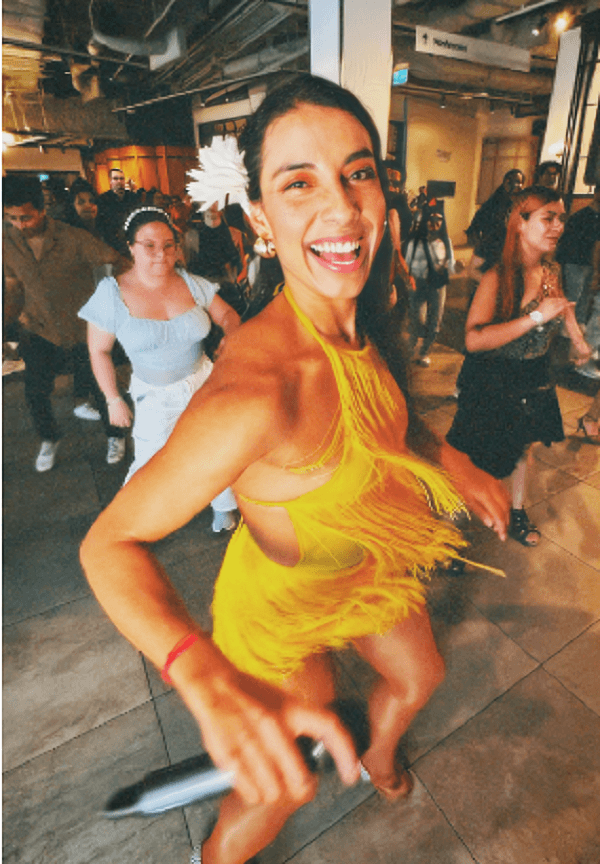
Camila dancing at an event
Camila Cepeda dancing in one of her salsa caleña events

Moving to Canada

Initially, Camila’s plans did not include leaving Colombia, but when she knew Canada, she found it an extremely interesting country where she could start something new with dance due to the lack of salsa caleña there. So, she entered the country with a student visa and studied international business at Seneca College in Toronto, with the intention of forming her own company in her new host country.

While gaining business experience through jobs for other companies, she continued to offer classes in parallel. Finally in 2020, in the middle of the COVID-19 pandemic and when she was still a university student, she decided to register and open her dance academy, “Salsa & Sabor.”

During that time, she also validated her teaching in English so that she could give classes to both locals and people from other cultures who spoke the same language.
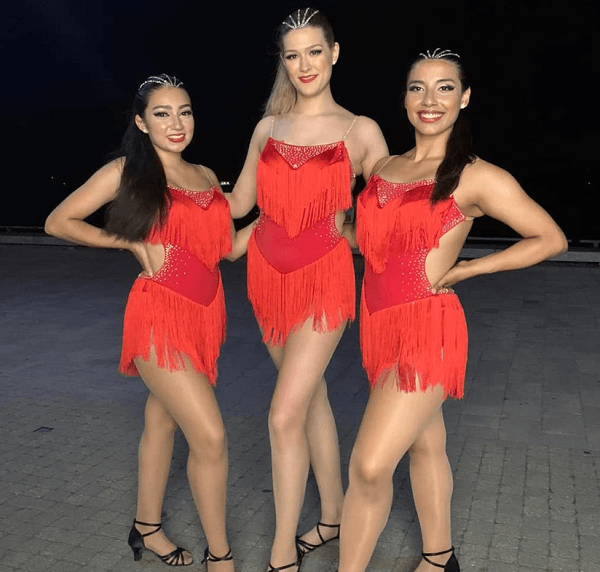
Camila, Aleja, and Sonia
Camila with dancers Aleja and Sonia

Salsa & Sabor today

Although the academy was started with only online classes due to the sanitary restrictions of that time, Camila was able to gather together a more or less numerous community that allowed her to stay afloat in such a difficult moment. Therefore, when government controls were relaxed, the young woman had no problem to organize dance classes and activities in parks keeping proper social distancing.

A short time later, she could finally open her dance studio, welcome students in person, and recruit other instructors such as Diana, Victoria, Mateo, and Paula. One thing to mention about these five young Colombians is that they were all Camila’s students in the past and, after all the training she offered, they also became experts in the field. Given the pitifully small number of salsa caleña instructors in Canada, when they were ready, she asked them to join her team, and they gladly accepted the opportunity.

This, in turn, helped them to open up more schedules and workshops for many more people, allowing the academy to grow even more.
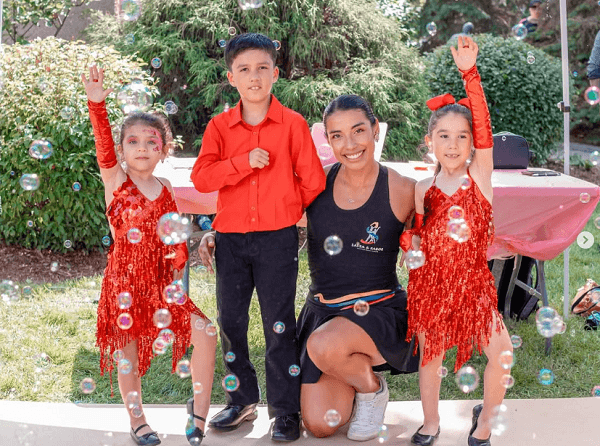
Camila with her students
Camila with some of her little students

Division of teaching genres and events

As we said at the beginning of this article, Camila also teaches other genres such as salsa choke, la champeta, bachata, and merengue, but her flagship and main rhythm remains salsa caleña. An important difference between salsa caleña and the rest is that it has a well-defined continuity and academic structure, so it takes much longer to learn. The other genres are relatively simpler, so they do not require as many hours or such an elaborate program.

Differences between salsa caleña and traditional salsa

According to Camila, a very important component of salsa caleña is its speed compared to traditional salsa. The way salsa is danced in Puerto Rico, Cuba, or New York is much better known around the world due to its age, while salsa caleña is a little newer and only began internationalizing a few years ago. In addition, traditional salsa is slower and uses the hips and shoulders a lot, while salsa caleña relies heavily on the rapid movements of the feet.

In fact, an important fact to know is that salsa caleña was created from a mistake. It turns out that a group of young people in Cali were doing private parties with LPs by various artists of the time, but they accidentally raised their speed and made the songs sound faster than they should. This led them to create completely new steps and choreographies based on these fast songs, giving rise to what we now know as salsa caleña. 

These parties were called “aguelulos,” a Colombian term to refer to alcohol-free parties or gatherings for young people. 

Read also: Tito Puente Jr.: perpetuating a legacy with its own rhythm

Jose Nogueras and Bobby Cruz Share a Social Message in Salsa

Veteran artists Jose Nogueras and Bobby Cruz have teamed up to create “Yo Soy Tú, Tú Eres Yo” (“I Am You, You Are Me”), a powerful song that celebrates equality, solidarity, and brotherhood among all people. According to a statement from Nogueras, the track delivers a deep and universal message: “Beyond our differences, we share the same dreams, struggles, and hopes.”

Bobby y Jose Por Bella Martínez

Composed by Jose Nogueras, “Yo Soy Tú, Tú Eres Yo” is a clear tribute to hope, love, justice, and unity, all set to a salsa rhythm deeply rooted in Puerto Rican heritage. The unmistakable voices of Nogueras and Cruz encourage us to reflect on the importance of human connection and empathy.

The song blends the classic essence of salsa with a meaningful human message. As is often the case with Nogueras’s compositions, the content resonates with today’s social reality. The arrangement perfectly complements the lyrics with rhythmic power, flavor, and authentic Puerto Rican style. This new release honors tradition while connecting with new generations of musicians and fans alike, thanks to its timeless message.

José Nogueras and Bobby Cruz combine their experience to produce "Yo soy tú, tú eres yo" (I Am You, You Are Me) by Bella Martinez

José Nogueras and Bobby Cruz combine their experience to produce “Yo soy tú, tú eres yo” (I Am You, You Are Me) by Bella Martinez

Nogueras’s lyrics once again confirm that his music serves as a vehicle for unity and hope. Meanwhile, the impeccable musical arrangement by Luis “Perico” Ortiz brings together several generations of great Puerto Rican musicians. The track features the talented Jorge Rivera on bass, interacting with the veteran tumbadora player Sammy Garcia. One of the most promising percussionists of his generation, David Marcano, shines on timbal and bongo. He’s also a member of one of the most respected dynasties in Puerto Rican popular music. On piano is Puerto Rico’s most versatile contemporary salsa artist, Carlos Garcia. The voices of the irreplaceable Josué Rosado and Willito Otero in the chorus seem to welcome back someone we’ve been missing for a while: Aldo Matta. The trumpets were handled by the song’s arranger, Luis “Perico” Ortiz, while Diego Diaz played the trombone.

Bella Martinez Puerto Rico


Also read: Mel Martinez, “I come from Puerto Rico and Puerto Rico is Salsa”

Salsa Fever On2 Dance Academy

North America / USA /  New York

At Salsa Fever On2, they take great pride in being the only licensed Adult and Children Salsa / Mambo dance academy in the state of New Jersey! Salsa Fever On2 has been in business for 12 years.

Members of the Salsa Fever On2 Dance Academy

Here, we have a reputation throughout the dance community for providing our students with an Award-Winning, structured curriculum that is conducive to all different levels of dancers while maintaining a fun and stress-free environment.

Whether you want to take your dance to the next level, support your exercise regimen, work on social skills or scape the daily stressors in your life, you can rest assure that you will be surrounded by a supportive staff in a non-intimidating environment.

The instructors at Salsa Fever take pride knowing that their students are held to the highest calibre and it’s evident on the dance floor. Under the artistic direction of Mario J. Gonzalez and his staf, SFOn2 Dance Academy aims to create true “On2” dancers – trained equally in dance and musicality.

Mario Justo Gonzalez a.k.a Mario B Founder & Director Salsa Fever On2 Dance Academy

Professional Dancer, Instructor, Choreographer, Actor, MC, DJ Date of Birth: April 23, 1976 Birthplace: Hoboken, NJ EthnicBackground: Puerto Rican/Cuban [email protected]

Mario has had an interesting start to what is now a SALSA / MAMBO lifestyle!

Mario was very athletic throughout his grammar and high school years. In 1999, a really good friend and high School teammate, Danny Useche, introduced Mario B. to the “Salsa Scene”. This, in turn, inspired Mario to sign up for his first dance class. It did not quite work out as well as he expected, as the class was slightly more advanced than he predicted. This left Mario even more determined to prove his point, size, shape and color was irrelevant when it comes to MAMBO!

Photo 1: Members of the Salsa Fever On2 Dance Academy

Mario was down, but definitely not out. He then came across one of the smoothest and most humble instructors in the Mambo scene, Greg Taylor, a prodigy of Delille Thomas and Original Eddie Torres dancer. After a few days with Greg Taylor, Mario was in Mambo Heaven. Took classes with Greg for approximately 6 months and was eternally grateful to Greg for this time, patience and expertise. Mario knew it was time to move forward and take on more of a challenge; he began taking more advanced classes with other established instructors.

Mario was immediately sought out and asked to become “The Papa” to Abbey Plotkins “The Mambo Mamas & The Papa”. Mario was now the Mambo Papa! By joining The Mambo Mama & The Papa, Mario was gice the opportunity to perform for what would become an instant hit LATIN MADNESS, an off-Broadway Dancical / Musical depicting the evolution of latin dance from past to present. The director and producer agreed that Mario would be a great addition to their all-star cast. Mario was now dancing alongside the BEST Mambo Dancers in the world! Latin Madness gave Mario the opportunity to dance, work and share the stage with the most sought out professionals in the world.

With stage experience and help from an acting coach, Mario earned the respect to appear in the movies “Empire” and “Kal-ho-naho”. Mario acted for the NY International Independent Film & Video Festival at Madison Square Garden, which then opened the doors for Mario to perform in two latin concerts at MSG… the largest stage in the world! In a short amount of time, Mario has come a long away to become a Professional Dancer, Choreographer, Instructor and Actor.

What’s most amazing I that he achieved all of these goals with NO background in dance!

It’s true what they say “Hard work does” pay off! “Hard work does pay off!” Who would have thought that Mario would transition from a full – time athlete to becoming a future Mambo Legend? In addition, his love for music and dance was Mario’s motivation to name his youngest daughter Jazzlyn.

Cycle Classes

Members of the Salsa Fever On2 Dance Academy - Dancers
Members of the Salsa Fever On2 Dance Academy – Dancers

Mambo On2 Partner & Floor Shine

  • Beginner Level 1: Beginner Students learn from a syllabus to help track their progress & pinpoint problem areas in floor shines & turn patterns in a 6 week cycle.
  • Advanced Beginner Level 2: students learn from a syllabus reflecting from Beginner Level 1 to help track their progress & pinpoint problem areas in floor shines & turn patterns with more of a challenge in a 6 week cycle.
  • Pre Intermediate Level 3: students learn from a syllabus reflecting from Beginner Level 2 to help track their progress & pinpoint problem areas in more complex floor shines & turn patterns in a 6 week cycle
  • Intermediate 4 Level: Students learn from a syllabus reflecting from Advanced Beginner Level 2 to help track their progress & pinpoint problem areas in more complex floor shines & turn patterns. Advanced beginner Level 2 will also prepare you for Advanced classes

What to bring to class

Please bring comfortable shoes with a leather or suede bottom. The best investment you can make as a dancer is a pair of quality dance shoes.

Do NOT recommend rubber soles or thick soled shoes as it will be difficult to find your balance, spin, and do the other exercises that to do in class. Bottled Poland Springs water is sold at the studio for a dollar.

Members of the Salsa Fever On2 Dance Academy - Photo 1
Members of the Salsa Fever On2 Dance Academy – Photo 1

Come dressed to dance. A short sleeved shirt and comfortable pants, tight & wind breakers are recommended. This class is a workout, you will sweat & enjoy it. There is a changing are at the studio, as well as restrooms.

The school is also equipped with state of the art central air conditioning & heating for both the summer & winter.

What to expect

Every class begins with a warm-up as a group, with introductory footwork drills for the first hour.

This gives students a chance to review the material that they know, and also gives them opportunity to assess new students and makes sure that they are in the appropriate group. For the second hour you split into partner work & continue with turn patterns & instruction. At the end of the class students have time to practice the moves that they learned, as well as ask question & clarify things that may have been missed.

Members of the Salsa Fever On2 Dance Academy - Photo 2
Members of the Salsa Fever On2 Dance Academy – Photo 2

Location: 83 Franklin Street

Jersey City, NJ 07307

Phone: (201) 792-116

[email protected]

Salsa Pal Bailador

Europa /

Salsa Pal Bailador. The success of a passionate venture that goes against commercial trends

Salsa Pal Bailador - Anniversary
Salsa Pal Bailador – Anniversary

By Roberto “Vene Barral”

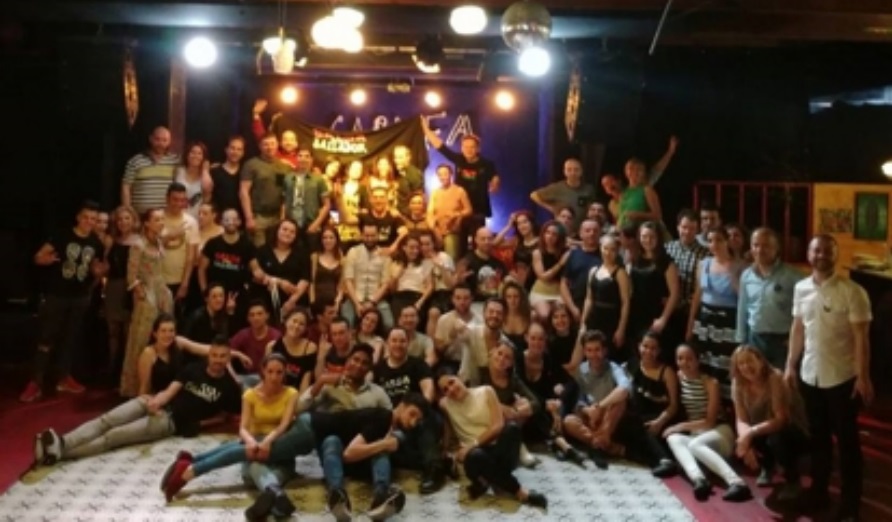
Last Saturday, May 6, the Garufa concert hall in A Coruña, a beautiful city in Galicia, central Spain, hosted the 5th Anniversary of Salsa pal Bailador. This event, created with the humble goal of offering a space to enjoy only quality salsa, has now become one of the most successful social events in Spain.

On the surface, the idea seems simple: organize a monthly event that brings together and gives free rein to all those who are passionate and nostalgic for pure, unadulterated salsa. But we must remember that we live in a consumer society that constantly tells us what we “have” to listen to, what fashions and styles are in and out. This is where SpB took a bold stand, going against what DJs and events were promoting at the time.

SpB emerged when kizomba, an African rhythm from Cape Verde, was spreading from neighboring Portugal into Spain. Along with the already established bachata, these were the trendy styles played at every social event that wanted to be a hit with audiences. But SpB’s proposal was even more daring. Not only did it focus exclusively on the most classic, least commercial, and least-known salsa, but it also had the audacity to schedule the event on a difficult day—Sunday—and at an even more challenging time: in the evening, starting at 8 p.m.

Perhaps in other parts of the world, organizing such an event would guarantee success with the public. But here, for the reasons already explained, it was a real challenge that was only expected to work because of the sheer tenacity that comes from having a passion for what you do.

So who are the impulsive salsa enthusiasts behind the success of Salsa pal Bailador?

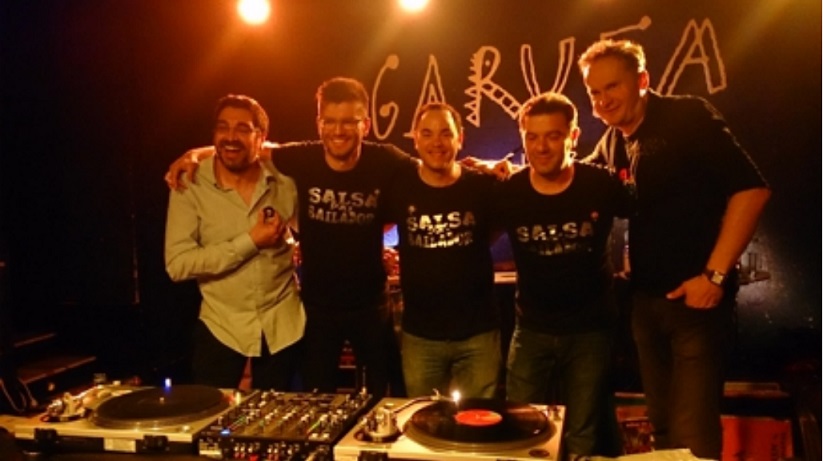
DJs - Salsa Pal Bailador
DJs – Salsa Pal Bailador

For one, there’s one of the organizers of these sessions, Martín Fernández, an Argentine who has lived in Galicia for decades. He turned salsa and this event into his dream and his challenge, striving not only to make each edition better than the last but also to bring in dancers, DJs, and collaborators from other parts of Spain and abroad (Portugal, Italy, etc.). More importantly, he has tried to support all the local schools, dancers, and DJs in Galicia, as well as the salsa orchestra created by Galicians, the Orquesta Sonoridad. This is something to keep in mind, as the exposure for all these artists is possible thanks to the celebration and promotion of events like this one.

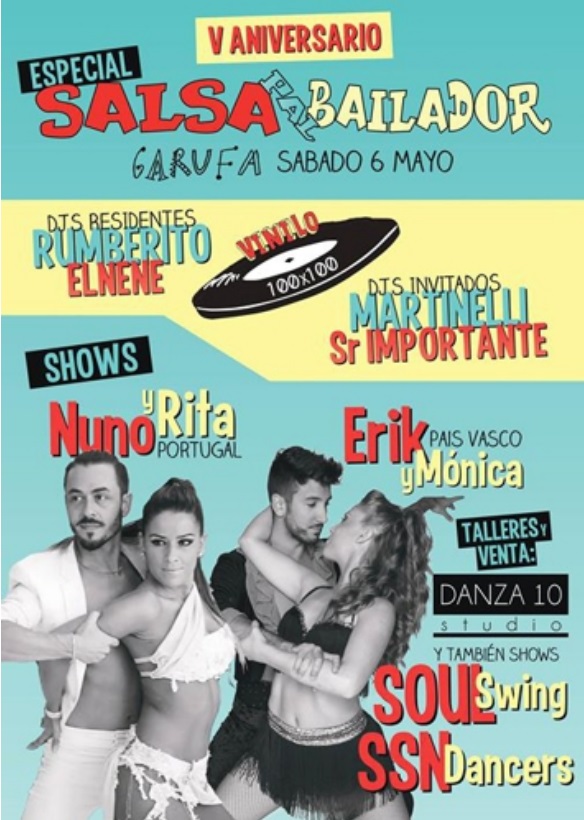
For its 5th anniversary edition, we enjoyed workshops and shows by Erik and Monika Eym Salsa from the Basque Country and Nuno and Rita from Portugal. There were also local shows like SSN Dancers, a group from a school in Betanzos, and Soulswing, a magnificent group of dancers from A Coruña, led by Javi Azúcar, who is a choreographer and guest DJ at several SpB sessions.

Over the years, many artists have participated in SpB sessions: figures such as Juan Matos, Yemambo, Carla Vocconi, Carlos Flow, Zergyo and Eva Mambo, Rui and Leonor, Nuno and Nágyla, or the local groups Mambo Sins and Son Candela, choreographed by the talented dancer Nuria Rodríguez Dieste, just to name a few.

Second, we have the two hosts who not only help organize all SpB events but also work hand-in-hand to ensure that each SpB session ends later, with more people asking for just one more song to dance to. I assure you that if the rules didn’t require a closing time, we would have the first after-hours venue where people consumed music, not substances, to stay awake. They are Manu Rumberito and El Nene del Bronx.

Salsa Pal Bailador - dance with me with Lugo - DJ Rumberito + El Nene
Salsa Pal Bailador – dance with me with Lugo – DJ Rumberito + El Nene

They are as unique as they are complementary, two tireless treasure hunters, searching for gems that haven’t yet been played on our dance floors, are unknown to our ears, or are classics we haven’t enjoyed in a long time or don’t get to hear very often. This is a luxury that, in these times of commercial music suffocation, very few of us can enjoy.

In addition, their passion for always seeking a more authentic, raw, and—why not say it?—more imperfect sound, but also one that is more acoustic and real, led them to start using vinyl records in their sessions. This trend has become SpB’s hallmark and has spread throughout Europe over time. Fortunately, we can now enjoy it at more and more events.

And, since passion is a state of mind that takes root everywhere, they found their alter egos in Madrid. Of course, they couldn’t celebrate SpB’s anniversary without them. These two turntable phenomena, Chema Sr. Importante and Marcin Martinelli, were the two guest DJs for such a special occasion. Other famous DJs have been featured at SpB sessions, including Hugo Leite, Nuno Melo, Dj Mito, Alexis Rodríguez, and Chris Beat, along with other local DJs such as Melao, Montuno, Sergio Elbembee, and the aforementioned Javi Azúcar. These DJs, like the guest dancers, aren’t unapproachable people; they come down to the dance floor to dance, chat, and enjoy themselves with the audience like everyone else.

Salsa Pal Bailador - Anniversary - DJs and workshops that will be presented
Salsa Pal Bailador – Anniversary – DJs and workshops that will be presented

At this point, many of you may be wondering: How is it possible that in a medium-sized city without a large Latin American population, an event featuring such a particular style of music can be so successful?

Well, it’s true that, fortunately for Galicians, in addition to having been welcomed with great hospitality in all the Latin countries to which we have emigrated, we have many returnees and natives from across the Atlantic living with us. This gives us the opportunity to enjoy many Cuban, Venezuelan, Colombian, and other styles of music and orchestras, which are very successful among both Galician and Latin American audiences.

But the truth is, we can say that they are different phenomena. People go to listen to the traditional music of these groups or orchestras for the pleasure of hearing those familiar tunes; it is more of a sensory delight.

However, when we talk about a social event, we associate it more with fun, leisure, and enjoyment in the sense of recreation. That’s what dancing at a social event means to us, where people of any age or condition simply let the music guide their bodies for pure joy, without any other pretensions.

It might be easy to conclude that this is the reason for the success of this type of event, and why they are so popular in this corner of the country. But we must remember that we are talking about A Coruña, a place that does not have the size or population of other large cities like Madrid, Barcelona, or Valencia. It’s a place where public attendance at these social events is high, where several social events are organized every week and on several days a week, and yet the public has been responding for decades. So what’s the secret?

Without wanting to diminish the great effort made in many other places, which despite this does not always have the deserved result, I believe that part of the success of this event is due to the courage to commit to formats or ideas that may not have an immediate and massive response or support but which, in return, offer sufficient quality to end up convincing even the most skeptical.

Therefore, in these times of commercial bombardment and mass-produced products, committing to creativity, innovation, and quality is a risky move. But we all know that if you don’t take risks, you don’t win, and SpB has taken that risk. As a result, every year it attracts more people from more places, including Portugal, Madrid, Valladolid, Asturias, Valencia, the Basque Country, Barcelona, etc. That is why, on its fifth anniversary, it has reaped its well-deserved rewards.

Salsa Pal Bailador - Congratulations
Salsa Pal Bailador – Congratulations

Congratulations to SpB and to its loyal audience, which is growing every day. Keep betting on quality!

Next event:

Salsa Pal Bailador

Sunday, June 4, 2017

Sala Garufa Club C / Riazor 5, A Coruña, Galicia, Spain

After the success of its fifth anniversary celebration, the Salsa Pal Bailador event returns on Sunday, June 4, to the Salsa Garufa Club in A Coruña, Spain. It will be a night of PURA SALSA, featuring 100% vinyl with DJs Manu Rumberito and El Nene del Bronx. There will also be two shows featuring the talents of Baila Conmigo Lugo and Euphoria Ladies Project from Vigo.

More information:

  • http://www.facebook.com/spb.salsapalbailadorlacoruna
  • http://www.facebook.com/SalsaGarufaClub/

Salsa Brava

Europa /

Salsa Brava. ¡La sensación latina en Dinamarca!

Salsa Brava es una de las compañías con más experiencia y prestigio del norte de Europa en la enseñanza de salsa, la realización de espectáculos de baile y la organización de eventos para empresas o reuniones privadas.

Son los ganadores del campeonato danés de salsa en 2004 y del campeonato de salsa de Copenhague en 2002.

Ima Mustafic - Salsa Brava
Ima Mustafic – Salsa Brava

Están deseando presentarte nuestro universo de salsa sensual, enérgica y elegante. Tras más de 20 años enseñando salsa, Salsa Brava es una de las escuelas de baile con más experiencia de Dinamarca en salsa y otros bailes latinos como bachata, merengue y chachachá.

Han desarrollado un método que hace que nuestros alumnos bailen con elegancia y confianza en sí mismos después de un corto período de tiempo.

Dos elementos importantes de nuestra forma de enseñar son el énfasis en la técnica de baile y la comprensión del ritmo y la música. También nos centramos en desarrollar tu estilo personal desde el primer momento.

No importa si eres principiante o bailarín avanzado. Bailarines de todas las edades son bienvenidos a nuestras clases, y si nunca has bailado salsa, no te preocupes… ¡Con ellos bailarás con confianza muy pronto!

Photo 1: Salsa Brava Social

Todos los estilos de salsa

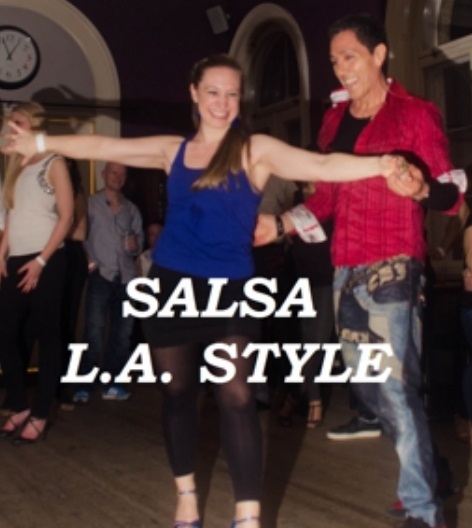
Enseñamos todos los estilos de salsa: “Nueva York”, “L.A.-style” (cross body) y “Cuba”. Al finalizar todos nuestros niveles de clase, podrás realizar combinaciones sensuales, fondos y pasos avanzados.

Desarrollarás tu estilo personal y tendrás un amplio conocimiento de la técnica de baile necesaria para ser un buen bailarín de salsa. Además, podrás improvisar con todo tipo de música de salsa.

¡Salsa Brava es Fernando Hernández!

Ima Mustafic

Ima empezó a entrenar gimnasia de niña. A los 12 años, la sustituyó por jazz, ballet, bailes de salón competitivos, bailes latinos y salsa. Desde entonces, ha entrenado con algunos de los mejores bailarines de salsa del mundo, viviendo en Barcelona, ​​Madrid y Nueva York. Tras muchos años de formación en ballet, jazz, bailes de salón latinos y salsa, Ima ha entrenado, actuado y competido en diversos estilos de baile en todo el mundo, lo que le ha proporcionado un amplio conocimiento de la danza, la interpretación y la técnica de la danza, que puede transmitir a sus alumnos.

Ima Mustafic
Ima Mustafic

Salsa Brava

Salsa LA & Estilo Cubano + Clases de Bachata

La próxima temporada comienza el 25/06 – 2017 con un profesor de latín real http://www.salsabrava.dk/new-classes

Dirección : Estudio de danza Salsabrava: Helgesvej 29, 2000 Frederiksberg. (Piscina Frederiksberg, arriba a la derecha, segundo piso). Estación de metro Frederiksberg. Autobús 2 A (parada Aksel Moellers Have).

Saludos, Fernando Salsabrava Hernández.

  • Correo electrónico: [email protected] – Tel: 2249 5834
Photo 3: Salsa Brava Social
  • « Go to Previous Page
  • Page 1
  • Interim pages omitted …
  • Page 3
  • Page 4
  • Page 5
  • Page 6
  • Page 7
  • Interim pages omitted …
  • Page 391
  • Go to Next Page »

International Salsa Magazine (ISM) is a monthly publication about Salsa activities around the world, that has been publishing since 2007. It is a world network of volunteers coordinated by ISM Magazine. We are working to strengthen all the events by working together.