On November 19, 1982, in Mexico City, Antonia del Carmen Peregrino Álvarez, better known as “Toña La
Toña la Negra, passed away. She was a prominent Mexican singer and actress of African descent, famous for her interpretations of boleros and tropical songs by the composer Agustín Lara, who considered her “the greatest female singer of all time” due to her “highly personal style,” “the power of her expression, and the velvet of her privileged throat.”
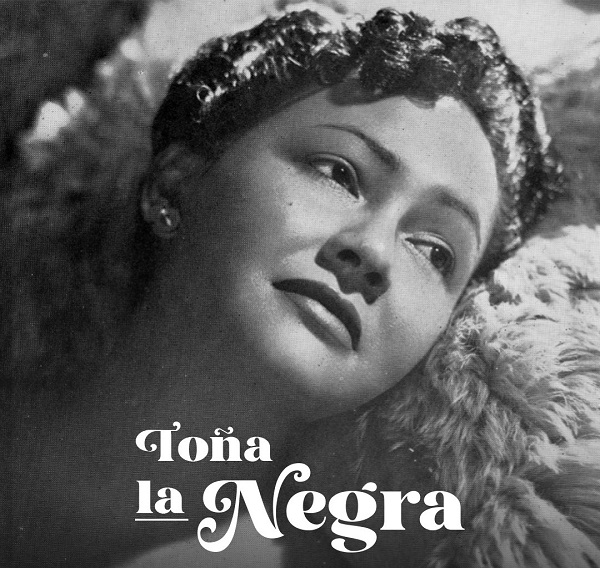
Antonia Peregrino was born in the city of Veracruz, in the La Huaca neighborhood, on November 2, 1912.
Her father, Don Timoteo Peregrino Reyes, played the guitar and worked as a freight opener for the crates arriving at the port; he was also one of the founders of the Veracruz Port Commercial Loaders and Openers Guild.
Her mother, Doña Daría Álvarez Campos, sang at family gatherings.
Her paternal grandfather, Don Severo Peregrino, was Haitian and had emigrated to Mexico in the 19th century.
By 1927, she had married Guillermo Cházaro Ahumada, who took her to Mexico City with their first child, who was only forty days old.
On July 16, 1929, she debuted at the cabaret El Retiro. While performing there, where she was known as La Peregrina, she met Don Emilio Azcárraga Vidaurreta. It was Azcárraga, along with Enrique Contel, who christened her “Toña La Negra.”
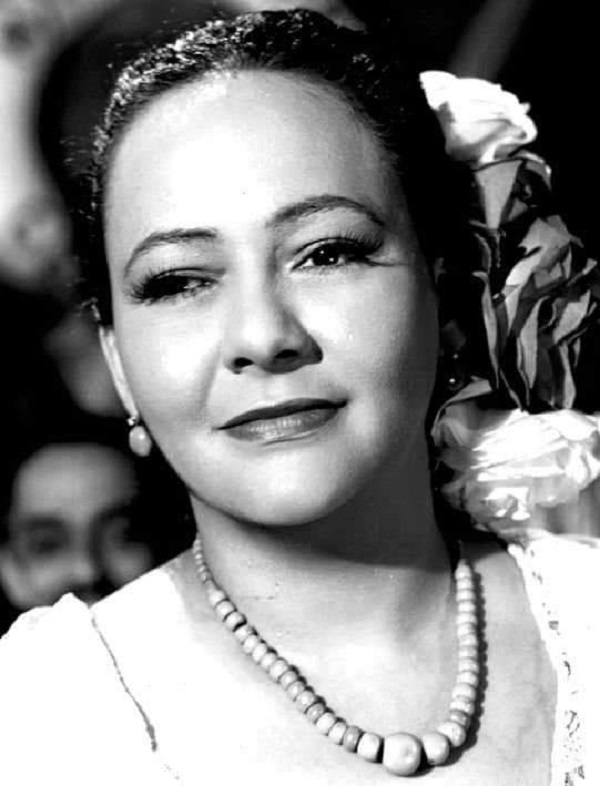
She began to gain recognition with her interpretation of the song “Enamorada” (In Love) by Agustín Lara. Lara also produced tracks for her such as “Lamento Jarocho,” “Veracruz,” “Noche Criolla” (Creole Night), “Oración Caribe” (Caribbean Prayer), “Palmera” (Palm Tree), “La Clave Azul” (The Blue Key), and “La Cumbancha.” They presented these together in a musical revue at the Teatro Esperanza in December 1932, achieving such success that they had to extend their performances for a long time.
Her voice tone was rather deep, with a velvety and rounded sound, and impeccable vocal techniquecharacteristics that became her interpretive signature.
Azcárraga added her to the cast of the XEW radio station, where she sometimes performed accompanied by Lara and other times by the Alfredo Girón orchestra.
Shortly thereafter, her spectacular performances began at the Teatro Politeama, across from Las Vizcaínas and next to San Juan de Letrán street.
Her recordings for the RCA Victor label constitute one of the most precious musical legacies in the history of the bolero.
One of the first records she cut for this label contained the song «El Cacahuatero» (The Peanut Vendor); this recording dates back to the 1930s. For RCA Victor, she recorded several long-play albums, including Caleidoscopio musical con Toña la Negra (Musical Kaleidoscope with Toña la Negra), Noche Criolla, vol. II, and La Sensación Jarocha, vol. III (The Jarocha Sensation, vol. III).
In the mid-sixties, she signed an exclusive contract with Discos Orfeón, where she recorded the last albums of her career.
“Este amor salvaje” (This Wild Love), “Por qué negar” (Why Deny It), “Obsesión,” “Mentiras tuyas” (Your Lies), “Y sin embargo te quiero” (And Yet I Love You), “Noche criolla,” “Pesar” (Grief), “Vereda tropical” (Tropical Path), “Cada noche un amor” (A Love Every Night), “Angelitos negros” (Little Black Angels), “Lágrimas de sangre” (Tears of Blood), “Estás equivocado” (You Are Wrong), “De mujer a mujer” (From Woman to Woman), “Como golondrinas” (Like Swallows), “Diez años” (Ten Years), and “Cenizas” (Ashes) are some of her successful titles recorded on over 75 LP records, some of them for the Peerless label. Already famous for many years, she recorded two songs with the legendary Sonora Matancera in 1974.
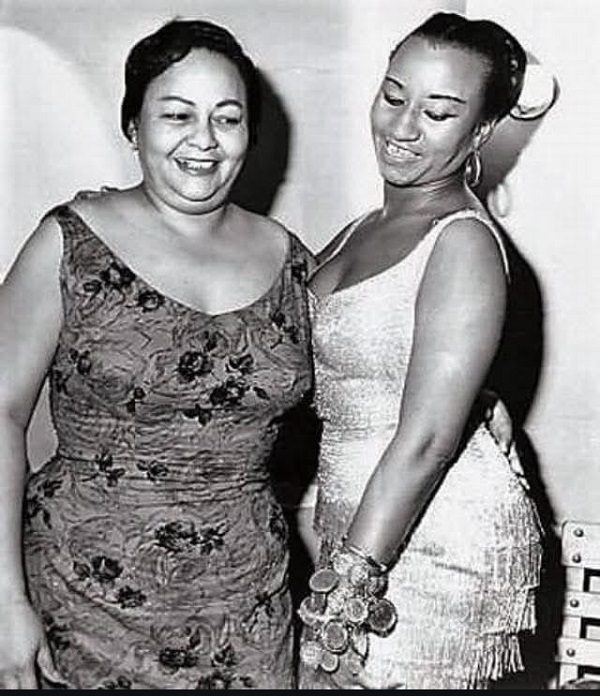
In her final years, due to some health issues, she gradually withdrew from the stage and recording.
Toña La Negra always maintained a very reserved personal life. With her first husband, the musician Guillermo Cházaro Ahumada, she had three children: Ramón (b. 1932), Guillermo (b. 1933), and Ernesto (1935–1979). Toña and Cházaro Ahumada separated in 1945.
Later, in 1955, she remarried the Veracruz-born bassist Víctor Ruiz Pazos, known as “Vitillo.” This marriage lasted until 1963. In an interview, Ruiz Pazos spoke about Toña’s artistic qualities:
Her commitment, her feeling when she sang, her style, the way she did it, how she expressed things musically; I have lived a long time, I have heard many fabulous singers, but none of them come close to Doña Toña.
The German filmmaker Christian Baudissin made a documentary about Toña La Negra for television in 1993, featuring interviews with her ex-husband, the musician Vitillo (Víctor Ruiz Pazos), and other artists who knew her during her lifetime.
Collaborators:
Los Mejores Salseros del Mundo
Also Read: Santa La Salsera and Diva of Mexico with her unique voice and style will continue to conquer us all

- Willie Colón The “Architect of Salsa” Enters Immortality - February 23, 2026
- Porfi Jiménez The Master of Rhythm Who United Two Nations - February 23, 2026
- Andy Durán: The Architect of Mambo and Latin Jazz - February 23, 2026