The legacy of a visionary who fused the saxophone with the essence of the Caribbean and national cinema.
Víctor Cuica was more than just a musician; he was a bridge between two worlds. Born on April 19, 1949, in the iconic Caracas neighborhood of La Pastora, Cuica established himself as a preeminent saxophonist and actor, earning global acclaim for his innovative fusion of Jazz with Afro-Caribbean roots.
His presence defined a golden era in Venezuelan culture, as he shared the stage with legends such as Tito Puente, Paquito D’Rivera, Porfi Jiménez, and Gerry Weil.
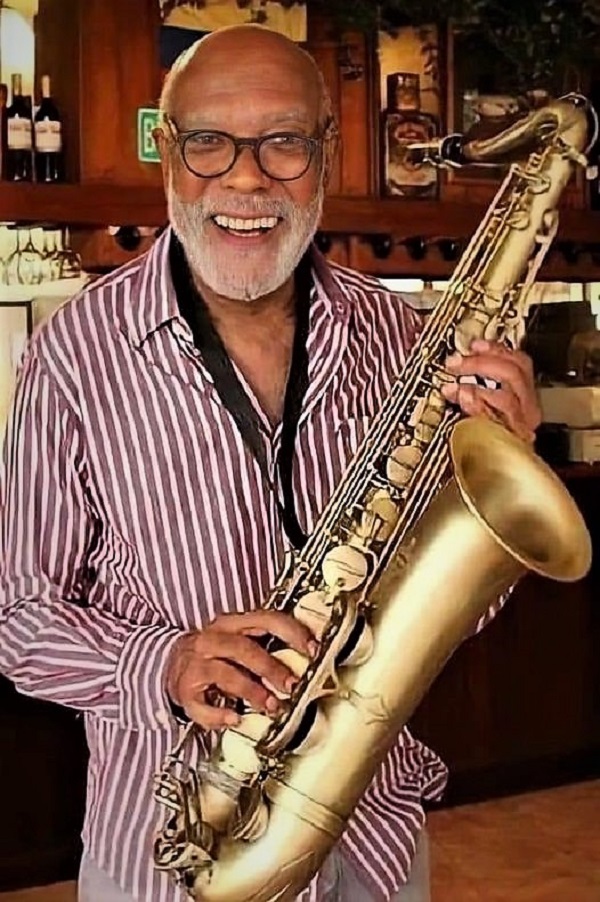
Victor Cuica “The Eternal Breath of Latin Jazz and Venezuelan Identity”
Training and First Steps: The Birth of a Style
The journey of this virtuoso—master of the tenor and soprano saxophone as well as the flute—began in 1963 at the Military Music School of La Victoria. His time in the Venezuelan Navy band served as the catalyst for his love of Jazz, leading him to deepen his knowledge of flute, harmony, and composition at the “José Ángel Lamas” Higher School of Music.
His professional career took off in Chucho Sanoja’s orchestra. Shortly thereafter, he joined Oscar D’León’s ensemble. It was actually Cuica who suggested the name “Dimensión Latina” to replace the group’s former name, “Oscar y sus Estrellas,” thereby christening what would become the most iconic salsa orchestra in Venezuelan history.
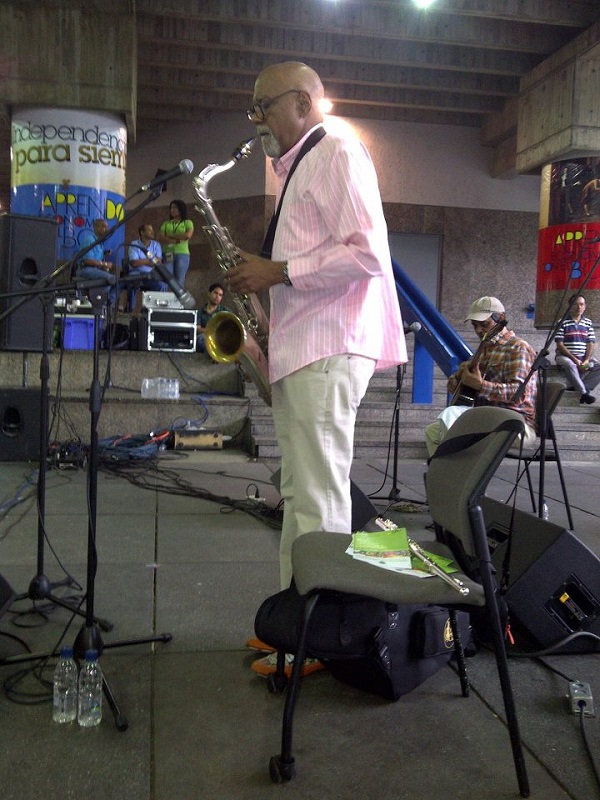
Victor Cuica in concert held on August 22, 2011 in Juan Pedro Lopez Square in Caracas
Latin Jazz: From the Silver Screen to International Stages
By the late 1970s, Cuica expanded his horizons into the “seventh art.” In 1978, he composed and performed the soundtrack for “The Sea of Lost Time” (El Mar del Tiempo Perdido), based on the short story by Gabriel García Márquez. A year later, he solidified his own group, “Víctor Cuica y su Jazz Latino,” debuting to resounding success at the Alcázar Theater in Caracas and gaining international momentum in Costa Rica.
Throughout the 1980s, critics hailed him as the most important innovator of jazz fusion in the region. His talent brought him to historic venues:
- 1981: He triumphed at the “Memphis in May” festival in Tennessee.
- 1982: He performed at the prestigious “Domicile” club in Munich, Germany.
- 1985: He reached a milestone as the leader of the first Venezuelan group invited to the Montreal International Jazz Festival, where he shared the limelight with the legendary vibraphonist Lionel Hampton.
Artistic Maturity and Recognition
In the 1990s, his music reached new academic heights when Maestro Eduardo Marturet composed the work “Music for Six and Sax” specifically for him. It premiered with the Sinfonietta Caracas and represented Venezuela at the 1992 Universal Exposition in Seville.
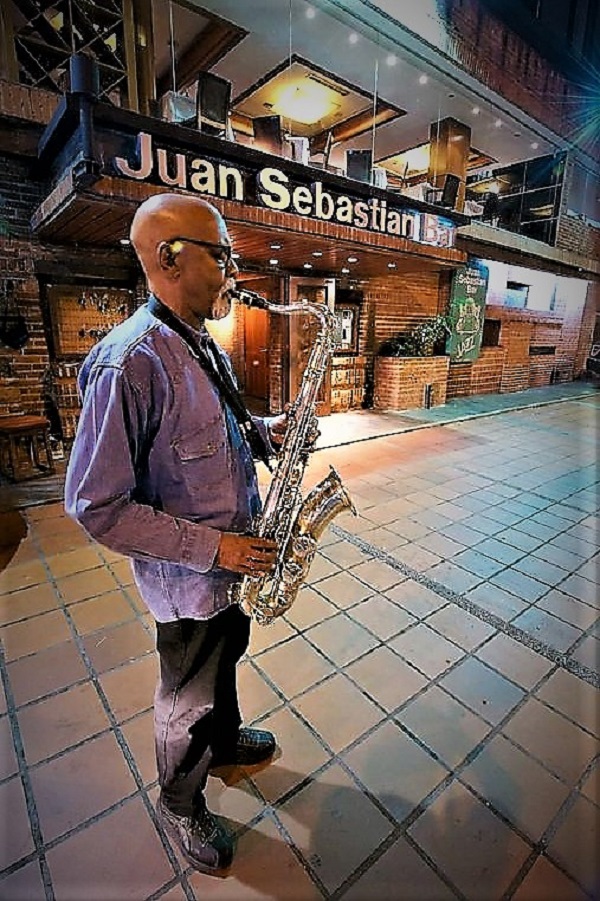
Víctor Cuica was not just a musician; he was a bridge between two worlds. Photograph at Juan Sebastian Bar
His discography, which includes gems such as Que sea para siempre (1984), Noctámbulo (1993), Just Friends (1998), and Los Locos de Caracas (1999), stands as a testament to his versatility. In 1995, the Venezuelan Artist’s Guild (Casa del Artista) honored him as Musician of the Year.
A Farewell with the Flavor of the Streets and Bohemia
Víctor Cuica passed away on Saturday, December 26, 2020, at the age of 71 due to a heart attack. His departure left a void in the film industry, where he starred in memorable films such as Santera (for which he also composed the award-winning soundtrack in 1997), and in the bohemian nights of Caracas, where his saxophone was often the soul of the evening.
A Tribute from His Peers
Multi-percussionist José Hidalgo, known as “El Tokun Mayor,” describes Cuica with words that summarize his essence:
“Víctor Cuica is the finest example of an artist intimately linked to his daily reality and cultural origins, without ever losing sight of the cosmopolitan and universal nature of his musical message. Cuica is the expression of genuine jazz performed with the simplicity of the streets.
Víctor is as authentic in his personal character as he is as an artist. This virtue was his companion as he traveled across numerous international stages, spanning the worlds of music, film, theater, and opera always with the transcendence of a bohemian, simple, and bold minstrel.
Cuica never ceases to surprise us, whether through his voice or the sound of his saxophone an instrument that, with his habitual ingenuity, he turned into a centerpiece of performance through his creativity and versatility.
His talent has graced stages across Europe and the Americas. His work projects far beyond the commercial mainstream and, today, leaves us with a brilliant musical improvisation that is truly beyond compare.”

DJ Augusto Felibertt with the one and only virtuoso Víctor Cuica
Today, the name Víctor Cuica remains etched in history as the man who gave Jazz a Caribbean color and gave the Venezuelan saxophone a voice of its own.
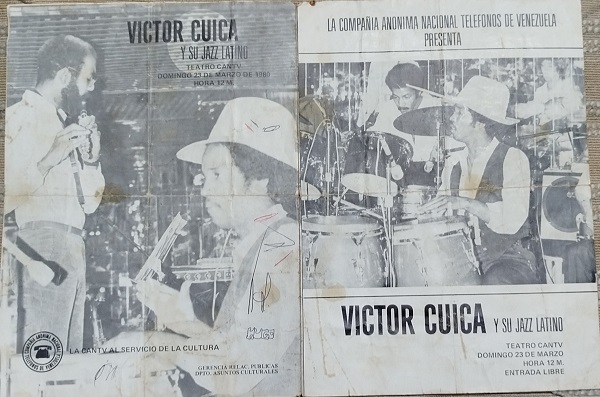
Victor Cuica and his Latin Jazz, March 23, 1980 at the Cantv Theater in Caracas
Also Read: Oscar Rojas Oscar Rojas has 54 years of musical career full of passion, rhythm and flavor

- Willie Colón The “Architect of Salsa” Enters Immortality - February 23, 2026
- Porfi Jiménez The Master of Rhythm Who United Two Nations - February 23, 2026
- Andy Durán: The Architect of Mambo and Latin Jazz - February 23, 2026