• Skip to primary navigation
  • Skip to main content

International Salsa Magazine

  • Home
  • Previous editions
    • 2025
      • ISM / November 2025
      • ISM / October 2025
      • ISM / September 2025
      • ISM / August 2025
      • ISM / July 2025
      • ISM / June 2025
      • ISM / May2025
      • ISM / April 2025
      • ISM / March 2025
      • ISM / February 2025
      • ISM / January 2025
    • 2024
      • ISM / December 2024
      • ISM / November 2024
      • ISM / October 2024
      • ISM / September 2024
      • ISM / August 2024
      • ISM / July 2024
      • ISM / June 2024
      • ISM / May 2024
      • ISM / April 2024
      • ISM / March 2024
      • ISM / February 2024
      • ISM / January 2024
    • 2023
      • ISM / December 2023
      • ISM / November 2023
      • ISM / October 2023
      • ISM – September 2023
      • ISM – August 2023
      • ISM July 2023
      • ISM Edition June 2023
      • ISM – May 2023
      • ISM April 2023
      • ISM March 2023
      • ISM February 2023
      • ISM January 2023
    • 2022
      • ISM December 2022
      • ISM November 2022
      • ISM October 2022
      • ISM September 2022
      • ISM August 2022
      • ISM July 2022
      • ISM June 2022
      • ISM May 2022
      • ISM February 2022
      • ISM January 2022
    • 2021
      • ISM December 2021
      • ISM November 2021
      • ISM October – 2021
      • ISM September 2021
      • ISM August 2021
      • ISM July 2021
      • ISM May 2021
      • ISM April 2021
      • ISM June 2021
      • ISM March 2021
      • ISM February 2021
      • ISM January 2021
    • 2020
      • ISM December 2020
      • ISM November 2020
      • ISM October 2020
      • ISM September 2020
      • ISM August 2020
      • ISM July 2020
      • ISM June 2020
      • ISM May 2020
      • ISM April 2020
      • ISM March 2020
      • ISM February 2020
      • ISM January 2020
    • 2019
      • ISM December 2019
      • ISM November 2019
      • ISM October 2019
      • ISM Septembre 2019
      • ISM August 2019
      • ISM July 2019
      • ISM June 2019
      • ISM May 2019
      • ISM April 2019
      • ISM March 2019
      • ISM February 2019
      • ISM January 2019
    • 2018
      • ISM December 2018
      • ISM November 2018
      • ISM October 2018
      • ISM September 2018
      • ISM August 2018
      • ISM July 2018
      • ISM June 2018
      • ISM May 2018
      • ISM April 2018
      • ISM March 2018
      • ISM February 2018
      • ISM January 2018
    • 2017
      • ISM December 2017
      • ISM November 2017
      • ISM October 2017
      • ISM September 2017
      • ISM August 2017
      • ISM July 2017
      • ISM June 2017
      • ISM May 2017
      • ISM April 2017
  • Download Salsa App
    • Android
    • Apple
  • Spanish

2019

Health Benefits of Dance

Europe / Romania / Galati

Health Benefits of Dance

Studies show that dance can help to lose weight, stay flexible, reduce stress, make friends, and much more. Discover the advantages of health and DANCE!

Many love to dance and follow the rhythm of the music on the radio. Others enjoy watching others dance.

The truth is, that dancing really has many benefits for health and well-being. Adopting a lifestyle where there are music and dancing is definitely healthy. But why?

Learn about the health benefits of dancing

Let us show you!


1.-  Reduce stress

If you’re feeling stressed out or anxious, you perfectly might want to invite a partner, turn up the music, and Salsa! Researchers have found that partner dance and musical accompaniment can help bring about stress relief.


2.- Boost memory

According to studies, dancing may boost your memory and prevent you from developing dementia as you get older. Science reveals that aerobic exercise can reverse volume loss in the hippocampus, the part of the brain that controls memory. The hippocampus naturally shrinks during late adulthood, which often leads to impaired memory and sometimes dementia.


3.- Improve flexibility

Those plies and arabesques that ballet dancers practice aren’t just for aesthetics — they also increase flexibility and reduce stiffness. You can skip the ballet slippers and still reap the benefits of ballet by practicing some simple stretches at home. Increasing your flexibility will help ease joint pain and post-exercise soreness.


4.- Help your heart

Dance is a great activity for those at risk for cardiovascular disease. People with heart failure who took up waltzing improved their heart health, breathing, and quality of life significantly compared to those who biked or walked on a treadmill for exercise, noted an Italian study.


5.- Diminish depression

Dancing really does lift your spirits, according to a study that tested the effects of dancing on people with depression. Patients who participated in an upbeat group dance showed the fewest depression symptoms and the most vitality. Got the blues? Grab a friend and go out dancing tonight.


6.- Balance better

If you are nervous about falling as you get older, some dance lessons might help ease your worries. Dancing requires a lot of fast movement and good posture, so frequent dancing will help you stabilize and gain better control of your body.

With info a Salud Cotidiana.

“Trayectoria de Clásicos” – Johnny Cruz and Adalberto Santiago

North America / United State / New York

Johnny Cruz releases his new Salsa album “Trayectoria de Clásicos” with Adalberto Santiago to the musical arena

The famous Timbalero and musical producer presents a CD tribute to all the Puerto Rico and the world’s Soneros, along with one of the most privileged voices of Latin music and Fania All-Stars’ vocal ex-leader: Adalberto Santiago.

"Trayectoria de Clásicos" - Johnny Cruz and Adalberto Santiago
“Trayectoria de Clásicos” – Johnny Cruz and Adalberto Santiago

Johnny Cruz “El Señor del Timbal” launches his second historical compilation “Trayectoria de Clásicos” directed to all the Salseros lovers of the whole world, which can relive in a single album ten great classics of this tropical genre in the interpretation of the vocal versatility most famous of six decades, Adalberto Santiago.

This four-years recording album involved more than 20 Latin music personalities, including: Jason Villamar, Louis Perieda and the special guest: Richi Ray (Piano), Rubén Rodríguez and Freddy Rivera (Bass), Johnny Rodríguez, Pedro Segundo and Luisito Rodríguez (Bongos), Eddie Montalvo and Erick Vélez (Congas), Jerry Rivas and Luisito Rodríguez (Three), Nelson Jaime Gazu (Trumpet), Johnny Cruz (Timbales), Moisés Noguera (Trombones), Freddy Miranda (Baritone), Jerry Rivas, Adalberto Santiago and Frankie Vásquez in the choirs and Adalberto Santiago as Leader Vocal.

Each track of this Salsa flagship CD was chosen with special attention for being emblems of the salsa movement of the 60s, 70s, and 80s popularized by great artists and orchestras, such as: Fania All-Stars, El Gran Combo de Puerto Rico, Cheo Feliciano, Tommy Olivencia, Adalberto Santiago, and Justo Betancourt.

Johnny Cruz and Adalberto Santiago

“Trayectoria de Clásicos” comes with the differentiating touch of musical arrangements of extreme sonority concerning their original compositions. “Anacaona” (1971) by Cheo Feliciano with the Fania All-Stars, “El Swing” (1965) and “Un Verano en New York” (1975) by El Gran Combo de Puerto Rico and “Hipocresía”, the work of the Cuban master: Adalberto Álvarez are interpreted by the legendary vocalist Adalberto, who at 82 years of age keeps his voice intact and dominates a wide range of tones. This former member of the Chuíto Vélez orchestra, Ray Barretto, Típica 73 and Los Kimbos has one of the most prominent careers in the music industry, which has allowed him to share stage and recording with almost all the world-famous Salseros.

In this Salsa compilation, the New Yorker Cruz, also included the six singles: “Planté Bandera” (1975) whose original composition is Tommy Olivencia, “No hago más Na” (1973) belonging to El Gran Combo de Puerto Rico, “Pa’ Bravo Yo” (1972) by Justo Betancourt, and “Imposible ha de Ser” (1977), “Más Sabroso” (1985) and “Mañoño” (1973) with Típica 73 by Adalberto Santiago.

Undeniably, it’s an album that was worth every year of waiting. “Trayectoria de Clásicos” is of incomparable quality and a super Salsera production highly recommended.

Waiting for the big concert in the city of New York for all lovers of the genre this year!

Release: 2019

Label: Cruz Music Inc.

“Salsa music means everything to me. It’s a passion that goes hand in hand with my culture and roots… I have been playing it for 40 years as a musician and love it dearly”. Johnny Cruz

Johnny  Cruz “El señor del Timbal”

The New Yorker musician, CEO, businessman, audio engineer, producer and broadcaster of radio and television, Johnny Cruz since 20 years ago has had one of the most important programs of the five counties of the city of New York dedicated to Salsa, “The Johnny Cruz Show”. This program seeks to enhance the genre, raise awareness and make a difference to what has already been established with interviews with Salsa Mainstays and emerging artists. “The Johnny Cruz Show” ​​is already part of the New York Latino culture and you can enjoy it on public access television every Saturday from 3:30 PM to 4:30 PM and also through www.mnn.org  and https://www.youtube.com/channel/UCNT-nQee0t_uiDvUGlyh5dA

Johnny Cruz
Johnny Cruz

Likewise, Cruz is also the host of the digital radio program “Galería de la Salsa” dedicated entirely to this tropical rhythm, concentrating on the biggest hits of all times and salsa styles, as well as presenting outstanding live interviews. “Galería de la Salsa” is broadcasted all over the world online at www.miradio.fm.us

This humble, sincere, and successful multifaceted artist told us that among his plans are to make great concerts in his hometown and the rest of the world.

“My legacy rests on what I have created like the SPAHA Salsa Gallery, my radio show, my TV show and all of my musical productions. I hope future generations look at my work here and are inspired to continue the Salsa tradition”. Johnny Cruz

Johnny Cruz Timbal: https://www.facebook.com/profile.php?id=100028301633677

Adalberto Santiago:

https://www.facebook.com/adalberto.santiago.1401

Balazo Destacado:

Johnny Cruz releases his new Salsa album “Trayectoria de Clásicos” with Adalberto Santiago

Meet and learn the Venezuelan Salsa

Latin America / Venezuela / Caracas

Meet and learn the Venezuelan Salsa

Did you know that in Venezuela the basic traditional Salsa is known as “Salsa Cero”, where the only thing anyone needs is “Not knowing how to dance”, knowing the basic steps of salsa, hearing and feeling the rhythm of the music and the musicalization.

The basic steps of the sauce are:

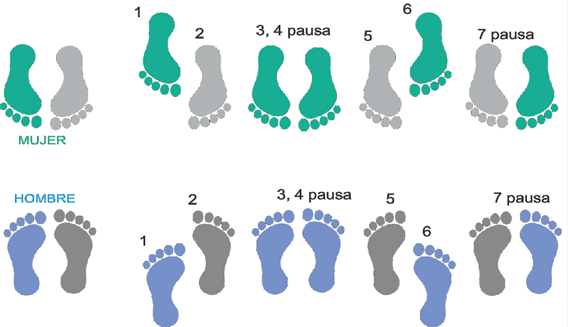
  1. Paso de lateral and/or lateral: This basic step consists of three steps that are executed on the first three beats of the bar. The fourth beat of the measure is a pause where no step is performed. The three steps are repeated in reverse in a second measure to complete a sequence of the step.
  2. Cruzado o cross: en este paso los pies se mueven de la siguiente manera: En el golpe 1, el pide derecho da un paso por delante del pie izquierdo, de manera que lo cruza. En el golpe 2, el pie izquierdo cruza al pie derecho, y así sucesivamente.
  1. Gait: It is a very similar step to the side, but this time it consists of taking two “2” steps forward and two “2” backwards, advancing in short steps and repeating the cycle. With this step the dancer can execute it alone or with a partner, the latter is not performed and is usually executed in a couple but not face to face, since the two people cannot perform the march at the same time.     
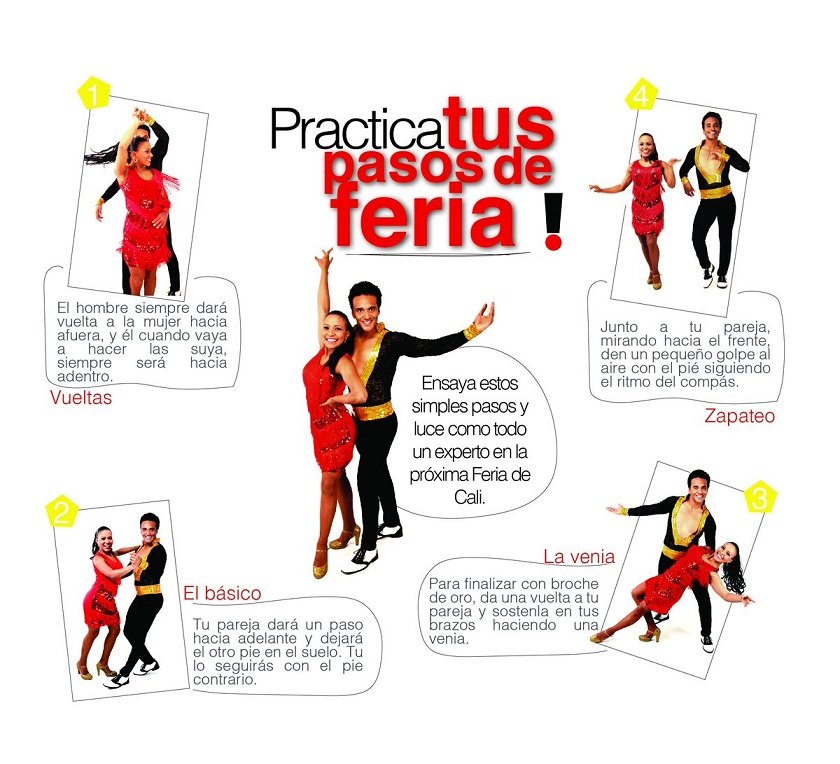
  1. Turns: The turns in both the man and the woman can be done with any of the steps mentioned above. The turn is usually done in step 1 where the man invites the woman to perform her basic step to turn, everything will depend on the entry made by the couple. There are different types of laps, we mention the basic ones on this occasion:
a.   Return of the woman/man.

b.   Back in Croos.

c.   Return of the man.

d.   Right left.

e.   The butterfly.

f.    The Bridge.

g.    The 70.

h.     Sixty.

Did you know that Salsa Cero is not just for learning to dance?

Many people who practice or learn “Salsa Casino” take the workshop and/or zero salsa classes to learn to “count” the music that is being danced since musical counting is the fundamental basis of any dance.

One of the characteristics of this rhythm is the corporal expression, since there are details or corporal messages that make the couple understand how to move or what turn they are going to perform and these details can be known with the look, position of the hands and the body. before and during the return to perform. These details are very important especially in the man who is the one who controls and/or manipulates the woman so that she dances to the beat.

Among the different styles of salsa, Venezuelan salsa has a very special and interesting detail and that is that it is a very sensual style, in which the dancers make thousands of turns and constantly hug each other, showing their potential, emotion and feelings at the moment.

Redames (Randy) Plaza

Latino America / Puerto Rico / Carolina

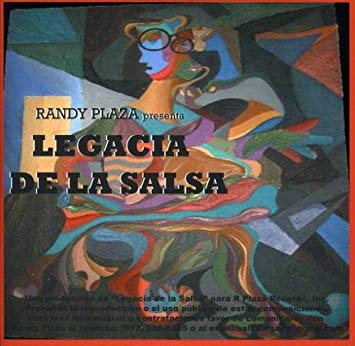
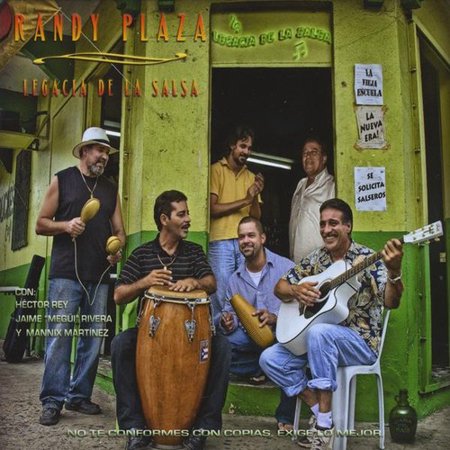
Redames Randy Plaza. Salsa Legacy

“It is salsa from yesterday and today for the dancer and the romantic salsero”.

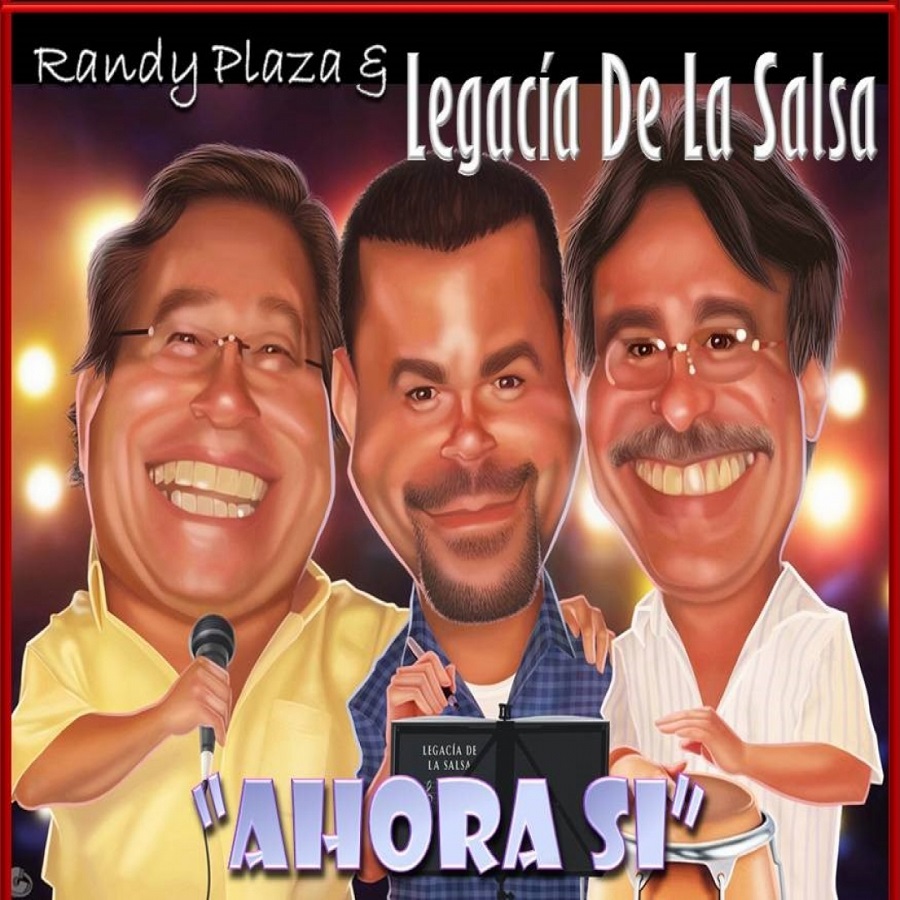
Randy Plaza, a native of Carolina, Puerto Rico, is the producer, composer, publisher and independent label of Legacía de la Salsa. Created in 2007, LS arises under a constant concern of seeing and feeling how the salsa genre has been musically devalued over the years.

Legacy of Salsa is an invention, a concept, a movement, an experiment, which tries firstly to raise the musical quality of salsa to another level, to keep the tradition alive, to demonstrate that if we work together and without interest, everything can be achieved. and proclaim to everyone that the sauce is not over.

That it is not in extinction, that it has not gone out of fashion, nor has it lost its style.

“That all these are tales of the boring.”

Legacy of Salsa is the legacy and teaching received from the great masters of salsa, who have captivated us in various ways and to whom we owe everything that was the development and fusion of this genre to the point of establishing it as a root in the heart of every Latino.

“It is salsa from yesterday and today for the dancer and the romantic salsero”.

Legacy of Salsa manages to incorporate the feeling of some of the greatest salsa institutions in this project, whether it be for the musical sound, for the style, for the arrangements, for the romantic, the singers, etc.

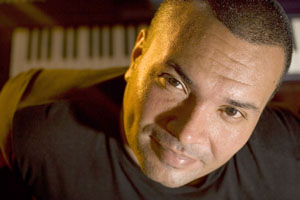
Randy Plaza
Randy Plaza

In this way we can recover a little of what has been lost today, please the entire salsa market, and fill that empty space; orphan of style and rhythm, and musically instructing and educating the disoriented and those who got lost along the way.

“The essence of yesterday in today’s day, traditional sauce without monotony and without fillers. For you salsero, cocolo, rumbero, with flavor and feeling”.

The unexpected, unfortunate and tragic death of Humberto Gómez leaves a huge void in the formation of Legacía de la Salsa.

A week before leaving Tito Gómez was already part of this musical concept.

Due to such loss, it was decided to cancel the first Legacía de la Salsa concert in New York City on July 21, 2007, where he would have participated as a guest star.

At that moment we entered the recording studio insecure and with the enormous concern of wanting to do the best possible on his behalf, never forgetting the person he was and will continue to be for us and without leaving aside his musical legacy.

Randy Plaza - Legacia de la Salsa
Randy Plaza – Legacia de la Salsa

https://www.legaciadelasalsa.com/

Joel Uriola

Latino America / Venezuela / Caracas

Joel Uriola “I am the best, because I surpass myself”

Very soon the theme will be released, Cuidadillo there ok

This Venezuelan pianist, arranger and musical producer was born on January 4, 1963 in Caracas, in the popular parish of Antímano, the same one that saw the birth of Sonero del Mundo Oscar D´ León, by chance or his destiny was already written and en route. towards a dream that over the years would come true; be the best and that your work is recognized both nationally and internationally.

In our gathering, Joel tells us that when he is classified as the best, he has nothing to do with competing with others or with airs of greatness, but with surpassing himself in everything he proposes, he tells us that “my path is longer, but I came as Joel Uriola”, his name is a seal that ensures quality work.

With 38 years of musical career, Joel Uriola has plenty of talent, level and experience, in each production he uses the best group of Venezuelan musicians and continues to be at the forefront of music, all this is demonstrated in the more than 1000 musical productions in which he has participated as a performer, director or musical producer, with national and international artists.

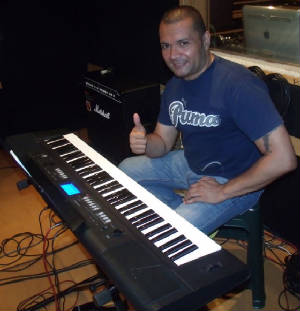
Joel Uriola
Joel Uriola

Joel Uriola The best?

“That’s right, metaphysics says that you can’t talk about yourself in a negative way, you can’t sell a product if you don’t have good marketing, you must see beyond, be your own manager, most record companies are in the hands of ignorant people. the music that drive the artist’s work”. “Artists have the obligation to cultivate themselves, learn and not only be musicians, we must project ourselves in a big way”.

How did your childhood develop and what was the atmosphere of the time like?

“I had a good education in my home, with values, a grandmother with character, who told me that no matter where you lived, your behavior would make a difference, she always motivated me, just like my mother who also instilled in me to prepare myself, my grandmother was an enterprising woman, my father was a rumba guitarist and a professor at the Católica”. “I remember that I saw the debut of the Trabuco Venezolano in the CC Propatria, as fate would have it, my mother had an office there, as did the people of the Latin Dimension.”

At what age did you start in music and with which orchestras did you take your first steps?

“My musical beginnings took place at the “Prudencio Esáa” School of Music, starting professionally at the age of 17 with a group called Galaxia, I was the conga player, it was a Son group and we rehearsed at the observatory”. “Then I became part of the Caracuchos of Joseito Rodríguez from 1977 to 1979, whom I met thanks to Jesús “Totin” Rebolledo, later with the Latin Dimension from 1979 to 1980, from Cesar Monges I learned a great deal, and from 83 to 87 with Oscar D´ León.

And why is there that change from the conga to the piano?

“Due to the noise I made in the house when I was rehearsing and the equipment turned on at full volume, my mother subliminally gave me an organ, it was less noise, and then I began to imitate what the pianists did in a self-taught way, I remember the theme of Pete Rodríguez… What things life has, life, life”. “Then my mother bought me a piano and took me to audition at the School of Music and I stayed, I was a student of teacher Tiero Pezzuti, Gerry Well and Samuel del Real”. “In the nightclubs of El Rosal I did many substitutions, there I polished myself, I had a good preparation and some great teachers who are my friends”.

Joel Uriola - piano
Joel Uriola – piano

What anecdotes do you have about your experience of working alongside Oscar D´ León, and about that piano solo on the song “Cuídate bien”, did you ever think that being so young, almost 20 years old, your name would remain forever on the mind of the salsero?

“The time with Oscar was glorious, I got to know many places, we toured for 3 and 4 months, we enjoyed ourselves but we also had a lot of fun, I learned a great deal and disciplined.” “I had the blessing of meeting many musicians that I admired such as Eddie Palmieri, Salvador Cuevas, Barry Rogers, among others, with Domingo Quiñones I made a great friendship.” “As for improvisation, I feel great pride, it was something that came out at that time, I don’t know if it will come out again -laughs-“.

Which musician has been your biggest influence?

Markolino Diamond, Eddie Palmieri, Papo Lucca.

A pianist you admire?

“Markolino Diamond is my idol, a lot of what I do has to do with this guy, if he were alive he wouldn’t exist…”. “He was irreverent, crazy, he broke the schemes.”

How do you see the response of the salsa audience with your productions?

“There will always be admirers and detractors, with the level of awareness that you gain, it doesn’t bother you that there are people who don’t like your work, I make music for everyone”. “Public opinion can kill you if you are not prepared for it, but you must believe in what you do.”

How do you see the support of the media to spread your music?

“Thank God the record companies disappeared, those who knew the least about music controlled them, they decided that it was commercial and that it was not, in the alternative media there is response and support, however, social networks allow you to reach in a matter of seconds many places and you can do your own marketing”.

What do you think about the fusions that you are doing with salsa, for example, salsa and reggaeton?

“It works perfectly, it’s urban salsa, reggaeton with its lyrical content has improved a lot, they’ve softened it, reggaeton artists have great economic and communication support.” “The good things are guaranteed, reggaeton is seen as Salsa was seen in its beginnings, with bad eyes, but you see, Salsa is worldwide even the Chinese dance it, people consume what the radio puts on it, even if it’s bad, there’s room for everyone”.

As a music teacher, what have you contributed to the country?

“Train the next generation, in values ​​and discipline, and that seed continues to germinate, help people regardless of how they sometimes pay you.”

Why musician and not another profession?

“I wanted to be Disip (Venezuela’s intelligence corps), but when one is born marked for something, that’s what goes… My destiny is music.”

How do you see the music industry right now?

“Everyone is recording with their own effort, you make a song, you upload it to the networks, we have that powerful tool in our favor; the record companies limited you, hardly any albums are recorded anymore”.

Can you live from music?

“Well… Thank God I can do it, every day I get up like a conuquero to work, I can live from music.”

Of the 9 productions under your belt, which do you think is the best or the most important for you?

“Babalawo (2009), the best achieved, the best worked in all aspects, was sold in all religious houses.”

What motivated you to form your own orchestra?

“I’ve always been a leader, that’s why I decided to form my own orchestra, everyone has their moment”.

Isn’t it a difficult job to compose and arrange?

“You are born for this, it is not difficult, you must study and prepare yourself, my muse can arrive at 3 a.m., I get up and add or season my music in my own way, I listen to traditional Cuban music, jazz that inspire me.”

What is Joel Uriola doing right now?

“Currently I dedicate myself to producing for other artists of the Salsero genre, always offering quality, the most recent is the work with the Mercadonegro Orchestra with the theme Rumba Negrito”.

You are the arranger of the 3 songs that made the Bailatino orchestra known internationally, you have been the Producer and arranger in five songs of “Rumberos del callejón”, among other Venezuelan artists. What does it feel like to contribute so that other Venezuelans are successful?

“At the moment you do things, you do it with the best intention, and that is the greatest satisfaction, helping others grow regardless of how they pay.”

Do you feel that unity and camaraderie are lacking in the salsa guild?

“Totally, without unity nothing is achieved.”

What do you think of copying, imitating and not creating?

“He who imitates is destined to fail, one must have personality, you must not cling to something foreign to survive, what you do has more value, you must have creative capacity”.

Future plans or present?

“I am recording two songs, Cuidadillo there ok composition by Maurice Melo, a salsa with tasty rhythmic elements, timba and hard sauce, and the second song You are the teacher has a Christian connotation, with the Praise Orchestra, the song is my own. , a cool sauce with Christian sauce”.

Joel reaffirms us “My road is long, but I arrive as Joel Uriola, I am who I am, I am the best”.

  • « Go to Previous Page
  • Page 1
  • Interim pages omitted …
  • Page 7
  • Page 8
  • Page 9
  • Page 10
  • Page 11
  • Interim pages omitted …
  • Page 16
  • Go to Next Page »

International Salsa Magazine (ISM) is a monthly publication about Salsa activities around the world, that has been publishing since 2007. It is a world network of volunteers coordinated by ISM Magazine. We are working to strengthen all the events by working together.