• Skip to primary navigation
  • Skip to main content

International Salsa Magazine

  • Home
  • Previous editions
    • 2025
      • ISM / November 2025
      • ISM / October 2025
      • ISM / September 2025
      • ISM / August 2025
      • ISM / July 2025
      • ISM / June 2025
      • ISM / May2025
      • ISM / April 2025
      • ISM / March 2025
      • ISM / February 2025
      • ISM / January 2025
    • 2024
      • ISM / December 2024
      • ISM / November 2024
      • ISM / October 2024
      • ISM / September 2024
      • ISM / August 2024
      • ISM / July 2024
      • ISM / June 2024
      • ISM / May 2024
      • ISM / April 2024
      • ISM / March 2024
      • ISM / February 2024
      • ISM / January 2024
    • 2023
      • ISM / December 2023
      • ISM / November 2023
      • ISM / October 2023
      • ISM – September 2023
      • ISM – August 2023
      • ISM July 2023
      • ISM Edition June 2023
      • ISM – May 2023
      • ISM April 2023
      • ISM March 2023
      • ISM February 2023
      • ISM January 2023
    • 2022
      • ISM December 2022
      • ISM November 2022
      • ISM October 2022
      • ISM September 2022
      • ISM August 2022
      • ISM July 2022
      • ISM June 2022
      • ISM May 2022
      • ISM February 2022
      • ISM January 2022
    • 2021
      • ISM December 2021
      • ISM November 2021
      • ISM October – 2021
      • ISM September 2021
      • ISM August 2021
      • ISM July 2021
      • ISM May 2021
      • ISM April 2021
      • ISM June 2021
      • ISM March 2021
      • ISM February 2021
      • ISM January 2021
    • 2020
      • ISM December 2020
      • ISM November 2020
      • ISM October 2020
      • ISM September 2020
      • ISM August 2020
      • ISM July 2020
      • ISM June 2020
      • ISM May 2020
      • ISM April 2020
      • ISM March 2020
      • ISM February 2020
      • ISM January 2020
    • 2019
      • ISM December 2019
      • ISM November 2019
      • ISM October 2019
      • ISM Septembre 2019
      • ISM August 2019
      • ISM July 2019
      • ISM June 2019
      • ISM May 2019
      • ISM April 2019
      • ISM March 2019
      • ISM February 2019
      • ISM January 2019
    • 2018
      • ISM December 2018
      • ISM November 2018
      • ISM October 2018
      • ISM September 2018
      • ISM August 2018
      • ISM July 2018
      • ISM June 2018
      • ISM May 2018
      • ISM April 2018
      • ISM March 2018
      • ISM February 2018
      • ISM January 2018
    • 2017
      • ISM December 2017
      • ISM November 2017
      • ISM October 2017
      • ISM September 2017
      • ISM August 2017
      • ISM July 2017
      • ISM June 2017
      • ISM May 2017
      • ISM April 2017
  • Download Salsa App
    • Android
    • Apple
  • Spanish

Artists

Mario Bauza

North America / United States / New York

Mario Bauza, Pioneer of Afro-Cuban jazz in New York, Clarinetist, saxophonist, trumpeter and arranger

Mario Bauzá (Havana, April 28, 1911 – Manhattan, July 11, 1993) was a Cuban saxophonist, clarinetist, trumpeter, arranger and composer.

Known above all for having been the musical director of the Machito orchestra (of whom he was also a brother-in-law), he was a pioneer of what is now known as Afro-Cuban jazz.

Mario Bauza The Legendary Mambo King
Mario Bauza Pioneer of Afro-Cuban jazz in New York

Bauzá played the clarinet in the Havana Philharmonic Orchestra. However, after traveling to New York in 1927 with the Antonio María Romeu orchestra, he was so impressed by the Big Bands of Paul Whiteman, Fletcher Henderson and Tommy Dorsey, and by the Harlem music revues, that in 1930 he decided to emigrate definitively to USA.

During the trip, he became friends with Antonio Machín. Mario Bauzá would return on the same boat in which Don Aspiazu’s orchestra was travelling, who immediately began the arrangements to record El manisero.

Upon arriving in New York, Bauzá went to live in Harlem with his cousin, the trumpeter René Endreira. Bauzá began playing the saxophone at house parties with pianist Lucky Roberts and began to absorb African-American culture.

Mario Bauza
Pioneer of Afro-Cuban jazz in New York

Between 1930 and 1931, he was a trumpeter in the Antonio Machín quartet and made important recordings with this group in New York City. Anecdotally, it is said that he had learned to play the trumpet in just two weeks.

His first jobs were with the orchestras of Cass Carr, Noble Sissle and Sam Wooding.

In 1933 he entered Chick Webb’s orchestra as first trumpet, where he ended up as music director. He then worked with Don Redman and Fletcher Henderson, eventually landing Cab Calloway.

Being in that band, Mario brought the young trumpeter Dizzy Gillespie to the orchestra.

Bauzá married Estela Gutiérrez, sister of Francisco Raúl Gutiérrez Grillo, known as Machito.

On December 3, 1940, he debuted with Machito at the Park Plaza, a dance hall, with the Afro-Cubans, later working for almost four years at the La Conga club.

Bauzá works for Machito as artistic director, taking care of the arrangements and hiring the musicians.

The style of the Afro-Cubans mixes the son montuno of Cuba with features of swing bands.

Mario Bauzá Pioneer of Afro-Cuban jazz in New York

Thanks to this, musicians like Dizzy Gillespie or James Moody introduced Afro-Cuban rhythms into jazz, starting in 1947.

He became interested in jazz when he heard Frankie Trumbauer play the saxophone performing Rhapsody in blue with the Paul Whiteman orchestra.

In the forties, Mario will develop the sound of Afro-Cuban jazz. His work as a clarinetist, trumpeter, saxophonist and arranger in the Machito orchestra constitutes one of the main pillars in the emergence and development of that Cuban genre.

Master Timbalero Luisito Quintero

North America / United States / New Jersey

Master Timbalero Luisito Quintero hails from Caracas, Venezuela.

Where his father, a respected percussionist in his own right, tutored and encouraged his son to become one of music’s best percussionists.

Luisito comes from a long line of outstanding musicians including his uncle, Carlos Nene Quintero and cousin Robert Quintero.

He studied at the respected Orquesta Sinfonica de Venezuela (The Symphonic Orchestra of Venezuela) and his percussion technique soon garnered attention from his colleagues.

Master Timbalero Luisito Quintero
Master Timbalero Luisito Quintero – Photo

Luisito joined the popular music ensembles Grupo Guaco and Oscar D’Leon, where he enjoyed worldwide acclaim.

Luisito Quintero has worked and recorded with many of music’s legends including The Rolling Stones, Vanessa Williams, Paul Simon, Santana, Jack De Johnette, David Sanborn, George Benson, Joe Sample, Bill Cosby, the late Celia Cruz and Tito Puente, Cachao, Eddie Palmieri, Marc Anthony, Gloria Estefan, Richard Bona, Ravi Coltrane, Nathalie Cole, Diana Krall, Giovanni Hidalgo, Toshiko Akiyoshi, Spanish Harlem, Willie Colon and countless others.  One of his recent projects finds him as musical director for Louie Vega and the Elements of Life Band, as well as extensive work with Jack DeJohnette’s Latin Project.  He has also had the privilege to tour and record with the Tony & Grammy award winning Jazz artist, Dee Dee Bridgewater.

Quintero himself has earned more than thirteen Grammy certificate awards for his participation in numerous recordings.

Luisito Quintero has two solo projects under Vega Records/BBE, entitled “Percussion Maddness” and “Percussion Maddness Revisited”.

Timbalero - Luisito Quintero
Master Timbalero Luisito Quintero – Photo

Scheduled for release in the spring of 2013, his upcoming production entitled “3rd Element”, features guest artists Gato Barbieri, Oscar Hernandez, Doug Beavers, Richie Flores, Steve Khan, Reynaldo Jorge and his cousin Roberto Quintero.  Currently, Luisito is the touring & recording percussionist for the legendary jazz pianist Chick Corea and for Spanish Harlem.

Nicky Marrero is an innovator, timbalero and bongo player, living legend of our Afro-Latin and Caribbean music.

Nicolás Marrero Jr. “Nicky Marrero” was born in the Bronx, New York, on June 17, 1950, to a Puerto Rican father and mother (born in San Germán and Corozal, respectively).

He had formal studies in drums during his adolescence, but more could the sounds of Tito Puente and Willie Bobo, his major influences.

Nicky Marrero is an innovator, timbalero and bongo player, living legend of our Afro-Latin and Caribbean music.

He debuted in music with a high school ensemble called Orquesta Caribe.

However, his first recording session was at the age of 15 with the original band of another teenager born in 1950: Willie Colón.

Curiously, at the time of these sessions, three pillars of the Alegre All-Stars, Charlie Palmieri, Louie Ramirez and Kako, were present in the studio, and young Nicky was invited to participate as a timbalero.

In 1968 he was recruited by Eddie Palmieri, who by then, as a consequence of internal problems, gradually disbanded his original orchestra: La Perfecta.

Nicky Marrero joins the orchestra shortly after recording the album “Champagne,” the album “Justicia” (1969), where, still under the powerful voice of Ismael Quintana, Nicky begins to explore his own sound (listen to his solo in the song “My Spiritual Indian”),

The decade of the 70’s opens for him with three important events: the classic album “Vámonos Pa’l Monte”, his participation with Patato in the album “Portrait Of Jennie” by Dizzy Gillespie and the beginning of his career as a percussion teacher, as a member of the faculty of the East Harlem Music School, the school of Johnny Colón, legendary pianist and one-time pioneer of boogaloo.

Ggilberto Santa Rosa y Nicky Marrero

At this institution Nicky gives his first lessons to a 13 year old boy named Jimmy Delgado.

In 1972 Nicky is invited to participate in the Afro-American Music Festival. 1975 he joins the troupe of the Wonderful Jew, Larry Harlow, then he is part of the Revelation Orchestra, two years with the Novel Orchestra.

In fact, thanks to his internship with Harlow’s band, Nicky was already part of Fania Records’ staff of musicians, recording as timbalero, bongos player and even drummer (and one of his first assignments for that label as a studio musician was the album “Pa’ Bravo Yo” by Justo Betancourt, produced by Harlow himself in 1972).

In 1973 he was included in the Fania All-Stars, replacing Orestes Vilató.

Marrero received an invitation from Pacheco to make his debut with them at Yankee Stadium in August of that year. Ironically, despite the events that separated Vilató from the stellar orchestra, he remained part of Fania’s studio staff. In fact, Vilató and Marrero crossed paths on countless sessions for various artists on the label between 1973 and 1980, in most cases with Marrero on timbales and Vilató serving as bongos player.

His multiple sessions for Fania (Ismael Miranda, Ismael Quintana, Héctor Lavoe’s first solo album (“La Voz”), Justo Betancourt and others), he also participates in “Sun Of Latin Music,” Eddie Palmieri’s classic par excellence and the first album to win a Grammy in the then debut category of “Best Latin Album.”

Roberto Roena y Nicky Marrero

He is also invited to participate in the first of several rock sessions, this one specifically as an all-around percussionist for the group Electric Flag: “The Band Kept Playing”.

He travels with Fania to the African continent, later Jerry Masucci gets a potentially lucrative contract for the Fania All-Stars with Columbia Records, for recording purposes the orchestra is reduced to a sextet: Pacheco, Barretto, Nicky, Roberto Roena, Bobby Valentin and debuting with the orchestra, Papo Lucca.

This is how Nicky, without being a band leader, not only became a star member of the Fania All-Stars, but also an “exclusive artist” of the Fania label. And as such, he appears on several albums that are not necessarily Latin and travels with Fania to Europe (the first of several subsequent visits) and Japan. Together with Harlow, Vilató on bongo, Eddie “Guagua” Rivera on bass, Frankie Rodríguez on congas, Harry Viggiano on guitar and Pablito Rosario on percussion, he recorded an album of downloads for the Japanese market under the curious group name of Belmonte (“Olé”). [This album is very difficult to obtain.

1977 he joins Tipica’73, an orchestra which he joins shortly after the release of the previous album: “Rumba Caliente,” ironically replacing Vilató once again. The album in question, for which Nicky alternated between his timbales set and the drums proper, is “The Two Sides Of Tipica’73,” the band’s most progressive album.

Nicky introduces drum toms to his rhythm kit (the only drum component Nicky overlooks in his regular timpani set is the hi-hats).

Nicky even recorded his first drum solo on the song “Yo Bailo De Todo” on that album. By this time, production at the Fania label and its subsidiaries was exhausting and the salsa boom in New York was in full swing.

Exhausting tours with the Fania All-Stars, he travels with Tipica’73 to Havana, Cuba, the first time in 20 years of economic blockade and open political friction that a New York Latin orchestra performs in the home of son, Nicky’s visit with La Tipica and Orestes Vilató’s own visit the following year, replacing him with the Fania All-Stars, helped to restore the timbal and bongo to the importance they should never have lost in Cuba.

Nicky Marrero Leyenda Fania

To this day, Nicky remains healthy and active in music.

Also Read: The legendary singer Guadalupe Victoria Yolí Raymond “La Lupe”

Willito and Japhet from La Sonora Ponceña

The stories of two great musicians

The island of enchantment, Puerto Rico, has been one of the places with the most talented musicians in Latin America, so it is always worth mentioning some of the most important names in the music scene in this beautiful land. Today it is the turn of talented musicians Willito López Vázquez and Japhet O. Rodríguez from the world-famous orchestra La Sonora Ponceña. 

Next, we will talk a little about both salsa exponents’ stories separately so that our readers can get to know these great personalities of the entertainment world who are not so famous for some.  

Willito López 

Wilfredo López Vázquez, artistically known as Willito López, is a famous percussionist whose career over time has been brilliant and has countless great collaborations with other exponents of the genre such as Tito Puente, Eddie Palmieri, Tito Nieves, Jerry Rivera, Luis Perico Ortiz, Lalo Rodríguez, Bobby Valentín, among many others.   

One of the instruments that makes this musician excel more than another is the conga and it is present in several of the greatest records of La Sonora Ponceña, the orchestra to which the artist currently belongs. 

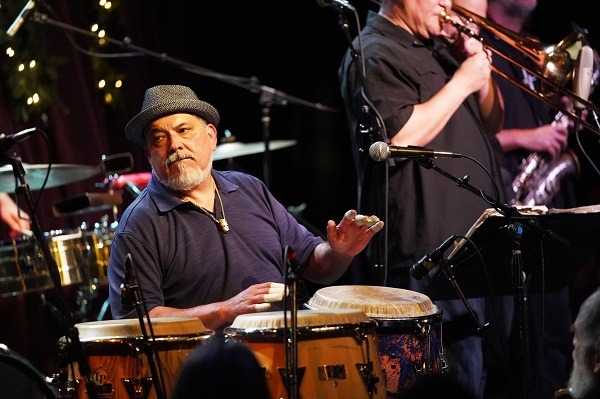
Willito playing the conga
Willito López playing the conga during a performance

In one of his last interviews, he talked a bit about maestro Ángel ”Maldonado” Maldonado, of whom he cherishes fond memories after his unfortunate death a few years ago. He mentioned that the sonero lent his support to him when he needed it most and was very grateful for that, while regretting that he was already no more in this world. 

Undoubtedly, he is a pride to his family and the artists who have had the opportunity to feature his talents for any project in the past. He has always left everything on stage with each of his works and we have no doubt that he will continue to do so as long as his arms allow him to delight the audience with his talent.   

Japhet Rodriguez  

Japhet Rodríguez is also a talented Puerto Rican-born percussionist who has a very interesting career behind him.  

The artist was initially invited by La Sonora Ponceña to participate in some projects in 1998, but after having shown what he was really made of, he continued working with the orchestra for years to come.   

Japhet with his timbales
Japhet Rodríguez with his timbales

It was in 2007 that he became an official member of the group and thanks to which he became popular all over the world while serving as the timbalero of La Sonora Ponceña.   

While it is true that he has reached a huge popularity worldwide thanks to the aforementioned Puerto Rican orchestra, Japhet has been part of many other important names in Latin music such as Sabor Ponceño, La Terrífica de Ponce, Costa Brava, Moncho Santana, Los Hermanos Moreno, Willie Crespo, Camilo Azuquita, Impacto CREA, Raphy Leavitt Y La Selecta, Manix Martínez, Rafy Class, Conjunto La Perla, La Tropicana de P.R., and Homenaje Matancero. 

Something very interesting about the musical career of this great artist is that all these groups to which he has belonged have not only been from Puerto Rico, but also from countries such as the United States, Panama and Colombia. This shows that his talent has not only shone in his native country, but also in other latitudes. 

In next editions, we will be talking a little more about other salsa exponents who have left our music in high, so you can not miss the section of Johnny Cruz in coming months. 

Read also: Remmberin g Domingo ”Tito” Gutiérrez’s career 

Johnny Cru ISM corresponde in New York City

René Latin Soul and his journey into music from his home country

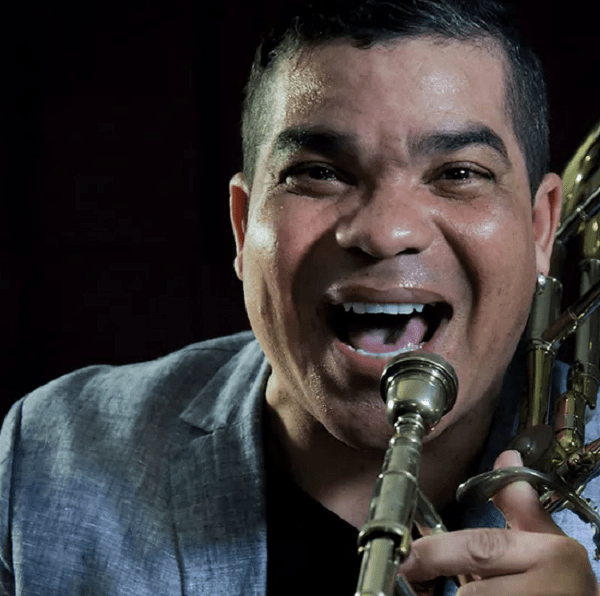
René Latin Soul 

After anything we have yet witnessed in the Latin music scene of the United States, we can say that it is undeniable that Cuba is an endless source of talent and passion for music, so this island can never be missing in International Salsa Magazine. On this occasion, it was the turn of producer, musical director, arranger, composer and trombonist René Latin Soul. 

René is a talented Cuban who has managed to gain a very important place in the music industry in this country and we wanted to know how he managed to get there. Do not miss the fascinating conversation we had with the artist.  

René playing the trombone
René Latin Soul playing the trombone during a performance

Beginnings in Cuba 

René Amet Campos Artigas was born in the province of Camagüey, specifically in the municipality of Nuevitas. He came to music from a very early age, as many of his relatives are musicians, including his father and grandfather. This led him to enroll in the music conservatory when he was only 10 years old. 

He confesses that he always knew he wanted this to be his profession and had no other career in mind for tomorrow, so he always did his best to excel as much as he could in the music business. 

Once he finished school, René entered the military for mandatory service and was part of the general staff band. He was always intended to move to Havana in order to make himself known as an artist and he finally did it to stay for a while and see how he was doing. 

During this time, he was working for several nightclubs that offered live music, but he did it with the trombone given by the army when he was in the staff band, since he just did not have enough money to buy one of his own.  

Unfortunately, the time of the ”Special Period” arrived and this crisis forced him to return to his native Camagüey. However, this was not the end of his dream.   

Upon returning, both René and his father started an artistic project which they named ”Valentín y Los del Caribe” and started working in tourism, specifically in a company called El Cuartón Club which had hotels in Acapulco, Puerto Vallarta and Ixtapa, Mexico.   

Canada and the United States 

While working with El Cuartón, René spent a long spell touring in the Aztec country, which gave him the opportunity to get to know other territories and other ways of doing things. In one of these trips, he made the decision not to return to Cuba and try his luck on new horizons.  

He lived in the capital of the aforementioned country for more than 12 years, during which time he worked as an instrumentalist and worked with several artists belonging to the salsa guild such as La India, Jerry Rivera, Grupo Niche, Oscar D’ León, Los Adolescentes, among many others.   

René on stage
René Latin Soul performing on stage

When he met the woman who became his wife, they started their romantic relationship and began making plans of life in common, between which Mexico fell a long way short, so it was time to put down roots elsewhere. At first, this new place would be Canada, but plans changed and the couple ended up leaving to the United States of America. 

René and his wife spent about eight months living in Canada, but immigration issues became very difficult for them from one moment to another, so it did not take long for them to relocate to the United States.   

René never thought to live here, since the Cuban government instilled an absolutely negative view of what this country represents in children from a very young age and he was no exception. However, all those opinions changed once the musician began to really get to know this nation. Today, he feels he has adapted perfectly and has been here for about six years, when he moved to this country to establish his family and career.  

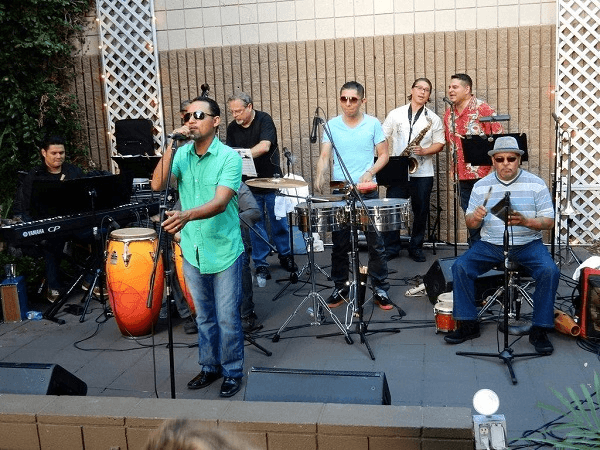
René Latin Soul & His Quartet 

Once René arrived in the United States with his wife, his situation was very complex as any immigrant’s, so he had to work on things that had nothing to do with music. In fact, he recalls he spent more than a year without playing the trombone because he could not devote himself to music at that time. 

That was it until he started playing trombone with the Kimbalai Orchestra, which he left in December 2021 and went to live in the city of Murrieta, one hour from San Diego. Once there he met Michael Mora, a friend who advised him to exploit the features of the city to start a solo project, which led him to start a solo career, which he finally did. 

As he made a name for himself, he was able to include other musicians in his project, which allowed him to build the quartet he has today. Although René is very happy with what he has accomplished so far, he plans to have a much bigger salsa band in the future.  

René and his piano
René Latin Soul in front of his piano

Music classes 

A very important part of René’s work with music is teaching and this was a point we found interesting to discuss.   

When asked if talent was natural or developed, he said natural. The artist thinks that the ability to play an instrument is innate in the musician, so this person only requires academic training to educate those gifts at a professional level.   

He finishes by saying that ”there is a very particular way of feeling the music and, if you don’t feel it that way, you can’t play it correctly. Time, tuning and melody are essential for anyone who wants to be a professional musician.  

Cuban talent despite the circumstances  

According to one of the descriptions provided by René’s website, the artist is one of the figures who demonstrates the virtuosity of Cuban-born musicians. Of course, considering that the island does not live the same normality as most countries in the world. 

About this, René said that ”clothes don’t make man. The most important thing to a talented person with an instrument is to focus on what he or she has to do and not look at anything around. There may be vicissitudes and shortages, but if you are focused on something you love, you have to find a way to improve and develop yourself in spite of everything”.  

In his case, the musician tells us that he had friends with travel opportunities who brought the most recent findings made in music and he was always interested in knowing these things to apply them to his own technique. 

Read also: Sizzling Summer Nights at the Autry Museum Of The American West 

  • « Go to Previous Page
  • Page 1
  • Interim pages omitted …
  • Page 63
  • Page 64
  • Page 65
  • Page 66
  • Page 67
  • Interim pages omitted …
  • Page 106
  • Go to Next Page »

International Salsa Magazine (ISM) is a monthly publication about Salsa activities around the world, that has been publishing since 2007. It is a world network of volunteers coordinated by ISM Magazine. We are working to strengthen all the events by working together.