• Skip to primary navigation
  • Skip to main content

International Salsa Magazine

  • Home
  • Previous editions
    • 2026
      • ISM / January 2026
      • ISM / February 2026
    • 2025
      • ISM / December 2025
      • ISM / November 2025
      • ISM / October 2025
      • ISM / September 2025
      • ISM / August 2025
      • ISM / July 2025
      • ISM / June 2025
      • ISM / May2025
      • ISM / April 2025
      • ISM / March 2025
      • ISM / February 2025
      • ISM / January 2025
    • 2024
      • ISM / December 2024
      • ISM / November 2024
      • ISM / October 2024
      • ISM / September 2024
      • ISM / August 2024
      • ISM / July 2024
      • ISM / June 2024
      • ISM / May 2024
      • ISM / April 2024
      • ISM / March 2024
      • ISM / February 2024
      • ISM / January 2024
    • 2023
      • ISM / December 2023
      • ISM / November 2023
      • ISM / October 2023
      • ISM – September 2023
      • ISM – August 2023
      • ISM July 2023
      • ISM Edition June 2023
      • ISM – May 2023
      • ISM April 2023
      • ISM March 2023
      • ISM February 2023
      • ISM January 2023
    • 2022
      • ISM December 2022
      • ISM November 2022
      • ISM October 2022
      • ISM September 2022
      • ISM August 2022
      • ISM July 2022
      • ISM June 2022
      • ISM May 2022
      • ISM February 2022
      • ISM January 2022
    • 2021
      • ISM December 2021
      • ISM November 2021
      • ISM October – 2021
      • ISM September 2021
      • ISM August 2021
      • ISM July 2021
      • ISM May 2021
      • ISM April 2021
      • ISM June 2021
      • ISM March 2021
      • ISM February 2021
      • ISM January 2021
    • 2020
      • ISM December 2020
      • ISM November 2020
      • ISM October 2020
      • ISM September 2020
      • ISM August 2020
      • ISM July 2020
      • ISM June 2020
      • ISM May 2020
      • ISM April 2020
      • ISM March 2020
      • ISM February 2020
      • ISM January 2020
    • 2019
      • ISM December 2019
      • ISM November 2019
      • ISM October 2019
      • ISM Septembre 2019
      • ISM August 2019
      • ISM July 2019
      • ISM June 2019
      • ISM May 2019
      • ISM April 2019
      • ISM March 2019
      • ISM February 2019
      • ISM January 2019
    • 2018
      • ISM December 2018
      • ISM November 2018
      • ISM October 2018
      • ISM September 2018
      • ISM August 2018
      • ISM July 2018
      • ISM June 2018
      • ISM May 2018
      • ISM April 2018
      • ISM March 2018
      • ISM February 2018
      • ISM January 2018
    • 2017
      • ISM December 2017
      • ISM November 2017
      • ISM October 2017
      • ISM September 2017
      • ISM August 2017
      • ISM July 2017
      • ISM June 2017
      • ISM May 2017
      • ISM April 2017
      • ISM March 2017
      • ISM February 2017
  • Download Salsa App
    • Android
    • Apple
  • Spanish

Biography

Eukaris Figeroa

Latin American / Venezuela / Caracas

Eukaris Figeroa. I don’t imitate Celia Cruz

Five years ago, Eukaris Figueroa dared to initiate an investigation into Celia Cruz. A work came out of that work, La guarachera del mundo.

Eukaris Figeroa
Eukaris Figeroa

Figueroa is also in charge of directing and producing the play. It explores from Cruz’s beginnings, in 1950, until his death, in 2003; addressing his personal life and ailments.

Where did that idea of ​​presenting the life of the sauce boat come from?

When I decided to launch myself as a singer 10 years ago, I visited his grave in New York and asked his permission, not to take his place, but to perpetuate the salsa genre. Later, I began to investigate his life and this montage emerged, which I am very proud of. This is the second season and we hope it will be as well received as the first.

Was it easy to interpret a character as mediatic as she?

Eukaris Figeroa Photo

There is no imitation here. There is, yes, a lot of admiration. And the public will realize this in the monologue of the piece, where they will discover things that she wanted to do, but could not and that she did not see on a stage either. Impersonators always make her old and fat. And no. Celia was also a very beautiful young woman.

Doesn’t her nickname “The sexy salsa babe” pigeonhole her and distance her from the image of Celia?

The fact that I have made myself known like this does not imply that I do not have training and that I do not worry about studying. It was the way I got them to notice me, and I did it.

But behind these curves there are many hours of work. An orchestra of 14 musicians. This montage that I am passionate about does not separate me from my career as a salsa singer. Everything is complemented to offer the best to the public.

Eukaris Figeroa Flyer

Son Cubano is one of the most popular musical styles in Cuba and Kiki Valera is one of its leading exponents

Over the last century, this style of traditional Cuban music has contributed to many other musical genres, including jazz, cha cha cha, mambo, salsa, songo and timba.

Cuban Son is one of the most popular musical styles in Cuba and Kiki Valera is one of its greatest exponents.

Cuban son is the music that made the Buena Vista Social Club worldwide stars in the late 1990s, but Kiki Valera comes from a family of musicians whose involvement with Cuban son predates BVSC by decades.

Kiki Valera is the eldest son of the famous septet La Familia Valera Miranda, a multi-generational traditional music group from Santiago de Cuba.

Since the 19th century, La Familia Valera Miranda has played an important role in Cuban culture by collecting and preserving the deep-rooted traditions of the legendary Sierra Maestra mountain region.

Their debut album, “Antología Integral Del Son”, released in 1982, helped initiate the explosion of interest in traditional Cuban music.

Kiki, like most of her family, is a virtuoso. A multi-instrumentalist, composer, arranger, sound engineer and producer, he is best known as one of the world’s best players of the Cuban cuatro, a medium-sized guitar with 8 strings grouped in sets of 2.

Kiki Valera is the eldest son of the famous septet La Familia Valera Miranda, a multigenerational group of traditional music from Santiago de Cuba.

Kiki learned the Cuban tres under the guidance of his father Felix as a child.

He later attended one of Cuba’s most prestigious music schools, the Esteban Salas Conservatory, in Santiago de Cuba and by the age of 15 was touring internationally.

Kiki continues to conduct, compose, arrange and perform internationally. She also performs and teaches in Seattle, Washington, where she contributes to the vibrant Pacific Northwest music scene.

His current project features several other internationally renowned artists, including Coco Freeman (former singer for Adalberto Alvarez y su Son and NG La Banda), vocalist Carlos Cascante (three-time Grammy Award winning vocalist for the Spanish Harlem Orchestra), trumpeter Alexis Baró (Cubanismo and Omara Portuondo) and bongocero Pedro Vargas (Barbarito Torres’ band). (Kiki Valera)

“Vacilón Santiaguero” is Kiki Valera’s second solo release in the United States after many distinguished years as the director of La Familia Valera Miranda in Santiago de Cuba.

He goes beyond his core group to present collaborations with some Grammy® award winning musicians and features his favorite trumpet players, some born in Cuba, some born in the U.S., but all with reputations jus????ficadas for playing Cuban music for love, if not DNA.

Son Cubano is one of the most popular musical styles in the world.

“Vacilón” is one of those words that doesn’t have a perfect English equivalent to Cuban Spanish, but something that’s a really good time (a little rum or aguardiente always helps).

So what sets this project apart from the vast mountain of excellent traditional albums already out there? Not only is there Kiki’s custom-made Cuban cuatro, which brings a unique texture to the sound, rather than a tres, but, in his jazz-influenced hands, you’ll occasionally hear twists and turns in his improvisations that you probably weren’t expecting when you first glanced at the song titles, which are mostly Cuban evergreens.

Thanks to Kiki’s creative arrangements, this is no mere recycling of covers of these classic songs.

Kiki is as exacting with the recording, mixing and mastering work as he is with the arrangements.

Much of the recording and mixing was done in Kiki’s custom home studio, and Grammy® winner Michael Lazarus mastered the project.

The result will be an audiophile’s delight, a reason, I might add, to want the physical product for your collection (Kiki Valera).

Kiki Valera – Vacilón Santiaguero (2024).

Tracks:

  1. Este Vacilón (Felix Valera Miranda)
  2. El Ají de Cocina (Felix Valera Miranda)
  3. Sobre una Tumba una Rumba (Ignacio Piñeiro)
  4. El Penquito e’ Coleto (Francisco Repilado “Compay Segundo”)
  5. Funfuñando (Arsenio Rodriguez)
  6. La Guajira (Olga de Blanck)
  7. Mari-Juana (Juana María Casas)
  8. Muñequita Feliz (DR)
  9. El Empanadillero (Teodoro Benemelis)
  10. Pájaro Lindo (Felipe Neri Cabrera)
  11. Dos Gardenias (Isolina Carrillo)
  12. El Cuarto de Tula (Sergio Gonzales Siaba)

Musicians:

Kiki Valera (Cuban cuatro, guitar, bass, harpsichord, maracas and backing vocals).

Pedro Vargas (congas, bongos and backing vocals)

Steve Guasch (Backing vocals)

Carlos Cascante (Lead vocals on tracks #1,#4,#5,#7,#9,#10,#12)

Francisco “Coco” Freeman (Lead vocals on tracks #2,#11)

Joshuah de Jesus (Lead vocal on tracks #3,#8)

Raquel Zozaya (Lead vocals on track #6).

Special guests:

Alexis Baró (Trumpet on tracks #1, #3, #4, #6, #9, #11).

Steve Mostovoy (Trumpet on tracks #1, #3, #3, #6, #11)

Michael Rodríguez & Jonathan Powell (Trumpet on track #8)

Pete Nater & Dennis Hernández (Trumpet on tracks #2, #5, #7, #12)

Brian Lynch & Thomas Marriott (Trumpet on tracks #1#0)

Leon Q Allen (Trumpet on track #4)

https://www.kikivalera.com/

Also Read: Yilian Cañizares, an excellent Cuban musician, studied in her hometown in the strictest tradition of the Russian school of violin

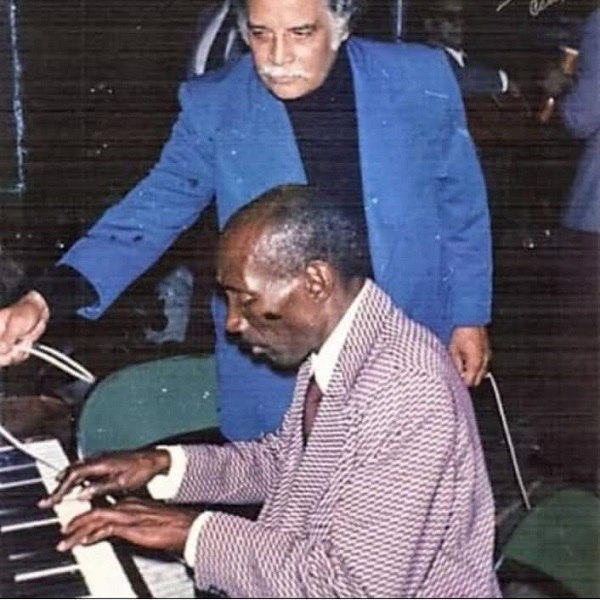
Ezequiel Lino Frías Gómez was an excellent musician, pianist, arranger and composer.

Ezequiel Lino Frías Gómez was born on April 10, 1915 in Havana, Cuba.

Lino Frías y Daniel Santos

Musician, Pianist, Arranger, Composer. He began his artistic career in the early 30’s, working with singer and composer Joseito Fernandez, in the orchestra of Raimundo Pla.

Later he became part of the Fantasía Orchestra.

At the end of the decade he worked with the Septeto Carabina de Ases.

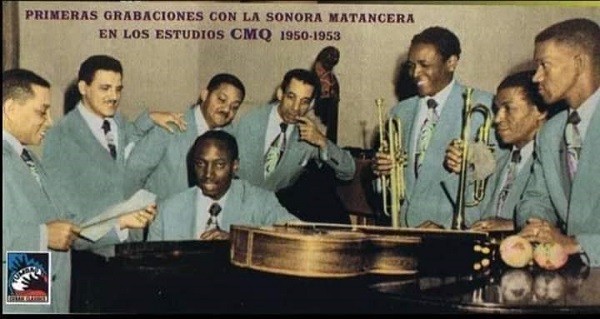
Some time later he joined Arsenio Rodríguez’s Conjunto Todos Estrellas in September 1940, remaining in it until November 1943, leaving his place to Adolfo Oreilly Panacea, to join the Sonora Matancera in 1944, until 1976, where he contributed in an important way both in the composition and musical arrangements, imposing his particular piano solos.

In 1974 he helped found with Armando Sánchez the Conjunto Son de la Loma.

Upon his retirement from La Sonora Matancera, the Puerto Rican producer René López invited Lino, together with Israel “Cachao” López, to revive the descargas he had already recorded in the fifties, assembling a Típica together with “Cachao”.

Sonora Matancea
Sonora Matancea

In his independent years Lino worked with Johnny Pacheco and Carlos “Caito” Diaz.

He accompanied great artists in recordings, in that period in New York, such as La Lupe, Olga Guillot, Daniel Santos, Carmen Delia Dipini, Bobby Capo, among others.

He died on May 22, 1983 in New York, USA.

Lino Frías, who for twenty-two years was the pianist of the Sonora Matancera, composed the very popular Mata Siguaraya in 1951.

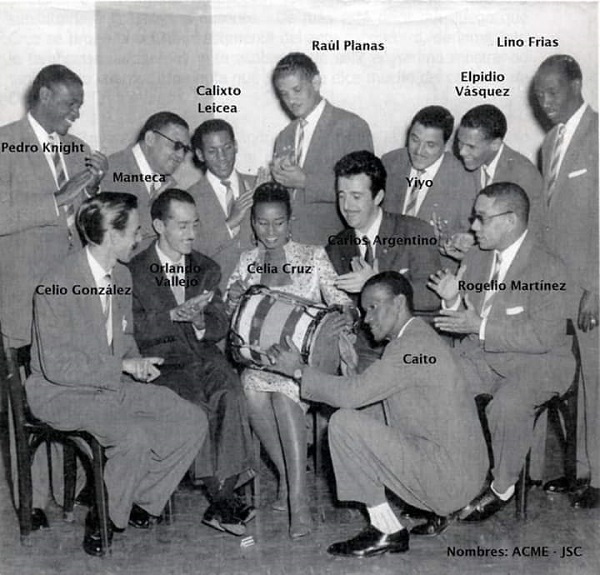
One of the most popular photos of the Sonora Matancera.

In it we can see Lino Frías from his piano looking at Celia Cruz, great interpreter of Mata Siguaraya, together with Benny Moré and Oscar D’León.

Ezequiel Lino Frías Gómez was born in Havana and died in New York in 1983.

Lino studied piano at the Havana Conservatory. For a time, in the 1930s, he played in the Raimundo Pia y Rivero Orchestra, whose singer was Joseito Fernandez. He would later play in the Orquesta Fantasía.

In 1939 he joined the Septeto Carabina de Ases, led by Mariano Oxamendi, guitarist and second voice, and with Bienvenido Grande, singer and harpsichord player, Nilo Alfonso, double bass, José Bergerey, maracas and third voice, Ramón Liviano Cisneros, tres player, Florencio Coco Morejón, bongos player, and Félix Chappotín, trumpet player.

In 1944, Lino joined the Sonora Matancera as a pianist, where he remained until 1976.

In the 1960s, Frías joined the movement that created the so-called salsa music, alongside Fania All Stars, Johny Pacheco, Bobby Rodríguez, Carlos Patato Valdés y Caíto, Carlos Manuel Díaz (Matanzas 1905-New York 1990), among others.

Don Adolfo, a Puerto Rican timbalero, worked with Lino Frías in a group that included some of the most renowned musicians and singers of the 1950s and 60s: Olga Guillot, Daniel Santos, Lucecita Benítez, Bobby Capó, Marco Antonio Múñiz, Carmen Delia Depiní, Chucho Avellaneda, Sergio González Siaba and La Lupe, among others.

In 1974, parallel to his work as a pianist in the Sonora Matancera, Lino Frías created the ensemble Son de la Loma, with the participation of Cuban-Niuyorquinos such as Marcelino Guerra, Rapindey (Cienfuegos 1914-Spain 1996), author of Convergencia, and Pedro Rudy Calzado (Santiago de Cuba 1929-New York 2002).

Celia Cruz y La Sonora Matancera

Due to arthritis, in 1976 Lino left the Sonora. His place is taken by Javier Vázquez, (Matanzas 1936), son of the double bass player Pablo Vázquez.

It is said that the death of Lino Frías, in 1983, was a hard blow for his great and faithful friend Celia Cruz (Havana 1925-New Jersey 2003).

In addition to Mata Siguaraya, Lino Frías composed Pan de piquito, Óyela, gózala, Vamos todos de panchanga, Cañonazo, Vive la vida hoy, Suena mi bajo, Convencida, Afecto y cariño, Has vuelto a mí, Baila Yemayá.

Also Read: Israel “Cachao” López Sobrado en fama y respeto en los años setenta se dedicó a mantener la tradición a nivel supremo

Veruska Verdú woman full of Barloventeña roots currently doing artistic work in Peru

On January 26, 1993 was born in the city of Caracas Venezuela, Cristina Veruska Verdú Mendoza, a woman full of Barloventeña roots.

Currently doing artistic work in Peru,

Veruska Verdú woman full of Barloventeñas

Premiering the songs “ME CANSE DE TI, LA NEGRITA, Y PASITO A PASITO” This is the first advance of “Caminando”, solo album that the Venezuelan artist plans to release this year and which will include songs of her authorship.

Third finalist of “LA VOZ PERU” season 2022, a program of great artistic relevance, where for the first time in the program a participant arrives as a foreign singer to the final.

Singer in Tonny Succar’s orchestra in Peru with Mimy Succar.

Special participation in the video clip, QUIMBARA of the producer Tonny Succar.

Participates hand in hand with the great musician and international producer Tito Manrique creator of the Salsa criolla, nominated to the Latin Grammy and winner of VIÑA DEL MAR. Participating in a solo track on his album Abriendo Caminos with the song and video of the song Taita Bilongo (Peruvian salsa/afro fusion).

From the production of Puerto Rican composer Eduardo Zayas and his project ¨EZ la Banda¨ sings with another legend of salsa singer Rafy Andino singer of the MULENZE Orchestra the song ¨Sabor y Sandunga¨, also recorded a song with Luchito Muños “Dos puntos de vista”.

Veruska fue invitada especial en dos temas de la producción llamada “Huerta de Soneros” con el tema ¨Yo soy la Rumba¨ y otro junto al legendario cantante Johnny Vega (cantante de Cortijo y su Combo) ¨Nació para cantar¨, igual del compositor Eduardo Zayas.

Veruska Verdú, a woman full of Barloventeño roots, is currently doing artistic work in Peru.

Also invited to the production of producer Gerson Zayas, performing the song “Cuando deje de amarte”.

Works with producer and pianist Kike Purizaga, Mario Cuba, singer Carlos Mosquera, with Juan Medrano “Cotito” known as the voice of the cajo of Peru and many more.

Along with producer Alberto Crespo and Daniel Espinoza, recording choirs for the film of Ricardo Rey and Bobby Cruz with Rodrigo Mendoza and Wilmer Lozano.

She is invited to work with international musician Alfredo Naranjo in his project “El Guageo” with singer Edgar Dolor Quijada.

Later they work together with the great Venezuelan musician Nene Quintero in the “Be Jazz Sessions” project also winner of the Pepsi Awards 2019 which sold out all their concerts during the framework of its activities which had international reach.

She sings as a special guest with the classic Sonero del Caribe.

She shares the stage as a duo with Rodrigo Mendoza, singer of Dimensión Latina and of great worldwide trajectory.

She is part of the project “Salsa Master” with the participation of Edgar dolor Quijada, Marcial Isturiz, Rodrigo Mendoza and percussionist Cheo Navarro.

Veruzska was also a special guest in the orchestra “RUMBEROS DEL CALLEJON” of Carlos Padron in which she participates in its production along with the staff of artists such as Wilmer Lozano, Rodrigo Mendoza, Gonzalo Diaz, Memo Arroyave, and international artists such as Tito Nieves, Gilberto Santa Rosa, Maelo Ruiz and Domingo Quiñonez.

He began his musical career when he was only eight years old in the Afro-Venezuelan genre (traditional Venezuelan Afro music). Where he participated in various festivals being in first place in each of them.

Later he joined the ranks of the prestigious “Orquesta Latino Caribeña” of the orchestra system which is directed at that time by the great maestro Alberto Vergara, orchestra with great projection and impact in the country (Venezuela), participating in major festivals in countries like the United States and Colombia captivating the public with his voice.

Pasito a Pasito · Veruska Verdú

All the power of her voice, the flavor and the feeling.

Songs from the album that she is recently finishing the recording of

La Negrita

Pasito a Pasito

Me Canse de ti

It is a great joy for me to share this event with you. My dear friend Veruska Verdu does not stop growing and now she is going all out with the help of Takina Records to make a Celia Cruz Tribute in style.
By: Alberto Valles Salazar.

Also Read: Virginia Ramirez is the artist of the XXI century, the Princess of Piano and Voice, the hope that will save the new generations of anti-music

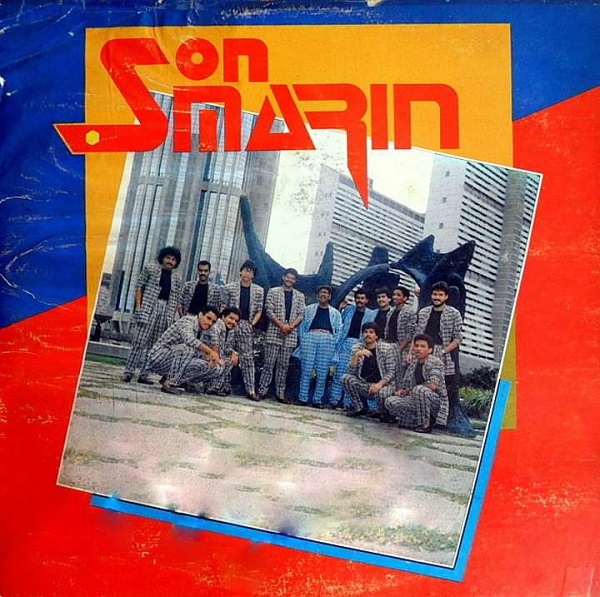
From Parroquia San Agustín del Sur is Son Marín ¡Aquí Empezó la Cosa…!

In order to delve a little into what the group Son Marín was, we must necessarily refer to the late musician Jesús Blanco or “El Pure” as everyone called him.

Jesús Giselo Blanco was his first name, born in Mirandino, but settled in Caracas when he was still a child.

To talk about his musical beginnings is to evoke part of the history of the Son in our country, since “El Pure” before arriving to the San Agustin Parish had already participated with old groups such as Conjunto Rex and the well remembered Sonora Caracas.

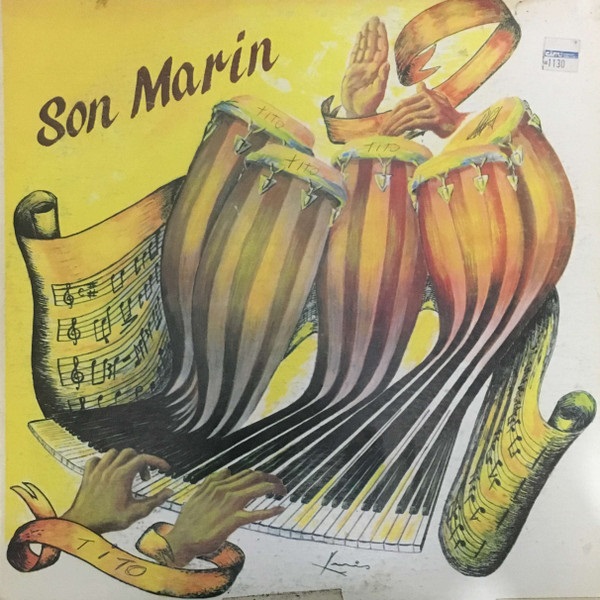
Son Marín ¡Aquí Empezó la Cosa...!!
Son Marín ¡Aquí Empezó la Cosa…!!

El Pure Blanco was recognized in San Agustin Marin as a true builder of musicians since, with his work as a musical artisan, besides having created the first music school in Marin, many young people were nurtured and formed with his teachings.

Jesús “el Pure” Blanco was a key character in the formation and integration of several groups in Barrio Marín, among them we remember the aguinaldo group Los Juveniles, Los Gaitetricos, Los Super Cremas, La Nueva Generación and of course his biggest dream, the “Son Marín”.

The group Son Marín had several stages, starting in 1981 when in Barrio Marín an improvised musical group was organized to receive at the International Airport of Maiquetía the Grupo Madera that was arriving from an important presentation in an International Festival in the city of Avignon, France.

That small group was formed by: Eliel Rivero (trombone), Jorge Rondón(flute), Enrique Palacio (Bass), Arnaldo Blanco(tres), Renny Mendoza (Bongó), José Luis Mendoza (Tumbadora) Luciano Reyes (singer), Pablo” Pabloco” Martínez (singer) and Jesús “Pure” Blanco was the director.

As fate would have it, that group, which was only a provisional “vente tú” organized by Pure, later became another of the emblematic groups of San Agustín, SON MARÍN.

In particular we remember pleasantly the participation of Son Marin as a representation of the San Agustin del Sur Parish, in the Afro-Caribbean Music Festival “La 5ta Esencia de la Salsa” held on June 17, 1983 at the Nuevo Circo de Caracas, by then the group had not yet recorded their first album, but we had already had the opportunity to listen to a demo with a couple of numbers that came to promote the announcer Hector Castillo in his radio program on the now defunct Radio Aeropuerto.

Son Marin
Son Marin

Over time the group grew and new instruments were added; and of course the inclusion of other musicians, such is the case of Jesus Guzman the popular “Paicosa” who enters as guitarist to later become the bassist and musical director of the group, it was the idea of “Paicosa” with the support of “Pabloco“, to expand the group’s equipment incorporating Hugo Olivero’s sax, Josue Silva’s trumpet, Randal Monasterio’s piano, while the percussion was reinforced with Juber Ramirez.

Already with a more solid group and with a view to a greater projection within the Venezuelan salsa music scene, the only thing missing was the recording of the album, which began in September 1986, with the collaboration of Mauricio Silva in the arrangements and the inclusion of several guest musicians.

Unfortunately, a month after the recording began and without being finalized, Jesús “el Pure” Blanco died, however his voice and feeling were reflected in this album that was finally released in 1987, quickly gaining strength and penetrating the taste of the music lover public after the composition of Pablo Martínez, AQUÍ EMPEZO LA COSA, a tribute to this neighborhood that has given so many important musicians, a cradle of soneros as Gonzalo Martínez says in the song.

The voice of Pure Blanco was recorded in the song LA CAÑA; all the numbers were original pieces except for the song “Sin Compromiso” by the Brazilian Chico Buarque, but with an excellent adaptation of the lyrics by Pablo Martínez and Joseito Romero.

To end this biographical sketch, I leave here part of the thanks contained in the back cover of the album from Son Marín.

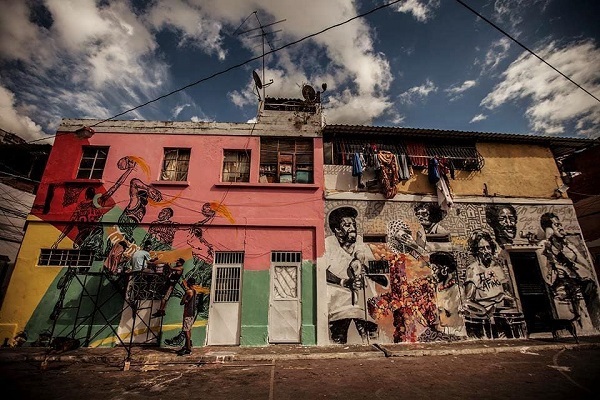
San Agustin del Sur
San Agustin del Sur

JESUS BLANCO “Pure” every joy lived with this work, makes us feel you more.

SON MARIN… This is where it all began!!! (1987) Mucer International DL-7140

SIDE A

1.- HERE I STARTED THE THING (Pablo Martínez)

2.- SIN COMPROMISO (Chico Buarque) Lyrics Adaptation: Pablo Martínez/Joseito Romero

3.- YOUR HOLY BLESSING (Pablo Martínez)

4.- EL BUHONERO (Pablo Martínez)

SIDE B

1.- LA CAÑA (Rafael Quintero/Pablo Martínez)

2.- RECUERDOS (Rafael Quintero/Pablo Martínez)

3.- VOLVAMOS A EMPEZAR (Rafael Quintero/Pablo Martínez)

4.- BENITO EL CHICHERO (Jorge Rondón)

Members:

Randal Monasterio (Piano)

Arnaldo Blanco (Tres)

Jesús Guzmán (Bass, Conductor)

Josue Silva (Trumpet)

Hugo Salinas (Trombone)

Hugo Olivero (Saxophone)

Jorge Rondón (Flute)

Jimmy Fariñas (Congas)

Fidel Martínez (Bongo/Campana)

Juber Luis Ramírez (Timbales, bongo, bell)

Gonzalo Martínez (Vocal)

Pablo Martínez (Vocal)

Jesús Blanco (Vocal)

Pablo Martínez/Gonzalo Martínez/Arnaldo Blanco/Mauricio Silva/Daniel Silva (Backing Vocals).

Guest Musicians:

José Pepe Vera (Saxophone)

Raúl Agras (Trumpet)

Mauricio Silva (Piano/Trombone)

Felipe Blanco (Conga/Güiro)

José “Cheo” Escobar (Conga)

Douglas Guevara (Tumbadora)

Daniel Silva (Bass)

Other Credits:

Arrangements and Musical Direction: Mauricio Silva

Recording Technician: Fernando Hernández

Sound Engineer: Fernando Hernández and Mauricio Silva

Executive Production: Wolfgang Roldan

General Direction: Mauricio Silva (Cortesía Sonográfica)/Son Marín (Mucer Internacional)

Recording Studio: Sonomatrix

Photos: Pedro Hernández.

Also Read: If you want to listen to Tasty Salsa tune in to Ritmo Sabor y Salsa with Nesmary J. Gómez

  • « Go to Previous Page
  • Page 1
  • Interim pages omitted …
  • Page 12
  • Page 13
  • Page 14
  • Page 15
  • Page 16
  • Interim pages omitted …
  • Page 21
  • Go to Next Page »

International Salsa Magazine (ISM) is a monthly publication about Salsa activities around the world, that has been publishing since 2007. It is a world network of volunteers coordinated by ISM Magazine. We are working to strengthen all the events by working together.