• Skip to primary navigation
  • Skip to main content

International Salsa Magazine

  • Home
  • Previous editions
    • 2025
      • ISM / November 2025
      • ISM / October 2025
      • ISM / September 2025
      • ISM / August 2025
      • ISM / July 2025
      • ISM / June 2025
      • ISM / May2025
      • ISM / April 2025
      • ISM / March 2025
      • ISM / February 2025
      • ISM / January 2025
    • 2024
      • ISM / December 2024
      • ISM / November 2024
      • ISM / October 2024
      • ISM / September 2024
      • ISM / August 2024
      • ISM / July 2024
      • ISM / June 2024
      • ISM / May 2024
      • ISM / April 2024
      • ISM / March 2024
      • ISM / February 2024
      • ISM / January 2024
    • 2023
      • ISM / December 2023
      • ISM / November 2023
      • ISM / October 2023
      • ISM – September 2023
      • ISM – August 2023
      • ISM July 2023
      • ISM Edition June 2023
      • ISM – May 2023
      • ISM April 2023
      • ISM March 2023
      • ISM February 2023
      • ISM January 2023
    • 2022
      • ISM December 2022
      • ISM November 2022
      • ISM October 2022
      • ISM September 2022
      • ISM August 2022
      • ISM July 2022
      • ISM June 2022
      • ISM May 2022
      • ISM February 2022
      • ISM January 2022
    • 2021
      • ISM December 2021
      • ISM November 2021
      • ISM October – 2021
      • ISM September 2021
      • ISM August 2021
      • ISM July 2021
      • ISM May 2021
      • ISM April 2021
      • ISM June 2021
      • ISM March 2021
      • ISM February 2021
      • ISM January 2021
    • 2020
      • ISM December 2020
      • ISM November 2020
      • ISM October 2020
      • ISM September 2020
      • ISM August 2020
      • ISM July 2020
      • ISM June 2020
      • ISM May 2020
      • ISM April 2020
      • ISM March 2020
      • ISM February 2020
      • ISM January 2020
    • 2019
      • ISM December 2019
      • ISM November 2019
      • ISM October 2019
      • ISM Septembre 2019
      • ISM August 2019
      • ISM July 2019
      • ISM June 2019
      • ISM May 2019
      • ISM April 2019
      • ISM March 2019
      • ISM February 2019
      • ISM January 2019
    • 2018
      • ISM December 2018
      • ISM November 2018
      • ISM October 2018
      • ISM September 2018
      • ISM August 2018
      • ISM July 2018
      • ISM June 2018
      • ISM May 2018
      • ISM April 2018
      • ISM March 2018
      • ISM February 2018
      • ISM January 2018
    • 2017
      • ISM December 2017
      • ISM November 2017
      • ISM October 2017
      • ISM September 2017
      • ISM August 2017
      • ISM July 2017
      • ISM June 2017
      • ISM May 2017
      • ISM April 2017
  • Download Salsa App
    • Android
    • Apple
  • Spanish

Europe

Wilmer Sifontes “Music is one of the most important things in society”

Music has no boundaries, it has the magical power to bridge social and cultural divides. Such is the case of percussionist Wilmer Sifontes, born in Caracas on March 21, 1968, a year of great events worldwide, a native of the parish of La Vega.

In 1992 he travelled to the United Kingdom for the first time to participate with the Entreverao Group in the World Music Festival “Spirit of The Earth” of the BBC in London.

Thanks to his (Wilmer Sifontes) participation with this group, he got several offers to return to the United Kingdom, so from 1996 he decided to settle down definitively in that country.

His musical duality has allowed him to work with different musical groups and bring the intoxicating rhythms of the American continent to those latitudes. He tells us that; “Fortunately, music is a universal language, it is the flag that one carries and allows you to make your way in other spaces”.

Wilmer, sometimes we imagine that the passion for music comes from a family inheritance, I see that this is not the case with you, how were your musical beginnings?

“In my family there are no musicians, however, as a child I always listened to music, on the way to my house there were places where the orchestras rehearsed, and that I liked it, I started playing salsa, it was always my forte, the music worm began at 10 years old, when the theme of Pedro Navaja with Ruben Blades and Willie Colon was in fashion, in the classroom a classmate imitated that little grave on the desk, this impressed me so much that from that moment the message came to me and I said -this will be my thing-“.

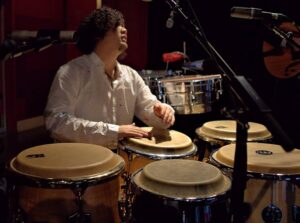
Wilmer Sifontes and his drums

That would be his entrance to the world of music

 “Yes, that was a message -but look at it-, I was a sportsman -I played Volleyball and Basketball-, and my sportsman friends wanted to be musicians, they were all adults and I was always with them as a boy, but they had no musical skills, no instruments, this prompted me to look for someone who would help me get into music, so, through my cousin I met the bassist José Machado

-he belongs to a family of musicians from La Vega-, they were my first teachers, they were always rehearsing and I saw, -a visual teaching – because I was a kid, they had a Cuban Son group called “Los Machados”.

At some point he played with them

 “After a while we started playing with the “Machados”, people were impressed to see such young boys playing, from him I received my first drumsticks, although I wanted to play bongo”.

How was that evolution?

 “In the neighborhood I continued with different groups, then with my cousin we created the “Orquesta La Conclave” and here we developed, we played in all the cultural events”. “We were rehearsing at Catia and Jesús Gómez -one of the singers of Sonero Clásico del Caribe- was always passing by and one day he told us that he needed a timbalero and a pianist, that if we wanted to work with him and we said yes, they played every night at La Caneca, a very famous place that was on Sucre Avenue in Catia”.

“This was my first night job, then I went to Silencio and played in different clubs”.

Wilmer Sifontes in the company of various artists

He is an empirical musician

“I made several attempts to study but… It was a little difficult, there were very rigorous classical schools at the time and I could not enroll, in one I went – La Lamas- together with my cousin, we took the exam and they scratched us (laughs), it is a very nice anecdote, we both sang without knowing the Black Tomasa”.

How does it come to perfection then?

 “I was playing by ear, it wasn’t something formal, as he already works in the nights in the clubs, a friend told me that in the Central University of Venezuela, Alberto Borregales and Orlando Poleo were giving classes, when I arrived I saw a great amount of people and I said: -whoa, here they are not going to accept me with that crowd- by chance, the teacher Borregales, makes a small group due to the little space that there was in the classroom, and at that moment I was going to evaluate them to decide who was left and who was not, fortunately I passed the test and I stayed”.

The experience of the street helped him

“(laughs), yes.”

Formally, Borregales was their teacher

 “Yes, but my first teachers were the Lp, besides the radio, I listened to a program called “Latin America the Cosmic Race”, with Borregales I entered with a greater discipline, he taught me to analyze, he indicated us what to read, what to listen. Later I was with Poleo in Caricuao, then in San Agustín and eventually went to Sarria. In the neighborhood I learned from Carlos “Tabaco” Quintana, he was one of my favorites, he was my inspiration, he was a timbalero with a terrible swing, excellent, in the neighborhood there were many good ones”.

“Apart from them I also learned from; Daniel Milano Mayora, Jesus Milano Palacios, in the Aquiles Nazoa Library -of Caricuao-, the Bigott Foundation and the Grupo Autóctono de la Vega”.

How was that jump from salsa to folklore?

 “I was offered to join the Grupo Autóctono de la Vega, with a great trajectory -it must be 40 or 50 years old by now- there is no role for the amount of people who have passed through there, it is the first group that makes the San Juan demonstrations in Caracas, this is from the Rivas and Ochoa family, it was my first school of folklore, they did dances, sports and then it was dedicated only to folklore music, both have been my teaching, I did not leave either of them”. “Then I played with many other folk and salsa groups, music is one of the most important things in society.”

The Grupo Autóctono de la Vega opened its doors to him, but the Agrupación Entreverao marked his future

“Yes, Entreverao marked my future, let’s say it was a show group, a quartet, its musical structure was very particular, harp, bass, drums and singer, then the percussion was introduced, the percussionist Rhay Herrera was their Director, I got a lot of experience with this group, we had a lot of work and learning, with them we made the first trip to the UK in 92”.

Wilmer Sifontes on stage

How did you decide that London would be your destination, why not another place more tropical, warmer, you did not think that you would face another culture, another language, another climate?

 “I was playing with Erick Franchesky, at that time he had 3 songs stuck in New York, we were going to go four or five of the band, it was almost confirmed, but it didn’t happen, music is like that, sometimes it offers you villas and castles and tomorrow you have nothing.” “I also had other proposals to come to the United Kingdom, the first thing that came out was this, that is, my destiny wanted me to come here”.

“Being out of your country, you learn other things, and that’s one of the particularities of my work, you learn to be more tolerant with people, as I know a lot of folklore from other places has allowed me to arrive, the culture is different to ours, is strong above all if you do not master the language, even if it is the basics, the climate if it was a shock, this is a fridge, (laughs)”.

I can’t imagine the English dancing and listening to Salsa, do they like the genre?

 “In the 90’s Salsa was very fashionable around here, there were many places to play, the acceptance of the music is excellent, when the Salsa boom, everyone wanted to learn to dance it, there are clubs to learn to dance, they have fallen in love with Latin American culture, they have been very receptive to those we have come to work with”. “I am the first Venezuelan to make a legal Folkloric Group in this country”.

Tell us a little about that project; AfroAmerica Project

 He founded it in 2007, it is an official group of typical and traditional Afro-Venezuelan music, people love Latin American music, they receive it very well, the name is due to a magazine that Jesus “Chucho” Garcia made, which speaks of Afro-Cuban music”.

 He continues to work with this project

“Yes, it is a group like Un Solo Pueblo, 90% is Venezuelan music, fulia, tambor, parranda, Calipso, Larense music, there are people who are outside Venezuela and do not know their music, then, we must show what we are, show our culture”.

Photo of Wilmer Sifontes and his instruments

What groups have you worked with in the UK?

 “Any number of bands, when I arrived in the UK I started with a man named Kora, he played an African harp, his band was World Music, his music was a mix of African rhythms and the idea was to play Latin American percussion, as I have the virtue of playing different styles of music work with him”.

“Although I did a lot of Salsa in the early years, the other bands I remember are Conjunto Sabroso, Hussein Zahawy, Tumbaito, Ensamble Criollo, La Papayera, Salsa Nueva, The Voices of Naturale, La Charanga Rivera, Tango Tierra, Ensamble Criollo, Clara Rodríguez, Ola Onabule, AfroAmerica Project, Cubanito, Chacón y Su Timba, Bahareque, Salsa Céltica, Kora Colours, Los Charlys Orchestra, Classico Latino, Bilongo all Stars, among others”.

It’s easy for him to move through different genres

“Yes, I owe this to my country, thanks to all that learning I have been able to do so many things and share with so many people in different parts of the world.”

Thanks to this duality you have worked with and accompanied different artists, which ones do you remember?

“Among those I remember are Herman Olivera, Willie González, Maelo Ruiz, José Mangual Jr, Luisito Carrión, Roberto Torres,Tony Vega, Pedro Brull, Tito Gómez, Tito Nieves, Cano Estremera, Giovanni Hidalgo, Andrés Cepeda, Aterciopelados, Leroy Burges, Rodolfo Arcardi, Henry Fiol, Alci Acosta, and the Bands and groups in Venezuela are; Orquesta la Grande, Catatumbo, Entreverao, Criollo y Sabroso, Orquesta la Raza, and with whom I have participated are; Grupo Cosecha, Grupo Autóctono, Jesús Ruiz, La Gran Compañía and Eric Franchesky -who- among many others”.

Wilmer Sifontes in the studio with his instruments

Celtic Sauce, explain that to me, it sounds a little strange

“It’s a Scottish group that mixes Celtic music with Salsa, with them I started doing substitutions for the timbalero, it’s very nice and interesting, they use the traditional instruments of Scottish Folk and the instruments of Salsa and Latin Jazz, they have also mixed it with pop, with rock, with Indian music, that gives them a unique and characteristic sound to this group, with this group I have traveled the world”.

Another band you have worked with is Sidestepper, very famous for fusing elements of Antillean and Colombian music with electronic music.

“Yes, the band was formed in Colombia, by the English producer Richard Blair, he revolutionized the traditional sounds of the region by mixing them with avant-garde sounds, with them I made an interesting work”.

Tell us about the Salsa Nueva Project

“That is the project of the Venezuelan pianist Elena Riu, is the fusion of Salsa with classical arrangements, you can be listening to a kind of montuno, a tumbao’ on the piano and the minute it disappears and leaves a passage well classic, is Latin in classical music, had original themes, is a theme that is called sal-si-ta -so separated-, had songs by Ruben Blades, Ismael Rivera, very cool.

“She needed a rhythmic element and invited me to accompany them, two months later we recorded an album in a church”.

 How do you feel about conducting one of the most popular bands in London, El Conjunto Sabroso?

“It has given me a lot of foundation and satisfaction, it was founded by Mrs. Luisa Elena Caicedo, since I arrived here I started to work with them, she listened to my references and called me to make substitutions, then I was their director and assistant director”.

Wilmer Sifontes in the studio

With you, the saying goes… No one is a prophet in his own land

“I think that yes, many people have been prophets, but… after death or after many years -laughs-, I don’t know, at this moment it is so difficult to put a definition to this, although I believe that nobody is a prophet in his land”.

From whom or from whom has he taken his musical influence?

 “There are several, the list is long, Carlos “Tabaco” Quintana, Orlando Poleo, Alberto Borregales, Alfredo Villamizar, Orestes Vilato, Tito Puente, Dave Wackel, Ray Barreto, Un Solo Pueblo, Guaco, Paquito de Rivera, Giovanni Hidalgo, Paoli Mejias whom I had the pleasure to meet and accompany, El Trabuco Venezolano, La Fania All Star, Irakere Orchestra, and Puerto Rican and New York Salsa, among many others”.

How has your musical growth been?

 “I have learned a lot from each culture, from the Colombian, Cuban, Argentinean, African, knowing the folklore of other places teaches you a lot, sharing with people from all over makes you grow and learn every day, this is part of the particularity of my profession.”

How do you see the market right now, there is a great variety of music, everyone has their own style, what do you think of all this new, but sometimes not good?

 “I don’t know if it’s taking a turn or not, the truth is that Europe is different, it has another kind of market, which is not that I’m involved, previously there were many festivals, pop and rock are the popular music of this country, but, reggaeton has been influenced by society, it has been injected with a lot of money, apart from the impact of social networks, it reaches more people, social networks have changed the way music is sold in the world.

“People are scared of reggaeton, for me it depends on who is doing it, the market has changed because of the networks, anyone makes music, anyone plagiarizes music from others, we are in a time of change and music does not escape from it.”

What do you think about tributes and copies, is the musician’s creativity running out?

“When people are alive it is always good to highlight their contribution to the world, there will always be a reference to someone, but it is good that people are creative, and there are the brazen ones who shoot the songs and put other lyrics on them, it is like winning people over with other people’s work”.

“The musical genius has not declined, what happens is that there are no promotions, people who do not do commercial work, it costs a little more to reach, fight against the great machines that bet on other things, musical geniuses are born for generations, are counted.”

Wilmer Sifontes and his records

The first production of the Conjunto Sabroso is entitled “Ya tengo lo que quería, realmente”

 “You never get to have everything you want, but at that moment, we had what we wanted, in that production there are arrangements by Naty Martínez”.

Among your personal projects, which ones would stand out and what new proposals do you bring to the public?

“I was the founder of Ensamble Criollo, we still work with this, AfroAmerica Project, Wilmer Sifontes y Su Combo Caribe, Will Sifontes and his Latin Sound and I’m still working with Conjunto Sabroso as musical director, besides, I’m making a solo album, -let’s say it’s called Latin Jazz- it’s a mix of everything, of my musical career, I already have 3 numbers, there will be duets, quartets, guests, the production is going to be called “Handmade”.

If you were to choose between folklore and salsa

“I’ll take them both, they’re different loves, I still do folklore, salsa and fusions.”

What recommendation do you have for the relay generation

“My recommendation is that they prepare themselves, musically, but first of all their idiosyncrasy, we have to have very clear the bases of what we are and develop them with modern techniques and other elements from other countries, to have discipline, today it is easier to have the information, there are more institutes, the internet”.

Wilmer Sifontes
Wilmer Sifontes


By Eling Blanco, ISM Journalist Correspondent, Caracas, Venezuela


La Candela Salsa Orchestra

La Candela Salsa Orchestra, the band is made up of eight musicians settled in Tenerife Canary Islands

La Candela Salsa Orchestra - La Resistencia
La Candela Salsa Orchestra – La Resistencia

La Candela is a small independent orchestra that in recent years has made a place for itself among the preferences of salsa dancers.

Her proposal is aimed at “hooking” the dancer with the original rhythms of salsa such as son montuno, guaguancó, mambo or chachachá, recovering the sound of the era in which what is known today as Salsa was forged.

The band is made up of eight musicians based in Tenerife (Canary Islands).

Its target audience is the salsa dancer on1 & on2, a great consumer of this type of music.

However, they have also conquered the hearts of the salsa music lovers who are staunch consumers of hard sauce.

La Candela Salsa Orchestra

The live La Candela show is a roller coaster of sensations that aims to spread joy and good vibes with a varied repertoire in terms of the danceable rhythms that are included within the salsa genre.

With him they have been presented in Spain and in other European countries such as Germany or Switzerland throughout these five years of activity.

La Candela’s style is inspired by the repertoire and execution style of the master Joe Cuba and his Sextet.

They have brought back to life some of their best classic songs that are still a reference for the dancer today.

With this spirit, her first musical project was born: On Fire, which was released in November 2015 and was a very good business card.

The album includes some classic songs by maestro Joe Cuba, such as “La Palomilla”, “Clave Mambo” or “El Ritmo de Joe Cuba”, along with self-written songs such as our first two singles, entitled “Es Guaguancó” and “For her”.

Members of La Candela Salsa Orchestra

In 2017 and thanks to the executive production of Batlei Productions, a new project by La Candela was born with a closer sound and with many new features, without leaving behind our essence, headed by the first single titled “Se Prentó”, On Time moves between the primitive and the new, rescuing jewels and offering deserved tributes to some of the great pioneers of Afro-Cuban danceable music, like Tito Rodríguez or Frank Grillo “Machito”.

They are currently preparing what will be their third studio album with a new line-up of Musicians

We are also in the process of reserving the album “On Time” with a crowdfounding project, in which 300 LPs of this production have been put on sale in a limited edition: https://qrates.com/projects/20837- on-time In addition, we have launched a merchandising store where you can find all kinds of products with the unmistakable seal of La Candela Salsa Orchestra: https://lacandelasalsa.threadless.com/

La Candela Salsa Orchestra Disco
  • Video clip of “Sin Ti”: https://youtu.be/WkV2hvCeXhE
  • Video resumen Suiza: https://youtu.be/whUDfAx0Fwc
  • Video resumen Benidorm: https://youtu.be/j3puMxehsQk
  • Website: http://lacandelasalsa.com
  • Facebook: https://www.facebook.com/lacandelasalsa
  • Instagram: http://instagram.com/lacandelasalsa

Influence of Latin Music in Europe and Vice Versa


European union 


When we refer to any Latin element that has been influential at the European continent or vice versa, it is almost inevitable that we think back to the Discovery of the Americas on the part of Christopher Columbus.

It was about this time when various instruments present in cumbia and salsa started to be used. No wonder we attach so much importance to this event, as this is how Spanish and the Portuguese arrived in the so-called New World. It is no coincidence that these languages are the protagonists of these rhythms at this time.

While it is true that Europe gave its languages to Latin music, we cannot fail to mention that the African slave trade played a major role in this context. Its beats and drums closely tied to religious ceremonies were inspirational for salsa, bachata and samba and African-American music, in which the famous Jazz may be included.

Neither can we leave out the fact that many pre-Colombian civilizations created many types of percussion music instruments, which are very present in Andean music and its very traditional flute-like sounds.

 What has led Latin American music to become so popular in recent times?

There is no denying that Latin music has achieved a tremendous global reach in recent years, but things were not always like this. In the past, it was ballads of love with heartbreaking lyrics that dominated this market and its primary target audience was female.

With the passing of years, this reality radically changed. We can see it in the emergence of an encouraging number of commercial songs and very simple to dance like La Macarena by Los Del Rio, Livin La Vida Loca by Ricky Martin, A Dios Le Pido by Juanes, among others. These pieces of theme music were the ones that broke the barrier of traditional radio in due course.

Later, hip hop and R&B gave origin to other urban rhythms that took hold of everyone’s attention

Bongos
Bongos


Latin music for some time now

That mode of nightclubs of Latin origin that have been inaugurated  the length and breadth of the old continent is nothing new. What is new though is the type of attendees received in these places in recent years. There’s a very large audience of all ages who show real interest in rhythms whose language they don’t even know, but they do not seem to care at all. In fact, this peculiarity seems to give an extra touch of excitement to the point. They see Latin music as an array of sounds and rhythms that may not understand, but that simply cannot stop dancing them.

When making a comparison of the monotonous pop style with this recent wave of Latino artists that have been conquering hearts throughout the world, it is evident that things are different now and did not seem to go back to the way they were. What is true is that traditional styles have been overthrown surprisingly.

It is not a secret that singers such as Shakira or Ricky Martin became immensely popular in the late nineties and the early 200All Posts0s, but now things go much further. We are saying that there is a very important number of musicians in these genres that have drawn the attention of all audiences of all ages and countries.

Further, there is a lot of Americans who have appropriated these styles and the Spanish language to give a lot of freshness to their musical projects. A telling example is the Canadian Justin Bieber who has worked with Luis Fonsi and other artists from Latin America, giving as a result a fan base that became interested in these genres and the Spanish language.

It looks like musical lyrics no longer need to be in English to reach all corners of the globe and make everyone dance. In fact, many people look for this type of music to enjoy it, even if they understand little to nothing about it.

Orchestra Latin music playing in the roads

What can we deduce from all this?

After having analysed all these data, we can say that Latin music is a very rich and intense mix of a cluster of cultures that were linked up between them until we find the heterogeneity that we see today. Undeniably, this whole process of miscegenation between so many rhythms would not have been possible under the influence of pre-Columbian, African and European culture. However, the same can be said in the opposite case.

Yes, this also occurs in the contrary case. Europeans’s musical tastes are no longer those of a few decades ago. Nowadays, there are many adults and young people who cannot stop dancing when they listen to certain salsa or merengue songs that have gone across all possible borders.

In short, we are talking about a continuous feedback loop between both cultures that keeps going until now. No musical rhythm is completely pure and Latin rhythms are the perfect example.

Image source 1: http://nuevacaravana.blogspot.com/2010/08/bongo.html

Image source 2: https://presencia.unah.edu.hn/noticias/los-origenes-de-la-musica-y-la-identidad-en-america-latina-4-de-4/

Image source 3: https://www.correo.ca/2015/07/willie-colon-la-clave-es-la-experimentacion/

Image source 4: https://www.youtube.com/watch?v=QH_3h43nGf4


Itamar Doari

Europe/ Israel / Galilee

Itamar Doari, Born and raised in Galilee, grew up surrounded by a variety of musical traditions: Arabic, Sephardic, Turkish, Persian, Bedouin

Itamar Doari is an international percussion artist who has spent most of his adult life traveling around the world giving concerts, recording albums, appearing at music conferences and most importantly studying the ancient art of rhythm and drumming. He began his musical journey at the young age of six, when he played his first drum in the Israeli desert oasis of Wadi Farran.

Itamar Doari
Itamar Doari

Itamar, born and raised in Galilee, grew up surrounded by a variety of musical traditions: Arabic, Sephardic, Turkish, Persian, Bedouin and many others which had a huge influence on his musical persona. During his early years of playing, he had the privilege of learning from some of the most prestigious teachers in percussion and hand drum technique in the world, among them; Zohar Fresco, Glen Vallez, Sallem Darwish and Ahmed Taher. Doari plays a wide range of instruments, including the Darbuka, Dohola and a variety of frame drums such as Bandir, Tar, Riq, Udu, and Cajon alongside Cymbals, bells, shakers and many others.

Itamar Doari’s wide ranging techniques have led him to work with an eclectic mix of some of the world’s finest musicians. Including prominent Jazz musician Avishai Cohen, with whom Doari has performed and recorded three albums, both as a musician and as a musical producer.

He was at the forefront of the Idan Raichal Project, which gained international success due to the unique Ethiopian musical exploration.

He has a continuing musical association with mandolinist and Grammy nominee Avi Avital, with whom Doari has collaborated in several projects including the “Between Worlds” Trio and with orchestras around the world. The great Ladino singer Yasmin Levy, Israeli Rock legend Berry Sakharof, oud player Samir Mekhul,Esther Ofarim, Yoni Rechter, Eviatar Banai, Amal Murcus, Ahuva Ozeri, Shotei Hanevuah, Nitin Sawhney, Omer Faruk, Tekbilek and Radiohead guitarist and composer Johnny Greenwood.

Itamar Doari in concert

In 2010, Itamar became one of the founding members of the band Yemen Blues along with singer & composer Ravid Kahalani, the band explores music from a variety of different cultures from Yemen to West Africa inflected with contemporary grooves of funk, Arabic Music and the deep soul of old chants. A project particularly close to Itamar’s heart is one he created entitled WadiAtma.

In 2015, he put together a band of virtuoso musicians from the Flamenco and Middle Eastern traditions which created a musical melting pot of ancient art forms.

Itamar Doari in concert

The name of the project unites souls (Atma in Sanskrit) with the wadi (originally an Arabic word that found its way to Spain via Andalusia) in a way that describes, in the best possible way, the meeting on stage: The Valley of the Souls. His collaborations have seen him perform on some of the world’s most prestigious stages and Festivals.

Itamar has recorded with several notable record labels, such as; Universal, EMI, Deutsche Grammophone, Sony, Helicon, Blue Note, Decca

Itamar Doari
Itamar Doari
Itamar Doari
Itamar Doari

Interesting conversation with vocal coach and YouTuber Ceci Dover

Who is Ceci Dover and what she has done

Ceci Dover is a professional vocal coach and singer of Argentinean origin residing in Spain, where she has been dedicated to voice, music and technological advances that have emerged out in this world over the past few years. All this accumulated experience has made her worthy of sharing the stage with several of the most important Spanish-speaking artists such as Coro Kennedy and Alejandro Lerner.

Ceci Dover working in her studio

In her talent and knowledge, we can notice that she has received a very solid training in the issues she always touches and two very important teaching centers in her academic life were the Manuel de Falla Conservatory and the singing academy Valeria Lynch, both of which contributed greatly to make Ceci the professional voice teacher she is today. Another important detail to highlight from her route is the Still Voice Training academy in the United States in 2020, which would complete her studies as a coach and professional singer.

Currently, Ceci is dedicated to perform vocal diagnosis for those who request it and she works as a content creator through YouTube, a platform on which she offers her analysis to well-known voices in the entertainment world so that the public can know a professional opinion on their quality or the absence of it.

In view of Ceci’s great career in the world of music, we wanted to talk to her and learn a little more about her career and experience from her own mouth.

How did your interest in music and vocal technique begin?

After thanking us for the space we gave her, Ceci went on to explain that it all started when she was in high school, which she combined with singing studies at a particular level since she turned 13 years old. Once she finished school, she enrolled in a conservatory and began studying lyrical singing full time for about 12 year until she chose to specialize in folk singing in order to achieve a change of range.

Throughout this process, she discovered that she enjoyed singing and teaching, although she would be dedicated exclusively to the latter.   

Major references and inspirations

Her most significant influences are Whitney Houston, Aretha Franklin, Mariah Carrey, Celine Dion, Barbra Streisand, Freddy Marcury, Michael Jackson, among others. Ceci said to belong to old school because of her tastes, but it took a few years for her to start paying more attention to music in Spanish. It was in 2020 that she started paying attention to Latin voices such as Juan Gabriel, who has gone on to become one of her favorite artists worldwide. Although she has discovered a lot of talent in music in Spanish, she has been really fascinated by Mexican culture, which has given birth to several of the songs that did not have faces during her childhood.

Italian singer Laura Pausini and Ceci Dover

One of the things that has caught her attention the most about rancheras and boleros is that they allow artists to show all their talent and vocal ability. In addition, he says that these genres come from times when singers ”sang for real, excellence was demanded of them and had to be good in order to succeed”.

The industry dies not require artists to offer quality because it only focuses on creating characters and products carefully designed to make shows,” said the professional singer on this subject.

Importance of lyrics in culture

Ceci has been highly critical of everything related to the kind of lyrics that have been used in modern genres such as reggaeton and considers that so much vulgarity is not necessary to express what is wanted. In fact, he considers that these lyrical resources are an involution and a total reversal in music. Ensures that trap and reggaeton do not bother her, but she believes that explicitness, offenses and vexations used by many of its exponents do not send any positive message to the youth.

For the artist, this issue becomes even more serious and delicate when talking about young children as well, who are the primary audience of this musical content. She comments that her own son learns these lyrics at school and comes home singing them, something that makes her very angry and leads her to do everything possible to reverse the negative effects that this may have on his upbringing.

Peruvian composer and singer Eva Ayllón with Ceci Dover

It is possible to talk about heartbreak without being vulgar and degrading. I understand that this is what many young people like nowadays, but I think it is not a generational thing, but a matter of education. I have very young students who also disagree with that way of expressing music”, she added.

In that sense, he also points out that parents should instill other musical references and listen to other music so that their children get to know other voices and styles. Few people know Freddy Mercury or Michael Jackson, but everyone knows Bizarrap, Rosalia and Quevedo. That has to change” said the performer.

Vocal diagnosis and training

When Ceci was asked if a person without natural vocal talent could develop it, her answer was yes, although with several points to consider. A person without natural singing talent can develop his full potential and educate his voice. I know singers who don’t have good voice, but they strive to make good songs, write good lyrics and convey the listening audience special things” Ceci replied.

”I encourage everyone to educate their voice, even if they weren’t born with the natural talent that can make that process a little easier. I think we all can work on our voice and offer quality singing, but within our means. You can’t promise people that they are going to sing like Celine Dion in a year if they don’t have the conditions to do that. There are borders we simply cannot cross, but we can look for the best version of ourselves” she added.

Ceci working in one of her videos

Scenography and details unrelated to voice

Just as voice is a very important part of the analysis, there are other aspects that can distract Ceci from her analysis, such as lyrics, costumes and choreography. In that sense, she mentions the recent case of Shakira, whose story of heartbreak attracts much more attention than the technical details involved.

He also mentioned the case of K-Pop groups, whose choreographies, pirouettes and costumes stand out much more than their members’ voices. ”Before, the technical aspects related to voice were what stood out on stage, but now the visual part of the show is much more important than before,” said the artist. ”I was very much against backing tracks, but I have realized that K-Pop groups cannot achieve a perfect voice with such demanding dances and aerobics,” she concluded on this issue.

Salsa exponents

Although Ceci has focused on analyzing rancheras, boleros, pop and reggaeton, she thinks it is time to dedicate some of her material to analyze other more tropical genres such as salsa or merengue. In this part of the conversation, she expressed her admiration for stars such as Juan Luis Guerra, Marc Anthony, Celia Cruz and many more. There have been many followers who have asked her to react to voices of this genre, so she is considering making an exclusive special for tropical rhythms such as these and thereby appeasing the part of her audience that enjoys these styles.

Read also: Mexican announcer Jesse ‘‘Chuy’’ Varela and the radio today

  • « Go to Previous Page
  • Page 1
  • Interim pages omitted …
  • Page 16
  • Page 17
  • Page 18
  • Page 19
  • Page 20
  • Interim pages omitted …
  • Page 41
  • Go to Next Page »

International Salsa Magazine (ISM) is a monthly publication about Salsa activities around the world, that has been publishing since 2007. It is a world network of volunteers coordinated by ISM Magazine. We are working to strengthen all the events by working together.