• Skip to primary navigation
  • Skip to main content

International Salsa Magazine

  • HOME
  • Previous editions
    • 2026
      • ISM / March 2026
      • ISM / February 2026
      • ISM / January 2026
    • 2025
      • ISM / December 2025
      • ISM / November 2025
      • ISM / October 2025
      • ISM / September 2025
      • ISM / August 2025
      • ISM / July 2025
      • ISM / June 2025
      • ISM / May2025
      • ISM / April 2025
      • ISM / March 2025
      • ISM / February 2025
      • ISM / January 2025
    • 2024
      • ISM / December 2024
      • ISM / November 2024
      • ISM / October 2024
      • ISM / September 2024
      • ISM / August 2024
      • ISM / July 2024
      • ISM / June 2024
      • ISM / May 2024
      • ISM / April 2024
      • ISM / March 2024
      • ISM / February 2024
      • ISM / January 2024
    • 2023
      • ISM / December 2023
      • ISM / November 2023
      • ISM / October 2023
      • ISM – September 2023
      • ISM – August 2023
      • ISM July 2023
      • ISM Edition June 2023
      • ISM – May 2023
      • ISM April 2023
      • ISM March 2023
      • ISM February 2023
      • ISM January 2023
    • 2022
      • ISM December 2022
      • ISM November 2022
      • ISM October 2022
      • ISM September 2022
      • ISM August 2022
      • ISM July 2022
      • ISM June 2022
      • ISM May 2022
      • ISM February 2022
      • ISM January 2022
    • 2021
      • ISM December 2021
      • ISM November 2021
      • ISM October – 2021
      • ISM September 2021
      • ISM August 2021
      • ISM July 2021
      • ISM May 2021
      • ISM April 2021
      • ISM June 2021
      • ISM March 2021
      • ISM February 2021
      • ISM January 2021
    • 2020
      • ISM December 2020
      • ISM November 2020
      • ISM October 2020
      • ISM September 2020
      • ISM August 2020
      • ISM July 2020
      • ISM June 2020
      • ISM May 2020
      • ISM April 2020
      • ISM March 2020
      • ISM February 2020
      • ISM January 2020
    • 2019
      • ISM December 2019
      • ISM November 2019
      • ISM October 2019
      • ISM Septembre 2019
      • ISM August 2019
      • ISM July 2019
      • ISM June 2019
  • Download Salsa App
    • Android
    • Apple
  • Spanish

Europe

El Chinchilla

Europe / Spain

With his characteristic jovial and cheerful nature, just like the Flamenco Rumba he creates and performs, this extraordinary singer, born in Alcázar de San Juan, Ciudad Real, greets us with smiles and hugs, as if we were family or lifelong friends. Perhaps this is one of the keys to Miguel Chinchilla “El Chinchilla’s” success: simplicity and humility through and through.

El Chinchilla
El Chinchilla

Without further ado, to make the most of the limited time available, we begin the interview.

-Chinchilla, when and how did you get started in the art world?

Well, I have to say that before I was a musician, I was a painter. I painted my first oil painting when I was 7 years old, and I’ve never really put down the brushes. I couldn’t start developing my musical side until I managed to save enough money to buy my first guitar. I was 17 then, and from then until now, music has been my whole life, and I dedicate all my energy and time to it.

And when did you create that “magic” fusing Flamenco Rumba with genres like reggae, rock, and ska?

In my early days in music, I had a fusion rock band where we mixed everything imaginable: punk, rock, ska, reggae, flamenco, hip hop, and so on. That way of creating and understanding music is what marked me forever, and to this day, although I have a more defined flamenco and rumba style, my songs always have an open door to fusion, and that’s something I love because it makes me feel free. I don’t like to be pigeonholed or locked in any kind of mental cage.

Photo 1: El Chinchilla

For the album Quejios del Alma, for example, I collaborated with “El Gato” José Luis Morán on the track “Quiere que la Quiera,” and that combination—because, as I always say, Flamenco Rumba and Salsa are like cousins—turned out sensational and full of flavor. It was a real pleasure to share and record that track with “El Gato.”

— You write, compose, and perform your own music. Which of these roles brings you the most satisfaction?

Every part of the creative process for a song has its own charm, but for me, the ultimate payoff is being able to get up on stage and share it with my fans. That’s the most beautiful part—the part that makes everything else worth it. Giving your all on stage, interacting with the crowd, and feeling that energy coming off the stage that feeds back into me from my people… that’s priceless. It’s a one-of-a-kind feeling.

— You’ve released several albums, and with each one, your success grows. In fact, your music is playing on the top radio stations in Spain and even as far as Israel, just to name a couple of places. Why do you feel the need to start preparing a new album when you’ve barely finished the last one? Is your creativity just overflowing?

Well, I wouldn’t say it’s overflowing. The thing is, even if I’ve just finished a track and I’m thrilled with the result—and I’m thinking I’ll finally take a well-deserved break—it’s usually only a matter of weeks before my mind feels the need to let out the new ideas that are bubbling up and I head back into the studio. Maybe one day I’ll learn to relax in that sense, but it certainly won’t be anytime soon because I have this massive urge to tell the world how I feel.

– You’re preparing to release a new single along with its accompanying music video. When will it be released, and where can we see your other music videos, which, by the way, have thousands and thousands of views?

Photo 2: El Chinchilla

That’s right. My new single will be available starting January 2nd, and it will be accompanied by a beautiful music video filmed in Gran Canaria. The song is called “MI TESORO” (My Treasure). For me, the greatest treasure is nothing more and nothing less than the time I have to do with it as I please: come and go, do, undo, fly, live… That’s my treasure, the time I’m lucky enough to have. To see and enjoy my music, just go to YouTube and search for Miguel Chinchilla; that way you’ll find my official channel.

– As we mentioned before, you’re already working on a new album, and what are your expectations for 2017 in terms of concerts?

My expectations now are, initially, to release the songs one by one, giving each one the time it deserves.

As for concerts, I plan to do all the shows that come up along the way, since a whole professional team at my agency is working on that. Above all, I want to enjoy myself with my fans; that’s the ultimate goal.

Photo 3: El Chinchilla in concert

– Now, to say goodbye, Chinchilla… What are your future projects and a message for both your fans and the artists who want to walk the path to success in the art world?

Well, my future project would be to keep going strong in terms of music, living, suffering, and enjoying this tough but beautiful profession. To my fans, I send thousands of kisses and thanks because they help me so much and they are the best.

To people who want to dedicate themselves to this, I’d say that it’s hard and they’ll have a tough time, but if it’s really what they want, they must do things from the heart and persevere because in the end they will achieve their goal. That will be the reward that will make them happy for the rest of their lives.

We say goodbye just as we did when we met, with joy and laughter. El Chinchilla’s vitality is contagious, and that’s exactly what he transmits in his live performances. It’s impossible to remain unmoved at his concerts; it’s impossible to stop dancing and singing because that’s precisely this artist’s objective. Let’s keep an eye on their upcoming performances because they won’t leave anyone indifferent.


Photo 4: El Chinchilla and his group


The Latin sensation in Zurich. Salsa Passion

Europe / Spain

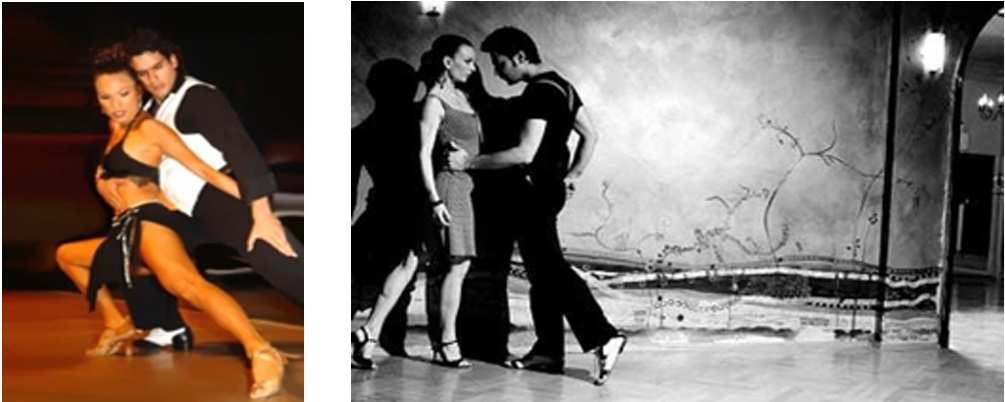
Salsa passion is known as one of the best Salsa Dance School in Zurich to build your foundation. More than 15 years of teaching experiences. See why it’s rated as one of the best in tow.

Zurich. Salsa Passion - Photo 1
Zurich. Salsa Passion – Photo 1

Salsa, Kizomba, Bachata, Cha Cha Cha, Lady Styling, Rhythm and dance Technique. Salsa dance Courses and Workshops for Beginner to Advanced levels. As a student you would benefit from Winny’s and diverse dance and music background. From leading to following technique, from rhythm to musicality, Spin, Body control, styling and footwork technique.

Good teaching strategies can be borrowed, but a good teaching heart is unique and cannot be replicated. Whether you want to become an excellent dancer, for fun or just for social reason, we love to help you to achieve your goal and teach with our hearts and passions.

Director of Salsa Passion – Winny. She is one of the best female instructor in Switzerland that can both lead and follow equally well in all Latin Styles such as Salsa Cubana, Cross Body Style, Mambo on2, Salsa Puerto Rican, New York On2, L.A style on1, Son and Cha Cha Cha.

Zurich. Salsa Passion - Photo 2
Zurich. Salsa Passion – Photo 2

Whether you are completely new to the art, or experienced dancer, we have the patient, the knowledge, the experience to bring you further.

Dancing is about social and fun, but while you are investing your time and money to learn, why not learn it properly.

They’ve developed a “step by step” method that is fun and efficient for everyone to learn. We teach the “know how”. You will learn the vocabulary and the techniques of how to put them together, so you can become creative in a long run, and not just coping or try to memories a program.

“For us, teaching is not just a job, is an opportunity to give, and we love it!” Salsa with a smile, Salsa with passion!

What do we teach

Rhythm

How to dance into the rhythm with the style that you have choose to learn.

Music and Interpretation

We teach our classes with live percussion. We also have special training CD to help you to develop your skill.

Coordination, body movement and Posture

Zurich. Salsa Passion

We love to show you how to look good while dancing, not just walking around and making steps. They have warm up and exercise at each course, to help you to perfect your coordination and body movement.

Partner Work – turn patterns and combination for all levels

Any figure or combination without technique is no different then it’s like just making a bunch of movements. We will show you how to makes each figure leadable, what makes a combination easy to follow or the opposite. We taught each figure with leading and follow technique, and how you can become a “smooth dancers”. Read our tricks and tips.

Footwork

Steps and combination to help you develop your dancing technique with balance, speed, and “shine” on the dance floor.

Zurich. Salsa Passion - Photo 3
Zurich. Salsa Passion – Photo 3

Turning /Spinning technique

How to keep your balance when turn, how to gain speed and avoid getting dizzy. We have exercise to develop your turning technique at each of our course, plus tricks and tips how to turn during Partner Work.

Información de contacto:

  • Email address: [email protected]
  • Telephone: +41-76-5173138
  • Location: 4th Floor, Militärstr 84. 8004 ZH

Jorge Duran

Europe / Germany

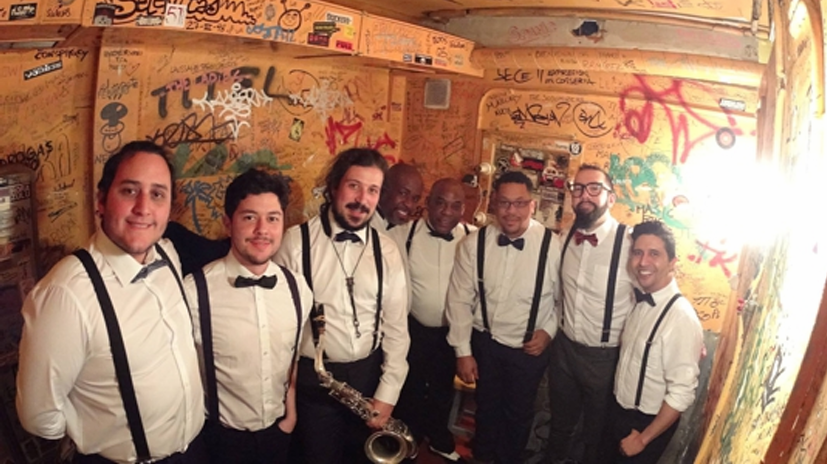
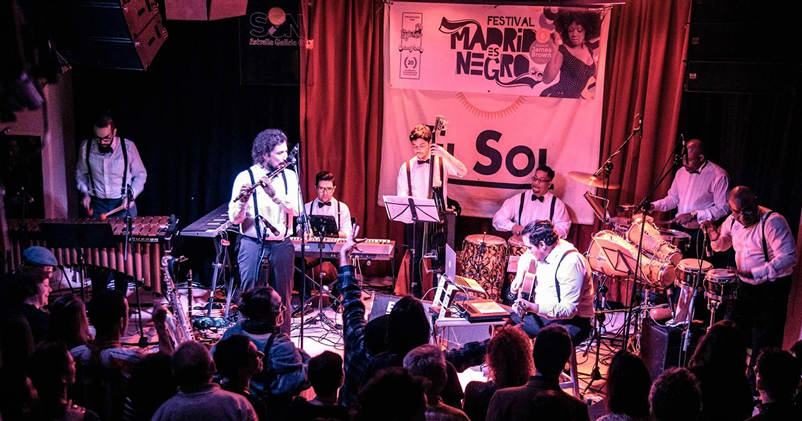
Interview to Jorge Duran & his Jalea de Mambo

Now settled in Europe, venezuelan vibraphonist Jorge Duran is leading Jalea de Mambo band which mix musicians from different nationalities recovering the swing and mambo of the 50s with the smart flavor of the New York Palladium, the famous Broadway dance-hall, and the color of the best Latin Jazz that can be heard in Europe right now. Its characteristic vibraphone sound makes this band a unique and raw example in the current music panorama.

Recently documentary “We Like It Like That” has been released worldwide http://latinboogaloo.com/ emphasizing that cultural revolution where boogaloo, mambo, among other genres, were considered the so-called “Latin Soul” creating that cultural movement which day by day takes more strength everywhere.

Jorge Duran
Jorge Duran

1) Jorge, tell us a little bit about your background, your roots, and your musical influences.

Well, I started playing Latin American percussion in Venezuela (Caracas) having the chance to share with great musicians beside studying with amazing percussion players but my degree was focus in composition. Then I begun to play jazz vibraphone and it took me a few years to play again Latin American Music although here I am ready to give my very best.

2) How did you come to the idea of Jalea de Mambo?

The idea of Jalea de Mambo came to me long time ago (10 years ago or more) when I first heard the album Cal Tjader Modern Mambo Quintet, quite old album indeed (1955). That record change everything for me and blew my mind up focus then on mambo, latin jazz and what so called “Latin Soul”.

3) Mambo, Boogaloo, what many people called “Latin Soul” was a revolution during the 50s. Do you think that nowadays these genres could reach something similar?

I really think everything is possible if you work hard, I’m not trying to make a revolution my idea is that every single person come to see us playing, enjoying magic music, having a great time. Obviously that “revolution” happened once but its essence has come along the years in all musicians who play caribbean rhythms. Nowadays, this genre is getting popular again but honestly I believe it has never lost validation.

Photo of Jorge Durán and his band members in the music world

4) What are your feelings coming from Venezuela performing in Europe and worldwide? Is the musical movement opened and active enough over there?

My feeling is that in Europe we, musicians, have more opportunities to show our culture and most of the people here are opened enough to hear or see our projects.

Beyond Europe is quite the same because I have Heard about concerts with more tan 100.000 audiences in Arab Countries, for instance. It simply means that latin and caribbean music “hook” people hearts so they enjoy it full.

5) Now that you are settled in Europe tell us a bit more about your projects and expectations.

I’m living in Germany now and it is a huge challenge for me as it is a real different culture and language but my idea is to spread the Latin American culture and music not only in Europe but worldwide. We are living very tough moments at this very moment and firmly believe that músic and culture are more needed than ever because music tame the beasts, as people usually say, and that’s what we need now, I mean, peace, calm and mainly love.

Photo of Jorge Durán and his team at the live concert

6) Looking for these goals, are you working on your own or you are supported by a company, agency or similar.

Now I have the great pleasure to say that I’m not alone in this business because Cat 7 Production is my new family and they are really focused in spreading my music to reach more people. I think this is the idea, music is a language we need to be heard as I said before.

7) Finally Jorge, let’s share a message for all your fans beside colleagues who work hard to achieve similar goals you are looking for.

Well, I’m always very grateful when some one takes time to send emails or messages after watching us in a concert, I love it and love fans who give me strenght to keep doing what my heart says. My humbly advice to all musicians who have an idea or project is that never stop making music because everything is possible in life and the real power is inside us. This is one of more beautiful and hard profession but sure worth it!

Jorge Duran in concert

Buika. The Multicultural Sensation

European Union
Buika
Buika

“It takes a lot of guts to expose your true self to others, and acclaimed singer, songwriter, poet, composer and music producer, Buika (pronounced BWEE-ka), does that every night she goes on stage. As plain as the tattoos on her skin, Buika bears her soul to her fans across the world, which she affectionately calls her “tribe.””

This summer, Buika continues her journey of storytelling across Europe and South America in support of her latest album, fittingly named Vivir Sin Miedo (To Live Without Fear). Her eighth album and one with the most English lyrics, Vivir Sin Miedo, co-produced by Grammy Award-winning Swedish producer, Martin Terefe (Mary J. Blige, Mutya Buena, Coldplay) features Grammy-winning singer-songwriter Jason Mraz, German neo-soul artist Meshell Ndegeocello, and Spanish underground flamenco legend Potito.

2- Buika
2- Buika

Born María Concepción Balboa Buika in Palma de Mallorca, Spain, Buika grew up immersed in Spanish culture with her African-born parents. Surrounded by multiple cultures throughout her life, Buika had a variety of musical influences, from jazz and flamenco to pop, soul and African polyrhythm. This eclectic upbringing shaped Buika’s ability to make music without limitations. During her 15-year recording career, her albums flow seamlessly between pop, jazz, soul, reggae, afro beat, R&B and flamenco. Equally diverse are her collaborators, which include Pat Metheny, Anoushka Shankar, Chick Corea, Niño Josele, Bebo and Chucho Valdés, Seal and Nelly Furtado.

Photo 2 - Buika
Photo 2 – Buika

“Filmmaker and longtime fan, Pedro Almodóvar, remarked about Buika, ‘Seeing her draw from such different genres…mix them all together with such grace and spontaneity, one cannot help but think that there is a brighter future as long as one can witness the boundless evolution of this infinite performer.'”

A brighter future did arrive for Buika with each new album. Her 2006 album, Mi Niña Lola (My Little Girl Lola), won Buika high praise from the US media, including The New York Times, The New Yorker, Miami Herald and NPR. She received two Latin Grammys, one for her 2009 album, El Ultimo Trago (The Last Drink) and for her 2013 album, La Noche Más Larga (The Longest Night), which also won a Grammy nomination for Best Latin Jazz album.

Photo 3: Buika
Photo 3: Buika

Other Latin Grammy nominations included Best Album and Best Production for Niña de Fuego (Girl of Fire, special 2-CD Edition, which included her first collection of poems – 2008), Record of the Year for her albums, Se Me Hizo Facil (2010) and La Nave del Olvido (2013) as well as the new Record of the Year nomination for Vivir sin Miedo for the song “Si volveré” (2016)

Buika knows no boundaries when it comes to language or geography. She has collaborated with musicians and singers in Spanish, Catalan, English, French, Portuguese, Iranian and Armenian. Her touring has spanned the globe, covering Europe, Latin America, the Caribbean Islands, Asia, Africa and the US.

A great music ambassador, she reaches any small or large crowd..i.e performed at the US Embassy in Madrid, Spain, on a great 4th of July or a year ago at the Spanish Embassy in DC, for a larger audiences at different music festivals, such as “La Notte della Taranta” Italy over or “Jazz al parque” Bogotá just a month ago.

Photo - Buika
Photo – Buika

She has no barriers in terms of artistic expression and rejects any kind of self-limitation, a business owner, singer / songwriter, producer and poet, whom on her time off immerses herself in the world of photography, some of her best portraits and self-portraits can be seen on any of her books, Niña de fuego (Girl of fire) “special edition” and -A los que amaron a mujeres difíciles y acabaron por soltarse (To those who loved difficult women and ended up letting go)

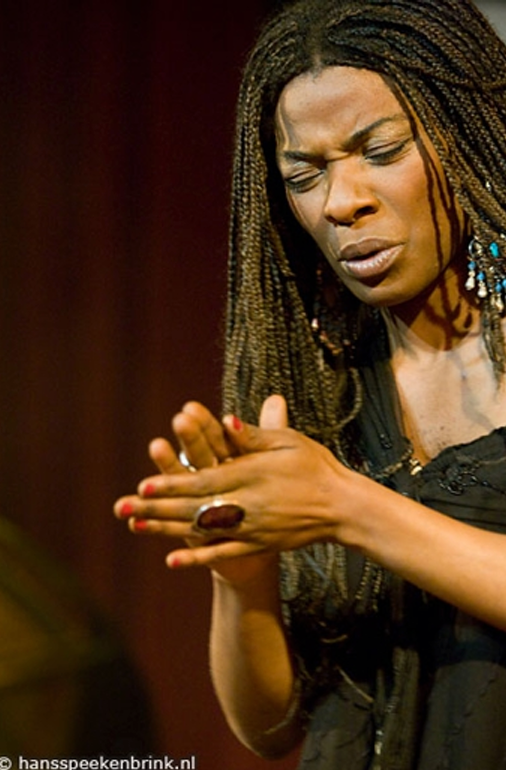
Buika singing
Buika singing

For Buika, her music is more than a career. She says, “I am music (…)!”

  • [email protected]
  • [email protected]
  • [email protected] 
  • [email protected]

Malia The Energy That Allows The Blues To Have A Soul, A Voice

Malia (born in 1978) is a singer from Malawi. She has released seven studio albums. Her mother is Malawian and her father is from the United Kingdom. She moved to London in her teens.

After finishing school, Malia dedicated herself to music. She worked as a waitress while organizing a backing band, singing ballads and classic jazz in London bars and clubs.

During a visit to New York, she heard a pop-jazz track sung in French by vocalist Liane Foly, produced by André Manoukian. She contacted Manoukian to ask for his help, and they began working on her 2002 debut album, Yellow Daffodils. Although the release included English lyrics, it achieved recognition in France and Germany.

Malia (born in 1978) is a singer from Malawi

Her subsequent releases, Echoes of Dreams (2004) and Young Bones (2007), were highly acclaimed among jazz fans across Europe. Malia is known for her expressive voice. From the beginning, she found her way to the stage and her singing style flirted with sounds from the 1960s and 1970s.

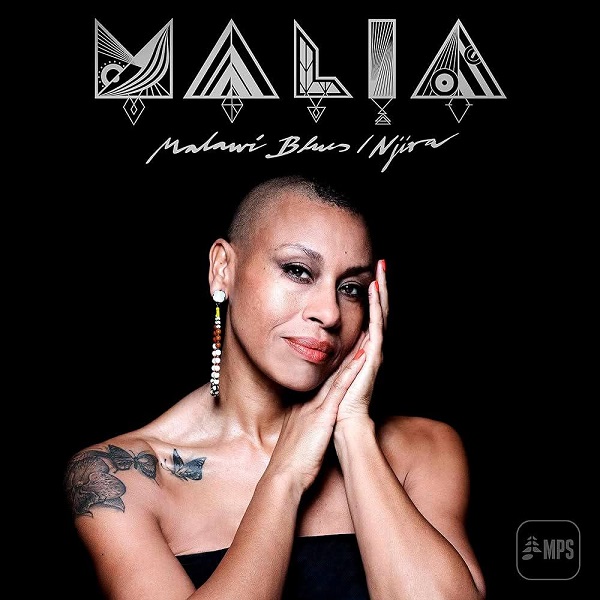
Her role models include Billie Holiday, Sarah Vaughan, and Nina Simone. In 2013, she received the Echo Jazz Award for “International Female Vocalist of the Year.” She explored her African roots in the album Malawi Blues/Njira, released on MPS in 2016. In her 2018 release, Ripples (Echoes of Dreams), Malia offers another perspective on her previous album, Echoes of Dreams. Her latest release, The Garden of Eve, is dedicated to the blues.

Malia is the energy that allows the blues to have a soul, a voice

“My heart beats for many things. I think that is because I come from a marriage of mixed heritage. I have never felt like I am one thing or the other; I am more of a fusion of both, and my music reflects that. I feel I am evolving as a human being, and although music is simply a medium for expression, I like the idea of resonating with it, if its rhythm suits me.

The blues has always been dear to my heart: it is a cathartic, precious, and profound experience, whether playing it or hearing it on the radio. When I first heard Billie Holiday sing ‘Blue Moon,’ I could feel it in every cell of my body.

She had a very powerful effect on me. Sentimental blues, originating in tragic situations, sometimes even reflecting my own experiences… No matter how bad family, friends, politics, lovers, governments, or society may be, they can never destroy the forces of good in this world.

And as time passes, I find more and more of the truth that is rooted in my soul. And I finally feel mature enough to understand this wonderful musical tradition, because the blues means life.”

And if the blues means life, Malia is the energy that allows the blues to have a soul, a voice. It has been a long time since a contemporary artist paid such a beautiful homage to the blues—a style that, in the year 2020, deserves to have the dust shaken off.

Marshall McLuhan’s once-futuristic idea of the “global village” became a reality long ago. Only now, in pop music, are we learning and experiencing, in many ways, what the legendary media theorist formulated in the early 60s. Thanks to digital technological advancements, most pop genres have acquired a global dimension.

Her mother is Malawian and her father is from the United Kingdom. She moved to London in her teens.

Hip-hop, blues, and jazz are evolving into hundreds of regional variants, far from their original roots. Malia’s music can undoubtedly be considered an impressive testament to this worldwide fusion.

After moving from the southern African republic of Malawi to London at age fourteen, the singer spent her adolescence in the UK capital (Note: the “Big Apple” is the nickname for New York, which contradicts having spent her adolescence in London. The original text was left, but the inconsistent use of the term is corrected).

Malia recorded three albums in France with André Manoukian: Yellow Daffodils (2002), Echoes of Dreams (2004), and Young Bones (2007), all created in Manoukian’s Parisian studio.

In 2010, she met Swiss producer Boris Blank, who, since the 80s as part of the avant-garde duo Yello (The Race, Bostich) with Dieter Meyer, has garnered great success. In 2012, Malia released a tribute to Nina Simone, Black Orchid, which won that year’s ECHO Jazz Award. In 2014, Boris Blank produced the eleven electronic-style songs for her album Convergence.

Malia’s sixth studio album, Malawi Blues/Njira, sees her clear, incisive voice amplified again in a soul-jazz context. “An album I’ve always wanted to make… I feel like the time is right now… I wanted songs that reflected my consciousness and my ancestry,” she summarizes the essence of the ten tracks on Malawi Blues/Njira.

The album features thoughtful, mostly slow-tempo original tracks, with sparsely orchestrated piano, accompanied by guitar and percussion, including an almost minimalist version of the classic ‘Moon River.’ From the outset, with Malawi Blues/Njira, Malia recalls the sound of her childhood.

The local vibes of the Kwela and Kwasa-Kwasa traditions are felt not only in the moving “Love Is Holding Both Our Hands.” “I humbly consider it my duty to pass on the rich traditions and stories, just as my ancestors did, as my grandparents and parents did when we would sit around the fire in the evenings in Malawi, eating nsima with pumpkin leaves and peanut sauce.” Of course, that is only one aspect of her rich work.

Her songs are characterized by artistic experiences and experiments, an amalgam that has shaped Malia’s life and a lasting effect of her time in the London club scene, where she was able to sharpen her sense of rhythm in small bars in front of reduced audiences. Here, she could always adjust her sets live, night after night.

This musical diversity now benefits her, when, in Chipadzuwa (a southern African colloquial term for a beautiful woman), she alternates between the regional language, Chichewa, and the universal language, English, with a mellifluous ease.

With the support of the virtuoso pianist Alex Wilson, a sound that is both fresh and warm emerges. Malia has arrived in a global musical world for which she works and fights. “To all the silent warriors in this world,” Malia concludes, “Malawi Blues/Njira is for you!” (mps-music)

Malia – Malawi Blues / Njira (2016)

Malia - Malawi Blues Njira (2016)
Malia – Malawi Blues Njira (2016)

Tracks:

  1. Malawi Blues / Njira
  2. Love Is Holding Both Our Hands
  3. Chipadzuwa
  4. Let Me Breathe
  5. Disgrace
  6. The Seed
  7. Black Widow
  8. Moon River
  9. Friendship
  10. Wonder Of The World
  11. Let Me Breathe (bonus track)

Musicians:

  • Malia (Vocals)
  • Alex Wilson (Piano, Programming)
  • Dimitris Christopoulos (Double Bass)
  • Edwin Sanz (Drums, Percussion)
  • Ahmed Fofana (Guitar on track #2, Instruments on track #9)

About Malawi, The Warm Heart of Africa

Malawi, known as the “Warm Heart of Africa” for the kindness of its people, is a landlocked country located in southeastern Africa. It is famous for its stunning natural landscapes, highlands, and, above all, the vast Lake Malawi, which covers approximately 20% of its territory.

Culture and History

  • Culture: Malawi’s culture is rich and diverse, with various tribes such as the Maravi, Nyanja, and Tumbuka. Each contributes particular aspects to the traditional masks, dances, music, and clothing. The people are known for their friendly nature and relaxed pace of life.
  • History: The territory was a British protectorate called Nyasaland until its independence on July 6, 1964. Subsequently, it became a one-party state under the authoritarian rule of Dr. Hastings Kamuzu Banda for decades, until the transition to a multiparty democracy in the 1990s.

Tourism and Nature The main tourist attraction is Lake Malawi, the third-largest lake in Africa, known for harboring more fish species than any other lake in the world, including about 1,000 species of cichlids. The country offers an authentic travel experience and is considered one of the safest countries in Africa for visitors.

🎤 Personal Data on Malia

  • Birth Name: Not commonly used publicly; she is known simply as Malia.
  • Year of Birth: 1978.
  • Place of Birth: Malawi, East Africa.
  • Nationality: Malawian and British (United Kingdom).
  • Family Origin: Her mother is Malawian, and her father is from the United Kingdom.
  • Musical Career: She was exiled with her family to London when she was a teenager (around age 14) due to political reasons. It was there that she discovered jazz and was inspired by singers like Billie Holiday, Sarah Vaughan, and Nina Simone.
  • Genres: Jazz, Soul, Blues, Pop, with African influences.
  • Recognition: She won the Echo Jazz Award for “International Female Vocalist of the Year” in 2013 in Germany.
  • Notable Discography:
    • Yellow Daffodils (2002) – Her debut album.
    • Black Orchid (2012) – A tribute to Nina Simone.
    • Malawi Blues/Njira (2016) – An album where she explores her African roots.


Collaboration:

L’Òstia Latin Jazz

Dj. Augusto Felibertt.

Also Read: Dave Valentin considered one of the most important Latin Jazz flutists in history, thanks to his technique and rhythm.

  • « Go to Previous Page
  • Page 1
  • Page 2
  • Page 3
  • Page 4
  • Interim pages omitted …
  • Page 43
  • Go to Next Page »

International Salsa Magazine (ISM) is a monthly publication about Salsa activities around the world, that has been publishing since 2007. It is a world network of volunteers coordinated by ISM Magazine. We are working to strengthen all the events by working together.