• Skip to primary navigation
  • Skip to main content

International Salsa Magazine

  • Home
  • Previous editions
    • 2025
      • ISM / November 2025
      • ISM / October 2025
      • ISM / September 2025
      • ISM / August 2025
      • ISM / July 2025
      • ISM / June 2025
      • ISM / May2025
      • ISM / April 2025
      • ISM / March 2025
      • ISM / February 2025
      • ISM / January 2025
    • 2024
      • ISM / December 2024
      • ISM / November 2024
      • ISM / October 2024
      • ISM / September 2024
      • ISM / August 2024
      • ISM / July 2024
      • ISM / June 2024
      • ISM / May 2024
      • ISM / April 2024
      • ISM / March 2024
      • ISM / February 2024
      • ISM / January 2024
    • 2023
      • ISM / December 2023
      • ISM / November 2023
      • ISM / October 2023
      • ISM – September 2023
      • ISM – August 2023
      • ISM July 2023
      • ISM Edition June 2023
      • ISM – May 2023
      • ISM April 2023
      • ISM March 2023
      • ISM February 2023
      • ISM January 2023
    • 2022
      • ISM December 2022
      • ISM November 2022
      • ISM October 2022
      • ISM September 2022
      • ISM August 2022
      • ISM July 2022
      • ISM June 2022
      • ISM May 2022
      • ISM February 2022
      • ISM January 2022
    • 2021
      • ISM December 2021
      • ISM November 2021
      • ISM October – 2021
      • ISM September 2021
      • ISM August 2021
      • ISM July 2021
      • ISM May 2021
      • ISM April 2021
      • ISM June 2021
      • ISM March 2021
      • ISM February 2021
      • ISM January 2021
    • 2020
      • ISM December 2020
      • ISM November 2020
      • ISM October 2020
      • ISM September 2020
      • ISM August 2020
      • ISM July 2020
      • ISM June 2020
      • ISM May 2020
      • ISM April 2020
      • ISM March 2020
      • ISM February 2020
      • ISM January 2020
    • 2019
      • ISM December 2019
      • ISM November 2019
      • ISM October 2019
      • ISM Septembre 2019
      • ISM August 2019
      • ISM July 2019
      • ISM June 2019
      • ISM May 2019
      • ISM April 2019
      • ISM March 2019
      • ISM February 2019
      • ISM January 2019
    • 2018
      • ISM December 2018
      • ISM November 2018
      • ISM October 2018
      • ISM September 2018
      • ISM August 2018
      • ISM July 2018
      • ISM June 2018
      • ISM May 2018
      • ISM April 2018
      • ISM March 2018
      • ISM February 2018
      • ISM January 2018
    • 2017
      • ISM December 2017
      • ISM November 2017
      • ISM October 2017
      • ISM September 2017
      • ISM August 2017
      • ISM July 2017
      • ISM June 2017
      • ISM May 2017
      • ISM April 2017
  • Download Salsa App
    • Android
    • Apple
  • Spanish

Europe

The Tempo Latino Festival is Back

The major European festival of Latin and Afro-Cuban music will present Los Van Van, Pacific Mambo Orquestra, Interactivo, and Minyo Crusaders (H2)

The benchmark Festival of Latin and Afro-Cuban music in Europe, Tempo Latino, resumes its activities after the forced cessation of its activities for two years due to the Pandemic.

From Thursday, July 28th to Sunday, July 31st, on the main stage Les Arènes, the whole family, heterogeneous public, and inveterate traveler will enjoy the performances of Los Van Van, Pacific Mambo Orquestra, and Interactivo, as well as an exceptional set & exclusive presentation on Saturday, July 30th  at 11 PM of “Con Tumbao All Stars” with the winners of Best Traditional Tropical Album at the Latin Grammy 2021 for their album “Chachachá…Homenaje a lo Tradicional”, Issac Delgado and Alain Pérez, as well as Oscar Hernández, Robby Ameen, Tony Succar, and many more.

Minyo Crusaders rediscovered the songs associated with the working classes.

The festival to be held in Vic-Fezensac, the heart of the Gers de Gascony department (France), will open its doors on Thursday, July 28th, with Tempo Latino Social Club on the stage of its satellite “Geo-rhythmic” Conga with a special performance by the Tokyo band, Minyo Crusaders.

This Cumbia band with a Japanese identity aims to make reversals between the traditional and foreign rhythms. Guitarist Katsumi Tanaka was in charge of bringing together the twelve musicians to perform these magnificent melodies with a fusion of the Caribbean (Reggae, Cumbia, and Cuban Salsa), Africa (Afro-Blues, Afro-Funk, Ethiopian rhythm), and Asia (Thai Pop) after of the Fukushima accident in 2011. The ticket for this show costs €15.80, and the opening is at 6 PM.

Pacific Mambo Orchestra is the only active Latin Big Band on the West Coast of the United States.

Continue on Friday, July 29th with the concerts of the Pacific Mambo Orchestra and Los Van Van together with the Cuban trumpeter, composer, singer, and leader of the band Havana D’Primera, Alexander Abreu.

The first orchestra to perform at the festival in its twenty-eighth edition at 9 PM will be the Pacific Mambo Orchestra. This North American band, a winner of the Grammy Award in the category “Best Tropical Album” in 2014, is the revival of the Latin sound of the Big Bands of the 40s with the combination of Mambo, Pop, Cha Cha, Timba, and Bolero. Pacific Mambo Orchestra founded 12 years ago by the Mexican pianist Christian Tumalan and the German trumpeter Steffen Kuehn has collaborated with renowned artists such as Carlos Santana, Poncho Sánchez, Pete Escovedo, and Arturo Sandoval.

Currently, this Latin Big Band performs on the West Coast of the United States with elite musicians from the Bay Area, and their repertoire is in English and Spanish. Their third album “The III Side” (2020) fuses the traditions of the Mambo of the 50s with the musicality of the moment. This Latin Big Ban considered one of the best in the United States will also is at the prestigious San Francisco Annual Jazz Festival on Wednesday, June 8th from 7:30 PM to 9 PM. Address: Miner Auditorium, 201 Franklin Street, San Francisco (EEUU).

“Legado” is an album in homage to the legacy left by maestro Samuel Formell.

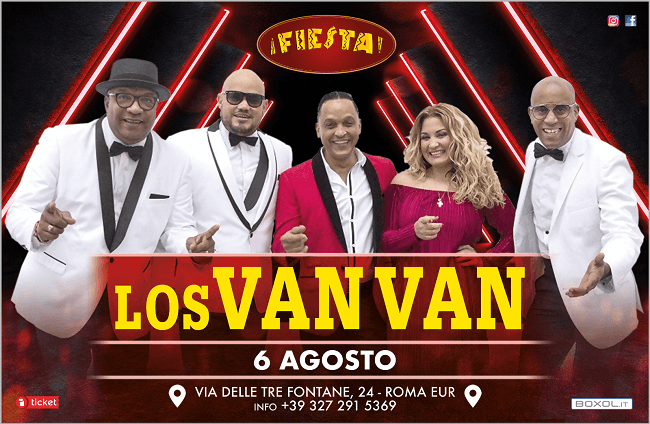
The second orchestra is to take the stage on Friday at 11 PM and will be Los Van Van with their special guest Alexander Abreu. The emblematic Cuban music orchestra will celebrate its more than 5 decades of history.

Los Van Van known by many as the “Rolling Stones of Salsa” was founded in 1969 by bassist and composer Juan Formell, a legend of Cuban music, who accompanied by José Luis Quintana, known as “Changuito” and César “Pupy ” Pedroso, invented the “Songo”, a Cuban rhythm predecessor of the “Timba” or “Salsa Cubana”, which generated the “Salsa – Son” with a Cuban sound that has made generations dance.

In 2018, they recorded their first record production “Legado” since the physical departure of Juan Formell in 2014. This tribute album has 14 songs with 3 new versions of the international singles Te extraño, Por qué lo haces y Amiga mía.

On the third day of the Festival, Saturday, July 30th, the Latin sound will be awakened by the performances of the Interactivo group and the exclusive presentation of “Con Tumbao All Stars”. On Sunday, July 31st, Tempo Latino will close its doors on the Les Arènes stage with London Afrobeat Collective and Alain Pérez & La Orquesta Bassiste.

Most of the members of Interactive are representatives of currents such as Nueva Trova, son, and Cuban jazz.

The avant-garde collective, Interactivo, is one of the most representative bands of the current Cuban generation and will take to the Tempo Latino stage at 9 PM.

This emerging orchestra of international stages brings together the most brilliant and eclectic composers and producers in Havana. Each member contributes their specialty: Timba, Funk, Jazz, Hip Hop, Rock, Rumba, traditional Cuban music, and Soul for a result of great richness, where individual originality, musical creativity, and avant-garde ideas enrich the group.

London Afrobeat Collective has hypnotic flashes and powerful percussive beats.

Similarly, the addictive London Afrobeat Collective has been offering festive music based on Jazz, Funk, Rock, Dumb, and African Vibes for ten years. Its international DNA made up of nine members from England, Italy, France, Congo, Argentina, and New Zealand with the powerful voice of the Congolese singer Juanita Euka has made its rhythm addictive music with powerful and committed messages. The London-based band will open the night of concerts on Sunday, July 31st at 9 PM.

Alain Perez and the Bassiste Orchestra will offer a mixed show of Salsa, Son, Timba, and Latin Jazz

This musical evening ends with Alain Perez, bassist, singer, arranger, and who composes his orchestra of 13 young musicians on stage to offer a mixed show of contemporary Cuban Salsa, Timba, and Latin Jazz. His talent has given him wonderful experiences with internationally famous orchestras and musicians such as Los Van Van, Irakere, Issac Delgado, Paquito D’Rivera, and Celia Cruz. Always accompanied by his elephant-headed cane, in homage to Cuban musician Benny Moré, Alain has been influenced by flamenco through his work with Cuban artist Paco de Lucía.

The versatile artist born in Havana was twice-nominated for the Latin Grammy Awards in the category of Best Traditional Tropical Music Album with “El alma del Son, tribute to Matamoros” (2015) and “ADN” as Best Salsa Album. (2017).

El Cuento de la Buena Pipa (2020) is his most recent record production, and you can enjoy it on the main stage of the festival at 11 PM.

You can get the tickets for Tempo Latino 2022 on their official site http://www.tempo-latino.com/ for a four-beat tempo. The Tickets for the four nights of concerts are €86.70.

And while you wait for the Tempo Latino Festival (28th edition) you can enjoy its free predecessor event Clutcho at La Grainerie this May 4th. This place is emblematic of the circus and itinerant disciplines that take place with a large space that involves a large open-air square, and a performance hall with a capacity for 230 people through an “interior street” that serves for creative studios and workshops.

Tromboranga Will Visit America And Europe With Their World Tour 2022

France, Norway, the Netherlands, and the United States will be some countries that will dance to the rhythm of Salsa Dura

Músicos: Joaquín Arteaga, Diego Coppinger, Freddy Ramos, Rafael “Madagascar” Arciniegas, Lorenzo “El diablo” Barriendos, Vladimir Peña, Albert Costa, Miguel Moises, Oriol Martínez, Climent Campa.

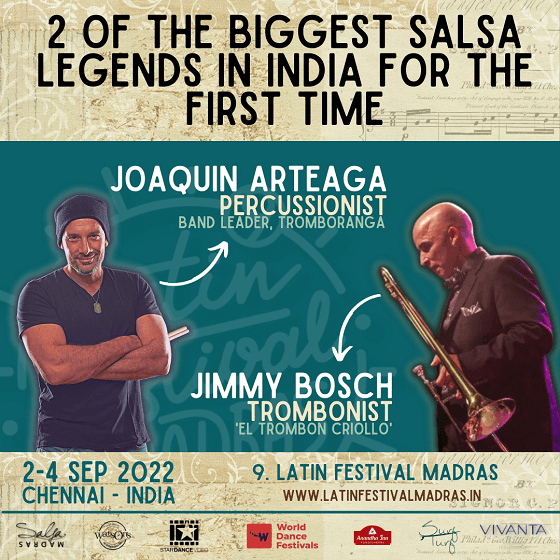
With the solid and unmistakable sound of the trombone & percussion sections and the strong influence on Salsa from the 60s and 70s, Tromboranga with their Hot Salsa will visit France (Festival Corazón Latino 2022 – Bordeaux), Norway (featuring the trombonist, Jimmy Bosch at Kafe Sync – Oslo), the Netherlands (Summer Breeze Latin Night 2022 – Amsterdam), Spain (Pamplona and Barcelona), the United States (The Great Colombian Festival Miramar – Florida), and Ecuador (Guayaquil ) with its World Tour 2022 from May to September.

The friendly musicians residing in Barcelona (Spain) will offer a series of performances to captivate Latin audiences in Europe and America to celebrate their tenth anniversary on the music scene.

The orchestra will play all their hits including Agua que va caer, Alabanciosa, Humildad, Mi china Colombiana, Ah Caraj, Palo pa’ la campana, Charrupi, Como la marea, Sangre sudor y Salsa, Esclavo de tu apariencia, Que linda que estás, likewise the nine unreleased songs from their album Te voy a contar, released to the Salsa scene in 2019.

Te voy a contar has the participation of the Jazz and Salsa master, the trombonist Jimmy Bosch in the song Te perdono. Oscar Hernández (the Spanish Harlem Orchestra leader and winner of several Grammy awards) arranged the Latin Jazz theme, Sal de la Cueva. In addition to this, Huracán no me tumbas (dedicated to the Island) was recorded in Puerto Rico, and they shared voices with one of their idols from the Fania All-Stars, Ismael Miranda.

The followers of Tromboranga call themselves “Salseros Tromborangueros”.

During the pandemic in 2020, Tromboranga http://www.tromboranga.com/en continued with their new record production Salsa Terapia. Melodies such as El cuero del tambor, Devuélveme mis discos, Pachanguera y El mundo al revés are part of this album that has gone viral in choreographies on social networks in addition to being reproduced as multimedia content by Latin radio stations around the world.

 “Our success is the dedication and love in selecting the songs, most of them are my authorship, I carry out the general production and the concept of each album”, said the Venezuelan musician Joaquín Arteaga (Director of the orchestra and known for his extensive career as a percussionist and Timbales expert).

In 2021, this Salsa Dura orchestra released the single “Baila Africa” ​​sharing with African artists such as Msaki (voice of the promotional theme) while they toured South Africa (2020). The authorship of this salsa melody was in charge of the leader of Tromboranga, Joaquín Arteaga.

Telling a little about their history, the orchestra made up of ten Latin and European musicians released their first studio album in April 2012 titled Salsa Dura, rated among the top ten of that year by DJs, dancers, and specialized bloggers of the genre.

The stellar and Sabrosa Salsa reunion will be from May to September.

In 2013, Tromboranga recorded Al Mal Tiempo Buena Salsa, rewarding them with their first international tour in Europe and Latin America. During that same year (November 2013), they released the Special Edition Vinyl “Solo para Coleccionistas Vol. 1” exclusive for 300 people.

The sum of the rest of their recordings reaches a total of five albums published in successive years: Como La Marea (2014), Sangre, Sudor Y Salsa (2015), Golpe Con Melodía (2015), Tumbando Fronteras (2017), Una Noche En Bangkok (2018).

You will hallucinate with these 4 Salsa clubs in Spain

Barcelona is the second destination city with the major Salsero movement in the Iberian Peninsula

After the Spanish capital, Barcelona, ​​Galicia, and Alicante are the main cities with the greatest salsa identity.

During the 90s this tropical rhythm began to be adopted in the territory and the first cities to put aside the prejudice toward Latin music were Madrid, Murcia, Cádiz, and Galicia, although Salsa was always heard in the Canary Islands but that is a story that we will tell later.

Currently, Barcelona is the second city with the most salsa movement and there are many options where you can enjoy an amazing dance experience in combination with tropical music and amplified energy. So, we will give you a guide to four clubs that have left their mark in Spain with Latin rhythms and which we assure you that you will love a lot.

Mojito Club

Mojito Club is 100% Salsa & Bachata on Thursdays and Sundays

If there is a place where you can go dancing Salsa and enjoy an unforgettable night out, that place is Mojito Club. Indeed, this club is a reference for Salsa in one of the fascinating cities in Spain with architectural landmarks and where more people like this Caribbean rhythm, Barcelona. On its dance floor, you can have a great time until dawn. Thursdays are from 11 PM with the usual Salsa and the most current Latin sounds with local DJs. Does it surprise you? Wait, there is still more to celebrate. On Fridays and Saturdays, they play the most international Latin music and on Sundays, it’s student day from 8 PM.

Mojito Club also has a dance school where they teach classes of Salsa and Bachata to start or improve. These lessons are entertaining, educational, and fun. Each course is 10 hours long and the lessons are from Monday to Friday. It’s not necessary to attend as a couple. Registration is free and costs € 29 per month.

The charm of Mojito Club https://mojitobcn.com/ is located at Rosellón Street, 217. 08008 Barcelona.

Sabor Cubano Sarrià

Luis Alberto Díaz “El Negri” plays the big hits of traditional Cuban music on salsa nights

It’s true Barcelona is almost the cradle of Salsa in this European country. Sabor Cubano Sarrià is one of the town’s Salsa clubs. This Night Club offers live music with the virtuous Cuban pianist, Luis Alberto Díaz “El Negri” also you can dance to the melodies of Cuban Salsa, International Salsa, Bachata, and urban rhythms with DJs. Here, you will find Salsa and Bachata teachers who give free lessons for beginners at 8 PM every Sunday with minimum consumption. Sabor Cubano Sarrià https://www.facebook.com/saborcubanoclub is one of the clubs where you can have fun with the two most widespread Latin dances in the world. It opens its doors from 7 PM to 12:30 AM and you can find it at Calle Marià Cubí 4. 08006 Barcelona.

Baby’Oh

Baby’Oh is a meeting point for lovers of Salsa, Bachata, and Kizomba

Baby’Oh is another fantastic club to enjoy Salsa and is easy to locate in Alicante at Calle Sabadell, 16, 03203 Elx. It is characterized by having a large room to dance and slide with quick movements and turns. It has a terrace for smokers, V.I.P and Reserved areas, as well as Table Service. Additionally, Baby’Oh https://www.facebook.com/babyohelche/ offers monthly events, workshops (Saturdays), and live performances with stars and emerging Salsa and Bachata artists.

Salason

This cultural platform is designed with exceptional acoustics and cutting-edge technology.

The last stop in this guide with the four Salsa clubs in Spain with which we assure you that you will hallucinate is Salason. Of course, you will learn Cuban-style Salsa and Rueda Casino as well as traditional Bachata lessons with maximum fun, coordination of movements, and body language.

You can practice on Tuesdays in two groups: Students (intermediate level), the Salsa lessons start at 8 PM, and the Bachata group starts at 8:30 PM.

Thursdays are classes for beginners with two choice times: 8 PM and 9:30 PM.

Salason https://salason.es/ is a structured building with three independent rooms but complementary to each other and is located in the northwest of the country at Calle Lirio, 30 Cangas Do Morrazo, 36940, Galicia.

Get Through March With Latin Atmosphere And Sound

France is ready to enjoy Latin events during the third month of the year

Covid-19 and its multiple variants have already ceased in France and that is why this European country is ready to start enjoying Latin events during this third month of the year. So don’t miss the details of each of the Latin parties that we bring this month dedicated especially to you.

Mulatason & Alfredo Buendía Y Los Picaflores

(Salsa / Mambo)

The 5 Mulatason singers dressed in white
This event will comply with current health measures.

Join and enjoy the end of this winter in the country with the Latin concert of the female group Mulatason and the band with the singular joy of Mambo Alfredo Buendía y Los Picaflores, this Saturday, March 5th at 9 PM at 3 Rue Ferdinand Buisson, 82000 Montauban, France Association Le Rio. Try to pre-sale tickets for € 20 because the price at the door will be € 24 per person.

And for those who still don’t know Mulatason, here I make a summary of their history. This orchestra formed in September 2013 by its director Yarelis Martínez Chávez is made up of five women with harmonious voices, and their music is a mixture of dance rhythms that range from Salsa through Timba and ending with the traditional melodies of the island of Cuba. Their popular and peculiar choreography called “Rikiti” has been their hallmark that they have managed to spread across large national and international stages.

The orchestra is made up of nine talented artists residing in Havana (Cuba) who graduated from higher art schools. Each member of the band is no older than 25 years old and they have a repertoire of original compositions.

Mulatason “Las Princesas de la Salsa” returns to Europe to present their new album No Vale Rendirse celebrating almost nine years in the art scene.

The 7 members of Alfredo Buendía and the Picaflores dressed in blue and black card
Seven musicians with a good dose of humor and passion for Afro-Latin music and Jazz make up the Mambo band, Alfredo Buendía y Los Picaflores

On the other hand, and for those who have not heard before about Alfredo Buendía y Los Picaflores, below I will tell you a little about them. This project of seven musicians was born on an afternoon in December 2016 in order to have fun on stage, make a type of music that injects energy into the audience, and transports joy and light madness to the spirit.

Alfredo Buendía (Lead Vocals – Trumpet 2) was returning from three years as a Jazz crooner in Rio de Janeiro (Brazil), he wanted to bring something new, interesting, and different to the artistic scene in France since he had become accustomed to the type of show that it’s made in America. Also, he wanted to play rhythmic and deliberately festive music like the one he had been listening to for a long time-El Mambo by Pérez Prado-with its history from Cuba in the 1950s to Mexico.

This bewitching goal materialized with Pierre Levy (Tenor Saxophone), Jonas Chirouze (Drums), Clément Lefèvre (Trumpet), Hugo Lebeau (Congas), Guillaume Pique (Trombone), Youssef Ghazzal (Double Bass), and Alfredo Buendía managing to create El Mambo a novel concept between Afro-Latin music and jazz little explored on the French scene.

Le Balajo

(Salsa / Bachata)

Le Balajo Salsa Class Flyer in France
Le Balajo is located at 9 Rue de Lappe, 75011 Paris, France

Le Balajo nightclub open since 1936 brings Salsa and Bachata classes every Tuesday from 7:30 PM to 2 AM for beginners and intermediate level dancers. Salsa lessons for amateurs start at 7:30 PM while intermediate level classes begin at 8:30 PM followed by a Latin party hosted by DJ Karim until 2 AM.

Remember that to access the club you must present a Vaccination Certificate (Required) and an identity document.

The fees to attend this weekly event of joy and good humor are €8 and include non-alcoholic drinks and €12 if the drink is alcoholic, but if you just want to enjoy the bar and its atmosphere, the admission is €5.

La Pachanga

(Salsa)

Colorful flyer of La Pachanga club in France
On the dance floor of La Pachanga, you can dance to the rhythm of Salsa, Bachata, Merengue, and Kizomba

The Bar/Restaurant/Club La Pachanga is a place of reference for Salsa lovers, it is located in Paris at 8, rue Vandamme 75014. This club is designed with a cozy and Caribbean style. At the bar, you can enjoy different types of cocktails, Mojitos, Caipirinha, or Cuba Libre, just as they offer only Latin American dishes at the restaurant.

At Pachanga, you can attend classes for beginner and intermediate levels from Tuesday to Saturday from 7:30 PM to 8:30 PM with different instructors who will make you live an hour of Salsa Cubana and Salsa Puertorriqueña dance.

Latin Music Bonus In France

Dancing couple dressed in black
The Latin Party at Bar Le 3 is back

On Friday, March 18th, you can enjoy the Soireé Mix Latino “La Calle” event from 4 PM to 9 PM at Bar Le 3 located at the French city and commune Valence at 4 rue André Lacroix. This bar has a tropical atmosphere with living rooms with sofas and armchairs as well as a cozy and warm decoration. It also has a selection of 30 cocktails and a permanent musical atmosphere with a selected playlist of Jazz and other genres.

And the last Latin Music Bonus in France that I bring you for this edition is the Fiesta Latina Metz to be held on Friday, March 26th. This festival will offer you two workshops (Salsa and Bachata), in addition to having fun with the rhythm of Cuban Salsa, Dominican Bachata, Sensual Bachata, Kizomba, and other Caribbean melodies. There will be big parties with DJ Will, DJ Papy Culio, and DJ Kylian starting at 9 PM and ending with seven shows from 11 PM to 3 AM. Fiesta Latina Metz will have three rooms (Salsa/ Bachata/ Kizomba) and the prices to attend vary by combo: one workshop + evening: €12, while two workshops + evening: €20, and if you just want to attend to enjoy the shows the ticket has a value of €7. Fiesta Latina Metz will take place at the Quai Sablon Social and Cultural Center at 1 bis rue Castelnau 57000 Metz.

You Can Also Read: Enjoy 4 Latin Events In Prague

Pedro González

Musician, Instructor, And Pioneer Of Salsa Casino In Venezuela

Pedro González dressed in white playing the bass
“I always had the connection to music, and today, I still have two congas. Sometimes I play them during classes.” Pedro González

“If people dedicate themselves to this, it is because we are doing it well.” This nice phrase arose from the pleasant and attractive telephone conversation about the history of the pioneer of Salsa Casino in Venezuela, the charismatic Cuban-Venezuelan musician and instructor Pedro González.

This affable musician and Salsa Casino instructor told us that he carved out his career from a very young age. He was born in Havana (Cuba) in 1966 and began his musical studies at the National School of Arts in the Havana capital at the age of ten, graduating in the specialty of Guitar (Short Course of 8 years) in 1984.

He comes from a musical family, his grandmother was the soprano Rosa “La China” and his mother (teacher and school principal) Zoe Portuondo Suarez, a distant relative of the singer Omara Portuondo.

“…Since I was little I liked to dance, I would dance everywhere. I learned with my cousin… I went to places like Playa… Besides, my mother danced a lot and my grandmother was a singer and she was also linked to the world of art…” Pedro commented.

His first job was as a music teacher in the Pinar del Río city, three hours from Havana. A short time later, he joins the Caranday group, and they play Son Cubano every night at the luxurious Hotel Nacional De Cuba.

After 45 days from his first presentation with the group, they meet the Venezuelan businessman Martín Gutiérrez, who takes them to Venezuela in 1993 to perform at private parties in the Falcón state.

Due to the few opportunities he had in Cuba, he decided to stay in Venezuela and formed the Latino Son band, made up of four Cuban musicians, and in turn began to be members of the Tropicana-style Cuban Fiesta Magazine (Show with a range of musical genres, interaction with guest singers, and dancers) in nightclubs of the Capital.

In Moments of pause with the musical magazine (1997), he undertook a tour with the Latino Son group with whom he traveled for almost all of Venezuela and toured the main stages of large national festivals such as La Feria del Sol (Mérida), Feria de San Sebastián (San Cristóbal), and La Feria de la Chinita (Zulia) among many others.

“We played permanently at La Giralda… At La Giralda we organized a party playing the Cuban Timba, then, there they called us “The Cuban Orchestra” in 1996, 1997, and 1998…”

During the ’90s and already residing in Venezuela, Pedro became the first Salsa Casino instructor in Venezuela without planning it as a life plan, and in 2000 he founded his homonymous academy that has graduated thousands of fans of this style of salsa dance.

Dancing is one thing that keeps you active. That is good for the body. If you have a problem in two hours or an hour and a half dancing you forget it. For my part, I like to teach… And, I like people to have fun.” Pedro González

History And Evolution Of The Academy Dance

Pedro González with burgundy flannel and four women on the sides
Pedro González is the President of the Salsa Casino Organization in Venezuela

One night at the end of the 90s, Pedro along with his friend Milan (Medical and Countryman) began to remember the Dance of the Casino in La Giralda (old venue to listen to live music and enjoy various drinks on the Boulevard de Sábana Grande – Caracas) after his customary presentation with the Latino Son group.

Both began to stand out on the dance floor with the genre of La Timba and for a way of dancing Salsa different from the one practiced in Venezuela. “We began to dance with two Venezuelan girls in the Rueda style (which was not a Rueda because there must be 3 couples)… I began to say Milan “Give me one”, “Plugin”, “The Hat”, and we began to dance the Casino Style”. Pedro “El Cubano” told us between laughs during the interview.

The two ladies were so impressed by that way of dancing that they did not hesitate for a moment to ask Pedro for dance lessons. After so much insistence, “El Cubano” agreed for the first time to give Salsa Casino classes in the capital of Venezuela in an improvised and reduced space with his first five couples. “I am from the Cerro municipality, which is the closest to Old Havana. I used to go to Playa (Municipality of Havana) a lot to dance and I learned many dances and turns…”

And so Salsa Casino began spontaneously in 1999. By the following year (2000), Pedro had 20 couples and a larger room to teach.

The evolution of him in his rise during this year was impressive. Due to the influx of students, he began to teach in the blue auditorium of the Faculty of Economic and Social Sciences (Faces) of the most prestigious University in the country, the Central University of Venezuela (UCV) through Reinaldo Mijares, Director, and choreographer of the contemporary dance “Mudanza” attached to this institution and where González assures that this movement grows.

From there, he gave way to the Casa Monagas club, a place located in the Las Acacias sector (west of Caracas) behind the UCV with the capacity to hold up to 1,000 people. Here, Pedro’s students had more space to rehearse, and Salsa Casino Parties began to be organized monthly.

Pedro González with a blue shirt dancing with two women
Dance academies in Venezuela were teaching Puerto Rican Salsa Style in the year 2000

With this overwhelming success, the creation of the Academia Salsa Casino in Caracas was imminent. It had massive attendance, national impact with graduate students, and attendance at national and international festivals such as Curacao Salsa Tour, Festivals in Cuba, and an amazing show at the Amador Bendayán Theater.

With more than 20 years of teaching Salsa lessons, Pedro has graduated more than 2000 students and changed its name to Academia Pedro González. It currently has five locations: Sábana Grande (main location), Chacaíto, San Antonio de los Altos (Los Teques), Capitolio, and El Cafetal.

The classes are aimed at children and adults. The call is open, so you can sign up without a partner and don’t worry because the essence of the Rueda remains. The estimated graduation time is three years with four basic levels, four intermediate levels, six advanced levels, you will also receive a triple casino level, two dance technique levels, and to complete the process a final choreographic exam is done.

Every dance lesson is fun because of Pedro’s ability to teach. The names of each step such as “Pégale un Cacho” are adapted to the colloquial vocabulary of the Venezuelan so that it is easy and fast to learn.

Due to Covid-19, the Pedro González Academy makes the use of the mask and antibacterial gel an essential requirement for permanence within the institution, as well as reducing the maximum number of couples per level to only ten.

Vanessa Lovera y sus amigas vestidas de negro
Vanessa Lovera (Left) accompanied by two Salsa Casino dancers at the Caracas Carnival party

At the main headquarters, there are four instructors. One of them is Vanessa Lovera, a graduate instructor from the academy. For Pedro, she has been unconditional support in difficult moments of the institution. Vanessa teaches Salsa Casino and Ballroom Dance. You can also find her at the El Cafetal headquarters, but if you prefer the main headquarters, the address is as follows: Sábana Grande Boulevard, Fénix building, 5th floor, next to the Gran Café.

For this 2022 and if there is a return to normality, the Cuban instructor and musician residing in Venezuela hopes to resume the lost spaces in Caracas such as discos, nightclubs, presentations in theaters, once again hold large Salsa Casino parties in large rooms, the return of national competitions, and the continuation of the training of instructors in person (it is only online currently).

Casino Dance Or Salsa Casino?

Club Casino Deportivo in Havana, Cuba
Club Casino Deportivo no longer exists. Nowadays only the sports fields were preserved of this infrastructure.

According to the friendly instructor Pedro González, the origin of Salsa Casino on the island of Cuba has a unique story that begins like this…

Since 1956 numerous Cuban orchestras have been registered that played very popular and contagious musical genres such as Cha Cha Cha, Guaracha, Mambo, and Son. Rhythms that invited the young inhabitants of Cuba of this time to just want to dance and have fun all night with these melodies, but they not only wanted to do it with their partners but also with those of their friends, acquaintances, and strangers. However, for this decade that was not allowed because the rules of the strict and conservative society dictated it.

In this way and with the pursuit of that goal, the gentlemen created this style of dance. A style that did not require constant practice and where partners could be exchanged using keywords such as “Plugin” to perform the movement and for the theory to be carried out perfectly without altering society. The place where this event was recorded was Casino Deportivo, a private summer vacation club located in the Miramar residential area in Havana.

“We (in Venezuela) call it Salsa Casino because it is the commercial name already used in the United States. In Europe they call it Salsa Cubana, but the original name is Baile Del Casino”. Pedro Gonzalez

That is why at the end of 1950 this style of dance began to be generated that people internationally associate with the style of gambling performed in a Casino because it is a dance in Rueda.

The popular expression of most people in Cuba every time they saw this peculiar way of dancing was to say “Ah! But you are dancing like the people of the Casino (Casino Deportivo Club)” that each day was shortening the expression until reaching the Baile Del Casino.

The peculiarity of this dance style is that it does not have a musical genre, that is, no melody that identifies it. For example, a Danzón is danced with the music of the Danzón, the same happens with the Cha Cha Cha, Mambo, Son, and Bolero. There is no rhythm called Casino, therefore this style acclaimed in the world and preferred by Cubans began with the music that existed in this glorious decade of the ’50s.

  • You Can Also Read: Sidney Poitier

  • « Go to Previous Page
  • Page 1
  • Interim pages omitted …
  • Page 28
  • Page 29
  • Page 30
  • Page 31
  • Page 32
  • Interim pages omitted …
  • Page 41
  • Go to Next Page »

International Salsa Magazine (ISM) is a monthly publication about Salsa activities around the world, that has been publishing since 2007. It is a world network of volunteers coordinated by ISM Magazine. We are working to strengthen all the events by working together.