Founding President of Tempo Latino
Interview conducted in August 2026, a few days after the 2026 edition of Tempo Latino
Since our last interview in 2023, how have you been? And what are you doing these days outside Tempo Latino?
I have been retired since 2022. I am still very involved with Tempo, but aside from that, I am spending more time at home and with my partner. We do a lot of walking, and I do a little exercise on Tuesday evenings – except during the summer. I also do a great deal of work around the house.
I have two family properties that I am taking care of with a view to selling them. So, in the end, I am still quite busy!
What led you to hand over the presidency of the association?
At one point, I was extremely tired because of my work. I experienced what you might call burnout. I
recovered, but I also had many other things to deal with, and I had become tired of all the demands involved, particularly dealing with elected officials and trying to secure funding.
However, I retained artistic direction of the entire festival, both the official and fringe programs, as well as responsibility for finding partnerships. I am also heavily involved in communications, working with the young interns we take on: visual materials, promotional materials, press and media relations. So I still have plenty to do!
The 2026 edition has just ended. What is your assessment?
There were many unexpected difficulties throughout the year and many things that had to be reconsidered. But musically and artistically, it was very, very successful. The artists were genuinely committed. We had some major travel problems, but everyone came.
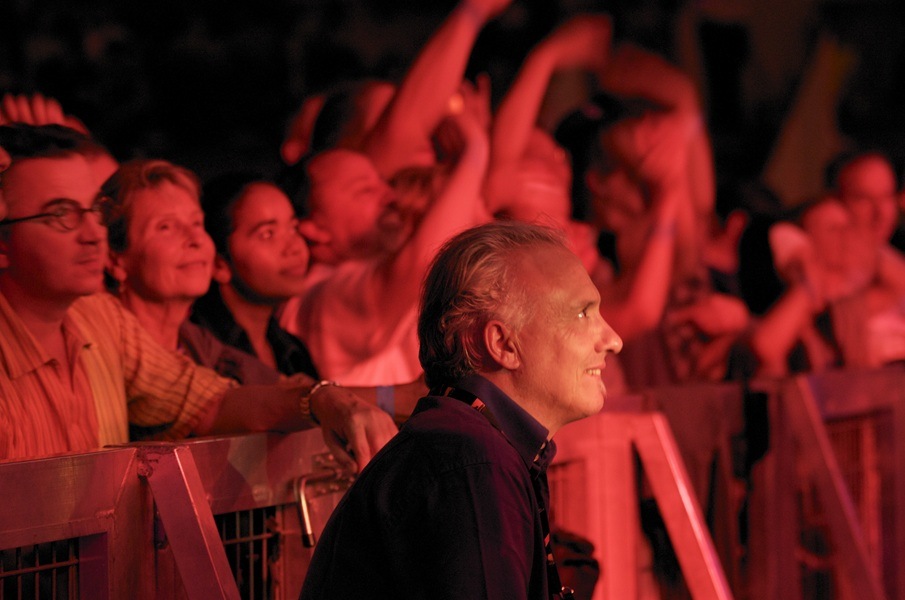
Attendance, however, was very disappointing. We received the results yesterday evening during a meeting, and we are down by more than 2,000 – perhaps 2,500 – paid admissions.
The paid events take place mainly in the Tempo Arena, with an average ticket price of around 40 euros,
taking into account the different prices and the three- and four-day passes. In the end, we will therefore be facing a significant financial shortfall.
How do you explain the decline in attendance?
I do not know. Perhaps the program was less appealing.
However, when we began selling tickets in December, before even announcing the program, sales of three- and four-day passes were clearly up.
We then announced the lineup gradually, one evening at a time. I had already booked almost everything, but not every appearance had been confirmed and signed. Until a contract is signed, I do not like announcing an artist, because it can create problems later.
Sales continued to increase steadily, in small increments, but we never experienced the kind of surge we
have seen in some previous years.
There is also a difficult broader context in France. I learned that several festivals, including some much larger than Tempo Latino, also experienced serious attendance problems.
Fuel prices may have played a role. Around Bordeaux, approximately 180 kilometers from here, there were major wildfires. We also experienced repeated heat waves, with extremely high temperatures, and we clearly saw that people were traveling less.
There are therefore many possible factors. Perhaps the program was less attractive as well. I am not looking for excuses. But I will not hide it: it is disappointing. Personally, I am disappointed.
Which artists particularly stood out during this edition?
When I create a program, I first try to establish two or three anchor points, and then I build each evening
around those artists.
One of my first anchor points this year was the Brazilian artist Rogê, whom I had already invited last year for a small concert in the church. He now lives in Los Angeles. This year, I scheduled him for Saturday evening.
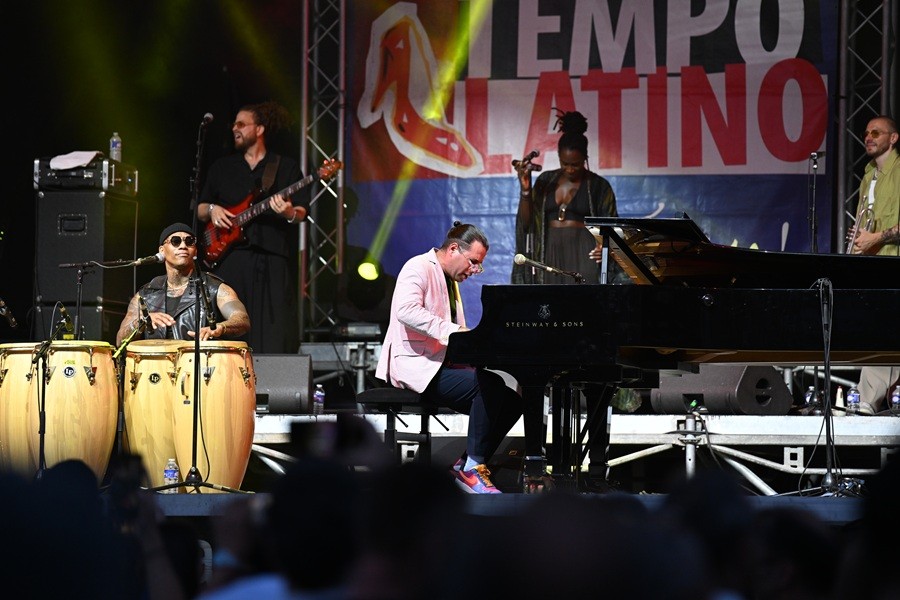
I had also booked Alfredo Rodríguez, who lives in Miami and is fairly well known in France because he performs at many jazz festivals around the world. Pedrito Martínez was among the musicians appearing with him. It was a very effective quintet.
I also programmed Orquesta Akokán, and then built the rest of the lineup around those artists.
They were strong names. Rogê as well, although we have not traditionally programmed much Brazilian
music. For the past three or four years, I have been trying to include more of it, but it is rather difficult in
France, particularly here in the southwest.
After Alfredo Rodríguez, I programmed Tony Succar’s latest project, which he came to present before it had even been recorded. There was also a tribute to Celia Cruz, with his mother, Mimy Succar, performing several songs.
I try to structure each evening so that the energy rises progressively.
On Saturday, we also had Matt Bianco as the opening act. It is a group known since the 1980s, with bossa nova, samba and pop influences. Attendance that evening was fairly close to what we have seen on
Saturdays in previous years – around 200 fewer admissions, but not a collapse.
Where we saw a major decline was primarily on Friday and Sunday.
Thursday is a somewhat separate opening-night event for Tempo Latino, held at a venue called La Conga
behind the arena. I had programmed the Argentine artist La Yegros, and we exceeded 1,000 admissions.
For the concert traditionally held in the church on Sunday afternoon, we presented Yilian Cañizares as a trio. We had more than 500 people in a venue with a capacity of 550. It was almost sold out, so we could hardly have done better.
But the rest did not take off.
You also mentioned a change in the public’s relationship with live music and dance.
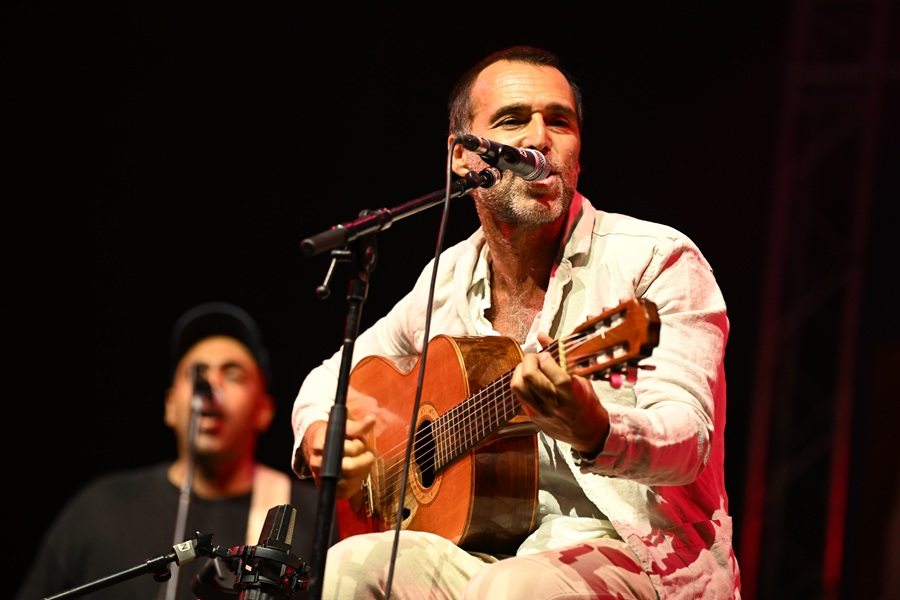
Yes. There may have been slightly fewer people around the festival itself, but down in the town, cafés have DJs everywhere. Everything is free, and there are huge numbers of dancers.
Many people come only to dance and do not attend the festival’s concerts. For us, that is a genuine problem.
There are several different audiences. I obviously have nothing against dancers. Some people enjoy both
dancing and listening to artists in concert. But others listen to music mainly in order to dance and do not
attend live performances.
Tempo Latino exists first and foremost for concerts. That is also what enables the festival to survive.
We organize dance workshops ourselves, with a particular artistic direction. In my view, dance should also have refinement and elegance. That is a personal perspective, of course.
Above all, however, one very simple point needs to be understood: to dance, you need music. For music to exist, you need musicians. And for musicians to make a living from their profession, their work must be supported.
Records are barely selling anymore, so people also need to attend concerts. That is part of the arrangement, and it is a question of respect.
Personally, I have a Spotify subscription, but I still buy albums. And when I attend a concert, I pay for my ticket. That is also a way of supporting artists.
People need to decide what they want. If we want films to continue being produced and actors to continue working, we need to go to the cinema. The cinema is not free. Classical music is not free either. So why should this music be free?
We also have DJs at night and free concerts during the day. But part of the festival requires paid admission. The equation is very simple.
How do you discover new talent, and how do you select the artists you program?
I receive an enormous number of proposals, either directly from orchestras or from agencies and producers. I also look among artists I have loved for many years and would like to invite.
But whenever someone sends me something, I listen. I listen to everything.
Sometimes I will look for or order an album so that I can explore the artist’s work more deeply. I examine the artist’s career. On the other hand, I do not look at follower counts. I do not care about that. I do not need other people’s opinions or comments to know whether the music interests me.
When I do not know an artist well, I may listen to five or six albums, sometimes more.
This year, together with Léa and Maël, two interns we welcomed at Tempo, we also tried to introduce the
artists more effectively, including already established musicians such as Alfredo Rodríguez.
With the agencies’ approval, we created musical career overviews for social media, featuring five, six or eight albums that traced an artist’s development. I prepared the texts and selected the tracks to encourage the public to discover the artist’s world.
Despite all that, sales did not take off.
I am not trying to make excuses. When I see that attendance is low, I am the first person to feel hurt by it. I take responsibility for it.
There is so much work throughout the year that it is inevitably painful.
What is frustrating is that I know there are three, four or sometimes five times as many people outside the paid festival area as there are inside the concerts.
And our prices are not high when compared with those of other festivals.
If the only future is to organize DJ events and activities exclusively centered on dancing, I personally will no longer do it. That would not stop me from continuing to listen to and love the artists.
Looking ahead to 2027, 2028 and beyond, which artists would you still dream of welcoming to Tempo Latino?
There are artists I have dreamed of presenting for a very long time, but we simply do not have the financial resources to bring them.
Obviously, my greatest dream has always been Carlos Santana.
The first vinyl album I ever bought, when I was 13 – and I will soon be 69 – was a Carlos Santana album.
My partner and I had the privilege of meeting him in 2018 at a festival in Albi. Friends had arranged it as a surprise for me. Thanks to the festival director, I was able to go backstage and speak with Santana.
I introduced myself and showed him what Tempo Latino was, the history of the festival and all the artists we had presented. He genuinely listened to me.
I was like a child meeting Santa Claus!
I told him I owned 38 of his albums. He looked at the festival’s history, and when he saw Israel López
“Cachao,” Celia Cruz, Cheo Feliciano, Bobby Valentín, Eddie Palmieri, Compay Segundo and all the others, he said, “Wow!”
I explained that Tempo Latino was probably the only festival in Europe to have done all of that around this music.
He told me to speak with his manager. I explained the project to the tour manager and gave him documents and photographs, but I never received a response.
Later, I contacted a Paris agency that represented Carlos Santana and with which we had already worked
when we presented Bernard Lavilliers. They explained that we would need a capacity of approximately 10,000 people, while our capacity is 7,500, and above all that the cost would be extremely high.
Santana alone would represent almost twice our entire artistic budget. It is therefore impossible unless he were to offer us truly exceptional terms!
But we always keep trying.
I would also very much like to bring back Oscar D’León. We have presented him here six times. It is a long friendship, and I am deeply attached to him. I would really like him to return one final time before he stops singing or touring.
There are obviously many other artists. Some people tell me that we should bring Bad Bunny to Tempo.
Well, we can forget that! I think he is very talented, but that is not necessarily the direction I want for the
festival.
How do you see Tempo Latino evolving after this edition and in response to
changing public tastes?
I think many programmers in my position would say, “I know exactly what needs to be done. I will book this artist or that artist.”
I am not like that. I do not hide my feelings. I am being honest: today, I am rather pessimistic – perhaps even very pessimistic.
That does not mean I no longer want to continue. But I realize that the artistic direction we have chosen is not easy to develop today.
I proposed this festival 33 years ago, in September 1993. I arrived with my records so that people could hear the music, and I said, “This is what I want to create a festival around.”
Mambo, cha-cha-cha, salsa, Brazilian music, Latin jazz. At the time, it almost frightened people.
I wanted to create a festival for these artists, because no festival truly existed for these musical traditions as such.
I consulted many very well-known journalists in France – from the print media, Libération, France Inter and elsewhere. They all agreed that such a festival did not exist.
We also have a partner, Radio Gladys Palmera in Spain, which holds an exceptional collection of Latin music and jazz. They have always told me the same thing: a festival like this did not exist.
Today, there are many more, and that is a good thing. It means that this musical world has grown richer. But the fact that things have evolved does not mean that we should do just anything.
This festival exists for the artists we love, whether they come from Caracas, San Francisco, the Caribbean, Africa or elsewhere. We have welcomed artists from Senegal, Japan, Great Britain, northern Europe and many other places – around 30 countries in total – performing Afro-Cuban and Latin music.
Today, it is extremely difficult for us, and I do not know whether we will be able to survive. I am not at all
certain.
Perhaps we need patrons, including international patrons, or people in France who genuinely want to help us preserve and develop this project. At present, we have none.
We would also need certain artists to want to appear here under financial conditions that we can afford.
This is the project that matters to me. I have never earned money from Tempo Latino, and I never will. On the contrary, I have spent a great deal of my own money, particularly on travel, and some of my friends have done the same.
I did all of this to meet people.
Artists, agents, technicians, journalists and people who are not artists – people I would never otherwise have met in my life.
That is what has enriched me.
This human dimension clearly remains fundamental to you.
Yes. This year, for example, we had two dance teachers serving as festival patrons.
One is Cuban, originally from Santa Clara, and has lived in France for many years. The other, Timbo
Washington, is from São Paulo. My partner and I had met him a year and a half or two years earlier during a Brazilian evening at L’Ermitage in Paris.
I selected both of them as festival patrons.
For us, a patron is a symbol. At some point, these two men left their countries, their cities, their
neighborhoods and their families. They came to France to make a living from their abilities and talents,
teaching dance and, in Timbo’s case, also working as a choreographer.
This year, the entire audience discovered them. They presented performances and gave something
tremendous back to us, emotionally and socially.
That is also what I want to show: these journeys, these differences and these encounters.
That is why I created Tempo Latino.
After 33 years, do you still have the energy to continue?
I am tired.
For the past week, I have slept very little. When you encounter difficulties like the ones we are currently
experiencing, it is not easy.
We have two year-round employees who are extremely worried. I spent an entire lunch with them today
trying to reassure them. They too care deeply about the festival continuing.
The determination and energy are still there. But today, the problem will be financial.
What message would you like to give readers of International Salsa Magazine and, more broadly, music lovers and professionals?
I would like professionals – journalists, media organizations and everyone who writes about this music – to use their influence and arguments to remind people that music, like culture, requires commitment.
Today, there are major festivals organized by cities where everything is free. But why is it free? Someone is always paying. Frequently, public funding from local governments pays for these events.
The work of artists is not free. Neither is the work of technicians. The work of the media and of the people responsible for communications also has a cost. People need to be able to make a living from their work.
We therefore need to restore value to the act of purchasing culture, whatever form it takes: theater, dance, singing, music, concerts – or sport.
I do not see myself as an activist. What I am saying is very simple: we must encourage people to attend concerts.
When I pay 40 dollars or 40 euros to attend a concert, I know what I am supporting. I am contributing to
something so that it can continue.
It is as simple as that.
You mentioned Oscar D’León. Your history together illustrates the human dimension of Tempo Latino.
Yes. Oscar is a very long story.
We have presented him six times. One year, following a cancellation caused by a storm in 1996, I promised that if we were able to recover the money through insurance, I would invite him back the following year.
In 1997, he returned.
I went to greet him as he stepped off the bus, and I thanked him for coming back. He replied, “No, you are not the one who should thank us. I should thank you. You are a man of your word, and that is the most important thing for us.”
His manager at the time, Osvaldo Ponte, who has unfortunately since passed away, was an extraordinary
person.
Before the concert, Osvaldo asked whether he could say a few words to the audience. It is unusual for a
manager to speak onstage, but of course I agreed.
He spoke about what Tempo Latino was doing for their culture and for salsa artists from Caracas, New York and elsewhere. He was the one who thanked us.
Oscar then performed for three and a half hours! We eventually had to stop him.
After the concert, I was sitting with Oscar and a journalist from the Caribbean, Patrice Gonfier. We were
discussing the future, and without having planned anything, I jokingly said to Oscar, “And what about Celia?”
He replied, “You want Celia?”
I said, “You know very well that she is our queen!”
He told me to speak with his agent, Ettore Caretta. The agent explained it very simply: “You know what you paid for Oscar? Celia is twice that amount.”
I replied, “We will see.”
The following year, Oscar D’León and Celia Cruz were on the Tempo Latino stage, with Celia’s husband conducting the orchestra.
It was extraordinary.
To welcome Celia onto the stage, I had arranged for 15 or 20 children to stand on either side, each holding a different flower. My son was among them; he was four or five years old.
When Celia saw all the children, she asked me, “Is all this for me?”
I replied, “Yes, Celia, of course it is for you.”
She asked me why. I reminded her that before becoming a singer, she had wanted to be a schoolteacher.
She looked at me and said, “How do you know that?”
I explained that I had read it somewhere and that the children of Vic-Fezensac were there to welcome her.
She had tears in her eyes.
These are only small details, small touches, but that is what I love doing. It is something different.
I had a similar experience with Israel López “Cachao.” His wife was always beside him. I therefore decided to introduce them to the audience together.
These human connections are what matter.
That is Tempo Latino.
Today, there is only one thing I can say: spread the word.
Thank you for taking an interest in what we do. I hope we will be able to continue welcoming you.
Read also: Enjoy the Tempo Latino 31st edition with the best of Latin music in Europe