• Skip to primary navigation
  • Skip to main content

International Salsa Magazine

  • Home
  • Previous editions
    • 2025
      • ISM / December 2025
      • ISM / November 2025
      • ISM / October 2025
      • ISM / September 2025
      • ISM / August 2025
      • ISM / July 2025
      • ISM / June 2025
      • ISM / May2025
      • ISM / April 2025
      • ISM / March 2025
      • ISM / February 2025
      • ISM / January 2025
    • 2024
      • ISM / December 2024
      • ISM / November 2024
      • ISM / October 2024
      • ISM / September 2024
      • ISM / August 2024
      • ISM / July 2024
      • ISM / June 2024
      • ISM / May 2024
      • ISM / April 2024
      • ISM / March 2024
      • ISM / February 2024
      • ISM / January 2024
    • 2023
      • ISM / December 2023
      • ISM / November 2023
      • ISM / October 2023
      • ISM – September 2023
      • ISM – August 2023
      • ISM July 2023
      • ISM Edition June 2023
      • ISM – May 2023
      • ISM April 2023
      • ISM March 2023
      • ISM February 2023
      • ISM January 2023
    • 2022
      • ISM December 2022
      • ISM November 2022
      • ISM October 2022
      • ISM September 2022
      • ISM August 2022
      • ISM July 2022
      • ISM June 2022
      • ISM May 2022
      • ISM February 2022
      • ISM January 2022
    • 2021
      • ISM December 2021
      • ISM November 2021
      • ISM October – 2021
      • ISM September 2021
      • ISM August 2021
      • ISM July 2021
      • ISM May 2021
      • ISM April 2021
      • ISM June 2021
      • ISM March 2021
      • ISM February 2021
      • ISM January 2021
    • 2020
      • ISM December 2020
      • ISM November 2020
      • ISM October 2020
      • ISM September 2020
      • ISM August 2020
      • ISM July 2020
      • ISM June 2020
      • ISM May 2020
      • ISM April 2020
      • ISM March 2020
      • ISM February 2020
      • ISM January 2020
    • 2019
      • ISM December 2019
      • ISM November 2019
      • ISM October 2019
      • ISM Septembre 2019
      • ISM August 2019
      • ISM July 2019
      • ISM June 2019
      • ISM May 2019
      • ISM April 2019
      • ISM March 2019
      • ISM February 2019
      • ISM January 2019
    • 2018
      • ISM December 2018
      • ISM November 2018
      • ISM October 2018
      • ISM September 2018
      • ISM August 2018
      • ISM July 2018
      • ISM June 2018
      • ISM May 2018
      • ISM April 2018
      • ISM March 2018
      • ISM February 2018
      • ISM January 2018
    • 2017
      • ISM December 2017
      • ISM November 2017
      • ISM October 2017
      • ISM September 2017
      • ISM August 2017
      • ISM July 2017
      • ISM June 2017
      • ISM May 2017
      • ISM April 2017
      • ISM March 2017
  • Download Salsa App
    • Android
    • Apple
  • Spanish

Europe

What semba is and how it arises

How semba arises

Lately, many African rhythms have become very famous in Europe, which has motivated many African descendants and artists from African countries to organize all kinds of activities related to their culture, especially with music.  

One of the most present African genres in events with this type of music is semba. This lively musical style also known as the belly dance is an Angolan rhythm that originated during the colonial era when African slaves came to America. One of the receiving countries was Bolivia, a place in which it began to be widely danced by the local tribes of that territory. What is even more, this country hosts many festivities where this rhythm is very present despite the time elapsed.  

Over the years, semba slowly merged with other local styles, resulting in a set of mixes that have spread throughout the world. Indeed, it was a process much like that of kizomba and zouk, which also changed a lot after so many transformations and mergers.  

Currently, this African genre is very present in many musical events carried out in Europe. It is impressive to see how the locals have been interested in learning how to dance such a diverse set of sounds. 

What semba is 

semba and its presence in Bolivia
Two people dancing semba

Semba is a traditional dance that is very present in family celebrations and has gained tremendous traction in the European continent after being made known to the locals. Many know this genre as the kizomba’s father, as this style was inspired by semba, although the differences between both genres are more than noticeable. 

To begin with, this genre was the preferred dance for livening up public and family feasts, so there are many real stories about this rich set of sounds and the enthusiasm it aroused in people who danced it. Nowadays, this dance has an incredible presence in a large number of festivals, in which the curious can quench the desire to know much more about African culture. 

How to dance semba 

 There are two ways to dance semba, so the choice is at the convenience of the dancer. There is a version of the dance in which the embrace is not so closed and there are no tricks or pirouettes. In the other version (it is a bit more modern than the previous one), the members of the couple perform all kinds of tricks to decorate the dance and the woman has a much more predominant role than in kizomba. 

Additional characteristics 

Semba and African culture
A girl dancing semba with drums in the background

One of the most important characteristics of semba is the clashing of bellies that dancers are supposed to do during the dance. In the same way, they must move their belly buttons to the beat of drums and gesticulate in a flirty way to transmit more charisma to the dance, which gives the girl a bigger role. 

And plus, dance steps are usually very fast and accurate, so both member of the couple must be very attentive to each other’s moves. In the large majority of cases, it is the girl who walks quickly while the man must keep up with her and bust out cheerful and fun steps. 

There is no right or wrong way of dancing semba, but it is always recommended that those interested in attending events that include it learn as much about the typical steps and moves. This would make the experience a little more fruitful and intense. 

Home

What urbankiz is and how it is danced

Europe

Urbankiz and its relation with kizomba

In recent years, kizomba has become one of the most popular rhythms in many parts of the world. While ir is true that this genre has gained great ground lately, there are many who think that it is too soft and gentle, so some choose faster and more cheerful musical styles. One of those options is the so-called urbankiz. 

If you consider that kizomba is too slow for you, you have the possibility to learn to dance urbankiz, which is considered a variant of kizomba that is already present at many events worldwide. 

Urbankiz and its relation with kizomba
This is a group of people dancing urbankiz

How could we define urbankiz? 

The urbankiz can be defined as a version of kizomba that stands out for mixing the African essence with other slightly more modern musical styles. It is thought that the name was first heard in Paris, France, which then caused quite a stir between lovers of this fabulous dance style. 

One of the key differences between urbankiz and kizomba as it was known is a group of technical details of one dance relative to the other. In the case of the kizomba, you are meeting with linear movement, a greater distance between the dancers and a greater emphasis on the arm movements. And as regards urbankiz, one of its greatest attractions is its lively rhythm. 

This dance is a fusion of the most electronic versions of kizomba (zouk and terraxa) with well-known urban styles such as rap and hip-hop.

This mix of rhythms is what makes the dance happier and more lively from what one commonly imagines. In the same way, people have been introducing a few changes to the dance styles employed in classical kizomba. 

How to dance urbankiz? 

Urbankiz in Europe
This is a couple dancing urbankiz

One of the most impressive aspects of urbankiz is the separation of the couple during the dance. Many think that this detail does not make any sense, since one of the most enduring characteristics of kizomba is the sensuality wasted by two people who dance very close together. Why is this change taking place? What happens is that urbankiz is much more focused on other aspects such as the strength and the explosiveness appropriate for urban rhythms. 

Additional to that, this variant of kizomba includes various pauses, acrobatics, and very abrupt choreography switchs. This makes this style and the traditional one be quite different from each other, so faint that they do not seem to be linked in any way. 

Conclusions 

From the above, it can be concluded that urbankiz is a variant much more intended for those who want to try a more lively, cheerful, and picturesque style. It is only a matter of trying different rhythms until they find the most exciting and appropriate option for everyone. This is the reason why many artists and singers are always trying to create more new rhythms to choose from, which is very useful for those who are looking for new options.

The more mixes of genres are created, the more likely people are to find what they are looking for when dancing. 

Home

Marco Toro y su Ensamble Leave Venezuela on high

Marco Toro – How it all began

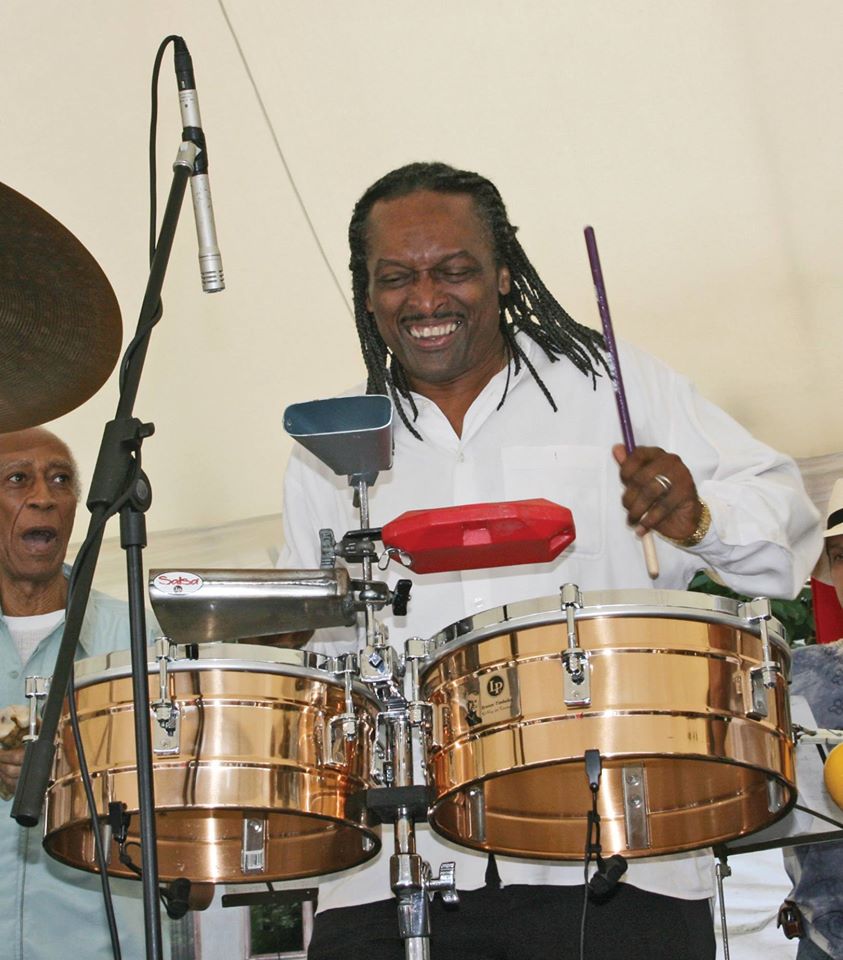
Music knows no barriers in cultural and linguistic terms. Proof of this is drummer and percussionist Marco Toro’s amazing trajectory, who was born in Caracas, Venezuela, and whose musical roots are embedded in the rhythms and culture of that country.

Five years ago, the artist launched his latest music work based on what we know as Latin jazz, which is a blend of rhythms and sounds that transport its hearers to certain parts of Africa and South America.

Marco Toro in the netherlands
Marco Toro with one his instruments

This percussionist always flaunts his versatility by interacting with first-class musicians from all latitudes, with whom he has created certain musical productions. In addition to that, he can play the drums, timbales, the conga, the big drum, the maracas, among others.

In 2004, Toro released his solo project called Marco Toro y su Ensamble, with which he began to venture into rhythms such as joropo, salsa and rock.

We were pleased to converse with him on his musical history told by himself.

You have a very interesting musical and personal story. We would like to know a little more about your beginnings. When did you decide you wanted to make a career out of this? How were your first steps into the musical world and what inspired you to accomplish what you have done today?

Well, my beginnings were with my dad, may he rest in peace. I started by playing the maracas with him. He sang and played the cuatro. I sang llanera music in bands and trios like Los Panchos. I sang serenades, I was a serenader within the Guarenas blocks and played llanera music with a hat Pelo É Guama since I was 9, which I did not like when I was little kid, but anyway I did it.

After that, I began taking drum lessons when I was 14 or 15 years old with a drummer friend named Ildemaro, and afterwards in Caracas, I also took a couple of classes with the Daiquiri band’s drummer in Hemisferio Musical, which was a school with music store in Sabana Grande (area of Caracas) with a teacher named José Matos.

Finally, I also took lessons with Willy Diaz who is a drummer in Caracas and with whom I made recordings and other things.

Then from there, I was hitting on rock. Let’s say, I knew much about salsa from my mother and I don’t know if the new generation is aware, but there was what we used to call matinees, where I danced salsa while at home, I listened to rock. That’s where this mix comes from, but overall I have always liked those musical styles and it shows at what I do.

In Guarenas there was a group called Estandard and we started playing original music with musicians from Caracas and Guarenas, with whom we used to mix these two styles (salsa and rock). We mixed heavy metal with Latin music and rehearsed in a studio in Caño Amarillo (another area in Caracas), which was equipped with many Latin instruments such as the conga or the timbales, and that was how the whole mixing of the Latin with rock began.

We started doing very well, so much so that we recorded a demo and ended up playing with Desorden Público, which at the time was one of the best bands.

We played with them in Mata de Coco and the Poliedro of Caracas. The band was getting a lot of swing until, like every young man with dreams, the time came when we felt we had to head to new directions, so we decided to go to the Old Continent and bring our savings here.

When we finally got to Europe, many doors were opened for us because this was a style that was not being done anywhere in the world at the time. So, through the Dutch ministry of culture, began to appear the first recording deals and we got a chance to play on local television networks.

A lot of people did not even know where Venezuela was, so we did really well and started touring Europe. I got a little off track there (laugh), but that is what the emotion of talking is about.

It is a very interesting mix of rhythms without a doubt. You commented to us that you started a rock band, took salsa classes and listened to rock at home.

From here arises what is known as Latin jazz or sambojazz, could you tell us a bit about this interesting mix made in your career? How do you think your Venezuelan roots influenced your music along with all that you have learned abroad?

The Venezuelan roots have always been in me. Also, I have a regionalist family. My parents and my uncles always bet on Venezuela, so I grew up with this picture in my mind even though I listened to foreign music. Thankfully I have always been open to any kind of rhythms, but my roots became to grow when I played Christmas bonuses, aguinaldos and Afro-Venezuelan drums in the block where I lived. By the way, I lived very close to Curiepe (a Venezuelan town in the state of Miranda where drums and Afro-Caribbean music are very common).

More than once, I went to Curiepe (another Venezuelan town in the State of Miranda) rumbas to celebrate the festival San Juan, so this Afro-Venezuelan part was always very present.

When I got to Europe, I wanted to learn more about Afro-Venezuelan and Afro-Caribbean drums in general. In Venezuela, drums were a mere pastime, but here we had to explain the origin of our music, so we had to learn many more about these instruments.

After that, I realized that our music was different and very original to each other’s ears. When there was talk of Caribbean music, you just heard the names of Cuba and Brazil, but things have changed because Europeans have become much more open to new rhythms and the large number of Venezuelan musicians who have left the country and brought Venezuelan culture to a new level. That has made Venezuelan music more present and many musicians, artists, dancing painters have been in this. Everyone doing their bit.

Musician Marco Toro next to his drum
Marco Toro poses next to his drum

Everything what you told us is very interesting. In that case, can you tell us about the change in attitude of Europeans toward all those Venezuelan rhythms and the vision they have of Latin talent compared to a few years ago?

If you want to enter, you need to get it nice and slow. Venezuelan music have been accepted immediately by Europeans, but they feel like it is something new by listening.

That does make them pay a little more attention. That is like saying that arepa vendors should make them thinner for the European, since they don’t like it too thick. Thus, you should turn this around to introduce our music so people can enjoy it, but we have only been able to form music groups in December and the majority of attendees are Venezuelans and their Dutch partners.

Our music has not become as internationalized as much as salsa. When you go to a place where you dance salsa, the band can come from anywhere and people will always dance it. We have not yet succeeded in making people dance to Venezuelan drums in the same way. We have only participated in festivals where all kinds of music are played, but we are working on it.

And so we go on little by little. The important thing about Venezuelan musicians is that we have always been influenced by all kinds of Afro-Caribbean music, which makes a big difference. The other countries do not play our music, which makes make a big difference. In addition, there are always Venezuelan musicians in almost all orchestras. I mean, we have entered our music thanks to our musical aperture and our participation in any genre.

I personally don’t like labels, I’m a musician and if there is anything I can do in any genre I will do so without any problem. I am not one to take salsa or any musical style as a religion. I am very open to playing with the Dutch, the gringos and whoever. I love participating with different nationalities because that is where learning occurs.

Everything you have told us is very interesting. Certainly, This set of mixtures you use is what has made your work so interesting, you are not afraid of anything. You also told us that you have to adapt your rhythms to the European’s ear to make it more enjoyable.

Could you tell us how you have made Europeans to get interested in Venezuelan music and what arrangements have you made at instrumental level to make it more enjoyable to their ears the first time they hear them?

I’m going to give you an example. I am performing with a group called Drums United with which I have toured the world. With them I included Curiepe’s drums culo e´puya and have a show where I play that instrument. What do I do? I play that instrument first for people to hear it and at the same time one of the members explains to them how these drums sound, where they come from, their roots, how they got there, among other things.

After playing them, I sing the most popular music with those drums in the background and people really get into it. My way of singing is so easy for the European who come to party with those drums. I also sing with the attendees and throw a party with them, I think it is the best way to interact with the public when they do not know our music.

Also, I have made compositions in which we do not use the drums that are typical in Venezuela. We use a grenadier and a snare drum that are known around these parts. One of my own compositions is called Reina Pepiada (arepa with chicken and avocado salad which name means ¨curvy queen¨ in honor of Susana Dujim, the first Venezuelan international beauty queen) and the other is Guasacaca (savory sauce very similar to guacamole).

When our songs come up, people ask the meaning of the names mean, and that is where we need to explain this. In my case, music is closely linked to food, and so you start to raise public interest.

In that case, in what way has music helped to put Venezuela and other Latin American countries on the map after listening to these rhythms?

Venezuela has become known for all the Venezuelan musicians who are in these parts. Each of us, within his style, has done that. La India came here and we joined her. We were rehearsing without her and when she came in she said she knows that there are Venezuelans on the team and asked who they are.

We were six Venezuelans and she said she had nothing to worry about because everything will be fine. That is the explanation of how Venezuelans in Europe and elsewhere have earned a reputation for discipline and effort. That has helped us turn the attention of the European public to what we are doing.

For instance, in New York there is a group of Venezuelans who are an emblem. I can name Luisito Quintero, Roberto Quintero, Raúl Agrá, and some others. Here is also a tremendous crowd putting on the table their best effort. There is Orlando Poleo in France, Javier Plaza in Germany, and many others. Here’s a crowd doing his best.

What we do have is a short break for the pandemic. Well, in my case, I had a tour with some saxophonists, but all of this year was cancelled. We are all waiting for things to go back to normal to move forward. Meanwhile, I wrote two new songs during the pandemic. Everyone has been recording material at home and sending us their files. There was even a song that Marcial Isturiz sang from Colombia and sent me the files, so I worked on the mixes and turned this around.

Marco Toro smiling
Marco Toro willing to play his music

Covid-19 and adaptation to the new normal

In view of the fact that all artists had to reinvent themselves because of all this situation caused by COVID-19, in what way have you been impacted, both professionally and personally?

I have been touring, playing in all places, and suddenly the front door gets slammed in your face. And it happens to be, like, what now? Not just for myself, but for many people as the world was surprised by this and now we have to learn to live with it.

What else are we going to do? You have to look after yourself and turn this around. In spite of everything, I am not complaining because I have noticed that I have sold many records. I have sent records from here to the United States and other parts. At a certain point, the live shows have been cancelled, but music is still sold. Additionally, there is a couple of interview there and over there.

In that case, what would you recommend to all new generations of musicians?

What I recommend is that the new generations is that they should have discipline. I bethink that this is the most indispensable in the music world and when I talk about discipline I mean the study of your instrument to try to be better. For example, you have to be on time or earlier for the band plays or practices. Please call if you have a problem. Everything that has to do with discipline is important because I have seen many excellent musicians who have failed as they have not had discipline. So these is paramount to succeed.

So, as we confront this new normal, what advice can you give to these new generations at the suspension of concerts are going to be canceled for a long time? Given this new scenario, what would you advise those who are starting in the music world?

Well, I recommend them remain positive and use the brain to get what they want. If one door has closed on us, one will be open up. However bad the situation is, one can always invent things. There are many musicians who are doing online concerts. So they have their account, and if people like their music, they can put some money in their accounts. I think it is fabulous. Other people are doing other things. There are people that play in front of their homes and those who walk around can give them some money too. A lot is happening here until then, you have to be positive.

When a person is complaining all the time, he is just adding negativity upon himself, making doors harder to open. In my case, I just made two new songs, one is called Mi casa (My house in Spanish), which is a parrandón (musical genre typical in Christmas) with Afro-Venezuelan drums and is dedicated to Venezuela. The other is called Sólo un poco. I have a little studio and from where I record and send material to other places. That is how I held mi own and made my productions here from the house.

My message is that. We have to move forward. When I came to Europe, I arrived with a small suitcase without knowing where to go and my English was so bad that I could not make myself clear. I got in touch with the culture of this country and met people. However, I have not lost touch with Venezuela, and what is more, I go every year. In 2018, I was playing at La Casa del Artista, La Rumba Latina in Guatire and elsewhere.

A final message to the public of International Salsa Magazine and your social networks.

My website is www.toro-ensamble.com, you can follow me on my Facebook Marco Toro y su Ensamble and you can follow me on Instagram as @Sambojazz

As a final message, we have to be positive and think about the good times to come. We have to be patient, wear a mask and take care of ourself because this is not a game. And most of all, we have to take care of elders.

I tell young people to listen to your elders. Listen to old music that is very important and then listen to modern music because everything has its roots and starts at a certain point.

Home

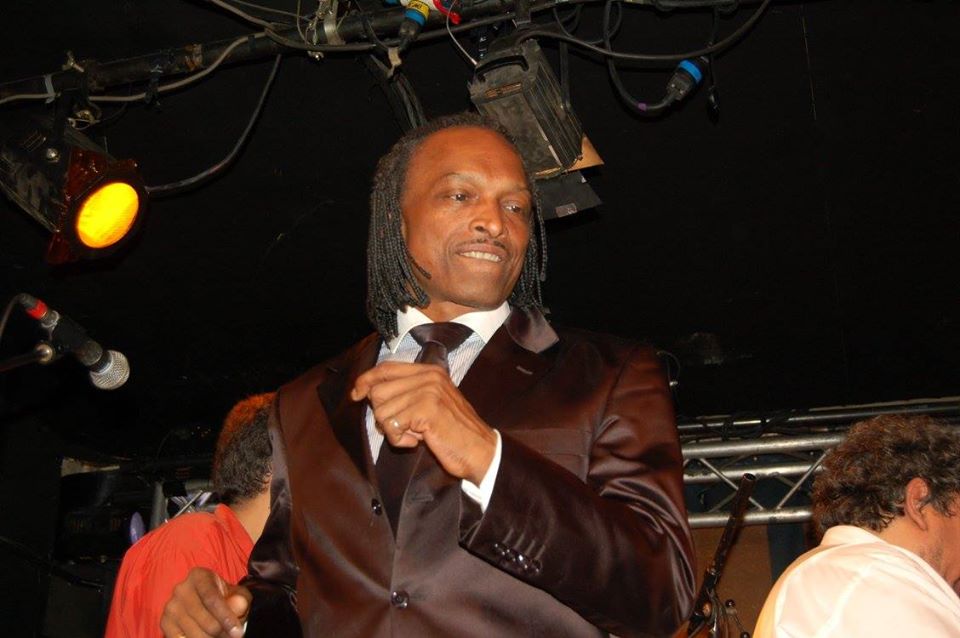
Orlando José Castillo: The Venezuelan sonero graduated in New York

Orlando José Castillo “Siempre Pa’lante”

He (Orlando José Castillo) is catalogued as one of the most important soneros that Venezuela has given to the world and considered a living legend of Afro-Caribbean music for his extensive, successful and extraordinary career during many years; for “International Salsa Magazine”, it is a great honor to have as a special guest on this occasion Orlando José Castillo “Watussi”, born in Marín, Yaracuy state, on March 23, 1949, who, since he was a child, moved with his parents to live in the parish of La Pastora in the city of Caracas.

Welcome Master Watussi and we hope that all salsa lovers through International Salsa Magazine, www.salsamundi.com, will know part of his life.

Thanks to all the staff for giving me the opportunity to read your magazine, which is already observed in Latin America, USA and Europe.

Orlando José Castillo "Watussi" The Venezuelan Sonero graduated in New York
Orlando José Castillo “Watussi”

And well, I am currently living in the city of Milan, Italy and let me tell you that I have beautiful and unforgettable memories of Barquisimeto, so for me it is a pleasure and an honor at the same time, to be sharing with all those people and my country.

To begin with, Maestro Watussi, which were the first groups and orchestras you were part of? Let me tell you that I started with Los Satélites, Federico y su Combo Latino, Porfi Jiménez, Príncipe y su Sexteto and that was super important, since they were the Venezuelan orchestras with which I began to form my career, especially with Los Satélites, Porfi, Federico; I sincerely owe the present of my life to all of them and that is why I do not want to leave them out of the picture.

"Watussi" The Venezuelan Sonero graduated in New York
Orlando José Castillo “Watussi”

Very good teacher, we would like to talk about your career in Puerto Rico and in the United States, with the various groups with which you were part.

Well, I tell you that I left Venezuela in 1979 definitely because I traveled for the first time in 1971, musically speaking, and it was my first international tour to the island of Santo Domingo with Los Satélites and then we returned in 72 and in 1974 we were the first Venezuelan orchestra to set foot on American soil in New York City.

NY being on the most important stage in the world at that time as it was Madison Square Garden and the importance of imposing a hit of musical salsa in the Big Apple, with a song I recorded called “Traicionera”, by the master Carlos Guerra and recorded with “Los Satélites”, after that experience I was founder of the “Renovación”, from there I went to be part of “Federico y su Combo Latino”; Then I worked with Rafael Cortijo and his Combo in Puerto Rico in 1977.

Later, in 1979, I went to the island of Borinquén, Cortijo was already traveling to New York and because I could not accompany him, I was lucky enough to be asked by the maestro Bobby Valentín to be part of his band. I stayed with him for three months and at one point I went to New York, The strike of Puerto Rican musicians, as many Dominican musicians were entering the island, led to Bobby being criticized for having a Venezuelan singer instead of a Puerto Rican one.

Later, in New York, I joined Cortijo and Kako Bastar again, who was another teacher in my career and with him I learned to know that great city and at that time almost all the singers of the orquestas bravas, were beginning to do their own work as soloists and I began to work with Joe Cuba and his Sextet, Eddie Palmieri, Larry Harlow, La Típica 73, until I arrived at the “Conjunto Libre”, I was there for about a year and a half, I recorded with them “El changó de María”.

After I had signed with the Fania label, which was a mistake I made, because Cortijo and Kako were telling me not to do it, since I had Fania in my brain, I rushed and was with them for a year practically inactive in the discography and that cost me not to have recorded the last album with Rafael Cortijo and others.

I recorded with Fania “Mi rumba y yo” and told them to leave me alone, they let me go and I joined the orchestra of “Bobby Rodríguez y su Compañía” for three years, I recorded a very good album, including the songs “María Cristina”, “El Pintor”, “Homenaje a Cortijo”.

In fact Carlos, then I continued with Palmieri in 1987, when I had already recorded the album “Las Calaveras” with José Mangual Jr. and there I began my career as a soloist.

Later on I set up my orchestra in New York, but unfortunately work began to decline due to the closure of venues such as El Corso, Casablanca, Copacabana, El Palladium and that brought as a consequence much less work, but thank God, in 1988 I had the opportunity to go to Paris, invited by my compadre Alfredo Cutuflá, in the place of Cheo Feliciano, to do the dance of December 31st at the New Morning.

Excellent, master Watussi, and it must have been a great commitment to replace Cheo at that time, tell us about this experience. Yes, I was fortunate to take his place because he did not travel at that time without his orchestra and Alfredito Cutuflá told me to get Cheo, I had his telephone number, I gave it to him and he told me that if Cheo did not go, I would go, and well it was a tremendous success with Cutuflá and that opened the doors for me in Europe and specifically in Italy, where my friend Carlos Ugueto was based, who brought salsa to that country.

Orlando José Castillo "Watussi"
Orlando José Castillo “Watussi”

Ugueto played the first album of this genre on his radio program, in his club and after he found out that I was in France, he sent for me and facilitated a tour in Milan in 1990, since in 1989 I was in Panama, singing to my compadre’s daughter Roberto “Mano ‘e Piedra” Durán, his 15 year old party, together with Camilo Azuquita, exactly on December 16, 1989,

but on December 19 the invasion of Panama began and I had to stay there until January 5 and well Carlos, I go to Europe and start my tour in Holland, then London, where I did a show with the master Tito Puente, on December 30, 1990, there I was 2 months in the old continent; I returned to New York, where I was residing, and in 1991 I returned to Europe and that’s when I stayed here for good with my family in Milan.

Orlando José Castillo, when you come to Venezuela, we imagine you will feel very well because you are visiting your homeland?

Of course I do, professor, when I go to my country I recharge my batteries, because there is no place like Venezuela, no matter what happens and I tell you honestly, I hope one day to be able to be in Barquisimeto with you, especially to personally show my appreciation for this gesture of having given my name to that “Peña Salsera Orlando Watussi”, in the middle of 2019, being the first time in Venezuela, to give me an honor of that size; especially my thanks to Dany Castillo and my family there, precursors of that idea, and to all the musicians of the musical capital to whom I send a cordial greeting.

Master Watussi, I am remembering that you were integrating the “Clan of Salsa” here in our city, do you remember that too?

Obviously, my friend Carlos, I was there with one of the bravest singers that Venezuela has given, my little brother Willy Rodriguez, who unfortunately is no longer with us.

Willy “El Guaro”, took care of me in his house for a few days, until I got my house in Barquisimeto; I am going to take advantage of this interview professor, to thank the family of Aldemar Barrera, the family of Honorio, tremendous bass player, Coromoto, who was the engine of that movement; greetings equally to Egidio and to all those panas.

Carlos, I want to greet especially the people of the Orquesta Malecón, I hope that one day we can meet on a stage and make a little effort, or perhaps in the Peña itself.

Orlando José Castillo, what can you tell us about Maestro Baquedano? Santiago Baquedano is one of the best musicians Venezuela has ever given and with him I worked on Margarita Island for a few months and from there I went to “La Salsa Mayor” and then I went to Puerto Rico, but I feel proud to have shared with so many valuable people from my country in my 50 year artistic career.

And let me tell you Carlos, just to finish, I reiterate my congratulations and good wishes for you to continue always with the work you do with this salsa column and your radio program, which aims to support and encourage musical talent in salsa.

Thank you Carlos and God bless you, take care all of you in my country and don’t leave the house! Cool…!.


Home

Find out all you want at the Love Sensual Festival

Europe / Croatia

Very seldom do we get places and festivities that have everything we like on one occasion.

As it turns out, they do exist, but we must make efforts to look for them, even in the locations we never expected.

One example of this is the spectacular Love Sensual Festival, which includes everything you can expect from an event of its stature. This great show will have as point of the beginning a series of celebrations that you will not believe. Not to mention that they will be held in the most spacious halls you can imagine and with the best artists and dancers of the time.

Love Sensual Festival in Croatia
A group dancing and singing at the Love Sensual Festival

If you thought that the foregoing was not enough, the event will also offer a set of concerts and dance classes that will awaken your taste in contemporary African music.

The Love Sensual Festival includes the newest African rhythms of today, among which we can find kizomba, urbankizz, semba, zouk, and many others.

Workshops:

1) URBANKIZZ / KIZOMBA / SEMBA / ZOUK

2) BACHATA: MODERN / SENSUAL / FUSION / DOMINICAN

3) SALSA ON1 / ON2 / CUBANA / RUEDA / MAMBO

Location: Valamar Diamant Hotel. Brulo bb, Porec

Porec, Istarska Zupanija, Croatia

Date: from April 30 to May 5 2021.

Home

  • « Go to Previous Page
  • Page 1
  • Interim pages omitted …
  • Page 39
  • Page 40
  • Page 41
  • Page 42
  • Go to Next Page »

International Salsa Magazine (ISM) is a monthly publication about Salsa activities around the world, that has been publishing since 2007. It is a world network of volunteers coordinated by ISM Magazine. We are working to strengthen all the events by working together.