• Skip to primary navigation
  • Skip to main content

International Salsa Magazine

  • HOME
  • Previous editions
    • 2026
      • ISM / March 2026
      • ISM / February 2026
      • ISM / January 2026
    • 2025
      • ISM / December 2025
      • ISM / November 2025
      • ISM / October 2025
      • ISM / September 2025
      • ISM / August 2025
      • ISM / July 2025
      • ISM / June 2025
      • ISM / May2025
      • ISM / April 2025
      • ISM / March 2025
      • ISM / February 2025
      • ISM / January 2025
    • 2024
      • ISM / December 2024
      • ISM / November 2024
      • ISM / October 2024
      • ISM / September 2024
      • ISM / August 2024
      • ISM / July 2024
      • ISM / June 2024
      • ISM / May 2024
      • ISM / April 2024
      • ISM / March 2024
      • ISM / February 2024
      • ISM / January 2024
    • 2023
      • ISM / December 2023
      • ISM / November 2023
      • ISM / October 2023
      • ISM – September 2023
      • ISM – August 2023
      • ISM July 2023
      • ISM Edition June 2023
      • ISM – May 2023
      • ISM April 2023
      • ISM March 2023
      • ISM February 2023
      • ISM January 2023
    • 2022
      • ISM December 2022
      • ISM November 2022
      • ISM October 2022
      • ISM September 2022
      • ISM August 2022
      • ISM July 2022
      • ISM June 2022
      • ISM May 2022
      • ISM February 2022
      • ISM January 2022
    • 2021
      • ISM December 2021
      • ISM November 2021
      • ISM October – 2021
      • ISM September 2021
      • ISM August 2021
      • ISM July 2021
      • ISM May 2021
      • ISM April 2021
      • ISM June 2021
      • ISM March 2021
      • ISM February 2021
      • ISM January 2021
    • 2020
      • ISM December 2020
      • ISM November 2020
      • ISM October 2020
      • ISM September 2020
      • ISM August 2020
      • ISM July 2020
      • ISM June 2020
      • ISM May 2020
      • ISM April 2020
      • ISM March 2020
      • ISM February 2020
      • ISM January 2020
    • 2019
      • ISM December 2019
      • ISM November 2019
      • ISM October 2019
      • ISM Septembre 2019
      • ISM August 2019
      • ISM July 2019
      • ISM June 2019
  • Spanish
  • Download Salsa App
    • Android
    • Apple

Latin America

Paoli Mejías A Talent Forged in the Streets and Discipline with a New Sound in Latin Jazz

From legendary sideman to the leader of a limitless musical vanguard.

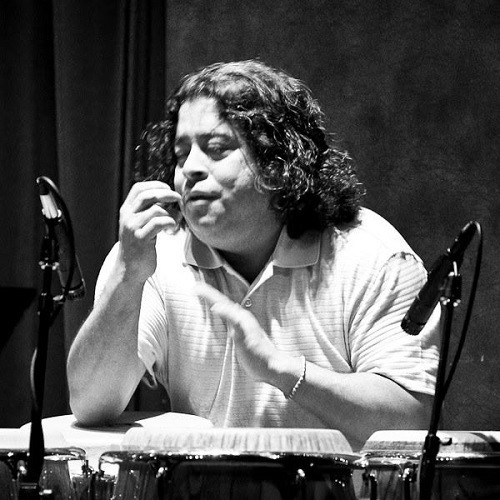
Paoli Mejías is a pivotal figure in the evolution of contemporary percussion, renowned for his seamless fusion of Latin jazz with masterful conga technique.

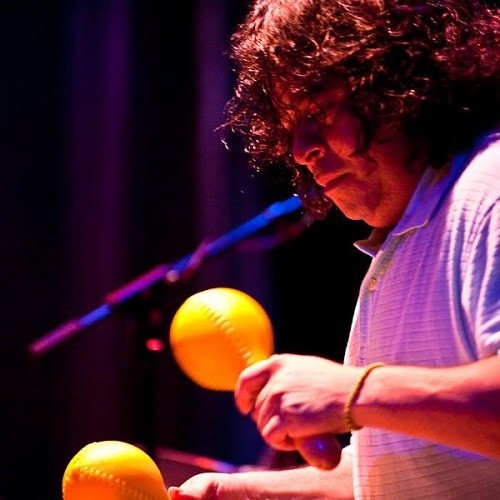
Paoli Mejias: From accompanying legends to leading a musical vanguard without borders

Paoli Mejias: From accompanying legends to leading a musical vanguard without borders

While he is an exceptional multi-percussionist, his command of the congas has established him as one of the most in-demand soloists in the world.

He is distinguished by a melodic style; he doesn’t just keep time he makes the drums “sing,” utilizing precise tuning and astonishing speed.

After touring the globe alongside icons such as Eddie Palmieri, Tito Puente, Seis del Solar, Chick Corea, and Marc Anthony, Mejías has solidified his status as an international benchmark. His vast musical, folkloric, and cultural knowledge positions him today not only as a percussion virtuoso but as a visionary leading his own quintet.

With a career marked by success, Mejías has produced three high-caliber independent albums: Mi Tambor (2004), which received a Latin Grammy nomination, Transcend (2006), and Jazzambia (2008).

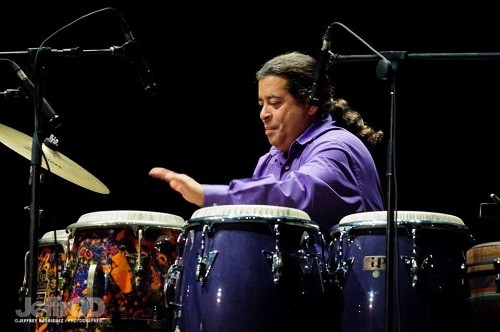
Paoli Mejías, a talent forged in the streets and through discipline

Paoli Mejías, a talent forged in the streets and through discipline

These works have placed the Puerto Rican percussionist at the forefront of the genre, earning glowing reviews in the world’s most influential publications, including JazzTimes, DownBeat, Jazziz, and Modern Drummer.

A Talent Forged in the Streets and Discipline

Born in Río Piedras, Puerto Rico, on March 7, 1970, Paoli discovered his calling at the age of twelve. Inspired by the records of Carlos “Patato” Valdés and Ray Barretto, and the innovation of groups like Batacumbele and Irakere, he bought his first conga and began a self-taught journey.

Without formal teachers, he learned the language of percussion by mimicking the sounds emanating from his favorite vinyl records.

Paoli Mejía with Nuevo Sonido en el Jazz Latino

Paoli Mejía with Nuevo Sonido en el Jazz Latino

His true training took place in the effervescent musical atmosphere of San Juan, absorbing the styles of his mentors in street rumbas.

His professional debut came via Rafú Wagner (former vocalist for Bobby Valentín), and while still a teenager, he was already collaborating with renowned local artists such as José Nogueras, Glenn Monroig, and Charlie Sepúlveda.

The Leap to the Global Stage

His impeccable technique and melodic sensitivity quickly made him the preferred sideman for the greats. For over eight years, he was a key member of maestro Eddie Palmieri’s orchestra, recording on historic projects like Masterpiece/Obra Maestra (with Tito Puente), which won a Grammy Award.

Paoli Mejías is a fundamental figure when discussing the evolution of contemporary percussion

His discography now exceeds 20 commercial productions, including the nominated Acuarela de Tambores.

This exposure to world music enriched his creative fire. As Elmer González noted in Latin Beat: “Through Mi Tambor, Paoli achieves a watercolor of rhythms and textures that make this album one of the best Afro-Latin jazz productions released as a leader, and he aspires to continue a career forged on the stages of the world’s most important festivals.”

Beyond the Traditional Genre

Today, Paoli Mejías’ group offers a style that transcends labels. His proposal fuses the “Salsa Gorda” of the big orchestras with Puerto Rican bomba and plena, incorporating nuances of Greek, Flamenco, Indian, and African music. The result is a vibrant experience where the audience ceases to be spectators and becomes participants.

His versatility was cemented at the Heineken Jazz Festival, where critics highlighted his absolute mastery of minor percussion, timbales, bongos, and ethnic instruments like the Nigerian Udu, hailing him as one of the most complete percussionists of our time.

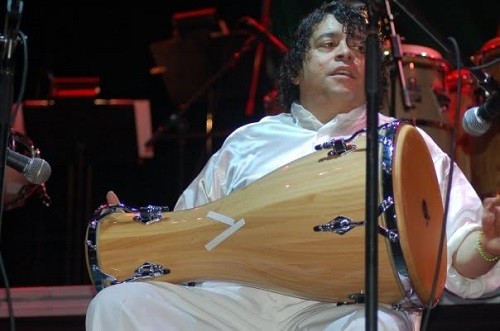
Paoli was there: Eddie Palmieri, Tito Puente, Seis del Solar, Chick Corea and Marc Anthony

Paoli was there: Eddie Palmieri, Tito Puente, Seis del Solar, Chick Corea and Marc Anthony

Beyond his role as a performer, the “Maestro” shares his knowledge by conducting clinics at prestigious institutions such as the University of Washington, the University of New Mexico, and the Puerto Rico Conservatory of Music.

Sponsored by leading brands like Latin Percussion and Sabian, Paoli Mejías continues to elevate the legacy of Latin jazz into exciting new dimensions.

Member of Santana

Paoli Mejías is a world-renowned percussionist who was a member of the band Santana, led by Carlos Santana.

Joining Santana: Paoli joined the group in 2013, taking over the conga chair. His arrival brought an impressive technical energy and rhythmic depth, establishing him as a fundamental piece of the band’s world tours for several years.

Source: Paoli Mejías

Photos: Paoli Mejías Archives / © Martin Cohen

Also Read: Carlos “Patato” Valdés: One of the Greatest Percussionists in Latin Jazz History

Profile of Raimundo Elpidio Vázquez Lauzurica: The Guardian of the Rhythm in Sonora Matancera

The heir to a musical dynasty that defined the sound of the “Dean of Latin Ensembles”

On March 15, 1934, the Jesús María neighborhood in Havana saw the birth of one of the most solid figures in Cuban syncopation: Raimundo Elpidio Vázquez Lauzurica. Known worldwide as “Elpidio Vázquez,” his destiny was written between the strings of a double bass and the mystique of Cuba’s most iconic musical group.

As the son of the legendary Pablo Vázquez Gobín (“Bubú”) and the older brother of master pianist Javier Vázquez, Elpidio did not just inherit an instrument he inherited a historical responsibility.

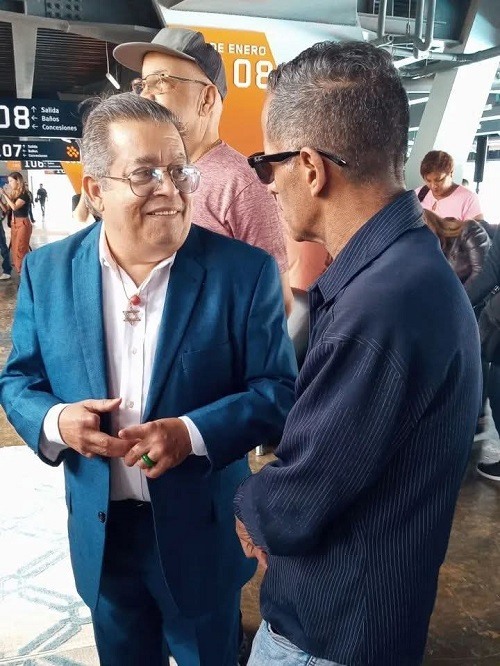
Javier Vazquez y Elpidio Vazquez

His formal connection with Sonora Matancera began in 1952, when he started subbing for his father. It didn’t take long for his talent to secure him the permanent spot, becoming the rhythmic backbone of the institution until the end of his career.

Legacy and Musical Contributions: Beyond the Double Bass

Elpidio Vázquez was not just a performer; he was a sonic architect. His ability to maintain a precise tumbao allowed Sonora Matancera to preserve that unmistakable harmonic signature that captivated the entire continent.

In addition to his technical prowess, Elpidio shined as a composer, contributing tracks that became essential hits:

Elpidio y Vazquez y Celio Gonzalez
  • “Le dio con la sartén”: A guaracha recorded by the “Flaco de Oro” (The Golden Thin Man), Celio González, in late 1959.
  • “La negrita inteligente”: A gem performed by the Queen herself, Celia Cruz, in 1961.

His versatility led him to explore other musical horizons. He participated in the vibrant Cuban descarga (jam) sessions alongside Osvaldo “Chihuahua” Martínez and collaborated on historic recordings with giants of salsa and bolero, such as Ismael Rivera, Daniel Santos, Johnny Pacheco, Justo Betancourt, and Roberto Torres.

The Double Bass: Unlike many bassists of the salsa era who quickly transitioned to the Baby Bass or the electric bass, Elpidio is remembered for his mastery of the acoustic double bass, maintaining that organic, deep sonority of traditional, evolved Cuban son.

Recognition and Saying Goodbye to the Stage

One of the most memorable chapters of his career took place in 1989, during the 65th-anniversary celebration of Sonora Matancera. Organized by Gilda Mirós, Elpidio rocked world-renowned stages like Carnegie Hall and New York’s Central Park, reaffirming the band’s timeless relevance.

La Sonora Matancera en el año 1956

Career with Sonora Matancera

  • The Historic Handover: In 1952, Elpidio took on the responsibility of replacing his father on the double bass for Sonora Matancera. This was no small task, as he had to maintain the characteristic tumbao that had defined the group’s sound for decades.
  • Sonic Signature: He is credited with imprinting a robust harmonic stamp and a rhythmic stability that allowed Sonora to back the biggest stars of the era (Celia Cruz, Nelson Pinedo, Bienvenido Granda, etc.) with flawless precision.
  • Exile and Continuity: Like the rest of the group, he left Cuba in 1960, continuing his career abroad and participating in Sonora’s prolific New York era and their international tours.

A historical footnote: After the death of Rogelio Martínez, it is said that Elpidio was designated as the group’s musical director by public deed. However, in a gesture of humility and after decades of dedication, he preferred to retire in New Jersey, letting his brother Javier take the helm for the orchestra’s new era.

Sonora Mattancera
Sonora Mattancera

Today, the figure of Elpidio Vázquez remains a symbol of artistic fidelity and musical excellence the bridge between the tradition of “Bubú” and the modernity of New York salsa.

Also Read: La Sonora Matancera musical congregation of long trajectory and its sound quality, is one of the most popular in the Caribbean island “Cuba”

José Mangual Sr. “Buyú”: The Architect of Bongo Sound Defining the Rules of How it Should Sound

In the history of Afro-Latin music, there are names that didn’t just play an instrument they defined the rules of how it should sound. José Mangual Sr., known universally as “Buyú,” is one of those pillars.

José Mangual Sr., known universally as Buyú, is one of those pillars

An extraordinary and legendary percussionist, José Mangual Sr. was the founder of the prestigious percussive lineage that carries his surname.

Since his childhood in Juana Díaz, he professed a deep love for music; by age ten, he was already playing professionally, and during his youth, he even enjoyed crafting his own bongos.

Over time, he became the musician who endowed the instrument with an extraordinary sonority. He was the father of the equally prominent percussionists José Mangual Jr. and Luis Mangual.

The Architect of Sound on the Bongos defining the rules of how it should sound

The Architect of Sound on the Bongos defining the rules of how it should sound

Considered by experts as one of the greatest bongo players of all time, his legacy remains the gold standard for meter and tuning in Latin Jazz and Salsa.

From Juana Díaz to the Heart of Spanish Harlem

Born on March 18, 1924, in Juana Díaz, Puerto Rico, Mangual discovered his vocation at age 10. However, his musical destiny was sealed in 1938 when he migrated to New York at the age of 14.

Settling in Spanish Harlem (“El Barrio”), he found himself at the epicenter of a cultural explosion that was about to change world music forever.

The Consecration: Machito and his Afro-Cubans

Although he began by filling the timbales position, it was with the Machito and his Afro-Cubans orchestra where “Buyú” made history. Under the direction of Mario Bauzá (who is said to have given him his nickname), Mangual remained with the group for nearly 17 years.

The Legacy and the Patriarch of a Dynasty
  • Rhythmic Innovation: He was part of the “perfect percussion trio” alongside Carlos Vidal (congas) and Machito (maracas).
  • Historic Fusion: His performance was key to blending the complexity of Afro-Cuban rhythms with the harmonies of New York Jazz in the 1940s and 50s.

An Unrivaled Session Musician

His technique was so clean and his sound so bright that he became the preferred collaborator for the biggest stars. Throughout his career, he contributed his mastery to projects led by:

  • Tito Puente: The “King of the Timbales.”
  • Israel López “Cachao”: Participating in historic Afro-Cuban Jazz “descargas” (jam sessions).
  • Jazz Greats: His versatility allowed him to navigate fluidly between the world of Big Bands and traditional Salsa ensembles.

Pedagogical Legacy and Solo Career

In the 70s and 80s, Mangual recorded music not only for enjoyment but also for instruction:

The Patriarch of a Dynasty
  • Album “Buyú” (1977): A Latin Jazz gem on the Turnstyle label, featuring tracks like “Black & Brown Boogie.”
  • Musical Education: Alongside conguero Carlos “Patato” Valdés, he recorded the volumes of Understanding Latin Rhythms. These LPs became the auditory manual for thousands of percussionists around the globe.
  • The Mangual Dynasty: In 1986, he consolidated his family heritage with the album Los Mangual: Una Dinastía, recording alongside his talented sons.

“The sound of his cowbell and his bongo didn’t just mark time; they cemented the foundations of the music we dance to today.”

The Patriarch of a Dynasty

The impact of José Mangual Sr. extends through his sons, who inherited his musical excellence:

  • José Mangual Jr. (“El Milamores”): Famous bongo player and singer, a key figure in the orchestras of Willie Colón and Héctor Lavoe.
  • Luis Mangual: Renowned percussionist and musical director.

Passing and Recognition: Buyú passed away in 1998, leaving an irreplaceable void. In 2001, he was posthumously inducted into the International Latin Music Hall of Fame  a fitting tribute to the man who gave the bongo unprecedented brilliance and elegance.

Also Read: Israel “Cachao” López, a Cuban musician and composer, has been hailed as “the Inventor of Mambo”

Venetur Canaima Camp

Latin America / Venezuela / Bolivar
Venetur Canaima Camp

Canaima National Park is known worldwide as a “Natural World Heritage Site,” where you can enjoy not only the fresh air but also the great beauty of the tepuis (table-top mountains) and waterfalls, especially Angel Falls, the park’s most important tourist attraction.

It’s the perfect place for a pleasant vacation, to escape the daily grind, spend time with your family, and have a unique experience. Venetur Canaima Camp is one of the best-equipped camps in Canaima National Park, boasting the best location.

Venetur Canaima Camp - Restaurant
Venetur Canaima Camp – Restaurant

It’s also the largest and offers the most comfortable facilities, where you’ll receive the best possible service and a warm welcome upon arrival. The camp has an incredible view from its open-air restaurant, as you can see in the next image. This pleasant restaurant, called “Orquídea,” offers both national and international cuisine.

The restaurant is a spectacular churuata (thatched-roof structure) that is very… In keeping with the location, you can savor the most exquisite local cuisine or dishes of your choice.

There’s also a well-stocked bar, all near the lagoon’s edge, allowing you to enjoy the incredible scenery and even dance, especially if there’s an event.

Venetur Canaima Camp - Salto el Sapo
Venetur Canaima Camp – Salto el Sapo

For rest, there are both single and shared rooms, each with a well-maintained bathroom with hot and cold water, a closet for luggage and personal belongings, and air conditioning for added comfort. Room service is also available.

It’s an ideal place where you can not only enjoy excellent lodging and camping but also adventure tourism by visiting “El Salto del Sapo” (The Toad’s Leap) and “El Salto del Hacha” (The Axe’s Leap), whose torrential waters cascade from great heights, inviting peace and meditation. The journey to these waterfalls reveals a different, beautiful, incredible, and pleasant world.

From there, you can also take excursions to various destinations, such as: Isla La Orquídea (Orchid Island), the Pozo de la Felicidad (Well of Happiness), Canaima Lagoon, Yuri Falls, and… Angel Falls, known for having the world’s highest waterfall, can be visited by air (small plane) or land.

The entire tour is conducted with a guide who shares the most emblematic details of the area, the Pemón culture (the native inhabitants), and many of their fascinating stories. If you haven’t ventured far from the city, and you enjoy nature and adventure, we highly recommend visiting this place.

Venetur Canaima Camp - Stay
Venetur Canaima Camp – Stay

For more information, visit:

  • http://www.venezuelatuya.com/hoteles/mostrarhotel.htm?119,Campamento_Venetur_Canaima_
  • [email protected] / [email protected]
  • +58 289-540-2746 / +58 289-540-2747

Azucar Club Cubano

Latin America / Brazil / São Paulo
Azucar Club Cubano
Azucar Club Cubano

The “Azucar Club Cubano” opened in August 2000. The idea stemmed from Latin inspiration, with its vibrant and magnificent Caribbean music, leading to the opening of the first Latin club in São Paulo. To this day, it is recognized for its lively atmosphere and excellent service, where it enjoyed great success and continues to welcome all those who love Latin rhythms.

Among the rhythms played at “Azucar” are Merengue, Salsa, and Cumbia. It’s worth noting that Reggaeton and Bachata were added due to their popularity. All of these genres are provided by top Latin DJs, including Azucar Nelson Noce, Will Rosbon, Daniel Venezuela, and Julio Moracén. Both Brazilians and tourists visit “Azúcar,” so they specify a schedule of Latin rhythms to be played, as customers have different tastes. This way, you can enjoy the musical genre you want to dance to or listen to at the club that day. However, on Fridays and Saturdays, there’s a mix of Latin rhythms since those are the busiest days, marking the start of the weekend.

Photo 1: Azucar Club Cubano

Photo 2: Azucar Club Cubano

Photo 3: Azucar Club Cubano

Photo 4: Azucar Club Cubano

They also have a bar where the most popular drinks are rum and tequila, and their cocktails include the Margarita, the Tequila Margarita, and the Mojito, the latter known as the best in all of São Paulo. They also have a varied menu.

Azucar Club Cubano collash

The club is open to the public from Tuesday to Friday from 7:00 pm and on Saturdays from 8:00 pm, and you can pay with any credit or debit card. For more information:

  • Website: http://www.azucar.com.br/
  • Phone: +55 (11) 3074.3737
  • Facebook: https://www.facebook.com/azucarclubcubano/
  • Instagram: instagram.com/azucarclubcubano
  • « Go to Previous Page
  • Page 1
  • Page 2
  • Page 3
  • Page 4
  • Interim pages omitted …
  • Page 90
  • Go to Next Page »

International Salsa Magazine (ISM) is a monthly publication about Salsa activities around the world, that has been publishing since 2007. It is a world network of volunteers coordinated by ISM Magazine. We are working to strengthen all the events by working together.