• Skip to primary navigation
  • Skip to main content

International Salsa Magazine

  • Home
  • Previous editions
    • 2026
      • ISM / January 2026
      • ISM / February 2026
    • 2025
      • ISM / December 2025
      • ISM / November 2025
      • ISM / October 2025
      • ISM / September 2025
      • ISM / August 2025
      • ISM / July 2025
      • ISM / June 2025
      • ISM / May2025
      • ISM / April 2025
      • ISM / March 2025
      • ISM / February 2025
      • ISM / January 2025
    • 2024
      • ISM / December 2024
      • ISM / November 2024
      • ISM / October 2024
      • ISM / September 2024
      • ISM / August 2024
      • ISM / July 2024
      • ISM / June 2024
      • ISM / May 2024
      • ISM / April 2024
      • ISM / March 2024
      • ISM / February 2024
      • ISM / January 2024
    • 2023
      • ISM / December 2023
      • ISM / November 2023
      • ISM / October 2023
      • ISM – September 2023
      • ISM – August 2023
      • ISM July 2023
      • ISM Edition June 2023
      • ISM – May 2023
      • ISM April 2023
      • ISM March 2023
      • ISM February 2023
      • ISM January 2023
    • 2022
      • ISM December 2022
      • ISM November 2022
      • ISM October 2022
      • ISM September 2022
      • ISM August 2022
      • ISM July 2022
      • ISM June 2022
      • ISM May 2022
      • ISM February 2022
      • ISM January 2022
    • 2021
      • ISM December 2021
      • ISM November 2021
      • ISM October – 2021
      • ISM September 2021
      • ISM August 2021
      • ISM July 2021
      • ISM May 2021
      • ISM April 2021
      • ISM June 2021
      • ISM March 2021
      • ISM February 2021
      • ISM January 2021
    • 2020
      • ISM December 2020
      • ISM November 2020
      • ISM October 2020
      • ISM September 2020
      • ISM August 2020
      • ISM July 2020
      • ISM June 2020
      • ISM May 2020
      • ISM April 2020
      • ISM March 2020
      • ISM February 2020
      • ISM January 2020
    • 2019
      • ISM December 2019
      • ISM November 2019
      • ISM October 2019
      • ISM Septembre 2019
      • ISM August 2019
      • ISM July 2019
      • ISM June 2019
      • ISM May 2019
      • ISM April 2019
      • ISM March 2019
      • ISM February 2019
      • ISM January 2019
    • 2018
      • ISM December 2018
      • ISM November 2018
      • ISM October 2018
      • ISM September 2018
      • ISM August 2018
      • ISM July 2018
      • ISM June 2018
      • ISM May 2018
      • ISM April 2018
      • ISM March 2018
      • ISM February 2018
      • ISM January 2018
    • 2017
      • ISM December 2017
      • ISM November 2017
      • ISM October 2017
      • ISM September 2017
      • ISM August 2017
      • ISM July 2017
      • ISM June 2017
      • ISM May 2017
      • ISM April 2017
      • ISM March 2017
      • ISM February 2017
  • Download Salsa App
    • Android
    • Apple
  • Spanish

Latin America

José Mosquera from Barquisimeto for the World “The bodybuilder and elegant”

Barquisimeto, is well known as the musical capital of Venezuela and in this opportunity we will make special mention to the musician José Jesús Mosquera Cañizales, born in our city in the Antonio María Pineda Hospital, on May 23, 1969, son of Rafael Mosquera and Juana Cañizales, married to Yolanda García and from this union were born their children Yolanda José and Luis José.

Mosquera was always inclined to music since he was a child, participating in the musical activities of his school “Ciudad Bolivar”, located on Carrera 13 and 48th Street, in Barquisimeto, singing and playing the cuatro in a self-taught way and with the help of his father who taught him to improve his playing.

At the age of 8 he studied at Pablo Canela’s academy, at the age of 10 he learned to play guitar, also with the support of his father and his cousin Carlos Romero.
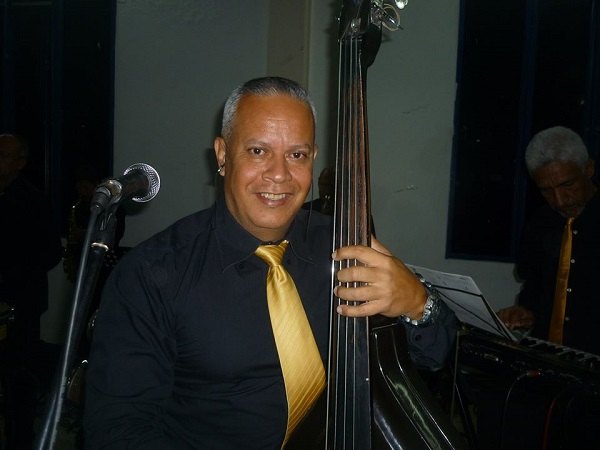
At the age of 11 he participates in the musical groups of the Christian church, standing out as a guitarist, drummer and timbalero. When he turned 15, he became interested in playing the bass guitar and during his high school studies at the Ezequiel Bujanda Combined Cycle, he met Jesús Rincón, also a musician, and joined the ranks of the “Obeligaitas” bagpipe group, where he began his career as a bass player.

When he turned 18 years old, he was part of the staff of the group “Tecnogaitas” of the Tecnológico Antonio José de Sucre and simultaneously he was bassist of the band “La Salle”. Afterwards, he is recommended to Alí Rojas and auditions to be the bassist of the “Sonora de Alí”, where he remains for 3 years.

Alí Rojas gave him the responsibility of being the bassist of the dance orchestra “Sensación”, where he remained for 15 years. In 1992, he began working as a music instructor for the Fundación del Niño until 1996.

Mosquera, besides being an excellent bass player, plays string instruments such as the cuatro, guitar and requinto.
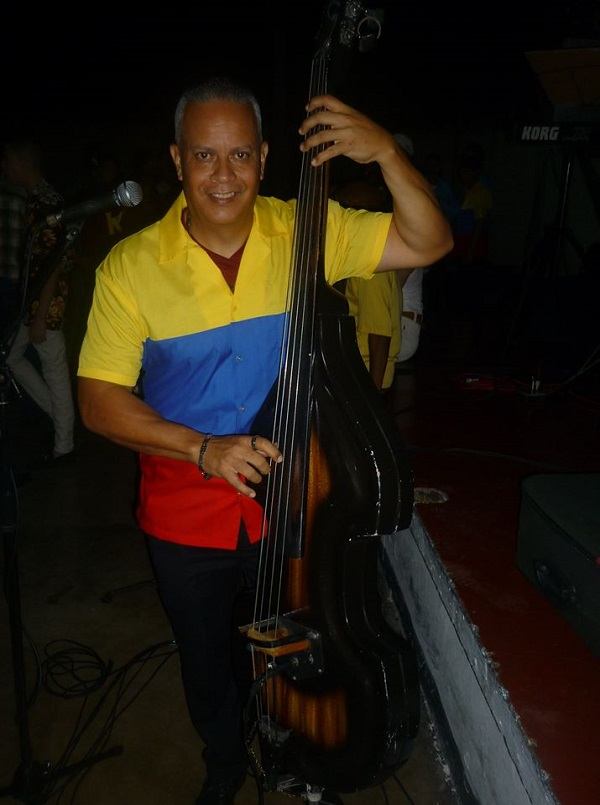
In 1993, Mosquera turned to romantic music and created the duet “Génesis” with his friend and compadre Carlos Enrique Prince, performing in nightclubs and private parties. In 1997, he joined the Poliboys Orchestra of the General Command of the Lara State Police as a bass player, where he currently works. In 2004 he began his musical studies at the Vicente Emilio Sojo Conservatory and graduated as an academic musician in 2009 with excellent grades. José has performed on regional television stations demonstrating his qualities in various prestigious programs and in 2016, he won 3rd place in the Police Voice Festival.

Mosquera, at what date do you become interested in salsa as a musical genre?, Professor Carlos in 2007 I start playing the baby bass and in 2011 I join the K’dencia Latina Orchestra of Carlos Sanchez and also had the privilege of accompanying Benjamin Rausseo “El Conde del Guácharo”, performing with his band and with K’dencia Latina, accompanied the late Willy Rodriguez, and vocalists of national and international renown: Hildemaro, Pibo Márquez, Charlie Guzmán, Alejandro Mayora, Mariana “La Sonera de Venezuela” and the official doubles in Venezuela of Rubén Blades (Jhony Heredia) and Celia Cruz (Ibrahíma Rondón).

Mosquera finally told us that musical excellence is achieved through perseverance and dedication.

Finally we wish the best of success on behalf of International Salsa Magazine, to the excellent musician José Mosquera “The bodybuilder and elegant bass”.

See you next time and let’s keep on salsaing!

José Mosquera “The bodybuilder and elegant”.

The 4 Ladies of Venezuelan Salsa project

The rumba night is dressed as a woman with the arrival of Las 4 Damas de la Salsa de Venezuela, a project of musicalizers at parties and events to exalt one of the Afro-Caribbean rhythms that most identifies Latin culture: SALSA.

The 4 ladies of Venezuelan Salsa debuted in May 2018, on the initiative of Sol Graffe after feeling that there was no female and group movement as DJane’s or musicalizadoras.

When musicalizing becomes, not a job but a passion, the commitment grows, and so these D’jane’s arrive presenting a different proposal giving prominence to females, with the aim of incorporating into the salsa market 4 women willing to permeate in a movement where the male presence predominates.

Professional and tasteful, lovers of this genre that unites us in one spirit: SALSA, to bring a musical selection, energy and good vibes to encourage salsa dancers and dancers of Venezuela and beyond its borders.

4 Personalities Conjugated in one Rhythm

DJane. Sol Graffe: Born in Caracas, a salsa dancer at heart, she became a radio promoter, TV producer and event producer under her slogan “Sol 100% Salsa” with more than 25 years of experience in the salsa industry.

DJane. Rocío Blanco: Born in Maracay edo. Aragua, lawyer, manager of the Posada Turística África and salsera by birth, dedicated to the musicalization five years ago being the only lady of the aragüeña entity baptized “La Consentida de la Salsa”.

DJane.  Zaire Plater: “La del Melao Salsero”, born in Caracas, economist by profession, salsera by conviction; dedicated to the musicalization of salsa for five years, leads the family project called “El Arepazo Salsero Plater”, where they gather a large group of dancers and salsa lovers to dance and share eating some typical and delicious arepas.

DJane. Zulay Millán: Caraqueña, lives between two passions: Radio and Salsa. She is a teacher by profession and a salsa dancer by heart. Announcer, certificate #55.721, voice over, radio producer, with experience in events and TV production, radio host for 25 years and counting, presenter/entertainer, composer and article writer, which explains her slogan “Soy Salsa y Más” (I am Salsa and More).

The 4 Ladies of Venezuelan Salsa have managed to position themselves with this interesting project in the salsa environment, whose protagonism brings a touch of elegance and distinction when they go on stage uniformed and organized, supporting each other, where camaraderie and good vibes are noted, as well as the demonstration of commitment and discipline setting a precedent, opening the way for alternatives to enrich the forms of dissemination of the salsa genre.

A solid project, which has the acceptance of producers and especially the dancers, who have become an important support for the permanence of Las 4 Damas de la Salsa in the collective memory and the salsa scene.

Sol, Zaire, Rocio and Zulay.

Last March 12, 2022 they were awarded as best musical project 2021 – 2022 event held at Cerro del Avila V.I.P Disco in Caracas, this activity was conducted and sponsored by Libia Ascanio and Edgar Mendoza.

They are The 4 Ladies of Venezuelan Salsa

Facebook: https://www.facebook.com/4damasdelasalsadura

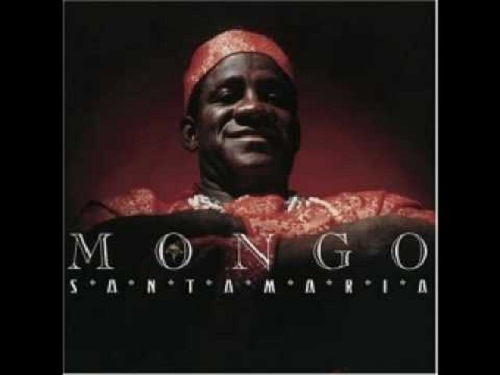
Ramón “Mongo” Santamaría “I wanted to do something that sounded like home”.

April 7, 1917, Mongo Santamaría was born in the Jesús María neighborhood of Havana, Cuba.

Exceptional percussionist of Latin Jazz and related rhythms, whose first name was Ramón Santamaría.

Mongo left to continue playing his Congas hard in the sky on February 1st, 2003.

“I wanted to do something that sounded like home”. With these simple words, Ramón Santamaría Rodríguez “Mongo Santamaría” spoke of his essence.

The purpose of his music pursued a sonority and a memory, possibly located in Cuba, in Jesús María, a marginal neighborhood where he grew up and enjoyed a tradition attached to the drum, to religion, to the street and from where this great Cuban percussionist drank infinitely.

But surely those drums also came to him from far away, from the Congo, where his grandfather came from to be a slave on the island and who also filled his head with sounds full of meanings and colors, which he later masterfully spread around the world.

The name of Mongo Santamaría (Havana, April 7/1917 – Miami, Feb. 1/2003) is, for the glory of all music, an inevitable reference of Cuban percussion.

Since he was a child he knew that his thing was to play the drum and he was lucky enough to belong to a family of empirical musicians, singers and drummers who supported him in the learning and mastery of these instruments.

During his time in Cuba, already a professional musician, he participated in numerous groups that little by little gave him a place among the most outstanding percussionists of the time. Some names of these groups are El Conjunto Boloña, Lecuona Cuban Boys, with whom he was able to participate in the recording of his first album, Conjunto Matamoros, Segundo Grupo de Arsenio Rodríguez, among others.

Each group had its own style and stamp, but in each of them Santamaría put his personal “touch”.

At the prestigious Tropicana cabaret he played with Chano Pozo as a member of Armando Romeu’s orchestra.

From that moment on, his career would not stop. Conjuntos, Septetos de Son were the perfect selection to complete the sap from which he would draw all his style and technique.

Later, from carnival to carnival, he would gather with other percussionists to play in the comparsas and experience the festive musical atmosphere par excellence of those years.

Alongside him played other friends who soon became a Cuban reference in the United States: Patato Valdés and Armando Peraza.

As part of the Tropicana orchestra and located in a show in Mexico, he decided to settle there as did many musicians of his time and came to play with Pérez Prado and Benny Moré.

It was precisely in the latter orchestra where he met Clemente Piquero “Chicho”, another Cuban percussionist whose style made him rethink the role of percussion in Cuban popular orchestras.

Mongo Santamaría belongs to the second wave of Cuban percussionists who arrived in New York in 1950.

His new idea of restructuring and designing his own style in the use of Cuban percussion was perfectly in tune with the reality that a few years earlier was being experienced in the music produced and sold in New York, after the arrival of the Cuban rumbero Chano Pozo.

“The rhythm produced by the conga organizes all the percussion of a band, from which melodies and counter-melodies can be experimented with.”

“I think percussion is the base from which things come out.”

Already in the United States, Mongo plays with Gilberto Valdés, again he is part of Pérez Prado’s orchestra and finally with Tito Puente’s, where he stayed for 7 years. Once in the line of Afro-Cuban jazz, so popular at the time, he joined George Shearing’s group and later the vibraphonist Cal Tjader.

With his own orchestra, he accompanied La Lupe, one of his favorite singers, and undertook projects of novel formats for the time, such as small formations of brass trio, piano, bass, percussion and drums, at a time when jazz bands predominated.

Mongo Santamaría, perhaps without the theatricality to which Chano had accustomed the New York public, focused all his strength on achieving his own sonority, with a fusion of Cuban styles and genres, perfected and deepened in the introduction of Afro-Cuban rhythms with a naturalness and using colorful timbre elements by using several tumbadoras in his set.

His creativity is highly demonstrated in the great amount of music that is part of his catalog of works and the quality becomes indisputable when seeing the amount of outstanding jazz interpreters that version and recreate his work.

In 1959 he recorded Tambores y cantos, which contains the song Afro blue, which over the years became “a jazz anthem of all times”, according to Nat Chediak, author of the Latin Jazz Dictionary.

His long recording career (50 albums), testifies to the musical activity that this great percussionist carried out throughout his professional career. He worked with American jazz legends such as Chick Corea, Herbie Hancock, flutist Hubert Maws, Dizzy Gillespie, trumpeter Marty Seller, among other musicians who today still pay tribute to this Cuban conguero who was the architect of the fusion of rhythm & blues rhythms and Afro-Cuban music, recognized the connection of Cuban music to African roots and placed the congas in an indispensable instrument for the determination of Latin jazz.

In 1977 Mongo Santamaría received the American Grammy Award for “Best Latin Recording” for the work Dawn.

In 1999, Rhyno Record Company, based in Los Angeles, California, recognizing his contribution to Latin Jazz, released the “box set” (CD) Skin On Skin: The Mongo Santamaría Anthology (1958-1995), which includes 34 of his most successful pieces (from his rumba albums, his LP with La Lupe and his projects in the fusion of Jazz and Latin) and an extraordinary literature about his career written by actor Andy García, musician Poncho Sánchez and other connoisseurs of the Latin Jazz genre such as José Rizo, Luis Tamargo, Joel Dorn and Miles Pelich.

The legendary musician was extremely honored and grateful for the distinction Rhyno gave him by introducing this historic anthology to the world. As stated in the conversation with Jaime Torres, Mongo said:

“This is the fruit of many years of work, music made with taste and love.”

May he rest in peace and eternal glory to him.

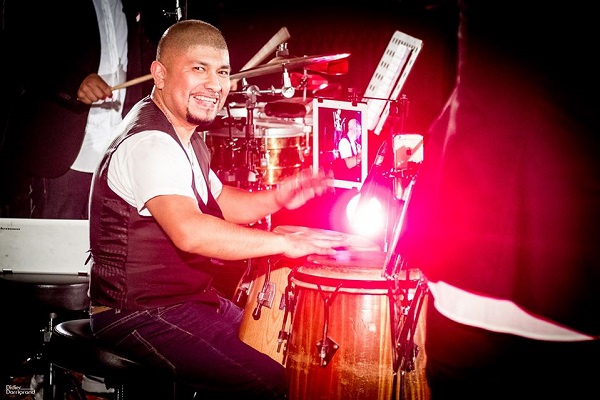
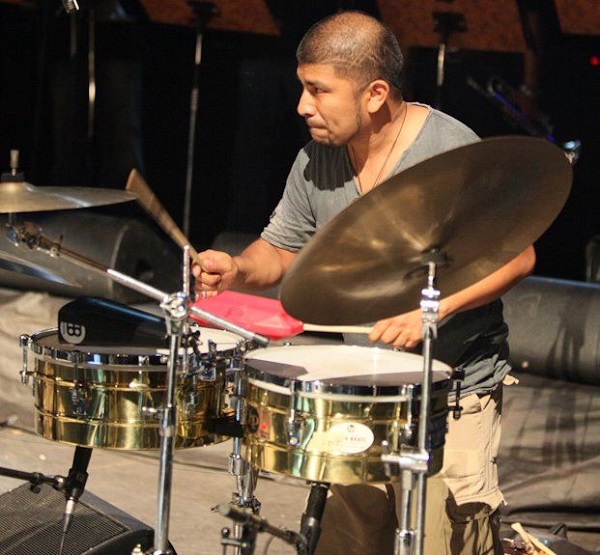
From Peru and based in France we have Wálter Antonio Rebatta Hinostroza is a brand new and spectacular percussionist.

We are honored to present in this new release, one of the most outstanding figures of Latin music, representing the brother country of Peru, who has put the name of the musicians born in Inca lands very high in the world.

With you, directly from France, we have as a special guest Wálter Antonio Rebatta Hinostroza, a brand new and spectacular percussionist, who was born on September 14, 1973, in Bella Vista, Callao, Peru, being artistically known as “El Chato”.

Welcome Wálter to Salsa Escrita “La Columna Salsera de Barquisimeto, Venezuela”. It is a great pleasure to have you as a special guest in International Salsa Magazine, www.SalsaGoogle.com.

Thank you very much to you, my friend, Professor Carlos, for the invitation to your well read and recognized column and I take this opportunity to give a sincere greeting to all Venezuelans who are like my brothers.

How did you start in music? Well, teacher in my neighborhood called Ventanilla, in Peru, I grew up and since I was a child I breathed musical air, where at the age of 6 years old I was already playing “El Cajon”, traditional Peruvian Creole instrument, under the tutelage of my older brother Kike Rebatta, who took me later to learn other percussion instruments and prepare me with music theory, and then enter the music school of the renowned teacher Edelmi Chavez, and thus join the ranks of the most renowned orchestras in my country, such as: La Iniciativa, Orquesta la Grande, Banana Latin Jazz, among others.

Wálter, which international orchestras and artists have you accompanied? I have accompanied and worked with “Los Hermanos Colón” from Puerto Rico and among many groups, I have had the honor of being on stage with my Venezuelan brothers, Hildemaro “El Sonero del Amor”, with whom I have a great friendship, as well as with the master timbalero Alfredo Villamizar, from whom I have learned a lot and from whom I must thank through his column Salsa Escrita. “Chato”, you are currently based in the French city of Grenoble and we would like to know how is the salsa movement, especially in Europe. In fact, professor, in 1995, I came to Europe with the “Orquesta Salsa Perú” and I met Mr. Rodolfo Guerra, with whom a great friendship was born and I became part of the “Orquesta Sincopa Latina”, directed by him, being present in his productions: Salsa que te pasa, Demasiado corazón, Mi bachata, Puerto Rico, Todo, Escándalo, Mi silencio, Mi toque, Habla conmigo and Azafata. Wálter, I have heard that you have accompanied great salsa artists in their presentations, tell me who? I have had the honor of accompanying the late Tito Gómez, Willie González, Luisito Carrión and the great Venezuelan sonero Orlando José Castillo “Watussi”.

Also, let me tell you professor, that I have worked in the Italian television Media Set, in the very popular program “Notte Vola”, also in 2002, I participated in the Tour of the Queen of Salsa, Celia Cruz, along with the orchestra of the prestigious world famous violinist Alfredo de La Fe.

Likewise, my friend Carlos, in 2004, I performed in numerous events with Latin jazz groups, among them “El Royal Cuba”, of the Cuban musician and singer Eduardo Céspedes.

In 2007, I participated in the prestigious and famous festival of San Remo with the singer Daniele Silvestri, with whom I have recorded in his productions. In 2009, I participated in the Italian tour “Terromotati Dil Abruzzo”, conducted by the famous singer Laura Pausini and later that same year I participated again in a tour in the United States for charity with Pausini again.

Excellent Wálter, and what can you tell us about the orchestra you are currently working with and what are your future projects? Professor Carlos, at present I am an official musician of the renowned orchestra “Mercadonegro” and in relation to my projects, is to form my own group and perhaps dabble in bachata, but without leaving aside the salsa, since living in Europe I have met many bachateros. And something very important, my friend Colmenárez, I am also working on the project of my Venezuelan compadre, the musician Edwin Sanz, whom I would like you to interview at some point.

Very good Wálter, congratulations for your career, what are your contacts on digital platforms?  My Facebook is: Wálter Antonio Rebatta Hinostroza and my whatsapp: +41 77 5122633.

We want to wish you the best on behalf of Salsa Escrita “La Columna Salsera de Barquisimeto” and that you continue to put the name of Peru on high in all the stages of the world.

Thank you a thousand times, Professor Carlos Colmenárez, for taking me into account and thus make my career known and offer my greetings, thanks and respect to all the salseros of the world through International Salsa Magazine, www.SalsaGoogle.com and long live salsa, Peru and Venezuela, united forever…!

Frederlyn Mayora returns to Venezuela to sing Salsa Romántica to the dancing public.

Last Friday, April 22, at 7:00 p.m., a concert was presented at the Juana Sujo Hall of the Casa del Artista, in Quebrada Honda, Caracas. Tickets are already on sale at popular prices.

After several years out of the country, Venezuelan singer Frederlyn Mayora returns to Venezuela to relaunch his musical career and sing Salsa Romántica to Venezuelan dancers and music lovers.

Mayora, who has been part of the orchestras of Tony Vega, Maelo Ruiz, Jose Alberto “El Canario”, Luisito Carrion and Tito Nieves, among others, arrives in the country with a single called “Viernes Romantico” that promises to be a hit in a short time.

“I want everyone to know what I am doing and what I come to do in Venezuela”, said the singer who now has his own orchestra.

The singer will be in Venezuela until the end of his musical production loaded with romantic Salsa, ballads and merengues.

On April 1 and 2, Mayora offered a couple of concerts called “After Party de los Hermanos Primera”, that is to say, he performed in a well-known venue of the CCCT as soon as the presentation of the renowned singers Servando and Florentino was over, and it was a full house.

On Friday, April 8, at 4:00 pm, he will offer a press conference at the Doris Wells Hall of the Casa del Artista in order to announce in detail the entire agenda that he will fulfill on Venezuelan soil.

On Friday, April 22, he offered a concert at the Juana Sujo Hall of the Casa del Artista, located on Amador Bendayán Boulevard, Quebrada Honda, Caracas.

The event was scheduled for 7:00 pm. The occasion will be propitious to record a video click.

All Frederlyn Mayora’s events and presentations are in charge of her manager, Humberto Gonzalez, president of Producciones Salsayer.

A little bit of history

Frederlyn Alejandro Mayora Martínez, was born on July 27, 1982, in the populous Sucre Parish, west of Caracas, Venezuela.

He is a musician, singer and percussionist. At the age of 9 he began his musical studies, especially in percussion. He belonged to the estudiantina Héctor Pacheco and spent several years at the Bigott Foundation, where he received master classes with Professor Rodolfo González.

When Mayora turned 15 years old, he decided to focus his musical career as a singer and it is when the producer Humberto González, currently director of the Salsayer Orchestra, took him to sing in several salsa groups in Venezuela, among them, “Herencia”, “Neo Latino” and “El Combo Antillano”, among others.

In 2003 he moved to Spain, specifically to Galicia. There he became part of the orchestras “Panama”, “Filadelfia” and “Orquesta TV”, among others. His artistic commitments reached the beautiful city of Santander, located in the North of Spain, where he performed ballads, salsa and merengue.

In addition to the aforementioned orchestras, Frederlyn Mayora has been the lead voice in groups such as “Ekilibrio”, “La Junior”, “Mandinga Star Band”, “Puma Band”, “Patatín Orquesta” and the “Máquina de la Salsa” and has accompanied in the chorus, since 2002 to date, renowned singers such as “Maelo” Ruiz, José Alberto “El Canario”, Tony Vegas, Luisito Carrión and Charlie Aponte, former member of the Gran Combo de Puerto Rico.

Balance of the work carried out at the level of Social Media in Venezuela.

Publication of the Briefing

Noti-America (01-04-2022) Mexico

La Patilla (El Farandi) (02-04-2022) Venezuela

https://www.elfarandi.com/2022/03/30/briefing-vuelve-a-venezuela/

Notimundo (03-04-2022)

Press Conference

Day: Friday, April 8, 2022

Place: Doris Wells Hall of the Casa del Artista.

Attended by representatives from 10 media outlets and Instagram accounts. Examples: Venevisión, Portal La Patilla, Rumbas Venezuela, Intervez, Diario La Calle, Noticiero Digital, Analítica, El Universal, Tendencia Internacional and Radio Tiuna, among others.

Press releases published in digital media

Analitica.com (11-04-2022) Venezuela

https://www.analitica.com/emprendimiento/noti-tips/de-vuelta-al-barrio-toma-caracas-de-la-mano-del-salsero-frederlyn-mayora/

Tendencia Internacional (11-04-2022) Venezuela

https://www.tendenciainternacional.com/2022/04/11/de-vuelta-al-barrio-toma-caracas-de-la-mano-del-cantante-salsero-frederlyn-mayora/

Contraste Noticias Newspaper (12-04-2022) Venezuela

https://www.diariocontraste.com/2022/04/de-vuelta-al-barrio-toma-caracas-de-la-mano-del-salsero-frederlyn-mayora/

Vida y Arte (14-04-2022) Venezuela

http://www.vidayarte.com/farandula/cantante-salsero-frederlyn-mayora-esta-de-vuelta-al-barrio

Intervez (14-04-2022) Venezuela

Business and Destinations (15-04-2022) Venezuela

Cantante salsero Frederlyn Mayora regresa a Venezuela con “De vuelta al barrio”

La Calle Newspaper (17-04-2022) Venezuela

Mentions on Instagram accounts

@TendenciaInternalcional

@caracas_view

@augustofelibertt (Dj)

TV Programs, Portals and Radio

Wednesday, April 6, 2022

Venevisión, Channel 4. Presentation in the program “Sábado Sensacional” on the occasion of the 50th Anniversary.

Thursday, April 7, 2022

Globovision, Channel 33. Interview

Tuesday, April 12, 2022

Portal La Patilla. Interview. Broadcasted on April 20, 2022

Thursday, April 21, 2022

Program “Asi Suena”, Channel 8, with Rubén Jiménez. Broadcasted on Sunday 24-04-2022

Radio program 24-04-2022

“Ni tan Bravo”, with Isnardo Bravo. FM Center La Romántica 88.9 FM

This is a balance of the presence he has had in the media.

Wednesday, April 27, at 8:00 am, he was on Televen, Channel 10, in the program “Con lo actual”.

Sources

Salsayer Press Director: Yira Yoyotte, journalist. 0424-105-61-66. E-mail: [email protected]

Facebook: Frederlyn Mayora

  • « Go to Previous Page
  • Page 1
  • Interim pages omitted …
  • Page 71
  • Page 72
  • Page 73
  • Page 74
  • Page 75
  • Interim pages omitted …
  • Page 88
  • Go to Next Page »

International Salsa Magazine (ISM) is a monthly publication about Salsa activities around the world, that has been publishing since 2007. It is a world network of volunteers coordinated by ISM Magazine. We are working to strengthen all the events by working together.