• Skip to primary navigation
  • Skip to main content

International Salsa Magazine

  • HOME
  • Previous editions
    • 2026
      • ISM / March 2026
      • ISM / February 2026
      • ISM / January 2026
    • 2025
      • ISM / December 2025
      • ISM / November 2025
      • ISM / October 2025
      • ISM / September 2025
      • ISM / August 2025
      • ISM / July 2025
      • ISM / June 2025
      • ISM / May2025
      • ISM / April 2025
      • ISM / March 2025
      • ISM / February 2025
      • ISM / January 2025
    • 2024
      • ISM / December 2024
      • ISM / November 2024
      • ISM / October 2024
      • ISM / September 2024
      • ISM / August 2024
      • ISM / July 2024
      • ISM / June 2024
      • ISM / May 2024
      • ISM / April 2024
      • ISM / March 2024
      • ISM / February 2024
      • ISM / January 2024
    • 2023
      • ISM / December 2023
      • ISM / November 2023
      • ISM / October 2023
      • ISM – September 2023
      • ISM – August 2023
      • ISM July 2023
      • ISM Edition June 2023
      • ISM – May 2023
      • ISM April 2023
      • ISM March 2023
      • ISM February 2023
      • ISM January 2023
    • 2022
      • ISM December 2022
      • ISM November 2022
      • ISM October 2022
      • ISM September 2022
      • ISM August 2022
      • ISM July 2022
      • ISM June 2022
      • ISM May 2022
      • ISM February 2022
      • ISM January 2022
    • 2021
      • ISM December 2021
      • ISM November 2021
      • ISM October – 2021
      • ISM September 2021
      • ISM August 2021
      • ISM July 2021
      • ISM May 2021
      • ISM April 2021
      • ISM June 2021
      • ISM March 2021
      • ISM February 2021
      • ISM January 2021
    • 2020
      • ISM December 2020
      • ISM November 2020
      • ISM October 2020
      • ISM September 2020
      • ISM August 2020
      • ISM July 2020
      • ISM June 2020
      • ISM May 2020
      • ISM April 2020
      • ISM March 2020
      • ISM February 2020
      • ISM January 2020
    • 2019
      • ISM December 2019
      • ISM November 2019
      • ISM October 2019
      • ISM Septembre 2019
      • ISM August 2019
      • ISM July 2019
      • ISM June 2019
  • Spanish
  • Download Salsa App
    • Android
    • Apple

Latin Jazz

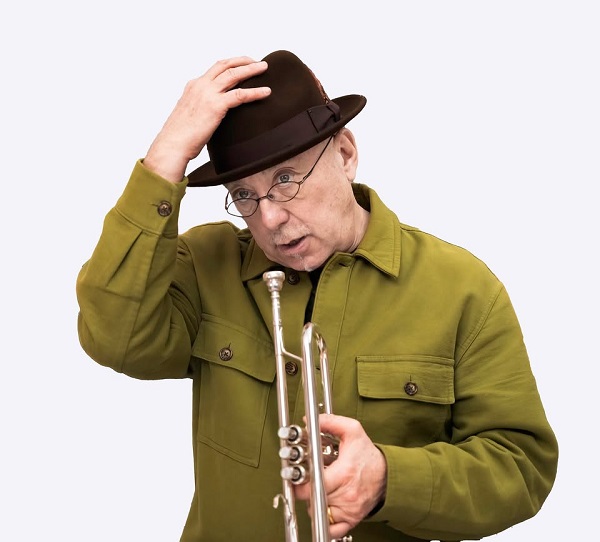
Eduardo Tancredi is a renowned Uruguayan pianist and composer specializing in Latin Jazz

Eduardo was a distinguished student at Berklee College of Music in Boston.

Eduardo was an outstanding student at the Berklee College of Music in Boston.

Musical Style: His music fuses a wide variety of Afro-Latin rhythms (such as Uruguayan candombe, Brazilian samba, Cuban son, Peruvian landó, and Venezuelan joropo) with the harmonies and melodies of modern jazz.

Accolades: He has recorded several CDs with his own compositions and has received awards for his outstanding performance in the Latin jazz scene. His album “Ongoing Dreams” was chosen as the best album in its category in 2002 by “The Boston Globe.”

Teaching Experience: During his time in the United States, he was a piano and harmony professor at Berklee College of Music. Since 2003, he has resided in Barcelona and teaches at ESMUC (Escola Superior de Música de Catalunya).

Collaborations: He has collaborated with numerous musical groups as a pianist and is a significant figure in the jazz scene in Spain.

Eduardo Tancredi is a prominent figure in Latin Jazz, known for his ability to integrate diverse Latin American rhythmic influences with the harmonic sophistication of modern jazz.


Latin accents took some time to establish themselves in jazz music. Very few composers ventured into that genre in the early decades of the last century, to the point that their timid attempts were considered exotic and trivial.

Initially, one recalls passages from William C. Handy’s “St. Louis Blues,” some Scott Joplin ragtimes, Jelly Roll Morton’s references to the “Spanish tinge,” or, shortly after, the themes performed by Duke Ellington’s orchestra.

Eduardo Tancredi
Eduardo Tancredi

It was in the 1940s that the Latin touch gained relevance. Cuban Mario Bauzá, who had played trumpet in Chick Webb’s and Cab Calloway’s orchestras, propelled the success of Machito’s band and convinced Dizzy Gillespie to hire conga player Chano Pozo.

Afro-Cuban influence became powerful in the following decades through sones, charangas, rumba, mambo, and salsa. Names like Chico O’Farrill, Tito Puente, Mongo Santamaría, Ray Barretto, and Chucho Valdés became highly regarded, and their works inspired a legion of jazz musicians.

Eduardo Tancredi es un reconocido pianista y compositor uruguayo, especializado en Jazz Latino

Latin jazz today has a strong presence in popular music, and Uruguayan Eduardo “Edú” Tancredi is a brilliant exponent of that style. He was an outstanding student at Berklee College of Music in Boston, where he won awards such as the Quincy Jones Award and the Outstanding Latin Act Award.

After his acclaimed “Ongoing Dreams” from 2002, this CD, “Venimos Tumbando,” recorded in 2007, now arrives with ten formidable compositions and his own arrangements. His background in Latin American folklore plus his jazz studies have achieved a splendid confluence that is enjoyed from beginning to end on this album.

His versatility as a composer is evident in candombes (“La mama vieja” and “Montevideo”), a baião (“Baialona”), a chorinho (“El germen”), a zamba (“Zamba del aire”), and the obvious references to Afro-Caribbean rhythms that unite their exciting cadences with jazz elements. Edú’s works are incisive, stimulating, possess an overflowing swing, and it’s easy to imagine the musicians’ pleasure during their performance.

The arrangements contrast the different orchestral sections, highlighting their diverse sound textures, suggestive harmonizations, and enhancing the dynamics and fiery percussion instruments. Three saxophones, piano, guitar, bass, and drums alternate with ten other guest musicians (vocals, sax, harmonica, two basses, two drum sets, and three percussionists), generating a sonic turbine that captivates the listener from the first note.

This doesn’t mean that all tracks propose an overwhelming rhythm. There are passages of beautiful lyricism, as in the two versions sung by Ana Finger, or the pleasant harmonica of Antonio Serrano, or the director’s piano in “Como un blues.”

The soloists perform at a high level, with special mention of Miguel Zenón’s alto sax, an improviser of fresh ideas, clean musicality, and great inspiration and fervor. The interventions of guitarist Alejandro Luzardo, trumpeter Matthew Simon, tenor saxophonist Eladio Reinón, and baritone saxophonist Xavi Figuerola are also noteworthy.

“Venimos Tumbando” confirms Tancredi’s talent as a composer and pianist and his skill as an orchestra conductor. Abilities he generously demonstrated during his acclaimed performance at the Teatro Solís last December. Thomas Werner

Edu Tancredi & Bandon 33 – Venimos Tumbando (2007)

Tracks:

  1. El Subibaja
  2. Hocus Pocus
  3. Montevideo
  4. El Germen
  5. La Mama Vieja
  6. Baialona
  7. Mapa Del Mundo
  8. Venimos Tumbando
  9. Como Un Blues
  10. Zamba Del Aire

Musicians: Edu Tancredi (Piano) Ana Finger (Vocals) Antonio Serrano (Harmonica) Mathew Simón (Trumpet) Pere Grau (Soprano sax, alto sax) Miguel Zenón (Alto sax) Eladio Reinón (Tenor sax) Juajo Arrom (Trombone) Xavi Figuerola (Baritone sax) Alejandro Luzardo (Guitar) Matías Migues, Paco Weht, Javier Gómez (Double Bass) Santiago Blanco, Salvador Toscano (Drums) Carlos Reyes “Compota”, Alejandro Luzardo, Santiago Blanco, Alexis Liden, Sandro Lustosa, Salvador Toscano (Percussion)

Edu Tancredi & Bandon 33 - Venimos Tumbando (2007)
Edu Tancredi & Bandon 33 – Venimos Tumbando (2007)

Information By:

Ostia Latin Jazz

DJ, Augusto Felibertt

Also Read: Arturo “Chico” O’Farrill. “The Architect of Afro-Cuban Jazz”

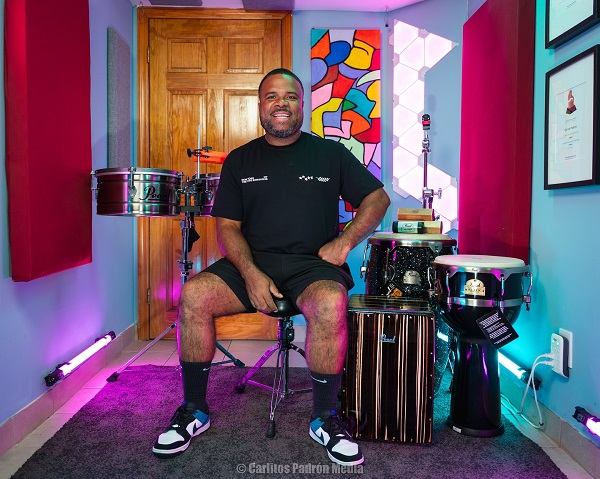
David Atanacio Percussionist, Composer and Singer Unveils a New Sound

David Atanacio, grounded in the values of honesty, integrity, loyalty, responsibility, and respect, appears to be an individual of strong moral and ethical character. He is someone who can be fully trusted, a faithful and committed friend and colleague who always tells the truth and acts with righteousness.

His sense of responsibility ensures he fulfills his commitments, while his respect makes him a considerate, open person capable of building harmonious relationships. Together, these values suggest a dependable, upright, and kind personality, making him a positive and admired presence.

Born in New York City and raised in Puerto Rico, specifically in the municipalities of Bayamón and Cataño, David Atanacio has cultivated a unique musical identity rooted in a powerful fusion of Cuban rumba, flamenco rumba, and Afro-Caribbean influences.

David Atanacio Percussionist, Composer and Singer

In 1993, he began his musical journey as a bongo player for his uncle’s “Grupo Típico,” later joining a local orchestra as a conguero in 1996. In 1997, he was presented with the opportunity to become a singer, marking a turning point in his musical destiny.

Recruited to co-found “Grupo Folclórico Yuba Iré,” it was with this group that he began to perfect his mastery of rhythms like La Bomba, La Plena, El Guaguancó, El Yambú, and more. During this same period, David Atanacio discovered his talent for composing and began writing his first songs, including one titled “Lo que dice el Tambor” (What the Drum Says).

He was recommended to work with the “Orquesta Abran Paso” from Puerto Rico, with whom he accompanied luminaries such as Ismael Miranda, Adalberto Santiago, Junior “Hommy” González (RIP), Larry Harlow (RIP), among others.

He then received a call from the Puerto Rican Maestro “Paoli Mejías,” percussionist for “Carlos Santana’s” group, who invited him to be part of his first musical project, “Mi Tambor.” On this album, David’s song “Lo Que Dice el Tambor” was recorded, appearing as Track No. 7. The album was nominated for “Best Latin Jazz Album” at the Latin Grammys in 2004.

David Atanacio: Percussionist, Composer, and Singer Unveils a New Sound

David Atanacio: Percussionist, Composer, and Singer Unveils a New Sound

In 2003, the King of Rhythm, Mr. Afinque “Don Willie Rosario,” invited David to join the front line of his orchestra, where he remained until 2005. After leaving Willie Rosario’s Orchestra, David decided to move with his family to Tampa, Florida.

Even in his new home, David never lost touch with his roots. One day, he received a call to contribute background vocals to the production “Sobrevolando” by the acclaimed Puerto Rican group “Cultura Profética” (2019). This production earned them the Latin Grammy for “Best Alternative Album” in 2020 and a nomination for “Best Latin Rock or Alternative Album” at the 2020 Grammy Awards.

David Atanacio is a “Sonero de Calle” (Street Sonero), with ample talent and ability to succeed. He is a percussionist, composer, and possesses the added artistry of the “Soneo del Guaguancó” (Guaguancó vocal improvisation).

Atanacio is now releasing his musical proposal, “David Atanacio & Champán D’ Barrio,” featuring aged salsa and plenty of flavor.

David Atanacio & Champán D' Barrio
David Atanacio & Champán D’ Barrio

The album contains ten tracks, eight of which are his original compositions. The production features special guest Herman Olivera, who performs a duet with David on a meticulously crafted song titled “De la Vieja Escuela” (From the Old School). The first single from this project, “Lo que dice el Tambor,” is hitting the airwaves, now presented under his orchestrated concept, “David Atanacio & Champán D’ Barrio.”

The Puerto Rican sonero recently released his latest single, “No Me Llores Más” (Don’t Cry For Me Anymore), a masterfully interwoven piece that pays homage to the musical genres that have shaped his artistic journey. The song perfectly fuses Cuban rumba, guaguancó, Spanish flamenco rumba, and son.

More than just a song, No Me Llores Más is a deeply personal sonic exploration that honors the genres that have influenced David Atanacio since his beginnings.

More than just a song, “No Me Llores Más” is a deeply personal sonic exploration that honors the genres that have influenced David Atanacio since his beginnings. Rhythms such as trova, décimas, aguinaldo, bomba, and plena have profoundly impacted his musical development, adding unique nuances to his artistic expression and reaffirming his commitment to the cultural heritage of his homeland and the Caribbean.

“No Me Llores Más” Credits:

  • Lyrics, Music, and Lead Vocals: David Atanacio
  • Background Vocals: Herman Olivera Jr. & Adriel González
  • Musical Arrangement: Carlos García
  • Piano: Yassel Puppo
  • Bass: Kevin Pagan
  • Trombone Solo: Carloscar Cepero
  • Percussion: Diego Centeno
  • Spanish Guitar: Alex García Potia

With an exquisite arrangement by Carlos García and impeccable execution by top-tier musicians, “No Me Llores Más” marks a new chapter in David Atanacio’s career. It’s where tradition and vanguard embrace to the rhythm of the drum, the guitar, and pure emotion.

This track will be available on all digital platforms starting June 14, 2025.

The rumba lives, the son renews, and David Atanacio’s voice celebrates it!

Press Contact: David Atanacio [email protected] 813-569-9581

Reference: Luis Rojas

Also Read: Herman Olivera the sonero of the 21st century

Adrián Joel Rodríguez Rivera is a musician with extensive experience as a Bassist

Adrián Joel Rodríguez Rivera (a.k.a. “AJ”) had his first experiences with the electric bass at 14 years old.

Adrián Joel Rodríguez Rivera is a musician with extensive experience as a bassist.

He began formal studies at the Antonio S. Paoli Specialized Music School in Caguas, Puerto Rico, that culminated with a Bachelor’s Degree in Music in Jazz & Afrocaribbean Music Execution with a major in Electric Bass from The Conservatory of Music of Puerto Rico.

Throughout his career, he has played and recorded with musical groups in diverse music genres, e.g. reggae, rock, jazz, urban and tropical music.

He’s had the pleasure of collaborating with artists like Calma Carmona, Yaire, Auudi, Brytiago, Raquel Sofía, Jean Carlos Canela, Galé, among others.

Adrián Joel Rodríguez Rivera (alias “AJ”) gained his first experiences with the electric bass at the age of 14

Adrián Joel Rodríguez Rivera (alias “AJ”) gained his first experiences with the electric bass at the age of 14

Presently works from Puerto Rico and has performed in the United States, Colombia, and Ecuador.

The History of the Electric Bass

The history of the electric bass is intrinsically linked to the need for a more practical and amplified alternative to the bulky double bass, especially as musical bands grew larger and louder.

The Early Steps and Paul Tutmarc (1930s)

Although there were some earlier experiments, the first functional electric bass is considered to have been developed by Paul Tutmarc in the 1930s. In 1936, his company, Audiovox, launched the Model 736 Bass Fiddle.

This instrument featured a guitar-like design, with a solid body, frets, and an electromagnetic pickup, making it easier to transport and play compared to the double bass. However, Tutmarc’s invention was not a great commercial success at the time.

Leo Fender’s Revolution (1950s)

It wasn’t until the early 1950s that the electric bass truly took off, thanks to Leo Fender. Seeking to solve the problems of size, volume, and tuning of the double bass, Fender applied his expertise in electric guitar manufacturing to create an innovative instrument.

In 1951, Fender launched the Precision Bass, the first mass-produced and commercially successful electric bass. Its design was robust, with a solid body and frets (hence the name “Precision,” for the tuning accuracy the frets offered). This bass quickly became a standard, used in a wide variety of musical genres, from soul and R&B to rock.

Adrián Joel Rodríguez Rivera

Later, in 1960, Fender introduced the Jazz Bass, which offered a slimmer neck and two pickups (one near the bridge and one near the neck), providing greater tonal versatility and a sound that many jazz musicians found closer to the acoustic double bass.

Expansion and Evolution (1960s Onward)

Throughout the 1960s, other brands like Gibson, Höfner, and Rickenbacker also began manufacturing their own electric bass models, flooding the market with new options. The popularity of the electric bass grew exponentially, solidifying its place as a fundamental element in modern music.

The 1970s saw further experimentation. Preamplifiers began to be integrated into instruments to expand the tonal range, and multi-string basses emerged. In 1974, bassist Anthony Jackson and luthier Carl Thompson collaborated to create the first six-string bass, with the goal of expanding the instrument’s sonic range.

From the 1980s onward, innovation continued. 5 and 6-string basses became popular, as did active circuits and “boutique” basses from specialized luthiers. Designers like Ned Steinberger introduced headless basses and experimented with materials like carbon fiber. Influential musicians like Jaco Pastorius brought the fretless bass to the forefront, and techniques like “slap” and “double thumb” were developed and popularized.

Today, the electric bass continues to evolve, with a vast range of designs, configurations, and sounds, adapting to the needs of the most diverse musical genres and the creativity of bassists worldwide.

He began formal studies at the Antonio S. Paoli Free Specialized School of Music in Caguas, Puerto Rico.

Also Read: Charlie Haden was an extraordinary double bassist and composer who was a key figure in the history of modern jazz

Javi Jiménez from Barrio Manouche talks about his career in Spain and then in San Francisco

Javi Jiménez from Barrio Manouche graces us with his presence in this July 2025 edition after several months of wanting to talk to the artist. After witnessing one of his wonderful shows at Cascal Restaurant, where the group performs regularly, we have checked the high quality of Javi’s work and that of his bandmates, so we could not miss the opportunity to share the most important aspects of his career, both in his native Spain and in San Francisco.

Javi with his guitar
Javi Jiménez with his gypsy jazz guitar

Javi’s beginnings in the musical world

The first contact with music in Javi’s life was made thanks to his parents, and in the neighborhood where he grew up, music was always present. From an early age, he and his brother listened to all kinds of genres at home, which awoke in them an interest in this art form beyond seeing it as simple entertainment. He remembers that since he was six, he saw his uncle playing the guitar until a few years later, when he turned 10, his uncle gave him this instrument so that he could play it himself.

Although his family did not have many musicians, he mentioned a cousin of his who was a bassist and actually wrote him his first chords on a piece of paper so that he could experiment with his new guitar and he did.

First professional experiences

He describes his taste in music after the age of 12 as an “obsession,” and at that time, he was very into rock and punk, nothing to do with what he plays today. He then started hanging out with several schoolmates who shared his hobby of playing music, which ended up giving rise to his first band, Mulatask. Currently, there is nothing about this online, as the internet did not exist at that time, so all evidence that this alternative rock and grunge band ever existed is on CDs and MP3 files that are not public.

In addition to that, the music his parents listened to continued to influence him to some extent. Among their favorite artists were Silvio Rodríguez, Victor Jara, Canción Protesta and Paco Ibañez. These singers impacted him so much that he began to study a little the classics and play them, but rock and electric guitar were still his favorites above all else. In fact, his favorite artists were Jimmy Page of Led Zeppelin, Pink Floyd, Jimmy Hendrix, among others. 

Javi and his brother
Javi Jiménez and his brother Luis Jiménez sitting to his right

This was the kind of music he played with his friends in the neighborhood and they even gave small recitals in front of audiences of 200-300 people when they were 15 or 16 years old at the time, which made the teenage Javi love to show his art to the world. 

Transition to gypsy jazz, modern jazz, and flamenco

Javi’s transition to gypsy jazz (inspiration for the name of his future band), modern jazz, and flamenco began when he moved to Barcelona, where he studied at a jazz and modern music conservatory. There he discovered a lot of genres and styles he had never heard before, one of which was bebop, also known simply as bob, which is a jazz style developed in the United States during the 1940s. At that time, he also discovered Charlie Parker, John Coltrane, Thelonious Monk, Dizzy Gillespie, among others.

Although Javi did not really identify with that language, he wanted to truly understand music so he could interpret it as best as possible. He did everything he could to understand bebop, but he found it very difficult until he started listening to Belgian gypsy jazz guitarist of Roma descent, Django Reinhardt, who was also a fan of Louis Armstrong. When he listened to Armstrong, he wanted to play the same thing, but with his own Roma touch, so he formed a band with two guitars, a bass, and a violin.

One of this band’s favorite genres is gypsy jazz manouche, which Javi loved and was passionate about since the first time he listened to it, to the point that he would name his future group Barrio Manouche (Gypsy jazz in Spanish).

On the side of flamenco, there were many gypsies and immigrants in his home neighborhood, including the Porrina family, which consisted of world-renowned percussionists such as Ramón Porrina, who has played with Concha Buika and Israel Suarez ‘‘El Piraña’’, a flamenco guitarist who was in Paco de Lucía’s last lineup.

Album release party
”Despierta” album release party at The New Parish in 2019

Javi tells us this to show that flamenco was very present in the environment he grew up, largely because there were many migrants. In his family’s case, they came from Andalusia and Cordoba.

He continues to insist that he still did not like it very much and his thing was rock. It was in California that he finally had nostalgic about the music of his homeland and wanted to reconnect with his roots in foreign lands. 

Moving to California

Javi had never thought about trying his luck in California until he met Adam Rouch, a Californian tattoo artist and musician who became his friend and with whom he toured Europe. In 2009, Adam had to return to his city because his parents were not in good health, and he told his Spanish friend to go with him to see how he liked the place. 

Although the artist was not convinced by the idea, he ended up accepting and discovered in San Francisco fun, cultural exchange, diversity, and many things that fascinated him. The best thing was the opportunity for its inhabitants to express themselves through practically any type of art or genre without fear of judgment, which made him decide to definitely stay living and finally become an American citizen.

Javi and Fanny Ara
Javi Jiménez and dancer Fanny Ara at the 62nd Monterrey Jazz Festival

How Barrio Manouche was formed

After he met with many musicians and made many contacts, Javi and his brother Luis, who is also part of the group on cajón and percussion, met Salvadoran percussionist Marcos Odara, French saxophonist Cyril Guiraud, violinist Magali Sanscartier, bassist Chris Bastian, his future replacement Gary Johnson, and guitarist Ross Howe. Finally, they included Colombian bongo player and flutist Iván Rondón, with whom they collaborated until he became a permanent member of the band.

The previous artists make up the instrumental part, but the dancing part includes Fanny Ara and Brazilian dancer Emaye Ama. 

Thanks to the huge number of nationalities and cultures present in the group, they have managed to get a unique sound Javi describes as a “bomb” due to the mixture of elements that are so diverse from one another.

 He says he feels a deep appreciation and respect for each of them, which makes the unity of the group stronger and more lasting despite the crises and the passage of time.

Read also: Sizzling Summer Nights dancer April Connella breaks silence on Orlando Delgado and her career

The best of Cuban music in Tampa with Cuband Son Band

We are very happy to be able to talk with Lizandro Muñoz, Liaudriz Fuentes, and Alfredo Sotolongo, who are part of the Cuban music group Cuban Son Band. We will know a little about each of them and the orchestra as such so that the public can get to know them and identify them.

Although all the musicians are coming from Cuba such as the genres they play, they met in Tampa, Florida, where they currently reside and have developed their respective musical careers.

Lizandro playing
Lizandro Muñoz playing at Water Street Tampa in April

How Lizandro, Liaudriz, and Alfredo became interested in music

Lizandro was the first who talked a little about himself and started by describing how his father played the guitar and began teaching his son to do the same. After attending the pre-university studies and playing guitar along with a group for about four years, he did his military service and moved to Spain to work with a number of groups at many Latin music events, especially Cuban music, which was what he played most.

Itis at this point in the conversation that Liaudriz, the group’s keyboardist, joined the meeting. After saying hello and introducing himself, he began to explain that he started in music at a very young age in Cuba, more specifically on the Isle of Youth or the Isle of Pines, as it was known before. As a child, he already had a lot of affinity for the guitar just like Lizandro, but also for everything related to percussion, which led him to take the respective tests to enter a music school.

That was when he went through the elementary, middle, and part of the upper levels. He did not complete the latter, as he got the opportunity to move to the United States. 

When Alfredo, Cuban Son’s violinist, slipped into the conversation, he and the boys joked about whether he remembered how he started in music due to his age. He then relates starting in music at about 10 and is now 66, so much water has flowed under the bridge since then. He studied at the National School of Art up to the fifth level for five years, where he trained as a percussionist, singer, and violinist, but had to withdraw due to family problems. However, his great strength helped him keep the lights on.

By not being enrolled in any institution, he began his training at home. Several members of his family were helping him to continue his dream and one of whom was his uncle, a flutist who played in Los Van Van, who inspired him to follow his path in the world of music. This is how he resumed his academic training and received an A grade in singing and an A grade in violin lessons. 

Liaudriz playing
Liaudriz Fuentes playing the keyboard live

He was in the Cuban Institute of Radio and Television Orchestra, better known as ICRT for its acronym in Spanish, and made some recordings with Los Van Van as a violinist. In 1998, he emigrated to Israel, where he worked as a musician for 10 years and even played in an orchestra known as Jerusalem Salsa Band, in which he alternated with several great artists such as Alfredo de La Fe, Buena Vista Social Club, and many others.

After those 10 years, he moved to the United States in search of new opportunities, which led him to make contact with Lizandro and Liaudriz from Cuban Son, which he joined about two years ago.

Alfredo added that one of the things that brought them together was that his now bandmates were following the way of son, the same path as their ancestors, who were soneros. It is in their blood and they had that in common.

How Cuban Son Band got started

Liaudriz again takes the floor and assures that the affinity between them was also due to the need Cubans feel to continue making music from their native land despite the distance and the way many of them come together to do this work. This is something that has mushroomed in Tampa in recent years due to the large number of Cubans who have arrived there.

“Cuban Son Band emerged from our need to share the music of our country not only here in Tampa, but also in other cities in Florida,” said the young keyboardist on this subject.

Lizandro added that several members of the group came from a much larger orchestra, but for economic and practical reasons, they left it and opted for a smaller, more compact format. This also gave them the freedom to make the music they wanted without consulting many people. 

Alfredo playing
Alfredo Sotolongo playing the violin during a concert

The biggest challenges Cuban Son faced at first

Regarding the receptivity of the people to Cuban Son Band’s work, Alfredo pointed out that they always try to make their music as traditional as possible so that the audience may know it. What has made things easier for them was his senior audience that misses these genres and enjoys listening to them, even if they are not what is trendy right now. There are many new genres in Cuba, such as reggaeton and cubatón, but the audience between 30 and 40 years old are not fans of that kind of music, but of more traditional genres such as bolero, bachata, changuí, and others.

Lizandro also added that as long as they offer something traditional, original, and authentic, language barriers should not be a problem, even though most of their fans are American. One of the biggest challenges for the group has been communication, precisely because of the language of their lyrics, but that has not prevented them from being listened to and fervently supported. 

In addition to that, they rely on covers of well-known English songs to connect even more with their non-Latin listeners, which has made them accept their work even more willingly. Their traditional foundation and open mind to new things have been the key to their progress.

Lizandro, Liaudriz, Alfredo, and Raysel
Trumpet player Raysel Reyes, keyboardist Liaudriz Fuentes, Violinist Alfredo Sotolongo, and guitarist Lizandro Muñoz

Current members of Cuban Son Band

Alfredo pointed out that they always try to be as loyal as possible to their main project, which is Cuban Son Band, but they are also aware that it will not always be possible for them to play only with their main orchestra, as they will have to work on other projects due to their economic situation.

Liaudriz also said that something that benefits them is that Tampa is a city that is growing a lot as for the Latin music scene, resulting in more and more work for them and groups with the same characteristics. This allows them to call each other and help each other without egos or pettiness.

Inspirations for each one

Alfredo was inspired as a singer by artists such as Ibrahim Ferrer, Pacho Alonso, Felix Chappottín, Pedrito Calvo, Oscar D’ León, Gilberto Santa Rosa, among others. in one way or another, all of them have honored Cuban music and that makes them bastions of what Cuban Son wants to achieve.

For his part, Lizandro mentioned Buena Vista Social Club, Omara Portuondo, Compay Segundo, Adalberto Álvarez, Chucho Valdez, Juan Formell, Bebo Valdéz, and Benny Moré.

Read also: Tito Planas talked to us about his Orquesta Afinke and its members

  • « Go to Previous Page
  • Page 1
  • Interim pages omitted …
  • Page 9
  • Page 10
  • Page 11
  • Page 12
  • Page 13
  • Interim pages omitted …
  • Page 16
  • Go to Next Page »

International Salsa Magazine (ISM) is a monthly publication about Salsa activities around the world, that has been publishing since 2007. It is a world network of volunteers coordinated by ISM Magazine. We are working to strengthen all the events by working together.