• Skip to primary navigation
  • Skip to main content

International Salsa Magazine

  • Home
  • Previous editions
    • 2026
      • ISM / January 2026
      • ISM / February 2026
    • 2025
      • ISM / December 2025
      • ISM / November 2025
      • ISM / October 2025
      • ISM / September 2025
      • ISM / August 2025
      • ISM / July 2025
      • ISM / June 2025
      • ISM / May2025
      • ISM / April 2025
      • ISM / March 2025
      • ISM / February 2025
      • ISM / January 2025
    • 2024
      • ISM / December 2024
      • ISM / November 2024
      • ISM / October 2024
      • ISM / September 2024
      • ISM / August 2024
      • ISM / July 2024
      • ISM / June 2024
      • ISM / May 2024
      • ISM / April 2024
      • ISM / March 2024
      • ISM / February 2024
      • ISM / January 2024
    • 2023
      • ISM / December 2023
      • ISM / November 2023
      • ISM / October 2023
      • ISM – September 2023
      • ISM – August 2023
      • ISM July 2023
      • ISM Edition June 2023
      • ISM – May 2023
      • ISM April 2023
      • ISM March 2023
      • ISM February 2023
      • ISM January 2023
    • 2022
      • ISM December 2022
      • ISM November 2022
      • ISM October 2022
      • ISM September 2022
      • ISM August 2022
      • ISM July 2022
      • ISM June 2022
      • ISM May 2022
      • ISM February 2022
      • ISM January 2022
    • 2021
      • ISM December 2021
      • ISM November 2021
      • ISM October – 2021
      • ISM September 2021
      • ISM August 2021
      • ISM July 2021
      • ISM May 2021
      • ISM April 2021
      • ISM June 2021
      • ISM March 2021
      • ISM February 2021
      • ISM January 2021
    • 2020
      • ISM December 2020
      • ISM November 2020
      • ISM October 2020
      • ISM September 2020
      • ISM August 2020
      • ISM July 2020
      • ISM June 2020
      • ISM May 2020
      • ISM April 2020
      • ISM March 2020
      • ISM February 2020
      • ISM January 2020
    • 2019
      • ISM December 2019
      • ISM November 2019
      • ISM October 2019
      • ISM Septembre 2019
      • ISM August 2019
      • ISM July 2019
      • ISM June 2019
      • ISM May 2019
      • ISM April 2019
      • ISM March 2019
      • ISM February 2019
      • ISM January 2019
    • 2018
      • ISM December 2018
      • ISM November 2018
      • ISM October 2018
      • ISM September 2018
      • ISM August 2018
      • ISM July 2018
      • ISM June 2018
      • ISM May 2018
      • ISM April 2018
      • ISM March 2018
      • ISM February 2018
      • ISM January 2018
    • 2017
      • ISM December 2017
      • ISM November 2017
      • ISM October 2017
      • ISM September 2017
      • ISM August 2017
      • ISM July 2017
      • ISM June 2017
      • ISM May 2017
      • ISM April 2017
      • ISM March 2017
      • ISM February 2017
  • Download Salsa App
    • Android
    • Apple
  • Spanish

Latin Music

Salsa at its best, led by the leader of La Puertorriqueña: Don Perignon

The most recent production of the Bailable Víspera de Reyes, which was instituted in 1987 by the timbalero and band leader known in the salsa scene as Don Perignon, was quite an event. Thirty-eight years ago, ‘La Puertorriqueña’ was still known as ‘Compañeros y amigos’.

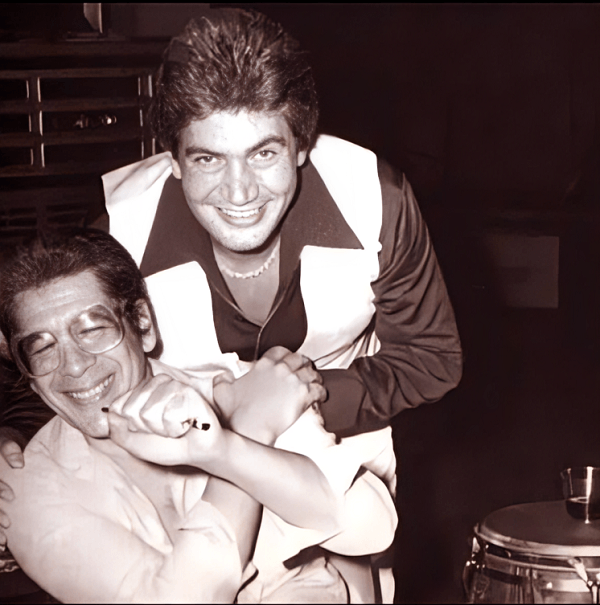
El líder de La Puertorriqueña, Don Perignon

However, the dance that fulfills a promise made by Perignon to kings has continued to be celebrated beyond the names with which Perignon has identified his band over time.

Each year, the show brings with it a box of surprises. In addition to what is promised during the promotion, the salsa public that comes to the traditional gala knows that anything can happen there. This year, the stage showcased great artists in addition to the luxurious closing that gave us the night by way of El Caballero de la Salsa, Gilberto Santa Rosa performing the emblematic song by Johnny Ortiz, ‘Tu música popular’.

Ángel Martínez, Efraín Hernández, Don Perignon y Miguel Aponte

In this edition, held on January 5, 2025, the concert was started by the successor of the Perignon dynasty, also a percussionist, Pete Perignon; flanked by vocalists Ricardo Rodríguez in the more melodic songs and Julio López in the heavier numbers. López got the first turn at the microphone with ‘Azúcar pa’ un amarga’o’, followed by Rodríguez in the key of ‘Cuéntame tu historia’.

According to Pete himself, he invited Jorge Yadiel Santos to silence rumors regarding the singer’s departure from his orchestra. With the vocal power that characterizes him, the now soloist closed the presentation of the first orchestra of the night; performing ‘Baila’ and ‘Gotita caído en clave’.

Cuto Soto, Gamalier González, Rafy Torres, Pedro Marcano, Carlos __Coamito__ Martínez, Jr., Ángel Segarra y Humberto Ramírez

The group led by Pete Perignon and his timbal offered a great performance with master musicians of the present generation. These were: Jean Carlos Camuñas on the tumbadoras, Carlos Pagán on the bongó, Reynaldo Burgos on the piano, Jorge Rivera on the bass; Víctor Ambert and Jahaziel García on the trumpets; Darnell Febres and César Javier Ayala on the trombones, and Víctor “Yuca” Maldonado on the baritone saxophone.

La Mulenze kept the crowd on the dance floor, with the first song of their repertoire being ‘La sala pa’l baile’, performed by Rafy Andino. The vocal front was completed by Rafy Cruz and Alex Ojeda. The bassist, director of the orchestra of eternal youth, Edwin Morales led his boys, as he affectionately refers to his musicians; Among them were Emanuel Navarro on the tumbadoras, Robert Watts on the timbal, Alberto Muriel on the bongo, Manolo Navarro on the piano, Carlos “Coamito” Martínez, Jr. and Abdel Rivera on the trumpets; in addition to Willie Torres Ortiz and Heity Morales Nogueras on the trombones. The golden touch was offered to those present during the interpretation of the song “Mala paga”, written by our Moncho Rivera, when the Venezuelan master musician and sonero Marcial Istúriz took on the task of accompanying Rafy Andino on the soneos, shortly after Rafy confessed to being a great admirer of one of the greatest exponents of the salsa sound in Venezuela.

Henry Santiago, Joe González, Rico Walker, Marcial Istúriz, Hermán Olivera, Jerry Rivas, Pichie Pérez, Josué Rosado y Pedro Brull

Before starting his presentation, the star of the annual gala, Don Perignon marked and conducted the orchestra to play ‘Happy Birthday’ in honor of the evening’s host, also Z-93 announcer: Néstor Galán, “El Búho”. The timbalero conducted the orchestra, which was reinforced for the evening with guest musicians. The group in its Bailable Víspera de Reyes 2025 version was composed of: Charlie Padilla on the tumbadoras, Miguel Aponte on the bongó, Ángel Martínez on percussion (güiro), Luis Marín on the piano, Efraín Hernández on the bass; Cuto Soto, Gamalier González and Rafy Torres on the trombones; in addition to Pedro Marcano, Carlos “Coamito” Martínez, Jr., Ángel Segarra and Humberto Ramírez on the trumpets. For the vocal front, Perignon called on: Henry Santiago, Pedro Brull, Joe González, Pichie Pérez, Josué Rosado, Jerry Rivas, Rico Walker, Marcial Istúriz, Hermán Olivera and Gilberto Santa Rosa.

Cuto Soto, Gamalier González, Rafy Torres, Pedro Marcano, Carlos __Coamito__ Martínez, Jr., Ángel Segarra y Humberto Ramírez

The repertoire took the followers of La Puertorriqueña on a historic tour that demonstrated the variety of songs and voices that come together in a salsa key with the cadence and flavor that Perignon manages to give to each project he leads. Joe González performed ‘Ciudad, ciudad’, Pedro Brull excelled singing ‘Represento’, Pichie Pérez was in charge of vocalizing ‘Como mangó’, Josué Rosado visited to sing ‘Cantándole al amor’, Jerry Rivas was in charge of ‘El pin pin’, Rico Walker shined with ‘Que vengan rumberos’, followed by Marcial Istúriz and a masterful interpretation of ‘La familia’ and Hermán Olivera with his spectacular ‘Ritmo Bembé’.

Marcial Istúriz comparte micrófono con Hermán Olivera

La Puertorriqueña was born in 1988 near the promise of Kings, which happens every January 5. The dance of January 5, 2025, which was held at the Sheraton in San Juan, Puerto Rico and was dedicated to trombonist Toñito Vázquez (RIP) showed that the promise of Reyes by Don Perignon -who is the leader of a generation of musicians- established more than three decades ago, remains valid. The participation of El Caballero de la Salsa recreated the beginning of his career, together with his first musical director: Don Perignon. That brotherhood between Gilberto and Perín, like the promise of Reyes, also remains valid. For our part, we will continue in salsa thanks to the call of the leader of La Puertorriqueña.

Also Read: Don Perignon and La Puertorriqueña are prides of Puerto Rico

Bella Martinez Puerto Rico

Songoyó the perfect idea Experimental Cuban Son Group with its own style

Songoyó is an experimental musical group of the Cuban son genre with a particular style, since it fuses many musical rhythms, born on the initiative of Professor John “Goyo” Useche, on November 11, 2021 in La Victoria, Aragua State, Venezuela.

Songoyó the perfect idea Experimental Cuban Son Group with its own style

In order to unite Victorian musicians and start putting together songs by the remembered Madera Group, icon of the Caracas parish of San Agustín in Marín, and thus present themselves at the Guataca Salsera, which takes place every December 31 at the Madera 15 court, located in the Las Mercedes urbanization of the same town.

The idea immediately begins to take shape and that is when Professor John “Goyo” decides to communicate his project to Shinaury Rojas, a personal friend of many years, who at that time was based in Argentina, then informs the poet guitarist Rafael Pérez who was in Brazil and knew by reference of salsa groups via the web. Communication was fluid and accepted, regardless of the distance. John, Rafael and Shinaury embody everything that Songoyó is today.

It should be noted that the first name of the Victorian group was Son Madera 15, due to the loyalty that is maintained with the Madera 15 foundation, then it was changed to Sabor Madera 15 and finally they decided to name it “Songoyó” as the definitive name.

Songoyó is an experimental musical group of the Cuban son genre.

The communication was continuous and they immediately began to organize the activities that had to be carried out to group the musicians who were willing to belong to the group, musicians were contacted by phone and in person, finally the interested parties were grouped and the rehearsals began in an accelerated manner at Professor John’s house, to fulfill the main objective which was the presentation at the Guataca Salsera at the end of the year, in that 2021.

From that moment until the present, there have been many musicians who have passed through the son group, including the young music teacher Willian Herrera who is assigned the task of directing the group, the rehearsals are given and four songs are put together that were played at the Guataca Salsera achieving total success in said presentation causing the acceptance and applause of all those present.

Our Sonero Machado Noel the indigenous salsa singer and our General Manager John Goyo

By January 2022, the creator of the group calls the musicians and proposes to continue the project, achieving the acceptance of all. In the following months they contacted maestro Fael Alvarado, an expert musician who knows the TRES very well, the base instrument of the Cuban son, who agreed to join the project and professor William Herrera gave the musical direction to maestro Fael.

In February of that same year, the second presentation was made before a large audience at the Juventud de la Victoria festivities on Paseo La Juventud and Songoyó was again liked by the public.

The rehearsals continued, and it was maestro Fael himself as musical director, who proposed to everyone to create their own style with songs that belonged to the group and to have a unique sound in order to accept more contracts from then on.

In January 2024, the recording of the first and unpublished production of Songoyó “EL NEGRITO BEMBA” began under the creation and pen of the poet Rafael Pérez and the general recording direction of maestro Fael, in the recording studio “Fael Alvarado” in San Mateo, Aragua State. This recording was a huge success and can be found on various digital platforms,  Its release took place in January 2025, with a great acceptance.

Songoyó
Songoyó

From that moment on, the group began to be sold and promoted for public and private events inside and outside Venezuela.

Currently, there are 8 musicians that make up the group: Norberto Machado, güiro voice, Noel Machado, clave voice and percussion direction, Rafael Pérez, maracas voice, Alexis Tovar, tres, Edwin González, bass, Jonhy Vergara, tumbadoras, Fael Alvarado, tres, piano, violin and musical director, and John Goyo, bongo and general direction.


“SONGOYÓ, THEY ARE AS WE ARE”

For hiring, contact Professor Useche by phone at

+58 424-3212762

Instagram: Songoyo

Facebook: Songoyo

Research and Writing Source:

Djane. Shina Rojas

Also Read: Cuban Son is one of the most popular musical styles in Cuba and Kiki Valera is one of its greatest exponents.

Mariana “The Sonera of Venezuela and for the world”

Janett Guevara García, artistically known as Mariana “La Sonera de Venezuela”, was born in La Pastora, Caracas on January 19, daughter of Reina García and Vicente Guevara.

Daughter of Reyna García and Vicente Guevara, she is the oldest of six siblings and from a very young age she showed her taste for music; an activity that has been her eternal passion, and has led her to make 12 record productions.

Mariana La Sonera de Venezuela

She is the oldest of six siblings and from a very young age she showed her taste for music; an activity that has been her eternal passion and has led her to make six record productions.

Educated in a convent school, she always participated and stood out in cultural events, until on one occasion she was suspended for telling the mother superior that there was a song called “La Cárcel” by Septeto Juventud that she wanted to sing at a cultural event.

At the age of 14, during her high school education, she learned to play drums and participated in the choir of the Caricuao Parish church where she lived.

As the years went by, Mariana was invited by Mr. Naty Martinez to a rehearsal, who was impressed when he heard her and decided to make a musical production.

That is when Mariana’s true pilgrimage began, going through stages earning the admiration of salsa greats.

In past years, she received praise from Queen Celia Cruz and has the guarantee and support of the singers of the Fania Stars, the Gran Combo de Puerto Rico, José Alberto El Canario and even her great friend and fellow countryman Oscar D’León.

Oscar El Sonero del Mundo y Mariana La Sonera de Venezuela

Mariana has been worthy of awards such as “El Congo de Oro” at the Barranquilla salsa festival.

She has been praised by personalities such as Don Tite Curet Alonzo. Mariana alternates her exciting career with the media, where she has a radio program dedicated to our Latin music “Sonsoneando con Mariana” winner of the 2010 Excellence Award, as a popular radio space in the Vargas State Venezuela.

She recently participated in the heartfelt tribute to the 50 years of artistic career of maestro Elio Pacheco, founder of the Latin Dimension, where she recorded an excellent song called “Al Olvido”.

She received praise from the Cuban queen Celia Cruz, and has the support of singers such as the Fania Stars, José Alberto “El Canario”, the Gran Combo de Puerto Rico and even her friend and confidant Oscar D’ León.

“Oscar represents more than a friend to me; he is like a brother. When he has a presentation in Vargas he does not hesitate to call me to see us and talk about our projects. I thank him a lot for his advice, because it has helped me to be where I am. The responsibility of being La Sonera de Venezuela falls on my shoulders.”

Y así quedó esta Sonera para su noche boleros

She has managed to release 12 musical productions. Among her best-known songs are “Frases hecha” in 1996, recorded in Peru and “Eres más fuerte que yo” by the composer Enrique Hidalgo.

Awards obtained

La Sonera has been worthy of multiple awards, including the “Congo de Oro” at the Barranquilla Salsa Festival, as well as the nomination three times in a row for the Vargas Excellence.

She has also received plaques as Female New Artist of the Year and Best Sonera in Caribbean Representation.

“I will never forget when they gave me the Catatumbo de Oro in Maracaibo, in the year 2000. It is one of my greatest achievements.”

Mariana La Sonera en el Santuario de La Divina Pastora en Barquisimeto

My family is my life

At just 18 years old, Mariana became a mother for the first time. “It is something that very few people know, but my first husband mistreated me physically, verbally and psychologically. The only thing I can be thankful for from that relationship is the existence of my son.”

She is currently a speaker, producer, and host of her own radio show “SONSONEANDO CON MARIANA,” broadcast Monday through Friday from 12:00 AM to 2:00 PM on Dial Azul 95.9 FM. At the same time, she directs her own group and is part of Jeque y su Banda, the Rumberos Callejón orchestra, directed by the experienced timbalero Carlitos Padrón, where she shares the stage with Rodrigo Mendoza, Wilmer Lozano, among others.

Edgar Dolor, Hayzalex, El Jeque, Janett Trejo, Mariana, Frederick, Carlitos Hurtado

Research Sources:

Djane. Shina Rojas

Luisana Brito, [email protected]

Also Read: “Canelita Medina” Caribbean popular music loses one of its best exponents

Adalberto Santiago celebrates his 70th Anniversary next March

In this space, we have always worked to pay tribute to the greatest salsa legends and we consider it important that these luminaries feel the love of the public in life. That is why we want to pay homage to the man who has been a great pillar of Puerto Rican salsa as we know today. We are talking about the great singer from Ciales, Adalberto Santiago, who is celebrating the 70th anniversary of his artistic career. Here is a summary of his brilliant career.

Adalberto and Ray
Adalberto Santiago and Ray Barretto in the 1960s

Adalberto’s beginnings in music

The sonero began his career by participating in trios, which he accompanied with his voice, guitar, bass and even his dance moves. This was something very few artists did at the time, which is why this young man drew a lot of attention at that time. 

He got to play with Chuíto Vélez and Willie Rosario, but his career really took off when he was given a chance to join the orchestra of Ray Barreto, which is when he managed to internationalize thanks to several albums that continue to be chanted by salsa fans until today such as ‘’Acid’’ or ‘’Rican Struction’’. Then, together with several members of this orchestra, he founded La Tipica 73, which revived Cuban son. 

Adalberto as an established artist

In the 1980s, he became part of the orchestra of Roberto Roena and got to perform famous songs such as ‘’Yo tenía una mujer’’. He is also known for co-producing the album ‘’Calidad’’ with his compatriot Papo Lucca, who arranged one of the tracks and was responsible for all the musical direction.

Some time later, he made a new version of the famous album ‘’Sex Symbol’’, becoming successful in countries such as Colombia, Peru and Venezuela. For this recording, the artist had the support of Isidro Infante in the area of production and arrangements. This is considered one of the most legendary musical works of the singer’s extensive career, to the point that many salseros around the world remember it fondly. 

Adalberto posing
Adalberto Santiago posing for the camera

During all these years, Adalberto has been the author of a great number of songs for many world-famous albums in which he has participated, either as a bandleader or lead singer. Despite the worldwide fame he has achieved, he always maintains loyalty for his Latin roots and, in his own words, the structure of Latin music is the most appropriate for his voice and singing style. 

In addition to that, the artist has always had the capability and experience to move through many Latin genres such as salsa, merengue, pachanga, cumbia, bomba, plena, boogaloo, guaracha, pachanga, among many others. 

He has always tried to maintain his physical and vocal discipline to continue giving the best of himself to his audience despite the years.

Celebrating his anniversary

As we said at the beginning, the great Adalberto Santiago is about to celebrate his 70th anniversary as an artist, an event that of course is to be celebrated big.

As a way of celebrating and thanking his public for all the support he has received, the singer has decided to hold a concert at the Lehman University of Performing Arts in New York City, more specifically in the Bronx, on Saturday, March 22 at 8PM. 

His fans have remained loyal all this time, so we have no doubt that he and his special guests will make everyone dance, making this event an unforgettable evening.

Read also: Milonga’s contribution to Latin music in general

Johnny Cru ISM corresponde in New York City

Peruvian singer Laura Bravo and her multiple projects in the Bay Area

The Bay Area continues to be the source of much talk in the Latin music scene and very talented singer and vocal coach Laura Bravo is the perfect example of that. The young but experienced artist gave us the honor of talking exclusively with us to learn a little more about her ambitious career and everything achieved over the years.

Laura singing live
Laura Bravo singing live during a wedding

Laura’s early interest in music

Laura tells us that she has been interested in music all her life, as her grandparents, aunts, uncles and cousins were always dancing and listening to music at home. In fact, her grandfather had a vinyl record player in which he always played boleros and Peruvian criollos waltzes, which inspired him to bring out his guitar and teach her little 6-year-old granddaughter to play. This led Laura to take a genuine interest in music and participate in events and recitals at school where she could evolve in this area.

On reaching the age of 12, her godfather gave her the opportunity to study music and singing at the Lima Museum of Art, Peru. At that age, she offered small concerts in which she was learning what she needed to pursue a more formal career in the future, something that she would achieve a few years later.

She also participated in a singing contest called ”Codigo Fama” and in some talk shows of the famous host Monica Zeballos on gifted children on Univision. 

After completing her education, Laura moved to the United States when she was 17 years old, since she had many relatives living in California and already planned to move there at some point. That is how she, her parents and sister had been getting all the important immigration paperwork done for about ten years until they met all the requirements to be able to travel. In that state, her aunts, uncles, cousins and grandparents were already waiting for her and welcomed her immediately after arriving in the country. 

Laura and Ray
Uncle Ray and Laura Bravo from the duo Laura & Ray

Current groups

Laura is currently involved in a cumbia band known as La Explosiva Sonora MX, with which she recently played at Giants Stadium in Oracle Park while supporting her local baseball team. The band also has a large presence at events and private parties where it makes attendees dance to their happy and catchy tunes. 

In addition to that, she also has her own acoustic duo called Laura and Ray, a project she has with her uncle for the past two years. With him, she has taken over the Summer Nights and Orchard Days at the famous Filoli Country House.

All this without mentioning that he has also been collaborating with the orchestra VibraSÓN for some time with great musicians such as Jake Jacobs, Manny Martínez, Luis Morales, Carlos Caro and many others.

Marco Diaz Y El Tren

Collaboration between Laura and the group Marco Díaz y El Tren started thanks to a mutual friend, percussionist Julio Pérez. Marco Diaz and Laura coincided in the same orchestra and he invited her to sing with his own band in a small concert at the San Jose Flea Market, which represented a first test for her in the group and was very successful.

The singer says she has so much fun playing with the guys, which she considers a very important part of the work she is doing with them. ”The guys are all extremely professional and it is an honor for me to be able to share this experience with them. I always learn a lot from Marco Diaz, Saul Sierra and Julio Perez’‘ said Laura about Marco Diaz and El Tren.

Although Diaz, Sierra and Perez have been playing together for many years and Laura was the last to arrive, they have all been able to mesh with each other without any problems and hope to stay together for many years to come.

Laura and Marco Diaz
Laura Bravo playing with Marco Diaz Y El Tren

The NAAM Show

Laura discovers her participation at The NAAM Show as a wonderful experience. At the time, she was collaborating with a local cumbia band called Sonora San Jose, which was invited to attend the event in the 2022 edition.

She says it was not easy to get to the event venue and she and her colleagues stayed in an Airbnb during those days. She remembers with a laugh how she would wake up the other guests with her vocal warm-ups very early in the morning to be ready for the show.

Sonora San Jose was the first group to perform at 11 a.m. and its members shared with many other very professional musicians from whom they learned a lot. 

Genres Laura has worked with

Laura is well known for working with salsa, merengue, cumbia, rock, pop and many other Latin genres. The reasons why she has been so concerned with covering many genres is that she likes to nurture from the energy of all kinds of people and reach as many audiences as possible.

”I’ve been a person who has said yes to many things. Whenever the opportunity to learn a new genre presents itself, I take it without thinking” says Laura about her musical styles.

Laura Bravo is an artist who is always open to try new things and does not limit herself to what she already knows, which has been a big part of the key to her success. It is a pleasure to have talked to her and we invite you to listen to what she has to offer in all her projects.

Laura at The NAAM Show
Laura Bravo at The NAAM Show

Read also: Milonga’s contribution to Latin music in general

  • « Go to Previous Page
  • Page 1
  • Interim pages omitted …
  • Page 29
  • Page 30
  • Page 31
  • Page 32
  • Page 33
  • Interim pages omitted …
  • Page 78
  • Go to Next Page »

International Salsa Magazine (ISM) is a monthly publication about Salsa activities around the world, that has been publishing since 2007. It is a world network of volunteers coordinated by ISM Magazine. We are working to strengthen all the events by working together.