 |
 |
 |
 |
 |
 |
 |
|
 |
 |
||
 |
 |
 |
 |
 |
 |
 |
 |
 |
 |
 |
 |
 |
 |
 |
 |
 |
 |
 |
 |
 |
 |
|
 |
 |
 |
|
 |
 |
 |
 |
 |
 |
 |
 |
 |
 |
 |
 |
 |
 |
 |
 |
 |
 |
 |
|
 |
 |
 |
 |
|
|
 |
 |
 |
 |
 |
 |
 |
 |
 |
 |
|
 |
 |
 |
 |
 |
 |
 |
 |
 |
 |
 |
 |
 |
 |
 |
Night Club


North America Directory – September 2023
 CANADA
5 best places to dance in Barcelona
Europe - Spain - Barcelona
5 best places to dance in Barcelona
We tell everything you need to know about it
Everyone wants to seize time when they travel, so we save you the search and show you the 5 places where you can go dancing salsa, bachata, merengue and all those vibrant tropical rhythms.
Europe cannot resist the swing of Latin music, dance and guaguancó!
1.- Antilla Salsa Barcelona
Antilla Salsa Barcelona is a discotheque specialized in Latin Music, the best option for your nights of Salsa in the city. Pass by the discotheque and share with us our happiness, our rhythm and our unique atmosphere. Approach to discover the musical selection of our DJs: salsa, bachata, kizomba, merengue, rumba, cha-cha-cha, casino wheel… They see and enjoy all our activities: exhibitions by renowned dancers, Free workshops and the collaboration of the Salsa-boys… Come and enjoy our unique and special environment!
Their school organizes the courses quarterly, and in the summer it also offers Intensive Courses and free Workshops for those who want to take advantage of their vacation period. Their School of dance receives pupils of all levels and for the different specialties and rhythms, too.
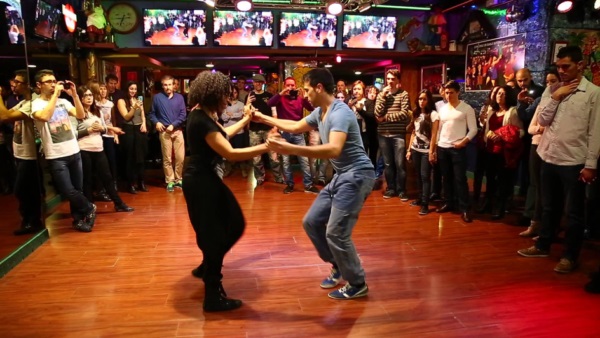
Address: Carrer d’Aragó 141, 08015 – Barcelona
2.- Mojito Club
Mojito Club is offering three salsa-nights a week and has one night completely dedicated to Cuban music. If you want latino music, salsa or bachata, Mojito Club is the place to go! On Fridays & Saturday the club is 100% an international latino music club. You will also find orchestras playing live music that you can strut your moves to. The club is very popular and might be busy on Fridays and Saturdays, so arrive early! Mojito Club is the reference of Salsa, Bachata and Latin music in Barcelona. The classic Mojitos and an international cocktail bar and the restaurant will not leave you indifferent!
Sundays is student’s day! If you are a student of their dance school, Sunday is your day. Enjoy discounts with your VIP card and wardrobes for FREE. If you don’t know how to dance, they have their own Salsa School where you can learn from the first steps to the most advanced movements.
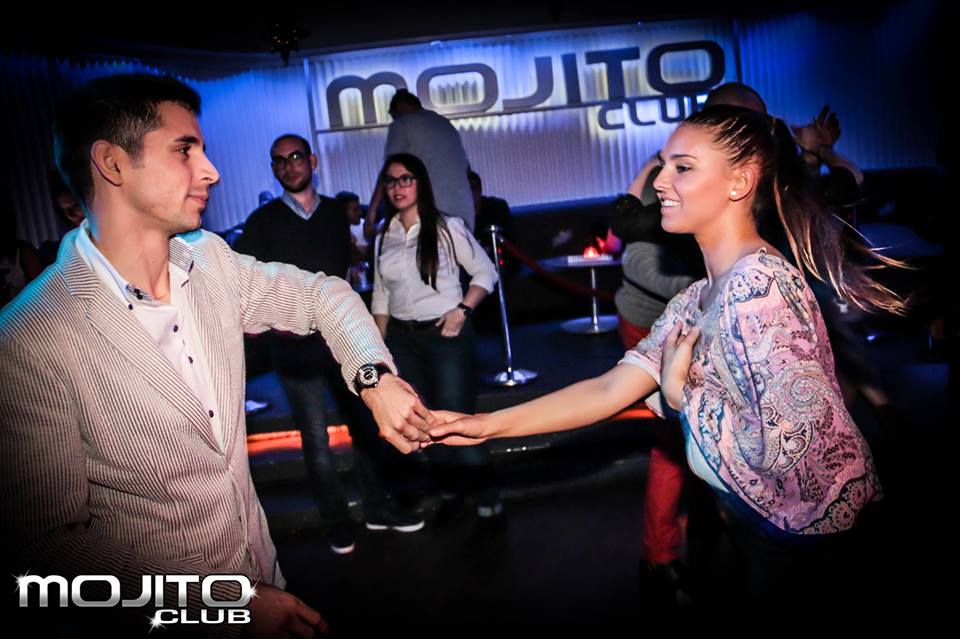
Address: Carrer del Rosselló, 217, 08008 Barcelona
3.- Habana Club
Habana Club is both a dance club and a restaurant in one. Go there for a delicious meal with live music or show off your rhythm and moves on the dancefloor. The club is located in the district of La Barceloneta and is very popular. You’ll definitely enjoy the view! The party in Habana Barcelona consists of a large number of live shows that will make you enjoy music, quality and harmony of your audience to the fullest. A place where you can enjoy a full night, with exquisite dinner, dances with our entertainers and the best tropical cocktails and mojitos in Barcelona.
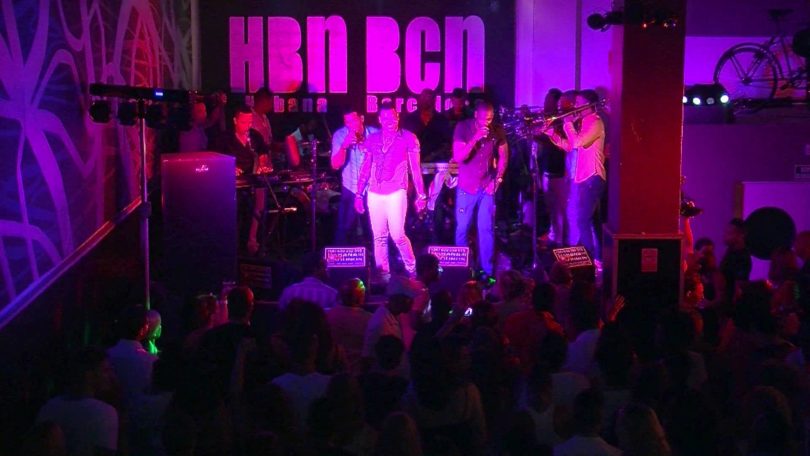
Address: Passeig de Joan Borbó, 74.
4.- El Bombón
El Bombón is the portal to the Caribbean in the heart of Barcelona. Salsa, latin soul, merengue, caribbean food and cocktails. The best Caribbean tapas in Barcelona and the best music. Amazing cocktails and amazing food!! Really good dancing music but not enough space to dance, so try to go to monday to friday.
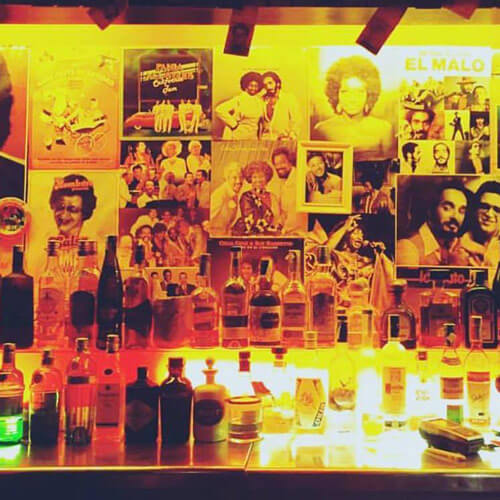
Address: C. Mercè, 13 bis, Barcelona.
https://www.facebook.com/bombonbarcelona/
5.- Dio Club
The party for students and partners of the Seven Dance dance school.
It is a magnificent space in the neighborhood of Gracia that has 2 spacious dance halls and that on Thursdays and Saturdays you can go dancing salsa, bachata and kizomba as long as you have your school membership card. You can get your card completely free at the door or by contacting them previously. On Fridays and Sundays you can go dancing ballroom dancing or swinging. It is advisable to check the schedule before going to dance. A lovely place to practice any type of dance offered there, plenty of space, comfortable ventilation and a bar as god commands.
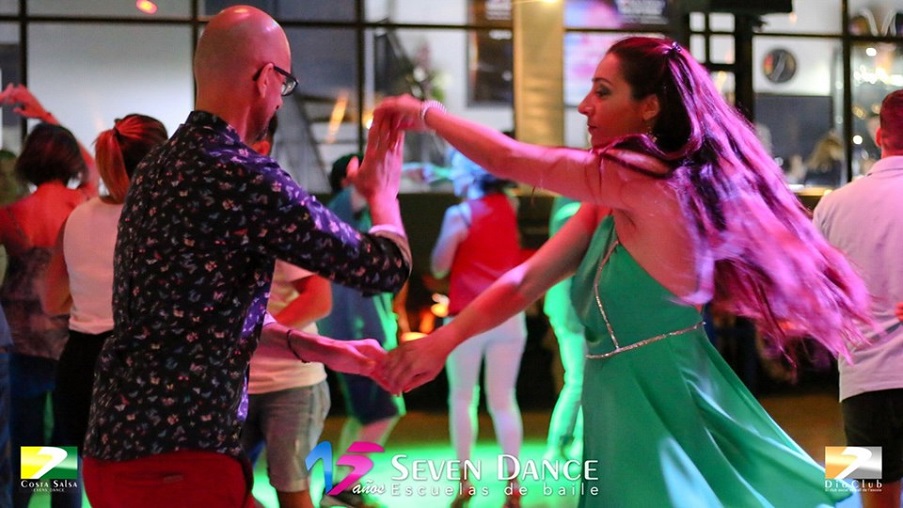
Address: Carrer del Perill, 10 08012 Barcelona
La Topa Tolondra & its Salsa with Criterion – Colombia
Latin America / Colombia / Cali
Something magical happens in a unique space in Cali – Colombia: Topa Tolondra
La Topa Tolondra & its Salsa with Criterion ¨ A magical place in a unique space in Santiago de Cali¨
Because what matters is the music and its only and great protagonist “la salsa” a whole universe of happy individuals united by the melody, and all this happens because the salsa is tattooed in the hearts of many caleños and visitors to the area who It becomes evident on the dance floor, where you can find that visiting salsa public from all over the world that dances professionally, there are also those who dance well and those who don’t dance, but who doesn’t give a damn? “nothing”.
Those who are stung or guilla of dancers, those who go in sandals, those who go with tennis, those who go with heels, those who go elegant, those who go relaxed, the dreadlocks with long hair, those with afros, the gentleman and the lady, the chickens, the urban cyclists and even the rockers… and the list is endless because what matters is the music and its only and great protagonist “salsa”
“Lovers of Salsa and Bolero romantics attend weekly without age limits” To the rhythm of the Charanga, the Pachanga, the Boogaloo, the Guajira and the Son Cubano, it is enjoyed every night at the Topa Tolondra. Something unique happens in that magical place and that is that everyone forgets what they will say and they enjoy it from start to finish. In addition, local and international artists such as:
Esteban Copete y su Kintelo Paci co, Habana con Cola, Los Hermanos Lebrón, Clandestina Orquesta, Africali, Ebano y Marl, Bailatino, La Negramenta, Bobby Valentín and among others. For special dates ¬these and events such as Halloween that is approaching are organized. In “La Topa” as it is already known in Cali, sounds resound that arrived in the city between the 50s and 70s, where Salsa shapes the body and bolero its spirit, and going a little deeper we also perceive inclusive energies.
“Having fun is the only requirement to attend” “The Environment” For an unforgettable night you need two halves. The first is a table, chairs, water and drinks. And the second, and perhaps the most important: music and hit.
In Topa Tolondra there is plenty of space for gozadera, to sit down, to toast. Time does not run and there is no decache… “La Música” Here they marry the old guard of Los Hermanos Lebrón, Ángel Canales, La Sonora Ponceña, Frankie Dante and La Flamboyán.
The curatorship of its owner Carlos Ospina, its disc jockey and owner, is to learn it. It is not at all about impressing, it is about knowing how to find the subject at the right time.
¨Variety¨ Mondays are for foreigners. On Tuesdays there is a cinema-forum space and separate classes that are included with the 3 for 1 promotion (for every 3 Salsa songs, one bolero). Wednesdays are the best dancers in the city, Thursdays are dedicated to live salsa.
Finally, Fridays and Saturdays are reserved for these traditional Topa. “To Many Degrees” If your hair is long, bring something to tie it up with. If you are wearing a long-sleeved shirt, roll up the sleeves. If you are one of those people who is not used to consuming water, be prepared to drink what has not been drunk in a year. In La Topa you feel the harsh heat, so it is necessary to establish breaks to go outside to cool off “the heat outside will seem cool to you.”
For a round night, the ideal combination is beer, brandy and water, in dosed sips. Does the temperature exhaust? Yes, but it doesn’t matter if the song that is playing touches your ¬bras and reaches your heart. If you don’t know La Topa Tolondra, be sure to go and if you want to get a clearer idea before visiting, visit their fan page on Facebook www.facebook.com/Latopabar but don’t stay intrigued! Location of La Topa Tolondra. Cl. 5 #13-7, Cali, Valle del Cauca, Colombia Telephone: +57 323 5972646
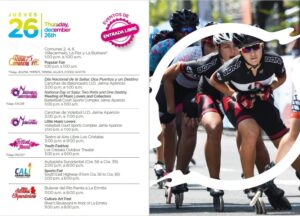
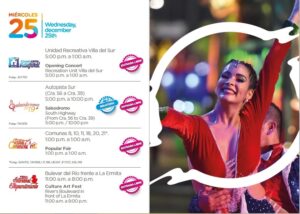
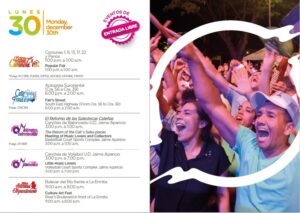
Cali Fairs 2019
What you should know before arriving in Cali
Cali is the capital of the department of Valle del Cauca, located on the Colombian Pacific. Located at 1,018 meters above sea level, its average temperature is 32 degrees, with a dry climate for most of the year.
The climate of the city is hot most of the day, so it is advisable to wear fresh clothing and elements to protect yourself from the sun.
The city is one of the main economic and industrial centers of Colombia, in addition to being the main urban, cultural, economic, industrial and agrarian center in the southwest of the country and the third nationally.
The number of inhabitants according to the result of the last census is 2,420,013 inhabitants, which makes it the third most populous city in the country.
The Alfonso Bonilla Aragón International Airport is located just 35 minutes from the city center.
Salsa is the musical genre that is most listened to in the city; but there are places for all kinds of musical tastes.
The dancers from Cali are recognized for the speed of their movements and there are academies where classes are taught for tourists.
Aguardiente is the typical drink of the region. To consume it, it is recommended to eat first and hydrate well.
A variety of beers, local rum and imported spirits are also available.
It is essential to try the local delicacies: Lulada, marranitas, pandebonos, cholados, chontaduros and shampoos.
If you arrive in Cali at the time of the Fair, it is best that you prepare to live six of the best days of your entire life; where the music, the dance, the gastronomy and the warmth of the Caleños will make you fall in love with this city which they call “La Sucursal del Cielo”.
Cali has a massive transportation system called MIO, which has routes designed to cover the entire city; but you can also get around in taxis. The minimum race has a cost of $4,700. ($1.5)
Places to visit in Cali:
1. Calima Gold Museum
It is an archaeological museum dedicated to the Calima culture located in the historic center of Cali.
2. Boulevard of Colombia Avenue
Also known as the River Boulevard for being located on the banks of the Cali River.
It is a boulevard located in the historic center of the city, in whose surroundings are the Ermita Church, the Coltabaco Building (architectural heritage), the Municipal Administrative Center, CAM; the Puente España, the Jorge Isaacs Theater, among others.
This pedestrian space has become one of the most visited sectors of the city due to its traveling art shows.
3. The Tertulia Museum
It is a museum of modern art and has the most important collection of works on paper in the country.
4. Alameda Park
It is a space for family integration that has become a great cluster of gastronomy, music and dance.
5. Caliwood Museum of Cinematography
It stands out for its emblematic collection of cinematographic, photographic and phonographic devices, which show the evolution of the filming and film exhibition equipment used in Colombia.
6. La Merced Religious Complex
Religious complex located in the place of foundation of the city of Santiago de Cali.
It is made up of the main nave of the church dedicated to Our Lady of Mercy (patron saint of the city), the auxiliary chapels dedicated to Our Lady of Remedies and the Lateran Christ, the religious convent, the museum of religious art and the archaeological museum.
7. Pance River and Health Park
It is one of the most frequented natural places by the inhabitants of Cali.
From the town of Pance to the area known as the Vorágine there are a good number of restaurants and recreational parks.
8. Sebastian de Belalcázar viewpoint
It has a monument that pays homage to the conqueror Sebastián de Belalcázar, who founded the city in 1536.
9. San Antonio neighborhood
Its richness lies in its urban landscape and in the daily expression of its inhabitants, custodians of the oral traditions that gave the city its identity.
It is the cradle of a varied gastronomic offer and fashion shops, as well as religious devotion and the sweet tradition of flower pots on the last weekend of June when the Flower Pot Festival is celebrated.
10. Christ the King
It is the monument that dominates and protects the city with open arms. It is 26 meters high and is located on Cerro Los Cristales.
11. Granada and El Peñon
These neighborhoods are renowned for their hotels, shops, restaurants, bars and nightclubs, with something for everyone.
12. The Cat of the River
It is one of the sculptural works of different artists located on the banks of the Cali River.
The Cat is the work of Hernando Tejada. A series of complementary sculptures can also be found accompanying the cat, called Las Novias del Gato.
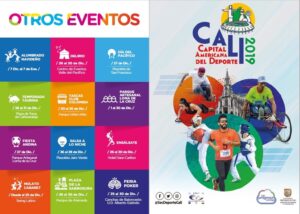
Events to return to Cali
Macetas festival
It is part of a local tradition that celebrates the bond between godparents and godchildren. Every year, during the last days of June, cultural activities, exhibitions and sales of pots, made with sugar candies, are held.
Dance Biennale
It is a festival dedicated to the music of Pacific folklore that takes place in the month of August. It seeks to highlight composers, musical groups and music researchers of Afro-Colombian origin. Gastronomy, clothing and handicrafts are some of the components of this multicultural meeting.
Petronio Álvarez Pacific Music Festival
Event that aims to stage theater shows at a local, national and international level, during the month of October.
World Salsa Festival
National and international companies arrive in the dance capital in November to show the country the best of contemporary, urban and folkloric expression.
Cali International Theater Festival
It takes place in Cali every year in the month of September and recognized orchestras and all the salsa schools in the city participate, accompanied by dance academies from other cities and abroad that are represented by around 5,000 dancers.
During the festival, workshops, talks and academic meetings are held around salsa.
Cali Exposhow
It is the most important beauty, health and fashion event in Colombia, it takes place annually in the month of October and brings together important local and international designers and exhibitors.
- Information: https://feriadecali.com.co/sobre-cali
