• Skip to primary navigation
  • Skip to main content

International Salsa Magazine

  • HOME
  • Previous editions
    • 2026
      • ISM / April 2026
      • ISM / March 2026
      • ISM / February 2026
      • ISM / January 2026
    • 2025
      • ISM / December 2025
      • ISM / November 2025
      • ISM / October 2025
      • ISM / September 2025
      • ISM / August 2025
      • ISM / July 2025
      • ISM / June 2025
      • ISM / May2025
      • ISM / April 2025
      • ISM / March 2025
      • ISM / February 2025
      • ISM / January 2025
    • 2024
      • ISM / December 2024
      • ISM / November 2024
      • ISM / October 2024
      • ISM / September 2024
      • ISM / August 2024
      • ISM / July 2024
      • ISM / June 2024
      • ISM / May 2024
      • ISM / April 2024
      • ISM / March 2024
      • ISM / February 2024
      • ISM / January 2024
    • 2023
      • ISM / December 2023
      • ISM / November 2023
      • ISM / October 2023
      • ISM – September 2023
      • ISM – August 2023
      • ISM July 2023
      • ISM Edition June 2023
      • ISM – May 2023
      • ISM April 2023
      • ISM March 2023
      • ISM February 2023
      • ISM January 2023
    • 2022
      • ISM December 2022
      • ISM November 2022
      • ISM October 2022
      • ISM September 2022
      • ISM August 2022
      • ISM July 2022
      • ISM June 2022
      • ISM May 2022
      • ISM February 2022
      • ISM January 2022
    • 2021
      • ISM December 2021
      • ISM November 2021
      • ISM October – 2021
      • ISM September 2021
      • ISM August 2021
      • ISM July 2021
      • ISM May 2021
      • ISM April 2021
      • ISM June 2021
      • ISM March 2021
      • ISM February 2021
      • ISM January 2021
    • 2020
      • ISM December 2020
      • ISM November 2020
      • ISM October 2020
      • ISM September 2020
      • ISM August 2020
      • ISM July 2020
      • ISM June 2020
      • ISM May 2020
      • ISM April 2020
      • ISM March 2020
      • ISM February 2020
      • ISM January 2020
    • 2019
      • ISM December 2019
      • ISM November 2019
      • ISM October 2019
      • ISM Septembre 2019
      • ISM August 2019
      • ISM July 2019
      • ISM June 2019
  • Spanish
  • Download Salsa App
    • Android
    • Apple

North America

From La Cuarta to the world, the National Afro-Caribbean Festival puts us in touch with our essence

Bella Martinez “La Escritora Irreverente de la Salsa” en Cuarta de Ponce from Puerto Rico the Island of Enchantment.

Ángel “Papote” Alvarado, who is also a composer, percussionist, vocal leader, and founder of Grupo Esencia, manages culture by fertilizing our Afro-Caribbean roots every year, making sure to bring the National Afro-Caribbean Festival to Ponce’s La Cuarta neighborhood, where he grew up.  Usually, the event takes place in June of each year.  However, this year -due to the global health emergency brought on by the pandemic that still threatens us- the iconic annual festival was held from November 19 to 21, 2021 at its usual venue.

On Friday the 19th November 2021 and coinciding with Puerto Rican Day, Angel “Papote” Alvarado kicked off the festivities to usher in the 22nd edition of the festival that each year makes the neighborhood the center of our Afro-descendant culture.

This year, the festival paid tribute to Willie Rosario, Ottoniel Vélez, Jesús Chu López and Héctor Pochy Gastón.

Bella Martínez
Ángel “Papote” Alvarado with Willie Rosario during the tribute to Míster Afinque

The musical offerings on Friday 19 included:  Los Cimarrones, Robert Burgos and Descarga Zasón in addition to the stellar Míster Afinque. Willie Rosario’s orchestra has delighted with its unique compact format and has remained active for more than six decades under the direction of maestro Rosario himself, whom the salsa dancer keeps at the top of his preference within the environment that groups only connoisseurs.

The closing of the first night of the festival was preceded by the impeccable performance of the Willie Rosario Orchestra, a well-deserved tribute to the longest-serving bandleader in the salsa sound. Afterward, the author of the authorized biography of Mister Afinque -Robert Tellez- praised Maestro Rosario with some moving words.

It is worth mentioning that journalist Robert Tellez, who is also known as "the one who knows the most about salsa" traveled from Colombia to Barrio La Cuarta in Ponce to be part of the festival and specifically to accompany the artist who is the subject of his work "Willie Rosario, el Rey del Ritmo" during the tribute.
Willie Rosario with his biographer: Robert Téllez

Afterward, “Papote” Alvarado thanked Robert for his support to Afro-Caribbean cultural activities and presented him with a commemorative poster of the 22nd edition of the festival.  The poster contains a photo by a photographer who stands out as one of the most committed cultural connoisseurs of the salsa scene: Conrado Pastrano.

It is worth mentioning that journalist Robert Tellez, who is also known as “the one who knows the most about salsa” traveled from Colombia to Ponce’s Barrio La Cuarta to be part of the festival and specifically to accompany the artist who is the subject of his work “Willie Rosario, el Rey del Ritmo” during the tribute.  Maestro Rosario made us laugh when, in his usual serious and firm tone, he affirmed, microphone in hand, that he was grateful for the tribute, and at the same time said that he deserved it.

From La Cuarta to the world, the National Afro-Caribbean Festival puts us in touch with our essence


On Saturday 20, the following were presented: Boricua y de Mayagüez, Tribute to Héctor “Pochy” Gastón and Jesús López, Ángel “Papote” Alvarado and El Grupo Esencia, Roberto Roena’s Apollo Sound with Carlos Santos and Tito Cruz singing. On Sunday 21, the stage was decorated with Ausuba, Bambalué, Homenaje a Ottoniel Vélez, Guayacanes de San Antón and Abran Paso, with Pichíe Pérez and Rafy Santana singing.

This 2021 would have been the 23rd edition of the festival.  However, the 2020 edition was canceled.  In a stoic manner, the team in support of the persistence of the president and founder of the Comité Pro Nuestra Cultura – “Papote”- who has the unconditional support of William Rodríguez Thillet did not give up so that this 2021 edition would be achieved. Following all the rules that the COVID-19 protocol demands, the public was able to enjoy a luxury show.

Willie Rosario Orchestra

Security and parking added comfort and convenience to the event.  The festival featured, as usual, a display of artisans and kiosks, with the best of Puerto Rican fritanga.

For more than two decades, which are easy to say but are twenty-two struggles for the benefit of culture and its permanence, Angel “Papote” Alvarado has kept our Afro-Latin culture afloat, beyond the border of the southern pearl. Congratulations!

Lots of good energy, health, and success to this musician and cultural manager who carries on his shoulders an invaluable legacy.  As for the rest, we look forward to the next edition of this unmissable festival that takes place every year.  In the meantime, let’s follow the transcendental feat of his Grupo Esencia.

Bella Martinez and Conrado Pastrano


By: Bella Martínez

Photos: Conrado Pastrano

Article of Interest: Raymundo “Ray” Barretto Pagan was born in Brooklyn, New York on April 29, 1929.

Ray Barretto, Giant Force

Luisito Ayala and his Puerto Rican Power ¡Somos el Poder!

Luis César Ayala, known as Luisito Ayala is a native of Humacao, Puerto Rico.

His beginnings in music date back to his fifteenth year, performing as a trumpet player and director of the student group “Combo Estudiantil”.

At the age of sixteen, he began as a professional trumpet player in the Orquesta Panamericana, Willie Rosario, and Willie Rodriguez.

In the early 70’s the bassist and first director Jesús “Chuy” Castro founded the Puerto Rican Power Orchestra. Chuy was studying medicine and decided to dissolve the orchestra.

Luis César Ayala, known as Luisito Ayala, is a native of Humacoa, Puerto Rico.
Luisito Ayala and his Puerto Rican Power ¡Somos el Poder!

In 1978 Luisito Ayala acquired the rights of the orchestra and became its new director and trumpet leader.

This new stage and for six consecutive years the Puerto Rican Power Orchestra accompanied all the Fania Records artists that visited the enchanted island of Puerto Rico, among these famous stars were: Celia Cruz, Cheo Feliciano, Pete “El Conde” Rodríguez, Vitìn Avilés, Santitos Colon, Ismael Miranda, Héctor Lavoe, Paquito Guzmán and others.

By 1983 Luisito incorporated to his orchestra the quoted singer Tito Rojas “El Gallo salsero” as lead vocalist, from that moment the history changed. Puerto Rican Power became one of the most powerful orchestras in the salsa scene.

At the end of the 80’s, it became the stellar orchestra when it joined the cast of the record label Musical Productions (MP).

It was so successful that later the company decided to launch Tito Rojas as a soloist.

His time with Musical Productions and the Puerto Rican Power Orchestra spanned 9 years where he recorded great and important productions such as: Puerto Rican Power, Con más Poder, Con todo el Poder, El Da más Poder, and Poderoso pero Diferente.

Tracks such as “Noche de Bodas”, “Quiéreme tal como Soy”, “Juguete de Nadie”, “A Donde Irás”, “Emergencia de Amor”, and “Quiero Volver Contigo” have taken him around the world with his music.

The release of the album Con todo el Poder, in 1992, had a monumental impact on the public, the song “A dónde Iras?” led them to obtain local and international awards such as La Campana de Oro, El Combo de Oro, El Buho de Oro, Diplo’s, Paolis, Tu Música and nominated to the prestigious Billboard Awards.

In 1999 he became part of the record label J&N Records.

Luisito Ayala and his Puerto Rican Power ¡Somos el Poder!
In 1978 Luisito Ayala acquired the rights to the orchestra and became its new director and trumpet leader.

He continues with his overwhelming success with the productions: Men in Salsa, Wild Wild Salsa, Salsa Another Day and Éxitos Más, spreading with intensity the songs “Tu Cariñito”, “Me Tiene Loco”, “Doctor”, “Si Pero Na”, “Pena de Amor”, “Cuando me faltas Tú”, “Mi Mujer es un Policía” among others.

Another important production for the Puerto Rican Power Orchestra was “Salsa of the Caribbean”. a conglomerate of rhythm and flavor that got everyone dancing.

In 2009, Luisito Ayala takes another successful step in his musical career by presenting the recording “Luisito Ayala y La Puerto Rican Power…¡30 años de Power! A compilation of his most acclaimed live hits available in DVD and CD formats, this tour of famous songs includes 13 tracks including: “Quiéreme Tal Como Soy”, “Noche de Bodas”, “¿A dónde Iras?”, “Tu Cariñito” and Juguete de Nadie”.

In 2009, Luisito Ayala took another successful step in his musical career by presenting the recording "Luisito Ayala y La Puerto Rican Power...¡30 años de Power!
“Luisito Ayala y La Puerto Rican Power…30 years of Power!

His next musical work under the Latin Word Records label entitled A Otro Nivel! with the musical direction of maestro Julio “Gunda” Merced with his hit “Tengo Miedo” in the voice of the legendary Jose Feliciano.

The production shined with the participation of the outstanding voices of Fania’s Niño Bonito Ismael Miranda, Javi Marrero, Kittin Santiago, and Luisito Ayala Jr.

For 2014 and Luisito Ayala y la Puerto Rican Power returns with a masterpiece of modern Puerto Rican salsa entitled “Somos el Poder” is a mix of romantic and danceable material that sets a standard in the tropical genre.

That said the album highlights the common threads of salsa with a lot of swing and a Big Band sound, the first single titled “Dímelo Tu” in the youthful voice of Joshua Marcell, has become an anthem in Puerto Rico.

Marcell and the other singers Norberto “Gazu” Millón and Luisito Ayala Jr. come in with a new outfit and a new style for the group.

Another highlight of this album is the stellar posthumous tribute to Luisito’s son Braulio Ayala with Tony Vega, Tito Rojas, Ismael Miranda, Pedro Brull, Tito Nieves, and other salsa stars.

Once again Ayala presents us with a production of great variety and commercial appeal… ¡Somos el Poder!

For 2019 Ayala and the Puerto Rican Power bring us their most recent production titled 40 años de Poder.

Para el año 2019 Ayala y la Puerto Rican Power nos traen su producción titulada 40 años de Poder.

Contact:

Mambiche Records

Luisito Ayala Tel: 787-649-4440

Email: [email protected] / Wed: www.puertoricanpower.com

Article of Interest: Celso Clemente Torres is considered one of the best-sounding bongos in the world.

Spanish Harlem Salsa Gallery and its role towards salsa

Spanish Harlem Salsa Gallery and Latin music

The Spanish Harlem Salsa Gallery is one of those places where every salsa lover in New York should visit since there is plenty to see here. This museum has all kinds of items donated by many renowned artists or relatives of some who had passed away. This collection of valuable possessions has resulted in a set of priceless objects that will bow anyone visiting the facilities of such a special institution out of water. 

The Spanish Harlem Salsa Gallery, also known as Spaha Salsa Gallery, can be defined as an institution of a cultural nature whose main purpose is to serve as a reminder of how great our culture is, especially our music. Both residents and visitors of East Harlem, New York, can learn about the salsa genre and its roots as long as they desire. All thanks to a lot of tools, information and many initiatives with which those interested will know all kinds of interesting facts about salsa first hand. 

Another of the great objectives pursued by this place is the quest for knowledge about Latin music and the artists involved to offer it to anyone who decides to visit its facilities. That is why both its president Johnny Cruz and the team that helps him have been responsible for creating an inclusive and diverse gallery in which you can appreciate how far Hispanic talent has come by the hand of its top stars. 

Johnny and Boris
Johnny Cruz and Rubio Boris presenting their show

Role of the Spaha Salsa Gallery in the dissemination of Latin culture 

The role played by the Spaha Salsa Gallery in the dissemination of Latin culture is very important, since these institutions are the ones that manage to arouse the interest of the inhabitants of Harlem and other nearby sectors towards one of the most representative musical genres of Latinity. This has made many other cultural institutions to use this gallery in order to awaken a higher interest in its own activities, which shows extensive cooperation between those who seek to promote anything Latin-related at all costs. 

Fortunately, our work is not that complicated to carry out because too many tourists visit New York every day and many of them know that this city was the birthplace of the biggest salsa movement in history, so they are always looking for cultural sports in which you can find information about this set of rhythms and how it emerges in the public arena.   

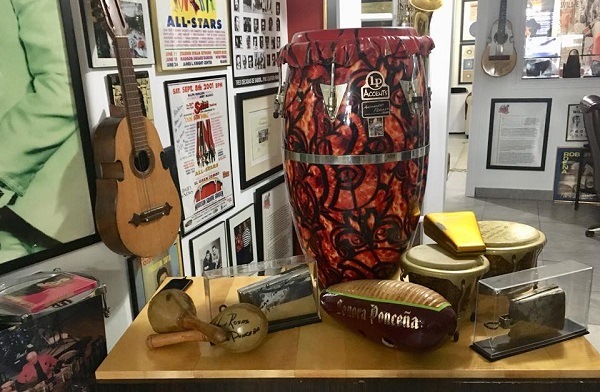
Instruments donated by La Sonora Ponceña
Some instruments donated by La Sonora Ponceña

Who Johnny Cruz is 

Johnny Cruz is the founder of the Spaha Salsa Gallery, but there are many other facets by which this talented Puerto Rican is known in the entertainment industry. Cruz is a famous musician and record producer who has worked and make friends with a wide number of artists from all genres, by providing him with the platform to create a true sanctuary for Latin music lovers. 

One interesting fact about the museum is that it is located on the plot where a hardware business owned by Johnny’s father used to function, which was made into something completely different thanks to the genius of his son long after. Today, that place contains several of the most invaluable objects in the history of salsa and whose relationship with some of the greatest figures of the genre is legendary.   

Link to the official website of the Spaha Salsa gallery: spahasalsagallery.com

By: Johnny Cruz correspondent of International Salsa Magazine in New York City, New York

Noticias Con Sabor with Luis Medina

Noticias Con Sabor in the month of January

We leave this year with the loss of giants in the Latin Music who have joined the ancestors that include the recent loss of the legendary Mexican star Vicente Fernandez, Panamanian powerhouse sonero Meñique and Paquito Guzman who was known for both his boleros and Salsa tunes.  This year we have also lost legends and great musicians such as Johnny Pacheco, Roberto Roena, Chick Corea, Larry Harlow, Adalberto Alvarez, Johnny Ventura, Ralph Irrizary, Tommy Villariny and at the end of 2020, Tito Rojas.  We are lucky that these artists have left us with their legacies of music that will continue to entertain people for years to come.  Rest in Power!

Spanish Harlem Orchestra conquered Monterey with two explosive sets at a special show this past Saturday, Dec. 11th at the Monterey Conference Center. SHO played a few new tunes from their upcoming 2022 release, their repertoire of hits and Christmas salsa music much to the crowd’s delight. I had the pleasure of emceeing the show as well as playing music as the event’s DJ. SHO who were on fire all night and the dance floor was packed all night long. The crowd roared their approval with a standing ovation at the end of the night.  SHO responded with an infectious danceable Christmas song with a crowd sing-a-long which ended the festive evening. Thanks to producer Luis Mendoza and Montuno Productions for inviting me to be a part of this event. Thanks to the great crowd in Monterey who are salseros all the way!

Oscar Hernández playing the piano
Oscar Hernández from Spanish Harlem Orchestra performing at The Monterrey Conference Center

During the COVID19 pandemic, it seemed that all live music stopped being played in public.  However, there were a few places, mostly outdoor cafes, farmer’s markets and restaurants with outdoor dining that offered live Latin Jazz during these dark times.  One of the unsung heroes who continued to play when the pandemic was at its height is veteran pianist-bandleader Gary Flores who formed Salsa Caliente in SF in 1976.  The group has had a lot of prominent musicians including vocalists Paquito Acosta and Angelo Pagan who continued to see their careers thrive in Puerto Rico and Los Angeles.  He disbanded Salsa Caliente in the late 90’s to concentrate on a smaller Latin Jazz group.  Flores along with ex Franco Brothers bassist/vocalist Carlitos Franco and a revolving lineup of all-star percussionists including Santana timbalero Karl Perazo and former Avance bongocero Oscar Soltero kept the live music going during the pandemic at different venues.  Flores was able to continue to play Latin Jazz and Salsa in stripped down format as a trio due to rearranging Salsa tunes as all the members sang coros and vocalized horn lines behind Franco,   Now that live music has made a comeback of sorts and some venues are now booking bigger bands, Flores is revitalizing a bigger version of Salsa Caliente featuring Franco and Perazo.  Flores has been writing new music and plans to record new music with the group.  His last recording “Descarga Caliente: A New Beginning” came out in 2005.  Gary Flores is a veteran and a survivor of the San Francisco Salsa Scene who deserves a big shout out for keeping Latin music alive in the age of COVID!  Pa’lante Gary!!

Reopening will be later

Some scenes are not reopening for 2022 until February or later.  One of those venues affected is Space 550 at 550 Barneveld St. in San Francisco who will reopen in February due to concerns regarding the current surge in COVID cases and the situation with the new variant of the disease.  I also spoke with Adrian Goddard of Jaffe Events who told me that he will continue to book events but later in the first quarter of 2022,  For some event producers, January isn’t a good month to book Latin Music.

People at Space 550
Some people dancing at Space 550

However that’s not stopping Grammy Award winners Pacific Mambo Orchestra who will play their annual January dates at Yoshi’s, Jack London Square on Friday, January 7 and Saturday, January 8th.  Get ready to enjoy and dance to swinging Mambo, Salsa and Latin Jazz from this awesome all-star 20 piece band led by pianist Christian Tumalan and trumpeter Steffen Kuehn. This SF based band is scheduled to play at Europe’s prestigious Tempo Latino Festival in late July. Tickets are now available for these upcoming January dates at Yoshi’s. For more information,  visit www.yoshis.com.

The Cigar Bar, 850 Montgomery St. in SF is starting 2022 with a calendar of great acts coming to this fine venue where you can dine, dance and smoke a fine cigar if you choose to do so. The schedule includes Orquesta La Original w/Alexis Jan 7, Josh Jones Latin Jazz Ensemble Jan 8, The Latin Rhythm Boys Jan 14, Edgardo y Candela Jan 15, N’Rumba Jan 21, La Clave Del Blanco Jan 22, Julio Bravo Y Salsabor Jan 28 and Manteca Jan 29

The Seahorse in Sausalito continues to feature explosive music from the following acts in January on Saturday and Sunday including La Clave Del Blanco Jan 2, Gary Flores and Salsa Caliente featuring Karl Perazo of Santana Jan 8, Edgardo Cambon y Candela Jan 9, Carlos Xavier Salsa Band Jan. 15, Louie Romero and Mazacote Jan 16, Braulio Barrera and Somos El Son, Jan 22,  Orquesta Bembe featuring Christian Pepin on Jan. 23 and Rumbache on Jan. 29.  DJ Jose Ruiz from KPOO/KPFA Radio will also be behind the decks for your dancing pleasure. Check out their fine Italian cuisine and selection of beer and wine.

Seahorse at night
Beautiful decoration of Seahorse at night

The Ramp, 855 Terry Francois in SF continues to offer Salsa under their all-weather tent during the month of January.  Their line up includes N’Rumba Jan 8, Louie Romero & Mazacote Jan. 15, Manny Martinez y La Rebeldia, Jan 22 and Orquesta Borinquen on January 29th. DJ Mendy is providing the music in-between sets and from 9 to 11 pm.  The music starts at 5 pm on Saturdays.

Cascal, 400 Castro in Mountain View will be featuring the explosive sounds of Edgardo Cambon and LaTiDo on Fridays, January 7th and 21st starting at 7:30 pm. There is no cover. Cascal continues to offer their tasty menu of Spanish cuisine, Tapas and fine drinks.

The following recordings kept me going during the second year of COVID19: Ruben Blades “Salswing”, El Gran Combo “En Cuarentena” and their Xmas cd “De Trulla Con El Combo”, Gilberto Santa Rosa’s all-star studded “Colegas”, Sonora Ponceña “Hegemonia Musical”, Mel Martinez “Asi Escribe Un Sonero”, Los Generales De La Salsa featuring Van Lester, a 1996 all-star session finally seeing the light of day, Tromboranga “Salsa Terapia”, Los Van Van “Mi Songo”, Various Artists “El Son De Caballero-Homenaje A Adalberto Alvarez and “Son Para Un Sonero”, Sounds Of Cuba “Los Titanes De La Timba”, Alexander Abreu/Havana d’Primera, Various Artists “En Barranquilla Me Quedo-Homenaje a Joe Arroyo, Dorance Lorza’s Sexteto Cafe “20 Aniversario”,  Luis Perico Ortiz “Sigo Entre Amigos”, Charlie Donato’s Son Ideal “De Vuelta Al Barrio, Eduardo Zayas Y Su EZ La Banda “Huerto De Soneros” and his latest “Sabor Y Sandunga”, Alain Perez, Issac Delgado & Orquesta Aragon “Cha Cha Cha: Homenaje A Lo Tradicional”  and Orquesta Failde “Joyas Ineditas”.  There are a flood of singles that did the job as well from Julito Alvarado’s maxi single “Lo Que No Se Escucha (Descarga De Soneros), Don Pergiñon Y La Puertorriqueña, Marc Anthony, Wilito Otero, Josean Rivera, Monsi Y Su Salsa , Mariana Y Su Makynaria, Julito Albino y Secreto De Voces and VibraSON.  These recordings are some of my picks for the Best of 2021.

And…if that wasn’t enough, my program Con Sabor, Saturday nights 9 to 11 PM PST on KPFA 94.1 FM will be celebrating its 25th Anniversary year on January 1, 2022!  Time flies when you’re having fun!!  I’m also on “Sabiduria Con Tumbao” every Wednesday night 5 to 7 PM PST on WorldSalsaRadio.com.

That’s it for this time.  Ciao 4 now!!

The tent at The Ramp!
Inside the tent at The Ramp

This is the report last month: Noticias con Sabor by Luis Medina

BY LUIS MEDINA, PRODUCER AND HOST OF CON SABOR ON KPFA 94.1 FM AND SABIDURIA CON TUMBAO ON WORLD SALSA RADIO.COM

Not-so-well-known Latin percussion instruments

Some lesser-known percussion instruments

After so many centuries of history, Latin music has undergone any number of transformations and mixes that have made it into the wonder that it is today. In the result, percussion instruments play a critical role and many of them are widely known by fans of Latin rhythms, including those who do not have a great deal of expertise on the issue. The thing is that many of these implements are not so well known to people, so let us mention a few of them with their main characteristics.  

Arará 

The Arará drums are named after a Cuban ethnic group that is mainly based in Havana and the province of Matanzas. In turn, they descend from other ethnic groups that had similar practices and today almost all their temples are located in Matanzas. 

At present, these drums are still used in the rituals of these cults. They are of various sizes and types, but a common characteristic they share is that they are all unimenbranophone and open without exception. One of the things that most identifies them is the presence of ritual marks made to differentiate them.  

This is an arará drum
One of the many types of arará drum

Rain stick 

This percussion instrument consists of a long tube inside which you can find seeds and bamboo sticks, which form a helicoid extended throughout the whole instrument. When this stick is moved, the seeds hit its walls and the sound produced is very similar to that of the falling rain, a characteristic of which it receives its name. 

It is believed that it originated during the age of indigenous peoples in South America such as the Panatahuas, the Quitos, the Mexicas, among many others. On the other hand, it is worth noting the appearance of evidence to suggest that they may have come from pre-Inca cultures originating in the Peruvian coast and the Andes Mountain Range. 

Although the tools used in its manufacture vary from one cultural tradition to another, the most common material is cactus, whose spines must be dried, ground and reintroduced.  

This is a rain stick
A wooden rain stick


Güira 

This is a Dominican percussion instrument that is part of the idiophones. Although it has come to be popular in other places, it is in the Dominican Republic where it originated and became so famous that it is even considered as a national heritage. For many, it has a strong resemblance to the bangaño, but it is very different from this one, since it has a manufacturing process in which metal predominates. 

In these times, it is very common to see it being used as an important part of musical genres such as bachata and merengue, although it is most likely fans have no idea about its existence.  

This is a güira
Here is a güira

Marimbula 

The marimbula consists of a set of metal plates that attach to a resonance box and whose main purpose is to produce sounds. It is an idiophone instrument that holds a striking resemblance to the sanza, which originated in Africa many centuries ago and arrived to the American continent from the hand of the slaves, who already brought their own traditions from their places of origin. 

As to its current use, it serves as an accompaniment to all kinds of musical groups in their shows, whether we are talking about rural or urban environments. However, it should be noted that its use has also spread to religious ceremonies and cults of various kinds. 

This is a marimbula
A marimbula

If you want more info about this topic: The seeds of capacho give the sound to maracas

  • « Go to Previous Page
  • Page 1
  • Interim pages omitted …
  • Page 107
  • Page 108
  • Page 109
  • Page 110
  • Page 111
  • Interim pages omitted …
  • Page 132
  • Go to Next Page »

International Salsa Magazine (ISM) is a monthly publication about Salsa activities around the world, that has been publishing since 2007. It is a world network of volunteers coordinated by ISM Magazine. We are working to strengthen all the events by working together.