• Skip to primary navigation
  • Skip to main content

International Salsa Magazine

  • Home
  • Previous editions
    • 2026
      • ISM / January 2026
      • ISM / February 2026
    • 2025
      • ISM / December 2025
      • ISM / November 2025
      • ISM / October 2025
      • ISM / September 2025
      • ISM / August 2025
      • ISM / July 2025
      • ISM / June 2025
      • ISM / May2025
      • ISM / April 2025
      • ISM / March 2025
      • ISM / February 2025
      • ISM / January 2025
    • 2024
      • ISM / December 2024
      • ISM / November 2024
      • ISM / October 2024
      • ISM / September 2024
      • ISM / August 2024
      • ISM / July 2024
      • ISM / June 2024
      • ISM / May 2024
      • ISM / April 2024
      • ISM / March 2024
      • ISM / February 2024
      • ISM / January 2024
    • 2023
      • ISM / December 2023
      • ISM / November 2023
      • ISM / October 2023
      • ISM – September 2023
      • ISM – August 2023
      • ISM July 2023
      • ISM Edition June 2023
      • ISM – May 2023
      • ISM April 2023
      • ISM March 2023
      • ISM February 2023
      • ISM January 2023
    • 2022
      • ISM December 2022
      • ISM November 2022
      • ISM October 2022
      • ISM September 2022
      • ISM August 2022
      • ISM July 2022
      • ISM June 2022
      • ISM May 2022
      • ISM February 2022
      • ISM January 2022
    • 2021
      • ISM December 2021
      • ISM November 2021
      • ISM October – 2021
      • ISM September 2021
      • ISM August 2021
      • ISM July 2021
      • ISM May 2021
      • ISM April 2021
      • ISM June 2021
      • ISM March 2021
      • ISM February 2021
      • ISM January 2021
    • 2020
      • ISM December 2020
      • ISM November 2020
      • ISM October 2020
      • ISM September 2020
      • ISM August 2020
      • ISM July 2020
      • ISM June 2020
      • ISM May 2020
      • ISM April 2020
      • ISM March 2020
      • ISM February 2020
      • ISM January 2020
    • 2019
      • ISM December 2019
      • ISM November 2019
      • ISM October 2019
      • ISM Septembre 2019
      • ISM August 2019
      • ISM July 2019
      • ISM June 2019
      • ISM May 2019
      • ISM April 2019
      • ISM March 2019
      • ISM February 2019
      • ISM January 2019
    • 2018
      • ISM December 2018
      • ISM November 2018
      • ISM October 2018
      • ISM September 2018
      • ISM August 2018
      • ISM July 2018
      • ISM June 2018
      • ISM May 2018
      • ISM April 2018
      • ISM March 2018
      • ISM February 2018
      • ISM January 2018
    • 2017
      • ISM December 2017
      • ISM November 2017
      • ISM October 2017
      • ISM September 2017
      • ISM August 2017
      • ISM July 2017
      • ISM June 2017
      • ISM May 2017
      • ISM April 2017
      • ISM March 2017
      • ISM February 2017
  • Download Salsa App
    • Android
    • Apple
  • Spanish

North America

Saxophonist and flutist Dave Victorino talks to International Salsa Magazine

Dave Victorino is a saxophonist and flutist who plays various Latin genres such as salsa, Latin jazz and swing in the city of Los Angeles, California. The American musician has been kind enough to talk exclusively with International Salsa Magazine about various topics, including his beginnings, current career and existing projects. We hope that our esteemed readers will like the details of this conversation. 

Saxophonist Dave
This is saxophonist and flutist Dave Victorino

Young Dave’s beginnings in music

Dave recalls that his taste in music led one of his cousins to give him a flute so that he could start playing an instrument and see what happened. However, over time, the young man preferred the saxophone, which he found he liked much more at the time. He reckons that his interest in music began when he was just a 12 or 13-yeard-old.

His interest in the saxophone began with a friend of his mother’s who was a teacher of that instrument, so he was the first to teach him how to play it properly and, even after so many years gone by, he continues to remember everything he learned with him. 

Education

Dave graduated with a degree in music education from Cal State Los Angeles and assured us that one of his greatest mentors there was saxophonist Barney Martinez, a very important figure in Latin jazz at the time. This was a time of great learning for what was to come professionally, and that knowledge continues to help him a lot. 

He also studied with other important music teachers and professors who complemented his musical training almost perfectly. 

What has Dave learned from his greatest collaborations?

Throughout his career, Dave has collaborated with groups such as The Henry Mora Big Band, Temptations, Al Viola, Fred Ramirez, Little Anthony and The Imperials and many others. Obviously, all these personalities have had something important to teach the musician when sharing the stage with him.

Dave refers to Henry Mora as one of his greatest mentors in this whole process, as he had much more experience than the artist, so he had a lot to learn and imitate from him. 

Each professional experience is one more step on the road to excellence that Dave and any artist looks for in his work, which is achieved through practice and spending time with more experienced teachers.

Dave playing
Dave Victorino playing the saxophone live

Great inspirations

When we wanted to know Dave’s greatest inspirations, he could not help but first mention the group El Chicano, with which he played in the early 1980s. One of its founding members and singer Bobby Espinosa, who showed him some recordings of the Fania All Stars and Johnny Pacheco while playing one of the best solos Dave had ever seen. In fact, the artist considers Pacheco his favorite flutist from the very moment he first heard him. 

He also commented that he really likes the way Stan Getz, a Californian saxophonist whose main genres were jazz and pop, played.

How his love for Latin music was born

Dave’s first contact with Latin music was with the group El Chicano, but then came other groups that playing genres that caught his attention.

For several years in the 1980’s and 1990’s, he played in a park three times a week and, on those same days, a DJ would play music by Johnny Pacheco himself, El Gran Combo de Puerto Rico and other salsa groups. He became so fascinated with everything he heard that, little by little, he began to transform his repertoire into one that also included salsa and Latin jazz.

Initially, he only cared about playing this music without understanding the lyrics, but then he began studying and learning a little Spanish to get a better performance in his work. However, he assures that this detail has never posed a problem or a limitation to get good performances in Latin music.

Dave and Barbara
Dave Victorino playing with singer Barbara Reed

Music Classes

Another interesting thing about Dave is teaching. He currently teaches saxophone, flute, clarinet and piano to a good number of students, who have taught him the virtue of patience and determination to always learn something new.

His students are of different ages and he teaches various levels.

Dave and Anthony
Dave Victorino playing with saxophonist Anthony Gil

También lee: Eddie Muñíz continues to head Swing Sabroso

De Tierra Caliente founder Bronson Tennis talks about his career and band

There have been many American musicians who have fallen to the charms of Latin music, which is a practically inexhaustible source of genres allowing them to experiment with in many ways. One of them is Bronson Tennis, with whom we have been fortunate to talk about his interesting career and current musical group, De Tierra Caliente.

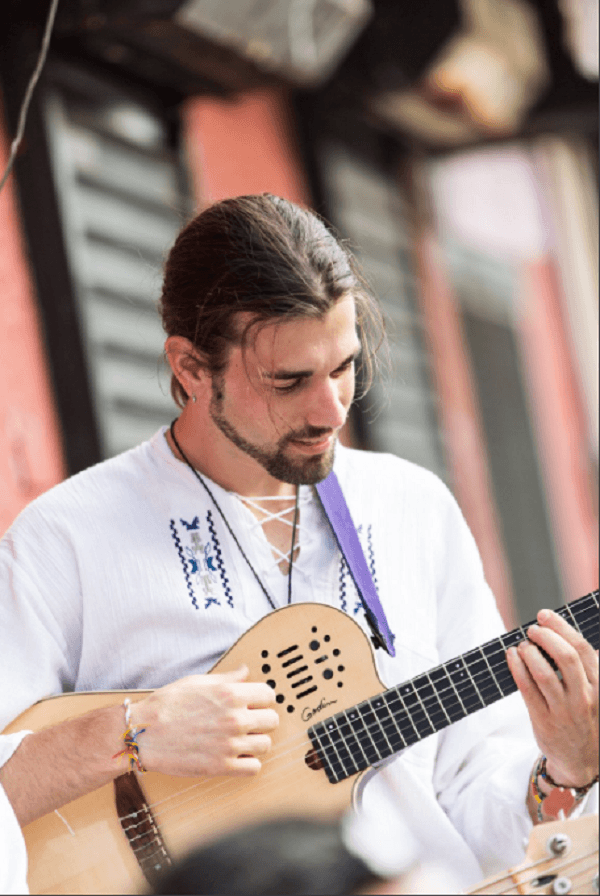
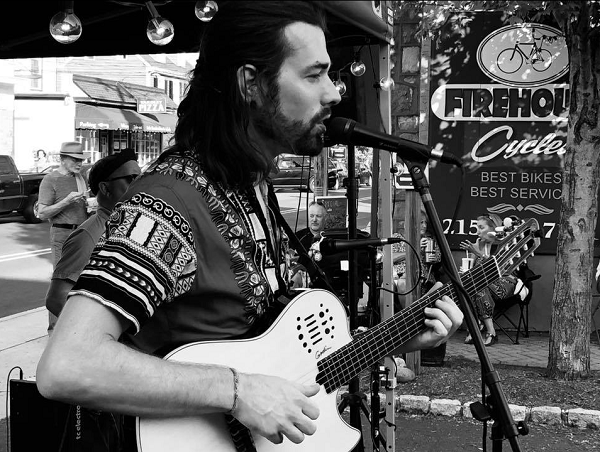
Bronson playing
De Tierra Caliente founder Bronson Tennis playing the guitar

Bronson’s beginnings in music

Bronson Tennis began to put his eyes on music when he was just a child, when he was very attracted to the 1990s alternative rock movement in the United States. When he was only 11 years old, his parents bought him his first bass guitar and later he also wanted to learn to play the guitar and sing.

In family matters, Bronson and his three brothers are musicians and several of his cousins and uncles have also been musicians. In addition, his mother was a fine artist and his grandmother was an art teacher.

Both in school and church, the boy always chased opportunities to sing and show his vocal skills to anyone who wanted to hear. He also took advantage of all these spaces to learn as much as he could about music until he was old enough to exercise it professionally. 

Today, his main instrument is the guitar, although he also plays the cavaquinho (an instrument of Portuguese origin which is widely used in samba) and the roncoco, which is an adaptation of the Andean charango that he uses to play salsa and Cuban son.

Bronson posing for the camera
Bronson Tennis playing the guitar while posing for the camera

Professional debut in music

Bronson also told us that he began his career path as a bassist and chorister in several musical groups in the city of San Diego between 2006 and 2009. He then spent some time in Philadelphia, where he also played with other bands from a variety of genres.

It is interesting that he lived in Buenos Aires, Argentina, where he also worked as a bassist and singer in some bands. In fact, in that same country, he helped form a Caribbean funk band in which he learned a lot about these genres so foreign to what he played in his childhood and youth. He stayed about four years in Argentina, specifically between 2009 and 2012, until he moved to Brazil for about six months to continue learning more and more about Latin music, but it was not his last stop in South America, as he was also in Colombia for a while more.

Following this, he returned to Philadelphia and decided to form his own orchestra which he named De Tierra Caliente.

Prior to De Tierra Caliente

When Bronson returned to Philadelphia, he had the chance to meet some musicians from the Puerto Rican music scene in that city and saw that they had similar outlooks on music, so they got back in the saddle to prepare a formal project amongst themselves.

The artist assures that it was in Argentina where he learned what it takes to move forward with his band. ”Argentines are people who do everything with strength and confidence, whether in music or in soccer. No matter who or what they have to face, as they take on all the challenges with confidence and that is something we could all learn from Argentina.” Bronson said of his stay in that country.

Bronson and his band
(L to R) Papo Buda, Bronson Tennis, Eubie Nieves, Andy Meyer and Steve Cochran

In Brazil, he studied percussion and learned Portuguese, while Colombia taught him to play salsa, champeta, vallenato and many other genres. In short, each country he has visited gave him tools to facilitate his learning in everything about Latin music in various areas.

Precisely thanks to all this acquired knowledge is that Bronson finally felt able to form his own band in 2014 in union with fellow musicians who understood what he wanted to carry out.

How De Tierra Caliente started

Upon his return to the United States, Bronson was very clear that he wanted to incorporate all those elements learned in South America and the Caribbean, but giving them his own touch. It was then that he met conguero Papo Buda, with whom he agreed on much and began the recruiting process for the rest of the musicians.

After that, Bronson and Papo could add more artists to the group, resulting in a fairly consistent group over time. Since its founding, very few musicians have left the band and Bronson and those who remain have an excellent relationship with all of them despite no longer being band mates.

Among his greatest inspirations, Bronson mentioned many artists and groups of various nationalities and genres such as El Gran Combo de Puerto Rico, the Brazilian composer and singer Paulinho da Viola, the group Caribe Funk and many others.

De Tierra Caliente playing
De Tierra Caliente playing live in Yardley

Read also: Latin jazz and mambo trumpeter Jonathan Powell and his great collaborations

Eduardo Herrera

Latin America / Puerto Rico / Puerto Rico

Puerto Rican singer Eduardo Herrera presents us with his new album “Libre” which will have 10 songs, one of them has the same title as the album, which aroused our curiosity. He mentions that his song “Libre” deals with a false love that destroys and manipulates at his convenience, his process of liberation from all that is bad or toxic in that love and, above all, the search for a force to have the courage to face everything and so on. being able to value yourself as a person and being able to look at yourself in the mirror.

Eduardo Herrera tells us that “it is not just a song, it is a way to get out of a prison, of the emotional and physical abuse that you can receive from a person who supposedly loves you… for me it has a lot of meaning, I sing it with great emotion because I lived it I got over it and now I’m free.”

The origin of the album was thanks not only to the singer but also to the good musicians who accompanied him, designed and finished him, among them the arrangers Richard Marcell (piano and bass) and Adán Pérez (piano), Tito de Gracia on percussion, Juan Carlos Cardona (Juako) with Trombones, Jesús Alonzo with Trumpet, Ángel Torres with Baritone.

Eduardo Herrera
Eduardo Herrera

Eduardo Herrera says that since he was a child he has sung in different choirs as he mentioned in the previous report, but from the age of 11 he fell in love with tropical music thanks to Jerry Rivera with the song “Casi un Hechizo” becoming addicted or passionate about the sound of the trumpets the congas and the romantic songs. After the separation of his partner, he began to write his own songs, and later he met a first-class musician named Adán Pérez, a great pianist and arranger; together they met to write and create the current themes of the discography.

He (Eduardo Herrera) also told us that he was in a choir called the Housing Authority Youth Choir, where he had many pleasant experiences and the opportunity to sing at Radio City Music Hall with the British Rock Symphony. In 2016 he produced an album of sacred music and had the honor of meeting Richard Marcell, winner of several Grammys as an arranger and musician, in that production he made 5 excellent songs.

The discography “Libre” has themes that speak of pain, love and the hope of a new beginning for the artist, that is, it is a production with a great variety of lyrics, he confesses that each song is its own story, it has its own identity and hopes that the salsa audience enjoys his work to the fullest since he left his whole being in that production.

In order for the professional life of an artist to be recognized, the greatest obstacle must be avoided, which is oneself, limiting oneself, being afraid; always says: to all my brothers or sisters who are starting something or have a goal in life, don’t give up, fight for your dreams

For more information:

  • Phone: +1 787 399 5064
  • Email: [email protected] / [email protected]
  • Facebook: https://www.facebook.com/eduardoherrerasalsa/
  • Instagram: https://www.instagram.com/eduardoherrerasalsa/
  • YouTube: https://www.youtube.com/user/eduardoherreramusic

Milonga’s contribution to Latin music in general

There are many Latin genres that have managed to find a place in the USA music scene thanks to the constancy of many of its great exponents, salsa being the genre we talk about the most. However, today we want to change the subject a little bit and analyze what is milonga and how popular it has become in recent years.

Malevo y su dama
Recreation of ”Malevo y Su Dama” in Buenos Aires, 1970

Definition of milonga

The milonga can be defined as a folkloric musical genre coming from the Rio de la Plata region, which is usually performed with a guitar accompaniment in 6/8 time. Usually, it is divided in two modalities that are the milonga campera (the genre in its purest form) and the city milonga (style subsequent to the milonga campera).

Etymology of ”milonga’’

Although the musical genre is known for being originally from Argentina, Uruguay and certain parts of Brazil, ”milonga” means ”word” in the Quimbundu language (a language of Angolan origin that corresponds in several expressions with Portuguese). It is important to mention that this is the language used by some tribes from Angola, which was a colony of Portugal, and that many of the slave population of those lands was transported to Brazil, Uruguay and Argentina.

According to information received from some scholars, after the defeat suffered by the Argentine founding father Juan Manuel de Rosas in Caseros at the hands of Entre Rios Governor Justo José de Urquiza, the Brazilian soldiers caught the porteños off guard while singing guajiras in mockery, at the same time that the porteños sang milongas.

In the ears of Brazilians, these songs sounded like gibberish they could not understand. In the end, as a result, the term had such an impact that locals began referring to their own creolized guajiras as milongas.

La milonga de buenos aires
Yanina Quiñones and Neri Piliu dancing “La milonga de Buenos Aires” at the 4th TangoLovers Festival 2018 in Athens, Greece

A little history of milonga

Milonga is known for its joy, speed and sensuality at the time of being performed by its dancers. Its binary rhythm is of great simplicity, so it is in stark contrast to the four beats of the guitar that gives the melody to the dance and is usually accompanied by lyrics occasionally.

It has always been closely related to paya and tango. In the case of paya, milonga used some of its elements specifically for the dance, while tango uses some details of the rhythm and the melody in milonga for its own dance. Today, the three genres are considered a very important part of the Rio de La Plata music scene and each of them has their own characteristics that distinguish one from another.

Milonga had much to do with the birth of tango, but at the same time, it evolved and maintained its independence. In fact, there is some sort of mix of the two called tango milonga that is almost extinct, although it is known that many musicians wanted to use it to give the rhythm of the tango more strength and sustainability. 

As for the places where milonga could be danced, the genre used to be found in neighborhood clubs, dance halls, tearooms and boites. The music used was usually recorded, although the venue owners hired small bands occasionally to change the modality. The popularity of these groups was so great that several of their musicians managed to join highly recognized orchestras at the time. 

Couples who went to milonga clubs to dance ballroom tango and outskirts tango. The first only consisted of beat and elegance, while the second had beat, elegance and figure. Among the most famous places to dance milonga that remain active to this today, we can mention El Barracas Central, Unidos en Pompeya, El Sunderland and many others.

Se dice de mi in milonga
Theddy Lizama and Pamela Ramos Aracena dancing ”Se dice de mí” in Santiago de Chile, November 2022. Source Fuente General de la Nación Argentina

Milonga at present

Today, milonga has become a genre of big importance for people eager to learn to dance things other than salsa, bachata or merengue. This genre offers them the opportunity to try something completely different thanks to which they can connect with others in ways they would not have imagined due to its peculiar rhythm and overflowing sensuality.

In addition to that, every day there are more and more events also called milongas, which consist of massive dances where couples show their best moves to the rhythm of various genres, such as milonga, tango, and vals criollo. In general, the scheduling of a milonga is divided into blocks of three, four or five dances that are separated by short pieces of light music. Apart from that, each block contains a sort of rhythm that is grouped by orchestra, singer or composer.

These events were very typical in Argentina, but have been gradually spreading throughout various parts of the world, including the United States. Nowadays, it is fairly common to find restaurants, night clubs and academies that offer this kind of entertainment to their attendees such as Alberto’s Night Club (San Francisco), The Tango Room (Los Angeles), Milonga La Paz Tango Club (San Francisco), Tango De Rey (San Diego), Tango La Nacional (New York), Fairmont Tango Club (Philadelphia), Dance Fire Studio (New York), and many more.

Read also: The best marimba band found in Los Angeles

Rumberos del Callejón

North America / USA

Rumberos del Callejón “Celebrando” The Salsera Culture

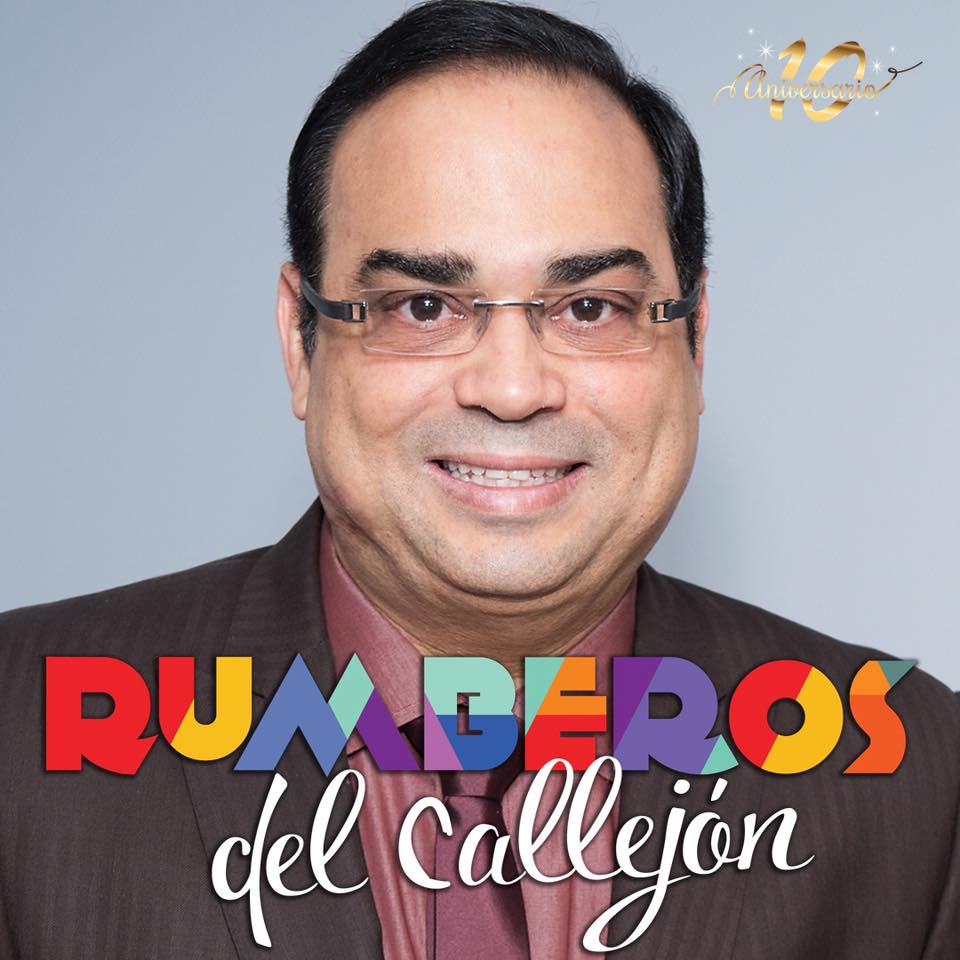
After 11 years of trajectory, Rumberos del Callejón return with their third record label “Celebrando” for Salseros lovers from all continents. An album that since its inception has gained great acceptance by the public knowledgeable of this Tropical genre.

Logo - Rumberos del Callejón
Logo – Rumberos del Callejón
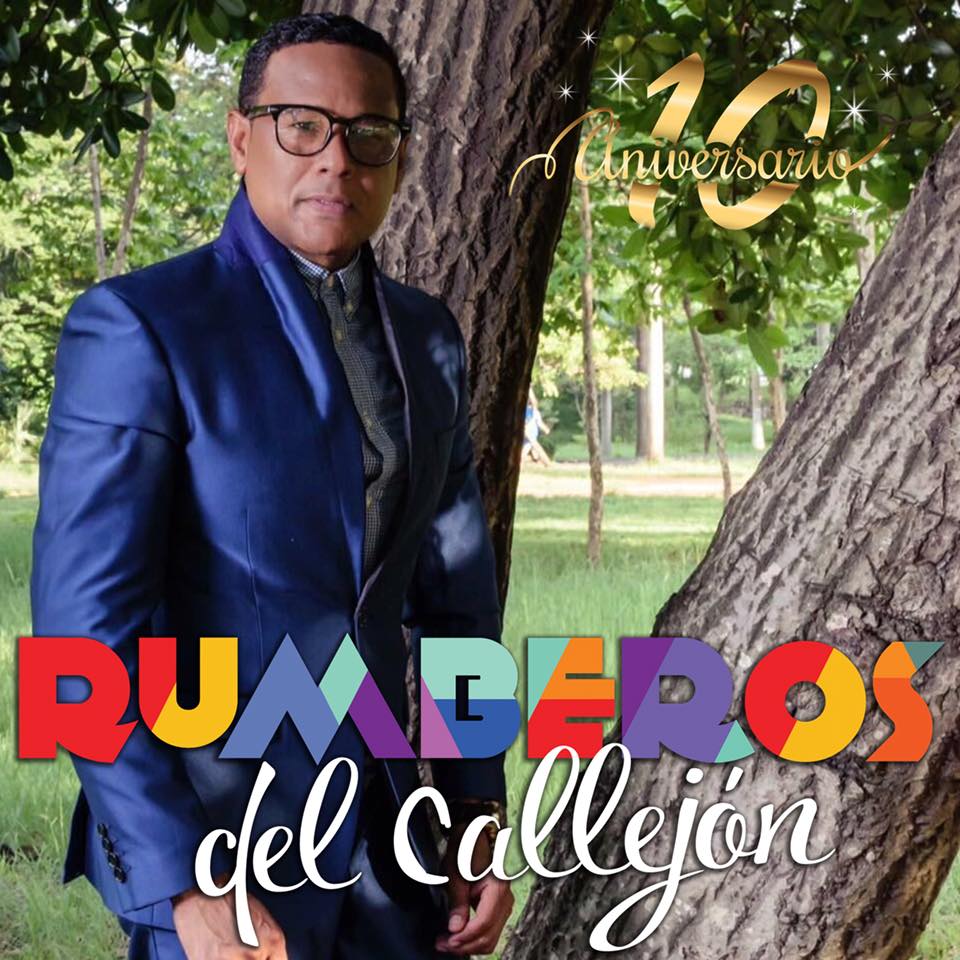
Rumberos del Callejón with the saxohone artist

“Celebrando” will feature several unpublished tracks that highlight the evolution of this orchestra created in Caracas – Venezuela in 2007. These singles will be interpreted mostly by guest artists of the current movement, internationally recognized for their extensive and successful musical career.

Rumberos del Callejón

Celebrando will have a modern and emblematic sound effect, since it has the outstanding voices of: Tito Nieves, Maelo Ruiz, Gilberto Santa Rosa, Domingo Quiñonez, Sixto Yorente “El Indio”, Luis Fernando Borjas, Wilmer Lozano and with the already prestigious vocal harmonies, members of this musical group: Rodrigo Mendoza, Gonzalo Díaz, Angelito Vallenilla, Memo Arroyave and their new musical bet, the young singer, Veruzka Verdú.

Wilmer - Rumberos del Callejón
Wilmer – Rumberos del Callejón

This group that owes its name to the San Pedro alley located in the popular Catia area, west of the Venezuelan Capital managed to obtain the collaboration of these international guest artists on their album not only thanks to the current avant-garde technology, but also to the printed constancy and always present in the director Carlitos Padrón, who took up the challenge with his father Carlos Padrón (founder of the orchestra) to produce “Celebrando”, which also had the privileged pens in the composition of the songs by Rodrigo Mendoza and Angelito Vallenilla.

Veruzca Verdu - Rumberos del Callejón
Veruzca Verdu – Rumberos del Callejón

“ For me Salsa is a way of life. It’s passion and culture. Carlitos Padrón “

This album with almost 4 years of production was recorded in the main cities of the American continent: Caracas, Santo Domingo, Cuba, Miami, Orlando and mainly in the recording studio “Chongo Records” belonging to the director, founder, composer and percussionist of the band, Carlitos Padrón, in New York.

Gilberto Santa Rosa - Rumberos del Callejón
Gilberto Santa Rosa – Rumberos del Callejón

“Celebrando” has the participation of important Venezuelan arrangers of the tropical genre, such as: Alberto Crespo and Willie Melo, who along with Carlitos Padrón took care of all the sound material of the production to get to the music market with a lot of “modernism and melao”, commented Carlitos Padrón. Currently, Celebrando is in the final phase of remastering and mixing so that dancers from the 5 continents are able to enjoy this new record proposal that Rumberos del Callejón will offer them soon.

“… We have international guests of great trajectory, which are a bit difficult to get but with the Grace of God, today, I think we have an Artwork”. Carlitos Padrón

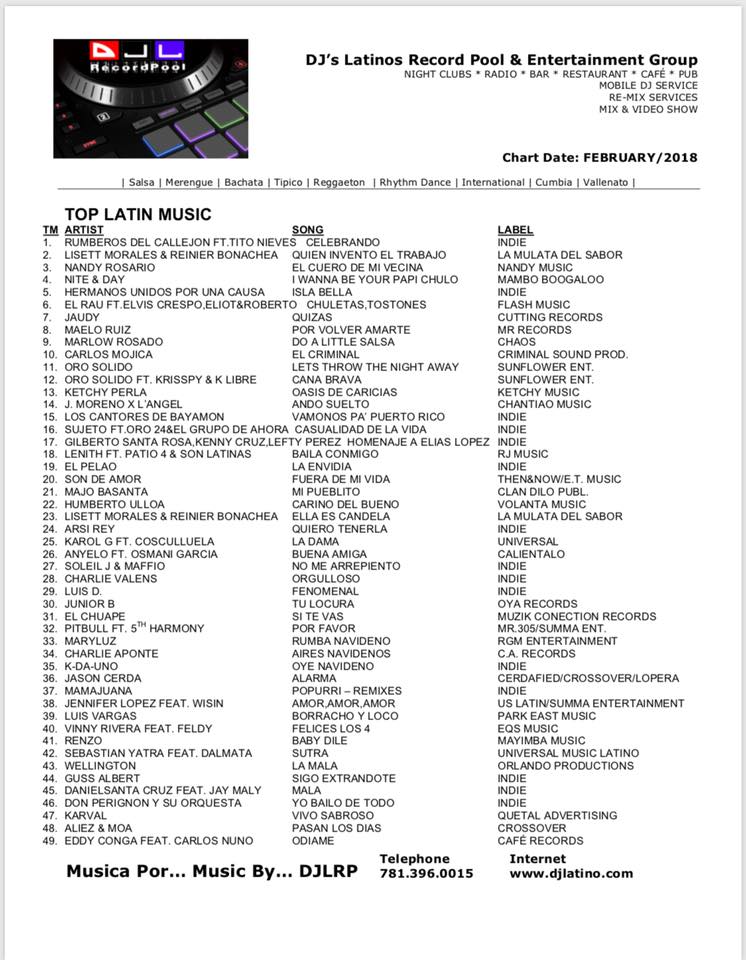
Check List - Rumberos del Callejón
Check List – Rumberos del Callejón

Recently, “Celebrando” whose name also titles the album, was the first single released by the group in November 2017 on all digital platforms and radio stations worldwide, and which last February managed to reach # 1 on the DJs chart.

The theme “Celebrando” has the participation of the Salsero Puerto Rican singer, Tito Nieves and the composition of the Venezuelan Angelito Vallenilla. The musical performance was in charge of the excellent Latin American musicians:

José Tabares (bass), Carlitos Padrón (Timbal), Alberto Crespo (piano), Marc Quiñones (conga), Bobby Allende (bongó), Manuel Maneco Ruiz (trumpets), Pablo Santaella (trombone), José Antonio Fariñas Gutiérrez (baritone), and in the choir: Rodrigo Mendoza, Leo Gruber, Wilmer Lozano and Angelito Vallenilla.

With this third record production product of the celebration of their 10th Anniversary, Rumberos del Callejón, hope to take their music to every corner on the planet and continue betting on the support and integration of new generations in salsa music.

Angelito Vallenilla - Rumberos del Callejón
Angelito Vallenilla – Rumberos del Callejón

“For me, the biggest success is to be able to say that I have in my production the biggest salsa singers of today, nationally and internationally.” Carlitos Padrón

Rumberos del Callejón’s Discography:

In order to rescue the golden age of Salsa in the 70s, 80s and 90s, the Orchestra Rumberos del Callejón was created with a total of 13 members at the beginning, currently, they are 12 members. Their great musical proposal was captured in their first record production titled “De la Nada” (2008) under the label Callejón Música. This album is composed of 11 songs, including: Aquí Se Puede, Pa ‘Lante Otra Vez, Chechere Guma by Justi Barreto, among many others.

Rumberos del Callejón - Se Acabo el Silencio
Rumberos del Callejón – Se Acabo el Silencio

After 4 years, they release their second album “Construyendo” (2012) with such emblematic songs as “Cuando te toque llorar” by Puerto Rican balladeer José Feliciano, likewise, the production of “Constuyendo” was in charge of the director, timbalero and composer, Carlitos Padrón with arrangements made by the renowned Puerto Rican producer, Ramón Sánchez.

Rumberos del Callejón - de la nada
Rumberos del Callejón – de la nada

And Finally, for the musical performance Padrón decided to gather the best musicians from the NY area: Isidro Infante (Piano), José Tabares (Bass), Pablo Santaella (Trombone), Ray Colón (Bongó), Nelsón Jaime “Gazú” (Trumpet) , Manuel Ruiz (Trumpet), Iván Renta (Saxo Baritone) and Robert Quintero (Congas).

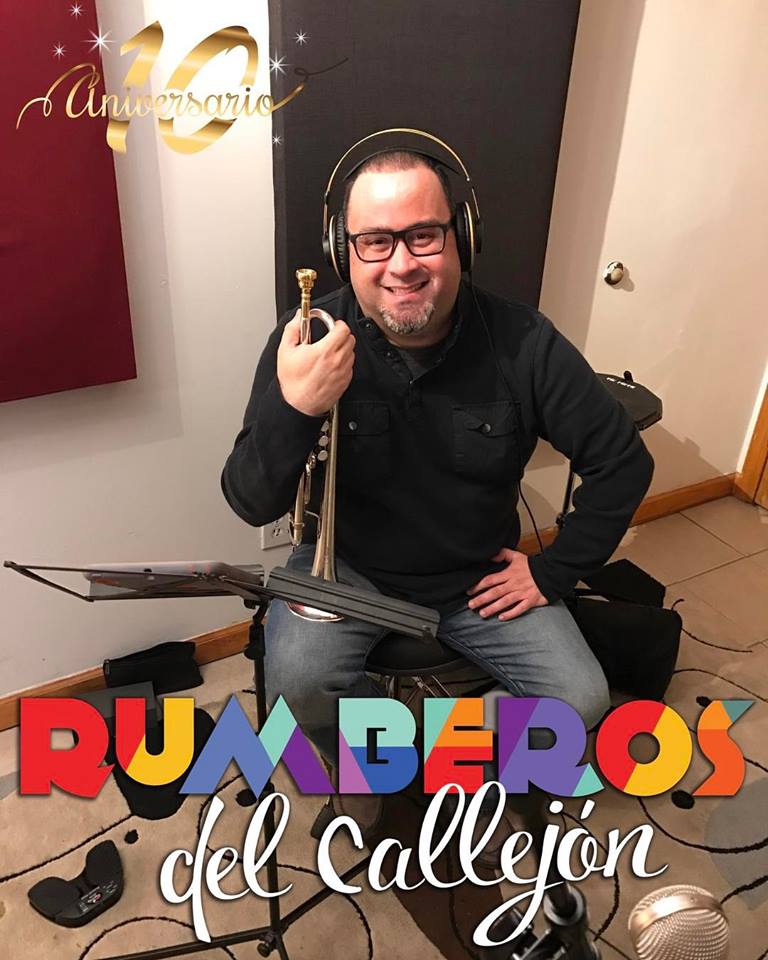
Trumpet Artist - Rumberos del Callejón
Trumpet Artist – Rumberos del Callejón

For more information, follow them at:

  • Facebook: https://www.facebook.com/pg/rumberosdelcallejon1
  • Instagram: @rumberos_del_callejon
  • The Official Accounts on YouTube and Soundcloud: Rumberos del Callejón.
Rumberos del Callejón
  • « Go to Previous Page
  • Page 1
  • Interim pages omitted …
  • Page 32
  • Page 33
  • Page 34
  • Page 35
  • Page 36
  • Interim pages omitted …
  • Page 127
  • Go to Next Page »

International Salsa Magazine (ISM) is a monthly publication about Salsa activities around the world, that has been publishing since 2007. It is a world network of volunteers coordinated by ISM Magazine. We are working to strengthen all the events by working together.