• Skip to primary navigation
  • Skip to main content

International Salsa Magazine

  • Home
  • Previous editions
    • 2026
      • ISM / January 2026
      • ISM / February 2026
    • 2025
      • ISM / December 2025
      • ISM / November 2025
      • ISM / October 2025
      • ISM / September 2025
      • ISM / August 2025
      • ISM / July 2025
      • ISM / June 2025
      • ISM / May2025
      • ISM / April 2025
      • ISM / March 2025
      • ISM / February 2025
      • ISM / January 2025
    • 2024
      • ISM / December 2024
      • ISM / November 2024
      • ISM / October 2024
      • ISM / September 2024
      • ISM / August 2024
      • ISM / July 2024
      • ISM / June 2024
      • ISM / May 2024
      • ISM / April 2024
      • ISM / March 2024
      • ISM / February 2024
      • ISM / January 2024
    • 2023
      • ISM / December 2023
      • ISM / November 2023
      • ISM / October 2023
      • ISM – September 2023
      • ISM – August 2023
      • ISM July 2023
      • ISM Edition June 2023
      • ISM – May 2023
      • ISM April 2023
      • ISM March 2023
      • ISM February 2023
      • ISM January 2023
    • 2022
      • ISM December 2022
      • ISM November 2022
      • ISM October 2022
      • ISM September 2022
      • ISM August 2022
      • ISM July 2022
      • ISM June 2022
      • ISM May 2022
      • ISM February 2022
      • ISM January 2022
    • 2021
      • ISM December 2021
      • ISM November 2021
      • ISM October – 2021
      • ISM September 2021
      • ISM August 2021
      • ISM July 2021
      • ISM May 2021
      • ISM April 2021
      • ISM June 2021
      • ISM March 2021
      • ISM February 2021
      • ISM January 2021
    • 2020
      • ISM December 2020
      • ISM November 2020
      • ISM October 2020
      • ISM September 2020
      • ISM August 2020
      • ISM July 2020
      • ISM June 2020
      • ISM May 2020
      • ISM April 2020
      • ISM March 2020
      • ISM February 2020
      • ISM January 2020
    • 2019
      • ISM December 2019
      • ISM November 2019
      • ISM October 2019
      • ISM Septembre 2019
      • ISM August 2019
      • ISM July 2019
      • ISM June 2019
      • ISM May 2019
      • ISM April 2019
      • ISM March 2019
      • ISM February 2019
      • ISM January 2019
    • 2018
      • ISM December 2018
      • ISM November 2018
      • ISM October 2018
      • ISM September 2018
      • ISM August 2018
      • ISM July 2018
      • ISM June 2018
      • ISM May 2018
      • ISM April 2018
      • ISM March 2018
      • ISM February 2018
      • ISM January 2018
    • 2017
      • ISM December 2017
      • ISM November 2017
      • ISM October 2017
      • ISM September 2017
      • ISM August 2017
      • ISM July 2017
      • ISM June 2017
      • ISM May 2017
      • ISM April 2017
      • ISM March 2017
      • ISM February 2017
  • Download Salsa App
    • Android
    • Apple
  • Spanish

North America

Nicaraguan composer and pianist Donald Vega’s hard-luck story

The character’s story we are going to talk about today is extremely fascinating, since the challenges he has had to endure did not prevent him from becoming the great musician he is now. We are talking about Donald Vega and the inspiration he is for those who believe their dreams and goals impossible to achieve.

Donald and his piano
Nicaraguan composer and pianist Donald Vega and his piano

Donald Vega and his interesting story

Donald Vega is a composer and jazz pianist born in Masaya, Nicaragua, whose family has had musicians for several generations. His grandfather, Don Alberto Gutiérrez Laguna was a composer and multi-instrumentalist and had a love for music that was passed down through his children as they grew older. This was the case of his uncle, Tránsito Gutiérrez, who was honored in 2022 at the Rubén Dario National Theater for his great artistic career.

Tránsito was one of the great inspirations for his nephew to become interested in music and play the piano at the tender age of three, guided only by his ear. His grandfather Alberto, seeing this, wanted to teach his grandson Donald to read music and prepare him as well as possible for the future. As part of this preparation, he attended the conservatory to study the greatest exponents of classical music such as Beethoven, Chopin and Mozart. 

Unfortunately, his parents quickly understood that the country was not safe for their son to pursue his dreams. 

Challenges of adolescence 

At that time, 15- and 16-year-olds were forced to join the Nicaraguan army, so his mother left the Central American country to find a way to get him and his siblings out of there and give them a better future far from armed conflict. Something that struck him at that time was that there were many wakes in his neighborhood where the body was not even present, but some parts of the military uniform such as the helmet or boots. This led his mother to want to get her son out of the country, so she got him a visa to go to Mexico so he could cross the land border into the United States with his godmother. 

Donald and Poncho
Donald Vega when playing with Poncho Sanchez some years ago

His first stop was Los Angeles, where he joined his mother and applied for political asylum. At that moment, he did not have any resources to buy instruments, but he received a scholarship at a conservatory where he got much support to train properly despite the want of money.

While in school, a music teacher heard him play the piano and invited him to participate in a national music competition in Los Angeles where he won first place and was given 5000 dollars and a piano as a gift. It can be said that this was his official start in the world of music, so he is very grateful to have participated in the competition.

Sometime later, he received a scholarship to study at the Manhattan School of Music in New York and the Juilliard School of Music, of which he is now a music teacher.

Golden Striker Trio

The opportunity to belong to the Golden Striker Trio is described by Donald as incredible, since it has been a fascinating experience with an interesting beginning.

It all started when a Ron Carter’s student at Juilliard, with whom Donald made a recording together in New Orleans to be shown to Professor Carter to determine what aspects needed to be improved. Carter was so fascinated with Donald that he asked to meet him and talk with him to learn more about his work.

When they met, the professor proposed the artist to watch him live in one of his performances. After that, he had him come to his home to tell him that he was giving him the opportunity to participate in his Golden Striker Trio as a pianist, since the previous one wanted to dedicate more time to his own group. Donald has been working with Carter and his group for more than 15 years and is very grateful for what he has achieved and learned. 

Donald, Ron, and Russell
Donald Vega, maestro Ron Carter, and guitarist Russell Malone from Golder Striker Trio

Backcountry Jazz   

Backcountry Jazz is a non-profit organization that seeks to support talented youngsters with limited resources to achieve their dreams in the music industry. Donald has become part of this noble initiative motivated by the teachings of his parents, who have always told him to be generous and give of his time to others. It is for this same reason that he also teaches at the Juilliard School of Music, since sharing his time and knowledge with others gives him an incredible satisfaction.

Due to the situation he himself experienced with lack of money and instruments in order to get ahead in his passion, he understands perfectly how children and young people who do not have the resources to be successful with music feel, so he seeks to give them a hand through this organization and his mentoring.

Grammy Nomination for As I Travel

Donald talks about ”As I Travel” as a description of the path he had to pass to become the musician he is today. He was also inspired by his journey across more than 44 countries he has visited with different musicians including, of course, Ron Carter.

The whole album is inspired by his experiences. An example of that is ”Baila! Dance Like No One’s Watching”, which is inspired by the happiness of those around him, especially his son, his biggest inspiration for writing the song. It is a celebration of life, family and his countrymen in Nicaragua.

Donald and Ruben
Rubén Blades and Donald Vega posing for the camera

Another example worthy of mention is ”I Know I can Fly”, which was inspired by the host of challenges he faced upon arrival to the United States and the whole process of adapting to the country, its lifestyle, its climate and its language. It was also inspired by his determination to succeed despite all the challenges he faced along the way. 

Read also: Cuban pianist Daniel Amat achieves his dream abroad

Latin jazz and mambo trumpeter Jonathan Powell and his great collaborations

Trumpeter Jonathan Powell is one of the many examples that show how much so many American artists have looked at Latin music over the last few years, so this is a great opportunity to know one of the many stories about what our heritage has achieved in this country.

Jonathan playing
Musician Jonathan Powell playing the trumpet live

Instruments that caught Jonathan’s attention

An important fact to remember is that Jonathan’s parents were musicians. His father played the electric bass and his mother played the cello, so he obviously has a lot of talent to get from. However, his interest in music turned to a slightly different way.

The instrument through which the artist is best known today is the trumpet due to his great skill at handling it, but it is not the only instrument he has learned to play. He also plays the trombone, the tuba and other bass instruments, but does not have the same fascination with them as with the trumpet.

His interest in music began when he was in high school and became part of a few student bands, resulting in more than 30 years of musical career.

Jonathan’s academic training

Most of what Jonathan has got to learn comes from the experience he has gained through his work, although he does not devalue formal music education. In fact, he attended the North Carolina School of the Arts and studied with that institution’s best teachers in the area of classical music.

When he turned 19, he made the decision to move to New York, where he has lived ever since. While there, he did not care as much about further studying music, but gaining as much experience as he could through practice.

Jonathan recording
Jonathan Powell recording music for his album ”Mambo Jazz Party”

Interest in Latin music

Although Jonathan’s interest in music began with the classical genre, his move to Florida made him seek other horizons. In Florida, he and his brother Jeremy began to make contact with radio stations that played Latin genres and this led them to meet the Garcia-Herreros brothers, Juan and Victor, who are two very experienced musicians in Latin jazz, but also in Latin music in general. The boys returned to Florida after studying at Berklee College of Music and started a band with Jonathan and Jeremy until they had to move to New York.

When Jonathan graduated from high school and also moved to New York, he was reunited with Juan and Victor who offered him to join their orchestra La Creación, with which he played every weekend for several years. This would be what the young musician would describe as his first real experience in the world of music, leading him to participate in the orchestra La Excelencia and to play with Arturo O’Farrill and Eddie Palmieri. 

Learning from other great artists

Just as Jonathan has played with O’Farrill and Palmieri, he has also been able to share the stage with Miguel Zenón, Tito Puente Jr, Oscar Hernández from the Spanish Harlem Orchestra, Israel Tanenbaum and many others.

Despite not having received much academic training, the opportunity to have played with the aforementioned music stars and many more really taught him many things that he would not have learnt in any educational institution. He assures that from whom he learned the most was Maestro Palmieri, since the legendary pianist is very generous when it comes to sharing his knowledge with whoever needs it, thanks to his extensive experience in this rich world.

‘‘Palmieri has been around since the fifties and sixties and has played with the most important artists of his generation, so he has a lot to teach. People have no idea how much he knows and how deep his knowledge on music is,” said the trumpeter about one of his great living inspirations.

However, as a trumpet player, another of his great inspirations was Puerto Rican arranger, composer and producer Juancito Torres for the way he played, since he considers it very special and unique compared to many other musicians.

Jonathan and Palmieri
Maestro Eddie Palmieri and Jonathan Powell smiling for the camera

Nu Shanga

Eager to manage his own musical group, Jonathan gives the public a very interesting proposal which he baptized Nu Sangha, inspired by Tibetan language, since these two words together mean ”new community”. With this group, he had much more freedom when choosing how he wanted to address each rhythm and wanted to give a much more modern approach to the type of jazz he had been playing through electronic elements few times used before.

In the case of Nu Sangha, he enjoyed everything he did professionally and was able to experiment with everything he had learned so far in creative ways, leading him to release the albums ”Transcend” and ”Beacons of Light”.

Mambo Jazz Party

In Jonathan’s own words, Mambo Jazz Party, the artist’s most recent musical work, the entire process of recording it took more than 10 years, since that was the time taken to create all the music that appears in the record material. He started the creation in 2014 and it was not until 2022 that Jonathan added the final details such as some missing vocals, but he assures that all the time spent on the album was worth it.

On the album, we can find Jimmy Bosch, guitarist Nir Felder, flutist Itai Kriss, pianist Manuel Valera, vocalist Ariadne Trujillo, singer Anthony Almonte and many other great artists who embellish this creation.

In other interviews, Jonathan has described this album as a mix of traditional salsa and Latin jazz elements, electronic sounds and a lot of spiritualism, which can summarize very well what this musical work represents for Jonathan Powell. 

Mambo Jaszz Party by Jonathan
Cover of the album ”Mambo Jazz Party” by Jonathan Powell

Read also: Great Christmas salsa songs and their stories

Yerba Buena Gardens Festival 2018 Begin this May in the heart of San Francisco

North America / USA / San Francisco

2018 Yerba Buena Gardens Festival (YBG Festival) proudly announces the lineup for its 18th Season.

The tradition continues to downtown in San Francisco! Hang out this new season with the first all-female mariachi ensemble, Mariachi Flor de Toloache + Mexican vocalist, composer, and guitarist Diana Gameros on Sunday, May 6 at 1:00pm, the first concert of this year’s 100 admission-free events.

2018 Yerba Buena Gardens Festival (YBG Festival)

The very popular series Let’s Go Salsa@Jessie also will have the best Latin artists, such as: “New Mambo Retro Salsa” group Cabanijazz Project on May 17, the nine-piece combo Bululú led by Venezuelan-born percussion master and vocalist Lali Mejia on June 21, the Bay Area’s inventive Cuban band Pellejo Seco on July 19, among many others. YGB Festival offers you entertainment FREE completely: music, theater, circus, dance, poetry & culture programs to children and entire family with artists from the Bay Area and International guests.

Cabanijazz Project
Cabanijazz Project

Named one of the Best Urban Green Spaces in North America by Local Medias, YGB Festival is a world-renowned cultural destination that offers three outdoor stages to performances for Bay Area residents, families, workers, and visitors alike. Yerba Buena Gardens Festival take place outdoors in Yerba Buena Gardens, off Mission Street between 3rd and 4th Streets, San Francisco.

Photo - Thursday lunch with various artists
Photo – Thursday lunch with various artists

YBG Festival Executive/Artistic Director Linda Lucero says, “Get inspired! Treat yourself and treat your family, friends, and co-workers to the most diverse performing arts experience in the Bay Area. Yerba Buena Gardens Festival is Free, Outdoors, and fresh!”

During these 6 months (May – October) YBG Festival includes the highly acclaimed Let’s Go Salsa@Jessie! Dance series, the family-friendly Children’s Garden Series, Poetic Tuesdays with Litquake, and Thursday Lunchtime Concerts.

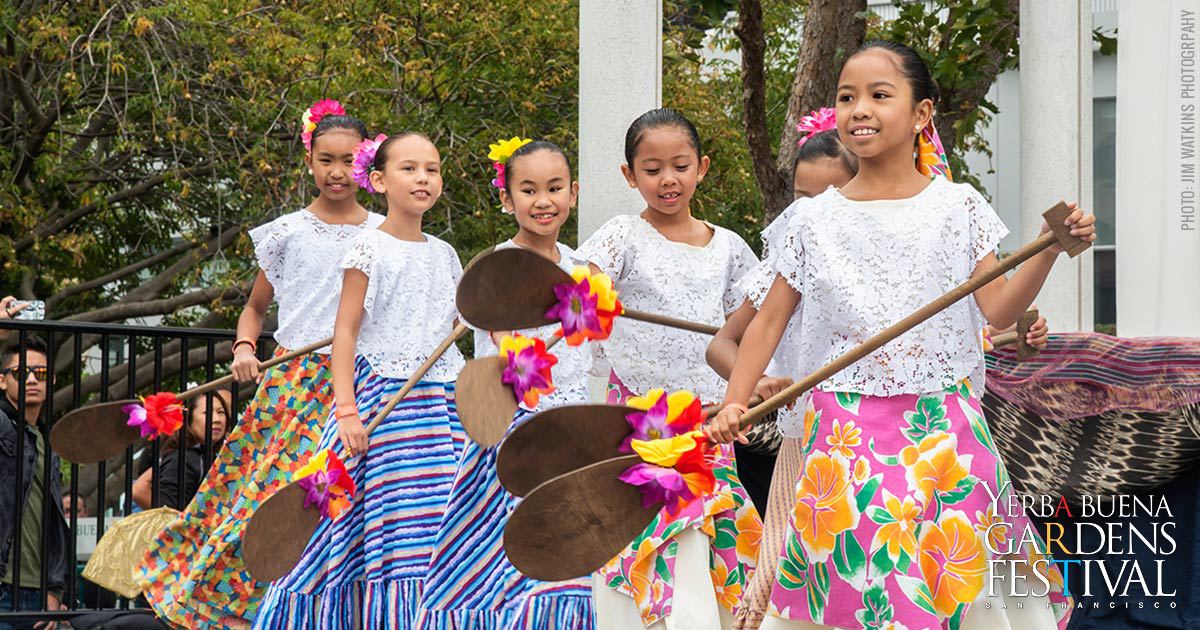
Pistahan Children at the Yerba Buena Gardens Festival

Each and every week and weekend, the Festival presents a curated lineup of musicians, dancers, poets, and artists from around the world including the Moroccan trance music of Innov Gnawa with Book of J on May 12, northwestern Indian dance with Garba in the Gardens on May 19, the 2nd Annual Yerba Buena Gardens ChoreoFest on June 2 and 3, the most celebrated gamelan ensemble outside of Bali, Gamelan Sekar Jaya.

On June 9, powerhouse Afro-Venezeulan vocalist Betsayda Machado y La Parranda El Clavo with VNote Ensemble on June 16, three performances from Festival favorites Circus Bella on June 22 and 23, the all-women klezmer group direct from New York City Isle of Klezbos with San Francisco’s Fanfare Zambaleta on July 7, Ukulenny and Cynthia Lin’s SF Uke Jam Summer Uke-Splosion! 

On July 14, Cuban saxophonist Yosvany Terry Sextet on July 28, the 40th Anniversary performance of the San Francisco Lesbian/Gay Freedom Band on July 29, one of Vietnam’s most celebrated traditional artists Vân Ánh Võ & The VA’V on August 25, Manila Disco Fever on September 1, and the Yerba Buena Gardens Festival commissioned piece from Marcus Shelby Orchestra – Blackball: The Negro League and the Blues on September 8. The Festival closes with the 18th Annual Halloween Hoopla on Sunday, October 28.

The Yerba Buena Gardens Festival Social (YBG Festival)

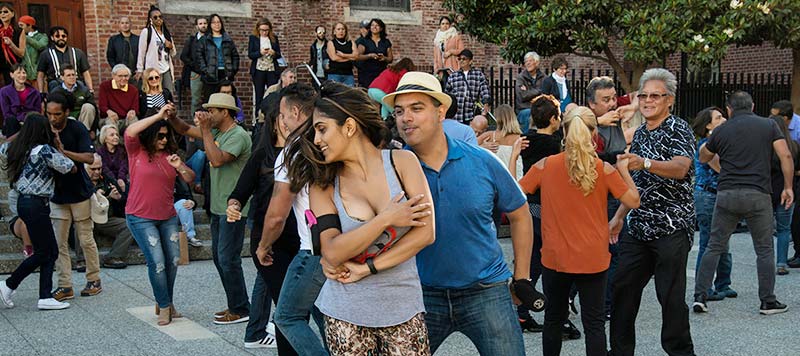
The popular series Let’s Go Salsa@Jessie!, the open-air salsa dance party in Jessie Square (near the Contemporary Jewish Museum), takes place on the third Thursday of each month from May to September from 6:00pm – 7:30pm.

Performers are the ‘New Mambo Retro Salsa’ group Cabanijazz Project on May 17, the nine-piece combo Bululú led byVenezuelan-born percussion master and vocalist Lali Mejia on June 21, the Bay Area’s inventive Cuban band Pellejo Seco on July 19, the U.S. State Department-sponsored Latin Jazz Ambassadors and the Mission’s own Annette A. Aguilar & StringBeans on August 16, and Los Mocosos vocalist and master salsero Manny Martinez y la Rebeldia on September 20.

This Festival brings the delightful Children’s Garden Series features interactive performances specially designed for kids and families every Friday from June to August in the Yerba Buena Children’s Garden at Fourth and Howard Streets.

The series presents performances by kid favorites: the 2018 Grammy-nominated Alphabet Rockers, Non Stop Bhangra,Māhealani Uchiyama, Parangal Dance Company, Circus Bella, Unique Derique, Caterpillar Puppets, Chelle! & Friends, Pi Clowns, Red Panda Acrobats, Venezuelan Music Project, Crosspulse, and Ka-Hon. The series ends with the wildly popular 18th Annual Halloween Hoopla on Sunday, October ­28.

Yerba Buena Gardens Festival San Francisco

Between these 100 free performances in YBG Festival are Thursday Lunchtime Concert Series that take place most Thursdays from 12:30pm to 1:30pm and is a favorite destination of downtown workers, shoppers, tourists, and students.

This year features the very best of local and international musicians including New World String Project on May 10, Community Music Center Older Adult Choirs on May 17, Dogon Lights on May 24, Kitty Pak on May 31, Latin Jazz Youth Ensemble of San Francisco on June 7, the Swedish Consulate’s Jenny Lind Concert on June 21, Dalia & the Big Violin on June 28, Manring Kassin Burr on July 5, Maikaze Daiko on July 12, Solate on July 19, Sol Development with Mino Yanci on August 2,

LINES Dance Center on August 9, Highest Ani on August 16, Faun Fables on August 23, La Patronal on August 30, John Brothers Piano Company on September 6, Daniel Riera: Future Flutist with Electric Ensemble on October 4, and Rice Kings on October 11.

CMC Older Adult Choirs

This amazing event also celebrates annually: the 21st Native Contemporary Arts Festival on June 17, the 18th Annual AfroSolo in the Gardens featuring a Tribute to Duke Ellington featuring Denise Perrier and Nina Causley with David Hardiman’s San Francisco All-Star Big Band on August 4, the 25th Annual Pistahan on August 11 and 12, and Brazil in the Gardens: Pragandaia with special guest Margareth Menezes on August 18.

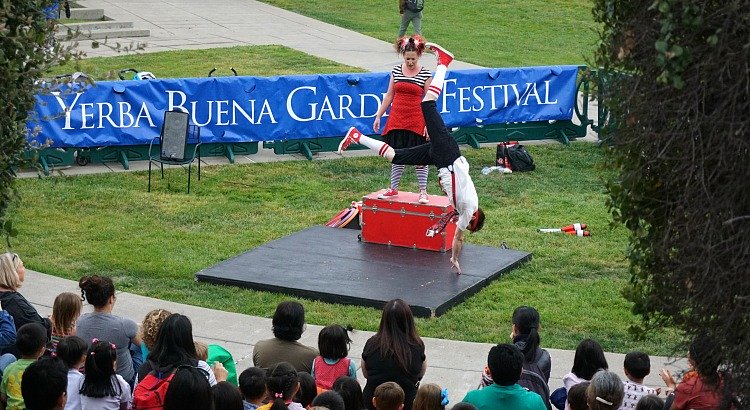
Poetic Tuesdays on the second Tuesday of each month with Guest curated by Litquake, Poetic Tuesdays run from 12:30pm-1:30pm and feature an array of poets and music as well as three performances of a new one-ring circus from Circus Bella on June 22 and 23. Conceived and directed by Abigail Munn and Joel Baker for Circus Bella, the show includes static trapeze, rope walking, juggling, contortion, unicycle, original clowning, acrobatics, and more.

Free Outdoors Fresh
Free Outdoors Fresh

Let’s Go Salsa Series’ Schedule (Every Third Thursday of month from 6:00pm to 7:30pm):

  • May 17: Cabanijazz Project
  • June 21: Bululú
  • July 19: Pellejo Seco
  • August 16: Annette A. Aguilar & StringBeans
  • September 20: Manny Martinez y la Rebeldia

Venue: 760 Howard Street, San Francisco, CA 94103.

For more information and complete 18th Season Schedule, please visit www.ybgfestival.org

Eddie Muñíz continues to head Swing Sabroso

From this space, every day we are much more aware of the unusual wealth of Latin talent that makes up the New York’s music scene, which continues to show many artists and orchestras that do not surrender to high competition and give their best to earn their place and stand out from the rest.

This is the case of Ray Rodríguez & Swing Sabroso, whose current leader, Eddie Muñiz, gives us a broader picture of the way any artist should go to keep his name alive in public taste and avoid getting lost in the large artistic catalog where there is a lot of content to choose from.

Swing Sabroso leader Eddie
This is current Swing Sabroso bandleader Eddie Muñiz

Talented musician Eddie Muñiz’s beginnings in the world of music

Eddie, who was born in Brooklyn, USA, but communicates in excellent Spanish, had his first approaches to music in elementary school at the age of 13, when he played in several classical music and jazz groups to keep improving in these arts and find his style until he had his big break.

This opportunity came when the young man turned 17 years old, at which point he had his professional career in music with a group of friends, with whom he stayed for two or three years. After that, his next group was called ”Herencia Latina” whose director was the talented Ray Rodriguez and would become the starting point of his current orchestra Swing Sabroso. 

After leaving Herencia Latina, he joined Ismael’s conjunto for four years and subsequently played with Conjunto Clasico, Ray de La Paz, La Sonora Matancera, Tony Vega and many more.

About eight years later, the group did not go ahead and Ray moved to New Jersey, but as it happens, Eddie had to do the same for work reasons. Back then, Ray started a group he called Ray Rodriguez y Swing Sabroso, which invited Eddie to join the orchestra in 2000. 24 years later, it is he himself who moved such an ambitious project forward after Ray’s sad loss from the cancer on April 17, 2016.

Swing Sabroso singer
Singer Angel Rios, who is Swing Sabroso vocalist

Swing Sabroso

By the time Ray was in good health, the orchestra released two albums, one in 2005 and another in 2015. When the bandleader began to sicken, he knew he could not give the group the attention it required, so he asked Eddie to take the helm of the ship in his place as long as the group was only called Swing Sabroso, nothing else. 

At that time, the group only had two trumpets and a trombone, but Eddie was gradually enlarging it and adding more instruments to make the sound fuller. Being in total control of the orchestra, the artist released the album ”Swing Sabroso, Mejor Que Nunca” in the year 2022, when they played everything that the three albums included.

Swing Sabroso, Mejor Que Nunca
Cover of the album ”Swing Sabroso, Mejor Que Nunca”

Currently, Eddie is the oldest of all the Swing Sabrso members, but not for that things are always done his way. In fact, the artist assures that the younger musicians are frequently those who teach him what to do in certain cases.

Far more than a salsa orchestra, Eddie considers that ”Swing Sabroso” is also a family of musicians in which they support each other, despite the regrettable absence of its main founder, the great Ray Rodriguez. Even so many years later, Rodriguez remains the biggest influence on everyone working with Swing Sabroso. 

Read also: Dominican trumpeter Wilson Portuondo talks about La Sonora Nuyorkina

Virgilio Martí was an excellent rumbero and composer of the classic “Cuba Linda” where he was vocalist and percussionist in Grupo Folklorico Experimental Newyorkino

Virgilio Martí, born in 1919 in Havana, Cuba.

Virgilio Marti
Virgilio Marti

Fine Rumbero, Singer, Composer, Arranger, Percussionist, Actor and Orchestra Director well known since the late 40’s, especially as a guaguancó singer.

He began touring the world in 1949 and met his later wife in 1960 in Peru.

That same year, he settled in New York, participating in the local scene. He participated in the LP “Patato y Totico” in 1967, he also participated with his brother Eloy Martí in a Quintet accompanied by Gene Golden for the year 1979.

Israel López (Cachao), Arsenio Rodríguez, Héctor Cadavieco, Francisco Valdés, Papaíto, Tony Mayari and Mario Cadavieco also worked on that album.

He participated in the “Grupo Folklórico Experimental Newyorkino” where he was their vocalist and percussionist in 1975. During his stay with them, he composed the song “Cuba Linda”.

Another work of Martí of great remembrance is the album titled: “Saludando A Los Rumberos” published by the Caimán label in the early 80’s and in which the Cuban acts as vocalist and main star.

Grupo Folklórico Experimental Newyorkino

In it Martí is involved with talents such as: Tony Cofresí, Andy and Jerry González, Yomo Toro, Paquito Pastor, Ray Romero, Claudio Roditti and Ignacio Berroa, among others.

“Iya Modapue” is in itself a guaguancó with open rumba, being at the same time the favorite number of the ‘Grupo Folklórico’, and even the first groove to be recorded.

The levels of experimentation and the freedom to unload several rhythms in a single musical performance are the factors producing the attraction of the musicians for “Iya Modupue” (which means Thank You Mother).

The vocal part is in the hands of Virgilio Martí. The trumpet of “Chocolate” Armenteros, the trombones of José Rodríguez and Reinaldo Jorge, the flute of Gonzalo Fernández and the percussion of Frankie Rodríguez stand out.

“Se Me Olvidó” a bolero by Lolita de la Colina but adapted in guaguancó to the style of the Grupo Folklórico, which, by the way, turned out to be the piece of greatest radio diffusion in the tropical environment and therefore, the one that would open the doors to the group.

The song was interpreted by Virgilio Martí, who also plays the congas. In “Se Me Olvidó”, the violin of Cuban Alfredo de la Fe, the quinto of Julito Collazo, the street redoblante of Jerry González and a Mexican marimba played by Andy González in counterpoint to the notes of the double bass, also played by Andy, stand out. Here it is worth mentioning that Alfredo de la Fe is a virtuoso violinist and among his many performances, I remember his work with Eddie Palmieri, Larry Harlow (the wonderful Jew), the Fania All-Stars and the avant-garde Típica 73.

In the early 80’s he formed a band with brothers Andy and Jerry González, and percussionist Ignacio Berroa.

It is worth mentioning Virgilio Martí’s 1985 performance in the film by Cuban filmmaker León Ichaso entitled “Crossover Dreams” (Sueños truncados).

In it, the Havana native plays the role of “Cheo Babalú” and vocalizes the song “Llora Timbero”.

In that film production made in New York City, he also participates with actor Rubén Blades, who plays the role of “Rudy Veloz”, where they sing the song “Todos Vuelven”.

In 1990, he contributed to the “Soundtrack” of the movie Azucar Amarga.

He maintained a great skill in converting songs from other genres into rumba arrangements.

We can mention the adaptation of the theme of the Brazilian composer Jorge Ben, “Más Que Nada” in which he appears on the LP with Patato and Totico.

Martí died on October 17, 1995.

Virgilio Marti – Guaguanco (1979)

Tracks:

  1. Amanecer (Armando Manzanero)
  2. Todos vuelven (Rafael Otero)
  3. A tus pies (D.R.) (Agustin Lara)
  4. My childhood (Laureano Martinez)
  5. Saluting the rumberos (Manolo Albo)
  6. I’m going to divide it (R. Livi)
  7. Acanapon (D.R.)
  8. The little handkerchief (D.R.)
  9. Que susto (Virgilio Marti)
  10. Odiame (Rafael Otero)
Virgilio Marti - Guaguanco (1979)
Virgilio Marti – Guaguanco (1979)

Information realized (June 1, 2024)

Also Read: Carlos “Nene” Quintero comes from a family of musical prodigies

Contributor: Dj. Augusto Felibertt (International Salsa Magazine)

  • « Go to Previous Page
  • Page 1
  • Interim pages omitted …
  • Page 33
  • Page 34
  • Page 35
  • Page 36
  • Page 37
  • Interim pages omitted …
  • Page 127
  • Go to Next Page »

International Salsa Magazine (ISM) is a monthly publication about Salsa activities around the world, that has been publishing since 2007. It is a world network of volunteers coordinated by ISM Magazine. We are working to strengthen all the events by working together.