• Skip to primary navigation
  • Skip to main content

International Salsa Magazine

  • HOME
  • Previous editions
    • 2026
      • ISM / March 2026
      • ISM / February 2026
      • ISM / January 2026
    • 2025
      • ISM / December 2025
      • ISM / November 2025
      • ISM / October 2025
      • ISM / September 2025
      • ISM / August 2025
      • ISM / July 2025
      • ISM / June 2025
      • ISM / May2025
      • ISM / April 2025
      • ISM / March 2025
      • ISM / February 2025
      • ISM / January 2025
    • 2024
      • ISM / December 2024
      • ISM / November 2024
      • ISM / October 2024
      • ISM / September 2024
      • ISM / August 2024
      • ISM / July 2024
      • ISM / June 2024
      • ISM / May 2024
      • ISM / April 2024
      • ISM / March 2024
      • ISM / February 2024
      • ISM / January 2024
    • 2023
      • ISM / December 2023
      • ISM / November 2023
      • ISM / October 2023
      • ISM – September 2023
      • ISM – August 2023
      • ISM July 2023
      • ISM Edition June 2023
      • ISM – May 2023
      • ISM April 2023
      • ISM March 2023
      • ISM February 2023
      • ISM January 2023
    • 2022
      • ISM December 2022
      • ISM November 2022
      • ISM October 2022
      • ISM September 2022
      • ISM August 2022
      • ISM July 2022
      • ISM June 2022
      • ISM May 2022
      • ISM February 2022
      • ISM January 2022
    • 2021
      • ISM December 2021
      • ISM November 2021
      • ISM October – 2021
      • ISM September 2021
      • ISM August 2021
      • ISM July 2021
      • ISM May 2021
      • ISM April 2021
      • ISM June 2021
      • ISM March 2021
      • ISM February 2021
      • ISM January 2021
    • 2020
      • ISM December 2020
      • ISM November 2020
      • ISM October 2020
      • ISM September 2020
      • ISM August 2020
      • ISM July 2020
      • ISM June 2020
      • ISM May 2020
      • ISM April 2020
      • ISM March 2020
      • ISM February 2020
      • ISM January 2020
    • 2019
      • ISM December 2019
      • ISM November 2019
      • ISM October 2019
      • ISM Septembre 2019
      • ISM August 2019
      • ISM July 2019
      • ISM June 2019
  • Download Salsa App
    • Android
    • Apple
  • Spanish

Search Results for: Afro+dances

John Leguizamo Returns to Broadway

North America / USA / New York

John Leguizamo returns to Broadway with the super production LATIN HISTORY FOR MORONS for only 16 weeks, a comedy theater that will teach the audience the story of Latino immigrants in North America that you won’t find either in books or in the education provided in the schools of the country.
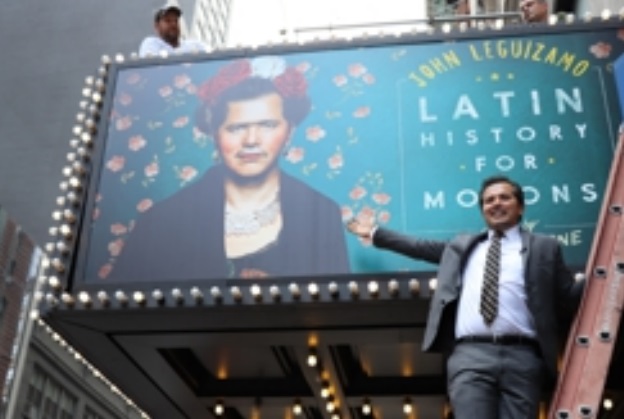
John Leguizamo returns to Broadway with the super production LATIN HISTORY FOR MORONS

This sympathetic actor, comedian, and Colombian – American producer created this monologue due to the situation he faced a long time ago with his son. The child was being bullied in the private school that he attended in NYC for being one of the few children of Hispanic origin there. For that reason, and using homework of heroes assigned to his son, John began to teach him some Latino leaders who played big roles in American history. “Things were getting kind of rough out there…

And then, all of a sudden, we were in this dark episode where Latin people are being maligned and we’ve become the whipping post for the president. They even tried to pass the – show me your papers- law in Texas, basically profiling Latin people”, said Leguizamo to an American media.

After 4 years of research, this Emmy Award-winner actor, very happy, created this dramaturgy in which he reveals the struggle of 10,000 Latinos in the American Revolutionary War, the brave AfroCaribbean women in Virginia who sold their jewels to feed the patriots in the wars. The shocking truth of the Cuban woman, Loreta Velasquez, who joined the army in New Orleans and fought the front in three battles of the Civil War disguised as a man. And not in accordance with it, John will continue walking for 3000 years of history, he will make us cross three continents and tell us about different empires, Mayas, Aztecs and Incas.
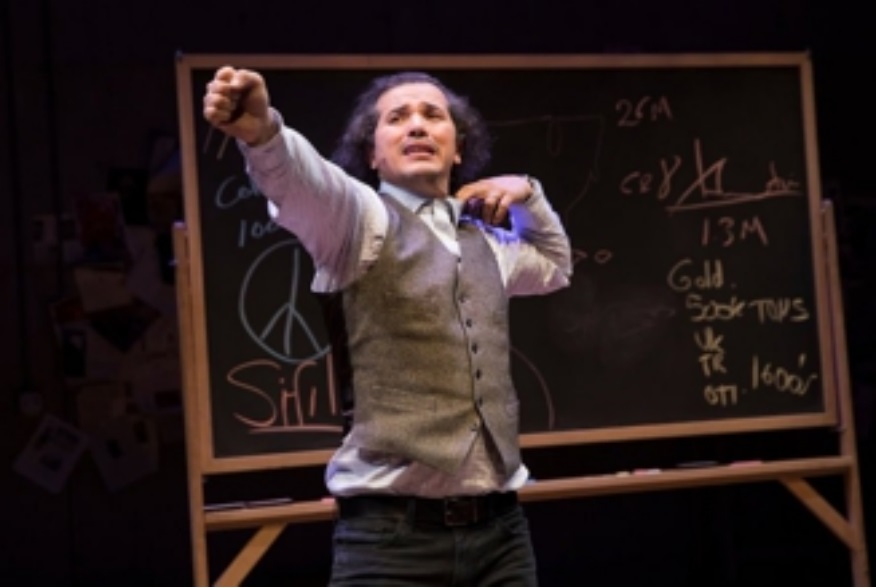
John Leguizamo - Latin History for Morons - 3
John Leguizamo – Latin History for Morons – 3

He will speak of Montezuma and Menudo, Yes! You read well, “Menudo” and he will close the acts with traditional dances like the Cumbia and indigenous rituals without censorship. “I was so ignorant of my own history because it is not taught in schools. It was a huge hole in my education and it shouldn’t have been, because without us Latinos, America wouldn’t be the country that it is”, Leguizamo explained to an American media.

John, who acted in series such ER (Dr. Victor Clemente), films such as: Super Mario Bros (Luigi) and more recently Wick 2 (Aurelio), besides, the voice of Sid (the laziness) in Ice Age, he in Latin History for Morons has a very unique style, a mixture between a stand up and a traditional dramaturgy. “There are other characters on stage, which I play; I do scenes with them and there is a narrative moving forward… I like to take people there with mime, dance, and music – it is very physical… It’s amazing what the audience will allow you to do.
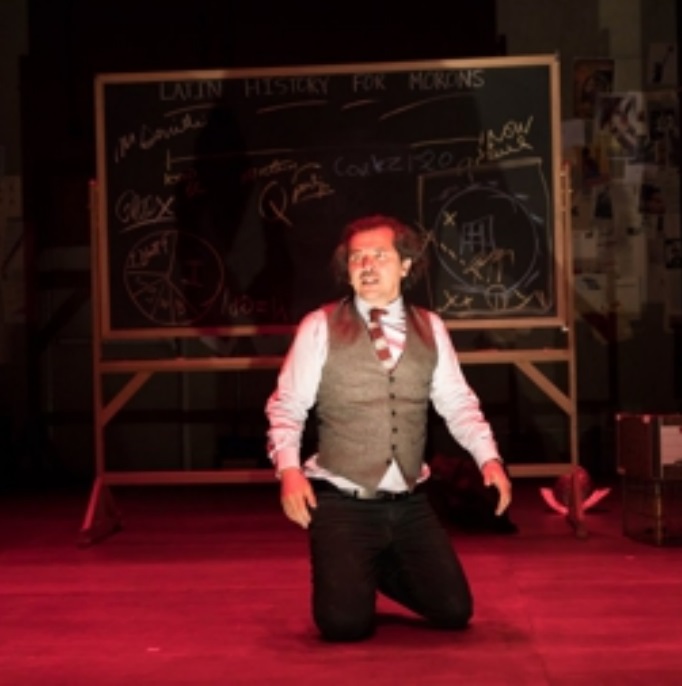
John Leguizamo - Latin History for Morons - 4
John Leguizamo – Latin History for Morons – 4

They will go with you anywhere as long as you stick to the rules that you set up at the beginning. That’s the beauty of theater. And that’s what makes me keep coming back. Anything is possible on stage. It seems to be the most democratic and egalitarian place in America for entertainment. Where else would Hamilton have happened? It couldn’t have happened in Hollywood, or on cable or the networks”, said Jhon Leguizamo in an interview.
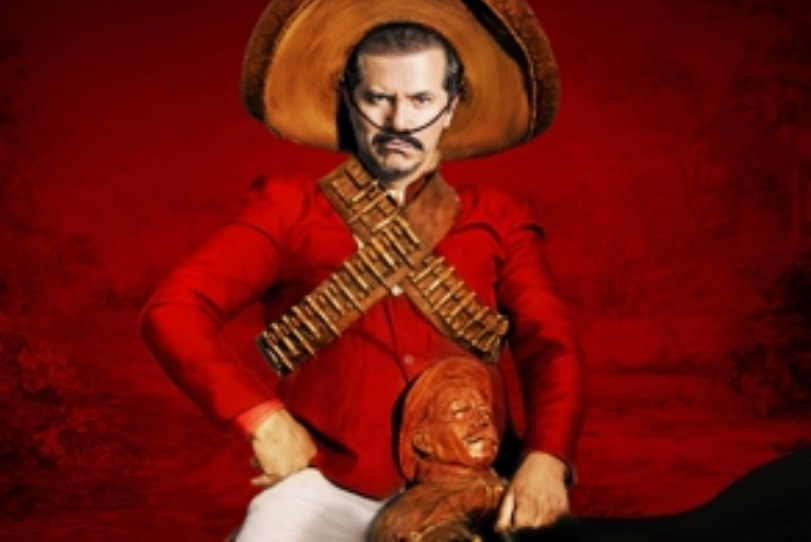
John Leguizamo - Latin History for Morons - 2
John Leguizamo – Latin History for Morons – 2

For his solo work of 45min of duration and which began since the third week of October he had to prepare himself in boxing as well as in dance. Hard work he had to do every day. “I’ve learned to consolidate my storytelling and be more of myself. To not just be an entertainer, but allow my anger, my edgier sides – and allow people to be even more uncomfortable. I never wanted my shows to be just Pollyanna shows,” he also said, “Latin comedy is a full emotional experience.”

Latin History for Morons (a satirical History Class) back to John Leguizamo to Broadway, under the direction of the famous theater director Tony Taccone, who owns 36 years of Career and who currently is the artistic director of Berkeley Repertory Theater in Berkeley, California. Moreover, John made his first Broadway presentation in 1991 with “Mambo Mouth” winning an Obie and he was nominated several times for Tony Awards for “Freak” in 1998.

“Broadway is just a culmination of a lot of work, and it always feels so celebratory. It’s the gaining of the highest prize.” John Leguizamo.

John Leguizamo - Latin History for Morons - 1
John Leguizamo – Latin History for Morons – 1

Venue: STUDIO 54. 254 W. 54TH ST., NEW YORK, NY. Tickets: $79 – $139 To get more information like them on Facebook https://www.facebook.com/LatinHistory101/ or buy the tickets online through https://www.latinhistorybroadway.com/

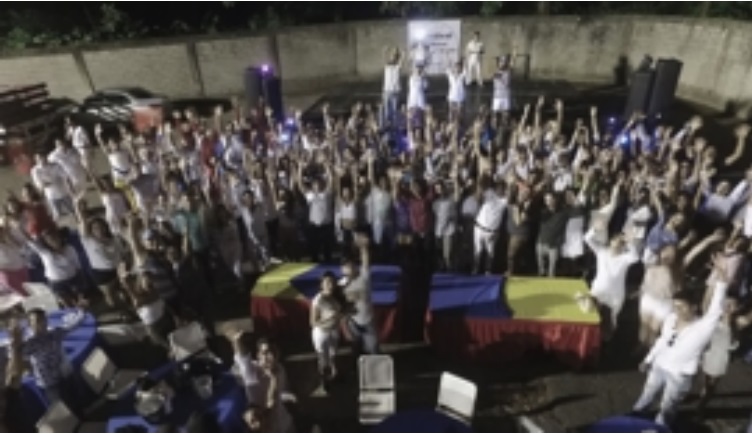
Dance. The best of America United in a Single Project

Latin America / Cuba / La Habana

Since the 1950s, a very humorous genre called the casino dance was born in Cuba, a style based on dancing the Cuban music of the moment between couples. This lies in history since the fashion of Mambo and Cha Cha Cha in the most aristocratic clubs and in the fraternal halls of poor blacks of the beautiful island, they danced on Saturdays, Sundays or special parties on specific days, for the moment the rhythms sounded de la Aragon, Chapotin, Orquesta Casino, el Benni, among others, without leaving aside rhythms such as rock and roll, sounds of the time that fought for a space in the fans.

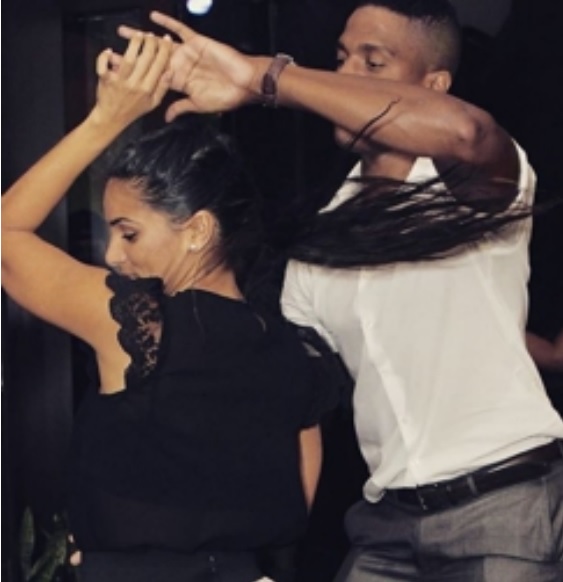
Social Photo
Social Photo

From the mixture and the dance relationship of those attending the clubs is born that change of couples in circular formation called the Rueda de Casino, a name that we will be developing in other editions of the magazine.

In America, especially in the south of this continent, Salsa Casino, as it is called in many places, has managed to lay firm foundations, much more than what is known in Europe or North America, in some countries becoming the reference number 1 of the Salsa dance modality. We have the best example in Venezuela, land of casinos par excellence, where we can add a great hundred dance schools nationwide, without leaving behind how strong it is in Colombia and Peru, among some countries that also use this discipline. as a strong influence on young and old.

It is incredible to see the great differences in styles and forms between the casinos in Europe and those in South America, but always the same concept, joining several couples to enjoy a good timba or a good son.

From the foregoing, the Cubashow Project arises, born with the primary objective of generating a training and development channel for the new generations that venture into the beautiful world of dance, mainly those linked to Cuban Salsa and its roots in popular music or traditional Cuban music, folklore and its Afro tendencies, all in relation to the strong wave of this discipline that is developing in the main capitals of many American countries.

they danced cha cha cha

BAILA QUE BAILA AMERICA a concept of union between southern countries to extend the dissemination of Salsa Casino in the continent brings together some of the best instructors from each country with the sole intention of conducting national and international training tours in all trends of the dances of Cuban culture, in this way we obtain from the best exponents classes, seminars, talks, forums, workshops and shows that can be viewed through the social networks of @BailaQueBailaAmerica the different schools, academies or instructors registered to the project.

Professional dance teams are structured based on their local projections, the work they do within each of their countries. An event of great proportions is expected for the month of June where we will be able to have the best instructors from all over South America together in a high caliber event, we just have to be attentive to social networks and future reports of this great magazine to join us. to this casual wave.

Habana Style. Dance Company “Where dancing is a pleasure”

North America / USA / Las Vegas

Habana Style

Founded by a professional dancer and choreographer, Yody Iznaga in 2001, to offer people who are passionate about latincaribbean and cuban music a place where they could learn such exotic dance styles and express themselves in dance body movements as its main objective. Habana Style Dance Company is one of the very few dance schools in LAS VEGAS which offer its public a complete portfolio with about 15 different latin-caribbean dance styles with an objective to enable the students to feel identified with what they are looking for in specific.

Yody Iznaga professional dancer and choreographer born in Cuba and educated through the authentic Cuban technique of modern dance created by the professor Eduardo Rivero Walker at a professional company Teatro de la Danza del Caribe (Theater of Caribbean Dance). Yody Iznaga knows to perfection about 15 different dance styles. He dances on TV channels and big and famous stages known in the world of salsa. Yody has choreographed and danced for artists like Marc Anthony, Victor Manuelle, La India, Maelo Ruiz, and others. https://habana.style

Habana Style - Social Photo 1
Habana Style – Social Photo 1

Dance Classes at Habana Style Dance Company

Private lessons Private lessons represent the most accurate, effective and the fastest way to learn or master any dance style of your choice; since you can choose exactly what you would like to learn and the areas you need to improve. The dance studio is reserved only and exclusively for you and the instructor for the time of your scheduled session. This is also why you can fully enjoy and exploit the most out of the instructor’s time and attention which are completely yours during the private lesson.

Workshops Workshops are special dance classes taught by certified professionals with the main objective to develop and improve special dance abilities and to acquire original movements of a specific dance style. Members of Habana Style Dance Company learn through an authentic technique created by the dancer & choreographer Yody Iznaga. This authentic method focuses also on clean movements while it is easy to understand and acquire due to the high and professional level of teaching methodology typical for Habana Style.

Group Classes Group classes are designed for people who want to learn in an entertaining way how to dance and at the same time to meet people and to connect to people who have the same dance objective.

The classes are structured so that also people without a partner can participate in and enjoy the group classes. Students keep on rotating which allows them to improve their commands necessary for social dance. The group classes are designed to create a friendly environment and increase trust among participant; students are greatly encouraged to practice and demonstrate the knowledge acquired in the group classes on the dance floor at our social dance nights.

Habana Style - Social Photo 2
Habana Style – Social Photo 2

Benefits of Dancing with Habana Style Dance Company

Habana Style Dance Company offers various benefits to its members while dancing Latin-Caribbean dances at the dance studio. Preparing and encouraging students to enjoy social dances anywhere in the world. On their way toward this goal, students have loads of fun, relieve stress, exercise, meet people with the same dance objective, and have constant participation in social events.

Members of Habana Style Dance School learn through an authentic technique created by the dancer & choreographer Yody Iznaga. This authentic method focuses also on clean movements while it is easy to understand and acquire due to the high and professional level of teaching methodology typical for Habana Style Dance Company.

Last but not least, Habana Style Dance School offers its members to join teams where they reach a very high level of dance including exotic movements within the social and professional dance through a long path of practices. What could be more beautiful and uniquely identifying than the exotic mixture of Salsa with Afro-Cuban rhythms and Cuban rumba within popular and social dances?

Damian Ballester and the transformations of Cuban Folk Dance

Latin America / Cuba
Photo 3- Damian Ballester on stage

The relationship of Africa within the musical and dance culture in Latin America is notorious when we see the cultural expressions of the peoples of this continent, it is easy to see how similar they are, the use of percussion is one of the most relevant topics, in itself a mixture of cultural customs, religion, musicality, dance, in itself all the elements of the black race.

America, one of the main destinations of the ships with black slaves from many areas of Africa, caused our culture to be armed with a bit of each custom, therefore, we can say that in America there is a bit of each African people, this relationship of variety of slaves focused on dividing the forces of the race so as not to make it powerful, divided languages, customs, words and religions only left the marginalized population to communicate through percussion, an element that made the system improve at times of understanding within the fences where they lived.

Due to the above, African religions and customs are born in Cuba but, adopted by those already existing on the island, this combination gives us a rich variant of movements from three continents, Europe through Spain and Africa in all its splendor.

To clarify some topics of the folklore of the Caribbean island and its current dance transformations, we had to contact a great teacher, Damian Ballester, director of Iya Aye, one of the best folklore groups on the island of Cuba, to speak with this professional of the dance is necessary if we want to obtain real information about Cuban traditions, a great teacher who has left his teachings in many Spanish-speaking countries, among which Venezuela, Colombia, Ecuador, Mexico and now in the United States stand out…

we begin by greeting him and opening a pleasant conversation, to which we got an original response “Greetings acere, what was it”, calling him opens up a range of questions on the subject in question, here is an extract of the most common doubts generated around the relationship with salsa, its festivals and diffusion in the world.

Greetings Prof. Damian, grateful for your receptivity, we want to give information to our readers about the relationship of Cuban folklore within our world, Salsa, to begin with, what is defined as Cuban Folkloric dances?

Grateful for the opportunity and sure, that if we report on the case, folk dances are nothing more than the set of cultural goods or phenomena that constitute a cultural complex with manifestations of all aspects of popular life. It is the sum of the manifestations acquired by experience, by inheritance, by tradition, by the satisfaction of biological or sociological needs, among other things. This lasts through several generations and almost always undergoes transformations.

They will get compound terms in the word folklore, which speaks of people or people, popular knowledge, together with the popular knowledge of the people. It is a very long topic, because I should talk about so many things about my culture, better let’s leave the definition until here and thus add flavor to the interview.

Much better, we continue then, do African dances have any impact on Cuban folk dances?

Yes, of course, it is the root, the exercise of dance has always characterized my land and has suffered the same processes of contagion and transculturation between the ways of dancing of the colonizer and the styles introduced by African ethnic groups since the 16th century, in fact, the colonizers brought romance, active in the Cuban countryside for several centuries, with its couplets and their ways of singing and founding alegrías, while the black slaves included their ancestral rites, their drums, and their particular sense of rhythm and movement. bodily.

Given this brief explanation, we can say that not only dances of African origin contributed or influenced Cuban folklore, we can say that there is also an incidence from Spain, France and the Caribbean, but its main axis was born from the Spanish and the African.

We know the extent of Cuban folklore, for how long should a person prepare to be called a professor in this branch?

First of all, to carry the name, whether it is a teacher or instructor of Cuban folklore genres, there are two factors that are very important, the first is study, since Cuban folklore is made up of a very wide range of genres divided into different styles, I could mention some examples: Peasant, popular, Afro-Cuban and Franco-Haitian folklore.

Within the styles of peasant folklore, examples could be given of the Cuban zapateo, the ripiado parakeet, the chidonga, the hawk, the caringa, the son montuno, among others.

Within the styles of popular folklore, the Complex of the rumba, the mambo, the chachachá, the danzón, the dance, the pilón, the congas and the comparsas, the casino can be mentioned, within the Afro-Cuban folklore the Bantú cycle can be mentioned, the Yorubas, the Arara, the Abakua, within Franco-Haitian folklore we can mention the French tomb, the Haitian merengue, the gaga, the vodu among others, if I continue we will not finish today. (laughs to close)

Of the folkloric dances, which are the most outstanding or spread worldwide?

It could be said that there are several, examples are the popular folkloric ones, one could say the casino, the mambo, the chachachá, the son, the rumba complex, that the latter people tend to say are African or Afro-Cuban dances, that have African influence does not mean that they are classified within Afro-Cuban dances because this genre emerged in Cuba, was used as an object of protest against the government of that time and was eradicated in the essence of Cuban. In the same way, the one that has had the most impact and remained in the whole world are the Yoruba dances or dances of the orishas.

Should we open another interview to just talk about the many genres that the island embraces, what institutions correctly form the folkloric traditions in Cuba?

There are many institutions in Cuba, from the community point of view what is named in Cuba as amateur dancer are the community projects and actions that are nothing more than groups created in the communities, all of these supervised technically and methodologically by specialists from the houses of culture of each area by provincial and national methodologists governed by the Ministry of Culture.

From a professional point of view, there are art schools such as the ENA (NATIONAL SCHOOL OF ART) and the ISA (SUPERIOR INSTITUTE OF ART) all governed by a logical curriculum organized by specialists and connoisseurs of the genres.

Photo 2- Damian Ballester on stage

Other institutions that could be mentioned, is the little school of the national folkloric group of Cuba with 56 years of creation in charge of rescuing and safeguarding the traditional Cuban musical and dance traditions.

Wao, Enough, Do you know if there is any similar institution in the world?

In the world there are countless schools that are training dancers with the Cuban style and technique, whether they are Cuban or foreign teachers, but nothing like the preparation of art schools in Cuba that work with a logical and well-prepared program, in some schools around the world it could be said that they do not work under a logical methodological program for the teaching of these genres due to the commercial and monetary part, unfortunately there are many dedicated to commerce, to money and not to the necessary dedication.

This dissemination has been achieved while respecting the roots and traditions of the farmers? The root? The original essence?

Unfortunately, it could be said that a good diffusion of Cuban genres worldwide has not been respected or achieved, of 100% of the performers, it could be said that only 10% are protecting Cuban traditions, it is sad to say, but trade and populism it is destroying the folklore of an entire country.

Have these changes in traditions positively or negatively impacted Cuban culture?

First of all, traditions do not change if they are not passed down from generation to generation. In terms of their impact, I see it negatively because the dissemination that is taking place is incorrect and worst of all, there is no organization, which was of Cuba, can follow up on the program that is being given to Cuban genres, in itself, many see the commercial and hence they do not care about the poor distribution of what is taught.

What is the reason that so many dancers seek to perform Cuban dances? It is notorious to see it at festivals and congresses.

There are two very important factors: 1 Cuban music, which has been evolving in an incredible way, fusing Cuban rhythms within its repertoire, and the other factor is not because I am from Cuba, Cuban folklore could be said to be the most complete genre available. world level from the point of view of dance, is that it has a history, virtuosity is varied, it could be said that it is well complemented, due to its complexity and interpretive difficulty, it is what attracts attention, additionally, salsa comes from us, from these roots is born what now wants to be denied.

Teacher and the Cubans? Have Cubans spread their dance correctly?

It could be said that the vast majority of Cubans have disseminated the genres well, why do I say that the vast majority?

Because there is another small group that deforms it, money changes everything, foreigners think that all Cubans They dance, it has happened that they say Cuban and quickly you think he is a dancer, he knows everything, he is good, and no, that is not reality, one thing must be clear about being an opportunist, not a dancer, being a dancer by hobby and another is being one by profession or for being a teacher.

There are Cuban teachers who are hurt by the deformation that is happening with what has been studied so much, but there are others who only care about getting paid and do not care if their students do it well or badly.

How has the interpretation of Cuban roots impacted the so-called Salsa Casino in the world? Has the original and real spread of traditions been respected?

Look, since Cuban music began to evolve inside the casino, it began to undergo a series of transformations from movements to choreography due to the musical style that Cuban orchestras began to spread, known as TIMBA, which was well accepted by the public, If we talk about the impact from the traditional point of view, it could be said that there is no original interpretation of the Cuban roots because they are not executing a specific traditional genre, but rather what they are using different styles of the traditional folk dances that all this could be called Variety.

Have Cuban music and dance festivals or congresses devoted time and effort to improving these transformations? Have they worried about minimizing the damage?

In most cases, very few, first of all, if it is a competitive event, the organizers make the mistake of hiring unqualified personnel to evaluate genres of Cuban origin, and that is where the serious faults come from. There have been cases where there are groups , couples or soloists who perform a good technique within normal limits and the jury evaluates for a taste problem if they see it as beautiful and give it less points, or disqualify it, it is not about beauty, it is about correctness, the organizers should be more careful about these things.

What recommendations would you give to our dancer readers on this controversial topic?

The dancer must be clear about four aspects that are fundamental to his artistic life and entire career: dedication, love of dance and, most importantly, study.

Do only what you love and you will be happy, the one who does what he loves is blessedly condemned to success, which will come when it should come, because everything that should be, will be, and will come naturally.

Photo 1- Damian Ballester on stage

Let’s spend time respecting the roots and cultures of peoples, and above all, let’s take a good look at who we entrust our desire to learn, there are thousands of ways to learn correctly, everything is in the research, knowing who we contact and why There are hundreds of excellent instructors in the world, not to mention the many means of learning today.

I invite you to learn a little about this and other topics, I have a virtual classroom where I teach a lot of the theoretical and practical content online, I do it through the son rumbero academy and its virtual classroom format, follow the @sonrumbero accounts on Instagram and Facebook.

Fundación Cultural Madera 15 where Brotherhood, Sports, Dance and Salsa go Hand in Hand

By the end of the 70’s and beginning of the 80’s a group of young people from different parts of the country gathered by chance in the same sector 4 de las Mercedes in La Victoria, Aragua State, began to listen to the new genre of the time, the popular “Salsa”.

Fundación Cultural Madera 15 donde la Hermandad, el Deporte, la Danza y la Salsa van de la Mano

Each one with different tastes but without leaving the genre, they felt the desire to imitate the Venezuelan and international bands they knew through the Lps, so every weekend they organized themselves to play their instruments with musicians already studied and the guataqueros in an empirical way.

These meetings became more and more frequent and due to the need of an acquaintance of the zone to have a salsa group they decided to form the first salsa group of the sector called “El Quinto Sonero”, then years later with many of the members of the previous group they formed the group “Juancito y su Son” and years later the “Conjunto Sabor”.

It is worth mentioning that the rehearsals of the different groups took place in the homes of some of the members, playing songs by Ray Barreto; Eddie Palmieri; Dimensión Latina; Grupo Mango; Trabuco Venezolano Grupo Libre and of course Grupo Madera, among others.

By the end of the 80’s this same group of young people always supported by their families decided to formalize all the events that took place during the year, thus creating the “Madera 15 Foundation” unifying culture, sports, art and dance all in what was once a “Little Square” and over the years became a court, which would become its main location.

Its name is due to the admiration that everyone felt for Grupo Madera and product of its unexpected accident in which most of its members lost their lives on August 15, 1980.

Fundación Cultural Madera 15

For this reason the affection and the interpretation of many of their songs and the attendance to their concerts. Once the tragedy occurred, the passion for the Caracas group grew, specifically in the Marín neighborhood of San Agustín del Sur, which was invited to the inauguration of the Cancha in 1989, an invitation that was accepted and it was possible to enjoy three days of Afro-Caribbean songs and dances among neighbors and people close to the area.

From then on, cultural, recreational and sporting activities are carried out and one of the most important meetings is organized every year on December 31st, where the Guataca de Fin de Año is held, which began as an informal meeting of these young people every year-end, specifically on the 31st of the year, and continued with a soup on January 1st, welcoming the new year.

Currently by decree of the Mayor of the Municipality of Ribas in La Victoria Aragua State, specifically by Mayor Juan Carlos “Jaimito” Sanchez in his 1st term in 2012, the Municipal Day of Salsa is celebrated, and are invited to cultors and musicians from different parts of the country to participate in this special date with all attendees, which enjoy a unique day full of much feeling.

For years, all kinds of musicians, orchestras, groups and salsa characters that have exalted the salsa culture, as well as characters of the gaita and folklore, have passed through the festival.

Today, the tradition of the Guataca is still maintained, paying tribute to the life of its famous characters and remembering those who left for another plane and those who unfortunately emigrated.

Hand in hand with the music was also formed the dance group of the area called in its beginnings “Los Gurrugurru” which performed nationalist dances and sang aguinaldos and parranda every Christmas. Today there is still a dance group called “Danzas Tricolor” also dancing all the national folkloric dances.

Danzas Tricolor
Danzas Tricolor

Through both groups passed the great majority of the young people of the sector and after generations their children and now grandchildren, all under the direction of Griseida and Mileyda Batidas.

It is important to highlight some emblematic names of the foundation among them stand out:

Benilde (RIP), Mercedes (RIP), Ligia (RIP), Aminta (RIP), Alicia (RIP), Carmen (RIP), , Williams (RIP), Santana (RIP), Agustín (RIP), Neptali (RIP), Mileyda (RIP), Ángel Miguel (RIP), Amalia, Dinora, Raquel, Adela, Eugenia, Ángel, Jaime, Nelly, Entre otros.

Participating Families:

Los Bauter, Los Yanes, Los Ascanio, Los Bastidas Salazar, Los Momplasiert, Los Power, Los Anzolar, Los Escalona, Los Guevara and many more.

Memorable sites

La Placita, La Cancha, La Matica de Amalia, La Esquina de los Bauter, and El Terreno.

There the traces of all those who in their time gave their hearts for the good of the most rumbustious sector of La Victoria were captured.

This message goes to them:

MADERA 15 we are all and even those who left.

Collaboration and Main Source:

Lcda. Shinaury Rojas / Publicist for Salsa Escrita

Photographer Nelson Bauter

Actividad con el Septeto Caribe y Nelson Bauter en La Fundación Cultural Madera 15

Also Read: Djane. Shina Rojas una Pasión Convertida en Realidad

  • « Go to Previous Page
  • Page 1
  • Page 2
  • Page 3
  • Page 4
  • Page 5
  • Interim pages omitted …
  • Page 9
  • Go to Next Page »

International Salsa Magazine (ISM) is a monthly publication about Salsa activities around the world, that has been publishing since 2007. It is a world network of volunteers coordinated by ISM Magazine. We are working to strengthen all the events by working together.