• Skip to primary navigation
  • Skip to main content

International Salsa Magazine

  • HOME
  • Previous editions
    • 2026
      • ISM / March 2026
      • ISM / February 2026
      • ISM / January 2026
    • 2025
      • ISM / December 2025
      • ISM / November 2025
      • ISM / October 2025
      • ISM / September 2025
      • ISM / August 2025
      • ISM / July 2025
      • ISM / June 2025
      • ISM / May2025
      • ISM / April 2025
      • ISM / March 2025
      • ISM / February 2025
      • ISM / January 2025
    • 2024
      • ISM / December 2024
      • ISM / November 2024
      • ISM / October 2024
      • ISM / September 2024
      • ISM / August 2024
      • ISM / July 2024
      • ISM / June 2024
      • ISM / May 2024
      • ISM / April 2024
      • ISM / March 2024
      • ISM / February 2024
      • ISM / January 2024
    • 2023
      • ISM / December 2023
      • ISM / November 2023
      • ISM / October 2023
      • ISM – September 2023
      • ISM – August 2023
      • ISM July 2023
      • ISM Edition June 2023
      • ISM – May 2023
      • ISM April 2023
      • ISM March 2023
      • ISM February 2023
      • ISM January 2023
    • 2022
      • ISM December 2022
      • ISM November 2022
      • ISM October 2022
      • ISM September 2022
      • ISM August 2022
      • ISM July 2022
      • ISM June 2022
      • ISM May 2022
      • ISM February 2022
      • ISM January 2022
    • 2021
      • ISM December 2021
      • ISM November 2021
      • ISM October – 2021
      • ISM September 2021
      • ISM August 2021
      • ISM July 2021
      • ISM May 2021
      • ISM April 2021
      • ISM June 2021
      • ISM March 2021
      • ISM February 2021
      • ISM January 2021
    • 2020
      • ISM December 2020
      • ISM November 2020
      • ISM October 2020
      • ISM September 2020
      • ISM August 2020
      • ISM July 2020
      • ISM June 2020
      • ISM May 2020
      • ISM April 2020
      • ISM March 2020
      • ISM February 2020
      • ISM January 2020
    • 2019
      • ISM December 2019
      • ISM November 2019
      • ISM October 2019
      • ISM Septembre 2019
      • ISM August 2019
      • ISM July 2019
      • ISM June 2019
  • Download Salsa App
    • Android
    • Apple
  • Spanish

Search Results for: Afro+dances

His name is: Elio Osácar Douguet, and artistically we know him as: Sonny Bravo

Interview conducted by journalist and music researcher Robert Téllez M., on February 4, 2017 and originally published later on the SONFONÍA portal. Interview provided by the author for International Salsa Magazine (ISM).

His name is Elio Osácar Douguet, and artistically we know him as Sonny Bravo.

Robert: His name is: Elio Osácar Douguet, and artistically we know him as: Sonny Bravo When and where were you born?

Sonny: I was born on October 7, 1936 in West Harlem, New York City.

Robert: Are you of Cuban descent?

Sonny: Yes, my grandparents were born in Havana, three in Santiago de las Vegas and one (maternal grandfather) in Bejucal. My parents were born in Key West, FL, and raised in Tampa, FL.

Robert: Tell me about your father Santiago “Elio” Osacar.

Sonny: Obviously, my first mentor! Santiago Osácar Colomá, born October 12, 1911 in Key West, FL, raised in Tampa, FL. He and his two older brothers, Juan and Tomás, founded the Sexteto Tampeño in 1928. He married my mother, Elisa Douguet Bravo in February 1932 and they settled in New York around 1933. Shortly thereafter he joined the Caney Quartet as bassist and second voice. At that time he also formed and recorded with his own group, the Conjunto Moderno. Later he was also a member of Monchito y su Orquesta. But he always returned to Caney! Until his death in the summer of 1957, from a pancreatitis attack he suffered on the stage of the Chateau Madrid in NY.

Robert: Maestro Sonny, is it true that you played baseball, but due to an injury you turned to music?

Sonny: Yes, it was in an amateur league in Miami where I was raised, my father was the manager! I was a pitcher and after pitching a complete game, while it was drizzling; the shoulder pains started the next day and that’s as far as my brief career went.

Robert: Did you write arrangements for Conjunto Caney?

Sonny: I only wrote one, “Añorado Encuentro” (Piloto y Vera), but it was never recorded.

Robert: What groups did you work with in Miami?

Sonny: My first job was with the Conjunto Casino de Miami. I also worked with several orchestras (Juanito Sanabria) and several combos (Cheo Venero, Gonzalo Barr). From 1959 to 1961 I was with Conjunto Caney. Then (1961-1963) with Mandy Campo, with whom I made my first tour outside the U.S., it was to Aruba and San Juan, Puerto Rico. Between 1963 and 1964 I worked with José Fajardo. He played dances in Miami on Saturdays and in New York clubs the rest of the week. When he decided to stay in New York, he convinced me to return with him.

Elio Osácar Douguet
Elio Osácar Douguet

Robert: Is the Típico Charanga format your favorite?

Sonny: Yes! I would like to have the same format we used on Alfredo de la Fé’s LP (Toca, Alfredo Toca) with the modern harmonies that can be heard in my arrangement of “El casabe,” my adaptation of Humberto Perera’s arrangement of “Que rico bailo yo,” and my arrangement of my own song, “Toca, Alfredo toca.”

Robert: What pianists influenced your playing?

Sonny: Charanga genre: Jesús López. Ensemble genre: Lilí Martínez. Big band and combo genre: Pedro “Peruchín” Jústiz. Variety of genres: Rubén González.

Robert: How did you become involved with the José Fajardo Orchestra?

Sonny: In 1963, bassist Nilo Sierra took me to the Palladium to meet Fajardo. After I married my first wife, I returned to Miami, and was able to contact him. During 1963 I played with him the dances I mentioned above and also toured with him to Venezuela, Mexico, Santo Domingo, and Puerto Rico. Fajardo stayed to fulfill his contract at the San Juan Hotel, but Orestes Vilató and I returned to New York. Orestes because of melancholy, and I, because I found out that my wife was going to give birth in January 1965.

Robert: As I understand it, when you settle in New York, you start playing with: Willie Bobo, Bobby Valentin and Ray Barretto What would you highlight about your work with Barretto?

Sonny: Between 1965 and 1966 I was Raul Marrero’s musical director. Besides what you mentioned, I also played with Vicentico Valdés, Mauricio Smith, Cortijo, Maelo and La orquesta Broadway, at that time. With Ray Barretto (and his charanga format) I only worked for two weeks, that was in October 1966, until the return of his pianist, Edy Martínez, who had stayed in Colombia after a tour. I felt very comfortable with Barretto’s group and I would have liked to continue playing with him.

Sonny was born on October 7, 1936 in West Harlem, New York City.

Robert: How did your integration with La Tipica 73 come about?

Sonny: I was there from the beginning. The group (unnamed) started in the summer of 1972 with musicians from various orchestras in a “jam session” (descarga) format, with the purpose of filling out the week with stews on Mondays, Tuesdays and Thursdays, that is, the laziest days in clubs and dance halls. Alfredo de la Fe was one of the original musicians. He and I played with Fajardo at that time.

There was also Bobby Nelson (flute) from Charlie Palmieri’s orchestra. Instigated by Johnny “Dandy” Rodriguez and with the support of several promoters and club managers, we decided to strengthen the group, create an ensemble and take the risk of competing with the already established groups.

Robert: Where did the idea of making the record production “Intercambio Cultural” come from?

Sonny: Johnny Rodriguez made the connection when he went to Havana on vacation. When he returned, he convinced Jerry Masucci to initiate the arrangements so that he could record at EGREM’s studios.

Robert: Was Típica 73 blocked because they had performed and recorded in Cuba and that’s why the group disbanded? Or were there other reasons…

Sonny: That’s the only reason!

Robert: What do you remember about your experience with Conjunto Clasico?

Sonny:

Side A: A lot of work, good music, good musicians.

Side B: Out of 20 songs, there were 19 solos of three and only one piano solo!

Robert: Maestro Sonny, you were present in several stages of Tito Puente’s orchestra, did you replace Jorge Dalto?

Sonny: Yes, in the Latin Jazz Ensemble. Jorge had his own group called “InterAmerican Band”. In the salsa band, I replaced Ruben Rivera. Eventually, the two formats came together to form a super-combo.

Robert: Of all the arrangements you have done in your career, which is your favorite?

Sonny: I have several, by format.

COMBO:

Typical ’73:

  1. Chachagüere
  2. Tula
  3. Rumba caliente
Típica 73
Típica 73

BIG BAND:

Latin Giants of Jazz:

  1. Gua Cha Rumba
  2. I have to conform
  3. I don’t bother
Latin Giants of Jazz

Mambo Legends Orchestra:

  1. Conmigo, candela brava 2.
Mambo Legends Orchestra

CHARANGA:

Alfredo de la Fé:

  1. Toca, Alfredo Toca
  2. El Casabe
Toca, Alfredo Toca
Toca, Alfredo Toca

Robert: And your favorite piano solo?

Sonny: I have two. El casabe (Alfredo de la Fe LP), because of the relaxed son montuno tempo and because of my favorite format: ¡Charanga moderna! And ¿Adónde vas? (Tito Puente’s LP) because it was recorded live and I could extend the solo, and because it’s the King’s orchestra!

Robert: On January 28, 2003 there was a historic reunion in Puerto Rico, which culminated with the release of the album TIPICA 73 LIVE. How did you live that experience?

Sonny: The audience enjoyed it, but not me. There was flavor and swing, but the piano had a damaged key and I was almost completely out of tune and the choruses were pretty weak. The record was bootlegged before it was released.

Robert: Of today’s pianists, who would you single out?

Sonny: In the Afro-Caribbean Jazz genre (Latin Jazz) there are a ton of Cubans like Chucho Valdés, Gonzalo Rubalcaba, Hilario Durán, Ernán López-Nussa, Harold López-Nussa, Aldo López-Gavilán, Iván “Melón” Lewis, Alexis Bosch, Yan Carlos Artime, Rolando Luna, Ramón Valle, Manuel Valera, Daniel Amat, the Venezuelan Luis Perdomo, the Colombian Edy Martínez, etc. In the genre they call salsa, my favorite: Papo Lucca, the poet of the piano, impeccable flavor and swing. Eddie Palmieri is Eddie Palmieri! Oscar Hernandez, Ricky Gonzalez, Edwin Sanchez and Yeissonn Villamar.

Robert: What future do you see for salsa?

Sonny: Unfortunately, I think it is diminishing with the disappearance of the old guard. We need to remember and respect tradition, but we also need to move forward, developing genres and sub-genres. For example, in Cuba, dance is developed and danzonete and danzón emerge. They develop the son and the son montuno, the guaracha, the mozambique, the mambo, the ritmo pilón, the ritmo pa’ cá, etc., emerge. Then came the songo and the timba, all based on the son. Where is the development of the New York, Puerto Rican, Caribbean or South American “salsa”? It is still more or less the same since the day it was discovered. If it were not for the innovations in Cuba, there would be no groups such as: Los Van Van, NG La Banda, La Ritmo Oriental, Klimax, etc. And please don’t talk to me about “salsa monga” or “bachata” or “reggaeton”, which, in my humble opinion, are not innovations, but aberrations!

Exclusive interview with Sonny Bravo

Interview by music journalist and researcher Robert Tellez M.

Robert Téllez M.
Robert Téllez M.

Also Read: Robert Tellez is undoubtedly “El más que sabe de salsa” (The one who knows the most about Salsa)
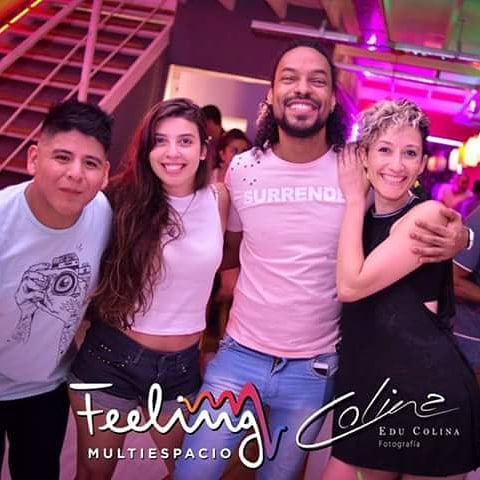
Yasser Peralta and his musical experience

Latin America / Argentina / Buenos Aire

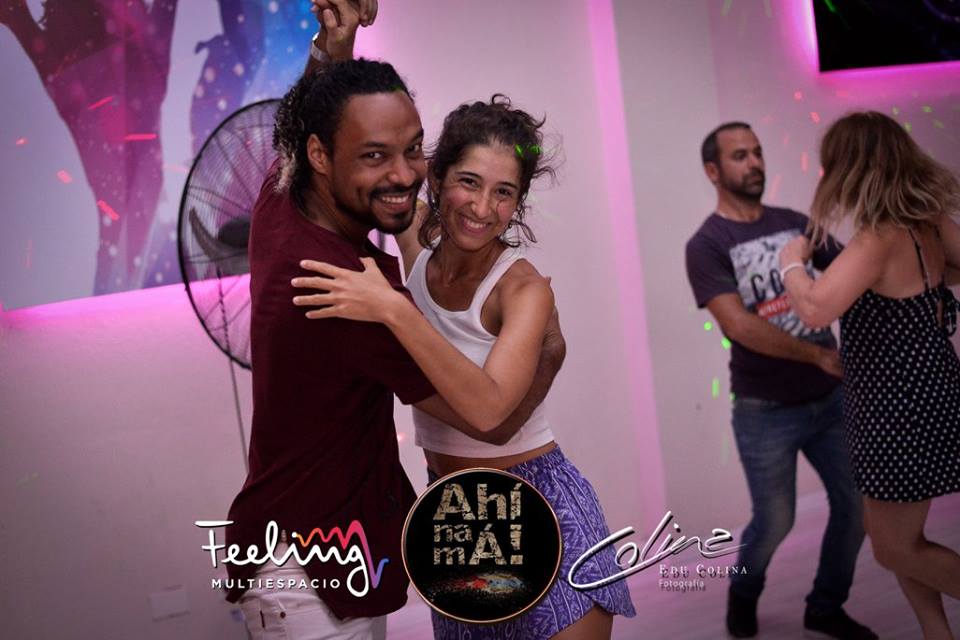
We have the opportunity to meet the dancer and teacher Yasser Peralta, who is dedicated to teaching Son and Rumba in the Cuban style, being something very striking due to the naturalness of his classes and we can believe that it is because his Cuban blood flows through his veins, giving the essence and flavor to the dance. He tells us that the development of his profession as a dancer and instructor began when he was little, since he was dedicated to dancing at parties, being a very common characteristic for most Cubans.

Yasser Peralta
Yasser Peralta

When he moved to Argentina, that did not stop him and in order to maintain his firm roots in his native land and to have his beloved culture very close, he went dancing, where he took advantage of every trip to Cuba to take classes, of which he was with:

  • Julia Fernández Regisseur of the National Folkloric Ensemble.
  • The Aspirins: Rumberos majors of Regla.
  • Luis Roblejo, professor of Modern Cuban Dance.
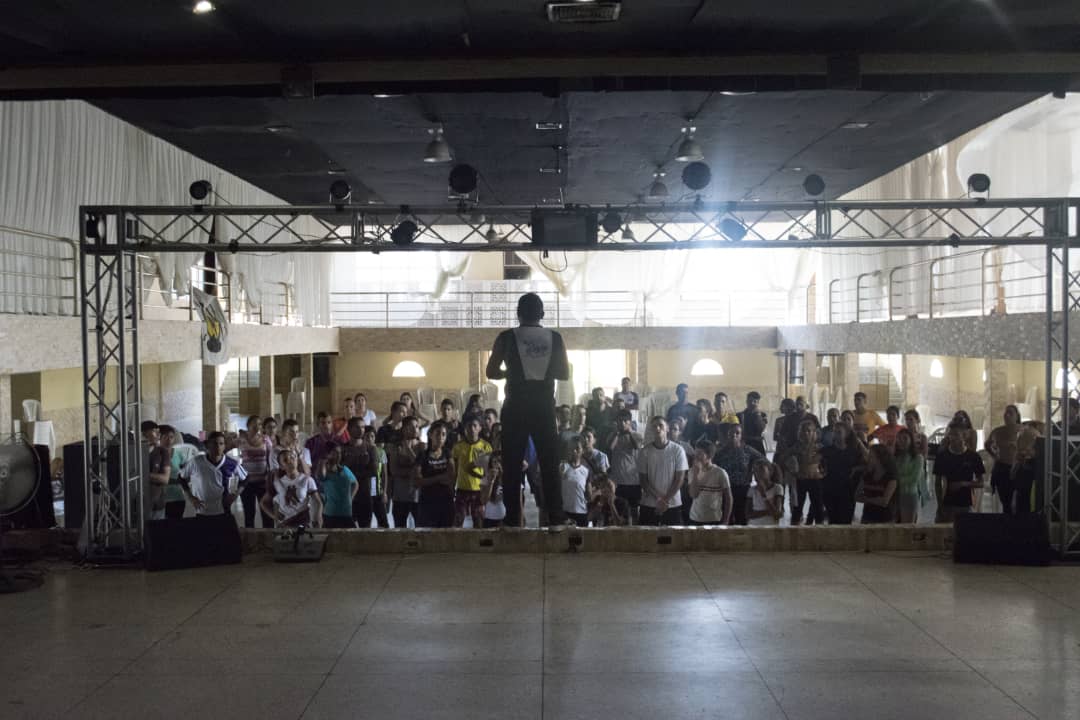
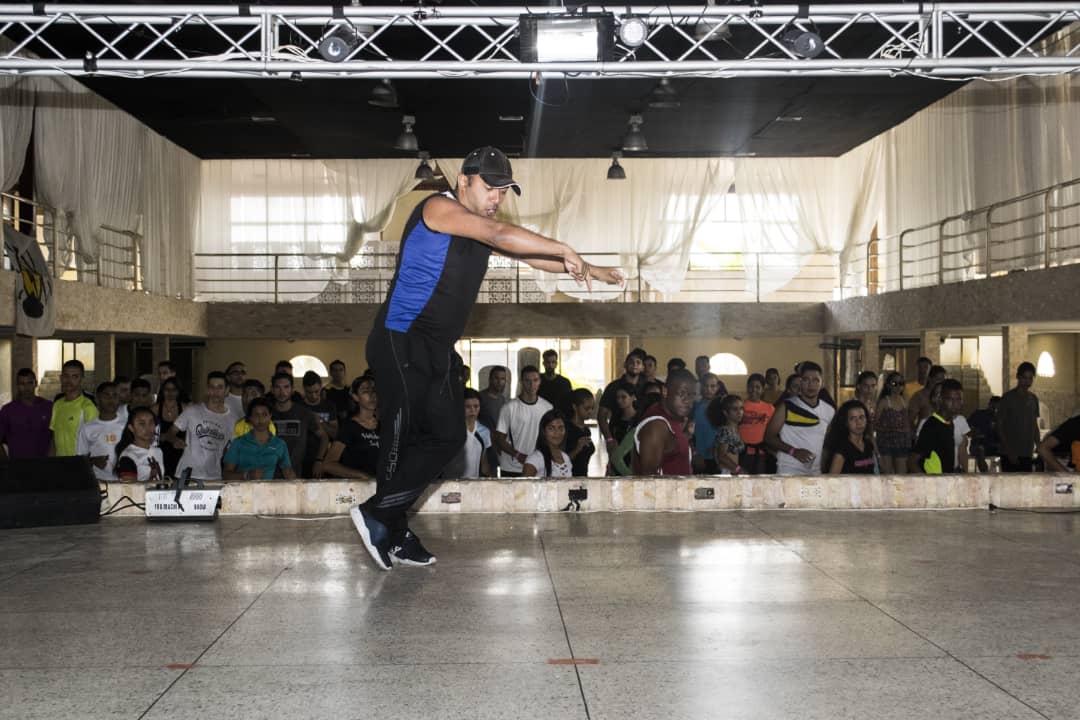
Yasser Peralta and his students

He tells us that he not only took classes, he also took training courses in both Cuba and Argentina; in Cuba he was in Cubadanza and in FolkCuba. In Argentina he was with two great dance masters of various genres and musical styles including the Cuban style such as the Mambo in 2 L.A. styles. All this made him increase his knowledge and resume of his musical career, being expanded by studying music, where he learned to play piano, guitar and percussion. And over time he began to organize events through his production company “AhíNaMá!”.

Workshop with Yasser Peralta

Of all his life journey, he tells us that “it was not only learning and having a profession, he enjoys dancing and teaching the genres of popular Cuban roots such as Afro-Cuban dances, Son and Rumba, because I understand that you have to go to the basis to better interpret current Cuban music…

On the other hand, I am from the Timba generation and I apply all of the above”, that is, dancing and teaching Cuban popular root genres are 2 of the things that I enjoy a lot, especially since In the future, he sees the possibility of traveling to, meanwhile, dedicate himself more to the production of cultural events of these Latin genres.

Photo - Workshop with Yasser Peralta
Photo – Workshop with Yasser Peralta

Yasser tells us that he has an event production company called “AhíNaMá!” where they hold workshops and teach at other academies:

La Viruta AhíNaMá! Vibra Dance
Tuesday: 20.30hs. $140

Thursday: 20.30hs $150

Wednesday: en Feeling 21.30hs más baile Social $120 Friday: 21.30hs más baile Social $150

Yasser expresses himself to all of us and above all recommends that lovers of Latin rhythms, whether they are dancers or artists who want to expand in the artistic area, “open your studio to other genres, other styles.” “Everything nourishes and gives resources to personal dance and there is nothing more difficult (but sublime) than achieving one’s own style; especially that they study the music they dance to, understand its structure and the “root” sub-genres that make it up. That is what makes the detail, and the difference is in the detail”.

Salsa Casino with Yasser Peralta

For more information:

  • Facebook:
    • https://www.facebook.com/yasser.peralta/
    • https://www.facebook.com/ahinamaproducciones/


  • Class:
    • Cuban Style : https://m.facebook.com/story.php?story_fbid=822097507972681&id=402506703265099
    • AhíNaMá en Feeling: https://m.facebook.com/story.php?story_fbid=877213132439763&id=739677559526655
    • Son: https://m.facebook.com/story.php?story_fbid=886905821470494&id=739677559526655
    • Rumba: https://youtu.be/BiTCxVsVeag
    • Musicality: https://youtu.be/ypUe_CYHRfk
    • La Viruta: https://m.facebook.com/story.php?story_fbid=809590925890006&id=402506703265099
    • Vibra: https://youtu.be/yRo9ZI1D1r0


Learn to dance to the rhythm of Son Rumbero

Latin America / Colombia / Bogota

The Son Rumbero academy dresses up with the grand opening of its offices in Bogotá in Colombia and Santiago in Chile.

Photo of dancers by Son Rumberos

They offer dance classes based on 3 profiles, for the youngest and adolescents of the “Kids” house, the fitness line and Latin dances, join the dance trend, give your body health and distraction, it’s been 15 years of experience and consolidation, they have been one of the distinguished schools of Salsa in Venezuela, now, they dedicate hard work in giving improvements and innovations to the dance of the capitals of Colombia and Chile.

Son Rumbero social
Son Rumbero social

In Bogotá they will begin to offer salsa tourism, if as you hear it, you could have 5 days of tourism in Bogotá under an innovative and very formal proposal. This tourist proposal begins with more than 24 hours of formal classes in the disciplines of Afro-Cuban music, learn rumba, cha cha, son, salsa, mambo and many more, together with the tourist tour of the city, closing every night in local and spaces destined for enjoyment, dance all night without stopping with the dancers taxis assigned for this great experience. To learn more about this great proposal, be sure to visit www.sonrumbero.com in our SALSERO TOURISM section soon to be published.

Jose Perez teaching in Son Rumberos
Photo of Jose Perez teaching in Son Rumberos

Everything is in the hands of lovers of good music and dance, do not forget to give yourself the opportunity to do a different tourism, full of experiences that you hardly get in the world, study, dance and get to know the best tourist sites. Follow the social networks of the academy by @sonrumbero on Instagram, Facebook and twitter.

Son Rumbero Logo
Son Rumbero Logo

Toñito Laya

Latinoamerica / Venezuela / Caracas

On this occasion we have the privilege of meeting the new Venezuelan talent Toñito Laya (singer), son of Maestro Antonio “20 DEDOS” Laya, who was one of the most significant conga players in the Venezuelan salsa movement in the 1980s, director of the “ Banbankere Orchestra” of Petare with two musical productions; giving him more than enough reason to grow in Latin music, such as “el Son”, “la Rumba“, “la Guaracha”, “el Danzón”, “Boogaloo”, “la Timba” and “la Salsa” being This is the beginning of his artistic and musical career.

Starting in the 90s, he (Toñito Laya) entered the Bigott Foundation where he had the opportunity not only to learn the various rhythms in Afro-Venezuelan percussion, but also developed as a dancer in one of the most important groups in Venezuela when it comes to popular traditions. “Vasallos del Sol”, eventually becoming “Vasallos de Venezuela” in 2016, where he had 16 concerts, productions, albums and national and international tours; Colombia, Mexico, United States, South Korea and Japan, among others.

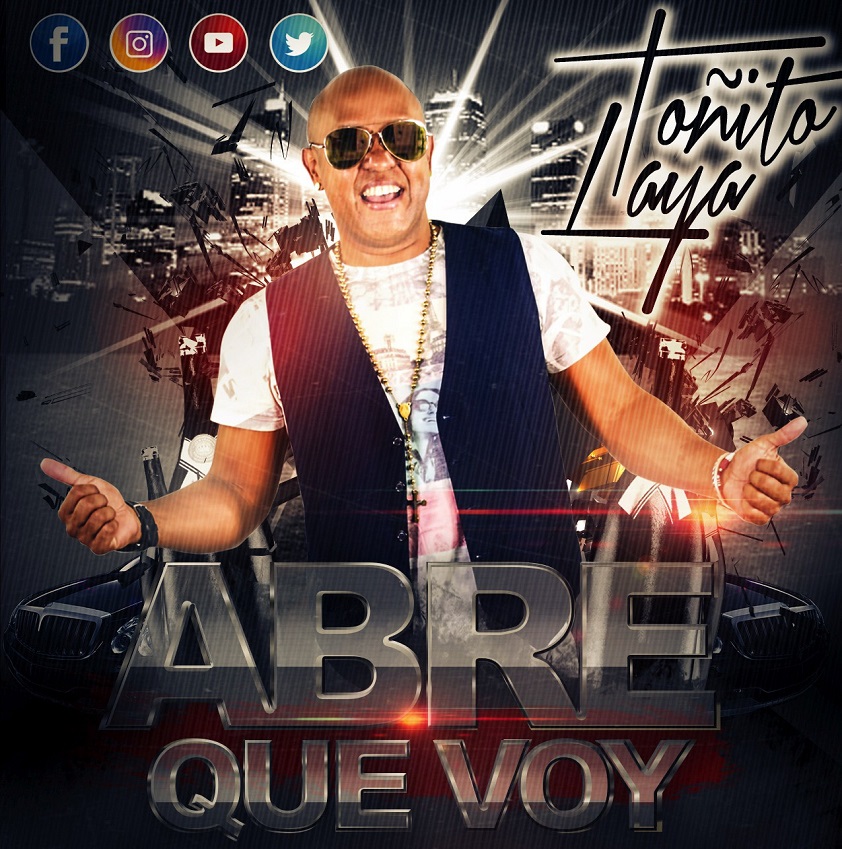
Toñito Laya flyer
Toñito Laya flyer

In 2006, a project called “Comprehensive School of Latin Tradition Dance 100% Tumbao” began, where many dancers were trained in the Cuban Salsa Casino genre, combining this training with Venezuelan traditions, making them understand that traditions come first. Venezuelans. Then they participated in the most important events and competitions in Venezuela, they even became Latin American Champions of “CUBAMEMUCHO 2009” in the city of Caracas-Venezuela, thus managing to represent the country in the grand final to be held in the city of Munich-Germany, 2010.

He also tells us that in 2009, they were invited to participate in a new project but this time not to dance, but to “sing” in a group that by then had no name but a particular genre such as “Son Cubano” . From that moment Toñito began his musical career to develop in a somewhat unexpected way, he was a founder and assumed the commitment of being in charge of this group as one of its leading singers for more than 7 years, where the themes arose: To me that, La Ruñidera, Bilongo, El Jamaiquino, I hear a drum, among others; They were part of his first musical repertoire.

With two record productions together with the already structured band “La Séptima Bohemia” he consolidated his musical career as a singer, going through a training process with different teachers and vocal coaches such as: Ronald González, Fanny Olano, Gustavo Gerardo and Marcial Istúriz, among others. others, who would help him develop in the middle of music.

National tours, award nominations and concerts allowed him to share the stage alongside large-scale national and international groups such as: Francisco Pacheco, Canelita Medina, Alexander Abre y su Habana de Primera, Manolito y su Trabuco, El Septeto Santiaguero, José Alberto “El Canario” to mention a few. Toñito records for the year 2012, the song “She takes me”, a song that in turn would be the title of the second album becoming an icon of parties, dances and social events not only in Venezuela but in many salsa and salsa dancing countries. casino in the world.

In the year 2016 Toñito Laya arrives in Aztec land to embark on a new path, he begins by residing in the city of Cancun-Mexico to sing in some local groups and participate in various projects such as: Los Panas.com, La Formula Perfecta, Grupo Swing Latin among others.

This new stage as an artist prompts him to consider a new musical challenge but this time as a solo singer with a well-defined and focused vision, his pleasant experience as a dancer motivates him to dedicate his first promotional single “ABRE QUE VOY”, this being the complement of an orchestra, for the musicians and their singers “EL BAILADOR”.

“ABRE QUE VOY” is the result of the work of talented and renowned Venezuelan musicians who give an important plus to this Musical production of “Maurice Melo”, this first single is created, performed by Toñito Laya, in the company of the Venezuelan talent of the following musicians:

  • Piano and arrangement: Joel Uriola.
  • Bass: Jesús Torres “Mandinga”
  • Percussion: Yomar Méndez “Caballo”
  • Trombone: Jhonal Rivero.
  • Trumpet: Edward Platter.
  • Baritone sax: Michel Peña.
  • Choirs: William “Wywy” Buznego, Carlos Guzmán and Ramfis Fajardo.
  • Recorded in the studio: A Tempo Records by Heyzer Cabrera.
  • Mixing and Mastering: Heyzer Cabrera. Caracas – Venezuela 2018

If you want to meet or contact Toñito, you can follow him through:

  • Correo: [email protected]
  • Facebook: https://www.facebook.com/tonito.laya
  • YouTube: https://www.youtube.com/channel/UCUkjU7SFnPc_W-XJDlMMzRg
  • Instagram: https://www.instagram.com/tonitolaya/
  • Twitter: https://twitter.com/negrolaya


Ismaray Chacón Tejeda

Latin America / Cuba

Ismaray Chacón Tejeda, a cuban who carries the betrayal of her land and her family throughout the world

When it comes to dances, rhythms and sounds, it is impossible not to take as a reference the island with the most impact in the world of dance in the entire world, the beautiful island of Cuba, how many countries are not nourished by all the culture that this pearl of the Caribbean It allows us to see with its cultural roots, it seems that on the day of creation they left in Cuba all the musical dance creativity that they had.

Today we will be talking with one of the distinguished artists of the Cuban cultural movement in Europe, a member of a family legacy in Cuba, the so-called aspirins, we are talking about Ismaray Chacón Tejeda, a Piscean eradicated in Switzerland.

Ismaray Chacón Tejeda

Welcome and always grateful for opening the doors of your life to make it known to our readers and your followers, we are going to get to know you a little.

Thank you for this great opportunity sir.

Ismaray let’s start by talking about the roots of your country. Do you live for folklore or do you enjoy it?

I enjoy it and at the same time I live it, it satisfies me is transmitting it and having the greatest result that a teacher can have, seeing the progress of the students, knowing that they deepen and feel identified with my culture, with my dance.

What does folklore mean in your life?

My identity as Cuban. It is life, feeling, experience… Everything!!

Photo of Ismaray Chacón Tejeda

 How was the idea of ​​being part of the dance world born in you?

I was born and raised in that environment for my family. My grandfather rehearsed every week at home with his group and I didn’t miss a concert. I am the result of that environment.

How long study and career?

Professionally I started at the age of 17, after I left the School of Art Instructors (EIA), which I could not finish, I auditioned in a group called Obini Bata (Bata Woman). This group and my family were my true school. Look, we rehearsed twice a week all day where we learned the different taps, songs and dances plus the rehearsal of the group for the weekly function, the other days I practiced with my family, or I attended a drum, güiro or cajon (religious festivals) . All that mix was very important to me as it gave me the foundation for my career.

How many countries have you traveled making known the culture of your Island?

Uff!… (Between laughter and emotion) I have really been very lucky to visit many and repeatedly. Singapore, Russia, Morocco, Israel, France, Italy, Spain, England, Sweden, Finland, Peru, Denmark, Poland, Serbia, Germany, Austria, Brazil, Canada, Croatia, Ukraine, Switzerland, among others. I would like to go to the brother countries of Latin America and be able to exchange cultures. I went to Mexico but only on vacation.

Ismaray Chacón Tejeda

What countries have you not visited that you would like to know?

Colombia, Argentina, USA, Africa (Nigeria, Congo), Dubai, China, Japan, India, Venezuela and other Latin countries, hopefully I can. Hey, let the promoters know (between laughs)

The Casino (Cuban Salsa), the rumba or the Afro-Cuban?

What comes to mind when you hear the name Luis Chacón Mendive?

Phew!… my map, my friend, the example to follow, my teacher, my idol, my little green old man, my adoration.

You have a traditional surname and a lot of renown in Cuba. At some point in your training was it a requirement or a motivation?

Yes, it was both. A motivation because it is a great pride for me to belong to this important family and to have that experience, which made me lean towards this side of dance, but at the same time, a challenge because I grew up with my grandfather and my father and every time I had to work, the other artists always said…

that’s Aspirin’s granddaughter… Koky’s daughter… There were those who trusted that I would do a good job, but there were also those who wanted to see if I was up to the job. that last name. Sometimes even though I don’t like to be the center of attention, I had to show it and be a fool as we say in Cuba.

congress and competition with Ismaray Chacón Tejeda

Why Aspirin?

Many say that when they see us play, dance or sing, their headaches go away hahahaha. In truth, it was from the great Aspirin who worked at that time and the boss always had pain in his teeth and sent him to the pharmacy to buy Aspirin. As it was very often, from there he got the nickname.

Do your dream and your reality go hand in hand? Did you dream of having another profession?

Today I can say yes. Being an artist was one of my dreams of the many I have. I remember when I was a child I wanted to be a flight attendant to travel the world and learn about other cultures, today I am lucky to travel carrying my culture and exchanging, I managed to be a flight attendant but in my own style. I’m very lucky.

What has the dance world given you and what has it taken from you?

It has not taken anything away from me, on the contrary, in addition to meeting so many beautiful people, it has given me life, emotions, sacrifices that today help me to value things more, it keeps me healthy and when I execute it, from that moment on all my problems they leave…it’s my therapy.

If you were born again, would you go back to dancing? Why?

Yes, a thousand times. Because art in general is a way of expressing what we feel, in the case of dance, we express it and transmit it with our body….it is life!

Photo of Ismaray Chacón Tejeda in a social

How is Cuban folklore currently spread in the world? Are lines of the original traditions maintained?

Well… this topic is very open and with different points of view, and the word Folklore says it all… In Cuba we have the Afro-Cuban and the Cuban, my point of view to summarize it in a few words, is an oral culture that was always transmitted through generations and family traditions, there is no book like in classical music where everything is written, rather what was seen that older people were doing was repeated, of course everything evolves and transforms over time of the generations even what is sung, the touches or their dances.

But in a certain way patterns are created to follow. I think that in order to spread it and teach it, it is important to know the basics and from there I totally agree with the evolutions, mixtures and others. We just have to be careful not to mistreat it.

What new projects could you share with us?

I currently live in Switzerland although I feel that I must start a new stage of my life in another European country. I also hope one day to be able to return to my country, be with my family and from there continue in the art that is what I love. For now I continue teaching and transmitting my culture throughout the world, already happily married I would like to have the blessing of one day having my family. Together with my husband Serguei Yera Madera, singer of La Reve, we want to continue developing our careers. We keep making history 😉

Grateful for letting us enter a very small corner of your life, we see that you are a true lover of your culture, we hope to continue seeing you succeed in the whole world. For our readers, you already know that this beautiful artist can be followed on her social networks.

Photo of Ismaray Chacón Tejeda and his family
  • « Go to Previous Page
  • Page 1
  • Page 2
  • Page 3
  • Page 4
  • Page 5
  • Page 6
  • Interim pages omitted …
  • Page 9
  • Go to Next Page »

International Salsa Magazine (ISM) is a monthly publication about Salsa activities around the world, that has been publishing since 2007. It is a world network of volunteers coordinated by ISM Magazine. We are working to strengthen all the events by working together.