• Skip to primary navigation
  • Skip to main content

International Salsa Magazine

  • HOME
  • Previous editions
    • 2026
      • ISM / March 2026
      • ISM / February 2026
      • ISM / January 2026
    • 2025
      • ISM / December 2025
      • ISM / November 2025
      • ISM / October 2025
      • ISM / September 2025
      • ISM / August 2025
      • ISM / July 2025
      • ISM / June 2025
      • ISM / May2025
      • ISM / April 2025
      • ISM / March 2025
      • ISM / February 2025
      • ISM / January 2025
    • 2024
      • ISM / December 2024
      • ISM / November 2024
      • ISM / October 2024
      • ISM / September 2024
      • ISM / August 2024
      • ISM / July 2024
      • ISM / June 2024
      • ISM / May 2024
      • ISM / April 2024
      • ISM / March 2024
      • ISM / February 2024
      • ISM / January 2024
    • 2023
      • ISM / December 2023
      • ISM / November 2023
      • ISM / October 2023
      • ISM – September 2023
      • ISM – August 2023
      • ISM July 2023
      • ISM Edition June 2023
      • ISM – May 2023
      • ISM April 2023
      • ISM March 2023
      • ISM February 2023
      • ISM January 2023
    • 2022
      • ISM December 2022
      • ISM November 2022
      • ISM October 2022
      • ISM September 2022
      • ISM August 2022
      • ISM July 2022
      • ISM June 2022
      • ISM May 2022
      • ISM February 2022
      • ISM January 2022
    • 2021
      • ISM December 2021
      • ISM November 2021
      • ISM October – 2021
      • ISM September 2021
      • ISM August 2021
      • ISM July 2021
      • ISM May 2021
      • ISM April 2021
      • ISM June 2021
      • ISM March 2021
      • ISM February 2021
      • ISM January 2021
    • 2020
      • ISM December 2020
      • ISM November 2020
      • ISM October 2020
      • ISM September 2020
      • ISM August 2020
      • ISM July 2020
      • ISM June 2020
      • ISM May 2020
      • ISM April 2020
      • ISM March 2020
      • ISM February 2020
      • ISM January 2020
    • 2019
      • ISM December 2019
      • ISM November 2019
      • ISM October 2019
      • ISM Septembre 2019
      • ISM August 2019
      • ISM July 2019
      • ISM June 2019
  • Download Salsa App
    • Android
    • Apple
  • Spanish

Search Results for: All Stars

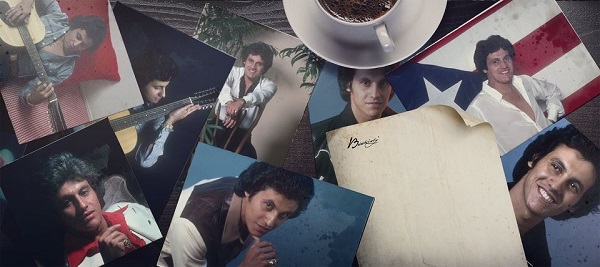
José Antonio “Maceo” Rodríguez was a faithful cultivator of Son Cubano and participated in the Afro Cuban All Stars project

José Antonio “Maceo” Rodríguez was born on April 17, 1950 in Holguín, Cuba.

Famous sonero voice leader of the group Sierra Maestra, he began his career at the beginning of the eighties of the last century with the group Sierra Maestra, integrated by former students of the Polytechnic University José Antonio Echeverría, of Havana, with which he won a televised contest of new musicians.

José Antonio Maceo Rodríguez was a faithful cultivator of Son Cubano and participated in the Afro Cuban All Stars project.

He died at the age of 55 on November 6, 2005 in Copenhagen, Denmark, of a heart attack, after giving a concert with his group at the end of a tour of Europe.

He was born on April 17, 1950 in a modest country house in the vicinity of the Antonio Maceo Sugar Mill, in Cacocun, in the eastern province of Holguin.

Relatives and neighbors say that since he was a child he loved art, music, pirouettes and attracting attention.

October 20, 1976 in Havana, together with his classmates at the José Antonio Echevarría University Center, he founded the musical group Sierra Maestra, called at that time Grupo de Sones de la Facultad de Ingeniería Eléctrica.

Those young dreamers performed in the popular contest “Todo el Mundo Canta”, where they took off on a spiral of success in Cuba and the world.

They traveled to many countries promoting Cuban music. They participated in Festivals of international relevance in Australia, Bosnia, Canada, Croatia, Cyprus, United Kingdom, Greece, Ireland, Israel, Italy, Macedonia, Mexico, Portugal, Puerto Rico, Singapore, Slovenia, Turkey, Yugoslavia and the United States.

A faithful cultivator of Son, Rodríguez participated in the Afro Cuban All Stars project, nominated for a Grammy in 1998 and parallel to the Buena Vista Social Club.
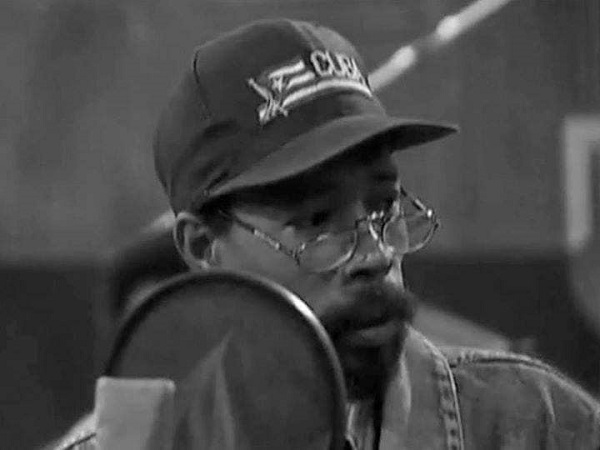
José Antonio Maceo Rodríguez

His excellent voice, comparable according to critics to that of the great cultivators of the genre, was one of the emblematic of the current Cuban dance music scene.

She began recording in 1981 her first album, “Sierra Maestra Llegó con El Guanajo Relleno”, was a silver disc and received excellent reviews. He participated in the Afro Cuban All Stars project, and parallel to the Buena Vista Social Club.

The trumpet player José Alemañy, Cubanisimo, and Juan de Marcos González, founder of the Buena Vista Social Club, were his partners in the group for years, and together they undertook the task of recovering the tradition of famous sones and soneros, revitalizing the genre at a time when other musicians were opting for salsa and more commercial rhythms.

According to the Cuban composer, José Antonio Rodríguez not only possessed a very special voice, “he also had the courage and human qualities to remain faithful to that style, the son style, which is the mother of Cuban music”.

The repertoire of Rodriguez, known as Maceo among his friends and admirers, included, in addition to the great classics of traditional son, pieces that became very popular in his voice, such as Dame un traguito ahora or Esa mujer lo que quiere es que la miren.

Maceo, although small in stature, was an immense man, someone who could not conceive where to keep the torrent of voice he displayed without ostentation, so much musicality, intonation and love for Cuban music.

José Antonio was not only a great musician, he was a great person, very loved by his closest friends and in general by the people whose affection and admiration he won since the participation of Sierra Maestra in the Adolfo Guzmán contest and that thanks to his special way of interpreting the Cuban son, great musicians such as Ignacio Piñeiro’s Septeto were born again in the popular taste.
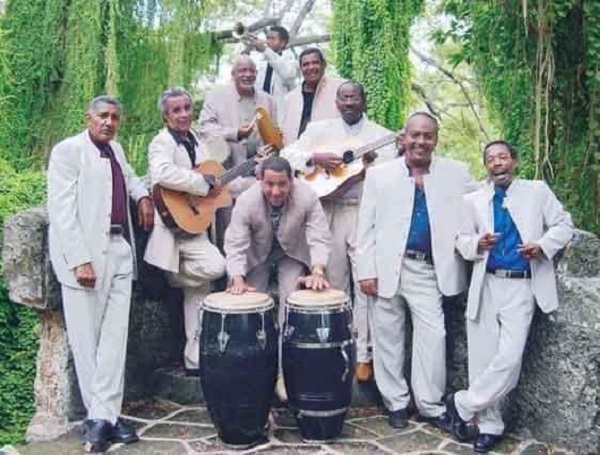
José Antonio Maceo Rodríguez y su Grupo

The singer died on November 6, 2005, just a few hours after finishing the European tour of Sierra Maestra with a concert at the Amager concert hall in Copenhagen.

With this presentation, the popular band put an end to the performance of all the Cuban artists who participated in the First International Latin Music Festival of that capital. The sonero’s remains were repatriated to Cuba, where he was buried.

Also Read: Bamboleo de Lázaro Valdés is another of those exquisite Cuban products, as well as sweet rum and mild cigars

The legacy of Leopoldo Pineda, the ambassador of the trombone in La Maquinaria Fania All Stars

The Dominican trombonist was part of Las Estrellas de Fania and stood out for his virtuosity on his instrument, as commented by musicians Joe de Jesús and Willie Álvarez.

Leopoldo Pineda, “Palma Sola” was born on May 8, 1939 in a small batey called Palma Sola, in Barahona, southern province, Dominican Republic.

El legado de Leopoldo Pineda, el embajador del trombón en La Maquinaria Fania All Stars

He passed away on June 27, 2019 in New York City. Due to his solvency on the instrument, Leopoldo was a participant in hundreds of salsa recordings for more than three decades.

At 80 years of age, Leopoldo Pineda, the Dominican trombonist who earned the respect of his colleagues in the most courageous years of salsa, has passed away.

A case of diabetes had undermined his health in recent years and the fatal outcome came on Thursday, June 27 in New York City.

In recent years, Pineda had been retired from musical activity, due to health problems and diabetes.

Willie Álvarez y Leopoldo Pineda (Foto Willie Álvarez)

He began at a very young age to seek out musical instruments. In his hometown, Pineda would often visit a neighbor’s house to watch him rehearse different instruments.

There he began his first lessons, learning to play trumpet and tambora.

He studied music at school for compulsory education and there he developed certain tropical rhythms.

In Barahona, there was a music school where Leopoldo graduated and later, because of his talent, he was referred to the National Conservatory of Music in Santo Domingo.

As he grew in knowledge, musically speaking, he learned to play several instruments, among them, the Saxophone and the Trombone, the latter being his weapon of choice for the rest of his life.

Leopoldo Pineda
Leopoldo Pineda

In his native Barahona, he was known as “Chanchito”, but it was at the Conservatory where the nickname “Palma Sola” was born, identifying him to his classmates by the name of the town where he was born.

After participating in various groups in the Republic, Leopoldo went to New York City and there he started playing with Tito Rodriguez’s orchestra in the 60’s.

He also recorded with Los Cachimbimbitos and Los Cachimbales.

He also recorded with Ismael Rivera’s Los Cachimbos and was producer of one of Milly Quesada’s first albums.

Musician Jimmy Bosch used to include Leopoldo Pineda in the select group of trombonists from whom he learned. Willie Colón, el Malo del Bronx, had emotional words for don Leo. Indeed, the Dominican Pineda is part of the glorious history of the best salsa, the one that was born in the neighborhood and that has deeply penetrated in this part of South America.

Alfredo de la Fe posted on his Facebook account: “Leopoldo Pineda, great musician, we played together with Típica 73 and Fania All Stars.

Lepoldo Pineda Trombonita de la Típica 73 y Fania All Stars

Then he began to walk the best paths of Salsa, being part of orchestras such as Típica 73, Orquesta Harlow, Willie Colón, Fania All Stars, Sar All Stars, Jose Mangual Jr, La Conquistadora, Jose Alberto “El Canario”, Rubén Blades, Orlando Watussi, Laba Sosseh, Monguito El Único and Héctor Lavoe, among others.

Fania Records

Read Also: Orestes Vilató is one of the most influential figures in the world of Latin percussion.

Ismael Miranda Carrero “El Niño Bonito of the Fania All Stars”

Where did Ismael Miranda’s artistic nickname “El Niño Bonito de la Salsa” (The Pretty Boy of Salsa), with which he became known, come from?

I liked to dress up and look nice for the presentations on one occasion I went to the hairdresser’s and bought a suit for the show when I arrived at the hotel, Johnny Pacheco said to me: ‘How nice, the pretty boy is late! As always.

And from that day on they called me “El niño bonito de la salsa” (the pretty boy of salsa). Pacheco gave the nicknames to everyone in the Fania All Stars.

Johnny Pacheco had a lot of faith when he came up with the idea of making this movie and it was a success.

People vibrated with our songs and we took advantage of 4 emblematic concerts to record it.

That’s how we have to walk through life. It is enough to know that we are doing things right to reap triumphs. Said the trumpet player and composer.

Perico also took the opportunity to tell where all that tasty Caribbean rhythm comes from, of which they are such good exponents. “The folklore of Latin American music was born in Africa”. He recalled the first time he arrived with La Fania to this continent. He still has in his mind the gesture of the Africans when he saw people from other parts of the world playing the congas like masters. We all felt proud, he said.

Miranda also recalled that on August 6, 1980, he arrived for the first time in Barranquilla to present a concert with Héctor Lavoe.

“We were used to performing on huge stages and singing with a well achieved sound; in Barranquilla there was nothing like that, but something magical happened, the affection and joy of the people infected us.

Hector and I gave a show of height, at the end we realized that we enjoyed it completely with all the people of Barranquilla.

During the conference, Perico Ortiz explained why he never recorded an album with Las Estrella de la Fania.

“I never recorded an album, but I participated in many concerts. At that moment I felt in my heart that it was time to sing and I told Jerry Masucci to give me the opportunity, but he did not see me as an artist, but as a trumpet player and arranger, so I decided to retire from La Fania and concentrated on recording my first album as a soloist in 1977 titled My Own Image”.

Ismael was born in Aguada, in western Puerto Rico, but as a child his family settled in New York. He began singing in English in school plays when he was only eight years old, and was even part of a children’s group called “Little Junior in the Class Mate”.

Soon after, he began taking singing lessons at a music school at 46th and Broadway, and then to improve his singing skills he studied with a music teacher recommended to him by Tito Rodriguez.

The environment in which he grew up helped him cultivate his love for music. First he wanted to be a percussionist and not a vocalist. That is why at the age of 10 he told his mother of his desire to buy a conga. Later he acquired a bongo, which resounded throughout the neighborhood. He got to play the conga in Andy Harlow’s sextet, and was part of the Sexteto Pipo y su Combo. But he finally turned to singing, for which he was assisted by Ismael Rivera.

He made his first recording in 1967 with José Luis Pastrana Santos, a musician, composer and timbalero from Santurce, known as Joey Pastrana, on the album Let’s Ball.

This album, recorded for the Cotique label, contains Ismael Miranda’s first big hit, the song “Rumbón melón”.

Facebook: Ismael Miranda

The All Stars Festival Will Be like This In Budapest

The Event Will Take Place From October 29th To November 1st

Couple dancing dressed in white upper body
The All Stars Festival started from being a small Hungarian-only Bachata event to an international festival of Salsa, Bachata, and other danceable rhythms

Everything is ready to celebrate the Latin heritage in the capital of Hungary, Budapest. Thousands of people have enjoyed the All Stars Festival for eight years, and this 2021 they bring workshops, Latin parties, and the novelty of this year will be the master classes taught by professionals specialized in each Latin rhythm.

In this eighth edition, you will be able to update and improve your dance techniques from Friday to Sunday with the different workshops and master classes taught by national and international instructors trained in Bachata, Cuban Salsa, Cross Body Salsa, and other rhythms. You’ll have fun with late-night Latin parties and social dances to practice the recently learned steps, ending with the afterparty on Monday (November 1st) with the best local and foreign DJs.

The All Stars Festival In Budapest Is An International Mixed Event!

The festival started in 2013 based on the prestigious international Bachata competition (BachataStars International). As time went by, they ventured into different Latin dance styles, involving a greater number of international artists each year, and at the same time, they continued to organize contests to serve as a platform for new talents.

In the last 3 years the amazing Salsa and Zouk rooms at the festival are very nice, every year they manage to gather a great mix of Hungarian dancers and visitors of different levels. Likewise, the Bachata and Urban Kiz / Kizomba spaces have grown enormously, bringing together a great variety of traditional and new dance steps on the floor.

Full Pass: € 90 (Does not include preparties and afterparties)

You Can Also Read: Don’t Think About Not Attend The Alocubano Salsa Festival

In Case Of…

DJ dressed in black at the All Stars Festival in Budapest
Enjoy quality workshops, parties with a good atmosphere, and fun teachers in an incredible place in the “Heart of Europe”
  • If the event is canceled due to the organizers, you will receive a full refund for your purchased ticket. But, if the festival must be postponed for climatic reasons or government regulation, the tickets will be automatically transferred to the following year according to the conditions and circumstances of the moment.
  • Do you have the 2020 event ticket? You can use it for this event or transfer it before September 30th, 2021.
  • Remember to bring your vaccination card or PCR-Negative.
  • You should be aware that photos and videos will be taken at the All Stars Festival for use on the website and social media, as well as to be featured in event marketing materials.
  • Private drones will not be allowed during the festival. If you use one, your pass will be revoked immediately.
  • In the spirit of providing a safe space for all dancers, a Zero Tolerance Policy towards inappropriate behavior will be maintained. Whoever violates this regulation will be penalized for current and future events.

These Data Maybe You May Be Interested:

Chain Bridge at dusk in Budapest
Chain Bridge in Budapest
  • If you plan to spend more days in the capital of Hungary, you can take a tour of the Jewish quarter. There you will discover the great secrets of the dark period, and you can visit the Great Synagogue. In addition, the splendid neo-Renaissance building, the Budapest Opera House, is also very close. The duration of this tour is two hours approximately.
  • You can also visit Széll Kálmán Square and appreciate the symbolic Buda Castle fortress, declared a World Heritage Site.
  • Or enjoy a cruise that crosses the Danube River passing through the five representative bridges of the city: Chain Bridge, Elizabeth Bridge, Liberty Bridge, and the two Margaret bridges.

Johnny Pacheco founder of the Fania All Stars says goodbye

This Monday Cuqui Pacheco announced the news

Johnny Pacheco, one of the great Latin musicians, died this Monday, February 15 at the Holy Name Medical Center in Teaneck, New Jersey because of pneumonia, which he had already suffered for several days and for which he was hospitalized. Called one of the creators of salsa, Johnny left this world at 85 years of age, but his legacy will live forever not only in the hearts of Latinos, but also in the history of music.

A short statement was released by what is now his widow María Elena “Cuqui” Pacheco and the rest of his relatives:

“With great pain in my soul and an emptiness in my heart I inform you that the teacher Johnny Pacheco with much peace passed away this afternoon. Thank you so much for all the prayers from him and all the love you always gave him. At this time we ask for privacy and prayers. “

Johnny Pacheco
Johnny Pacheco was co-founder of Fania Records.

There were and still are many reactions around the departure of the founder of Fania. Salseros around the world have mourned the news and many musicians who in one way or another knew Johnny have expressed their sadness:

Rubén Blades published on his Facebook account: “I just received information indicating that Dominican Johnny Pacheco, flutist, arranger, composer and leader of the group “Las Estrellas de Fania”, has just moved “al otro barrio”. At 85 years of age, Pacheco leaves us an important musical legacy, represented by all the collaborations that he made during his distinguished career, with figures like Celia Cruz … To his family and loved ones we send our condolences . Have a good trip Johnny and “Simá!”

On his part, Marc Anthony took to Instagram to dedicate these words to him: “Teacher of Teachers and my good friend! Rest in peace! You were there for me from day 1. Your sense of humor was contagious and I am forever grateful for your support, for the opportunity to be in your presence and for your amazing legacy. “

Maelo Ruiz also left his words: “Today a giant left us ? We regret his physical disappearance! Thank you maestro Johnny Pacheco for everything you did for salsa, you left an insurmountable legacy for future generations! God receive you in heaven ? #QEPD #Rip #JohnnyPacheco #FaniaAllStars ”

Puerto Rican Victor Manuelle also used Instagram to remember Johnny: “Thank you teacher. I had the honor of honoring you in life. Your legacy will not die. Your music will live forever in our hearts. We are going to miss you, Master Pacheco. R.I.P.”

And another was El Caballero de la Salsa Gilberto Santa Rosa: “Today Salsa and music in general are in mourning. One of the pioneers, creative genius and in my personal case an exquisite person said goodbye … Rest in peace master Johnny Pacheco.”

And these are just an example of the many reactions that Latin musicians left when they heard the news. Johnny Pacheco definitely left his mark and a legacy that was difficult to emulate, but which gave the foundation to one of the most listened to genres in the world, of which Latin America is extremely proud.

The incredible career of Johnny Pacheco


Juan Azarías Pacheco Knipping was born on March 25, 1935 in the city of Santiago de los Caballeros in the Dominican Republic. His father was Rafael Azarías Pacheco and thanks to him his love for music arises since he was a clarinetist and a famous conductor. On his part, his mother was Octavia Knipping Rochet, who brought Pacheco a mixture of cultures, since she was the granddaughter of a French colonizer and great-granddaughter of a German merchant who married a Dominican woman of Spanish family.

Johnny moved to New York with his family at the age of 11, where he continued his studies, especially music, managing to enter the prestigious Juilliard School to study percussion. In 1960 he founded his first band: Pacheco y su charanga, after working in several Latin bands. With this band Pacheco achieves success by signing with Alegre records, and presenting a dance rhythm which he called the pachanga, in this way he becomes a star touring the United States, Europe, Asia and of course Latin America.

Johnny Pacheco
Jonny was a great musician and the father of Salsa.

La Fania first started out as a record label, with a partner who was not thought to be interested in Latin music Jerry Masucci, a former policeman who became a lawyer, but fell in love with this music on a trip he made to Cuba. This foundation occurred in 1964, between Harlem and the Bronx where the productions were sold from the trunks of their cars. But the Fania legacy was only taking its first steps by giving an urban touch to Latin music using the term salsa to sell its releases.

With Pacheco, Fania achieved a new rhythm based on the existing ones of Caribbean music, especially the Cuban son, but by putting a faster tempo. One of the things that stood out in Fania’s music was the lyrics, which were used to talk about somewhat sensitive issues, from racism to the political problems of the time, without neglecting pride in their Latino origins.

During the ‘60s and ‘70s, Fania had under its wing many singers who today are considered the best in Latin music and the promoters of the salsa genre: Héctor Lavoe, Willie Colón, Celia Cruz, Rubén Blades to name a few, not counting the musicians who have been part of the band that accompanied the stars in their presentations. Practically the Fania All Stars became the school of many musicians.

Johnny Pacheco
The Fania All Stars.

Fania Records was called the Motown of salsa, becoming a music powerhouse, which led his band the Fania All Stars to tour around the world filling arenas and selling many records. Featuring never-before-seen collaborations such as Willie Colón, one of the best salsa composers, with Rubén Blades, a lyricist focused on the social part. Hector Lavoe was also a cult singer who made music history but whose career was very short and was marked by addiction problems which led to an early death at 46 years old.

During the ‘80s, Fania saw its end when facing many problems due to royalties and lawsuits, working with many artists was not easy and at that time there were many dark moments focused on addictions and monetary problems. In 2005 Fania returned to the spotlight as Emusica bought their catalog that was getting lost in a warehouse in Hudson, New York. Many hits were remastered and re-released in 2006.

Johnny Pacheco will always be remembered as the father of salsa, who with Fania managed to leave his mark on Latin music, rest in peace maestro.


Home

  • Page 1
  • Page 2
  • Page 3
  • Interim pages omitted …
  • Page 58
  • Go to Next Page »

International Salsa Magazine (ISM) is a monthly publication about Salsa activities around the world, that has been publishing since 2007. It is a world network of volunteers coordinated by ISM Magazine. We are working to strengthen all the events by working together.