• Skip to primary navigation
  • Skip to main content

International Salsa Magazine

  • HOME
  • Previous editions
    • 2026
      • ISM / May 2026
      • ISM / April 2026
      • ISM / March 2026
      • ISM / February 2026
      • ISM / January 2026
    • 2025
      • ISM / December 2025
      • ISM / November 2025
      • ISM / October 2025
      • ISM / September 2025
      • ISM / August 2025
      • ISM / July 2025
      • ISM / June 2025
      • ISM / May2025
      • ISM / April 2025
      • ISM / March 2025
      • ISM / February 2025
      • ISM / January 2025
    • 2024
      • ISM / December 2024
      • ISM / November 2024
      • ISM / October 2024
      • ISM / September 2024
      • ISM / August 2024
      • ISM / July 2024
      • ISM / June 2024
      • ISM / May 2024
      • ISM / April 2024
      • ISM / March 2024
      • ISM / February 2024
      • ISM / January 2024
    • 2023
      • ISM / December 2023
      • ISM / November 2023
      • ISM / October 2023
      • ISM – September 2023
      • ISM – August 2023
      • ISM July 2023
      • ISM Edition June 2023
      • ISM – May 2023
      • ISM April 2023
      • ISM March 2023
      • ISM February 2023
      • ISM January 2023
    • 2022
      • ISM December 2022
      • ISM November 2022
      • ISM October 2022
      • ISM September 2022
      • ISM August 2022
      • ISM July 2022
      • ISM June 2022
      • ISM May 2022
      • ISM February 2022
      • ISM January 2022
    • 2021
      • ISM December 2021
      • ISM November 2021
      • ISM October – 2021
      • ISM September 2021
      • ISM August 2021
      • ISM July 2021
      • ISM May 2021
      • ISM April 2021
      • ISM June 2021
      • ISM March 2021
      • ISM February 2021
      • ISM January 2021
    • 2020
      • ISM December 2020
      • ISM November 2020
      • ISM October 2020
      • ISM September 2020
      • ISM August 2020
      • ISM July 2020
      • ISM June 2020
      • ISM May 2020
      • ISM April 2020
      • ISM March 2020
      • ISM February 2020
      • ISM January 2020
    • 2019
      • ISM December 2019
      • ISM November 2019
      • ISM October 2019
      • ISM Septembre 2019
      • ISM August 2019
      • ISM July 2019
      • ISM June 2019
    • 2016
      • ISM December 2016
  • Spanish
  • Download Salsa App
    • Android
    • Apple

Search Results for: All Stars

The Elegant One of Salsa Life and Legacy of Tito Allen, one of the most refined voices in our Latin Music

The world of Afro-Antillean music celebrates the birth of one of the genre’s most distinguished and sophisticated voices Roberto Romero Caballero, universally known in the music scene as Tito Allen.

Born on May 1, 1946, in the iconic neighborhood of Santurce, Puerto Rico, this pillar of salsa has left an indelible mark on the history of Latin music throughout a career spanning over four decades of artistic excellence.
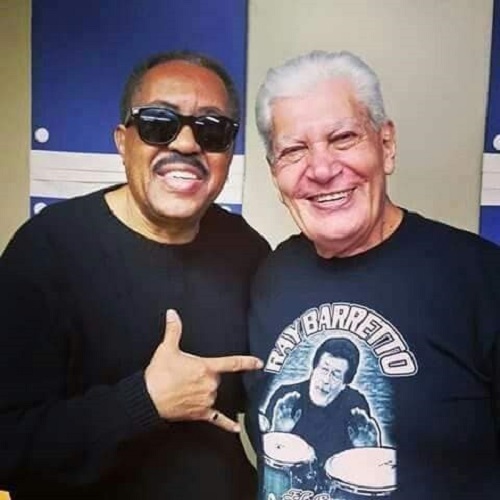
Tito Allen y Adalberto Santiago

The Origin of a Name with Tumbao

The stage name of this renowned sonero holds a curious history split into two parts. The first part, “Tito,” stems from a deeply rooted custom in Puerto Rican slang: the double diminutive. From Roberto, people began calling him “Robertito,” a nickname that over time affectionately evolved into “Tito.”

On the other hand, the surname “Allen” has a much more urban and accidental origin. The singer himself has confessed that during his youth, he saw the word painted as graffiti on a wall. The visual impact and the sound of the name pleased him so much that he decided to adopt it on the spot as his signature trademark for the entertainment world.

The Beginnings of a Multifaceted Star

Tito Allen’s musical journey formally began in 1962, when he was just a 16-year-old teenager. In his early days, the young Roberto showed a strong inclination toward rock and roll, a genre that was causing a frenzy among the youth of the 1960s.

During this formative period, Allen stood out as a bassist and guitarist, forming part of various musical trios that emulated the great bands of the era. These groups even enjoyed successful appearances on Puerto Rico’s Channel 4 television.

Fortunately for lovers of Caribbean rhythms, destiny guided him toward tropical music. His powerful voice, characterized by impeccable tuning and elegant phrasing, quickly made him a highly sought-after singer.
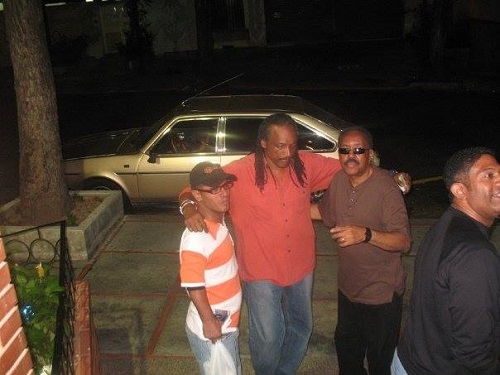
Dj. Augusto Felibertt, Orlando Watussi, Tito Allen y Jesus Torres

Among his major aesthetic influences, Allen has always expressed a deep admiration for Cheo Feliciano, whom he listened to with devotion during Feliciano’s era with the Joe Cuba Sextet. Likewise, he has repeatedly pointed to the Bobby Valentín Orchestra as one of his favorite bands of all time.

Conquering New York and the Big Leagues of Salsa

Determined to take his career international, Tito Allen traveled to New York in 1972. Although he initially tried to join the orchestra of the “King of the Timbal,” Tito Puente, Puente had no vacancies at the time. Far from discouraged, Allen joined forces with the prominent Colombian pianist Eddie Martínez to form a quintet that performed successfully in Big Apple nightclubs.

The true turning point came in May 1973. After a brief return to his native Puerto Rico, Allen went back to New York and, thanks to a recommendation from Eddie Martínez, scored an audition at the famous club El Corso. There, maestro Ray Barretto was looking for a vocalist to replace none other than Adalberto Santiago.

Tito Allen y Billy Crespo

Allen rose to the challenge masterfully, recording the acclaimed album Indestructible (1973), a work that instantly enshrined him in the pantheon of salsa royalty.

A Legendary Journey: Following his successful run with the Ray Barretto Orchestra, Tito Allen fulfilled his dream of working alongside Tito Puente. Later, he joined the ranks of the legendary Típica 73 before launching a solid solo career.

His impeccable reputation also led him to become a fundamental part of the Puerto Rico All Stars, participating in two of their most iconic album productions. Additionally, he collaborated closely with the virtuoso Louie Ramírez, leaving an indelible mark thanks to his versatility.

The Golden Backup Singer of the Latino Neighborhood

Beyond his brilliance as a soloist and bandleader, Tito Allen’s career stands out for his generosity and professionalism in the recording studio.

His trained, melodious voice graced countless productions for artists of the stature of Pupi Legarreta, Ralphy Santi, and Conjunto Clásico, among many other representatives of “the ultimate expression of the Latino neighborhood.” His work as a backup vocalist was essential in defining the sound of New York and Caribbean salsa during the ’70s and ’80s, solidifying his status as a complete artist and a gentleman of music who today, more than ever, deserves the applause of his audience.
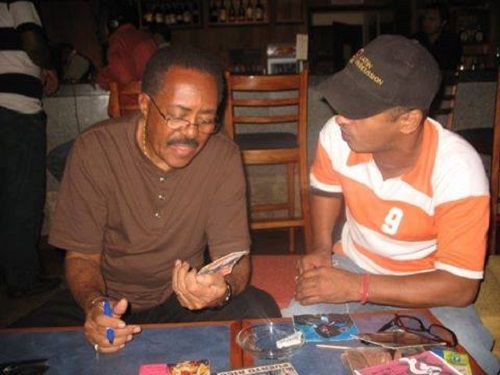

Tito Allen y Dj. Augusto Felibert

Also Read: Our friend Tito Allen supports the Salsa Museum

Omaha Ballroom. Make the world a better dancing place!

North America / USA /  Omaha

Omaha Ballroom was established in 2004 when founder, Elizabeth Colclasure decided to create dance while having fun.

With her passion she continued to grow the studio and invited some of the top instructors of Omaha to teach with her she continued to grow the studio and invited some of the top instructors of Omaha to teach with her.

Photo 1: Omaha Ballroom

The studio has variety of independent instructors including her husband James Colclasure Jr. who is a professional dance instructor how moved to Omaha in 2015.

James and Elizabeth are currently competing together and with their students at competitions all over the U.S.

With the popularity of the television show “Dancing with the Stars” Omaha Ballroom has grown tremendously. To give back, Omaha Ballroom’s volunteer their time to train local celebrities and put on “Dancing with the Omaha Stars” charity event.

Omaha Ballroom is located at 5038 South 153 Street Omaha, NE 68137 Located one block north of Q Street, in Walnut Grove Plaza, behind Crane Coffee and Omaha Oral Surgery Clinic

Hours are by appointment and group class times only, and you can register visiting http://www.omahaballroom.com/register/

Charities they have domated to

  • The Ronald McDonald House 2010, 2011, 2012
  • Angel Among Us 2012
  • The Sunshine Kids 2013,2014 and 2015
  • The Sunshine Kids and Angels Among Us 2016

What they offer:

  1. Personal Dance Training: Learn faster and have fun with personal dance training!
    • Come in as a single or with a partner, the pricing is the same.
    • Choose a convenient time that fits in your schedule.
    • Pick the Style of dances you want to learn.
    • Achieve your goals such as competing, wedding dances, or showcases.
    • Learn how to lead and to follow with help from our instructors.
    • Get the individual attention to help you learn faster
  1. Wedding Dance Lessons: Omaha Ballroom specializes in WEDDINGS!

Make your big day even more memorable with private lessons from Omaha Ballrom. They can help you with your first dance as husband and wife, the father/daughter dance, the mother/son dance, and even your wedding party entrance.

  1. DJ Services: We’ll make sure everyone is dancing!

The service is very affordable. Over 15 years of experience. Get to know you and work with you.

Not only can they play the right music, but they can teach over 20 styles of dance before and at your event. DJ weeding ceremonies, receptions, outdoor/indoor events, private parties, birthday parties, proms, homecomings, and more!

Photo 2: Omaha Ballroom

Group Class

Weekly Group Class Calendar (May 8th – August 3rd)

  • Monday:
    • 6:15 pm Beginners West Coast Swing
    • 7:00 pm Beginners Smooth Dancing
  • Wednesday:
    • 6:15 pm Beginners Smooth Dancing
    • 7:00 pm Beginners Latin and Rhythm Dancing
  • Thursday
    • 6:15 pm Beginners Country Dancing
    • 7:00 pm Beginners Line Dancing


  • Smooth: Waltz, Tango and Foxtrot
  • Rhythm: Rumba, Cha Cha and East Coast Swing
  • Country: Two Step, Country Swing and Polka
  • Latin: Salsa, Merengue and Bachata
  • Line: Country, Hip Hop and Top 40 music to line dance to

Sips and Dips

Friday, June 23th 7 – 9 pm “Wine and Line Dancing”

The dancing only stops when you need a refill for wine. Bring your pals and learn some line dances. We will teach you the most populars ones to top 40 music and country!

“Friday, June 30th 7 – 9 pm “Grease Night”

Grease is the word! We will be giving away prizes, doing a little hand jive, and teach you the moves from the movie. We will be dancing to the songs from the soundtrack and playing Grease movie trivia.

Friday, July 21st 7 – 9 pm “Ballroom Beach Vibes”

Dress in your summer gear and get ready to learn how to dance for the beach. We will be serving fruity drinks and teach you how to dance to summertime tunes! Leave your surfboard at home and get ready to boogie.

Photo 3: Position of the feet while dancing - Omaha Ballroom
Photo 3: Position of the feet while dancing – Omaha Ballroom

Our friend Tito Allen supports the Salsa Museum

From the Salsa Museum, we can boast of having a long list of important artists who have supported us since the project started or over the course of all these years. One of them is Roberto Romero Caballero, better known as Tito Allen, who is called ”El Elegante de La Salsa” by his most loyal fans as a result of the book ”Swing Latino” by Angel Mendez.

Tito singing
Tito Allen singing live

A little bit of Tito Allen’s biography

Tito Allen was born in the neighborhood of Santurce, municipality of San Juan, Puerto Rico, in 1946. He began his professional career in music as a 16-year-old teenager, when he was already part of groups in which he played the guitar and even performed on Puerto Rico’s Channel 4.

Although it is true that, initially, he was much more inclined to rock and roll and also used to play the bass, he changed his mind as time went by and decided to become a salsa singer, to the delight of all fans of the genre who gained forever one of their greatest Puerto Rican references. The best thing is that he turned out to have an incredible voice, so it was a very wise decision.

Obviously, Tito had his own inspirations to become what he is. In interviews with Tito, from his point of view, Cheo Feliciano is one of the best salseros of all and he has been listening to him since he was with Joe Cuba Sextet. As for the orchestras, he has also revealed that his favorite is that of Bobby Valentín and the song with which he identifies the most is ”Contento”. Another artist for whom he also expressed his admiration and desire to collaborate is the legendary pianist Eddie Palmieri.

Tito and Johnny
Johnny Cruz, Tito Allen, Viti Ruiz, Jorge Leureyro, Christopher Rey and Ray Sepulveda

Tito Allen’s career

This talented man’s career is so wide that it is impossible to list everything he has done since he started in music, but it is possible to highlight that he has always tried to collaborate with as many groups and artists as possible and the list of recordings he has with other great names proves it. Tito Allen has sung along with Cheo Feliciano, Ray Barreto, La Típica 73, Adalberto Santiago, Papo Lucca, Willie Rosario, Fania All Stars, Pupi Legarreta, among many others.

It should also be noted that the singer traveled to New York in 1972 in order to attend Tito Puente’s shows and try to sing with him, but unfortunately he had no vacancies at that time. In view of this refusal, he decided to meet with pianist Edite Martínez, which resulted in a quintet that used to play in nightclubs.

He went back to Puerto Rico, but traveled again to New York very soon after, since he got a chance to play at ”El Corzo” with Ray Barretto’s orchestra, which was in need of a singer after the departure of Adalberto Santiago. After that, he finally managed to sing with Tito Puente for a few months and then went on to join La Típica 73 and La Puerto Rico All Stars.

All this without counting the large number of productions and recordings in which Tito sang and delivered backing vocals with many other big names in the industry.

Supporting the Salsa Museum 

Recently, Tito visited us at the Salsa Museum to give us his support and promote the institution as so many of his colleagues have done. In our social networks, you can see two pictures of the artist with our president Johnny Cruz, Viti Ruiz, Jorge Leureyro, Christopher Rey and Ray Sepulveda. 

Johnny Cru ISM corresponde in New York City

Read also: Puerto Rican singer Max Rosado and what he had achieved in Washington DC

Marcial Isturiz from Capaya with soneos and melodic phrases and his popular “Agua pa’ los Gallos “Puerto Rico

In 2023 Sergio George, the famous “magician” who produced the artistic career of famous salseros and artists, said that salsa was “dead” and called on new artists to resurrect it and support each other as urban singers do.

Marcial Isturiz de Capaya

This caused commotion and controversy among salseros and made them doubt without a doubt what is the reality that salsa lives and more with the progressive physical departure of emblematic legends who made history in the world, coupled with the proliferation of the so-called “DJ” who multiply many times the nostalgia of the public for living the times of said legends and who became a trend due to this fact. In 2024 we saw how important salsa concerts were held in our country Venezuela where foreigners who had not visited us for a long time did so and so we enjoyed what some call “the last of the Mohicans”, as well as Venezuelans who took to various stages making it clear that, if they continue creating, either by adjusting the sound of the old and modernizing with quality staging or simply delighting with their career and style what they have already established.

We think that there is a lot missing since there is plenty of musical talent and a new generation in every sense, but not who listens to them and supports them, this being a truth bigger than the size of the sun.

Marcial Isturiz
Marcial Isturiz

After this necessary reflection we want to talk about Marcial Isturiz who was born in the sandunguera town of Capaya, Barlovento in the Miranda State of VENEZUELA, and we put it in capital letters because this “extraordinary sonero who wandered through the streets of Petareña hitting any pot he found in his path, finding out where and at what time the “arayé” was lit, always on the “hunt” for a good opportunity”, a quote was written by Ángel Méndez in his book “Entren que Caben Cien” describing how clear this man has been since childhood in pursuing and having the firm certainty of where he had to go to achieve his dream. He understood, from my point of view, that he who perseveres succeeds and we have seen his professional growth during all these years, thirty years recently completed, being a musician performing several instruments, going on to be also a composer and arranger, accompanying with his voice in duos of consecrated stars and groups, renowned orchestras as well as others not so well known, his voice being a characteristic seal that draws the attention of his followers, a sonero that we can say “gets lost from sight”.


A man who has earned the respect and affection of the public wherever he goes and to name one of the presentations in which he has demonstrated his “people skills”, we had the opportunity to travel and share with him closely accompanying him Sonero Clásico del Caribe in that free event that the Barquisimetanos salseros put on at the end of January 2024 to Ramón Méndez, where by the way Marcial took advantage of the invitation to perform the National Anthem the day before at the Cardenales – La Guaira Game, impeccably. Undoubtedly, that presentation was an omen of good fortune for what would be a year full of success.


Marcial Isturiz began hitting a home run this 2025 by performing on January 5 in Puerto Rico on the “Island of Enchantment”, at the traditional Three Kings Eve dance at the Sheraton Hotel, Convention District, with Don Perignon and La Puertorriqueña, with salsa figures such as Herman Olivera, Pedro Bull, Pichie Pérez, Joe González, Rico Walker, Josué Rosado, Jerry Rivas, Gilberto Santa Rosa and of course our Marcial Izturiz.

Joe, Rico, Marcial, Herman

We saw him singing choruses with these greats, specifically next to Herman Olivera and Rico Walker waiting for his turn like each of those called to this meeting until Peter Perignon introduced him for the first time with his Orchestra La Puertorriqueña and said that the person responsible for that invitation and presence of our sonero there was his friend Gilberto Santa Rosa.

Briefly, Perignon told the audience that he knew Marcial since he was part of Bailatino and he fell in love with that group, since then he had been following him and now recently in his participation with the Latin Dimension he knew that Marcial with this performance made his dream of being in that country come true.

Saying good night to Puerto Rico he performed the song “La Familia” (authored by José Curbelo and musical arrangement by Louie Ramírez, inserted in the production titled Indestructible by Ray Barretto and his Orchestra in the voice of Tito Alen for the year 1973) with soneos and melodic phrases and his popular “agua pa’ los gallos Puerto Rico” left established what this Venezuelan is made of, acclaimed and congratulated by his peers on stage.

Joy is not enough for what we salseros in Venezuela feel for this representation that should not be overlooked because if there are soneros from Venezuela and with class: Marcial Isturiz is one of them; with his own style and professionalism, this is how our “Mayor of Capaya” was seen next to these greats, comfortable, safe and proudly waving our tricolor wherever he goes.


At Swing Latino we say congratulations to Marcial, keep doing your thing without resting like until now, because later it will be too late:

AGUA PA’ LOS GALLOS  y

¡Ponle Sabor!

Source: Giorgenling Méndez from Swing Latino

Also Read: Salsa at its best, led by the leader of La Puertorriqueña: Don Perignon

The legacy of El Palladium lives on, as demonstrated by ‘Mambo Fantasy’

The legacy On Saturday, January 18, 2025, the Tropicoro Club at the Fairmont El San Juan Hotel in Puerto Rico was decked out to celebrate the music of Tito Rodríguez; led by his heir, Tito Rodriguez Jr., and El Caballero de la Salsa: Gilbertito Santa Rosa on vocals and the characteristic marquee of “El Inolvidable”. The show was part of ‘Mambo Fantasy’, a duel between the legacy of Tito Puente and that of Tito Rodríguez, two of the Kings of mambo during the golden age of big bands.

Humberto Ramirez, Herman Olivera, Tito Rodriguez jr. y Gilberto SantaRosa en Mambo Fantasy

The dance concert featured the musical power of the big orchestras, responsible for placing Latin music among the favorites of the dancing public. It was a must remember that the history of what was the era of mambo was strengthened in the emblematic New York halls, among which “El Palladium” stood out. To do so, the dance corps of Tito Ortos and Tamara Livolsi was accompanied by the nonagenarian Mambo Mike, engaging in an energetic choreography that the trio executed to perfection.

The legacy of Tito Puente resonated under the musical direction of the trumpeter, arranger, composer and producer Humberto Ramírez, with Hermán Olivera and Michelle Brava as the singers in charge of interpreting Puente’s repertoire.

Michelle La Brava 'Mambo Fantasy' en Puerto Rico
Michelle La Brava ‘Mambo Fantasy’ en Puerto Rico

Rodríguez’s legacy was carried out by the union between the timbalero, arranger, composer, producer and orchestra director, heir to the musicality and the name of one of our greatest musical glories -Tito Rodríguez, Jr.- and one of the greatest stars of contemporary music -Gilberto Santa Rosa. The group was composed of: Gerardo Rivas on the tumbadoras, Pete Perignon on the bongos, Mako Pérez and Genaro “Ginno” Ramírez on the chorus, Luis Marín on the piano, Johnny Torres on the bass; Freddie Miranda, Josué Urbina, Saviel Cartagena and Francisco “Pacman” Cruz on the saxophones; Georgie Torres and Anthony “Nony” Rosado on the trombones; with Rolando Alejandro, Pedro Marcano, Kevin Ibáñez and Becky Zambrana on the trumpets. And since legacies are significant, it should not be overlooked that the three percussionists of this group are children of musicians.

Orquesta 'Mambo Fantasy' en Puerto Rico
Orquesta ‘Mambo Fantasy’ en Puerto Rico

The repertoire, which included “Mama Güela,” “A los Muchachos de Belén,” “Vuela la paloma,” the bolero “Me faltabas tú,” “Baranga,” “Bon sueno,” “Yambú,” “Avísale a mi contrario,” “El agua de Belén,” “Óyeme Antonia,” “Estoy como nunca,” and the surprising intervention of the tumbador singer Johnny Rivero, the bolero “Tómame ya,” “El que se fue,” and “Abarriba cumbiaremos,” made it clear that the musical complexity of the golden age of mambo remains alive. The Gentleman of Salsa gave a lecture on his expertise in the most Tito Rodríguez-like dance that has ever been seen and heard, imprinting his interpretive style on the songs of “El Inolvidable,” while demonstrating his mastery of the dance, sliding across the stage using Rodríguez’s best steps.

Herman Olivera 'Mambo Fantasy' en Puerto Rico
Herman Olivera ‘Mambo Fantasy’ en Puerto Rico

Evidently, the participation of El Caballero de la Salsa was inspired by the musical perfection of “El Inolvidable”, achieving an impeccable performance. Through the magic that Santa Rosa brought to the concert, Tito Rodríguez, Jr. managed to connect with the Puerto Rican public that follows his father’s music. For our part, we are grateful for the invitation of the work team responsible for the success of ‘Mambo Fantasy’, while we remain awaiting the next show that manages to bring together these greats of mambo.

Also Read: Bella Martinez, the irreverent Salsa writer

Bella Martinez Puerto Rico

  • « Go to Previous Page
  • Page 1
  • Page 2
  • Page 3
  • Page 4
  • Page 5
  • Interim pages omitted …
  • Page 59
  • Go to Next Page »

International Salsa Magazine (ISM) is a monthly publication about Salsa activities around the world, that has been publishing since 2007. It is a world network of volunteers coordinated by ISM Magazine. We are working to strengthen all the events by working together.