• Skip to primary navigation
  • Skip to main content

International Salsa Magazine

  • HOME
  • Previous editions
    • 2026
      • ISM / March 2026
      • ISM / February 2026
      • ISM / January 2026
    • 2025
      • ISM / December 2025
      • ISM / November 2025
      • ISM / October 2025
      • ISM / September 2025
      • ISM / August 2025
      • ISM / July 2025
      • ISM / June 2025
      • ISM / May2025
      • ISM / April 2025
      • ISM / March 2025
      • ISM / February 2025
      • ISM / January 2025
    • 2024
      • ISM / December 2024
      • ISM / November 2024
      • ISM / October 2024
      • ISM / September 2024
      • ISM / August 2024
      • ISM / July 2024
      • ISM / June 2024
      • ISM / May 2024
      • ISM / April 2024
      • ISM / March 2024
      • ISM / February 2024
      • ISM / January 2024
    • 2023
      • ISM / December 2023
      • ISM / November 2023
      • ISM / October 2023
      • ISM – September 2023
      • ISM – August 2023
      • ISM July 2023
      • ISM Edition June 2023
      • ISM – May 2023
      • ISM April 2023
      • ISM March 2023
      • ISM February 2023
      • ISM January 2023
    • 2022
      • ISM December 2022
      • ISM November 2022
      • ISM October 2022
      • ISM September 2022
      • ISM August 2022
      • ISM July 2022
      • ISM June 2022
      • ISM May 2022
      • ISM February 2022
      • ISM January 2022
    • 2021
      • ISM December 2021
      • ISM November 2021
      • ISM October – 2021
      • ISM September 2021
      • ISM August 2021
      • ISM July 2021
      • ISM May 2021
      • ISM April 2021
      • ISM June 2021
      • ISM March 2021
      • ISM February 2021
      • ISM January 2021
    • 2020
      • ISM December 2020
      • ISM November 2020
      • ISM October 2020
      • ISM September 2020
      • ISM August 2020
      • ISM July 2020
      • ISM June 2020
      • ISM May 2020
      • ISM April 2020
      • ISM March 2020
      • ISM February 2020
      • ISM January 2020
    • 2019
      • ISM December 2019
      • ISM November 2019
      • ISM October 2019
      • ISM Septembre 2019
      • ISM August 2019
      • ISM July 2019
      • ISM June 2019
  • Download Salsa App
    • Android
    • Apple
  • Spanish

Search Results for: All Stars

Eric Maldonado from La Paris All-Stars’ work behind the scenes

Latin music, more specifically salsa, has had several initiatives over time that have managed to keep it alive and relevant in the popular taste and one of them is undoubtedly La Paris All-Stars Orchestra, which is a musical group based on old school salsa, but with current technological advances. 

The orchestra was created by the producer and sound engineer of Puerto Rican descent Eric Maldonado, with whom we have been able to talk about the group and his own career, so our dear readers can not miss this reading, as it will be very interesting.   

Eric from La Paris in his studio
Producer and sound engineer Eric Maldonado in his studio Paris Recording Studios

How Eric enters the world of music 

Eric begins his story by saying that he was the youngest of the family and both his father and brothers were always playing instruments, so his first contact with music occurred when he was practically a baby. He says that there were always relatives at home every weekend who came together to play jibaro music, salsa, merengue, cha cha cha or whatever they could think of that day.   

These family roots have encouraged to have a deeper interest in music, to the extent that he began to see it as a serious profession and not just a hobby.   

Eric and sound engineering 

By the time he turned 20 in the 1990s, Eric started playing bass in a band for a while, until he tried his hand as a soundman in the local band in New Jersey and realized that this was what he was truly passionate about. It did not take long for him to realize that being a musician was not his thing, but being behind the console and running the machinery behind the stage was. That is when he started purchasing the equipment he knew he would need and learning more about this part of sound engineering. 

Eric defines himself as someone who does not really like to stand out too much or feel really observed by those attending a show, so he prefers to help all he can on the organizational part and at the level of engineering in the events that he is involved. He affirms that his thing is choosing the talent and creating all the music that the musicians or singers are going to use, while he stays behind the stage taking take that everything forges ahead.    

He described feeling satisfied working in this way and has no problem with the artists taking most of the credit in front of the audience.    

The Paris All-Stars Orchestra   

It is important to note that, before founding the orchestra, Eric already had a recording studio called Paris Recording Studios. What inspired him to create a band was an event he did at a club in Florida shortly after moving to that city. The producer already knew some musicians thanks to his work and proposed them to form an orchestra that would take its name from the studio and be called La Paris All-Stars. ”That night, there were so many people who came to see us play that the place was packed and many of them were unable to get in. That’s when I knew this was going to be a success and the creation of the group was a good idea” said Eric about this first test concert.    

Upon seeing how successful this first concert with the group was, Eric decided to record a complete album which he named ”Los Escogidos” since it would only include the best singers that he would choose for this record production.   

He also wanted to clarify that he is the owner of both the studio and the orchestra and both go hand in hand in everything he does.    

Eric from La Paris with Erben
Marc Anthony’s bassist Erben Pérez with Eric Maldonado

The Paris All-Stars Orchestra: old-school salsa with today’s tools   

When we asked Eric if he agreed with those digital media that defined La Paris All-Stars Orchestra as an initiative linking old school with today’s tools, he answered absolutely.   

Noticing that reggaeton and bachata no longer dominate the international market like they once did, Eric took advantage of the fact that there are many new artists wanting to experiment with salsa to make them his clients and work with them from any country such as Mexico, Cuba, Colombia, Venezuela, among others.   

Although he added that he does not limit himself to any genre and works with a bit of everything, he assures that the music he loves the most is and always will be salsa. He regrets that broadcasters do not give a lot of exposure to salsa as before, but also highlights the support the exponents of the genre have received from media and digital stations that have been given a space to new salseros in different parts of the world.    

Eric’s references for the Paris All-Stars Orchestra   

When listening to any of the orchestra’s songs, there is no denying that its work is inspired by several of the biggest referents of salsa and one of them is Ismael Miranda, who was one of the members of the album ”Los Escogidos”, sharing the credits with Kevin Ceballos, Anthony Colón, Frankie Ruíz Jr., among others.   

Eric called the previous artists, who already had an important name in the industry, in order to attract new singers to join his projects and, in this way, make them known to the public. The producer assures that he likes to help new talents and considers them a fundamental part in the promotion and the new rise of salsa today.   

”I am very happy several of these new singers who worked with me have already been blazing their own trail and some of them are even doing big concerts, which makes me very pleased”, he said.   

Eric from La Paris with Jesus
Eric Maldonado with New York salsa singer Jesus Pagan, with whom has worked recently

Latest works of La Paris All-Stars Orchestra   

The first single from La Paris All-Stars in the year 2024 was ”Son Mentiras”, which, according to Eric, was to be part of ”Los Escogidos” at the beginning, but after recording so many good songs and finding so many talented vocalists, he decided to rethink his initial plan and only released it as a single. The final version of ”Los Elegidos” is scheduled to be released in June this year on all digital platforms after finishing a track still missing from the record production.  

We also could not put aside the group’s new release ”Yo soy La Rumba”, which is part of ”Los Escogidos Volumen 4” and features one of the more promising salsa singer currently, Kevin Gabriel, a young talent who was born in Puerto Rico and has managed to participate in several renowned ensembles and orchestras thanks to his great voice.   

One day, Eric heard Kevin Gabriel singing by sheer chance and became fascinated with the young man, but he knew that the label with which he had signed was not exploiting his full potential, so he proposed him to join his project and he accepted. Together with him, Eric released ”Yo Soy La Rumba” and soon there will be an entire solo album of the young singer. This boy is a clear example of what Eric seeks to promote with his work and has no doubt that there will be many more like him, whom the sound engineer will be more than happy to support. 

Read also: Medusa Pop Band delights its fans with a pretty interesting mix of rhythms 

September 22, 2022 marked the 48th anniversary of the Fania All-Stars concert in Zaire, Africa

Last Sunday, September 22, 1974 (On a day like today, Fania All-Stars made history by performing for the first time in Africa in front of 80 thousand spectators.

A magical night that included wonderful moments. This is their story.

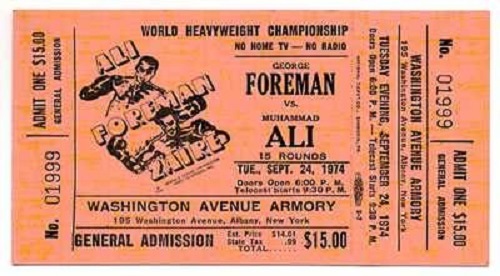
In mid-1974, American boxing promoter Don King organized a fight in Kinshasa, Congo, for Muhammad Ali to regain the crown against the then heavyweight champion of the world, George Foreman, a bout that was called ‘The Rumble in the Jungle’.

Fania All-Stars en Zaire, África

Parallel to the boxing match, musician Hugh Masekela and renowned producer Stewart Levine scheduled a series of concerts at the 20 du Maipara stadium in Kinshasa (Zaire) as part of a 3-day festival (September 22-24, 1974) that would later become one of the most important musical events of the century in Africa, which the organizers called ‘Zaire 74’Unfortunately, an injury suffered by George Foreman while training forced the fight to be postponed for almost six weeks, but the music festival did take place.

La Pelea del Siglo
La Pelea del Siglo

The event was attended by 31 groups (17 local and 14 foreign) and featured artists such as James Brown, BB King, Bill Withers, Manu Dibango, Miriam Makeba, Fania All-Stars, among others.

The Fania musicians who traveled to Africa and performed at the festival were: Johnny Pacheco (flute), Larry Harlow (piano), Bass: Bobby Valentin (bass), Nicky Marrero (timbales), Ray Barretto (congas), Roberto Roena (bongos), Yomo Toro (Cuatro), Pupi Legarreta (Violin) Jorge Santana (Electric Guitar), Victor Paz, Kurt Ranno, Luis ‘Perico’ Ortiz (Trumpets), Lewis Kahn (Violin and Trombone), Ed Byrne (Trombone), and 6 singers: Celia Cruz, Ismael Miranda, Jose ‘Cheo’ Feliciano, Hector Lavoe, Santitos Colon, Ismael ‘Pat’ Quintana (vocals and backing vocals).

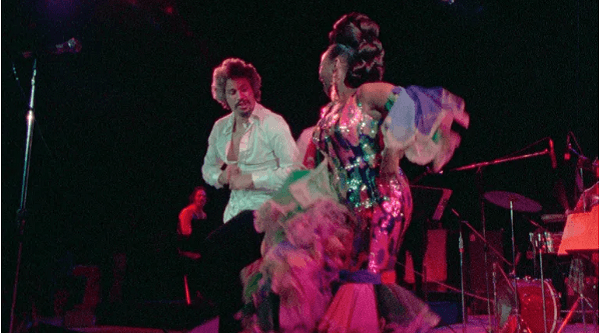
Concierto de la Fania All-Stars en Zaire, África

Everything was ready to return to the Big Apple, New York but a major misfortune forced Johnny Pacheco and company to stay.

Although it may seem incredible, musicians and singers had to stay 11 additional days due to a political and social problem in that country, unable to leave the hotel where they were staying. This is how Bobby Valentín tells it in an exclusive interview to Rafael Vega Curry, journalist of elnuevodia.com

“We couldn’t get out. (Jerry) Massucci had to pay an extra $18,000 because we would gather in the rooms to order food and empty the coolers (laughs). There was always someone who said “tomorrow we’ll play in my room”, says the well-known ‘King of Bass‘.

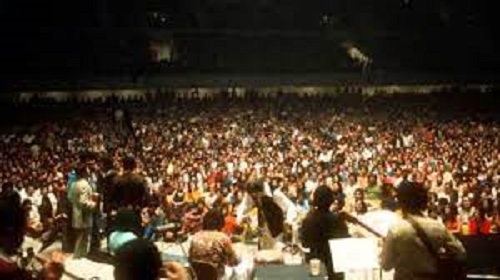
With the concert in Zaire, Fania All Stars had become the first tropical orchestra to set foot on African soil. The show, held at the Statu Hai stadium in Kinshasa, was attended by more than 80 thousand spectators.

Estadio Statu Hai de Kinshasa

It was part of the “Zaire 74” event held from September 22 to 24 of that year, and also featured R&B and Soul artists such as James Brown, Bill Withers and BB King.

In 1974, salsa was at its peak in New York. However, its top representatives were confined within four walls.

Celia y Jhonny en África

Among the musical geniuses were Johnny Pacheco, Ray Barretto and many others who made this orchestra the most important salsa orchestra in its history. Héctor Lavoe could not be missing in that directory.

Important Note:

The Democratic Republic of the Congo, also popularly known as D. R. Congo, Democratic Congo, Congo-Kinshasa or Eastern Congo, and called Zaire between the years 1971 and 1997, is one of the fifty-four countries that make up the African continent. Its capital and most populated city is Kinshasa.

Between October 27, 1971 and May 17, 1997, the African country currently known as the Democratic Republic of the Congo was known as the Republic of Zaire (in French, République du Zaïre).

The name Zaire was given to it during the rule of Mobutu Sese Seko, who ruled it with an iron fist during a long dictatorship, and from whom emanated the political system and the characteristic ideology of the State.

The instability and rebellions that plagued the Congo until 1965 culminated in the seizure of power by Lieutenant General Mobutu Sese Seko, then Commander-in-Chief of the Congolese Army.

Mobutu proclaimed himself president for five years and in 1970 consolidated his power by being elected president without opposition.

In 1971 the new name of the State was adopted, with the official proclamation of the denomination: Republic of Zaire. This name and the new national symbols would remain until 1997, when at the end of the First Congo War Mobutu was overthrown and fled the country.

Upon assuming the presidency of the country the guerrilla leader Laurent-Désiré Kabila proclaimed the Democratic Republic of Congo, recovering its own name.

Sources:

Bobby Valentín

Salserisimo Peru

https://es.wikipedia.org/wiki/Zaire

You can read: Fania All Stars

Louie Ramirez “The Quincy Jones of Salsa” and his progressive talent a genius-in-hidden of Fania All-Stars

The most progressive arranger and innovator of New York Salsa in the 70s and 80s.

Music often requires characters who are always backstage and support with their talent the work of singers and performers, who are eventually the ones who “come forward” and assume the popularity. Sometimes, though, these anonymous characters shot to fame in order to be able to perform their own work and even become more popular than any fashion singer.

a Hidden Genius of La Fania All Stars
The most progressive arranger that Salsa had in New York.

In the case of Pop, this character is named Quincy Jones, who was said to be the arranger for Frank Sinatra and the producer for Michael Jackson. A “nonentity”. In the case of Salsa, these characters have been symbolized by the emulator of Jones, a guy named Louie Ramirez who has done everything with everyone.

An afternoon in 1994, Ramirez was driving his car on the highway that took him to Variety Studios in New York. It was going to be a quick session because he only lacked one track to complete his 20th album as a bandleader. Perhaps this is why he was nervous and full of anxiety. Minutes later, he could not resist the feeling and had to stop the car. He had not finished doing it when a heart attack ended his life.

Introducing Louie Ramirez

The fact was that Louie had the answer and visiting him was like rubbing Aladdin's lamp. That was a characteristic that always accompanied him, since that first recording "Meet Louie Ramirez" in 1963.
Introducing Louie Ramirez 1963

Louie Ramirez was a genius. The one to whom all run for advice and solutions to their problems. It did not matter if they were young or old musicians. The fact was that Louie had the answer and visiting him was like rubbing Aladdin’s lamp. That was a characteristic that always accompanied him, from the first recording “Meet Louie Ramirez” in 1963.

He was 20 years old back then and had a good record with regard to composing some pachangas and arranging for the orchestras of Pete and Tito Rodriguez. Commentator Dick Sugar introduced him like this: Ramirez breaks through the image of a bandleader who uses the talents of other composers and becomes a follower of a rhythm. No, Louie Ramirez is a creator in his genre.

Louie Ramirez Ali Baba

star of Fania Records and, at the same time, as an arranger for the orchestras and ensembles that belonged to the record company. Ramirez soon found himself in a busy schedule and was only able to record two albums during the sixties, "Good news" and "Alí Babá".
Louie Ramirez ‎ Ali Baba

That talent did not go unnoticed by the new Czar of Latin music in New York, Jerry Masucci, who hired him as a star of Fania Records and at the same time, as an arranger for the orchestras and ensembles that belonged to the record company. Ramirez was soon wrapped up in work and could only record two albums during the 1960s, “Good news” and “Alí Babá”.

The last album included the hit that allowed him to be a famous artist, El Títere, a true Salsa classic. The song was performed by Rudy Calzado, the third of the soneros Louie had used without finding the right one. It was a ballast that stayed with him as a director during the 1970s, when he used singers such as Pete Bonet, Tito Allen, Jimmy Sabater, “Azuquita” Rodríguez, Adalberto Santiago, and even Rubén Blades.

Louie Ramirez y Sus Amigos

Ramirez was considered in New York as the most progressive arranger that Salsa had.
Louie Ramírez y Sus Amigos

It was precisely Blades that he made an anthological album with, “Louie Ramirez y sus amigos”, which included the song Paula C, with an arrangement of those that deserve to be admired. By then, Ramirez was already considered as the most progressive arranger of Salsa in New York, thanks to the brilliant works done for the Fania All Stars. An excellent work had been the instrumental arrangement for Juan Pachanga, to be performed by Blades, from Canta for a performance by Cheo Feliciano, and of the entire album “Algo nuevo” performed by Tito Rodriguez with Louie’s orchestra.

Noche Caliente

But the high point of Ramirez's career came in 1980 when Joni Figueras, a representative of K-Tel International's K-Tel label, took Ramirez's career to a new level.
“Noche Caliente” and was recorded by Louie Ramirez’s own orchestra.

The peak of Ramírez’s career was in 1980 when Joni Figueras, a representative of the K-Tel International label, hired him to maka arrangements for the ballads Todo se derrumbó and Estar enamorado by Manuel Alejandro. The album, which included these and other songs, was released two years later under the title “Noche caliente” and was recorded by Louie’s orchestra.

Ballad-salsa or romantic salsa was born as a result of a work Ramírez did until his death, making occasional attempts in Latin Jazz, which he loved. That is why he recorded a tribute album to Cal Tjader in which Louie was the director, producer, composer and arranger. Apart from that, he played the timbales and his favorite instrument: the vibraphone.

Louie Ramirez was a genius of arrangements, in a career that included Guantanamera and Isadora for Celia Cruz, El Guiro de Macorina for Johnny Pacheco and El Caminante for Roberto Torres.

The Cesta All-Stars Vol. 1

Apart from that, there are his works for La Alegre and Cesta All Stars. Regarding Ramírez's profile, the critic Eleazar López defined it very well
The Cesta All-Stars
Vol. 1

Further to that, there are his works for La Alegre and the Cesta All-Stars. Regarding this Ramírez’s profile, critic Eleazar López defined it very well.

“It is not easy to arrange for a dance orchestra, especially when it is a group that cultivates the hot tropical genre. Many musicians feel influenced by Jazz and the result of their orchestrations leaves a vacuum in the dancer”.

Others arrange in a simple way, but it is so simple that they repeat and copy themselves, and the result is tired music, without any degree of creativity: music that says nothing, that leaves nothing. Louie Ramirez has found the perfect balance… that’s why he always stays relevant.

Louie Ramirez has found the perfect balance... that's why he always stays relevant
Louie Ramirez The Hidden Genius of La Fania All Stars

Article of Interest: Bobby Valentin, the King of Bass at the Fania All-Stars Machinery

#ISMPublicity

Producer Eric Maldonado’s Paris All-Stars Orchestra

Producer Eric Maldonado, born and raised in Trenton, New Jersey, comes from a musical family of 6 brothers and 3 sisters.

All of his siblings and his father play an instrument and music has been a part of his life since he was a child.

From an early age, he listened to all kinds of music but was more interested in learning how to produce it than being a musician.

At the age of 12, he began to play with different electronic equipment and his passion grew. At the age of 18, he began to record his brothers’ band with a tape recorder and a mixer.

All of his siblings and his father play an instrument and music has been part of his life since he was a child. From an early age he listened to all kinds of music, but he was more interested in learning how to produce it than being a musician.
Producer Eric Maldonado’s Paris All-Stars Orchestra

The results of that recording were incredible and that’s when his passion to be a sound engineer in the studio began.

In 2000 he started recording professionally, but he already had experience in recording different local bands since 1997.

In 2014 he moved to Tampa, Florida, and started recording different genres of music, videos, rehearsals especially Salsa.

How did you decide to found La Paris All-Stars?

In 2017 we did a charity event and began recording in the studio one of the musicians suggested calling the orchestra La Paris All-Stars and it was a success, there begin the calls for the orchestra to participate in different events from there the first production titled “Los Escogidos” Vol. 1 is recorded in which he has as guests Ismael Miranda “El Niño Bonito” and Willie Rosario “Mr. Afinque” to mention some of a long list of excellent musicians of trajectory.

“Already with three productions that follow with La Paris All-Stars”.

In 2014 he moved to Tampa, Florida and began recording different musical genres, videos and rehearsals, especially Salsa.
The Paris All-Stars

This year singles have been released instead of a full production so that the songs are not lost as new singles from other artists are coming out all the time. At the end of October, all these singles will form the production Los Escogidos Volume II.

“There are moments throughout your musical career that remain marked by various circumstances who or those who leave you have left that mark embodied in your music.”

All the songs and artists have been well received by the public, each one is special and has their own style.

Otto Duniel Ferreiro is one of those artists that I like to work with him in the studio, his style and his voice are an incredible combination, I can listen to a musical arrangement and know which artist can sing it and right now I just released the song Ven a Gozar singing Chevy El Pitirre de la Salsa, it has been well received.

Have you just released the song “Ven a Gozar” with Chevy El Pitirre de la Salsa as your guest? How did you come up with the idea to achieve such a tasty ensemble?

I was about to include Chevy with a song in this production, I have many songs recorded, but without lyrics, I found this song and sent it to Chevy to compose the lyrics and we put it to cook this theme fell like a glove to Chevy El Pitirre de la Salsa achieving the perfect assembly.

What are we waiting for Christmas?

I started working on a Christmas song, but everything was delayed because I am working with many artists of different musical genres and I could not finish it, for this reason, nothing will be released this year, but you can enjoy my single Parranda con La Paris which was released last year where you can continue to enjoy great musicians of this house Paris Records.

Discography:

Los Escogidos Vol.1 (2018)

Estamos de Parranda (2018)

RnB and Pop Hits in Salsa (2019)

In early November he will be presenting “Los Escogidos” Vol.2 (2021) an album that comes with a musical quality that only our beloved Eric Maldonado knows how to do it and his Paris All-Stars.

Contact us:

Eric Maldonado

The Paris All-Stars Orchestra / Paris Records

[email protected]

813-340-6001

Producer Eric Maldonado's Paris All-Stars Orchestra
Producer Eric Maldonado’s Paris All-Stars Orchestra

The engine of my life my wife, my children, Baby Ezra always in my heart, blessings!

Thanking the collaboration of Eric Maldonado to be able to make this article.

Erika Muñoz

By: Erika Muñoz from “Se Armó la Rumba en México”

Article of Interest: Chevy “El Pitirre De La Salsa”

Bobby Valentin, the King of Bass at the Fania All-Stars Machinery

Bobby Valentin The mind of a master

Roberto Valentin “Bobby Valentin” was one of the main collaborators and arrangers of the Fania All-Stars in the 1970s, over which time he also recorded numerous solo albums. Born in 1941 in the locality of Orocovis, Puerto Rico, he began playing guitar as a child and won a contest with a band that he conducted himself at the age of 11.

He began his trumpet studies at the age of 15 shortly before he moved with his family to New York, where he continued his studies under the direction of Carmina Caruso. In 1958 he started his professional career with the Joe Quijano’s Orchestra.

Bobby Valentin, the King of the Bass of Fania All-Stars Machinery
Bobby Valentin The mind of a master

Valentin spent the next several years working as a trumpeter, guitarist, bassist and arranger for artists such as Willie Rosario, Charlie Palmieri, Ray Barreto, Tito Rodríguez and Willie Bobo, until the year 1965, when he debuted with an orchestra to his name by releasing two albums, one of them was under Johnny Pacheco‘s Fania label.

Bobby Valentin, the King of the Bass

During the following years, Valentin continued to release albums to his name under the Pacheco’s label, but he also began recording and making arrangements for the label’s band, the legendary Fania All Stars, which had the presence of important figures as Rubén Blades, Celia Cruz, Willie Colon, Eddie Palmieri, Papo Lucca, Mongo Santamaría, among many others.

In 1975, he began recording for his own label, but his work with the Fania All Stars goes on until the day. Since then, the musician continues to perform with his orchestra for the most important salsa and jazz festivals from all over the world, while at the beginning of the decade Valentin contributed arrangements for some Pacheco‘s songs, it was only natural that he released his albums under his new label.

Fania All-Stars, to which he helped define the sound through his bass playing, in classic albums of the 1970s such as the Tribute to Tito Rodríguez or the live album at Yankee Stadium.
Bobby Valentín moved with his orchestra to Puerto Rico in 1968.

And while Bobby Valentin moved with his orchestra to Puerto Rico in 1968, he continued to travel often to New York to record for Fania, in addition to working and arranging songs for the label’s band, the Fania All-Stars to which he helped define the sound through his bass, on classic albums of the 1970s like the Tribute to Tito Rodriguez or the live album at Yankee Stadium.

In 1978 he began recording for his own label, Bronco Records, through which he recorded “La boda de ella“, a song that became one of the most important of his career.In addition to continuing to release albums for his own label, the latter of which saw the light in 2016 under the name “Mi Ritmo es bueno” and Mind Of A Master in 2018.

The pop classic The Twist composed by Hank Ballard and popularized by Chubby Checker in 1960, now sounds in salsa clave in a new version created by musician, arranger and composer Bobby Valentin y su Orquesta.

For award-winning Puerto Rican composer, arranger, producer and musical director, to remember is to live, as a result of which he presented the song in Spanish and dance in order to interest the new generations.

“When I was based in New York, this was a boom, Chubby Checker recorded it! At that time, what was done in rock & roll and today’s music is called salsa and it was all about dancing. There was the chachachá, the pachanga, the boogaloo… Everything was visual, with dancing! Chubby Checkerwas in all the TV shows… I recorded the song a year and a half ago, but the premiere was pushed back for the pandemic. I figured I could do it in salsa without losing the essence of that time,” he said.

Fania All-Stars
Fania All-Stars Roberto Roena, Bobby Valentín, Johnny Pacheco


The Twist https://youtu.be/zf-SjdhbH9M

Sources

Amarie Magazine

Fania

  • « Go to Previous Page
  • Page 1
  • Page 2
  • Page 3
  • Page 4
  • Interim pages omitted …
  • Page 58
  • Go to Next Page »

International Salsa Magazine (ISM) is a monthly publication about Salsa activities around the world, that has been publishing since 2007. It is a world network of volunteers coordinated by ISM Magazine. We are working to strengthen all the events by working together.