• Skip to primary navigation
  • Skip to main content

International Salsa Magazine

  • HOME
  • Previous editions
    • 2026
      • ISM / March 2026
      • ISM / February 2026
      • ISM / January 2026
    • 2025
      • ISM / December 2025
      • ISM / November 2025
      • ISM / October 2025
      • ISM / September 2025
      • ISM / August 2025
      • ISM / July 2025
      • ISM / June 2025
      • ISM / May2025
      • ISM / April 2025
      • ISM / March 2025
      • ISM / February 2025
      • ISM / January 2025
    • 2024
      • ISM / December 2024
      • ISM / November 2024
      • ISM / October 2024
      • ISM / September 2024
      • ISM / August 2024
      • ISM / July 2024
      • ISM / June 2024
      • ISM / May 2024
      • ISM / April 2024
      • ISM / March 2024
      • ISM / February 2024
      • ISM / January 2024
    • 2023
      • ISM / December 2023
      • ISM / November 2023
      • ISM / October 2023
      • ISM – September 2023
      • ISM – August 2023
      • ISM July 2023
      • ISM Edition June 2023
      • ISM – May 2023
      • ISM April 2023
      • ISM March 2023
      • ISM February 2023
      • ISM January 2023
    • 2022
      • ISM December 2022
      • ISM November 2022
      • ISM October 2022
      • ISM September 2022
      • ISM August 2022
      • ISM July 2022
      • ISM June 2022
      • ISM May 2022
      • ISM February 2022
      • ISM January 2022
    • 2021
      • ISM December 2021
      • ISM November 2021
      • ISM October – 2021
      • ISM September 2021
      • ISM August 2021
      • ISM July 2021
      • ISM May 2021
      • ISM April 2021
      • ISM June 2021
      • ISM March 2021
      • ISM February 2021
      • ISM January 2021
    • 2020
      • ISM December 2020
      • ISM November 2020
      • ISM October 2020
      • ISM September 2020
      • ISM August 2020
      • ISM July 2020
      • ISM June 2020
      • ISM May 2020
      • ISM April 2020
      • ISM March 2020
      • ISM February 2020
      • ISM January 2020
    • 2019
      • ISM December 2019
      • ISM November 2019
      • ISM October 2019
      • ISM Septembre 2019
      • ISM August 2019
      • ISM July 2019
      • ISM June 2019
  • Download Salsa App
    • Android
    • Apple
  • Spanish

Search Results for: Argentina

Caroline Cohen

Latin America / Buenos Aires / Argentina

Carolina Cohen, Singer and percussionist

Carolina Cohen
Carolina Cohen

Percussionist and singer Carolina Cohen was born on November 8, 1982 in Buenos Aires, Argentina.

He began his studies in the year 2000 and traveled to Cuba, Peru and New York to perfect himself.

Throughout his career he has accompanied great artists such as Mayito Rivera, Eva Ayllón, Luis Salinas, Nahuel Peennisi, Bomba de Tiempo and prestigious artists at the Teatro Colón in the city of Buenos Aires.

Cohen has participated in highly relevant international festivals; Jazz Festival in Peru and Uruguay, International Cajon Festival in Peru, International Percussion Festivals in Argentina and the Great National Folklore Festival of Cosquín.
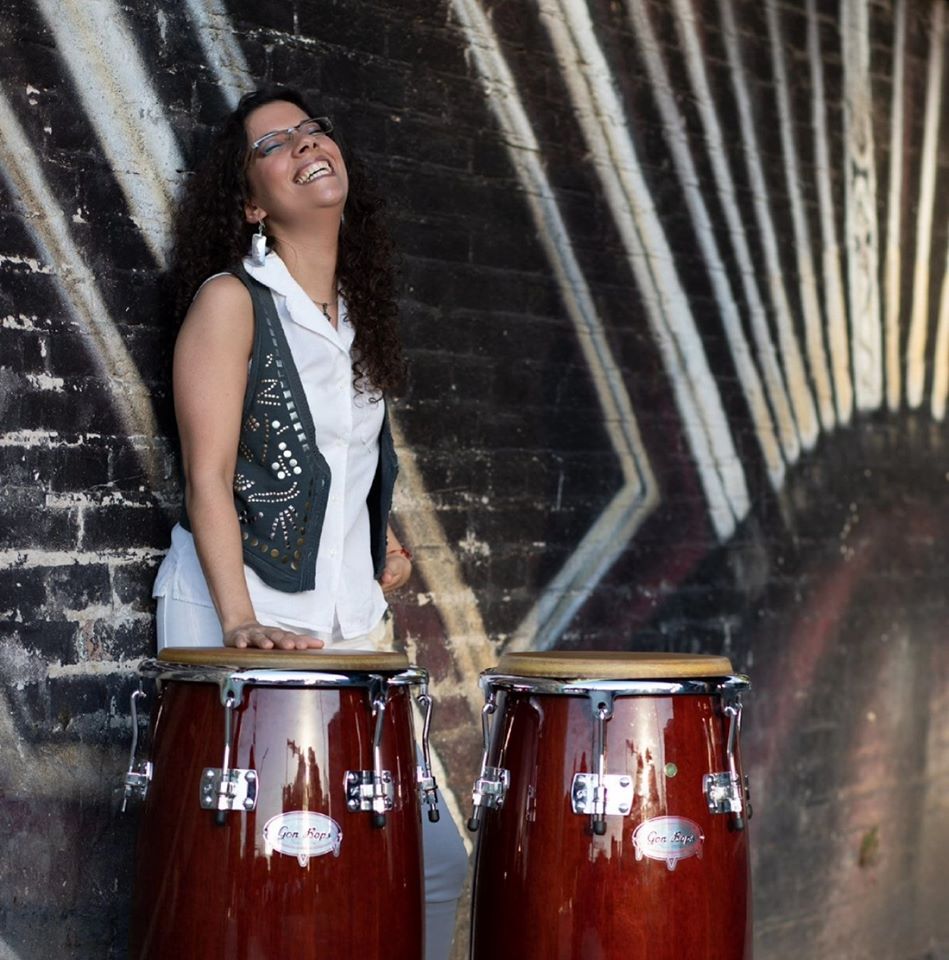
Carolina Cohen and her drums

Carolina is frequently invited to give percussion master classes, workshops and clinics at universities, colleges and schools in countries such as Colombia, Peru, Chile, Uruguay and the United States.

In 2016, she was invited to appear in a video on CongaHead, a popular YouTube with over 100,000 subscribers.

He currently directs his group “Caro Cohen Cuarteto”, created in 2017.

In the short period of existence, this group was already the opening act for Grupo Pedrito Martínez at Trastienda Club and accompanied Maestro Tito Manrique from Peru.

Highly in demand on recording sessions, she has recorded with many different artists.

Carolina Cohen on stage

Carolina has been a member of the “Grupo De Tal Palo de Música Latinoamericana” for eleven years with two albums released, Música Latinoamericana and La Luna Está Roja.

She is currently an exclusive artist for Gon Bops Percussion in Los Angeles-California.

Hindy & his Orchestra “The Sonera of the Moment”

Latin America / Buenos Aires / Argentina

Hindy Singer of the Latin genre, with a high and extensive artistic career in salsa.

Hindy born in San Félix – Edo. Bolívar, in the south east of Venezuela, in 27 years of artistic career, has enriched her musical career through her different participations as a soloist, chorister, singer-songwriter and producer.

Photo 1: Hindy dancing in a party festival

His beginnings in the Venezuelan salsa music elite are with a first place in the Record Report, at the hands of the international producer César Monges “Albóndiga” interpreting in his production “De Regreso a mi País” the version of the song A Flor de Piel del Venezuelan singer-songwriter Yordano Di Marzo, being in turn the leading voice of the Monges orchestra “Latín Girls” under the representation of Korta Records of the businessman “Negro Mendoza”.

Among some of the national and international celebrities with whom he has participated on different stages are: Cheo Feliciano, Viti Ruiz, Henry Fiol, Roberto Blades, Jr. Gonzáles, Paquito Guzmán, Richie Ray & Bobby Cruz, Gilberto S, Wladimir Lozano, Erick Franchesqui , Paquito Barón, Gustavo Rodríguez, Armando Manzanero, Pancho Céspedes, Gran Combo, S. Ponceña, Hildemaro, etc.

There is a long way to go, if it can be said, in the “short” artistic career of Hindy Castillo. His jump to internationalism was in 2007-08 to Europe, where he participated for two consecutive summers in different popular music orchestras touring more than 30 cities in Spain, and in France.

Photo 2: Hindy dancing in a party festival

His next artistic stop was in the state of Mexico.

Hindy was selected to assemble an international orchestra and travel from Venezuela to do a 3-month tour, which lasted another 13 months, the immediate rapport of all its members was a total success, profiling a true blunderbuss in the salsa environment. Veracruz.

She was also chosen to participate in the 1st Boca del Río salsa festival and, among other presentations, shared the stage with the great composer Armando Manzanero and Pancho Céspedes, extending her presentations to Guatemala City. Later, she travels to the capital, DF, invited by a local producer, who, seduced by her talent, encourages her with her orchestra to perform on different stages of the Aztec capital, capturing the taste of the Mexican music lover and salsa dancer, who turn to her presentations. to appreciate and enjoy his voice and the special talent of the soneo Salsoso.

Hindy musicalizes, produces her first songs and debuts as a singer-songwriter, under the executive production of her representative Carlos Zapata.

They record four songs sprinkled with romanticism, maintaining the bases of “hard” salsa and with novel musical variants.

Flamenco was one of these variants that played an important role in this product since its mixture with salsa resulted in a very genuine and fresh sound, from the pen of select Venezuelan arrangers. Graduated instructor of Popular Singing.

He has developed musical studies of: vocal technique, German singing method in Spain, Latin piano and modern harmony. He is currently doing his Bachelor of Music and Popular Singing at the José Ángel Lamas High School of Music. And preparatory studies of trombone. Caracas.

Photo 3: Hindy dancing in a party festival

As a musical producer, she manages the concepts “MujereSon & Boleros”, a musical of Boleros and sones, the social project Mujeres de la Escena, and her main project “Hindy & su Orquesta”, with a dynamic scene, full of salsa for all tastes, with the majestic quality that characterizes her performances.

Hindy is a talent full of energy, charisma, quality, with a Venezuelan flavor to export.

Origins of Kizomba

Kizomba is a very catchy musical genre that has its origin in Angola, Africa. It can be said that its birth was in the 1980s; but if we want to understand its history, we must look further back to the 50s and 60s.

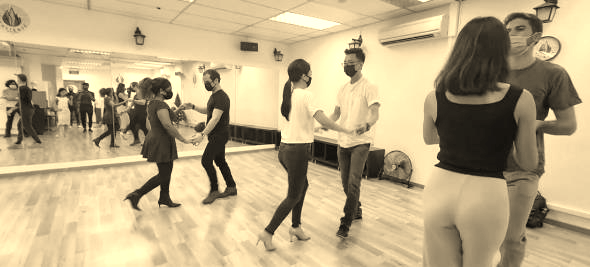
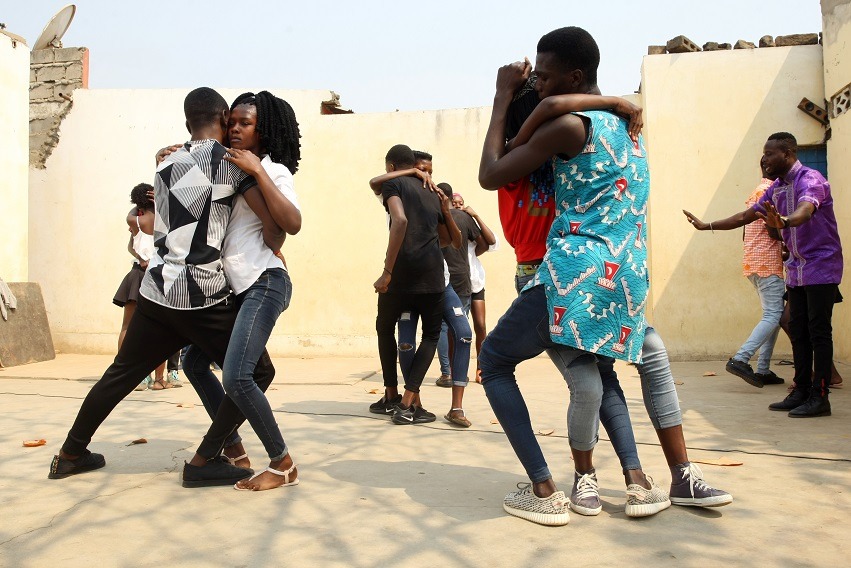
Kizomba class photo
Kizomba class photo

It was then that certain traditional dances of the African country and one of them was semba, began mixing with other rhythms both from its country of origin and other cultures after Africa was colonized by Europe in the 14th century. It is from there that a fusion of rhythms begins in which partner dancing takes center stage.

However, the old continent did not do all the work. Argentina and Cuba also played an essential role in the form in which semba must be danced.

In Portugal, the word Kizomba has its origin in all musical rhythms that derive from zouk, with which it is often constantly confused. It is a type of dancing laden with great sensuality and highly contagious that has become very popular with the passage of time, particularly in countries such as the United States, Canada, France, Spain, Poland, Belgium, Denmark, among others. Many Latin Americans consider that this is a breath of fresh air because it does not seem like anything they previously knew in terms of dance.

One of the reasons that it became so famous around the world is that this dance is very easy to learn due to its softness and simple dance steps. If you want to learn to dance, kizomba is a very good option to begin with.

Kizomba lets the couple play the music they dance. The more intimate the members of the couple, the more likely that the dance will be much more sensual and there will be much more complicity between men and women who enjoy this pleasure.

How kizomba originated

As we have said previously, kizomba has its origin in Angola, which was a colony of Portugal in the mid-1970s. With the arrival of Cuban military personnel, certain rhythms came from the Caribbean island that started to be used by various Angolan artists for their musical projects. The result was a fabulous mix of fast local rhythms with much slower, romantic and partially synthetic sounds.

The resulting genre was danced with semba and merenque, which made it known as kizombadas and, subsequently, kizomba.

By the 90’s, the word kizomba started to be used in Portugal to refer to all African rhythms danced in the nightspots of the most important cities in the European country. With the passage of time, the term would be used to refer to the musical genre and many other sub-genres with which it shares history.

Once this type of dance began to take hold in the rest of Europe, it was in France where all these rhythms that resemble one another started to be called kizomba, leading to the controversy over whether it and soft zouk are the same. Given that on certain islands belonging to France they were the cradle of zouk, it can be assumed that this has kindled heated debate even further still.

At the beginning, kizomba was only able to spread throughout the African continent, but migration allowed it to reach Europe and America respectively where a lot of passionate dance groups of this genre began to appear. The number of followers accumulated by this genre in countries such as Portugal, France or Spain was very huge.

Currently, there are a number of exponents of this kind of music that became famous worldwide such as Nelson Freitas, Djodje, Anselmo Ralph, Matias Damasio, among many others.

Kizomba dancer in Europe
Kizomba dancer in Europe – Origins

Kizomba in Europe

It is incredible the number of places where you can enjoy this spectacular dance. One of them is the world famous Eiffel Tower, where there are many options to learn or improve the dance steps. In France, the genre has been very popular, so much so that many places for dancing celebrate exclusive kizomba nights known as kizomba soirées by the locals. Considering the major African influence on this dance, those wishing to find out more will be able to enjoy a wonderful mix of dance styles and cultures that will leave no one indifferent.

In these places, you can share with a very impressive amount of tourists and foreigners from around the world. This contributes enormously to linkages and friendships between people of other cultures and other ways of seeing the world, which may be very rewarding from all points of view.

In the case of Lisbon, Portugal, it can be said that this is another place that every lover of kizomba in Europe should visit. Besides being a city that receives all its visitors with genuine hospitality, the dancing and music are ever-present. Among the many places you can go to enjoy the dance, it is important to mention the Estudio Sabor & Dança dance studio, the Academy World Dance and the Kizomba Power Dance School.

Kizomba class in Europe

Regarding Barcelona, Spain, what can be said is that this is one of the best European cities for dancing as there is a gigantic variety of musical styles that can be found there. There are always parties and events worth attending. One of those dances that can be found in the city’s nightlife is kizomba that has gained popularity in recent years.

Latin music events and festivals were based on salsa and bachata, but kizomba has completely changed that reality. Today, it is very common to find festivals and congresses dedicated exclusively to this dance and its most loyal lovers. If you want to learn to dance this genre, there are a number of schools and workshops that could be very useful such as Así se Baila, Seven Dance and Baila Barcelona.

Kizomba in Latin America

Many people who do not know the origin of the kizomba think that it originated in Latin America due to its type of dancing, but the fact is that this dance was not even known in most countries of the continent. In fact, its main boom started relatively recently in some places such as Colombia, where it began to be known not long ago. In that country, there are currently academies and teachers who are dedicated exclusively to this musical style, which has started to happen in other Latin nations.

In Venezuela, it is said that it has been danced for more than 10 years, but it began to be known a short while ago thanks to some videos on the major social networks after it became famous in Europe. The pioneers of this practice were a certain number of instructors born in the Caribbean country after being trained in Brazil. Following this, kizomba was the subject of a great deal of interest in many young Venezuelans who want to learn to dance it. There are not many records on places to dance where this genre may be found, but there is no doubt that soon it will be like this.

Kizomba dancer in Europe

Kizomba in Asia

There are many events and congresses linked to kizomba in Asia, which have a great influx of visitors, even when it is commonly believed that Asians are not fans of this type of rhythm. Experience with congresses of the last years has given the impression that this is not true. In fact, there are many fans of this rhythm from the continent who want to know all events and competitions details that are carried out in their countries for the coming months.

Japan is one of the nations where this type of event can be found the most. Such is the case of the Japan Kizomba Festival that has been going on in the country for many years due to the high level of attendance of visitors.

Video: https://www.youtube.com/watch?v=6WOVBNULkYc


Domi Dance, A New Brand for Dance Comes to New York

North America / United States / New York

Domi Dance a brand of dance products, designed by ex-dancers for dancers.

Domi Dance; the city of New York saw the birth in 2019 of a new brand of products for the dance world, a brand that seeks to reach all corners where music, rhythm and dance can be presented.

From the hand of Dorelys Rodriguez, a former dancer who Since she was 7 years old, she has evidenced the world of dance, going from ballet, flamenco, salsa among other genres, I always dream of achieving many things in the world of dance, hence it will never be possible to separate from this beautiful discipline.

In her professional studies and work experience in the world of Marketing, she was able to devise a proposal that would marry her great passions, her line of work in the world of sales and her passion for dance, from which DomiDance emerged.

In the United States, Dorelys saw the opportunity to exploit her abilities to create a brand, a product, an object that would give her a new entrepreneurial and business life, without forgetting the main point of her idea, to be what the dancer needs, to reach your punctual needs with a range of high quality products at affordable prices for everyone, from the professional to the beginner who ventures into any discipline of this art.

Domi Dance since 2019 managed to position itself in many of the corners of the dance, starting with its first product presented the openwork stockings, little by little it developed innovative strategies to enter the commercial game, facing large established brands in the American market, it was able to enter through of online sales, a channel that allowed it to reach many people due to the boom in purchases through the web.

The brand claims to present its products under a line of first-class raw materials, quality is the main object in its line, they seek to offer quality above any point, customers can be sure of acquiring an object that will not be easy to beat.

When it comes to bringing it to life on the stage and in the dance halls, Dorelys tells us ¨we do not want a dancer to be under pressure not to sit on the floor for fear of breaking the stocking or shoes on difficult floors, we do not sell products Unbreakable but difficult to beat¨.

Logo Domi Dance
Logo Domi Dance

Domi dance is not a sales space for other products, they are manufacturers, they are exclusive when designing products for their brand, they generate new ideas based on the direct experience of the dancer, they are concerned with investigating the experiences lived with the use of clothing and footwear in the scene, an element that drives them as a brand concerned with giving the artist what he needs.

To date, it has a top-level range of textiles, ballet shoes, urban clothing and much more, all aimed at meeting needs in many disciplines. They continue betting on their sales framework through digital platforms such as Amazon, Ebay, social networks such as Instagram, Facebook, among others.

They have already developed a point of sale for Latin America, established trade in Panama, Colombia, Argentina, Venezuela and heading to other latitudes.

For this 2020, the projects are focused on designing footwear for flamenco, tap, expanding its textile line in leotards and garments of greater demand, working with masculine elements and continuing to advance in its expansion project throughout America and Europe. Follow them on their social networks through @domi.dance.


By Jose Perez, ISM Correspondent, Caracas, Venezuela


Did you know that more than 60 personalities and artists come together in the Puerto Rican Virtual Parade

North America/ Puerto Rico / Puerto Rico

The fervor and love for Puerto Rico have overflowed in the call for the first Puerto Rican Virtual Parade with the aim of not interrupting a 62-year tradition of the great party that is celebrated in New York City.

Puerto Rican Virtual
Puerto Rican Virtual 2020

Dedicated to the great master of the timbal Tito Puente, a large number of personalities of the stature of Hollywood actors Edward James Olmos, who launched a phrase that will last for history, saying present “I was not born in Puerto Rico, Puerto Rico was born in me”.

Olmos was also joined by the popular and versatile actor Luis Guzmán, Rodrigo Massa, Juan Pablo Di Pace, Luis Ramos from the Power series and Delilah Cotto from Empire and Hulk, as well as Puerto Rican Major League Baseball player Yadier Molina who will present her daughter Ari D and directors José Javi Ferrer and Virginia Romero, the popular Super Yadira, Vanessa de Roide, Top Model Monique Alexandra and many more.

This year three kings said yes to their people, the Queen of Reggaeton Ivy Queen, who also started the urban movement La Leyenda Vico C and the King of Hearts, Manny Manuel.

Also present at this important event will be the group MDO, the artists Baby Rasta and Gringo, Melina León, Tito Nieves, Daniela Droz, Giselle, Víctor Santiago, Javyy L’amour, Spanish Harlem Orchestra, Lalo Rodríguez, The Martínez Brothers, Tito Puente Jr., Tito Rojas, Julio Sanabria, Luis Damon, Hip Hop Jibarito, Grizelle “La Chichi” del Valle, DJ NEGRO, DJ Playero and Michael Stuart.

Among the invited international artists are Soleil from Argentina, Toño Rosario, Fulanito, Yolanda Duke and Proyecto Uno from the Dominican Republic, the Salsa Institution, Adolescents from Venezuela and Ms. Dayana from Cuba.

Darma Diaz, councilor of the 37th district of New York City, stated that she was pleasantly surprised by the response of the artists, the media and the general public, “which represents one more demonstration of what Puerto Rican Pride is and how capable we are of rise up in the face of adversity”.

The Puerto Rican Virtual Parade will be broadcast through the Vivalivetv application on channel 1 “it will be totally free as a way to globalize this project and that wherever there is a Puerto Rican in the world or a Latino, they can enjoy this party” said Jhon Sepúlveda Vice President of Vivalivetv operations.

The artistic production of this event is in charge of the company Miami Talents and the editing and post-production in charge of the three-time winner of the Sovereign Award in the Dominican Republic, Hugo Oscar Chávez Baldera.

Website: https://paradavirtualpr.com/

Press contacts

Puerto Rico:

Jeanette Delgado

+1 787.645.0966

  • « Go to Previous Page
  • Page 1
  • Interim pages omitted …
  • Page 16
  • Page 17
  • Page 18
  • Page 19
  • Page 20
  • Interim pages omitted …
  • Page 27
  • Go to Next Page »

International Salsa Magazine (ISM) is a monthly publication about Salsa activities around the world, that has been publishing since 2007. It is a world network of volunteers coordinated by ISM Magazine. We are working to strengthen all the events by working together.