• Skip to primary navigation
  • Skip to main content

International Salsa Magazine

  • HOME
  • Previous editions
    • 2026
      • ISM / March 2026
      • ISM / February 2026
      • ISM / January 2026
    • 2025
      • ISM / December 2025
      • ISM / November 2025
      • ISM / October 2025
      • ISM / September 2025
      • ISM / August 2025
      • ISM / July 2025
      • ISM / June 2025
      • ISM / May2025
      • ISM / April 2025
      • ISM / March 2025
      • ISM / February 2025
      • ISM / January 2025
    • 2024
      • ISM / December 2024
      • ISM / November 2024
      • ISM / October 2024
      • ISM / September 2024
      • ISM / August 2024
      • ISM / July 2024
      • ISM / June 2024
      • ISM / May 2024
      • ISM / April 2024
      • ISM / March 2024
      • ISM / February 2024
      • ISM / January 2024
    • 2023
      • ISM / December 2023
      • ISM / November 2023
      • ISM / October 2023
      • ISM – September 2023
      • ISM – August 2023
      • ISM July 2023
      • ISM Edition June 2023
      • ISM – May 2023
      • ISM April 2023
      • ISM March 2023
      • ISM February 2023
      • ISM January 2023
    • 2022
      • ISM December 2022
      • ISM November 2022
      • ISM October 2022
      • ISM September 2022
      • ISM August 2022
      • ISM July 2022
      • ISM June 2022
      • ISM May 2022
      • ISM February 2022
      • ISM January 2022
    • 2021
      • ISM December 2021
      • ISM November 2021
      • ISM October – 2021
      • ISM September 2021
      • ISM August 2021
      • ISM July 2021
      • ISM May 2021
      • ISM April 2021
      • ISM June 2021
      • ISM March 2021
      • ISM February 2021
      • ISM January 2021
    • 2020
      • ISM December 2020
      • ISM November 2020
      • ISM October 2020
      • ISM September 2020
      • ISM August 2020
      • ISM July 2020
      • ISM June 2020
      • ISM May 2020
      • ISM April 2020
      • ISM March 2020
      • ISM February 2020
      • ISM January 2020
    • 2019
      • ISM December 2019
      • ISM November 2019
      • ISM October 2019
      • ISM Septembre 2019
      • ISM August 2019
      • ISM July 2019
      • ISM June 2019
  • Download Salsa App
    • Android
    • Apple
  • Spanish

Search Results for: Bar

Adalberto Santiago celebrates his 70th Anniversary next March

In this space, we have always worked to pay tribute to the greatest salsa legends and we consider it important that these luminaries feel the love of the public in life. That is why we want to pay homage to the man who has been a great pillar of Puerto Rican salsa as we know today. We are talking about the great singer from Ciales, Adalberto Santiago, who is celebrating the 70th anniversary of his artistic career. Here is a summary of his brilliant career.
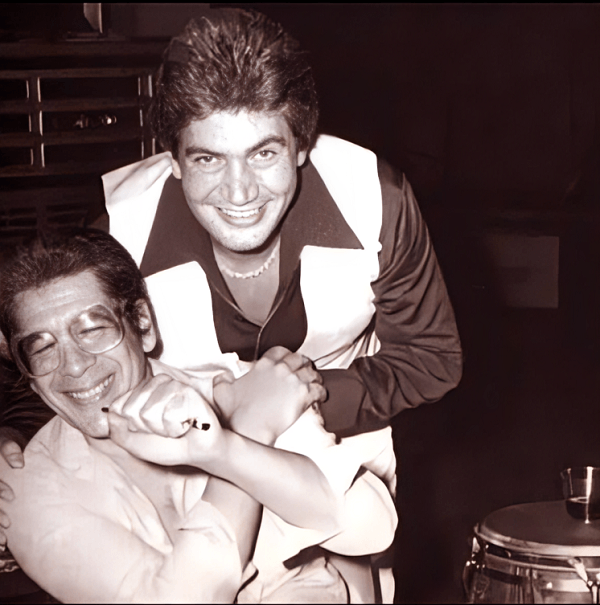
Adalberto and Ray
Adalberto Santiago and Ray Barretto in the 1960s

Adalberto’s beginnings in music

The sonero began his career by participating in trios, which he accompanied with his voice, guitar, bass and even his dance moves. This was something very few artists did at the time, which is why this young man drew a lot of attention at that time. 

He got to play with Chuíto Vélez and Willie Rosario, but his career really took off when he was given a chance to join the orchestra of Ray Barreto, which is when he managed to internationalize thanks to several albums that continue to be chanted by salsa fans until today such as ‘’Acid’’ or ‘’Rican Struction’’. Then, together with several members of this orchestra, he founded La Tipica 73, which revived Cuban son. 

Adalberto as an established artist

In the 1980s, he became part of the orchestra of Roberto Roena and got to perform famous songs such as ‘’Yo tenía una mujer’’. He is also known for co-producing the album ‘’Calidad’’ with his compatriot Papo Lucca, who arranged one of the tracks and was responsible for all the musical direction.

Some time later, he made a new version of the famous album ‘’Sex Symbol’’, becoming successful in countries such as Colombia, Peru and Venezuela. For this recording, the artist had the support of Isidro Infante in the area of production and arrangements. This is considered one of the most legendary musical works of the singer’s extensive career, to the point that many salseros around the world remember it fondly. 

Adalberto posing
Adalberto Santiago posing for the camera

During all these years, Adalberto has been the author of a great number of songs for many world-famous albums in which he has participated, either as a bandleader or lead singer. Despite the worldwide fame he has achieved, he always maintains loyalty for his Latin roots and, in his own words, the structure of Latin music is the most appropriate for his voice and singing style. 

In addition to that, the artist has always had the capability and experience to move through many Latin genres such as salsa, merengue, pachanga, cumbia, bomba, plena, boogaloo, guaracha, pachanga, among many others. 

He has always tried to maintain his physical and vocal discipline to continue giving the best of himself to his audience despite the years.

Celebrating his anniversary

As we said at the beginning, the great Adalberto Santiago is about to celebrate his 70th anniversary as an artist, an event that of course is to be celebrated big.

As a way of celebrating and thanking his public for all the support he has received, the singer has decided to hold a concert at the Lehman University of Performing Arts in New York City, more specifically in the Bronx, on Saturday, March 22 at 8PM. 

His fans have remained loyal all this time, so we have no doubt that he and his special guests will make everyone dance, making this event an unforgettable evening.

Read also: Milonga’s contribution to Latin music in general

Johnny Cru ISM corresponde in New York City

Saxophonist and flutist Dave Victorino talks to International Salsa Magazine

Dave Victorino is a saxophonist and flutist who plays various Latin genres such as salsa, Latin jazz and swing in the city of Los Angeles, California. The American musician has been kind enough to talk exclusively with International Salsa Magazine about various topics, including his beginnings, current career and existing projects. We hope that our esteemed readers will like the details of this conversation. 

Saxophonist Dave
This is saxophonist and flutist Dave Victorino

Young Dave’s beginnings in music

Dave recalls that his taste in music led one of his cousins to give him a flute so that he could start playing an instrument and see what happened. However, over time, the young man preferred the saxophone, which he found he liked much more at the time. He reckons that his interest in music began when he was just a 12 or 13-yeard-old.

His interest in the saxophone began with a friend of his mother’s who was a teacher of that instrument, so he was the first to teach him how to play it properly and, even after so many years gone by, he continues to remember everything he learned with him. 

Education

Dave graduated with a degree in music education from Cal State Los Angeles and assured us that one of his greatest mentors there was saxophonist Barney Martinez, a very important figure in Latin jazz at the time. This was a time of great learning for what was to come professionally, and that knowledge continues to help him a lot. 

He also studied with other important music teachers and professors who complemented his musical training almost perfectly. 

What has Dave learned from his greatest collaborations?

Throughout his career, Dave has collaborated with groups such as The Henry Mora Big Band, Temptations, Al Viola, Fred Ramirez, Little Anthony and The Imperials and many others. Obviously, all these personalities have had something important to teach the musician when sharing the stage with him.

Dave refers to Henry Mora as one of his greatest mentors in this whole process, as he had much more experience than the artist, so he had a lot to learn and imitate from him. 

Each professional experience is one more step on the road to excellence that Dave and any artist looks for in his work, which is achieved through practice and spending time with more experienced teachers.

Dave playing
Dave Victorino playing the saxophone live

Great inspirations

When we wanted to know Dave’s greatest inspirations, he could not help but first mention the group El Chicano, with which he played in the early 1980s. One of its founding members and singer Bobby Espinosa, who showed him some recordings of the Fania All Stars and Johnny Pacheco while playing one of the best solos Dave had ever seen. In fact, the artist considers Pacheco his favorite flutist from the very moment he first heard him. 

He also commented that he really likes the way Stan Getz, a Californian saxophonist whose main genres were jazz and pop, played.

How his love for Latin music was born

Dave’s first contact with Latin music was with the group El Chicano, but then came other groups that playing genres that caught his attention.

For several years in the 1980’s and 1990’s, he played in a park three times a week and, on those same days, a DJ would play music by Johnny Pacheco himself, El Gran Combo de Puerto Rico and other salsa groups. He became so fascinated with everything he heard that, little by little, he began to transform his repertoire into one that also included salsa and Latin jazz.

Initially, he only cared about playing this music without understanding the lyrics, but then he began studying and learning a little Spanish to get a better performance in his work. However, he assures that this detail has never posed a problem or a limitation to get good performances in Latin music.

Dave and Barbara
Dave Victorino playing with singer Barbara Reed

Music Classes

Another interesting thing about Dave is teaching. He currently teaches saxophone, flute, clarinet and piano to a good number of students, who have taught him the virtue of patience and determination to always learn something new.

His students are of different ages and he teaches various levels.

Dave and Anthony
Dave Victorino playing with saxophonist Anthony Gil

También lee: Eddie Muñíz continues to head Swing Sabroso

Federico Betancourt “Pioneer of Salsa in Venezuela”

Latin America / Venezuela / Carabobo

Jesús Federico Betancourt was born in the city of Valencia, Carabobo state, on March 22, 1940. He was always attracted to music from a very young age.

Photo of Federico Betancourt on stage

In his adolescence, he liked Cuban rhythms, being influenced by Sonora Matancera, Mon Rivera, Eddie Palmieri and Joe Cotto. Before entering the entertainment world, he works at the Bank of Venezuela.

He affirms that he has not carried out formal studies at the musical level, learning the necessary theory to be able to perform as an orchestra conductor, but without interest in interpreting any instrument, but with a well-tuned ear, which has allowed him to remain in the music business for decades. , in fact on certain occasions he is named as the King of the Güiro.

Photo by Federico Betancourt

His career began when he entered the Los Selectos Orchestra, where they played songs by the Billos Caracas Boy’s and the Los Melodicos Orchestra, which were at their peak in the 1960s, all this in a particular way, said Orchestra did not go beyond that.

In 1965, Federico Betancourt decides to satisfy his artistic restlessness and founds a band called Federico y su Combo Latino. The members that made up this band were chosen from among the founder and together with Roberto Monserrat.

But it was not until the middle of 1966, when the twenty-six (26) year old undertook the recording of the LP that would make him famous forever. This record production entitled LLEGO LA SALSA, would mark an important stage in Venezuelan Salsa, because it was the first LP that made use of the word SALSA in the country.

Federico Betancourt
Federico Betancourt

Federico Betancourt himself recounts that the Venezuelan announcer Phidias Danilo Escalona had a Radio Program called LA HORA DE LA SALSA, EL SABOR Y EL BEMBÉ, where all the Cuban and Puerto Rican Caribbean rhythms that were fashionable at the time were placed, among those who highlighted La Sonora Matancera with Celia Cruz, Tito Puente, Joe Cuba, Tito Rodríguez among others, and who was the one who supported them the most in terms of recording the album.

The production was recorded under the Palacio label, and the LP was titled LLEGÓ LA SALSA, he affirms that the title was chosen without taking into account the importance that it would revert in the future, he also affirms that it was not the name that gave him success , the album was a “bump” in sales, since all the songs were the most requested at the time, using his words: “The album sold like hot cakes”.

The music lovers of the time requested it on specialized sites such as the LA SALSA album. Federico says: “The father of the word SALSA was Phidias Danilo Escalona, ​​he used it for the first time in his radio program, and I, humbly, with the success of my LP, gave him the push for its mass use.”

Federico Betancourt - Photo
Federico Betancourt – Photo

In Venezuela, the word SALSA was welcomed by the public willingly, since it suggested a mixture of flavors, which was exactly what happened in the Phidias program, but at the level of rhythms. After the appearance of Federico’s album, all the shows that were performed at the level of Caribbean and Cuban rhythms, carried the name of SALSA.

It is important to name the musicians who took part in this historic production: The musicians are: Ali Rojas Bongo and Cencerro, Roberto Monserrat Music Director and Timbal, Pedro Medina Congas, Alfredo Arcas Trombone, César Pinto Trumpet, Enrique Iriarte Piano, Rafael Prado Bass, Carlín Rodríguez Singer and maracas, Dimas Pedroza Singer, Federico Betancourt Güiro and Director of the Orchestra. The musical arrangements were by the famous trumpeter Eduvigis Carrillo (RIP). Production themes:

Llego la Salsa CD - Federico su Combo Latino
Llego la Salsa CD – Federico su Combo Latino
1.- Cocolía

2.- Conmigo
3.- El Pachanguero

4.- Sancocho Caliente
5.- Guaguancó Manía

6.- Celosa

7.- Despierta Rumbero

8.- No Critiquen
9.- Saoco

10.- Baila Yemaya
11.- Café Y Pan

12.- Que Me Querías

After the success obtained with the record work, the time came for the first international outing, which was to Colombia, in 1969. It happened because the singer of Los Melodicos, Víctor Piñero, informed Betancourt that he was stuck in Cartagena and Barranquilla with the themes El Cobrador and Federico Boogaloo. After the information, the young musician went to the neighboring country and got a contract for the famous Reina del Mar parties, in Cartagena, on November 11, 1969.

The experience of the band was so good, that in 1970 they returned to visit the country. From then until our days Federico y su Combo continues to be an emblematic and legendary band in Venezuela, for this reason the WEB of the classy salsero SALSA BRAVA, offers its respects to such an important salsa figure.

Discography
1966 Llegó La Salsa Palacio (LPS-6171)
1966 Salsa y Sabor Palacio (LPS-6185)
1967 Más Salsa Palacio (LPS-6205)
1967 Durísimo – Vol. 4 Palacio (LPS-6216)
1968 Federico Boogaloo Palacio (LPS-6228)
1968 Psicodélico Con Salsa Gilmar (LPG-110)
1969 Mejor Que Nunca Gilmar (LPG-111)
1969 Vibración y Ritmo Sonus (102-17080)
1970 Dos Sets Velvet (LPV-1539)
1970 La Machaca Velvet (LPV-1539)
1973 Federico Si Te Pone A Bailar Palacio (LPS-6332)
1975 Derrape De Salsa BASF (10.068)
1976 Siguelo Ahí…. a Lo Cortico BASF (10.070)
1977 Ayer y Hoy BASF (10.076)
1977 Esto Es Lo Mejor Palacio (LPS-6372)
1978 Mis Exitos y Más BASF (10.079)
1978 Sabor Foca (LPF-10.037)
1979 Federico y Su Combo Foca (LPF-10.120)
1979 Federico y Su Orq. – El Maestro Discomoda (DCM-1128)
1980 Federico y Su Orq. con Memo Morales Discomoda (DCM-1148)
1982 No Le Digan Integra (PF-14.075)
1983 Nuevamente Palacio (LPS-66.541)
1984 SaaaBroooSo! Palacio (LPS-66.552)
Compilation
1996 Mis Exitos y Más…Vol.1 Sonograma
1996 Mis Exitos y Más…Vol.2 Sonograma
1996 Mis Exitos y Más…Vol.3 Sonograma
2005 El Pionero De La Salsa Palacio
2008 Salsa De Oro Gilmar


Pirisalsa Orchestra

Latin America / Venezuela / Falcon

The music is the result of the creation of a rhythm that tries to convey a message that the artists give to their audience and depending on the voice, the lyrics, the instruments and above all the desire to transmit that feeling, they make people want to listen to it and dance to it.

Pirisalsa Orchestra
Pirisalsa Orchestra

The Orchestras became known for being dynamic groups, creators of rhythms and party entertainers; something that cannot be replaced by a DJ or digital music, since recorded music and live music are two different things.

In the state of Falcón, Venezuela, there is the Grupo Piritu, who make up the Pirisalsa Orchestra, they are a group of talented young people who, despite their young ages, know how to transmit the flavor of Salsa to their audience.

Members of the Pirisalsa Orchestra

They emerged and were educated in schools and through the selection of the most outstanding children in music, they gradually gave rise to the orchestra, being a pleasant and rhythmic sound to the audience to date, not to mention that it is a group with many followers full of dreams and musical desires. They mention that “since our first presentation on October 19, 2011 to date we have not stopped working…”.

Pirisalsa Orchestra with Augusto Felibert - Asocosalsa
Pirisalsa Orchestra with Augusto Felibertt – Asocosalsa

Currently his manager is Frank Molina, he says:

“That as a manager whenever he discovers a rough diamond project what he wants is to make it shine to achieve and achieve the dreams of each member and turns it into a single dream, because the Pirisalsa orchestra is a family. …the goal is to ensure that our work is recognized both nationally and internationally, I have been working for some time now, spreading this project on radio, television and social networks, we also have the support of many artists who believe in this Project. These young people are admirable because at their young ages they decided on this genre that is SALSA”.

Franky Frorentino - Pirisalsa
Franky Frorentino – Pirisalsa

The Pirisalsa Orchestra plays SALSA, with a smooth style in its message and melody, despite the fact that the rhythm is very lively, thanks to the percussion instruments, showing us and maintaining its Latin, Afro-descendant, and Caribbean roots in its music.

Photo by Franky Frorentino

They have had the opportunity to participate in several important events in Venezuela, such as the PDVSA Salsa Festival held in La Estancia, Caracas in two editions, where they managed to share with great bastions of this genre throughout Venezuela, especially in Caracas, there were also a Festival in Maracay, Aragua and recently at the Whatuyusei Festival in Punto Fijo, Falcón, where they shared with artists such as Omar Enrique, la Melodía Perfecta, Gustavo Eli, los Bois Servando and Florentino, among others.

Franky Frorentino
Franky Frorentino

However, their goal and desire is to take their music throughout Venezuela and abroad so that the whole world can listen to them, appreciate their talent and be able to project themselves as an orchestra, since when they are on stage in a presentation they sing full of a feeling of love but that is with great elegance, with a fresh, tender language, full of emotion and kindness, but always transmitting his deep love for his homeland Venezuela.

The members of the orchestra are mostly young people and children from the town of Piritu, Falcón, dividing into:

Pirisalsa Orchestra
Pirisalsa Orchestra
●      Evannys Lorves – Vocalist ●      Daniel Peña – Hand Bell
●      José Amundarai – Vocalist ●      Bongo Wullian Álvarez – Piano
●      Yerli Lugo – Vocalist ●      Javier Gómez bajo eléctrico
●      José Daniel  Lugo – Timbal ●      David Gómez (director musical) – trombón
●      Reinaldo Pérez – Congas ●      Reinaldo Antonio Pérez – Trumpet
●      Navarro trompeta y Luis Navarro – Trombón

The Pirisalsa Orchestra and its Manager Frank Colina gave a message to all the new talents, which goes like this “if you have a musical dream, don’t let difficulties stop your path, believe in your virtues, try to be yourself, don’t copy nobody, be original, offer your own proposal and believe deeply in it, don’t stop no matter how hard the circumstances are, fight relentlessly until you break down the barriers and achieve your goals. He who perseveres achieves.”

Pirisalsa - CDs
Pirisalsa – CDs

For more information Pirisalsa Orchestra:

  • Facebook: @frank.colina
  • Instagram: @managerpirisalsa
  • Twitter: @pirisalsamanage
  • Phone: +(58) 4168076199 / +(58) 4168044073


Eduardo Herrera

Latin America / Puerto Rico / Puerto Rico

Puerto Rican singer Eduardo Herrera presents us with his new album “Libre” which will have 10 songs, one of them has the same title as the album, which aroused our curiosity. He mentions that his song “Libre” deals with a false love that destroys and manipulates at his convenience, his process of liberation from all that is bad or toxic in that love and, above all, the search for a force to have the courage to face everything and so on. being able to value yourself as a person and being able to look at yourself in the mirror.

Eduardo Herrera tells us that “it is not just a song, it is a way to get out of a prison, of the emotional and physical abuse that you can receive from a person who supposedly loves you… for me it has a lot of meaning, I sing it with great emotion because I lived it I got over it and now I’m free.”

The origin of the album was thanks not only to the singer but also to the good musicians who accompanied him, designed and finished him, among them the arrangers Richard Marcell (piano and bass) and Adán Pérez (piano), Tito de Gracia on percussion, Juan Carlos Cardona (Juako) with Trombones, Jesús Alonzo with Trumpet, Ángel Torres with Baritone.

Eduardo Herrera
Eduardo Herrera

Eduardo Herrera says that since he was a child he has sung in different choirs as he mentioned in the previous report, but from the age of 11 he fell in love with tropical music thanks to Jerry Rivera with the song “Casi un Hechizo” becoming addicted or passionate about the sound of the trumpets the congas and the romantic songs. After the separation of his partner, he began to write his own songs, and later he met a first-class musician named Adán Pérez, a great pianist and arranger; together they met to write and create the current themes of the discography.

He (Eduardo Herrera) also told us that he was in a choir called the Housing Authority Youth Choir, where he had many pleasant experiences and the opportunity to sing at Radio City Music Hall with the British Rock Symphony. In 2016 he produced an album of sacred music and had the honor of meeting Richard Marcell, winner of several Grammys as an arranger and musician, in that production he made 5 excellent songs.

The discography “Libre” has themes that speak of pain, love and the hope of a new beginning for the artist, that is, it is a production with a great variety of lyrics, he confesses that each song is its own story, it has its own identity and hopes that the salsa audience enjoys his work to the fullest since he left his whole being in that production.

In order for the professional life of an artist to be recognized, the greatest obstacle must be avoided, which is oneself, limiting oneself, being afraid; always says: to all my brothers or sisters who are starting something or have a goal in life, don’t give up, fight for your dreams

For more information:

  • Phone: +1 787 399 5064
  • Email: [email protected] / [email protected]
  • Facebook: https://www.facebook.com/eduardoherrerasalsa/
  • Instagram: https://www.instagram.com/eduardoherrerasalsa/
  • YouTube: https://www.youtube.com/user/eduardoherreramusic
  • « Go to Previous Page
  • Page 1
  • Interim pages omitted …
  • Page 39
  • Page 40
  • Page 41
  • Page 42
  • Page 43
  • Interim pages omitted …
  • Page 165
  • Go to Next Page »

International Salsa Magazine (ISM) is a monthly publication about Salsa activities around the world, that has been publishing since 2007. It is a world network of volunteers coordinated by ISM Magazine. We are working to strengthen all the events by working together.