• Skip to primary navigation
  • Skip to main content

International Salsa Magazine

  • HOME
  • Previous editions
    • 2026
      • ISM / March 2026
      • ISM / February 2026
      • ISM / January 2026
    • 2025
      • ISM / December 2025
      • ISM / November 2025
      • ISM / October 2025
      • ISM / September 2025
      • ISM / August 2025
      • ISM / July 2025
      • ISM / June 2025
      • ISM / May2025
      • ISM / April 2025
      • ISM / March 2025
      • ISM / February 2025
      • ISM / January 2025
    • 2024
      • ISM / December 2024
      • ISM / November 2024
      • ISM / October 2024
      • ISM / September 2024
      • ISM / August 2024
      • ISM / July 2024
      • ISM / June 2024
      • ISM / May 2024
      • ISM / April 2024
      • ISM / March 2024
      • ISM / February 2024
      • ISM / January 2024
    • 2023
      • ISM / December 2023
      • ISM / November 2023
      • ISM / October 2023
      • ISM – September 2023
      • ISM – August 2023
      • ISM July 2023
      • ISM Edition June 2023
      • ISM – May 2023
      • ISM April 2023
      • ISM March 2023
      • ISM February 2023
      • ISM January 2023
    • 2022
      • ISM December 2022
      • ISM November 2022
      • ISM October 2022
      • ISM September 2022
      • ISM August 2022
      • ISM July 2022
      • ISM June 2022
      • ISM May 2022
      • ISM February 2022
      • ISM January 2022
    • 2021
      • ISM December 2021
      • ISM November 2021
      • ISM October – 2021
      • ISM September 2021
      • ISM August 2021
      • ISM July 2021
      • ISM May 2021
      • ISM April 2021
      • ISM June 2021
      • ISM March 2021
      • ISM February 2021
      • ISM January 2021
    • 2020
      • ISM December 2020
      • ISM November 2020
      • ISM October 2020
      • ISM September 2020
      • ISM August 2020
      • ISM July 2020
      • ISM June 2020
      • ISM May 2020
      • ISM April 2020
      • ISM March 2020
      • ISM February 2020
      • ISM January 2020
    • 2019
      • ISM December 2019
      • ISM November 2019
      • ISM October 2019
      • ISM Septembre 2019
      • ISM August 2019
      • ISM July 2019
      • ISM June 2019
  • Download Salsa App
    • Android
    • Apple
  • Spanish

Search Results for: Bar

Tribute to Johnny “Dandy” Rodríguez Jr. His first recording was professionally with Tito Puente in 1964 and was titled “Exciting Rhythm of Tito Puente”

Johnny “Dandy” Rodriguez, (September 11, 1945, United States August 17, 2024) son of Johnny Rodriguez Sr. who was nicknamed “La Vaca”, remembered percussionist who was part of the orchestras of Tito Puente and Tito Rodriguez, among others; as we can deduce, music for Johnny Rodriguez is something clearly hereditary given that as a child he attended his father’s rehearsals and his mother was a dancer.

Johnny Dandy Rodriguez Foto By Miguel Martillo

To get an idea of ​​the musical family, let’s say that Johnny Rodriguez Sr. also took part in performances and recordings with musicians and singers of the stature of: Alfredito Levy, Joe Quijano, Jose Curbelo, Lou Perez Louie Ramirez, Machito, Miguelito Valdes, Noro Morales, Orlando Marin, Pete Terrace, Pupi Campo and Xavier Cugat.

The father’s enormous musical background was emulated in a great way with ample merits by the son.

Dandy Rodriguez grew up in Spanish Harlem in Manhattan, his home was very musical and when he was in high school he learned the details of percussion represented by the bongos, congas, timbales and drums. Influenced by his father he became interested in music and so in 1962 he joined the band of maestro Tito Puente.

His first professional recording was with Tito Puente and was titled Excitante Ritmo De Tito Puente; after this first album with Puente, “Dandy” Rodriguez began to deepen his musical studies listening and learning from leading musicians such as: José Mangual Senior bongosero from Machito, Rogelio “Yeyito” Iglesias bongosero from Cachao and Vitin Palacio bongosero from Johnny Segui.

He worked with the King of Timbales for more than three decades, initially in the sixties, more specifically from 1962 to 1972, then he rejoined Tito Puente’s band at the end of the seventies and was part of it practically until the death of the famous King of Timbales.

In the extensive career of our Johnny Rodriguez in music we must mention his internship with Joe Cuba’s orchestra, with whom “Dandy” Rodriguez himself says he participated in seven or eight albums since the mid-sixties; the first of them titled Joe Cuba Sextette – Comin’ At Yous; without forgetting to mention that in those albums the name of Johnny Rodriguez Jr. does not appear in the credits due to issues related to contracts with record companies.

His stay with Puente was not a limitation for him to be part of other musical groups, so he also worked for several years with another great of Latin music, the remembered Tito Rodríguez. He was also part of the band of the famous conguero Ray Barreto, replacing Tony Fuentes, and was one of the founders of the famous Típica 73 in 1972 and even took part in a couple of albums with Machito.

In the seventies, during the Salsa Boom, “Dandy” Rodriguez left his mark on recordings with: Jose “Cheo” Feliciano, Charlie Palmieri, Roberto Torres, Willie Rosario, Ismael Quintana, Celia Cruz & Johnny Pacheco, Louie Ramirez, Richie Ray & Bobby Cruz, Fania All Stars, Alfredo De La Fe, Conjunto Clásico, Henry Fiol and Tito Allen.

As we mentioned before, John Rodriguez returned to the band of maestro Tito Puente in 1978 and was part of the band until Ernesto Antonio Puente’s death in 2000 at the age of 77; he participated in this cycle in at least twenty musical works apart from a large number of concerts and performances on tours in different countries around the world.

During those two decades with Tito Puente he also worked with other musicians, singers and groups such as: Miguel Quintana, Roberto Torres, Charlie Rodriguez, Tito Allen, Alfredo De La Fe, Azuquita Y Su Melao, Charlie Palmieri, Celia Cruz & Johnny Pacheco, Paquito D’ Rivera, Raulin, The Bronx Horns and Angelo Vaillant.

Luisito Quintero, Johnny Rodriguez y George Delgado

During the first two decades of the new century, the musical work of maestro Johnny Rodriguez continued and his musical mark has remained in other publications with The Latin-Jazz Coalition, Frankie Morales, Eddie Palmieri, Gilberto Santa Rosa, George Delgado, Victor Manuelle, Rick Arroyo, Orestes Vilato, Mitch Frohman, Cita Rodriguez, Doug Beaver, Adalberto Santiago and Jeremy Bosch.

Also, special mention must be made of the participation of maestro Johnny Rodriguez with a group called The Latin Giants Of Jazz, in the best style of the classic Big Bands made up of great teachers, including some of the former members of maestro Tito Puente’s band; with this group they have published four albums; this project gave rise to another band called The Mambo Legends, who recorded the album entitled: Watch Out! Be careful!

John Rodriguez is without a doubt one of the most prolific percussionists in the world of Latin music called Salsa. The nickname “Dandy” dates back to his childhood when the car he was driven in was bought at a store or shop called “Dandy” and people said look how cute “Dandy” is and from there he stuck with that nickname. In music he is better known as Johnny instead of John.

In (the year 2022) the experienced Johnny Rodriguez had three or four groups with which he is playing, including Dandy Rodriguez and his Dream Team, while teaching percussion classes online.

He is one of the true legends of Latin music, not to mention that his talent has also been reflected in recordings for other musical genres such as: Electronic, Folk Rock, Folk, World & Country, Funk / Soul, Heavy Metal, Jazz, Stage & Screen, Jazz-Funk, Merengue and Pop.

Johnny Rodriguez y George Delgado

In his very extensive artistic career, maestro Johnny Rodríguez was part of historic and iconic recordings of our musical culture, some of these albums have been worthy of awards such as the Grammy Award, among which are:

Tribute to Beny Moré – Year 1978

On Broadway – Year 1983

El Rey: Tito Puente & His Latin Ensemble – Year 1984

Mambo Diablo – Year 1985

Goza Mi Timbal – Year 1990

Mambo Birdland – Year 1999

Masterpiece / Obra Maestra Tito Puente & Eddie Palmieri – Year 2000.

“In 2008, Johny entrusted LP’s Research and Development Department with the design of the John “Dandy” Rodriguez Jr. Legends Series bongos. John is proud that these drums, which bear his name, feature such outstanding sound and visual characteristics.”

Johnny Rodriguez’ “Dream Team”

Also Read: Jerry Ferrao says in salsa key: “My life is a drum”

Collaboration: Marino de Jesus (1588) from Salsa History from the Dominican Republic

Robert Tellez is undoubtedly “El más que sabe de salsa” (The one who knows the most about Salsa)

Recently, the second edition of the authorized biography of Míster Afinque, entitled Willie Rosario, El Rey del ritmo, was released. This work is authored by journalist and music researcher Robert Tellez M. The publication of this second edition of Willie Rosario, El Rey del ritmo came just in time to add to the centennial celebration of the musical leader, who has managed to keep his orchestra active and alive for more than six decades.

Photo by Sandro Sanchez Robert Tellez
Robert Tellez (Photo by Sandro Sanchez )

With this second edition, in alliance with our publishing house, the author was pleased with the treatment of the content and in his appreciation tells us: “This is a documentary work that exposes the different facets of the maestro Willie Rosario: the human being, the family man, the radio broadcaster and of course the leader of the “Banda que deleita””.

Fortunately, during the five years that followed the publication of the original text, maestro Willie Rosario has remained extremely active. In addition, since 2019, the orchestra leader has received several awards; so it was quite easy to collect data and photos that allowed us to expand the text with unpublished content.

As a journalist and researcher, Tellez affirms the importance of the text while clarifying: “This book is also a contribution to the preservation of the memory of salsa, a task that requires a rigorous, precise and responsible approach, ensuring adequate documentation for present and future generations. In my opinion, the work of building this memory is an inherent duty for communicators who are dedicated to disseminating this musical expression.”

Robert Téllez con Willie Rosario
Robert Téllez and Willie Rosario

Who is the biographer of Mister Afinque?

Labeled as “the one who knows the most about salsa”, Robert Téllez Moreno is a journalist.  Within journalism, he has excelled in different media.  He says he prefers his facet as a radio broadcaster, a branch in which he decided to specialize since he was a child.  However, Robert has also made a name for himself in the press and has ventured into television. Specifically, his interest in salsa music led him to be the biographer of Willie Rosario, his third literary work entitled Willie Rosario, el Rey del Ritmo (Willie Rosario, the King of Rhythm). His first literary publication was Ray Barretto, Fuerza Gigante and his second was Frankie Ruiz, Volver a nacer (co-authored with Felix Fojo).

A passion for salsa, but first a passion for the radio

Robert says that his first encounter with salsa was inexplicable.  It happened when he was a child by way of the Martínez family, some Caleños who moved in across the street from the Téllez Moreno home, located in a popular neighborhood.  In the mid-1980s, the Martinez family came to live in a neighborhood that did not accept them as noisy, because the Bogotá of that time was very conservative. Bogota belonged to the Bogotanos, and those who came from other parts of the country were in the minority. Robert’s mother went further and said that the Martínez were marihuaneros, not because she saw them smoking marijuana, but because she thought it was too noisy for the tranquility of the neighborhood before the arrival of the Caliños.  Téllez adds: “I was struck by the fact that since they arrived they had parties every weekend; Thursday, Friday and Saturday. There was music all night and they would wake up there. In reality, they were family parties.”.

“Uncles, nephews, cousins and brothers shared that taste for music there. The only thing you could hear was salsa at a time when salsa was not the prevailing thing in Bogotá. That sound attracted me.  That’s where I identify that my passion for this music began. Of course, first came a greater passion, which was the passion for the radio. I connected them very early in my childhood. I was attracted to what I heard. However, my brothers listened to Anglo American music. They heard other kinds of sounds. Break dancing was coming in, American music was invading us. Ballads were what my sister liked; the romanticism of Juan Gabriel, Camilo Sesto and all that kind of music. Vallenato was also listened to a lot, but the only thing that made an impact on me was salsa. As my love for salsa was born without explanation, but it arrived, I romantically say that salsa touched the window of my room, and I fell in love with it. It’s just that the room in the living room where those parties were held faced my bedroom window.”

Robert Téllez con Ismael Miranda
Robert Téllez and Ismael Miranda

A potential programmer

At just 7 years old, Robert began to understand the workings of radio as a means of communication and entertainment intuitively. He recalls how for as long as he can remember, he imitated the announcers of the moment, knew to tell the time; maintaining awareness of the time in relation to the songs in the order of radio programming. Sometimes he reasoned and concluded: “that song played a while ago and so he tried to understand everything that was happening on the radio”. However, that station did not play salsa; it played ballads, vallenatos, American music, and other genres. Of course, within the musical environment available, since he was a child he began to understand the style of the whole radio world and there he drew a line of programming. Later, when the Martinez family arrived in the neighborhood, Robert was able to connect the radio with salsa. However, he says, “I didn’t even have a record in my house to be able to have a reference. The arrival of the new neighbors coincided with the arrival of a Caracol FM station called Bienvenida Estéreo, the director was Rodrigo Salazar. Today I understand that Salazar began to program salsa in a city that was not salsa. But he came from Cali and tried to program the first salsa station in Bogotá, on FM”.

Robert Téllez con Willie Rosario
Robert Téllez and Willie Rosario

At just 8 years old, the precocious programmer had already won a radio contest that consisted of going to the station that sponsored the contest and doing voice-over, presenting songs and having the listeners select the winner. Robert does not remember which song he presented, but he does remember that he knew the station’s slogan, told the time, said his name and went to commercials. With the memory vivid in his mind, Robert adds, “I won because of the confidence I had. The other kids were shy. Many were silent on the air.”

In spite of his young age, with discipline and precision he remained engrossed by the radio, listening to it as if it were a mandatory activity. He knew all the programming, made programming spreadsheets and began to understand how the songs rotated and to memorize the songs that were played in the morning and later played at noon and then at night.

I began to understand everything and to compare different stations. Already with his critical thinking polished in the prediction of musical themes within the programming lineup, he began to participate in radio competitions in which they gave away records on a weekly basis and, “as that was what I wanted, to have records, then I became quite tired”. He continues his story, stating: “I think they already knew me there and I always guessed what the number one song of the week was. Since I had the program listings, it was easy for me”.  That’s how he got his first album: Salsa Fever, (1988, Gunda Merced y su Salsa Fever). But, he had nowhere to listen to it. He put it in his room, looked at it and read that the record had the song ‘La familia’ on it.  He went to a friend’s house to listen to it. After listening to it several times, he returned home and put it away again. Later, that LP gave him entry to the Martinez house, and established him as the DJ of the family parties; at first programming what they told him so that people would dance. About that entry, Robert adds: “Later I learned and I was already programming according to what they liked”. Later, that experience led him to play music at youth parties of the time that were called “minitecas” and to earn his money programming.

At just 14 years old, he went to his first concert, to see Grupo Niche, during the time when Tito Gómez was part of the front. It was also in those days when, in addition to being the Martínez’s DJ, he had already convinced the parents’ association of the public school where he was studying that it was time to create a school radio station. First they gave him permission to animate the breaks that were half an hour. He used the school recorder and placed it in front of the microphones, which were the same ones used for protocol activities. From there, Robert would give the time and announce the songs. Later on, a messenger service was created to guarantee the permanence of his radio functions on campus.

When he finished high school, he went to do mandatory military service in the Colombian army. There he had already defined that he wanted to study Social Communication and Journalism, but he had to go to the army first. Going to the army was not his worst drawback; the real impediment was the lack of money to pay for a career.

Before applying for the army he sold everything, even his records. He later regretted it, although the money came in handy to survive in the army from 1992 to 1993. He served days after Pablo Escobar’s death. While in the army, he did not stop listening to the radio, nor did he stop listening to salsa. In order to have access to the radio, he was designated to carry and maintain the communications radio and to prepare the sergeants’ reports. As a reward, he was allowed a transistor radio to listen to commercial radio. That radio wave accompanied him in the army and that is how he learned of Hector Lavoe’s death on June 29, 1993.

Eventually, in January 1994, he began studying at the Colegio Superior de Telecomunicaciones in Bogotá, and was also employed full time at the Luis Ángel Arango Library.  On Fridays and Saturdays, after his shift at the library, he would go to El Canelazo to program music until 3:00 a.m.

Once graduated from the Superior College of Telecommunications, the recent graduate was disappointed at not being able to enter the media because he did not have a referral. Later on, a client of the men’s fashion store that Robert managed, more out of necessity than for pleasure, recommended him to Gilma Camelo de Tobón, who gave him his first opportunity in the radio. About this, the journalist says: “she gave me the opportunity to enter the radio without having a name, without being anyone, without having had any experience working in the booth”. This is how Téllez entered Radio Capital that first of three times, in 1999. In his first on-air program, hosted by Henry Segura, Téllez was in charge of programming and news reading. In his second contract, in 2001, he programmed the station, but this one was boleros. Eventually, Robert took over the station, turning it into a 100% salsa station, 24 hours a day.

Already with the maturity of one who can choose his functions, Robert has dedicated himself to interviewing salseros. “That’s what I started to like more than the programming itself and they say that what I do best is the music programming, but interviewing is where I think I add the most to salsa and the media (…) because I am original, because I already have a method that works well for me. Some people want me to share my interviews in order to plagiarize them”, says Téllez, who remembers having made his debut as an interviewer with Ismael Miranda in 1998.

In the editorial field, Téllez was founder and director of Sonfonía magazine.  Sonfonía was first a portal that was managed as a virtual magazine and then went to paper, to which Robert adds: “It was an economic failure, but we did it”.

From there it went to Superestación Salsa, which is an important brand within Colombian youth radio and was a milestone in the 80s. Under the brand, Superestación rock, Superestación ballada, super pop station and super vallenata station were created. Within that conglomerate, Robert came to be the founder of Superestación Salsa under the online radio system, as director of that salsa concept.

In 2012, he accepted to be the manager of singer Miles Peña, and successfully represented him for a year. However, in 2013, when he accepted a contract with Radio Nacional de Colombia, he had to terminate his representation agreement with Miles.  Of course, they are still linked by a great friendship that survived beyond that artistic representation agreement. And as for his imprint on Radio Nacional de Colombia, for nine years he directed and hosted the weekly program known as Conversando la salsa con Robert Téllez. In that space, in which more than 400 unpublished interviews were published, hundreds of key figures in the musical memory of salsa were made known. There at Radio Nacional de Colombia he also maintained a podcast, entitled Cronología de la salsa as well as La salsoteca, digital content produced specifically to interact with salsa fans during the COVID-19 pandemic.

Today he is an advisor to a Christian radio station, Ambiente Estéreo, of which he was director a few years ago. Before directing it, he had a program entitled Salsa de verdad. In that space, in which he listened to salsa dura, he even programmed non-Christian artists who have recorded songs with a biblical message.

According to Téllez, his greatest professional achievement has been to write the biography of the longest-serving salsero who remains active playing his instrument and directing the oldest salsa orchestra in the salsa scene. In addition, as a result of that work he achieved a close relationship with Dr. Willie Rosario, adding: “that has no comparison”. Robert is welcome in Willie’s home, and often shares phone calls in which he is free to talk about any subject, including politics and religion. These are privileges he is humbled to receive, which he insists have come about because of the publication of the literary work. Regarding this achievement, Tellez shares with us: “Having the privilege of being the biographer of maestro Willie Rosario represents the pinnacle of my work as a researcher and journalist. It is an honor that transcends into a deeply rewarding and enriching experience. The opportunity to delve into the life and work of such an emblematic figure in the world of Latin music as Maestro Rosario has been a fascinating journey, full of invaluable discoveries and learning. Robert was recently invited by the Senate of Puerto Rico to be t Robert Téllez M.’s musical knowledge has been requested and published in prominent media such as Revista Nómadas, – a scientific publication, with an interdisciplinary approach and monographic character. – of the Universidad Central de Colombia. He has also collaborated with Latin Beat Magazine, Agencia EFE, Semana Magazine, Caracol Televisión, El País de Cali Newspaper, El Heraldo de Barranquilla, El Tiempo Newspaper and El Espectador Newspaper, among others.

Robert Téllez en el Capitolio de Puerto Rico
Robert Téllez at the Capitolio de Puerto Rico

Full time and overtime -because his days are approximately 12 hours working for the responsible documentation of salsa- he is a repository of stories that nurture what he has aptly called the memory of salsa. Currently, he is building a comprehensive project and, as he says: “I believe that this will be published, but we will disclose it in due time”.

The second edition of Willie Rosario, El Rey del ritmo is the second work that author Robert Téllez M launches in collaboration with Be more. The first was the translation of Ray Barretto, Fuerza Gigante (Unos y Otros Editores, 2016) under the title: Ray Barretto, Giant Force (Be more, 2021), which won a silver medal for best translation from Spanish to English in the 23rd International Latino Book Awards.

For me as an editorial leader, the publication of this work is of utmost importance not only because my roots, like those of maestro Willie Rosario, come from the Center of the Universe, as Coamo is known, but also because I am passionate about the cultural and historical context in which salsa has developed as an artistic and sociological movement. For my work team, it is a priority to disseminate the memory of salsa with the responsibility and scientific precision with which history is written.

Bella Martinez Puerto Rico

Also Read: A party of dancers at the concert to celebrate Willie Rosario’s 100th birthday

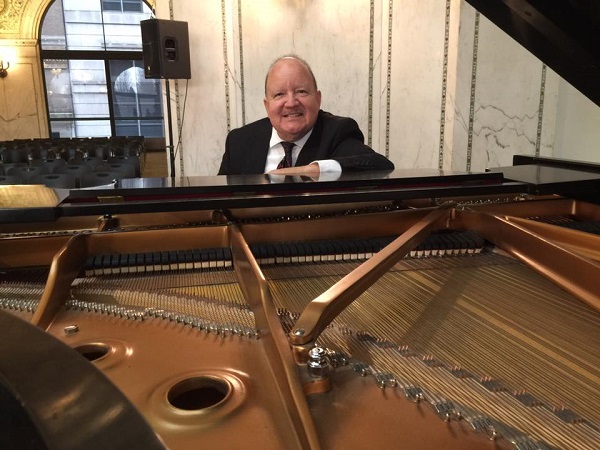
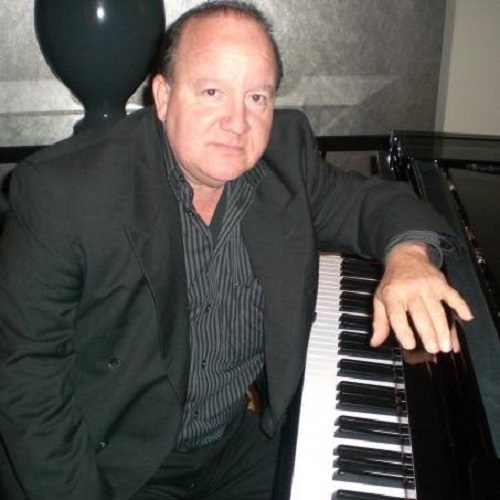
Samuel del Real was an excellent pianist, orchestra conductor, arranger and educator

Born on August 22, 1953 in Barranquilla, Colombia, he was a well-known pianist, orchestra conductor, arranger and educator.

Samuel del Real was an excellent pianist, conductor, arranger and educator.Samuel del Real was an excellent pianist, conductor, arranger and educator.
Samuel del Real was an excellent pianist, conductor, arranger and educator.

He was part of renowned orchestras such as Pacho Galán, La Dimensión Latina and El Trabuco Venezolano and participated in a series of record productions in Caracas, Venezuela.

In 1983 he recorded his first album with his own band. His first hit “Ella No Baila Sola” became the theme song in every night club in Colombia, Venezuela, Peru, Panama, USA among other countries.

In 1985, Samuel moved to Chicago, USA, where he quickly formed his orchestra with members of different nationalities resulting in a mixed sound for his music.

Since then Samuel del Real and his orchestra participated in many festivals, concerts, private events in cities such as Chicago, London, New York, Minneapolis, St. Paul, Detroit, Indianapolis, Miami and more. “Piano Caliente”, ‘Piano Jamboree’ and ‘Piano Navideño’ are the most recent albums that include selections from his extensive Latin jazz repertoire, as well as new interpretations of Afro-Cuban classics from his album entitled Piano Caliente.

Samuel In 1985, Samuel moved to Chicago, U.S.A.

Samuel has ventured not only into the salsa genre, but also into Latin jazz that surprises even those who don’t know him.

It doesn’t take much to realize that Samuel was “El Maestro del Buen Ritmo” and that his music is here to stay.

Samuel del Real: the artist from Barranquilla who triumphed in the United States.

He trained musically and academically, open to the idea of expanding his artistic horizons.

“I began my musical studies in Fine Arts, among my teachers I remember Günther Renz.

In Venezuela I attended the Juan José Landaeta Conservatory and the Caracas Philharmonic Conservatory with the pianist Paul Rosenbloo.

I studied harmony and counterpoint. With maestro Antonio Lauro, composer and guitarist, I completed my academic training”.

At the age of 15 he began his professional career as a pianist in the Pacho Galán Orchestra. There he learned the tricks of popular dance music of the Colombian Caribbean, and the possibilities of sharing with national musicians opened up for him.

DiegoDel Real, my first piano teacher, my advisor, my partner in producing, arranging and recording music.

With him I learned the routine of Caribbean music, he had a very positive attitude towards me. He would summon me before rehearsals to teach me how to play, he would take the score and sit with me at the piano: ‘Play like this’, he would tell me, and ‘play the acor-des this way, this is the tumbao, this is the phrasing’, all with a lot of patience”, he recounted.

“There was Pi¬chirilo on bass, Jorge Pérez on timbales and drums; and Joaquín Pérez on congas. Chicho Sarmiento, Clí¬maco Sarmiento’s son, played the alto saxophone; Pacho Aragón played the tenor saxophone. On trumpets Armando Galán, Raúl Lastra and Chino Acosta.

Rosendo on trombone. Maestro Pacho Galán would arrive to conduct the first set and then he would leave, Armando would be in charge of the orchestra. That’s when my interest in Caribbean folklore began.

I did not record with Pacho’s orchestra because he did not record in that period, but I played a lot of his music and I still play it in Latin jazz.

“For me it was a great school,” he said.

Although he has lived outside the country for many years, when he returns to Barranquilla it is as if he had never left.

It shows in his confidence to walk the streets, to visit places, to call friends, to exchange anecdotes with people he barely knows.

He is a man who lives for music, to which he has dedicated a contagious enthusiasm. That is why when he comes, it is a pleasure to review his career.

“I come to take a little hot temperature and to bring my latest albums for the local public to get to know them,” he said.

In 1975 he formed an orchestra in Venezuela with which he worked at the Hotel Tamana¬co Internacional, while at the same time he was a pianist, administrator and producer of various musical projects in the recording industry of that country.

In 1979 he joined Dimensión Latina, an aggregation with which he recorded Di¬mensión desconocida (1979), el número uno con la núme¬ro uno (1980), Para siempre (1980), Combinación latina Nº 4 (1980), and Cuerda para rato (1981).

“In Dimensión Latina I spent three years with Andy Montañez, Argenis Carruyo and Gustavo Carmona, then I started the orchestra project with my name.

I also recorded with Andy Montañez as a soloist, and made arrangements in recordings for Velvet de Venezuela”.

Samuel also participated in the extraordinary Trabuco Venezolano, led by drummer Alberto Naranjo.

“With Trabuco Venezolano I participated in many concerts in Venezuela.

With them I recorded Irakere and Trabuco, in a live performance at the Poliedro de Caracas. I also recorded Imágenes Latinas.

The Flor y Nata, themes: No me engañes, Rosa de la Noche, Brujería, Almas Blues, Desilusión, (there I do a piano solo that has been highly praised), a pesar de Usted, Orquesta de moda, No quiero Confusión. Retrospectiva del Trabuco Venezolano Vol. 2 (1977- 1984)”.

El Trabuco Venezolano – La Flor y Nata 1984

In 1983 he recorded his first album with his orchestra, the hit was the song Ella no baila sola, which became his letter of introduction.

In 1984 he recorded his second album, repeating his success with the song Cara de Domingo, by the niuyorrican flautist Lou Perez.

The third album with his orchestra was produced in 1987, when he was already living in Chicago.

“When I left Dimensión Latina, Gustavo Cardona, Oscar D’León’s bass player, encouraged me to start my own orchestra.

One of the numbers was Ella no baila so¬la, and when it was played, people stopped to dance. That is why we decided to record that song.

I brought Frankie Paz, a boy from Maracaibo who had auditioned with Dimensión Latina as a replacement for Argenis Carruyo, but César Monje didn’t like it.

I told the boy, I’m going to have my orchestra soon and I’m going to bring you with me”.

Referring to his piano influences, Samuel recalls Noro Morales, Eddie and Charlie Palmieri, Richie Ray and Lino Frias.

Others such as Bud Powell, Thelonious Monk and Oscar Peterson, shaped his vision.

“I liked Noro Morales a lot, I had only one record of his, ‘Maria Cervantes’, which caught my attention since I was a child. One day I decided to arrange it a little differently. I still play it in my Latin concerts.

Del Real took up residence in Chicago in 1985. There he has continued his work moving between Latin dance music and Latin jazz.

I’ve been living there for 32 years, I have my orchestra, I give Latin jazz concerts, and I’ve also worked for other organizations in other cities like Minneapolis and Cleveland.

We do salsa and different Latin American rhythms. The music business has changed, it’s a big investment to make a record, and you have to project it to the singer, limiting the possibility of moving.

That’s why I decided to make Caribbean Latin jazz instrumentals; with that I expose my music without the need to write ten arrangements for a singer with whom you run the risk of him leaving”.

His recent recordings include the Pianos del Caribe series, which includes the discs Piano caliente, Piano jamboree and Piano navideño.

“The first disc of the series, Piano Caliente, brings songs from the 50’s such as Mata Siguaraya, El que siembre su maíz, Besitos de coco…. I made the themes a little more progressive with jazz, but preserving their essence.

I subtly changed the harmonic structures, without distorting them. There the singer is the piano.

Then came Pia¬no Jamboree, with some of my own themes. I do more complex things, trying to penetrate Latin jazz, looking for a space for my musical identity.

It is an interesting work that I would like music lovers from Barranquilla to listen to.

The third album also in the same series is entitled Piano Navideño,

“The first album in the series, Piano Caliente, brings songs from the 50’s like Mata Siguaraya, El que siembre su maíz, Besitos de coco…. I made the themes a little more progressive with jazz, but preserving their essence.

I subtly changed the harmonic structures, without distorting them. There the singer is the piano.

Then came Pia¬no Jamboree, with some of my own themes. I do more complex things, trying to penetrate Latin jazz, looking for a space for my musical identity.

It is an interesting work that I would like music lovers from Barranquilla to listen to.

The third album also in the same series is entitled Piano Navideño, I took as a reference the themes of Christmas. Christmas is very important to me. I am a lover of that celebration.

I took several themes from the international Christmas repertoire and put them in Latin jazz”.

No one doubts that Barranqui jazz or the International Carnival of the Arts would be the perfect setting for his work. Plus, it would be a homecoming in style.

“I think it would be a great opportunity to showcase my music in my city. I am glad that in Barranquilla they are creating spaces like the Carnival of the Arts and the Caribbean Cultural Park, so that people have access to that part of the culture that is music”.

He passed away at the age of 67 on December 10, 2020.

Samuel del Real, who suffered from diabetes, died in Chicago, United States, where he had settled 35 years ago.

Also Read: Thank you Rafael for all you have done for Salsa. Without you many of us would not be salseros

Source and Collaboration By: Marino de Jesus (15889 of Historia Salsera
Republica Dominicana

Australia and New Zealand / September 2024

Calibrated maracasMartinez attorney

OCEANIA

Australia circular flag
AUSTRALIA
DIRECTORY OF NIGHTCLUB

bB Bachata BEATS
Bachata BEATS
Level 1, 416 Brunswick St. Fitzroy
Melbourne, VIC, Australia 3065
+64 0432 013 492

The Night Cat stage
The Night Cat
137-141 Johnston St, Fitzroy
Melbourne VIC, Australia 3065
+61 3 9417 0090

El Giza
El Giza Lounge & Bar
152 Lygon Street
Carlton VIC 3053, Australia
+61 466 023 140

La Bodega
La Bodega
12 Fitzroy street St
Kilda VIC, Australia 3182
+61 3 9525 3875

Pachanga
Pachanga
380 Russell St
Melbourne VIC, Australia 3000
+61 406 440 788

The Vineyard Bar
The Vineyard
71a Acland St
Kilda VIC, Australia 3182
+61 431 160 890

Bachata ConeXión
Bachata ConeXión
497-499 Queensberry St
North Melbourne VIC 3051, Carlton, Australia 3053
+61 432 215 060

Vodka Temple
Vodka Temple
162 Lygon Street
Carlton VIC, Australia 3053
+61 469 386 492

The Mustang Pub
The Mustang Bar
46 Lake Street Northbridge
Western Australia, WA, Australia 6003
+61 8 9328 2350

Noun
Noun Green Square
355 Botany Road Zetland
NSW, Australia 2017
+61 481 188 226

Uruguayan Club
Club Uruguayo de Sydney
56 – 62 Whithford Rd Hinchinbrook
NSW, Australia 2168
+61 419 494 096

Establishment
Establishment
252 George St The Rocks
NSW, Australia 2000
+61 2 9240 3000

Azuquita
Azuquita Entertainment & Productions
Sydney NSW, Australia 2000
+61 425 351 937

The Collaroy
The Collaroy
1064 Pittwater Road Collaroy Beach
NSW, Australia 2097
+61 2 9114 7366

Urban Salsa
Urban Salsa
Level 1, Suite 1, 136 Victoria Rd North Parramatta
NSW, Australia 2151
+61 478 411 849

New Zealand Circular flag
NEW ZEALAND
DIRECTORY OF NIGHTCLUB

Salsa Latina
Salsa Latina
12 Bath Street, Christchurch
Christchurch, New Zealand 8011
+64 21 743 783

El Barrio
El Barrio Latino Bar
35 Dixon Street
Wellington, New Zealand
+64 4-333 0261

Asia / September 2024

Calibrated maracasBill Martinez

Japan circular flag
JAPAN
DIRECTORY OF NIGHTCLUBS

Bar Mirage
Bar Mirage
5F VORT Roppongi Briller, 3-14-14 Roppongi, Minato-ku
Tokyo 106-0032, Japan
+03-5860-6946

Fiesta
Fiesta Latin Spot Bar
3F, 1 Chome-14-6 Kabukicho, Shinjuku City
Tokyo 160-0021, Japan
+81 90-1086-2878

El Cafe Latino Tokyo
El Cafe Latino
3 Chome-15-24 Roppongi, Minato City
Tokyo 106-0032, Japan
+81 3-3402-8989

JBA
Studio JBA
11-8 HAT Chuo-ku
Chuo City, Tokio 103-0011, Japan
+81 3 62310638

jsdc
Japan Social Dance Club
1-19-5-705 Shibuya-ku
Tokyo 150-0042, Japan
+81 3 5939-7262

Studio Pepe
Studio Pepe
7-17-12 Minato-ku
Tokyo106-0032, Japan
+81 090-4705-715

La Tropi Azabu
La Tropi Azabu
3F Roppongi Azelea Bldf. 1-3-6 Nishi-Azabu, Minato-ku
Tokyo1060031, Japan
+81 3 6804-5776

Latin Club Leon
Latin Club Leon
5-17-6 B1 Shinjuku, Shinjuku-ku
Tokyo 160-0022, Japan
+81 90-6474-5638

Hong Kong `circular flag
HONG KONG
DIRECTORY OF NIGHTCLUBS

PCL
Petticoat Lane
8F, California Tower, 30-32 D’Aguilar Street, Central
Hong Kong, Hong Kong
+852 2808 2893

DANCETRINITY
Dancetrinity
8/F, Fung Woo Centre, 279-281 Des Voeux Road Central
Hong Kong, Hong Kong
+852 9634 9770

Sole Mio Restaurant
Sole Mio
Upper Ground Floor, 51 Elgin Street, Soho. Central
Hong Kong, Hong Kong
+852 5508 8244

Solar LKF
Solar LKF
+2F, Ho Lee Commercial Building, 38-44 D’Aguilar Street
+Central District, Hong Kong 0000
+852 65467339

After Work Salsa Party
Pong, 1st Floor, Ho Lee Commercial Building, 38-44 D’Aquilar Street, Lan Kwai
Fong Central & Western District, Hong Kong
+852 6389 6213

ISRAEL
DIRECTORY OF NIGHTCLUBS

Havana Music Club
Havana Music Club
Yigal Alon St 126
Tel Aviv-Yafo, Israel
+972 3-562-3456

Thailand circular flag
THAILAND
DIRECTORY OF NIGHTCLUBS

bAFROS lOUNGE
Bafros
Sugar Club Complex Sukhumvit Soi 11
Bangkok 10110, Thailand
+66 63 039 8700

Havana Social Cocktail Bar
Havana Social
1/1 Sukhumvit Rd. Soi 11
Bangkok, Thailand
+66 2 821 6111

MillionSpace
MillionSpace Rooftop Bar & Bristro
Soi Sukhumvit 32, Khlong Tan, Khlong Toei
Bangkok 10110, Thailand
+66 83 898 9939
ASIA SEPTEMBER 2024 FESTIVAL by Karina Bernales

Israel circle flag
ISRAEL
Caramelo Festival 2024

CARAMELO FESTIVAL

Sep 19 / 22 2024

‎Leonardo Club Eilat
Kampen St
Eila, Israel
Nis 999

  • « Go to Previous Page
  • Page 1
  • Interim pages omitted …
  • Page 49
  • Page 50
  • Page 51
  • Page 52
  • Page 53
  • Interim pages omitted …
  • Page 165
  • Go to Next Page »

International Salsa Magazine (ISM) is a monthly publication about Salsa activities around the world, that has been publishing since 2007. It is a world network of volunteers coordinated by ISM Magazine. We are working to strengthen all the events by working together.