• Skip to primary navigation
  • Skip to main content

International Salsa Magazine

  • HOME
  • Previous editions
    • 2026
      • ISM / March 2026
      • ISM / February 2026
      • ISM / January 2026
    • 2025
      • ISM / December 2025
      • ISM / November 2025
      • ISM / October 2025
      • ISM / September 2025
      • ISM / August 2025
      • ISM / July 2025
      • ISM / June 2025
      • ISM / May2025
      • ISM / April 2025
      • ISM / March 2025
      • ISM / February 2025
      • ISM / January 2025
    • 2024
      • ISM / December 2024
      • ISM / November 2024
      • ISM / October 2024
      • ISM / September 2024
      • ISM / August 2024
      • ISM / July 2024
      • ISM / June 2024
      • ISM / May 2024
      • ISM / April 2024
      • ISM / March 2024
      • ISM / February 2024
      • ISM / January 2024
    • 2023
      • ISM / December 2023
      • ISM / November 2023
      • ISM / October 2023
      • ISM – September 2023
      • ISM – August 2023
      • ISM July 2023
      • ISM Edition June 2023
      • ISM – May 2023
      • ISM April 2023
      • ISM March 2023
      • ISM February 2023
      • ISM January 2023
    • 2022
      • ISM December 2022
      • ISM November 2022
      • ISM October 2022
      • ISM September 2022
      • ISM August 2022
      • ISM July 2022
      • ISM June 2022
      • ISM May 2022
      • ISM February 2022
      • ISM January 2022
    • 2021
      • ISM December 2021
      • ISM November 2021
      • ISM October – 2021
      • ISM September 2021
      • ISM August 2021
      • ISM July 2021
      • ISM May 2021
      • ISM April 2021
      • ISM June 2021
      • ISM March 2021
      • ISM February 2021
      • ISM January 2021
    • 2020
      • ISM December 2020
      • ISM November 2020
      • ISM October 2020
      • ISM September 2020
      • ISM August 2020
      • ISM July 2020
      • ISM June 2020
      • ISM May 2020
      • ISM April 2020
      • ISM March 2020
      • ISM February 2020
      • ISM January 2020
    • 2019
      • ISM December 2019
      • ISM November 2019
      • ISM October 2019
      • ISM Septembre 2019
      • ISM August 2019
      • ISM July 2019
      • ISM June 2019
  • Download Salsa App
    • Android
    • Apple
  • Spanish

Search Results for: Bar

Yova Rodriguez The Jibarito of Mayagüez in the Bronx New York

Mayagüez, is one of the 78 municipalities into which the Island of Enchantment is politically divided: Puerto Rico.

It is the eighth in size and located at the western and central end of the island. Its name comes from a Taino voice that means according to the official historian of this town – Don Federico Cedó Alzamora, “Lugar Grande De Aguas”.

It was founded by the Spaniards and history records a September 18, 1760 with the name of “Nuestra Señora de la Candelaria”, in the territory already occupied by a rural population that was called “Sitio de Mayagüez”. The city has also been known as “Ciudad de Dios”, “La Atenas de Puerto Rico”, “La Sultana del Oeste”, “La Ciudad de las Aguas Puras”, “Capital de la Hospitalidad”, among other names.

Giovanni (Yova) Rodríguez Ruiz was born in Mayagüez, being the youngest of six siblings, raised alone by his mother Doña Delia Ruiz Crespo. At the age of 7 years old, he began singing Christmas aguinaldos and was influenced by his maternal uncle José Ruiz Crespo ¨Pipo El Indio¨ and his great uncle Antonio ¨Toño Ruiz¨ who played the Puerto Rican cuatro. At the age of fifteen he began his studies at the Ernesto Ramos Antonini Music School in Mayagüez, Puerto Rico.

It is here that he began his singing and percussion career and at the age of 16 he became the singer of the school’s band. In 2004 he began the project ¨Yova Rodríguez & his ensemble Sakao – Akà, Homenaje a Polo Montañez¨.

Since the release of his musical work Yova Rodríguez conjunto Sakao – Akà has become one of the most sought after ensembles in Puerto Rico, Colombia, Venezuela and New York, since 2010 resides in the Big Apple, La Babel de Hierro N.Y, working in musical composition for singers of the stature, Danny Rivera, Herman Olivera, Marcial Isturiz, Orquesta Boricua Legends, and the great Andy Montañez among others and to mention a few and traveling through several Latin American countries with most of the artists already mentioned.

In 2016 he starts with his promotional song ¨Me Quedaré¨ with arrangements by trumpeter Nelson Jaime Gazu, a song dedicated to the thousands of Boricuas who have left their beloved Puerto Rico. In 2017 he composed the song ¨Mi Barrio¨ dedicated to his native neighborhood and was presented in Mayagüez, at the same time the Mayor José Guillermo Rodríguez gave him the keys of the city and a recognition, in the same year he composed the song ¨Borinquén se Levanta¨ with the participation of great luminaries of Salsa in New York such as El Pulpo Colon, Jhon Benítez, Luis Mangual, José Dávila among others and by the hand of the Cuban trumpeter and arranger Agustín Someillan Garcia, in January 2018 is presented in Medellín-Colombia in the outstanding local Son-Habana, returns to New York and composes the theme Medellín, is presented last June 23 with a resounding total success in the event a day of Salsa for Medellín.

Yova Rodriguez himself informs me that he is already preparing his fourth album with pianist and arranger Arturo Ortiz. And at the same time he belongs to the board of directors of the Galería de La Salsa in Spanish Harlem in New York.

Other themes that social networks have been responsible for spreading recently will see the light in the next production of Yova Rodriguez, the same that will be titled YOVA RODRIGUEZ ENTRE LOS PUEBLOS and will be part of this production the recent theme composed to the First Peruvian Port: El Callao; highlighting here the fact that Yova has never set foot in our territory but that has not been an impediment for his pen to recreate scenarios: neighborhoods, corners and, mainly, its people. As he says in his lyric “…he who knows about salsa, knows that it is enchanting there in the Chimpún Callao…”

We come to the final part of this biographical sketch, thanking Yova Rodriguez for his kindness in sharing with this server the data and images that accompany this publication.

We wanted to honor the musician, singer and composer, but without leaving aside the tremendous human being that our guest embodies, both as a son and brother, as a fellow professional musician and, especially, as a family man.

A facet that is hidden behind the public man (singer-songwriter) but that impresses greatly in Yova’s pen: first, when sharing a message in each of his lyrics; second, his constant attempts to honor his children Ariana and Kerby on a daily basis, taking as a guideline that old adage that says: “You preach by example”; finally his constant struggle to shorten the physical distances between them, something that surely his Muse manages to do.

For the year 2022 from the pen of the composer Yova is still in force.
Frankie Vázquez “El Sonero de todos los Barrios and still going strong” Guatacando

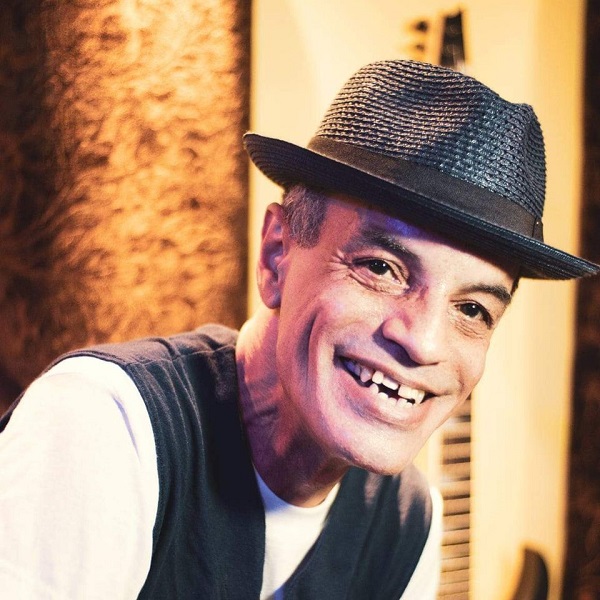
Efrain is a Puerto Rican Sonero Excélsior, he was born in Salinas in La Isla del Encanto.

His father gave him his first conga at the age of 10, and another one two years later, which allowed him to practice to the rhythm of his mother’s records: El Gran Combo, Cortijo and Eddie Palmieri.

His parents helped him to create his own band at the age of 16 “Los Generales” where he played congas; the band played concerts in his father’s restaurant. Suddenly replacing the singer of the orchestra, he becomes better and more popular. He then dedicated himself to singing, without giving up instruments such as congas, timbales, clave, maracas, güiro and bell.

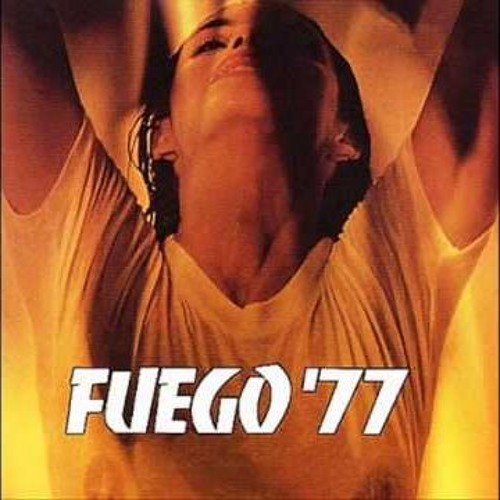
He moved to New York ’77, debuted recording on Al Santiago’s production Fuego ’77 to Alegre by the young band of the same name; Al liner note Frankie described as “enthusiastic, energetic and full of life”, he always chorused and sang lead vocals on the cut “Nueva York”, his cousin David Sanchez handled the remaining lead vocals. Fuego ’77 lasted two years.

Frankie performs: “New York”, where his very young voice is barely recognizable:

“New York site of opportunity

New York the city I love the most

I have a feeling that one day I would make it big”.


In the others, David Sanchez sings and Frankie is on backing vocals. Both are thanked in the credits for having contributed to the sounds.

This album is a wonderful little one, no song disappoints, on the contrary there is a communicative energy from the first to the last song.

“Fuego 77” was a band of young people in their early 20s.

He then spent two years with Sonido Taiborí (Sánchez sang in chorus with Johnny Ortiz and Taiborí ’79 in Fania with lead singer Tito Nieves, founder Ortiz, an outstanding Puerto Rican composer, later left), a year and a half with Orquesta Calidad and intermittently worked for three years with Orquesta Metropolitana.

He joined the “Conjunto Wayne Gorbea Salsa” for five years, providing lead vocals and güiro, accompanying one of the highlights of the Montuno sessions. He replaced Herman Olivera as singer with Manny Oquendo and his “Conjunto Libre” in December 1990, making his debut.

He partnered with pianist Martin Martin, bandleader of the magnificent “Los Soneros del Barrio” Orchestra in 1999.

He has sung with the Lebron Brothers for more than three years, as well as other spectacular company such as New swing Sextet, Leña Moncho, Tony Gonzalez, La Sonora Matancera, Frankie Morales, Delgado Jimmy, Joe Cuba, Jimmy Bosch, Spanish Harlem Orchestra and stop counting with his great success characterized.

He is currently one of the artists who has participated in countless recordings all over the world and even participated as a special guest in the group Dislocados de Ucrania.

His career is very rich and the list of his collaborations that we have just mentioned is not exhaustive.

We hope that the list will grow because we love his way of modulating his voice in each song, with a perfect diction, and his inspirations that enchant us in concert.

Facebook: Frankie Vázquez

Johnny Andreu “Almendra”. Bandleader, percussionist and founder of Los Jóvenes del Barrio

Growing up and listening to music, he played with various objects around the house. Taking things seriously at the age of 16, he started with bongos, then congas and then timbales, which is the instrument he is best known for.

Andreu y Los Jovenes Del Barrio, the band was led by his ex-wife, the American born singer JILLIAN (1962-2009) able to charm you in two languages, a great loss at a young age, another victim of the scourge of our time, cancer. Blending elements of Charanga, Jazz, Typical Latin, the group dominated radio stations for a decade.

Brooklyn-born composer Johnny Andreu, who from an early age was introduced to and kept in touch with Latin rhythm through family influences, received his musical training at U.C.L.A., the “University on the Corner of Lexington Avenue. When he was 18, Mario Lebran, a musician with Ricardo Ray and author of ‘Mambo Jazz’, helped him get into the music business. He has learned a lot by listening to his records and playing his instruments.

Lebran Andreu also encouraged him to audition for his first job as a percussionist working for “Mike y Su Rítmico”. From there he moved on to the Bobby Matos orchestra whose pianist Paquito Pastor said one day he named him Andrews after Andreu. You are Latin, you are an ‘Almendra'”. That’s how Johnny Andreu became Johnny Almendra.

In the late 1960s he teamed up with Johnny Colon, they performed at the Corso and the legendary Cheetah, and after a year, Almendra and Louie Bauzo left to form their own band, Tambo.

This group lasted about four years and later worked with Almendra Charanga ’76, Orquesta Broadway, and the Típica Novel. Playing with Típica Ideal, he met Milton Cardona, who became a lifelong friend.

Band director, percussionist and founder of Los Jóvenes del Barrio.
Johnny Andreu “Almendra”

One day Cardona invited Almendra to see Willie Colón at Casa Borinquén, and as it turned out, they were in need of a timbalero. They invited Almendra who stayed for eight years.

During 1977 and 1978, Willie Colón Rubén Blades recorded history-making albums. A large number of the best musicians of the time were brought together, including Héctor Lavoe, percussionist José Cándido Rodríguez, bassist Víctor Venegas and many others. This material was released in 1998 for the RMM label.

For International Salsa Magazine through www.SalsaGoogle.com it is a great pleasure to review an artist of the stature of Jhonny Almendra, catalogued as one of the greatest percussionists in the city of New York for his ability and skill still in the forefront of Latin Music.

Johnny Almendra, Los Jóvenes Del Barrio  Reconfirmando “1997”

Johnny Almendra, Los Jóvenes Del Barrio – Reconfirmando “1997”

Tracks

Todo el Mundo Necesita

Pasión Sin Freno

Hechicera

Everybody Plays the Fool

Borincuba

Zapato Apartao

Cumbiaranga

Compassion

Rent

Cold and Darkness, The

Hechicera Reprise/A-Files

Musicians

Regina Carter – trombone

Ozzie Meléndez – trombone

Ronnie Bar – backing vocals

David O’Quendo – flute

Karen Joseph – flute

Kimson Plaut – accordion, piano, synthesizer

Oriente Lopez – flute, synthesizer, backing vocals

Ray Sepulveda – vocals

Tito Nieves – vocal

Robert Thomas – violin

Sam Bardfeld – violin

Al Bello – percussion

Andreu Johnny Almendra – percussion

Frank Seguinot – vocal

Miles Peña – vocal

Sources: 

https://lasalsaesmivida.com/johnny-almendra-y-los-jovenes-del-barrio-reconfirmando/https://www.pinterest.com/bobbymartell/johnny-almendra/

Article of Interest: What Ángel Meléndez has to say about his brilliant musical career

Maestro Jorge Anselmo Barrientos Silva, conductor, arranger and composer

He is one of Mexico’s most important musicians and cultural heritage, recuerdos del Son with Jorge Anselmo Barrientos Silva.

Jorge Barrientos was born on November 14, 1953 in Mexico City. He studied music at the Escuela del Sindicato Único de Trabajadores de la Música del Distrito Federal. Groups and orchestras in which he has worked: Mocambo, Horóscopo Tropical, Jorge y su Boogaloo, Sonora Brasilia, Sonora Mayoral, Yímbola Combo, La Justicia, Sonora.

In 1980 he founded Recuerdos del Son (director, arranger, and composer), whose group is already part of our cultural heritage of Afro-Caribbean music in Mexico. This group has participated in festivals, conferences, concerts, and courses, in the most important auditoriums and theaters of the CDMX and the interior of the country. It is worth mentioning that it has been the only Mexican group invited to Nicaragua.

Within his musical career he has been a commentator on radio stations such as Radio D, Radio Educación, La Tropi Q and XEB. He has published several works on Afro-Antillean music and especially on Cuban Son -among others- El Son Raíz y evolución, La Clave en el Son cubano, Método de Tres and a didactic disc on the variants of Son.

 Jorge Anselmo Barrientos Silva y Erika Muñoz

Jorge Anselmo Barrientos Silva y Erika Muñoz

Regarding pre-Hispanic music, he published the research: ANALOGÍA ENTRE LOS INSTRUMENTOS DE PERCUSIÓN PREHISPÁNICOS Y LOS DEL SON CUBANO (ANALOGY BETWEEN PRE-HISPANIC PERCUSSION INSTRUMENTS AND CUBAN SON). He has given conferences, concerts and workshops in several cultural spaces such as Faculties of the Universidad Autónoma de México, Cultural Centers in Mexico City, as well as in the interior of the Republic.

He has participated in the Cervantino Festival twice, the Caribbean Festival in Managua, Nicaragua in 1984, Festival de las Artes in Monterrey, Nuevo León, Tabasco, Querétaro, San Luis Potosí, etc, etc. Jorge A. Barrientos Silva was an advisor in the Chamber of Deputies, and commissioner of the Musicians Union.

He has been Secretary of Political Action and in charge of the Legal Department. In the Musicians Union, he was a founder of the Afro-Antillean music workshop, besides having given countless lectures on the Cuban Son and its variants.

Jorge, how many productions have you recorded?

FIRST PRODUCTION OF MR. GENARO ÁLVAREZ (R.I.P.D.)

Jorge Anselmo Barrientos Silva
First production of Mr. Genaro Álvarez (Q.E.P.D.)

He is one of Mexico's most important musicians and cultural heritage

INDEPENDENT PRODUCTION, OWN BRAND, EL SON RECORDS

Record pressed in Pentagrama brand, production Jorge Barrientos
Independent production for the company's own brand, discs Son
Independent production for the company’s own brand, discs Son
Record pressed at the pentagram brand, production Jorge Barrientos

Among those productions, which is the one that has left a mark in your musical history?

All of them have been important and, for example, the album HOIMENAJE PEREGRINO, is a product that record collectors look for and has a special value.

The album, recorded live at the Teatro de la Ciudad, is a document that contains compositions and arrangements by the members, including music and piano solos by Mexican jazzman Héctor Infanzón.

We know that you participated in a festival in Nicaragua, can you share with us about that great experience?

It was something special, since several groups from all over the world participated, among them, Italians, Venezuelans, Cubans, etc. and when playing “al tocar al tú por tú”, the Mexican musicians did not shrink.

You participated in several recordings of your musical partners, to mention a few Tony Camargo, Linda Vera, Wuelfo Gutiérrez, (former member of the legendary Sonora Matancera), what did these great musicians leave you as a musician?

Participating with great music legends is an unforgettable experience since they ask you to interpret the scores, according to the recordings that have left their mark.

Were you in the golden age of Afro-Antillean music, how did Afro-Antillean music develop in those years?

Without underestimating the work of today’s musicians, the era I lived in was very special, because each group tried to put its “stamp” on each performance, nowadays, regularly and with honorable exceptions, most of them “sound the same”.

In the present time, do you consider that Afro-Antillean music has transcended?

Yes, it has transcended, but, with the globalization of culture, sometimes there are few novelties.

Jorge, which show do you remember that alternated with the salseros from abroad?

In the fever of the ’80s, fortunately, the businessmen looked at us to alternate with the great figures, among these I can mention: Irakere, Orquesta Aragón, Gran Combo, Sonora Matancera, Sonora Ponceña, Son 14, Adalberto y su Son, etc.

In the fever of the 80's, fortunately, businessmen looked at us to alternate with the great figures
In the fever of the 80’s, fortunately, businessmen looked at us to alternate with the great figures

¿Recuerdos del Son is already a cultural heritage of the CDMX did you imagine that someday it would happen?

The work in the cultural area has been the goal of our efforts. How nice to receive the affection and recognition of the people, who are ultimately the ones who make our career.

As director and musician of your own orchestra, has it been difficult to get to where you are?

Music and being in the show business is a daily battle, and if it has been difficult, of course, no one has the formula for success, we will continue in the daily struggle, preparing ourselves and presenting our new productions,

How did your love for the guitar, the bass and the Cuban tres come about?

First, I am a descendant of a bohemian family, where the guitar was never missing, then with time my love for the bass and then the Cuban tres began.

Are you still performing?

I’ve been performing on Saturdays at the Salón Caribe and other dance halls for 4 years. The cultural activities have been suspended for some time now (by covid) but, hopefully, the presentations in festivals and theaters will be reactivated.

Do you still feel the same adrenaline rush when you step on a stage?

Fortunately, it’s the same emotion, you never know if the public is receptive or ignores your efforts.

In your musical career, have you been honored or received recognition?

Yes, I have received countless recognitions, both for the trajectory of RECUERDOS DEL SON and for the research work I have done.

Jorge before saying goodbye we want to thank you for being and existing as the cultural heritage of the CDMX.

Would you like to close this talk with a few words?

Some say that Son is dead, Don Ignacio Piñeiro used to say: “Son is the most sublime thing for the soul to have fun, it should die, who for good does not judge it.

MAY THE SON NOT DIE, WITH CLAVE AND BONGO, MEMORIES OF THE SON.

Facebook: Jorge Anselmo Barrientos Silva

Article of Interest: Fabián Rosales Araos Chilean singer-songwriter, native of the city of Valparaíso

Salsa Escrita, the Salsa Column of Barquisimeto presents Cheo Valenzuela

Cheo Valenzuela, “El Sonero de la Dulzura”

We are pleased to have as a special guest in our salsa column, one of the vocalists possessing a unique, admirable, and respected quality of interpretation, which has stood out in our country and abroad, bringing his flavor and swing with great professionalism and hierarchy. We are talking about Cheo Valenzuela, “El Sonero de la Dulzura”, born in Cantaura, Anzoátegui state, on January 24th.

At the age of 7, he moved with his family to the city of Caracas, settling in one of the most popular parishes: La Pastora. Welcome Cheo to Salsa Escrita, “La Columna Salsera de Barquisimeto” and International Salsa Magazine, www.SalsaGoogle.com.

Thank you, friend and professor, Carlos Colmenárez, for giving me the opportunity to be present in this tribune of our Afro-Caribbean music, which serves us to make known our talents and musical projects and thus be able to interact with its assiduous readers in Venezuela and around the world.

Salsa Escrita, la Columna Salsera de Barquisimeto presenta a Cheo Valenzuela
Cheo Valenzuela, “El Sonero de la Dulzura”

Cheo, to begin with, we would like you to tell us how were your beginnings in music? Carlos, at the age of 14 I began my career as a salsa performer and with time I was called to join quite renowned orchestras.

Such as Cheo? I belonged to the Latin Dimension, then Oscar D’León called me and I was at his side with his orchestra; later I joined “Nuestra Orquesta la Salsa Mayor”; later I was called by “La Sonora Antillana”; then I joined the groups: Rumbero Menor, Venezuelan Master Orchestra, Orquesta Los Latinos, among others. Nowadays I have my own salsa orchestra “Cheo Valenzuela y su Orquesta” and also my own bolero group, called “Cheo Valenzuela y su Ensamble”.

Excellent Cheo, we really admire your work, which has been persevering and over the years, continues to rise steadily, with national and international projection. Yes, Carlos, let me tell you, apart from thank you for inviting me to your salsa column, that I launched myself into the market as a soloist some time ago and I currently have two musical productions, the first one entitled “Cheo Valenzuela and his Orchestra is you”.

Cheo Valenzuela
At the age of 7, he moved with his family to the city of Caracas.

This CD is made up of traditional salsa, romantic salsa, bolero, son, and ballads. Dear salsa lovers and consistent readers, let me tell you that Cheo, every time he gets on stage, shows off all his musical talent with total stage control, since he is a sonero, backed by multiple experiences acquired in his presentations, both in Venezuela and in the different countries he has visited.

Cheo, what can you tell us about your current musical situation? Professor Carlos, at present I am presenting for the consideration of all music lovers the new promotional theme that is part of my second musical production, which is called “Salsa Buena”, a theme of my authorship, with musical arrangements by the Venezuelan pianist, trombonist and singer Mauricio Silva, which we hope will be to the complete satisfaction of all of you. Of course, it will be a success, my friend Cheo, because your productions always carry an indisputable quality seal. By the way, what are your digital platforms and contacts? You can get me as Cheo Valenzuela in all social networks, you can also do it by email: [email protected] and Valenzuela [email protected] and for bookings by phone +58 424 1044822 and +58 416 6388420.

At the end of the interview, let me say that it was an honor to have you in Salsa Escrita “La Columna Salsera de Barquisimeto” and wishing you continue to succeed inside and outside our country so that we all enjoy Cheo Valenzuela “El Sonero de la Dulzura”.

A thousand thanks, Professor Carlos Colmenárez, for your unconditional friendship and for giving me a space in your column through International Salsa Magazine, also predicting successes in bulk and that you continue to support us in order to make our productions and presentations known, very soon in the name of God. Bendiciones Carlos and counts with the friendship of Cheo Valenzuela “Con Dulzura” and a lot of salsa…!

Remember not to leave your house…! Until next time and let’s keep on saucing!

Article of Interest: Eliel Rivero, “The Shaman of the Trombone”

  • « Go to Previous Page
  • Page 1
  • Interim pages omitted …
  • Page 5
  • Page 6
  • Page 7
  • Page 8
  • Page 9
  • Interim pages omitted …
  • Page 165
  • Go to Next Page »

International Salsa Magazine (ISM) is a monthly publication about Salsa activities around the world, that has been publishing since 2007. It is a world network of volunteers coordinated by ISM Magazine. We are working to strengthen all the events by working together.