• Skip to primary navigation
  • Skip to main content

International Salsa Magazine

  • HOME
  • Previous editions
    • 2026
      • ISM / March 2026
      • ISM / February 2026
      • ISM / January 2026
    • 2025
      • ISM / December 2025
      • ISM / November 2025
      • ISM / October 2025
      • ISM / September 2025
      • ISM / August 2025
      • ISM / July 2025
      • ISM / June 2025
      • ISM / May2025
      • ISM / April 2025
      • ISM / March 2025
      • ISM / February 2025
      • ISM / January 2025
    • 2024
      • ISM / December 2024
      • ISM / November 2024
      • ISM / October 2024
      • ISM / September 2024
      • ISM / August 2024
      • ISM / July 2024
      • ISM / June 2024
      • ISM / May 2024
      • ISM / April 2024
      • ISM / March 2024
      • ISM / February 2024
      • ISM / January 2024
    • 2023
      • ISM / December 2023
      • ISM / November 2023
      • ISM / October 2023
      • ISM – September 2023
      • ISM – August 2023
      • ISM July 2023
      • ISM Edition June 2023
      • ISM – May 2023
      • ISM April 2023
      • ISM March 2023
      • ISM February 2023
      • ISM January 2023
    • 2022
      • ISM December 2022
      • ISM November 2022
      • ISM October 2022
      • ISM September 2022
      • ISM August 2022
      • ISM July 2022
      • ISM June 2022
      • ISM May 2022
      • ISM February 2022
      • ISM January 2022
    • 2021
      • ISM December 2021
      • ISM November 2021
      • ISM October – 2021
      • ISM September 2021
      • ISM August 2021
      • ISM July 2021
      • ISM May 2021
      • ISM April 2021
      • ISM June 2021
      • ISM March 2021
      • ISM February 2021
      • ISM January 2021
    • 2020
      • ISM December 2020
      • ISM November 2020
      • ISM October 2020
      • ISM September 2020
      • ISM August 2020
      • ISM July 2020
      • ISM June 2020
      • ISM May 2020
      • ISM April 2020
      • ISM March 2020
      • ISM February 2020
      • ISM January 2020
    • 2019
      • ISM December 2019
      • ISM November 2019
      • ISM October 2019
      • ISM Septembre 2019
      • ISM August 2019
      • ISM July 2019
      • ISM June 2019
  • Download Salsa App
    • Android
    • Apple
  • Spanish

Search Results for: Bobby Cruz

Ezequiel Lino Frías Gómez was an excellent musician, pianist, arranger and composer.

Ezequiel Lino Frías Gómez was born on April 10, 1915 in Havana, Cuba.
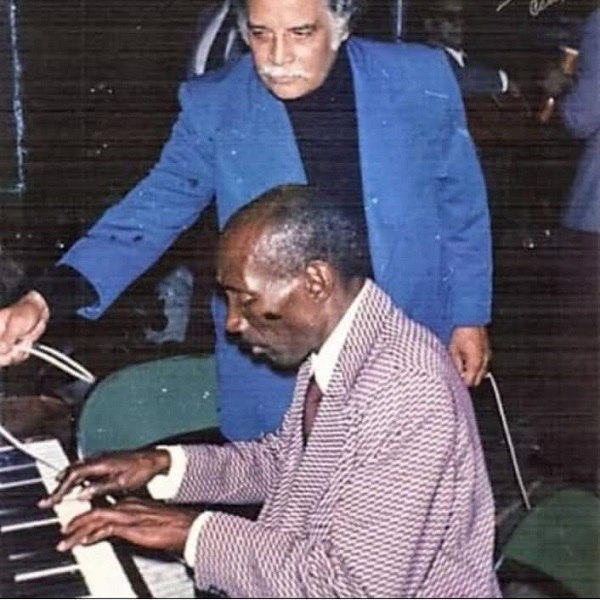
Lino Frías y Daniel Santos

Musician, Pianist, Arranger, Composer. He began his artistic career in the early 30’s, working with singer and composer Joseito Fernandez, in the orchestra of Raimundo Pla.

Later he became part of the Fantasía Orchestra.

At the end of the decade he worked with the Septeto Carabina de Ases.

Some time later he joined Arsenio Rodríguez’s Conjunto Todos Estrellas in September 1940, remaining in it until November 1943, leaving his place to Adolfo Oreilly Panacea, to join the Sonora Matancera in 1944, until 1976, where he contributed in an important way both in the composition and musical arrangements, imposing his particular piano solos.

In 1974 he helped found with Armando Sánchez the Conjunto Son de la Loma.

Upon his retirement from La Sonora Matancera, the Puerto Rican producer René López invited Lino, together with Israel “Cachao” López, to revive the descargas he had already recorded in the fifties, assembling a Típica together with “Cachao”.
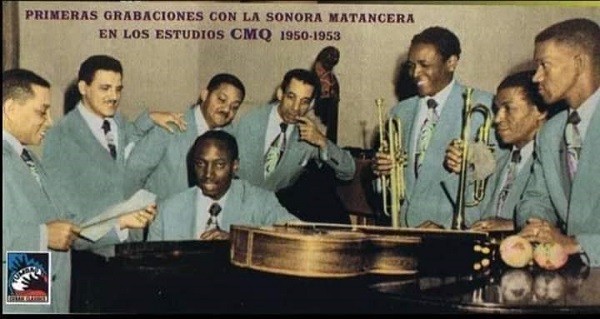
Sonora Matancea
Sonora Matancea

In his independent years Lino worked with Johnny Pacheco and Carlos “Caito” Diaz.

He accompanied great artists in recordings, in that period in New York, such as La Lupe, Olga Guillot, Daniel Santos, Carmen Delia Dipini, Bobby Capo, among others.

He died on May 22, 1983 in New York, USA.

Lino Frías, who for twenty-two years was the pianist of the Sonora Matancera, composed the very popular Mata Siguaraya in 1951.

One of the most popular photos of the Sonora Matancera.

In it we can see Lino Frías from his piano looking at Celia Cruz, great interpreter of Mata Siguaraya, together with Benny Moré and Oscar D’León.

Ezequiel Lino Frías Gómez was born in Havana and died in New York in 1983.

Lino studied piano at the Havana Conservatory. For a time, in the 1930s, he played in the Raimundo Pia y Rivero Orchestra, whose singer was Joseito Fernandez. He would later play in the Orquesta Fantasía.

In 1939 he joined the Septeto Carabina de Ases, led by Mariano Oxamendi, guitarist and second voice, and with Bienvenido Grande, singer and harpsichord player, Nilo Alfonso, double bass, José Bergerey, maracas and third voice, Ramón Liviano Cisneros, tres player, Florencio Coco Morejón, bongos player, and Félix Chappotín, trumpet player.

In 1944, Lino joined the Sonora Matancera as a pianist, where he remained until 1976.

In the 1960s, Frías joined the movement that created the so-called salsa music, alongside Fania All Stars, Johny Pacheco, Bobby Rodríguez, Carlos Patato Valdés y Caíto, Carlos Manuel Díaz (Matanzas 1905-New York 1990), among others.

Don Adolfo, a Puerto Rican timbalero, worked with Lino Frías in a group that included some of the most renowned musicians and singers of the 1950s and 60s: Olga Guillot, Daniel Santos, Lucecita Benítez, Bobby Capó, Marco Antonio Múñiz, Carmen Delia Depiní, Chucho Avellaneda, Sergio González Siaba and La Lupe, among others.

In 1974, parallel to his work as a pianist in the Sonora Matancera, Lino Frías created the ensemble Son de la Loma, with the participation of Cuban-Niuyorquinos such as Marcelino Guerra, Rapindey (Cienfuegos 1914-Spain 1996), author of Convergencia, and Pedro Rudy Calzado (Santiago de Cuba 1929-New York 2002).
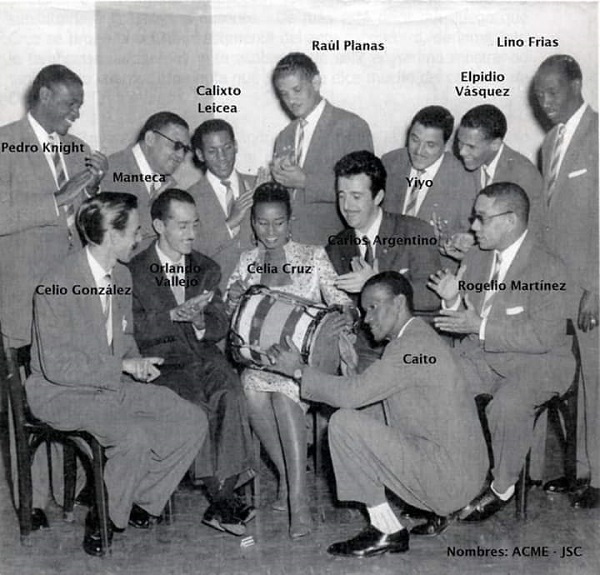
Celia Cruz y La Sonora Matancera

Due to arthritis, in 1976 Lino left the Sonora. His place is taken by Javier Vázquez, (Matanzas 1936), son of the double bass player Pablo Vázquez.

It is said that the death of Lino Frías, in 1983, was a hard blow for his great and faithful friend Celia Cruz (Havana 1925-New Jersey 2003).

In addition to Mata Siguaraya, Lino Frías composed Pan de piquito, Óyela, gózala, Vamos todos de panchanga, Cañonazo, Vive la vida hoy, Suena mi bajo, Convencida, Afecto y cariño, Has vuelto a mí, Baila Yemayá.


Also Read: Israel “Cachao” López Sobrado en fama y respeto en los años setenta se dedicó a mantener la tradición a nivel supremo

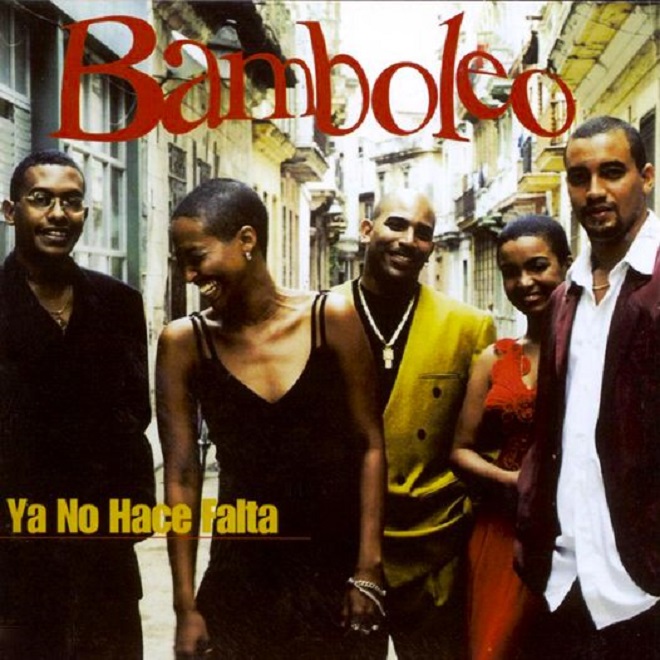
Bamboleo de Lázaro Valdés is another of those exquisite Cuban products, as well as sweet rum and mild cigars

Like the sweet rum and mild cigars, bamboleo is another one of those exquisite Cuban products that, once tasted, can’t get enough.

The 14-member timba group is a fiery number, from its music and choreography to its well-dressed singers and musicians.

Lazaro Valdes leads the group, plays piano, arranges, composes and writes songs. Born in Havana, he studied at the Alejandro García Caturla Academy in the 1970s.

Lazarito Valdés & Bamboleo

He created Bamboleo after spending time performing with artists such as Pachito Alonso, Bobby Carcasses and Héctor Téllez.

He selected the best musicians and incorporated into his new company many who had been trained at the Escuela Nacional de Arte de La Habana.

He added sparkle with vocalist Haila Mompie, who in turn recruited vocalist Vannia Borges. Another Havana native, Borges began studying music at the age of five, and first sang professionally with an all-female group known as D’capo in the early 1990s. Four years later, she became part of the band D’capo.

Four years later, she moved on to Pachito Alonso y su Kini Kini, which she left in 1997 to add her talents to Bamboleo.

Lazarito Valdés.
Lazarito Valdés.

Guantanamera Yordamis Megret joined the group in 1998, a year after Mompie’s departure. She began her musical training at the age of 10 and took up the guitar.

Like Borges, she is also a student at the Escuela Nacional de Arte. After graduating, she began singing professionally with Ricacha. Before joining

Bamboleo, Megret sang in José Luis Cortés’ salsa group PG. Bamboleo began touring outside Cuba in 1996, the same year the group debuted with Te Gusto o Te Caigo Bien.

The group has performed in major U.S. cities from Chicago to Miami, and from New York to Los Angeles. Following the release of Yo No Me Parezco A Nadie and Ya No Hace Falta, the group toured the world, with stops in Europe, the United States and Japan, as well as the Heineken 2000 World Music Festival in China.

Bamboleo also collaborated on the Temptations’ Grammy-winning album Ear-Resistable.

Lazarito Valdés
Lazarito Valdés

In addition, the group has appeared on MTV’s Road Rules and has worked with artists such as James Brown, Femi Kuti and George Benson.

Bamboleo, one of the best-known groups on the crest of the timba wave, a new style that blends salsa with funk and jazz elements and emanates from the streets of Cuba, remains at the forefront with 1999’s Ya No Hace Falta.

After leaping to international notoriety with 1997’s Yo No Me Parezco a Nadie, the pressure was on to deliver for his newfound fan base.

With smooth arrangements and a band with a tight drum kit, Bamboleo had no trouble making good on their reputation and, if anything, raised the bar for the entire genre.

Both the horn section and the vocalists have a cool, smooth approach that contrasts with the energetic sound of similar groups like Charanga Habanera or NG la Banda.

This smoky, jazzy sensibility juxtaposed with the sharp corners of the superfunky rhythm section makes for easy and enjoyable listening.

The group doesn’t lack for warmth, with salty montunos from pianist/arranger Lazaro Valdes and plenty of time changes from a percussion section as good as any operating today.

Sonically, the ears rejoice in listening to a timba album that lacks neither fidelity nor modern production sensibilities.

With its balanced overall sound, unique approach and expert musicianship, Bamboleo will set trends and erase boundaries for decades to come.

Bamboleo - Ya No Hace Falta (1999)
Bamboleo – Ya No Hace Falta (1999)

Evan C. Gutierrez

Bamboleo – Ya No Hace Falta (1999).

Musicians:

Lázaro M. Valdés Rodríguez (Director, piano, composer).

Abel Fernández Arana (Alto Saxophone)

Carlos Valdés Machado (Tenor saxophone)

Anselmo “Carmelo” Torres (trumpet)

Dunesky Barreto Pozo (Congas)

Alberto Para (Maracas)

Herlon Sarior (Timbales)

Jorge David Rodríguez (Voice)

Yordamis M. Mergret Planes (Vocals)

  1. Frank Cintra Cruz (Trumpet)

Alejandro Borrero Ramírez (Vocals)

Vannia Borges Hernández (Vocals)

José Antonio Pérez Fuentes (Violin)

Maylin de la Caridad González Aldama (Cello)

Ludwig Nunez Pastoriza (Drums)

Rafael P. Pacerio Monzón (Banjo)

Ulises Texidor Pascual (Bongos)

Sources:

Información realizada ( 27 de enero de 2024)

L’Òstia Latin Jazz 

Also Read: Irakere was a Cuban group that developed an important work in Cuban popular music and Latin Jazz under the direction of Chucho Valdés

Willito and Japhet from La Sonora Ponceña

The stories of two great musicians

The island of enchantment, Puerto Rico, has been one of the places with the most talented musicians in Latin America, so it is always worth mentioning some of the most important names in the music scene in this beautiful land. Today it is the turn of talented musicians Willito López Vázquez and Japhet O. Rodríguez from the world-famous orchestra La Sonora Ponceña. 

Next, we will talk a little about both salsa exponents’ stories separately so that our readers can get to know these great personalities of the entertainment world who are not so famous for some.  

Willito López 

Wilfredo López Vázquez, artistically known as Willito López, is a famous percussionist whose career over time has been brilliant and has countless great collaborations with other exponents of the genre such as Tito Puente, Eddie Palmieri, Tito Nieves, Jerry Rivera, Luis Perico Ortiz, Lalo Rodríguez, Bobby Valentín, among many others.   

One of the instruments that makes this musician excel more than another is the conga and it is present in several of the greatest records of La Sonora Ponceña, the orchestra to which the artist currently belongs. 

Willito playing the conga
Willito López playing the conga during a performance

In one of his last interviews, he talked a bit about maestro Ángel ”Maldonado” Maldonado, of whom he cherishes fond memories after his unfortunate death a few years ago. He mentioned that the sonero lent his support to him when he needed it most and was very grateful for that, while regretting that he was already no more in this world. 

Undoubtedly, he is a pride to his family and the artists who have had the opportunity to feature his talents for any project in the past. He has always left everything on stage with each of his works and we have no doubt that he will continue to do so as long as his arms allow him to delight the audience with his talent.   

Japhet Rodriguez  

Japhet Rodríguez is also a talented Puerto Rican-born percussionist who has a very interesting career behind him.  

The artist was initially invited by La Sonora Ponceña to participate in some projects in 1998, but after having shown what he was really made of, he continued working with the orchestra for years to come.   

Japhet with his timbales
Japhet Rodríguez with his timbales

It was in 2007 that he became an official member of the group and thanks to which he became popular all over the world while serving as the timbalero of La Sonora Ponceña.   

While it is true that he has reached a huge popularity worldwide thanks to the aforementioned Puerto Rican orchestra, Japhet has been part of many other important names in Latin music such as Sabor Ponceño, La Terrífica de Ponce, Costa Brava, Moncho Santana, Los Hermanos Moreno, Willie Crespo, Camilo Azuquita, Impacto CREA, Raphy Leavitt Y La Selecta, Manix Martínez, Rafy Class, Conjunto La Perla, La Tropicana de P.R., and Homenaje Matancero. 

Something very interesting about the musical career of this great artist is that all these groups to which he has belonged have not only been from Puerto Rico, but also from countries such as the United States, Panama and Colombia. This shows that his talent has not only shone in his native country, but also in other latitudes. 

In next editions, we will be talking a little more about other salsa exponents who have left our music in high, so you can not miss the section of Johnny Cruz in coming months. 

Read also: Remmberin g Domingo ”Tito” Gutiérrez’s career 

Johnny Cru ISM corresponde in New York City

Soneros Birthdays Party

Soneros Birthdays Party

Omara Portuondo, Ismael Rivera, Jimmy Bosch, and Luisito Carrión celebrate their birthdays this month

October is filled with talent and it’s that in this month a hurricane of brilliant artists of the Salsero genre was born, who have captivated us and have shown their Gift before hundreds of audiences around the world. These Latin Stars have bathed us in SABOR with their lyrics and infected with joy with their melodies. It for that, this month we celebrate their births and dance to the rhythm of the applause towards them. Happy Birthday, Soneros!

Omara Portuondo (October 29, 1930)

Omara was born in La Habana (Cuba). Her first encounter with music was at a very early age. Just as in any other Cuban home, the future singer and her siblings grew up with the songs which her parents, for lack of a gramophone, sang to them. Those melodies, some of which still form part of her repertoire, were young Omara’s informal introduction to the world of music.

She and her sister Haydee sang well-known American group “Los Loquibambla” and their style, a Cubanised version of the Bossa Nova with touches of American jazz, was known as “Feeling”. In their radio debut, Omara was introduced as “Miss Omara Brown, the girlfriend of Feeling”.

“Magia Negra” was her debut record released in 1959. It combined Cuban music with American jazz and included versions of “That Old Black Magic” and “Caravan”, by Duke Ellington. Later she joined one of Cuba’s most important orchestras, La Orchestra Aragón, with which she recorded several albums, such as the one she did with Adalberto Álvarez in 1984 and “Palabras and Desafíos” on which she was accompanied by Chucho Valdés.

Omara Portuondo
Omara Portuondo

However, Omara Portuondo catapulted to her well-earned fame was in the mid-1990s when she collaborated in the recording sessions for Buena Vista Social Club on which she sang “Veinte Años”.

She was the star of the third launching of the Buena Vista Social Club released in 2000 and she toured Europe, traveled to Japan, and performed in the USA and Canada.

Omara went back to the studio to record her second solo album “Flor de Amor” (World Circuit), which was produced by Nick Gold and Alê Siqueira, signals a change in direction in her career: it is an album marked by a more subtle sound and a richness of texture. Portuondo brought in a mixture of Cuban and Brazilian musicians for this album, and it is this factor which influences the particular style of the music.

Omara returned to Europe in 2004 to promote this album, performing at such illustrious venues as the North Sea Jazz Festival, Marble Hill House in London, Olympia in Paris and the Concertgebouw in Amsterdam. “Flor de Amor” was nominated for a Grammy in the Best Traditional Tropical Record category and the 16th edition of the Billboard Latin Music Awards (2005); this album obtained the Tropical Record of the Year award.

Later, Omara released “Gracias”, the record that marks her sixtieth year in the music business and won the Latin Grammy Award for the Best Contemporary Tropical Album. It was a very special night as Omara was there to receive the prize in person and she also presented one of the awards, the first time that a Cuban artist has done this. The album was also later nominated for a Grammy in the Best Tropical Latin Album category.

After touring with the Orquesta Buena Vista Social Club in Europe during 2010, “the girlfriend of Feeling” released the latest recording, Omara & Chucho (Montuno Producciones) in spring 2011. 14 years after their last joint album, they reunite once again to continue unravelling the thread of their first joint project, and show us their talents in the simplest, most unclad manner on a context that enables them to lay emphasis on some of the features that been characteristic of their music at various stages in their careers.

Omara will also tour with the Orquesta Buena Vista Social Club later in Europe and the U.S.

Ismael Rivera (October 5, 1931 – May 13, 1987)

Puerto Rican singer and songwriter contributed to the dissemination of the island’s native rhythms such as the Bomba and Plena, and he was one of the first standard-bearers of the Salsero movement of the decade, the reason for he was called “El Sonero Mayor” and also known for others by the nickname “Maelo”.

In 1952 he was hired as a singer for the Lito Peña’s Orquesta Panamericana with which he became known and reaped his first hits: “La vieja en camisa”, “La sazón de la abuela” and the most popular “El charlatán”, a song in Plena rhythm that was widely heard through the Puerto Rico’s local radio stations.

Two years later he left this group to join the Combo de Cortijo with whom he popularized “El bombón de Elena” by Rafael Cepeda Atiles, and as well as performed on Puerto Rican television in the “El Show del Mediodía”.

At the end of the ‘50s, they were presenting their shows at the prestigious New York club Palladium Ballroom, where they contributed to making popular the tropical rhythms imported from the island with great hits such as “El negro bembón”, “Maquinó Landera”, “Tuntuneco ”, and others.

Ismael Rivera
Ismael Rivera

Ismael Rivera’s triumphant career was interrupted in 1962 for paying four years under the laws of Puerto Rico for possession of narcotics. Then, after recovering his freedom, Ismael formed his musical ensemble “Los Cachimbos” and immersed himself in the nascent Salsero movement to which he contributed two classics such as “Dime por qué” y “Mi negrita me espera”.

In the mid-70s “El Sonero Mayor” became the ambassador of Salsa throughout America, working for the record label of the genre Fania, and triumphing with emblematic songs such as “De todas maneras rosas”.

In his facet as a composer, he wrote very notable pieces such as “Besito de Coco” (famous song by Celiz Cruz), “El incomprendido”, “Arrecotín, arrecotán”, “El que no sufre no vive”, y “Mi libertad eres tú among many others.

In his last years, he suffered a throat cancer that caused him to lose his voice and he died as a result of a heart attack.  R.I.P MASTER!

Jimmy Bosch (October 18, 1959)

Jimmy Bosch was born in 1959 (New Jersey, U.S.). He is a world-renowned Trombonist, composer, singer, and bandleader in the world music genres. He has been performing professionally since age 13. Jimmy’s first two solo CDs, “Soneando Trombón” and “Salsa Dura” established him as the Ambassador of the Salsa Dura movement. He ignited this movement by combining old school quality salsa arrangements with a modern NY aggressive edge and socially conscious lyrics. “El Avión De La Salsa” demonstrates and solidifies his commitment to dancer centered music, while “A Millón” is the title of Jimmy’s 4th solo record released.

Jimmy Bosch
Jimmy Bosch

Appearing in over 100 recordings, Bosch “El Trombón Criollo de La Salsa” has garnered at least 10 Grammys and has toured with his orchestra, his sextet or as a solo artist, as well as with: Eddie Palmieri, Ruben Blades, Celia Cruz, Ray Barretto, Willie Colon, Manny Oquendo y Libre, FANIA Allstars, and the list goes on.

Jimmy has been featured throughout the world in major venues and festivals, including; Carnegie Hall, Lincoln Center (NYC), Celebrate Brooklyn (NYC), Montreal Jazz (Canada), Madison Square Garden (NYC), Sydney Opera House (Australia), Barranquijazz (Colombia), El Poliedro and Teresa Careña (Venezuela), and many other important places.

Luisito Carrión (OCTOBER 26, 1962)

A native of Arecibo in Puerto Rico, Luisito Carrión has been singing since he was 13 years old. He began his career as a Salsa artist with the Orquesta Kafe, Orquesta La Nativa and Grupo Concepto Latino.

In his first performances, he sang along with Celia Cruz, Adalberto Santiago, and Santitos Colón. Later on, he was a member of Salsa Fever together with Julio “Gunda” Merced, were several hits come from: “Renta de Amor” and “Señores ahí va Julián”. Afterward, he joined the Bobby Valentín Orchestra, where he sang songs, such as: “El Señor de las Señoras”, “Ramos de flores”, “El Gigoló”, “Tributo de Cali” and “Como lo hago yo”. In his evolutionary process, Luisito joined the Orquesta Don Perignon where he sang “La Fuga” and later with the Sonora Porceña, where he performed songs, such as “Yaré” and “A Comer Lechón”.

Luisito Carrión
Luisito Carrión

In 1997, he recorded with Roberto Roena y Su Apollo Sound “Mi música 1997”. At the end of the 90s, Carrión began his career as a soloist with the record company MP Records with Julio “Gunda” Mercéd and Rafael Bodo Torres, which led to hits, such as: “Sin tu amor”, “La Chica Más Popular”, “Nadie Como Tú”, “Porque”, “Amiga Mía”, “Muriendo”, “Como Ave Sin Rumbo” and “Para Ser Real”. Nowadays, Luisito Carrión is one of the best Puerto Rico’s Soneros bringing on “Histeriaaaa…” in his fans.

Jerry Rivas, career, and support for the Spaha Salsa Gallery Museum

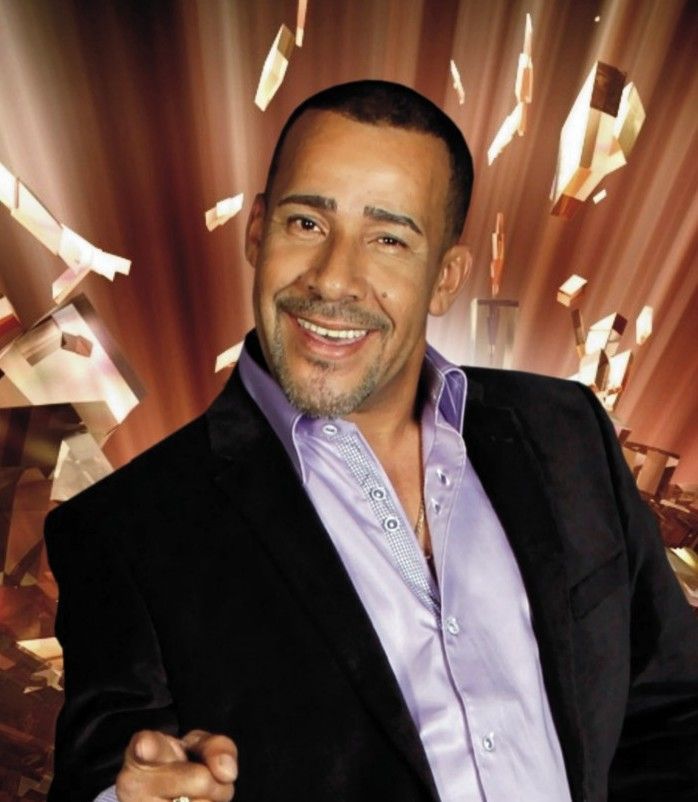
The Spaha Salsa Gallery Museum has been the recipient of a good number of objects donated by artists and their families after they had died. This time, it is the turn of Jerry Louis Díaz Rivas, better known as Jerry Rivas in the music scene, who is one of the main singers of El Gran Combo de Puerto Rico.   

We want to use his pleasant visit to our museum and his forty-sixth anniversary with El Gran Combo to talk a little about his great career and everything achieved in his long musical career over the past decades.   

Jerry with Johnny
El Gran Combo De Puerto Rico singer Jerry Rivas and Johnny Cruz

Life and career of Jerry Rivas   

Jerry Diaz was born in the city of Tampa, United States, on August 25, 1955 and his parents were of Puerto Rican origin, so it is undeniable that Puerto Rican heritage greatly influenced the path he would take later on.   

About five years later, Jerry and his family moved to the city of Bayamón, Puerto Rico, where he began to take his first steps in the world of music with the guitar, the Puerto Rican cuatro and the Cuban tres, counting on the support of professor Carlos Seguí to learn to play the latter. However, shortly after, he would decide that singing was his thing. 

While still a young teenager, he was part of various groups such as Grupo Complicación, Conjunto Cojoba and Grupo Chaney, being in all cases a very important part of the body of musicians who were in these bands.   

His big great came in 1976 when Don Rafael Ithier, who was interested in the artist to be part of El Gran Combo De Puerto Rico, after he was recommended by Don Quique Lucca, who thought of this boy as replacement of the legendary Andy Montañez, singer of the group for more than 14 years.   

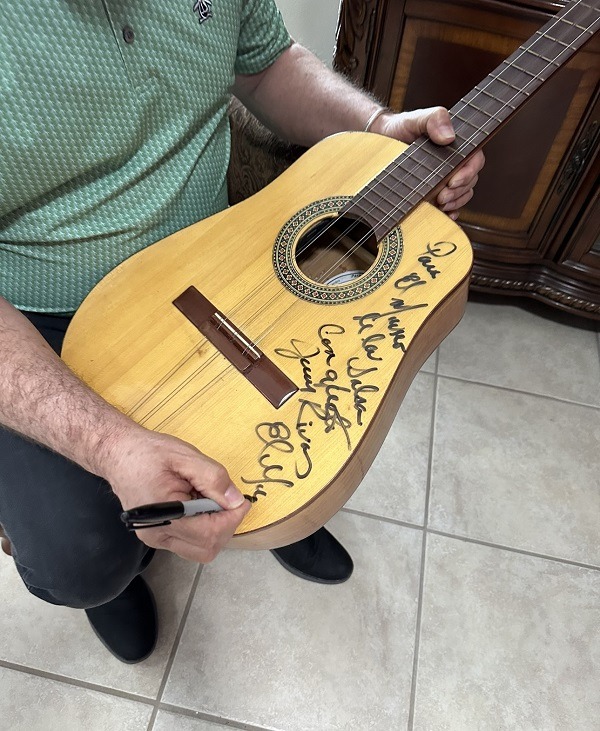
Jerry signing a tres
Jerry Rivas signing the Cuban tres he donated

Although it was not believed that Jerry could fill the shoes of his predecessor, his talent, effort and support from the music director of the orchestra, made him consolidate in the institution along with the rest of his colleagues and become one of the longest-serving members of El Gran Combo. 

International fame came with the album ”El Gran Combo En Las Vegas” thanks to the song ”La Clave”, in which he proved his vocal abilities to new levels. After that, he achieved his consecration as an international star with the album ”Happy Days” thanks to the song ”El Menú”.   

After that, everything that followed for Jerry was success with the orchestra, which resulted in approximately 30 recordings in a span of 45 years with El Gran Combo de Puerto Rico, his musicians and the extraordinary team behind the group.    

Other details of his life and support to the Salsa Museum  

In addition to being a vocalist for El Gran Combo de Puerto Rico, Jerry also participated in backing vocals with other great musicians for their respective musical works such as Willie Rosario, Bobby Valentín, Yuri Buenaventura, Gilberto Santa Rosa, La Sonora Ponceña, Adalberto Santiago and many others.   

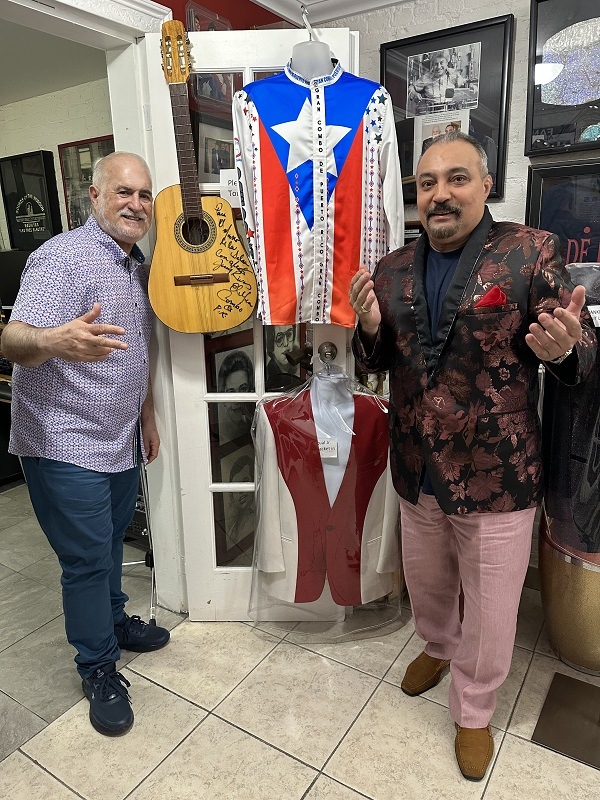
Jerry with Johnny and the tres
Jerry and Johnny with the tres and the jacket Jerry donated to the museum

In each of these projects, the Puerto Rican artist has always given his personal touch and his unmistakable vocal chords, so it is normal that he is considered a legendary voice within the salsa movement not only in his country, but also worldwide.   

Due to all of the above, it is a true honor for the Spaha Salsa Gallery Museum to receive this great musical luminary in its facilities, where he was welcomed by its president and founder, Mr. Johnny Cruz. 

Some photos on the Cruz’s official Facebook page, it is evident that both shared a very pleasant time remembering things from the past and talking about music. In addition, Jerry donated one of his shirts and a Cuban tres to the museum so that they can be exhibited to the public along with the rest of the objects in its collection.   

We thank Jerry for his kindness, generosity and great talent, which we hope will continue to accompany us in the years to come. 

Read also: Tommy Olivencia Jr’s career and support for the salsa museum 

  • « Go to Previous Page
  • Page 1
  • Interim pages omitted …
  • Page 10
  • Page 11
  • Page 12
  • Page 13
  • Page 14
  • Interim pages omitted …
  • Page 19
  • Go to Next Page »

International Salsa Magazine (ISM) is a monthly publication about Salsa activities around the world, that has been publishing since 2007. It is a world network of volunteers coordinated by ISM Magazine. We are working to strengthen all the events by working together.