• Skip to primary navigation
  • Skip to main content

International Salsa Magazine

  • Home
  • Previous editions
    • 2025
      • ISM / November 2025
      • ISM / October 2025
      • ISM / September 2025
      • ISM / August 2025
      • ISM / July 2025
      • ISM / June 2025
      • ISM / May2025
      • ISM / April 2025
      • ISM / March 2025
      • ISM / February 2025
      • ISM / January 2025
    • 2024
      • ISM / December 2024
      • ISM / November 2024
      • ISM / October 2024
      • ISM / September 2024
      • ISM / August 2024
      • ISM / July 2024
      • ISM / June 2024
      • ISM / May 2024
      • ISM / April 2024
      • ISM / March 2024
      • ISM / February 2024
      • ISM / January 2024
    • 2023
      • ISM / December 2023
      • ISM / November 2023
      • ISM / October 2023
      • ISM – September 2023
      • ISM – August 2023
      • ISM July 2023
      • ISM Edition June 2023
      • ISM – May 2023
      • ISM April 2023
      • ISM March 2023
      • ISM February 2023
      • ISM January 2023
    • 2022
      • ISM December 2022
      • ISM November 2022
      • ISM October 2022
      • ISM September 2022
      • ISM August 2022
      • ISM July 2022
      • ISM June 2022
      • ISM May 2022
      • ISM February 2022
      • ISM January 2022
    • 2021
      • ISM December 2021
      • ISM November 2021
      • ISM October – 2021
      • ISM September 2021
      • ISM August 2021
      • ISM July 2021
      • ISM May 2021
      • ISM April 2021
      • ISM June 2021
      • ISM March 2021
      • ISM February 2021
      • ISM January 2021
    • 2020
      • ISM December 2020
      • ISM November 2020
      • ISM October 2020
      • ISM September 2020
      • ISM August 2020
      • ISM July 2020
      • ISM June 2020
      • ISM May 2020
      • ISM April 2020
      • ISM March 2020
      • ISM February 2020
      • ISM January 2020
    • 2019
      • ISM December 2019
      • ISM November 2019
      • ISM October 2019
      • ISM Septembre 2019
      • ISM August 2019
      • ISM July 2019
      • ISM June 2019
      • ISM May 2019
      • ISM April 2019
      • ISM March 2019
      • ISM February 2019
      • ISM January 2019
    • 2018
      • ISM December 2018
      • ISM November 2018
      • ISM October 2018
      • ISM September 2018
      • ISM August 2018
      • ISM July 2018
      • ISM June 2018
      • ISM May 2018
      • ISM April 2018
      • ISM March 2018
      • ISM February 2018
      • ISM January 2018
    • 2017
      • ISM December 2017
      • ISM November 2017
      • ISM October 2017
      • ISM September 2017
      • ISM August 2017
      • ISM July 2017
      • ISM June 2017
      • ISM May 2017
      • ISM April 2017
  • Download Salsa App
    • Android
    • Apple
  • Spanish

Search Results for: Cali

“Extravagante” is the ninth record production by Orquesta Mulenze

Edwin “Mulenze” Morales was born on 9 April.

Orquesta Mulenze came out in 1976 due to the motivation of Edwin Morales. At that time, he was a young rocker who decided to change his guitar for a bass and in turn become part of Orquesta Yambo, often accompanyng artists such as Hector Lavoe, Celia Cruz, Cheo Feliciano, Ismael Miranda among others arriving in Puerto Rico without an orchestra; then it was later identified and we would know as MULENZE.

The Orchestra began at a time when salsa was booming, and was fortunate to have musicians, composers and singers
The Mulenze orchestra was founded in 1976, motivated by Edwin Morales

The Orchestra was created in the era where salsa was booming and was fortunate to have musicians, composers and singers of great stature who are now recognized. These include Cano Estremera (R.I.P), (El albino de la Salsa) who would later join Bobby Valentín’s band as a vocalist; in the choir singer-songwriter Pedro Arroyo who has brought several of his compositions to Mulenze, in the piano Andy Guzmán and Eric Figueroa. The latter would be one of the influencers in the style which would be adopted by the orchestra, practicing a little sophisticated and revolutionary rhythm for the public that follows popular music.

Mulenze was one of the first orchestras to use synthesizers within salsa, working rhythmically out of the beat in which the clave pattern is set, giving some jazz variations to their music; it was an innovation that was not very accepted by the groups that were already established at that time, though later this would give respect and an its own identity to the orchestra with its brilliant arrangements.

The ninth record production “Extravagante”

In the voices of Pedro Brull and Rafy Andino, excellent album and Edwin "Mulenze" Morales as director of the group with a first-class team of musicians and arrangers surprises us with this release.
“Extravagante” is the ninth record production by Orquesta Mulenze

This ninth record production “Extravagante” is impossible to get since 1990 as the company under which it was released has ceased to exist and it is one of those many lost records.

In the voices of Pedro Brull and Rafy Andino, excellent album and Edwin “Mulenze” Morales as director of the group with a first-class team of musicians and arrangers surprises us with this release.

Orquesta Mulenze – Extravagante 1990.

Record label: Hitt Makers

Quédate: Written-By – Pedro Arroyo

Ese Loco De La Vida: Written-By – Juan Bautista

Es Al Amor Que Llega: Written-By – Jose Luis Perales*

No Hay Preguntas: Written-By – Jose Luis Perales*

Contra Viento Y Marea: Written-By – Gloria Gonzalez

Zumba Con Mi Rumba: Written-By – Poldo Castro

Mi Tremendo Caso: Written-By – Tite Curet Alonso

A Dormir Afuera: Written-By Fabio Espinoza, Joaquin Galan, Lucia Galan

Arrangers:

Eric Figueroa (2) (tracks: B3),

Julio Alvarado (tracks: A2, B1),

Luis Garcia (5) (tracks: B2),

Ricky Rodriguez (3) (tracks: A1, A3, A4, B4).

Talent:

Bongos, Cowbell – Charlie Sierra

Congas – Jimmy Garcia (3)

Choir – Alex Castro (3), Cheo Andújar

Guest Musician, Congas – Giovanni Hidalgo, Johnny Rivero

Guest Musician, Keyboards – Jose Pujales

Guest Musician], Maracas – Cusy Castillo

Guest Musician, Timbales – Chago Martinez

Guest Musician, Trombone – José Berrios

Guest Musician, Trumpet – Carlos Martinez (3), Mario Ortiz Jr.

Güiro – Ricardo Salgado

Leader, Bass, Producer, Directed By – Edwin Morales

Mixed By – Papo Sánchez (2)

Piano, Keyboards – Ricky Rodriguez (3)

Producer – Antonio Rodríguez

Technician – Andrés Reyes, George Kamarinos

Technician, Mixed By – Ricky Martínez

Timbales – Roberto Whatts

Trombone – Eliut Cintron, Rafy Torres

Trumpet – Angie Machado, Roberto Santiago (2)

Vocals – Pedro Brull, Rafy Andino

Vocals, Choir – Jose L. Ramos

Extravagante 1990

#SalsaIsCulture

Article of Interest: Mulenze The Orchestra of Eternal Youth

Sources: Julio Vázquez Productions

Salsa fantasy, a concept of the Salsa designer Ron Levine

Album covers can express the technological and social advances of different epochs through indirect means.

“Salsa Fantasy” is a term coined by journalist Pablo Yglesias to describe a concept that artist and illustrator Ron Levine wanted to implement when he started creating various album covers for Latin music in the 70s.  He was primarily intended to propose a style that could compete directly with the creations of the prosperous American industry.

This article presents the reasons why Ron Levine decided to set out on on that journey. To that end, we have drawn on an interview conducted by Pablo Yglesias in 2011 in which, in addition to his interesting anecdotes, we are being offered a glimpse of a retrospect of all his work, going through his work with the Sonora Ponceña in which he had the opportunity to develop his style.

Album cover design, Fania Records, illustration, Pop Art, La Sonora Ponceña.

Introduction

Album covers can express the technological and social advances of different epochs through indirect means.

Album covers can express the technological and social advances of different epochs through indirect means (Rondón, C., 2008), (Figueredo, M., 2010). The interesting thing about this is that the relative precarious situation in which salsa album covers were designed and the marginality expressed in many cases by the lack of resources with which they were created.

Jerry Masucci’s Fania Records was really focused on supporting that nascent number of singers of Latin origin.

Many of those covers created were concepts on which certain issues closely related to the songs or what the singer wished to express were handled.

In most cases, staging and photography were resorted to express certain ideas related to migration of Latinos in the U.S. and others of social order that prevailed in the lyrics of the songs (Yglesias, P. E., 2005).

In this way, various artists became directly or indirectly involved in the making of their album covers; one example of this are Eddie Palmieri’s album covers where a set of simple but forceful photos and the good mastering of typography can be appreciated (Yglesias, P. E. ,2005).

Although there existed a number of non-Latin graphic designers and artists who engaged in Latin music in the United States during the 70s and 80s, the team formed by Ron Levine and Marshall Lee was the most visible of Salsa in New York.

The two artists, both iconic and revered, worked for Jerry Masucci at Fania Records where Levine created many of Fania’s best known and appreciated covers.

Salsa wonderful photos of Lee would be part of a comprehensive separate study, what interests us in this article is to show the work developed in Ron Levine’s work as a graphic designer and artist.

Throughout his career he played an important role in carrying on the legacy of high quality in the design of album covers initiated by Izzy Sanabria, Walter Velez, Charlie Rosario and other artists and illustrators in the 60s and early 70s.

Below is a review of Ron Levine’s work and some aspects that led him to develop a style so particular that, still today, is applauded by many designers, artists and illustrators who have been involved in the art of creating album covers.

Levine’s childhood: from drawing horses to Ronald Stuart art school Levine was born in 1947 in Brooklyn, New York and moved to Long Island at six years old. His maternal grandparents were Scottish Protestants; his maternal grandmother was Theodore Roosevelt’s nurse in a moment of her life (“She was a big burly woman with hair like sheep,” recalls Levine)

Her paternal grandparents were Jews from Poland and Russia. Her mother, who was born in Glasgow, converted to Judaism when she married her father. She attended art school and, besides being a housewife, she used to work in a professional photo studio and was an expert in dyeing and painting backgrounds oil colors in black and white photographs for weddings.

Her father worked in a textile store and had a knack for textile marketing and fashion in Manhattan.

Levine spent his childhood playing with drums, Jewish folk dances and horse riding. Drawing horses fascinated him and he was obsessed with science fiction illustrations such as Flash Gordon, Disney cartoons, superhero comics, horror and fantasy.

By the age of eight, he was longing to work for Walt Disney; at school he was irreverent in art classes, preferring to draw horses, fantasy characters or Flash Gordon, rather than those boring still life, fruit bowls and colour cards that were classroom exercises.

He motivated himself by drawing fantasy and beautiful horses. Despite his poor grades, his parents knew he had talent, so they encouraged his artistic skills knowing that his career in the arts may not be very financially feasible.

To him, music was a passion almost be likened to painting. Levine formed a band called “The tensions” in which he played drums. He was also the lead vocalist of another band called “The New Rock Workshop” and its members toured and recorded for several years in the 60s.

In addition to playing and singing in those bands, Levine began studying at the School of Visual Arts in Manhattan, where he took classes in a 4-year programme. There he reclaimed his passion for drawing the human figure.

At the age of 20 Levine settled permanently in Manhattan anstarted his professional career as an artist.  He could not finish the last quarter of his studies, but through a professor he was able to make contact high-profile graphic artists such as Paul Davis, Milton Glaser, Chwast Seymour and Lubalin Herb. After a while he landed a job making magazine covers and also with the famous creative director Tony Palladino with whom he learned various tools of the trade.

In these early works, as may be noted, photography was used as an element of graphic expression, combining some illustration and staging. It was a work concluded between Levine and Lee.

After the first six years, Levine was already doing most of the work for Fania All-Stars together with Lee.

At the same time, Sanabria was occupied with Latin NY magazine, which was a very influential publication for Nuyorican popular culture.

Levine comments that he felt part of The Good, The Bad And The Ugly and Lo Mato.

The Good, The Bad And The Ugly

Jhonny Pacheco has a respect for his illustrations, because Levine also knew about music. However, he says he took a crash course and went from knowing absolutely nothing about Latin music to witnessing its history
The Good, The Bad And The Ugly

Jhonny Pacheco had respect for his illustrations because Levine also knew about music.

However, he says he took an intensive course and went from not knowing anything about Latin music to witnessing its history and evolution in the front row.

After that, he worked for some albums by Rubén Blades in which he began experimenting with portrait photography, which was a realistic interpretation from photography.

Lo Mato

Despite the pleasant working atmosphere, Levine had some conceptual discussions with Masucci related to logos and title sizes in typefaces.
Lo Mato

Despite the pleasant working atmosphere, Levine had some conceptual discussions with Masucci in relation to logos and title text sizes in typographies, resulting in controversial results in some cases.

Since Latin music was marginalized for many years, the designs of the 60s and 70s used a shoestring budget, considering that Fania All-Stars was neither Columbia nor Atlantic Records, for many of the typographies almost everything had to be created manually and with basic techniques such as the use of masks, photocopies, adhesive tape and rubber cement.

In this way, there was a lot of handmade work in which Levine’s photos were taken to the extreme. All the lines were done by hand and then tinted with rapidograph pens. Levine says that some of the typographies created had no concept behind them, however, illustration to produce a quality product take a long time.

Creativity was blooming as was humor. Many musicians used to dress up in costumes and pose with girls.

Subsequently, he was called to work in the covers of La Sonora Ponceña given that the aesthetics of this orchestra’s pieces were in line with his expectations about fantasy illustrations.

La Sonora Ponceña.

Many of the covers created by Levine and Lee challenged the concept of the Latin identity’s representation, this can be better seen in the LP’s created for La Sonora Ponceña from Ponce, Puerto Rico.

The record label Fania Records offered that differentiation to new musicians, giving them the opportunity to say something interestingusing their covers. Sanabria had already begun to develop a concept, but were at the hands of Lee and Levine that a classic representation of the style based on comic-inspired illustrations, some humor and Pop Art was truly shown.

Ruben Blades.

Ruben Blades With Strings

In this way, contextualized ideas and stories were developed; an example of this is a cover that shows a representation of the conquistador Juan Ponce de Leon in full body armor (and somewhat incongruous with the use of a sweater
Rubén Blades With Strings

This is how contextualized ideas and stories were developed; an example of this is a cover where a representation of the conquistador Juan Ponce de Leon in full body armor (something incongruous with the use of a sweater), a guitar on his shoulder, a maraca in one hand and a parchment in the other one.

When Levine took charge, there was some controversy concerning how the group should be represented; however, Levine was quite good in the eyes of the fans.

Given that they felt the story needed to be told in some way and the problems and artistic freedom so important to salsa in the 70s were illustrated with authencity through his creations.

These creations that came out from an initial idea of Juan Ponce de León’s representation mutated and became the issue of many album covers that not only told fantastic fictional stories related to music, but also changed the traditional image of the Latin album.

Sonora Ponceña albums (Musical Conquest – Back to work).

Sonora Ponceña Musical Conquest

Sonora Ponceña Musical Conquest

Despite the success of Levine’s work with the public, Sanabria, who always tried to remain within the limits of Latin culture, criticized him precisely for distorting music and its culture.

Sonora Ponceña Back to work

Sonora Ponceña Back to Work

However, Levine defended his idea by saying that Latin music and its artists very good music), had not received before the support as is provided to American music and artists. Given that Levine had been linked to the creation of covers for rock bands, he always felt that the quality of Latin music covers was very poor due to the low budget.

 Sonora Ponceña albums (Determination – Night Rider).

Sonora Ponceña Determination

Sonora Ponceña Determination

In this way with his fiction proposal, Levine put Latin music on a par with some American artists who had recognition (Boston, ELO, Earth, Wind, Fire, Kiss and Yes).

Levine believed the covers should reflect the image of success. Fortunately, he had the support of Masucci, who, motivated by Levine, invested more money in the covers using the same premise.

Sonora Ponceña Night Rider

Sonora Ponceña Night Rider

With his proposal for the covers, Levine wanted to show that Latin music was part of one of the biggest music scenes in the world.

He remarked that each of the covers had the same standard of treatment as a work of art; it was worked with great care and detail.

Finally, the last cover created by Levine for La Sonora Ponceña was made in the digital age – On Target (1998). There is a kind of hybrid between samurai and barbarian, with certain influences of the aesthetics of video games, fast-moving typography management with a flatter illustration but with a three-dimensional look.

The CD was released the year after the death of Masucci.

Sonora Ponceña On Target.

Sonora Ponceña On Target

Conclusion

The concept proposed by Ron Levine allowed to explore from creation not only the various ways of making known a musical group, but also the establishment of a style that spread among the public to such an extent that his work on each cover is recognized as a work of art at present.

Mongo Santamaria

Mongo Santamaria
Mongo Santamaria

On the other hand, he was a pioneer of a style with which Latin music was not initially identified in its beginnings (fiction illustration, Pop Art, humor.) Yet, despite economic constraints, he designed several album covers with the best quality, they are even on the same level as those created on American record labels with higher budgets.

Notes

1 Member of the Research Group Camaleón.

2 Member of the Research Group Palo de Mango.

3 Music festival, art and Hippie congregation; held on 15, 16, 17 and the early morning of 18 August 1969, in Sullivan Country, New York.

References

Figueredo, M. (2010).

Album cover design in the 1970s.

Creation and Production in Design and Communication [works of students and Graduates] Nº 35 (2010). pp 99-102 ISSN 1668-5229 99

Rondón, C. (2008).

The Book of Salsa: A Chronicle of Urban Music from the Caribbean to New York City The University of North Carolina Press.

Cocinando. Fifty Years of Latin Album Cover Art.

New York: Pricenton Architectural Press.

Received: June 30/ Approved: November 28, 2013.

For Santa Maria’s bongo album Afro-Indio, Levine produced a masterful watercolor of ritual imagery focused on African culture.

https://nexus.univalle.edu.co/index.php/nexus/article/view/747/870

Share this:

Ron Levine

Noticias con Sabor by Luis Medina

News about the live music scene in San Francisco

The Ruben Blades concert at Oakland’s Paramount Theatre on Saturday, November 20th was sensational!  The anticipation of the packed intergenerational crowd to his first visit In 18 years was at a high peak.  Blades wowed the audience with a stunning performance backed by bassist Roberto Delgado’s dynamic Big Band.  Ruben’s powerful voice was as crystal clear as when he started his career with Ray Barretto back in 1974.  His set list was a retrospective into his vast and deep repertoire that included his big hits, crowd favorites, esoteric song choices and selections from his Latin Grammy award winning album Salswing! The musicianship that accompanied Blades was top notch as Roberto Delgado’s crack band were tight, explosive and swinging!  The visuals projected on the huge screen above Ruben were imaginative displaying photo tributes to Hector Lavoe as well as to recently deceased Latin music giants and clever animation that was the backdrop for songs.  This was a triumphant return to the SF Bay Area for Blades who last played a concert here in 2003 at Roccapulco.  He performed for 2 hours and 40 minutes to the delight of the massive crowd.  What a show!!

Art for the Salswing Tour
Art for the Salswing Tour by Rubén Baldes

Speaking of big shows….Three time Grammy Award Winner Spanish Harlem Orchestra will play a special holiday dance/concert “Salsa Para El Bailador” on Saturday, December 11th, 8 pm at the Monterey Conference Center, 1 Portola Plaza in Monterey.   Yours truly, Luis Medina  will be your Master Of Ceremonies and DJ for the evening playing 100% Bailable in between the sets.  There are VIP seats and packages still available. There is also an auto caravan coming from San Francisco directly to the concert.  For more information on the concert, caravan and tickets, please visit www.montunoproductions.com or call 510-586-3215. 

I dropped by La Peña Cultural Center, 3105 Shattuck Avenue in Berkeley to catch the livestream of their couch concert starring Santana percussionist Karl Perazo live from their stage on Friday, Nov. 19th.  The web streamed concert was hosted by renowned Bay Area based flautist Miguelito Martinez (Candela) with an intro from La Peña’s Executive Director Natalia Neira Retamal. Perazo was in excellent form on congas, bongos and percussion leading a hot Latin Jazz descarga accompanied by Martinez, bassist Saul Sierra and pianist Julio De La Cruz.  This session was part of an on-going series that is coordinated by La Peña new creative staff Corey Raynor.  For more information, visit www.lapena.org. 

The Cigar Bar, 850 Montgomery in SF’s North Beach will be open to Salseros in December for part of December.  Their lineup includes Orquesta Timbalero Dec 4, Alberto Y La Differencia Dec. 5, Edgardo Cambon y Candela, Dec 10, Josh Jones Latin Jazz Ensemble Dec 11, Latin Rhythm Boys Dec 17 and the last night for Salsa this year will be featuring PMO all star vocalist/percussionist Braulio Barrera’s Somos El Son on Dec. 18.  Cigar Bar will reopen the Latin music nights in early January 2022.

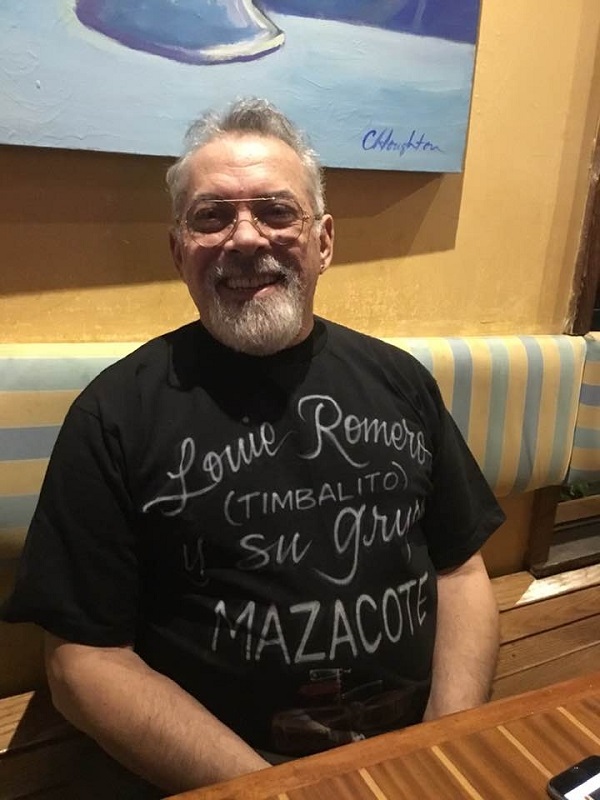
The Seahorse is Sausalito will feature in their Sunday Salsa lineup the following acts: Julio Bravo & Salsabor Dec 5, Edgardo Cambon & Candela Dec. 12, Louie Romero & Mazacote Dec 19 and the Salsa Caliente All Stars with Karl Perazo (of Santana), Gary Flores and Carlitos Franco on Dec. 26.  The Seahorse will also be starting off their Salsa Saturdays with Rene Escovedo on Dec. 4th. For the rest of the Sat schedule, visit sausalitoseahorse.com.

Julio Bravo Y Su Orquesta Salsabor
Julio Bravo in one of his performances

More news

The Ramp, 855 Terry Francois in SF will continue Salsa under their weatherproof tent on Saturday afternoons beginning at 5 PM featuring Pepe Y Su Orquesta Dec. 4, trumpeter Julius Melendez All Stars Dec. 11, Eric Rangel and Orquesta America, Dec 18 and a special Thursday with Julio Bravo and Salsabor on Dec. 23rd

Space 550 at 550 Barneveld, SF has opened its doors again to Friday Salsa dancing featuring Somos El Son Dec 3, Orquesta Borinquen Dec. 10 and their last event for 2021 featuring N’Rumba on Dec. 17th.  The Friday Night happenings will resume on Friday, January 14, 2022 with Borinquen.  The Saturday nights have resumed with Bachata Takeover Saturdays featuring Bachata in the main room and the other rooms featuring Salsa and Bachata.

Kimbara 3380 19th Street at the site of the old big room of the former SF Bissap Baobab location is now featuring Suzy Q Wednesdays every 1st and 3rd Wednesdays of the month.  This night brought you by the Producers of I Heart Mambo and the SBK Congress feature Salsa Congress style DJ’s and live bands such as VibraSON on December 15th. 

Peninsula/South Bay’s long-running established Salsa Club Alberto’s, 736 West Dana St in Mountain View offers Salsa on Tuesday and Friday nights featuring dance lessons by Pantea with DJ and live entertainment.  Their weekly calendar includes Tango on Sunday, Bachata on Wednesdays and Rock En Español on Saturday nights….Cascal Restaurant  located nearby at 400 Castro Street, Mountain View offers live entertainment on Fridays through Sundays with great ambiance, tasty Spanish cuisine and the sounds of Edgardo Cambon and LaTiDo on December 3, 4 and 17th. 

Singer Edgardo Cambon
Uruguayan bandleader, percussionist, and singer Edgardo Cambon

Producer Adrian Goddard’s Jaffe Events continues to keep busy into the holidays.  They will celebrate with a Fiesta Navideña on Saturday, Dec. 11 from 3 to 7 pm. Featuring an afternoon of Salsa, Timba, Bachata, Reggaeton and more by DJ’s including Walt Digz, Tony O and Pablo at the Mars Bar, 798 Brannan SF.  Jaffe Events is also presenting Feliz Año Nuevo 2022 on New Years Eve with DJ’s spinning Reggaeton, Salsa, Latin Hits, Cumbia and more at the BEI Hotel, 50 Eighth Street in San Francisco.

On New Year’s Eve, the renowned Salsa orchestra Grupo Gale from Colombia will headline at the Hyatt Regency in Burlingame.  The event will also feature DJ Tony O, DJ Bosco and DJ Franklin.  The event will also feature International music in their second room. For more information, go to eventbrite.com, ticketsparaticom or call 415-424-8809.

The Marriott in San Mateo will feature 6 rooms featuring live music by Julio Bravo and Salsabor, Amor Do Samba with Brazilian Drummers, Orquesta N’Rumba, Orq Revelation and 10 DJ’s playing hits, Reggaeton, Bachata and Salsa.  Free beer offered from 8 to 11 pm. For ticket info, visit www.marriottliveparty.com.

There will be a New Years Eve Descarga 2021 featuring Salsa, Bachata and Kizomba music at 1824 Hillsdale Avenue in San Jose.  This bash will feature a tribute to the legendary all-star timbalero Louie Romero who will be performing with Orquesta Salson, Dance performance by John and Liz of Salsamania Dance Company,, DJ music will feature WorldSalsaRadio DJ’s El De La Clave SF and DJ Boricua, dancer Kathy Reyes will be hosting the bachata room and more!  For tickets, go to eventbrite.com

Be sure to check out my radio programs “Con Sabor” every Saturday evening 9 to 11 pm on KPFA 94.1 FM/kpfa.org and “Sabiduria Con Tumbao” every Wednesday evening 5 to 7 PM PST on WorldSalsaRadio.com.

Until next time, Ciao 4 now!!!

Louie Romero Y Su Grupo Mazacote
Bandleader and timbalero Luie Romero while performing

This is the report last month: NOTICIAS CON SABOR- SAN FRANCISCO BAY AREA/NORTHERN CALIFORNIA

BY LUIS MEDINA, PRODUCER AND HOST OF CON SABOR ON KPFA 94.1 FM AND SABIDURIA CON TUMBAO ON WORLD SALSA RADIO.COM

A bit of history about Latin soul and its relationship with salsa

How Latin soul was born

There are certain musical genres that, despite their short duration on the public stage, marked history to such an extent that they continue to be named and taken into account when analyzing the process experienced by Latin music in the United States. One of them is Latin soul, which is defined as a musical genre born and developed in the 1960s in New York City, such as in the case of many of the rhythms we have today. 

Latin soul was born of the mixing of Cuban mambo and some elements coming from the American version of soul and Latin jazz. Even though it was a set of rhythms that became relevant only in the aforementioned decade, it played a particularly valuable role in the salsa movement that was starting to take shape at that time. 

One of its most striking characteristics is that it places a lot of emphasis on its Afro-Cuban rhythms, but at the same time, most of its songs are in English, which reveals an extremely interesting mix of Cuban and American cultures. After to have acquired a little more specific style, it started to become popular among New York-based Latin artists, who used the emerging genre to win over communities of their respective countries and local media at the same time. 

Among the greatest exponents of Latin soul is Joe Bataan, an American of Filipino descent who is regarded as the most famous vocalist of the genre. Something that made him really different from the rest of the artists of his kind was the merger between American soul and salsa that was already sounded at that time. For this and many other reasons, Bataan is still seen as one of the greatest idols of those golden years of music. 

This is Joe Bataan
Joe Bataan “The King of Latin Soul”

Bataan, Willie Colón, and other performers represented the emergence of a generation of musicians whose formation was the street itself and the harsh experiences occurring it. At the same time, there were others who had an academic background and studies that made them play and behave otherwise. When the union between both groups took place, the result was a display of talent that is still turning heads. All those who were trained in academies and on the street joined the new oncoming wave of rhythms. 

An important detail about this is that the Latin audience in general was eager to look for artistic role models through which to reflect their daily lives. We must remember that many of these people lived in poor conditions in some of the poorest neighborhoods in the country, so many did not really identify with educated music that came from the music academies and schools. All that changed greatly after the emergence of a group of artists who wanted to have their own place in the Anglo-Saxon entertainment business. In some cases, these young people came from an origin very similar to the one that has been described. 

This led to the creation of groups and orchestras in which formal and sophisticated music training had to coexist with other styles emerging from the humblest alleys in certain Latin neighborhoods. Music had ceased to be an elitist thing and would go on to become a mixture of different flavors and colors that were gradually brought together as the decades of the ’60s and ’70s went by. 

Around this time, the figure of Monguito Santamaría (Cuban percussionist and bandleader Mongo Santamaría’s son) emerged, who would be his biggest inspiration to take the path of music. The boy studied piano and proved a great talent for leading bands, but he needed something to push his career, since the mere fact of being a legend’s son was not going to guarantee the success he longed for. This led him to be carried away by the current of Boogaloo, another nascent genre that had gained overwhelming popularity at the time. 

Here you can see Monguito Santamaría
Monguito Santamaría

From there, Monguito created his own orchestra and invites some of his schoolmates to join him, which resulted in a quite complete group in which these guys designed their own American R&B versions and sounds and an accent that made them much closer to the African-American community that loved soul and funk. This made them put aside the Latin community for a while, but that would change sooner than expected.   

Long after Monguito completed his musical studies, he and his band decided to audition for Johnny Pacheco and Jerry Masucci. Let us not forget that Santamaria and the rest of his orchestra had a typically American vision of music, but they did not put aside the Cuban heritage behind them, so they always included songs in genres from the Caribbean island. This pleased the Fania All-Stars so much that they agreed to work with the orchestra, which adapted to the exigencies of the record label without losing sight of their goal: making music for Latinos in New York. 

This is how Monguito and Bataan became the Fania artists whose repertoires were more inclined to Latin soul. In view of the great success that Mongo’s son had with his projects on the label, he continued to immerse himself in the aforementioned rhythm and to enter Boogaloo, whose popularity was at its peak at that time. 

The bad news is that there were a set of factors that did not help the musician to make history as he wanted. One of them was the birth of salsa orchestras that perfectly read the social moment that lived by the poor Latin neighborhoods of the United States, a point on which Monguito stayed in the past. He and his musicians may have been better than many other bands of their generation, but they did not know how to read the historical moment when they were in. This and his little promotion in much of Latin America made much of his legacy be buried and forgotten. 

Monguito and his musicians
Monguito Santamaría, Rene McLean (saxophone), Harvey Hargraves (trumpet), Glenn Walker (trombone), Sam Turner (congas), Ronnie Hill (timbales), José Mangual Jr. (bongos), and Andy González (bass)

Eddie Palmieri’s role in this process 

American bandleader and pianist of Puerto Rican descent Eddie Palmieri played a very important role in the process carried out by Latin music during its evolution into what we know today. The artist radically changed the way Latin music was perceived thanks to his spectacular mix of Afro-Cuban rhythms and certain touches typically of Latin jazz. 

During the heyday of Boogaloo and Latin soul, Palmieri did his best to mix the best aspects of soul and funk with these Cuban rhythms, which would in turn be united with a typical revolutionary message of those years. Thanks to all these messages captured in his lyrics, the musician’s repertoire became more and more present in acts promoted by leftist movements and his music was brought to several prisons, giving it a nuance of denunciation that was very difficult to ignore.  

In contrast to other talents of those years, the New Yorker cannot be classified as a salsa, Boogaloo or soul musician. This is because he knew how to handle all genres and combine them in a novel way for that time.   

This is Eddie
Eddie Palmieri

Jorge Luis Suárez is a singer, musician and multifaceted artist and a bastion of Afro-Caribbean music

In Venezuela, the musical talent is undoubtedly first line and proven quality on any stage nationally and worldwide.

Specifically in the state of Lara and in the city of Barquisimeto, a great number of artists with category and hierarchy have emerged and been born, exalting our Latin rhythms.

For this edition of “Salsa Escrita”, we are honored to have as a special guest vocalist Jorge Luis Suarez, pride and bastion of Afro-Caribbean music and various genres, who, for years, demonstrates his class and professionalism.

Jorge Luis is a singer, musician and multifaceted artist; born on August 7 in the city of Maracaibo, son of parents from the city of Carora, where he spent part of his childhood in that state and began to lean towards music, having as main influence his father, who played the guitar and sang romantic music.

In the early 80’s, he moved to Barquisimeto to attend university and was discovered as a singer and player of the bass, cuatro and guitar. Welcome Jorge Luis Suarez to “Salsa Escrita”, through International Salsa Magazine, www.salsagoogle.com.

Vocalist Jorge Luis Suárez, pride and stalwart of Afro-Caribbean music

To begin this pleasant, enjoyable and long awaited meeting, because we wanted to have you as one of our interviewees and tell us about your experiences about your artistic career, which has been very successful nationally and worldwide for the pride of all who know you.

Thank you Professor Carlos Colmenárez, for inviting me to your well read and recognized salsa column, unique in the center-west of the country and in which you project Venezuelan musicians worldwide.

Jorge Luis, with which groups did you begin your journey through this wonderful art, in which you have demonstrated versatility, perseverance, discipline and quality?

Jorge Luis is a singer, musician and multifaceted artist

Well, let me tell you that I started my musical activity professionally, being part of groups of regional renown, among them: “Las Estrellas del Momento”, “Orquesta Alegría” and then “Venezuela en Gaitas”, “Sazón Latino” and in the late 80’s and early 90’s, I became part of the staff of the orchestra “La Banda Actual”, a salsa icon in the state of Lara.

By the way Jorge, we remember your beginnings with “La Banda Actual” and it was an obligatory reference to be hired in private parties, night clubs and of course to share the stage with great artists and luminaries of the Latin-Caribbean music genre.

In which billboards did you have the joy and privilege of singing, alternating with national and international stars?

Indeed professor, with Banda Actual we performed with Héctor Lavoe, Wilfrido Vargas, Las Chicas del Can, Porfi Jiménez, Guaco, Los Melódicos, Hermanos Carruyo, Billos Caracas Boys, Orquesta La Crítica and many more, in their visits to Barquisimeto, having as locations the Domo Bolivariano, Complejo Ferial, among others.

In fact, Jorge Luis and due to your outstanding and outstanding vocal ability, the son of the maestro Billo Frómeta, Luis Frómeta, called you to join the ranks of the Billo Caracas Boys, how was that experience?

With Billo I learned to have more artistic discipline and gain experience for 4 years, recording three albums touring Latin America, the United States and Europe; precisely in the carnivals of Tenerife we starred in the Güines Record in public attendance at a bailanta, sharing the stage with Celia Cruz and Oscar D’León.

Jorge, tell us about your entrance to the orchestra of the world’s sonero Oscar D’León.

Professor Carlos, precisely because of that event in the Canary Islands, maestro Oscar called me and told me that he needed a vocalist with my characteristics to accompany him in his shows and international tours and honestly it was a difficult decision because with Billo Caracas Boys I was well established along with other Barquisimetans: Ely Méndez and Wolfang Perdomo, integrating the line of vocalists at that time, pure “guaros”.

But maestro Oscar’s offer seemed interesting to me and I finally said yes. With the Sonero del Mundo, to whom I owe a lot, because thanks to him I established myself even more as a performer and especially in salsa, taking his recommendations to the letter and of course it was an unforgettable experience, because with his orchestra we toured many countries and performed in venues such as: Carnegie Hall, Madison Square Garden, House off Blue in Los Angeles, Orange Ball, jazz festivals in Europe, sharing with renowned artists.

Professor, I wanted to tell you that at the same time working with Oscar’s orchestra, I recorded my production “Una Tercera Persona”, in the middle of 1992, which included the hit “Niégalo Todo”, obtaining the first places in the hit parade.

In that production I was accompanied in the recording by renowned musicians such as: Luisito Quintero, Roberto Quintero, Robert Vilera, Raul Agraz, Yorman Leon and the Nicaraguan Luis Enrique.

Jorge Luis is a singer, musician and multifaceted artist, born on August 7 in the city of Maracaibo, son of parents from the city of Carora, Venezuela.

Jorge, how many years did you stay with Oscar and why did you decide to leave his orchestra?

I was with Oscar for about four years and I decided to leave the group due to major reasons, as a result of business and commercial commitments that I had and still have in Barquisimeto.

For those who do not know, Jorge Luis is a multifaceted artist and has managed to venture as a vocalist in different musical genres, from salsa, gaitas, tropical danceable, guaracha, merengue, Venezuelan and boleros; achieving in this last aspect, being the arranger and musical producer of the trio Carora International at the end of 2014.

At the same time, he produced and performed 19 songs of Venezuelan music with arrangements by Jean Piero Gonzalez, which will be released soon.

Jorge Luis, having settled again in the musical capital of Venezuela, with whom have you recorded? Professor, in Barquisimeto I have been invited to record with the following groups: Venezuela Somos Gaita, Nikitao, Amantes de la Gaita, Venezuela en Gaitas, Unión Gaitera, Rafa y sus Diamantes, Grupo Colorama, Con Klase, Orquesta Variación, Orquesta la Mayor, Orquesta la Gran Premiere, Venezuela Rumba, La Orquesta Raza Caribe, recording with the latter 8 songs in the production that is about to be released. I was also invited to record with the Orquesta Son Colón de Maracay and with the Latin Grammy nominees, our Grupo Santoral de Barquisimeto, participating with them as a special guest in the show “El Amor se Canta”, in celebration of the Day of Love and Friendship, touring, starting at the Teatro Juares and other cities in the country, as well as private presentations.

As for current projects, what can you tell the readers of Salsa Escrita? Currently my second solo production in the salsa genre is about to be released, with arrangements by multi-instrumentalist Taylor Aranguren from Barquisimeto and myself.

We are launching the record label, precisely this June with the promotional track “No lo beses”, a song that was interpreted by Alejandro Fernandez, by the Mexican composer Jose Luis Roma.

The production is called “José Luis Suárez Covers”, which includes songs that have been hits around the world, such as: Cobarde cobarde, Escándalo, La bomba, Cuatro rosas, Darte un beso, El amor más grande del planeta, Bailando, No lo beses, among others. In this production, I am accompanied by my nephew Taylor Aranguren, the musicians: Carlos Giménez, Rómulo Paiva, Jeison Marchán, Wílner Navas, Freddy Adrián, in the master and mixes: Latín Récods Digital. Sound engineer: René Zerpa and in the general production: Jorge Luis Suárez. Jorge Luis, what are your social networks or digital platforms to interact with your followers? My contacts are, Instagram: @jorgeluissuarezoficial, Youtube: Jorge Luis Suárez Oficial, [email protected]. Jorge Luis, to finish, we want to congratulate you for your perseverance in music and wish you to continue harvesting triumphs, because you have quality and to spare.

Salsa Escrita “La Columna Salsera de Barquisimeto”, will be at your disposal to support you in your present and future projects, good luck… Thank you professor and personal friend, Carlos Colmenárez, for giving me your support in your salsa column, unique in the west of the country and thus allowing you to reach your regular readers around the world; again a thousand thanks, blessings and long live Venezuela!

Article of Interest:  Gerson Aranda “La Tabla de Caracas”

Carlos Colmenárez

Correspondent in Venezuela for International Salsa Magazine

  • « Go to Previous Page
  • Page 1
  • Interim pages omitted …
  • Page 109
  • Page 110
  • Page 111
  • Page 112
  • Page 113
  • Interim pages omitted …
  • Page 131
  • Go to Next Page »

International Salsa Magazine (ISM) is a monthly publication about Salsa activities around the world, that has been publishing since 2007. It is a world network of volunteers coordinated by ISM Magazine. We are working to strengthen all the events by working together.