• Skip to primary navigation
  • Skip to main content

International Salsa Magazine

  • Home
  • Previous editions
    • 2025
      • ISM / November 2025
      • ISM / October 2025
      • ISM / September 2025
      • ISM / August 2025
      • ISM / July 2025
      • ISM / June 2025
      • ISM / May2025
      • ISM / April 2025
      • ISM / March 2025
      • ISM / February 2025
      • ISM / January 2025
    • 2024
      • ISM / December 2024
      • ISM / November 2024
      • ISM / October 2024
      • ISM / September 2024
      • ISM / August 2024
      • ISM / July 2024
      • ISM / June 2024
      • ISM / May 2024
      • ISM / April 2024
      • ISM / March 2024
      • ISM / February 2024
      • ISM / January 2024
    • 2023
      • ISM / December 2023
      • ISM / November 2023
      • ISM / October 2023
      • ISM – September 2023
      • ISM – August 2023
      • ISM July 2023
      • ISM Edition June 2023
      • ISM – May 2023
      • ISM April 2023
      • ISM March 2023
      • ISM February 2023
      • ISM January 2023
    • 2022
      • ISM December 2022
      • ISM November 2022
      • ISM October 2022
      • ISM September 2022
      • ISM August 2022
      • ISM July 2022
      • ISM June 2022
      • ISM May 2022
      • ISM February 2022
      • ISM January 2022
    • 2021
      • ISM December 2021
      • ISM November 2021
      • ISM October – 2021
      • ISM September 2021
      • ISM August 2021
      • ISM July 2021
      • ISM May 2021
      • ISM April 2021
      • ISM June 2021
      • ISM March 2021
      • ISM February 2021
      • ISM January 2021
    • 2020
      • ISM December 2020
      • ISM November 2020
      • ISM October 2020
      • ISM September 2020
      • ISM August 2020
      • ISM July 2020
      • ISM June 2020
      • ISM May 2020
      • ISM April 2020
      • ISM March 2020
      • ISM February 2020
      • ISM January 2020
    • 2019
      • ISM December 2019
      • ISM November 2019
      • ISM October 2019
      • ISM Septembre 2019
      • ISM August 2019
      • ISM July 2019
      • ISM June 2019
      • ISM May 2019
      • ISM April 2019
      • ISM March 2019
      • ISM February 2019
      • ISM January 2019
    • 2018
      • ISM December 2018
      • ISM November 2018
      • ISM October 2018
      • ISM September 2018
      • ISM August 2018
      • ISM July 2018
      • ISM June 2018
      • ISM May 2018
      • ISM April 2018
      • ISM March 2018
      • ISM February 2018
      • ISM January 2018
    • 2017
      • ISM December 2017
      • ISM November 2017
      • ISM October 2017
      • ISM September 2017
      • ISM August 2017
      • ISM July 2017
      • ISM June 2017
      • ISM May 2017
      • ISM April 2017
  • Download Salsa App
    • Android
    • Apple
  • Spanish

Search Results for: Caribbean Rhythms

Meet Pablo Emmanuel Lemos and his classes at the School of Caribbean Rhythms “PA’ que lo Gozes”

Latinoamerica / Argentina / Punta Alta

On this occasion we had the opportunity to meet the dancer and teacher of the School of Caribbean Rhythms “PA’ que lo Gozes” Pablo Emmanuel Lemos. He tells us about the course of his career, profession, tastes and goals.

Unlike many dancers who started when they were little, at the age of 23 he (Pablo Emmanuel Lemos) began to dance different Latin rhythms and with the support of his classmates and teachers, he decided to do a Caribbean Rhythms teacher training at SAOCO. Later he began to teach at the academy where he began his apprenticeship, without imagining what his job would be today.

He mentions that he is passionate about teaching, sharing and giving his Salsa and Bachata classes in his work space and that at the moment he does not have his own academy; however, he gives his classes in Punta Alta, Argentina:

  • Monday and Wednesday at 8:15 p.m. at Humberto 1159 (Guapas Factory Gym) in Bahía Blanca.
  • Tuesday and Thursday at 8:00 p.m. in Spain 843 (Dance Pulse).

In general, competitions and/or recreational activities are held for those who wish to share these dynamic and joyful rhythms.

Pablo Emmanuel Lemos and his students

In one of our questions, to know what is necessary to learn to dance like a professional, he answers us:

“Knowledge is not what makes the dancer, but the desire, motivation and decision to learn from their peers and/or partners”.

For new Latinos, he tells them to “dare to dance… whatever the impulse that leads you to want to do it, without brakes, fear, or doubts…. Dancing is a wonderful art that has made a resounding change in my life. That is why I invite you all to dance and try this healthy discipline”

If you want to know more about his classes:

  • Facebook: @PabloEmmanuelLemos o @AleA.Abello
  • Teléfono: +54 2932554866 / +54 2915265613

Maelo y su Klan want to bring tropical rhythms to the whole world

Maelo y su Klan is the latest project, and one of the dreams, of the producer with more than twenty years of experience, Johnny Ysmael Salaverria Dicurú. The popular “Maelo” as his dearest friends call him, continues his career by working and pouring his heart into this project. With them the first genre fusion between Son and Kizomba is known. In the following lines we will talk about Maelo and his most beloved project.

Who is Maelo?

Johnny Ysmael Salaverria Dicurú was born in San Juan parish, in Caracas, capital city of Venezuela, where he spent his childhood surrounded by the joy of the Caribbean “soneros and salseros”. He was a child when he first expressed his interest in one of the most popular tropical Caribbean rhythms, salsa. Part of his influences came from his uncle, Héctor Bruno Dicurú.

Ysmael D´La O, is his artistic name on stage and producing, but his closest friends call him “El Tiburón de la Salsa”. He left with $80, and a luggage full of dreams, to look out for adventures abroad. His destiny was Tenerife, where he quickly earned the love and respect of the natives, and was embraced as an adopted son.

Maelo as a producer has worked with renowned soloists and groups, from all over the world. To name a few: Nicky Jam, El Binomio de Oro, Tito Rojas, Oscar D’León, Porfi Baloa, Tony Vega, La Dimensión Latina, Ray Sepúlveda, Guayacán, El Grupo Niche. As a promoter and producer of events, one of his greatest achievements was El Gran Combo De Puerto Rico who celebrated their 50th anniversary, and visited Europe hand in hand with him.

We can call Maelo, the cultural ambassador of Caribbean rhythms, making more than 30 countries listen and enjoy them. He was the first Latin American to have 100 continuous virtual conversations during the pandemic, a time when creativity was the escape of many artists.

Among his awards and recognitions is being nominated as International Producer of the Year in 2020, Producer and Promoter of the Virtual Euro Festival in the 20/21 edition. But soon more will come, since Maelo’s talent is infinite.

Defining Maelo and his Klan

The band stands out in danceable rhythms such as: Son, Charanga, Guaguancó, Salsa, Tropical, Latin Jazz and a lot of fusion with an original sound, which is inspired by African rhythms. Of course, with the influences of great masters of the old tropical school. In this way, a combination is created that generates a modern sound, worthy of the new generation. But what most characterizes this Klan is the creation of the fusion of the genres between Son and Kizomba.

The works of Maelo y su Klan have the collaboration of the renowned arranger and director of Billo’s Caracas Boys, the Venezuelan Julio Cesar Estrada. Also by Paquito Barón, ex-member of the Orquesta Bronco of Venezuela, in the musical production.

The Klan has all the merits and the support of the Anglo-Saxon and Asian public. One of his productions entitled ¡Cultura viva! Fusion is positioned as the new sound in Afro-Caribbean music. Maelo not only puts his talent for the band, but also puts all his knowledge of the tropical rhythms of Latin America, as well as its movements through Europe and Asia. Let’s hope that the journey of Maelo y su Klan will be a very long one, full of great successes, so that they can continue to please the public that loves these tropical rhythms.

La Sonora Matancera musical congregation of long trajectory and its sound quality, is one of the most popular in the Caribbean island “Cuba”

It was founded in Matanzas in 1924 under the name of La Tuna Liberal.

Its first members were: Valentín Cané, director and tres player, Manuel Valera, guitar and second voice, Manuel Sánchez (Jimagua), timbal, Ismael Governa, cornetín, Pablo Vázquez Govín (Bubú), double bass, Domingo Medina, guitar, Ismael Goberna, cornetín, Julio Govín, guitar, José Manuel Valera, guitar, Juan Bautista Llopis, guitar.

In 1926 Carlos Manuel Díaz Alfonso (Caíto), falsetto voice and maracas, and Rogelio Martínez Díaz (El Gallego), guitar, joined the group and it adopted the name Sexteto Soprano.

On January 12, 1927, under the name of Estudiantina Sonora Matancera, they moved to Havana. In November of that year they recorded their first two recordings for the Victor label: Fuera, fuera, chino, by José Manuel Valera, and El porqué de tus ojos, by Valentín Cané.

With the definitive name of Conjunto Sonora Matancera, it began its transmissions on the radio station El Progreso Cubano (later Radio Progreso). At that time it appeared on Radio Atwater Kent; in 1932, at the suggestion of Rogelio Martínez Díaz, it took the name of Sonora Matancera, and began its performances in the Havana Sport dance academies, and later in Marte and Belona, and later became part of the cast of CMQ Radio. In 1935, trumpeter Calixto Leicea joined the group; in 1939, composer, pianist and orchestrator Severino Ramos, who gave the Sonora its distinctive sound with his orchestrations.

La Sonora Matancera congregación musical de larga trayectoria y su calidad sonora, es una de las más populares en la isla caribeña “Cuba”

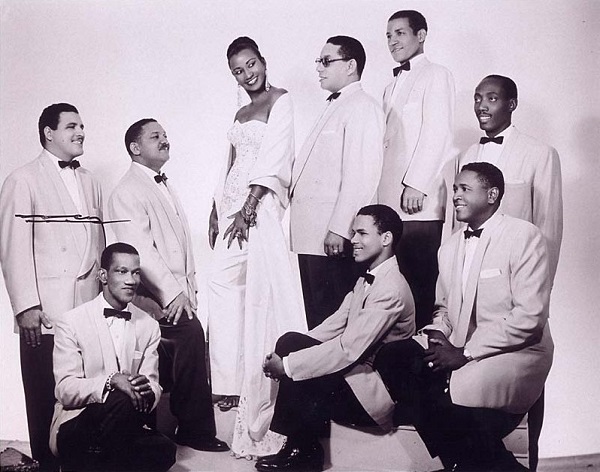
In 1944 pianist Lino Frias and trumpeter Pedro Knight Caraballo joined the group, who with Calixto Leicea formed the most interesting trumpet duo in the history of Cuban ensembles; in 1945 singer Bienvenido Granda Aguilera; in 1948, Angel Alfonso Furias (Yiyo), tumbadora. At this time the Sonora Matancera was formed by Rogelio Martínez Díaz, director, guitarist and chorus; Pablo Vázquez Govín (Bubú), double bass; José del Rosario Chávez (Manteca), timbal; Ángel Alfonso Furias (Yiyo), tumbadora, who replaced Valentín Cané; Calixto Leicea, first trumpet; Pedro Knight Caraballo, second trumpet; Lino Frías, pianist; Carlos Manuel Díaz Alfonso (Caíto), falsetto voice and maracas; Bienvenido Granda, singer and claves; and Celia Cruz, who soon became the stellar singer we knew and the mainstay of the Sonora Matancera hits. Thus began a period that critics have called the golden age of the Sonora.

In 1950, with the advent of television, the Sonora Matancera was one of the first musical groups to perform on this medium. It also signed a contract with the Seeco record company, with whose recordings it made a name for itself in the international market. In 1952, Raimundo Elpidio Vázquez replaced his father, Pablo Vázquez, on double bass (when Rogelio Martínez Díaz died in 2001, he took over the leadership of the group).

In 1926, it changed its name to “Septeto Soprano”. That same year, Carlos M. Díaz “Caíto” accompanied Eugenio Pérez in the choir.

Later in 1927, on Caíto’s recommendation, Rogelio Martínez joined the group and the name of the group was changed to Estudiantina Sonora Matancera.

Sonora Matancera
Sonora Matancera

With a great desire to improve the group travels to Havana where they get in touch with the record company “RCA Victor” and make their first recording on January 12, 1928.

At the beginning of the thirties, the group began to adapt to the new rhythms that were appearing at that time as well as adapting new instruments, such as the grand piano, which was played for the first time in the group by Dámaso Pérez Prado, who years later would become the “King of the Mambo”.

But it was in 1935 when the group took the name La Sonora Matancera, and with this change it introduced a new trumpet player: Calixto Leicea, who replaced Ismael Goberna, who died a few months later due to health problems.

The unforgettable José Rosario Chávez “Manteca”, who replaced the resigned “Jimagua”, also joined the band. Humberto Cané joined the group playing the tres and his father Valentín Cané began playing the tumbadora.

In 1938, Dámaso Pérez Prado retired and left the vacant piano position to Severino Ramos, who soon after became the musical arranger of the group.

During the first years of the forties they made presentations in dance academies, cabarets and in Radio Progreso Cubano, they also included in their repertoire: guarachas, montunos.

On January 6, 1944, two musicians from Arsenio Rodriguez’s group joined the group: Lino Frias (author of the popular song Mata Siguaraya) who began to play the piano and Pedro Knight who became the second trumpet player of the Sonora Matancera.

In the month of December, Bienvenido Granda enters the band recommended as vocalist, being his first recording “La Ola Marina” by Virgilio González, and with him they sign a contract with the nascent record label Panart Records. Valentín Cané, Israel del Pino, Caíto and Humberto Cané made recordings with this label.

In the middle of 1946 the founder Valentín Cané suffers asthmatic problems that force him to leave the group, dying two years later. Before the group joined Panart Records, it recorded other songs for the “Varsity” label, without the name of the Sonora Matancera appearing on the labels, here the first version of “Se Formó la Rumbantela” by Pablo Cairo, “Tumba Colorá”, “El Cinto De Mi Sombrero”, Bienvenido Granda and Humberto Cané participated in these numbers.

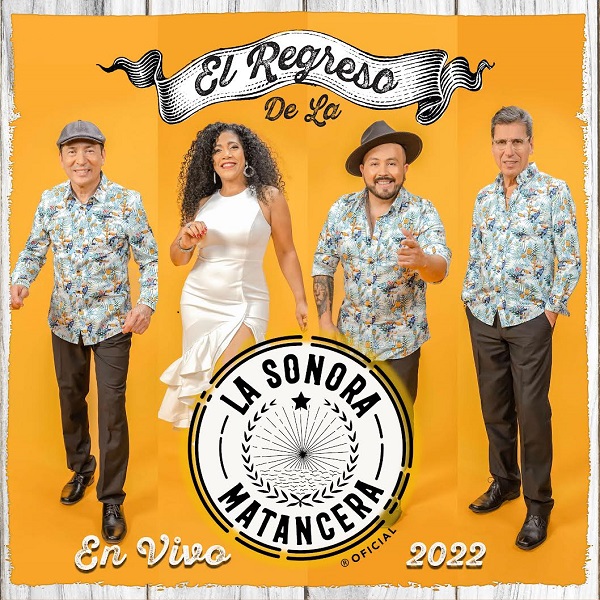
El Regreo de La Sonora Matancera 2022 2023

Members

Trumpets: Calixto Leicea and Pedro Knight

Double Bass: Elpidio Vázquez, replacing his father Pablo Vázquez, “Bubu”.

Piano: Lino Frías

Timbales, Bongó and Campana: José Rosario Chávez “Manteca” Chávez

Tumbadora: Ángel Alfonso Furias “Yiyo”.

Guitar and Choir: Rogelio Martínez

Maracas and Chorus: Carlos Díaz Alonso “Caíto”.

Claves and Choir: Bienvenido Granda.

Last January 13, 2023 they turned 99 years old and are still going strong from generation to generation.

Source:

Enrrique “Culebra” Iriarte, Venezuelan pianist, arranger and orchestra conductor.

Bibliography: Ecured Cuba

La Sonora Matancera 

You can read: Carlos “Patato” Valdés one of the best percussionists in the history of Latin Jazz

The Caribbean joined the party with Billo Frómeta

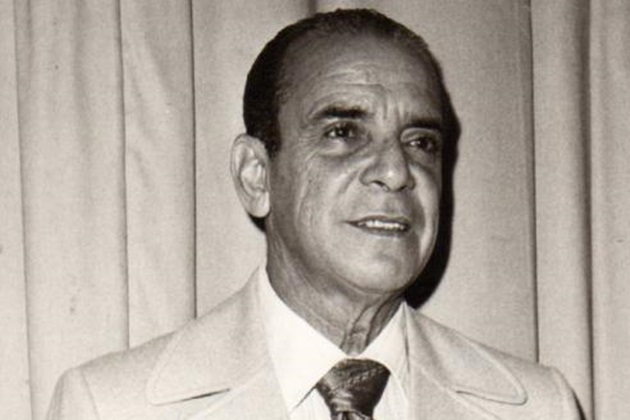
Luis María Frómeta Pereira, better known as Billo Frómeta, was born on November 15, 1915 in Santo Domingo, the capital of the Dominican Republic. However, this Caribbean man has more of a Venezuelan feeling than other compatriots, since he was very grateful to Caracas, that is where he made his life, both professionally and personally.

Despite his love for the Venezuelan lands, he never lost his Cibao smile, specifically from Quisqueya. But his gestures, his affection and tenderness, the details with which he acted, and his musical stamp are very Venezuelan. Perhaps we say goodbye to Billo very soon and he could not see his tribute in his lifetime, that only adds more strength to his career. Read all about his life with the following lines .

The beginnings of Billo Frómeta as Luis María

Although he was born in Santo Domingo, the Frómeta family moved to San Francisco de Macorís, where Billo spent his childhood and met the friends with whom he would embark on the musical adventure of his life: Rafael Minaya and Francisco Simó Damirón. As Billo recounted in his last interview before losing him to a brain stroke in 1988:

“There couldn’t be a birthday that we knew about because the three of us from San Francisco de Macorís were there playing and brightening up the evening. I always keep that in mind when I go to a special event”.

It can never be denied that Luis María was born with an innate talent for music, which he polished during his basic education, since rhythms and sounds were a compulsory subject in the Dominican Republic. As he already said, it was something he continued to do during his adolescence, although this was already in Santo Domingo where he moved back in 1933. There he is part of the firefighters, where with the rank of captain he founded and became director of the Band of the Fire Department of the capital.

Here he also gives guitar lessons, which leads him to meet the young saxophonist and violinist Freddy Coronado, through him Billo enters the world of dance orchestras, forming a group and working on the radio. Some time later, when they are already university students, Billo meets up with his childhood friends and introduces them to Freddy. They form the Santo Domingo Jazz Band, whose activities and presentations are carried out along with their studies.

However, Damirón moved to Puerto Rico, leaving Billo in charge of the management, but his medical studies were interrupted since at first it was difficult for him to comply with both things, then in his third year he began an internship at the military hospital but his ideas collide with those of the regime of Rafael Leonidas Trujillo, so he abandons his studies and decides to devote himself entirely to music.

Arrival in Venezuela and its success in Caracas

The Santo Domingo Jazz Band received the opportunity to play on December 31, 1937, at the Roof Garden, an important local in Caracas. The journey to reach those Venezuelan lands was an adventure full of many sacrifices. However, on the day of the presentation, without the teacher Billo being consulted, the name of the band was changed to Billo’s Happy Boys, which generated discontent in the Dominican Republic, especially from Trujillo’s regime.

Due to this discontent and the growing popularity of the band in Caracas, the boys were forced to stay in the capital of Venezuela. This was the point that would change Billo’s life forever, since this city is the one that sees him grow as a person and as a professional. As he himself relates:

“My forever girlfriend, the city with which I owe a debt of gratitude and affection…”

This is shown in the number of songs by the band that speak in one way or another of the city. Despite the great affection he has for Caracas and Venezuela as a whole, Billo never renounced his Dominican nationality:

“It is the least I can do for the land where I was born. Venezuela is my life. Here I have planted. So as a feeling of gratitude to the Dominican Republic, I keep that nationalist umbilical cord. It is like the case of two mothers, one brings you into the world but the other raises and educates you. You will not stop loving the first and you will show your affection in something even if all your tenderness arrives at the second…”

Two years later in 1939, Billo faces a tough stage, he falls ill with typhus and the doctors give him no hope, but the teacher shows them that his time had not yet come. He returns to the stage ready to consolidate the popularity of the band more than ever, to which he gives a new name: Billo’s Caracas Boys, which the band maintains to this day.

From that moment the career of Billo and the band goes through ups and downs, from having a radio program where he can even produce and edit his own records, to spending days in jail for marriage demands. Speaking of love, Billo got married 3 times, being Morella Peraza his last wife and the greatest love of his life:

“… the one that Morella inspires me and I don’t know what is the miracle by which I see her prettier every day… I think it is the miracle of love, of that feeling that creates the need for one with the other, that transforms what is impossible into possible, that gives life to life… Sometimes it scares me… I am getting old and when one is old one no longer inspires appetites or desires, but Morella loves me and that is the triumph of love over the years. Isn’t it wonderful?”

Billo Frómeta dark days

By 1957 Billo’s career was on the ground, in addition to jail he also faced vetoes due to having contacts with important figures of Marcos Perez Jimenez’s regime, which caused him to be banned “for life” from performing in Venezuela. However, this did not prevent him from continuing to work as an arranger and producer, not only in Caracas but also in other countries such as Mexico and the United States.

In 1958 he met and befriended Renato Capriles, who was a businessman at the time, but wanted to replicate the success of dance bands like Billo’s. The unusual thing about this friendship is that it began precisely with Renato asking Billo to help him in the composition and production of various works for his band “Los Melodicos”. The friendship was maintained over the years but always with a touch of enmity.

A phrase that sums up these fateful years is: “What hurts me the most in life is ingratitude, and I have cried for it.”

Last years of Billo and his mark in the musical history of Venezuela

Between the 1960s and 1980s, Billo focused on his career and his band, brought Billo’s Caracas Boys together again, thanks to the lifting of the veto, and from that moment embarked on the search for those little-known talents who by passing through the band would be taken to stardom, as is the case of Felipe Pirela, José Luís “El Puma” Rodríguez, Guillermo “Memo” Morales, among others.

In addition to presenting new and unpublished works, they also continue to present the old ones. Also, Billo embarks on the business adventure of founding his own record label called Fonograma, although this does not last long and after several problems he decides to close the record company, and sell the catalog to his son-in-law.

For the 80s, the band continued with a success that rose like foam, not only in Venezuela but in the rest of the continent, they even performed alongside great artists like Celia Cruz. For 1988 a tribute to the master in life was planned, which he himself was going to direct, and had him very moved and excited. How well the words of Lil Rodríguez portray him, to whom he granted his last interview:

“The Master would arrive with the minutes, loaded with thoughts and concerns which he had no qualms about spilling on his way home, as if he thought out loud and with affection. Here I have, finally, more or less the order of the concert. Almost everything is ready and only the last rehearsal is missing. It would not be the first time that Billo would conduct a Symphony, but he was excited as in a debut.”

But this tribute never happened and in his place a slow procession was held to say goodbye to the master. Billo Frómeta, out of emotion, nerves and his perfectionist mania, suffered a brain accident that led him to fall into a coma, just one day before his concert and tribute. He died on May 5, 1988, that day Caracas lost an adoptive son, that it made its own and it saw his development as a musician.

Many people said goodbye to the master at the Caracas Municipal Council, while others accompanied the coffin to the Eastern Cemetery. This way, a great chapter in the history of dance music in Venezuela and the Caribbean was closed, but leaving an incredible legacy that continues to this day, since who has not danced with the Billo’s Caracas Boys?

Jorge Luis Suárez is a singer, musician and multifaceted artist and a bastion of Afro-Caribbean music

In Venezuela, the musical talent is undoubtedly first line and proven quality on any stage nationally and worldwide.

Specifically in the state of Lara and in the city of Barquisimeto, a great number of artists with category and hierarchy have emerged and been born, exalting our Latin rhythms.

For this edition of “Salsa Escrita”, we are honored to have as a special guest vocalist Jorge Luis Suarez, pride and bastion of Afro-Caribbean music and various genres, who, for years, demonstrates his class and professionalism.

Jorge Luis is a singer, musician and multifaceted artist; born on August 7 in the city of Maracaibo, son of parents from the city of Carora, where he spent part of his childhood in that state and began to lean towards music, having as main influence his father, who played the guitar and sang romantic music.

In the early 80’s, he moved to Barquisimeto to attend university and was discovered as a singer and player of the bass, cuatro and guitar. Welcome Jorge Luis Suarez to “Salsa Escrita”, through International Salsa Magazine, www.salsagoogle.com.

Vocalist Jorge Luis Suárez, pride and stalwart of Afro-Caribbean music

To begin this pleasant, enjoyable and long awaited meeting, because we wanted to have you as one of our interviewees and tell us about your experiences about your artistic career, which has been very successful nationally and worldwide for the pride of all who know you.

Thank you Professor Carlos Colmenárez, for inviting me to your well read and recognized salsa column, unique in the center-west of the country and in which you project Venezuelan musicians worldwide.

Jorge Luis, with which groups did you begin your journey through this wonderful art, in which you have demonstrated versatility, perseverance, discipline and quality?

Jorge Luis is a singer, musician and multifaceted artist

Well, let me tell you that I started my musical activity professionally, being part of groups of regional renown, among them: “Las Estrellas del Momento”, “Orquesta Alegría” and then “Venezuela en Gaitas”, “Sazón Latino” and in the late 80’s and early 90’s, I became part of the staff of the orchestra “La Banda Actual”, a salsa icon in the state of Lara.

By the way Jorge, we remember your beginnings with “La Banda Actual” and it was an obligatory reference to be hired in private parties, night clubs and of course to share the stage with great artists and luminaries of the Latin-Caribbean music genre.

In which billboards did you have the joy and privilege of singing, alternating with national and international stars?

Indeed professor, with Banda Actual we performed with Héctor Lavoe, Wilfrido Vargas, Las Chicas del Can, Porfi Jiménez, Guaco, Los Melódicos, Hermanos Carruyo, Billos Caracas Boys, Orquesta La Crítica and many more, in their visits to Barquisimeto, having as locations the Domo Bolivariano, Complejo Ferial, among others.

In fact, Jorge Luis and due to your outstanding and outstanding vocal ability, the son of the maestro Billo Frómeta, Luis Frómeta, called you to join the ranks of the Billo Caracas Boys, how was that experience?

With Billo I learned to have more artistic discipline and gain experience for 4 years, recording three albums touring Latin America, the United States and Europe; precisely in the carnivals of Tenerife we starred in the Güines Record in public attendance at a bailanta, sharing the stage with Celia Cruz and Oscar D’León.

Jorge, tell us about your entrance to the orchestra of the world’s sonero Oscar D’León.

Professor Carlos, precisely because of that event in the Canary Islands, maestro Oscar called me and told me that he needed a vocalist with my characteristics to accompany him in his shows and international tours and honestly it was a difficult decision because with Billo Caracas Boys I was well established along with other Barquisimetans: Ely Méndez and Wolfang Perdomo, integrating the line of vocalists at that time, pure “guaros”.

But maestro Oscar’s offer seemed interesting to me and I finally said yes. With the Sonero del Mundo, to whom I owe a lot, because thanks to him I established myself even more as a performer and especially in salsa, taking his recommendations to the letter and of course it was an unforgettable experience, because with his orchestra we toured many countries and performed in venues such as: Carnegie Hall, Madison Square Garden, House off Blue in Los Angeles, Orange Ball, jazz festivals in Europe, sharing with renowned artists.

Professor, I wanted to tell you that at the same time working with Oscar’s orchestra, I recorded my production “Una Tercera Persona”, in the middle of 1992, which included the hit “Niégalo Todo”, obtaining the first places in the hit parade.

In that production I was accompanied in the recording by renowned musicians such as: Luisito Quintero, Roberto Quintero, Robert Vilera, Raul Agraz, Yorman Leon and the Nicaraguan Luis Enrique.

Jorge Luis is a singer, musician and multifaceted artist, born on August 7 in the city of Maracaibo, son of parents from the city of Carora, Venezuela.

Jorge, how many years did you stay with Oscar and why did you decide to leave his orchestra?

I was with Oscar for about four years and I decided to leave the group due to major reasons, as a result of business and commercial commitments that I had and still have in Barquisimeto.

For those who do not know, Jorge Luis is a multifaceted artist and has managed to venture as a vocalist in different musical genres, from salsa, gaitas, tropical danceable, guaracha, merengue, Venezuelan and boleros; achieving in this last aspect, being the arranger and musical producer of the trio Carora International at the end of 2014.

At the same time, he produced and performed 19 songs of Venezuelan music with arrangements by Jean Piero Gonzalez, which will be released soon.

Jorge Luis, having settled again in the musical capital of Venezuela, with whom have you recorded? Professor, in Barquisimeto I have been invited to record with the following groups: Venezuela Somos Gaita, Nikitao, Amantes de la Gaita, Venezuela en Gaitas, Unión Gaitera, Rafa y sus Diamantes, Grupo Colorama, Con Klase, Orquesta Variación, Orquesta la Mayor, Orquesta la Gran Premiere, Venezuela Rumba, La Orquesta Raza Caribe, recording with the latter 8 songs in the production that is about to be released. I was also invited to record with the Orquesta Son Colón de Maracay and with the Latin Grammy nominees, our Grupo Santoral de Barquisimeto, participating with them as a special guest in the show “El Amor se Canta”, in celebration of the Day of Love and Friendship, touring, starting at the Teatro Juares and other cities in the country, as well as private presentations.

As for current projects, what can you tell the readers of Salsa Escrita? Currently my second solo production in the salsa genre is about to be released, with arrangements by multi-instrumentalist Taylor Aranguren from Barquisimeto and myself.

We are launching the record label, precisely this June with the promotional track “No lo beses”, a song that was interpreted by Alejandro Fernandez, by the Mexican composer Jose Luis Roma.

The production is called “José Luis Suárez Covers”, which includes songs that have been hits around the world, such as: Cobarde cobarde, Escándalo, La bomba, Cuatro rosas, Darte un beso, El amor más grande del planeta, Bailando, No lo beses, among others. In this production, I am accompanied by my nephew Taylor Aranguren, the musicians: Carlos Giménez, Rómulo Paiva, Jeison Marchán, Wílner Navas, Freddy Adrián, in the master and mixes: Latín Récods Digital. Sound engineer: René Zerpa and in the general production: Jorge Luis Suárez. Jorge Luis, what are your social networks or digital platforms to interact with your followers? My contacts are, Instagram: @jorgeluissuarezoficial, Youtube: Jorge Luis Suárez Oficial, [email protected]. Jorge Luis, to finish, we want to congratulate you for your perseverance in music and wish you to continue harvesting triumphs, because you have quality and to spare.

Salsa Escrita “La Columna Salsera de Barquisimeto”, will be at your disposal to support you in your present and future projects, good luck… Thank you professor and personal friend, Carlos Colmenárez, for giving me your support in your salsa column, unique in the west of the country and thus allowing you to reach your regular readers around the world; again a thousand thanks, blessings and long live Venezuela!

Article of Interest:  Gerson Aranda “La Tabla de Caracas”

Carlos Colmenárez

Correspondent in Venezuela for International Salsa Magazine

  • Page 1
  • Page 2
  • Page 3
  • Interim pages omitted …
  • Page 30
  • Go to Next Page »

International Salsa Magazine (ISM) is a monthly publication about Salsa activities around the world, that has been publishing since 2007. It is a world network of volunteers coordinated by ISM Magazine. We are working to strengthen all the events by working together.