• Skip to primary navigation
  • Skip to main content

International Salsa Magazine

  • Home
  • Previous editions
    • 2026
      • ISM / January 2026
      • ISM / February 2026
    • 2025
      • ISM / December 2025
      • ISM / November 2025
      • ISM / October 2025
      • ISM / September 2025
      • ISM / August 2025
      • ISM / July 2025
      • ISM / June 2025
      • ISM / May2025
      • ISM / April 2025
      • ISM / March 2025
      • ISM / February 2025
      • ISM / January 2025
    • 2024
      • ISM / December 2024
      • ISM / November 2024
      • ISM / October 2024
      • ISM / September 2024
      • ISM / August 2024
      • ISM / July 2024
      • ISM / June 2024
      • ISM / May 2024
      • ISM / April 2024
      • ISM / March 2024
      • ISM / February 2024
      • ISM / January 2024
    • 2023
      • ISM / December 2023
      • ISM / November 2023
      • ISM / October 2023
      • ISM – September 2023
      • ISM – August 2023
      • ISM July 2023
      • ISM Edition June 2023
      • ISM – May 2023
      • ISM April 2023
      • ISM March 2023
      • ISM February 2023
      • ISM January 2023
    • 2022
      • ISM December 2022
      • ISM November 2022
      • ISM October 2022
      • ISM September 2022
      • ISM August 2022
      • ISM July 2022
      • ISM June 2022
      • ISM May 2022
      • ISM February 2022
      • ISM January 2022
    • 2021
      • ISM December 2021
      • ISM November 2021
      • ISM October – 2021
      • ISM September 2021
      • ISM August 2021
      • ISM July 2021
      • ISM May 2021
      • ISM April 2021
      • ISM June 2021
      • ISM March 2021
      • ISM February 2021
      • ISM January 2021
    • 2020
      • ISM December 2020
      • ISM November 2020
      • ISM October 2020
      • ISM September 2020
      • ISM August 2020
      • ISM July 2020
      • ISM June 2020
      • ISM May 2020
      • ISM April 2020
      • ISM March 2020
      • ISM February 2020
      • ISM January 2020
    • 2019
      • ISM December 2019
      • ISM November 2019
      • ISM October 2019
      • ISM Septembre 2019
      • ISM August 2019
      • ISM July 2019
      • ISM June 2019
      • ISM May 2019
      • ISM April 2019
      • ISM March 2019
      • ISM February 2019
      • ISM January 2019
    • 2018
      • ISM December 2018
      • ISM November 2018
      • ISM October 2018
      • ISM September 2018
      • ISM August 2018
      • ISM July 2018
      • ISM June 2018
      • ISM May 2018
      • ISM April 2018
      • ISM March 2018
      • ISM February 2018
      • ISM January 2018
    • 2017
      • ISM December 2017
      • ISM November 2017
      • ISM October 2017
      • ISM September 2017
      • ISM August 2017
      • ISM July 2017
      • ISM June 2017
      • ISM May 2017
      • ISM April 2017
      • ISM March 2017
      • ISM February 2017
  • Download Salsa App
    • Android
    • Apple
  • Spanish

Search Results for: Charanga

Eduardo Tancredi is a renowned Uruguayan pianist and composer specializing in Latin Jazz

Eduardo was a distinguished student at Berklee College of Music in Boston.

Eduardo was an outstanding student at the Berklee College of Music in Boston.

Musical Style: His music fuses a wide variety of Afro-Latin rhythms (such as Uruguayan candombe, Brazilian samba, Cuban son, Peruvian landó, and Venezuelan joropo) with the harmonies and melodies of modern jazz.

Accolades: He has recorded several CDs with his own compositions and has received awards for his outstanding performance in the Latin jazz scene. His album “Ongoing Dreams” was chosen as the best album in its category in 2002 by “The Boston Globe.”

Teaching Experience: During his time in the United States, he was a piano and harmony professor at Berklee College of Music. Since 2003, he has resided in Barcelona and teaches at ESMUC (Escola Superior de Música de Catalunya).

Collaborations: He has collaborated with numerous musical groups as a pianist and is a significant figure in the jazz scene in Spain.

Eduardo Tancredi is a prominent figure in Latin Jazz, known for his ability to integrate diverse Latin American rhythmic influences with the harmonic sophistication of modern jazz.


Latin accents took some time to establish themselves in jazz music. Very few composers ventured into that genre in the early decades of the last century, to the point that their timid attempts were considered exotic and trivial.

Initially, one recalls passages from William C. Handy’s “St. Louis Blues,” some Scott Joplin ragtimes, Jelly Roll Morton’s references to the “Spanish tinge,” or, shortly after, the themes performed by Duke Ellington’s orchestra.

Eduardo Tancredi
Eduardo Tancredi

It was in the 1940s that the Latin touch gained relevance. Cuban Mario Bauzá, who had played trumpet in Chick Webb’s and Cab Calloway’s orchestras, propelled the success of Machito’s band and convinced Dizzy Gillespie to hire conga player Chano Pozo.

Afro-Cuban influence became powerful in the following decades through sones, charangas, rumba, mambo, and salsa. Names like Chico O’Farrill, Tito Puente, Mongo Santamaría, Ray Barretto, and Chucho Valdés became highly regarded, and their works inspired a legion of jazz musicians.

Eduardo Tancredi es un reconocido pianista y compositor uruguayo, especializado en Jazz Latino

Latin jazz today has a strong presence in popular music, and Uruguayan Eduardo “Edú” Tancredi is a brilliant exponent of that style. He was an outstanding student at Berklee College of Music in Boston, where he won awards such as the Quincy Jones Award and the Outstanding Latin Act Award.

After his acclaimed “Ongoing Dreams” from 2002, this CD, “Venimos Tumbando,” recorded in 2007, now arrives with ten formidable compositions and his own arrangements. His background in Latin American folklore plus his jazz studies have achieved a splendid confluence that is enjoyed from beginning to end on this album.

His versatility as a composer is evident in candombes (“La mama vieja” and “Montevideo”), a baião (“Baialona”), a chorinho (“El germen”), a zamba (“Zamba del aire”), and the obvious references to Afro-Caribbean rhythms that unite their exciting cadences with jazz elements. Edú’s works are incisive, stimulating, possess an overflowing swing, and it’s easy to imagine the musicians’ pleasure during their performance.

The arrangements contrast the different orchestral sections, highlighting their diverse sound textures, suggestive harmonizations, and enhancing the dynamics and fiery percussion instruments. Three saxophones, piano, guitar, bass, and drums alternate with ten other guest musicians (vocals, sax, harmonica, two basses, two drum sets, and three percussionists), generating a sonic turbine that captivates the listener from the first note.

This doesn’t mean that all tracks propose an overwhelming rhythm. There are passages of beautiful lyricism, as in the two versions sung by Ana Finger, or the pleasant harmonica of Antonio Serrano, or the director’s piano in “Como un blues.”

The soloists perform at a high level, with special mention of Miguel Zenón’s alto sax, an improviser of fresh ideas, clean musicality, and great inspiration and fervor. The interventions of guitarist Alejandro Luzardo, trumpeter Matthew Simon, tenor saxophonist Eladio Reinón, and baritone saxophonist Xavi Figuerola are also noteworthy.

“Venimos Tumbando” confirms Tancredi’s talent as a composer and pianist and his skill as an orchestra conductor. Abilities he generously demonstrated during his acclaimed performance at the Teatro Solís last December. Thomas Werner

Edu Tancredi & Bandon 33 – Venimos Tumbando (2007)

Tracks:

  1. El Subibaja
  2. Hocus Pocus
  3. Montevideo
  4. El Germen
  5. La Mama Vieja
  6. Baialona
  7. Mapa Del Mundo
  8. Venimos Tumbando
  9. Como Un Blues
  10. Zamba Del Aire

Musicians: Edu Tancredi (Piano) Ana Finger (Vocals) Antonio Serrano (Harmonica) Mathew Simón (Trumpet) Pere Grau (Soprano sax, alto sax) Miguel Zenón (Alto sax) Eladio Reinón (Tenor sax) Juajo Arrom (Trombone) Xavi Figuerola (Baritone sax) Alejandro Luzardo (Guitar) Matías Migues, Paco Weht, Javier Gómez (Double Bass) Santiago Blanco, Salvador Toscano (Drums) Carlos Reyes “Compota”, Alejandro Luzardo, Santiago Blanco, Alexis Liden, Sandro Lustosa, Salvador Toscano (Percussion)

Edu Tancredi & Bandon 33 - Venimos Tumbando (2007)
Edu Tancredi & Bandon 33 – Venimos Tumbando (2007)

Information By:

Ostia Latin Jazz

DJ, Augusto Felibertt

Also Read: Arturo “Chico” O’Farrill. “The Architect of Afro-Cuban Jazz”

Beatriz Márquez Castro, an exponent of romantic songs, “Feeling” and Bolero

Beatriz Márquez Castro is a singer, composer, and pianist, born on February 17, 1952, in Havana.

Beatriz Márquez Castro. Cantante, compositora y pianista

She is the daughter of the prestigious composer and performer René Márquez. She began her artistic career in 1968.

An exponent of romantic songs, “feeling,” and bolero, she gracefully delved into these genres, performing pieces by prolific authors such as René Márquez, Marta Valdés, Juanito Márquez, Silvio Rodríguez, and Germán Nogueira, among others.

Her mezzo-soprano range has enabled her popular “descents” to low tones, as well as her unexpected and no less appreciated “ascents” to much higher tessituras, without losing her defining style. This style is very appropriate for songs and boleros, genres in which she has remained one of Cuba’s leading cultivators.

She is known as “La Musicalísima.”

We are witnessing the realization of a long-cherished project with which the performer, pianist, and composer Beatriz Márquez settles a debt both on a family level and within Cuban discography.

After several years of searching through archives and old recordings, thanks to the collaboration of Cuban audiovisual producer Felipe Morfa, it was possible to prepare “Este encuentro” (Colibrí Productions, 2023). This album features a selection of known and unreleased pieces by singer and composer René Márquez Rojo (1914-1986), some of which were popularized in their time by internationally renowned figures like Antonio Machín or the Puerto Rican Daniel Santos, to name just two examples.

Beatriz Márquez Castro, an exponent of romantic songs, "Feeling" and Bolero
Beatriz Márquez Castro, an exponent of romantic songs, “Feeling” and Bolero

Given the influence René had on the career of his daughter and grandchildren, this is an album full of love and, above all, gratitude.

While he was best known for his songwriting, it is important to highlight the mark he left as a charanga singer.

Among others, we can mention his work with the charangas of violinist Cristóbal Paulín, Oscar Muñoz Bouffartique, and René Touzet.

He debuted at the Mil Diez radio station with the group led by Julio Cueva, to which he dedicated himself for ten years.

From the late 1930s onwards, the lyrics by the artist from Villa Clara quickly resonated with the public.

“El Inquieto Anacobero” recorded “El disgusto de bigote” with the Sonora Matancera in 1949 and also sang other Cuban songs such as “Soltando chispas,” “A San Lázaro,” and “El granito de maíz.”

René’s songs, among which “El quinqué” cannot be missed, speak of his natural ingenuity for storytelling.

Upon his death at 72, he left a musical legacy that has since been defended by his descendants.

In over five decades of her artistic life, Beatriz has become her father’s most faithful interpreter, having recorded songs for several albums such as “No respondo,” “Explícame por qué,” and the now famous “Espontáneamente,” initially included in the LP “Es soledad” (Egrem, 1970) and re-recorded on multiple occasions.

In “La Musicalísima”‘s discography, prior to this material, there were only two phonograms exclusively dedicated to the work of a single author: “Beatriz canta a Juan Almeida” (Egrem, 1978), followed forty years later by “Libre de pecado” (Colibrí Productions, 2018), a tribute to maestro Adolfo Guzmán, thus contributing to the rescue of the island’s musical memory.

“Este encuentro” spans traditional trova and moves from guaracha to son, without forgetting some of the composer’s most notable boleros.

It also allows us to appreciate René Márquez’s interpretive qualities by hearing his voice, rescued from old recordings.

The special participation of singers Evelyn García and Michel Maza, continuators of the family saga, is noteworthy.

Now, the 2015 National Music Award winner and the main architect of this phonogram invites us to explore René Márquez’s immense body of work, one that will by no means be forgotten, across eleven tracks._ Jaime Masó

Beatriz Márquez - Este Encuentro (2023)
Beatriz Márquez – Este Encuentro (2023)

Beatriz Márquez – Este Encuentro (2023)

Tracks:

  1. Este Encuentro
  2. La Vida Es Un Momento
  3. Muchachito Inocente
  4. No Respondo
  5. Nunca Habrá Distancia
  6. Soltando Chispas
  7. En El Cielo De Mi Vida
  8. Imposible Amor 09. Popurrit 10. Espontáneamente 11. Mi Placer

By:

L’Òstia Latin Jazz

Augusto Felibertt

Ecured

Instituto Cubano de la Música

Also Read: Enrique “Culebra” Iriarte, master of the piano and musical composition

Maite Hontele in CONCERT!

Europe / France / Utrecht

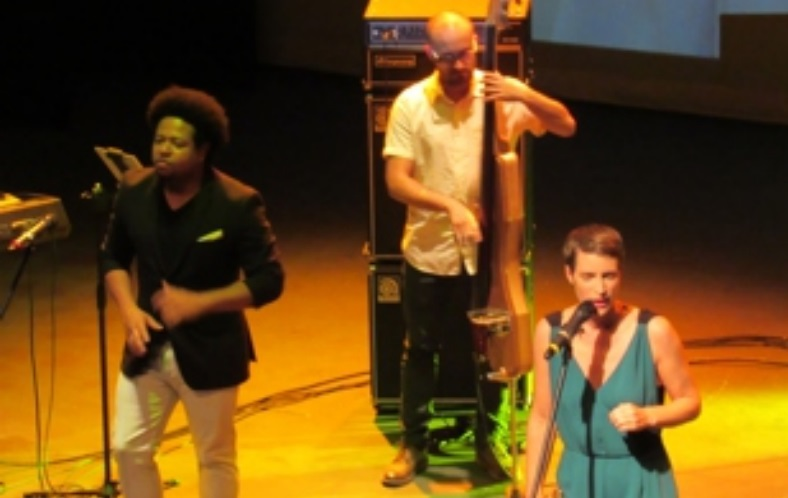
A great musician is someone who can enlighten the stage only with his/her presence, this is the case when Maite Hontele is on stage. Full-house, the stage full of colors and all the audience is ready to dance and enjoy the best rhythm: SALSA!

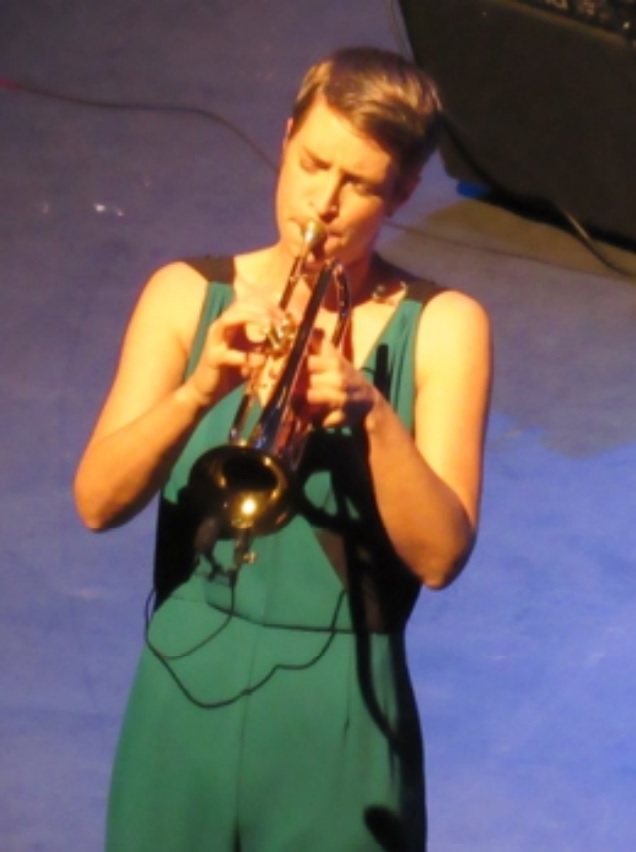
International Salsa Magazine had the honor to be part of the last concert of Maite Hontele, the incredible dutch trumpeter, in Caracas, Venezuela.

Maite Hontele in concert

The silence is interrupted with the beautiful sound of a characteristic trumpet playing a melody, the stage gets full of musicians and Maite comes out with the biggest smile that characterize her.

She starts with a speech where she explains how thankful she is for being there, talks a little bit about Colombia, and then the party starts! Two hours full of hits of herself, Oscar d’ Leon, and many other artists, with the performance of her Colombian band by her side.

Maite Hontele
Maite Hontele

But let’s get deeper in who is her. Maite Hontelé is a trumpeter who was born in Utrecht, Holland, and was raised with music. Her parents owned a huge collection of salsa and son Cubano, and every day she would listen to Latin music, quite unusual for a Dutch girl. After playing a few years with the local brass band, she decided to become a musician, and studied latin and jazz trumpet at the Conservatory of Rotterdam.

Her first big tour was life-changing. She went to Colombia, the country where she now lives. In 2004, Maite Hontelé toured with the world-famous Buena Vista Social Club. In 2009 Maite launched her first album, Llegó la Mona, a salsa-tribute to Colombian music. This album was made with the purpose to tour more in Colombia. Among the gigs she played was the Medellin Jazz Festival.

That year has been very important for her. Not only did Maite record her first album, she also found the place where she wanted to continue to live and make music. That’s when she decided to move to Medellin, Colombia.

Maite Hontele
Maite Hontele

In 2010, she released her second production, Mujer Sonora. The album is focused on oldschool styles such as son and charanga, but also contains some spicy salsa-tracks. This album was presented at the 2010 North Sea Jazz Festival, and on various international tours. In 2011 and 2012 Maite toured many countries with her band, and was a guest with Ruben Blades, Yuri Buenaventura, Issac Delgado, Diego Galé (DVD-recording), Juan Carlos Coronel, Oscar D’León, and many others.

Her 3rd album, Déjame Asi, was released in April 2013. She is currently touring Europe and Latin America.

“My Outlaw Loredo is the most elegant gig-bag in the universe. A perfect match for me!” Maite Hontelé

Maite Hontele in concer - Photo
Maite Hontele in concert – Photo

The show ends with the best energy. Maite Hontele is not only an amazing trumpeter, but also a great singer and composer. We are glad to be part of his musical journey.

Jose Bello, The Salsa Tycoon

North America / USA / New York

Jose Manuel Bello Suazo, better known as José Bello “El Cantautor”, a Dominican artist of international stature with several awards and achievements worldwide.

Jose Bello, born on April 6 in the city of Santo Domingo, who from an early age showed a deep love for music, making his first performances in kindergarten and elementary school. As a teenager, he moved to New York where he met Carlos Castillo, a member of internationally known bands such as Machito y su Orquesta, Joe Cuba y su Sexteto, Tito Rodríguez y su Orquesta. From that moment on, Bello formalized his start in the world of music by forming “El Sexteto Latino” together with Carlos Castillo.

Jose Bello
Jose Bello

Baila que Baila is known as his first musical recording with maestro Julio Gutiérrez, after that he recorded four record productions with the owners of LA CHARANGA AMERICA. His first full-length album emerged in the 70’s, with the record company “Lo mejor records” with songs of his own inspiration. But, it was in his third record production, where he decides to add songs with a title in another language, entitled “Blue Bossa”

José Bello manages to start his own record label in partnership with Mr. Aldemar Barona, who titled it “B&B Records Presents José Bello”, containing compositions by both members. In the fifth record production, which was established as the owner Jose Bello, El Cantautor, where only the La Salsa Magnate’s own productions are found.

After that, it was decided to record the first DVD recorded live in the city of Medellin, Colombia, becoming known around the world.

In the last 10 years, José Bello has taken his music to all parts of the world, receiving great acceptance from the European, American and Latin American public. Sharing the stage with great personalities such as Celia Cruz, Rubén Blades, Gilberto Santa Rosa, Oscar D’Leon, Marc Anthony, Tito Nieves, among many more.

Jose Bello Cover
Jose Bello Cover

At International Salsa Magazine, we were able to chat with this incredibly talented artist.


Below is the interview:


How was your first presentation? Did you know after that that music would be your passion?

In the kindergarten of the La miraculous school they had parties and they had a stage where I sang constantly and even had choirs that accompanied me and also acted, since I can remember, my passion is music.


How did you and Carlos Castillo meet? Did you know about his career before?

I met Carlos Castillo, because my mom lived in the house next to him and she talked to Carlos’s mom about me and they both agreed to introduce me, I had no idea who he was, until I met him.


What inspired you to compose those songs?

The experience of life and the gift that I always knew I had to compose, at any time.

Jose Bello CDs1
Jose Bello CDs1

Jose Bello CDs2
Jose Bello CDs2

Jose Bello CDs3
Jose Bello CDs3


Tell us a little about Aldemar Barona, what year did you decide to start with the label?

My great friend Aldemar Barona always went to my presentations and when the contract ended with the best record, we decided to make our own record label in the late 80s, early 90s.

Jose Bello - Photo
Jose Bello – Photo

Was this performance during a tour? What album were you promoting? Where could that DVD be purchased?

Exclusive record. He hired me to make that DVD in the mid 90s and you could get it online, or at the Musical 90 record store in Jackson Hghts Queens New York


All these artists are well known worldwide and having been able to share stages with them speaks volumes about your incredible talent and career. Which of these artists would you say is your greatest inspiration or example?

As I said before, my inspiration is a divine gift, I love all my colleagues very much, I respect and admire them, some started before me, others are from my generation and others became famous after my love, and I respect music, They have moderated me as I am and have led me to feel fulfilled in what I do, blessed and immensely happy.

Jose Bello in concert


Where would you like to present yourself in the next opportunity?

I would like to personally take my art to some countries that I have not visited to this day, such as Mexico, Peru, Panama, Canada, Japan, Chile, and Argentina.


What comes next in the life of José Bello, El Cantautor?

Make my new recording, already as JOSE BELLO EL MAGNATE DE LA SALSA 40 ANIVERSARIO and finish negotiating my next tours, to Central Europe and South America.


Where does his nickname El Magnate de La Salsa come from?

On July 23, 2017, I married the designer Patricia González on the largest luxury yacht in New York called “Infinity”, around 2000 people and with two orchestras. Tito Nieve with his orchestra and my orchestra. The ceremony was on the high seas.

Jose Bello, Jose Bello, The Salsa Tycoon
Jose Bello, The Salsa Tycoon

When in Mexico they found out about my marriage, they wrote to congratulate me and told me “Now you are the salsa magnate” I was surprised and asked them why? and they told me “Only Arab Magnates get married on the high seas on a luxury yacht” I liked the idea.

I always hear that in music there are kings, princes, knights, but there are no tycoons and I think that because of the explanation of the Mexicans, I am the tycoon of salsa.

His name is: Elio Osácar Douguet, and artistically we know him as: Sonny Bravo

Interview conducted by journalist and music researcher Robert Téllez M., on February 4, 2017 and originally published later on the SONFONÍA portal. Interview provided by the author for International Salsa Magazine (ISM).

His name is Elio Osácar Douguet, and artistically we know him as Sonny Bravo.

Robert: His name is: Elio Osácar Douguet, and artistically we know him as: Sonny Bravo When and where were you born?

Sonny: I was born on October 7, 1936 in West Harlem, New York City.

Robert: Are you of Cuban descent?

Sonny: Yes, my grandparents were born in Havana, three in Santiago de las Vegas and one (maternal grandfather) in Bejucal. My parents were born in Key West, FL, and raised in Tampa, FL.

Robert: Tell me about your father Santiago “Elio” Osacar.

Sonny: Obviously, my first mentor! Santiago Osácar Colomá, born October 12, 1911 in Key West, FL, raised in Tampa, FL. He and his two older brothers, Juan and Tomás, founded the Sexteto Tampeño in 1928. He married my mother, Elisa Douguet Bravo in February 1932 and they settled in New York around 1933. Shortly thereafter he joined the Caney Quartet as bassist and second voice. At that time he also formed and recorded with his own group, the Conjunto Moderno. Later he was also a member of Monchito y su Orquesta. But he always returned to Caney! Until his death in the summer of 1957, from a pancreatitis attack he suffered on the stage of the Chateau Madrid in NY.

Robert: Maestro Sonny, is it true that you played baseball, but due to an injury you turned to music?

Sonny: Yes, it was in an amateur league in Miami where I was raised, my father was the manager! I was a pitcher and after pitching a complete game, while it was drizzling; the shoulder pains started the next day and that’s as far as my brief career went.

Robert: Did you write arrangements for Conjunto Caney?

Sonny: I only wrote one, “Añorado Encuentro” (Piloto y Vera), but it was never recorded.

Robert: What groups did you work with in Miami?

Sonny: My first job was with the Conjunto Casino de Miami. I also worked with several orchestras (Juanito Sanabria) and several combos (Cheo Venero, Gonzalo Barr). From 1959 to 1961 I was with Conjunto Caney. Then (1961-1963) with Mandy Campo, with whom I made my first tour outside the U.S., it was to Aruba and San Juan, Puerto Rico. Between 1963 and 1964 I worked with José Fajardo. He played dances in Miami on Saturdays and in New York clubs the rest of the week. When he decided to stay in New York, he convinced me to return with him.

Elio Osácar Douguet
Elio Osácar Douguet

Robert: Is the Típico Charanga format your favorite?

Sonny: Yes! I would like to have the same format we used on Alfredo de la Fé’s LP (Toca, Alfredo Toca) with the modern harmonies that can be heard in my arrangement of “El casabe,” my adaptation of Humberto Perera’s arrangement of “Que rico bailo yo,” and my arrangement of my own song, “Toca, Alfredo toca.”

Robert: What pianists influenced your playing?

Sonny: Charanga genre: Jesús López. Ensemble genre: Lilí Martínez. Big band and combo genre: Pedro “Peruchín” Jústiz. Variety of genres: Rubén González.

Robert: How did you become involved with the José Fajardo Orchestra?

Sonny: In 1963, bassist Nilo Sierra took me to the Palladium to meet Fajardo. After I married my first wife, I returned to Miami, and was able to contact him. During 1963 I played with him the dances I mentioned above and also toured with him to Venezuela, Mexico, Santo Domingo, and Puerto Rico. Fajardo stayed to fulfill his contract at the San Juan Hotel, but Orestes Vilató and I returned to New York. Orestes because of melancholy, and I, because I found out that my wife was going to give birth in January 1965.

Robert: As I understand it, when you settle in New York, you start playing with: Willie Bobo, Bobby Valentin and Ray Barretto What would you highlight about your work with Barretto?

Sonny: Between 1965 and 1966 I was Raul Marrero’s musical director. Besides what you mentioned, I also played with Vicentico Valdés, Mauricio Smith, Cortijo, Maelo and La orquesta Broadway, at that time. With Ray Barretto (and his charanga format) I only worked for two weeks, that was in October 1966, until the return of his pianist, Edy Martínez, who had stayed in Colombia after a tour. I felt very comfortable with Barretto’s group and I would have liked to continue playing with him.

Sonny was born on October 7, 1936 in West Harlem, New York City.

Robert: How did your integration with La Tipica 73 come about?

Sonny: I was there from the beginning. The group (unnamed) started in the summer of 1972 with musicians from various orchestras in a “jam session” (descarga) format, with the purpose of filling out the week with stews on Mondays, Tuesdays and Thursdays, that is, the laziest days in clubs and dance halls. Alfredo de la Fe was one of the original musicians. He and I played with Fajardo at that time.

There was also Bobby Nelson (flute) from Charlie Palmieri’s orchestra. Instigated by Johnny “Dandy” Rodriguez and with the support of several promoters and club managers, we decided to strengthen the group, create an ensemble and take the risk of competing with the already established groups.

Robert: Where did the idea of making the record production “Intercambio Cultural” come from?

Sonny: Johnny Rodriguez made the connection when he went to Havana on vacation. When he returned, he convinced Jerry Masucci to initiate the arrangements so that he could record at EGREM’s studios.

Robert: Was Típica 73 blocked because they had performed and recorded in Cuba and that’s why the group disbanded? Or were there other reasons…

Sonny: That’s the only reason!

Robert: What do you remember about your experience with Conjunto Clasico?

Sonny:

Side A: A lot of work, good music, good musicians.

Side B: Out of 20 songs, there were 19 solos of three and only one piano solo!

Robert: Maestro Sonny, you were present in several stages of Tito Puente’s orchestra, did you replace Jorge Dalto?

Sonny: Yes, in the Latin Jazz Ensemble. Jorge had his own group called “InterAmerican Band”. In the salsa band, I replaced Ruben Rivera. Eventually, the two formats came together to form a super-combo.

Robert: Of all the arrangements you have done in your career, which is your favorite?

Sonny: I have several, by format.

COMBO:

Typical ’73:

  1. Chachagüere
  2. Tula
  3. Rumba caliente
Típica 73
Típica 73

BIG BAND:

Latin Giants of Jazz:

  1. Gua Cha Rumba
  2. I have to conform
  3. I don’t bother
Latin Giants of Jazz

Mambo Legends Orchestra:

  1. Conmigo, candela brava 2.
Mambo Legends Orchestra

CHARANGA:

Alfredo de la Fé:

  1. Toca, Alfredo Toca
  2. El Casabe
Toca, Alfredo Toca
Toca, Alfredo Toca

Robert: And your favorite piano solo?

Sonny: I have two. El casabe (Alfredo de la Fe LP), because of the relaxed son montuno tempo and because of my favorite format: ¡Charanga moderna! And ¿Adónde vas? (Tito Puente’s LP) because it was recorded live and I could extend the solo, and because it’s the King’s orchestra!

Robert: On January 28, 2003 there was a historic reunion in Puerto Rico, which culminated with the release of the album TIPICA 73 LIVE. How did you live that experience?

Sonny: The audience enjoyed it, but not me. There was flavor and swing, but the piano had a damaged key and I was almost completely out of tune and the choruses were pretty weak. The record was bootlegged before it was released.

Robert: Of today’s pianists, who would you single out?

Sonny: In the Afro-Caribbean Jazz genre (Latin Jazz) there are a ton of Cubans like Chucho Valdés, Gonzalo Rubalcaba, Hilario Durán, Ernán López-Nussa, Harold López-Nussa, Aldo López-Gavilán, Iván “Melón” Lewis, Alexis Bosch, Yan Carlos Artime, Rolando Luna, Ramón Valle, Manuel Valera, Daniel Amat, the Venezuelan Luis Perdomo, the Colombian Edy Martínez, etc. In the genre they call salsa, my favorite: Papo Lucca, the poet of the piano, impeccable flavor and swing. Eddie Palmieri is Eddie Palmieri! Oscar Hernandez, Ricky Gonzalez, Edwin Sanchez and Yeissonn Villamar.

Robert: What future do you see for salsa?

Sonny: Unfortunately, I think it is diminishing with the disappearance of the old guard. We need to remember and respect tradition, but we also need to move forward, developing genres and sub-genres. For example, in Cuba, dance is developed and danzonete and danzón emerge. They develop the son and the son montuno, the guaracha, the mozambique, the mambo, the ritmo pilón, the ritmo pa’ cá, etc., emerge. Then came the songo and the timba, all based on the son. Where is the development of the New York, Puerto Rican, Caribbean or South American “salsa”? It is still more or less the same since the day it was discovered. If it were not for the innovations in Cuba, there would be no groups such as: Los Van Van, NG La Banda, La Ritmo Oriental, Klimax, etc. And please don’t talk to me about “salsa monga” or “bachata” or “reggaeton”, which, in my humble opinion, are not innovations, but aberrations!

Exclusive interview with Sonny Bravo

Interview by music journalist and researcher Robert Tellez M.

Robert Téllez M.
Robert Téllez M.

Also Read: Robert Tellez is undoubtedly “El más que sabe de salsa” (The one who knows the most about Salsa)

  • « Go to Previous Page
  • Page 1
  • Page 2
  • Page 3
  • Page 4
  • Interim pages omitted …
  • Page 14
  • Go to Next Page »

International Salsa Magazine (ISM) is a monthly publication about Salsa activities around the world, that has been publishing since 2007. It is a world network of volunteers coordinated by ISM Magazine. We are working to strengthen all the events by working together.