• Skip to primary navigation
  • Skip to main content

International Salsa Magazine

  • Home
  • Previous editions
    • 2025
      • ISM / November 2025
      • ISM / October 2025
      • ISM / September 2025
      • ISM / August 2025
      • ISM / July 2025
      • ISM / June 2025
      • ISM / May2025
      • ISM / April 2025
      • ISM / March 2025
      • ISM / February 2025
      • ISM / January 2025
    • 2024
      • ISM / December 2024
      • ISM / November 2024
      • ISM / October 2024
      • ISM / September 2024
      • ISM / August 2024
      • ISM / July 2024
      • ISM / June 2024
      • ISM / May 2024
      • ISM / April 2024
      • ISM / March 2024
      • ISM / February 2024
      • ISM / January 2024
    • 2023
      • ISM / December 2023
      • ISM / November 2023
      • ISM / October 2023
      • ISM – September 2023
      • ISM – August 2023
      • ISM July 2023
      • ISM Edition June 2023
      • ISM – May 2023
      • ISM April 2023
      • ISM March 2023
      • ISM February 2023
      • ISM January 2023
    • 2022
      • ISM December 2022
      • ISM November 2022
      • ISM October 2022
      • ISM September 2022
      • ISM August 2022
      • ISM July 2022
      • ISM June 2022
      • ISM May 2022
      • ISM February 2022
      • ISM January 2022
    • 2021
      • ISM December 2021
      • ISM November 2021
      • ISM October – 2021
      • ISM September 2021
      • ISM August 2021
      • ISM July 2021
      • ISM May 2021
      • ISM April 2021
      • ISM June 2021
      • ISM March 2021
      • ISM February 2021
      • ISM January 2021
    • 2020
      • ISM December 2020
      • ISM November 2020
      • ISM October 2020
      • ISM September 2020
      • ISM August 2020
      • ISM July 2020
      • ISM June 2020
      • ISM May 2020
      • ISM April 2020
      • ISM March 2020
      • ISM February 2020
      • ISM January 2020
    • 2019
      • ISM December 2019
      • ISM November 2019
      • ISM October 2019
      • ISM Septembre 2019
      • ISM August 2019
      • ISM July 2019
      • ISM June 2019
      • ISM May 2019
      • ISM April 2019
      • ISM March 2019
      • ISM February 2019
      • ISM January 2019
    • 2018
      • ISM December 2018
      • ISM November 2018
      • ISM October 2018
      • ISM September 2018
      • ISM August 2018
      • ISM July 2018
      • ISM June 2018
      • ISM May 2018
      • ISM April 2018
      • ISM March 2018
      • ISM February 2018
      • ISM January 2018
    • 2017
      • ISM December 2017
      • ISM November 2017
      • ISM October 2017
      • ISM September 2017
      • ISM August 2017
      • ISM July 2017
      • ISM June 2017
      • ISM May 2017
      • ISM April 2017
  • Download Salsa App
    • Android
    • Apple
  • Spanish

Search Results for: Classes

Metamorphosis: from music to photojournalism, a reinvention without limits

In the salsa scene, we are privileged to have the presence and companionship of Felix “Guayciba” Ayala.Guayciba is one of the greatest photojournalists Puerto Rico has ever produced.

He has moved from the musical notes that embrace our ears to now capturing visuals that awaken our five senses of unrepeatable moments.

I appreciate and share first hand the reference of how this idea begins, how the seed of wanting to be a photojournalist is planted, after having directed the Guayciba Group for 12 years.

“In the mid-’80s, a group of friends and I got together. We started playing and put together a Christmas repertoire. People liked it, and they told me, ‘Hey Felix, you should form a group, you sound great.'”

Félix “Guayciba” Ayala y Chucho Valdes

Encouraged by the public’s reception, they set about the task of banding together and formalizing a repertoire of Christmas music, which they later expanded to include popular music. In 1987, the group did not yet have a name, but the musicians were already rehearsing and playing in a bar in Santa Rosa (Bayamón, Puerto Rico).

In 1988 they started calling themselves Murciélago Sound Machine and got their first professional contract, for which they charged $200.00. During one of the rehearsals, Felix’s neighbor, who owned a movie and video rental store, offered to give him the name of his store: Guayciba; which he had already registered with the State Department.

The rest is history.

Felix liked the name, even though he still didn’t know what it meant. Guay-ciba means to take care of the stone.  It turns out that our Taino Indians communicated by carving messages on stones, which we now know as petroglyphs.

This form of communication of our Indians, the Tainos, was engraved on the stones that are part of our heritage.

Since 1989, Guayciba claims to have lost his last name – Ayala – to replace it with the name he is known by in the media, Guayciba.
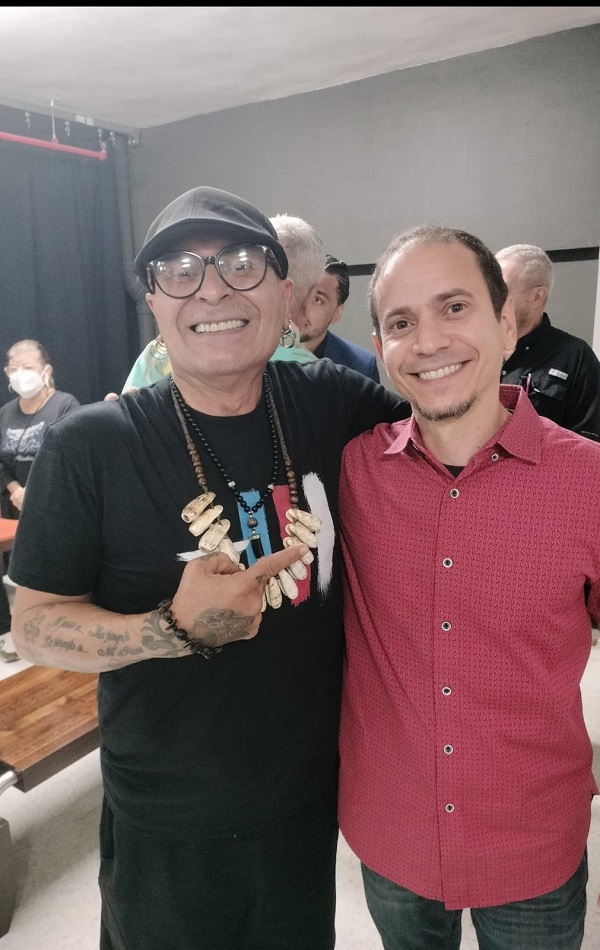
On the salsa stage we have the privilege of having the presence of Felix "Guayciba"
On the salsa stage we have the privilege of having the presence of Felix “Guayciba”

This was the name of the musical group of which Félix Guayciba was the director, composer and singer.  As the main member and founder, he took on the task with commitment and in 1989 they released their first record production, entitled Nuestra música primero en LP, because CDs were not yet widespread in the market.

Felix remembers that the first singer of Grupo Guayciba was Gisela Ortiz.  Some time later, Gisela got thyroid cancer and when she lost her voice, she had to be replaced by Aidita Encarnación.

Guayciba recalls that Aidita made her debut with the group during the “Coffee Festival” in Maricao and remained with the group until it disbanded in 2000.

In 1991 they produced Echemos pa’lante, which opened the door to radio stations on the island. In 1992 they produced Por ti doblaré rodillas, and in 1993 they released what Felix considers their masterpiece under the title Borinquen, nido de amores.

Félix affirms that this production became the classic album that consolidated them in Salsoul, Z-93 and Estereotempo.  Later they released La revolución apoya lo nuestro. In 1999 they released their last album, Contra viento y marea.

In this last Guayciba production, Maestro Luis ‘Perico’ Ortiz made two arrangements: “Déjame Soñar” by Perín Vázquez, which Tito Puente had already recorded on the 100th album, backing the voice of Tony Vega (Antonio Vega Ayala), the cousin of Félix Guayciba Ayala. The six albums of the Grupo Guayciba were recorded in the studio of Maestro Pedro Rivera Toledo, and in Contra viento y marea Maestro Rivera Toledo recorded the saxophone.

Félix “Guayciba” Ayala

In his last album, the song “Por nada la cambiaré” was composed by Guayciba and dedicated to his homeland, Puerto Rico.

They never recorded Christmas music because their mission was to defend our music, the seis, the bomba, the plena and the guaracha, among other indigenous rhythms. The time came for the group to disband, but as Guayciba affirms: “We left a legacy for the musical history of our nation (…) Guayciba was, is and will be one of the best musical groups in the history of typical Puerto Rican music. I have retired, but at least we have left a legacy for history, we have left a mark”.

With the arrival of the new millennium, Guayciba’s musical stage ended to give way to the visual arts, making it clear that he had not retired from the humanistic arts, but had reinvented himself and now stood out in the visual arts.

The images captured by Guayciba’s photographic lens are full of life and movement. The viewer sees as if the artist, athlete or object in the photo comes to life.

Guayciba reflects while explaining how the image speaks or remains silent, depending on the adjustment made, the movement given, the position and the light.

He hastens to clarify: “I have used my musical career to distinguish myself in photography. I photograph artists the way I want them to photograph me.

I try to make the image I take of an artist or a show speak. In photojournalism, the photo has to speak.”

Guayciba made the decision to move from music to photojournalism as a result of a deep depression that he faced and fought with professional help.  Once the decision was made, he began training at the University of Puerto Rico.

He never forgot what one of the specialists who was part of the medical team that helped him recover told him: “I have faith in you.  If you are going to be a photojournalist, I want you to be the best photojournalist”.

Felix attended classes every Wednesday for three hours. He remembers his first photographic experiments.  One that comes to mind is Ricardo Arjona, who performed for an entire season at the Centro de Bellas Artes. Felix would leave his weekly class to go to the CBA, where he would stay until late.

On the salsa stage we have the privilege of having the presence of Felix "Guayciba"
On the salsa stage we have the privilege of having the presence of Felix “Guayciba”

The next day he would go to a megastore to develop the photos from the night before and bring them to the professor to evaluate the shots.  The professor would give him advice on what to do to improve the photos he had in hand.

Another moment he remembers with emotion was in 2002, when Fania played a concert at the Juan Ramón Loubriel stadium in Bayamón.

Guayciba already had a digital camera, and during that concert, he says he used 25 rolls of film with 36 exposures each.

He says this was his first international assignment. The first time he photographed an international artist was when he was still a photography student, practicing with Ricardo Arjona in the Fine Arts Department.

As a result of that coverage, he got in touch with the Guatemalan artist, who was thrilled with the photos Felix took, saying at the time that they were the best photos he had ever taken, adding that the Puerto Rican had captured his best side.

Felix has continued to evolve and has had the opportunity to cover concerts by Elton John, the Rolling Stones and Paul McCartney, among others.  He says: “The only thing I don’t do is pornography, weddings or quinceañeras”. His specialty is artistic shows and sporting events.

Guayciba is the longest serving photographer to cover the Coliseo de Puerto Rico since its inauguration in 2004, when Sonora Ponceña, Richie Ray & Bobby Cruz and Roberto Roena’s Apollo Sound performed in that memorable concert produced by Pepe Dueño.

One of the highlights of his career was a trip to Cuba in 2009, where Guayciba was the official photographer for the Puerto Rican delegation that went to the Cuba Disco Festival, which was dedicated to Puerto Rico in that edition.

He has taken more than 24,000 pictures of Cuba. The most memorable experience of his trips to Cuba was visiting the resting place of Che Guevara.

He continues to learn from all the images he has taken and published.  “At one point, during the performance of the 2013 musical Pedro Navaja, the Caballero de la Salsa, Gilberto Santa Rosa told me, “You have to let yourself be criticized and you have to accept criticism as long as it is constructive criticism.”

Felix added and still maintains: “It depends on who is criticizing you, because there are people who criticize you just to make fun of you; yes, you know, out of envy”. In fact, Felix understood that he had the best photos of Gilberto.

When he went to see him to show him, Santa Rosa told him: “They’re good, but these photos where I’m alone don’t say anything because it could be at the Fine Arts Center or it could be in some theater.  This concert is symphonic, where is the symphony orchestra?” Santa Rosa was right. “From that ear flattery I learned that you have to take the picture of the artist and the complements like stage, orchestra, etc..  It’s like writing a story.  You have to include the day, the historical setting, the characters, and make sure that the viewer can get a picture of what happened there in the moment. It’s more of a frozen in time effect.

Guayciba considers Conrado Pastrano her teacher and mentor. She expresses gratitude for all that she has learned in photography and acknowledges that there is still more to learn.

Conrado is an exceptional colleague who takes the time to explain ways to correct unwanted effects in images. Guayciba has developed her own unique style by studying the works of other colleagues and drawing inspiration from each of the photojournalists whom she admires.

Guayciba is highly regarded as one of the top photojournalists in Puerto Rico, although he is humble and has never claimed the title for himself.  He recognizes that there are others who may be more talented than him.  His motto is: “I may not be the best, but I am proficient in my craft and the photos I take convey a narrative.”

When he is at the ball park, he adeptly adjusts his lighting, shutter speed, and lens to capture the intricate details on a ball despite its velocity exceeding 100 miles per hour. When artists perform on stage, Guayciba faces the task of restoring their natural appearance despite the color filters and stage lighting often making them look unnatural or cartoonish.  Overcoming these challenges and bringing the images to life, imbues these artists with renewed enthusiasm for their craft, a pursuit they have devoted over two decades to.

At 68 years of age, he prays daily for longevity. He abstains from drugs and alcohol, including wine, champagne, and cider. His sole indulgence is tobacco and photography.

To view Félix Guayciba’s artistic works and keep in touch with this vital advocate of Puerto Rican culture, please visit the publication at www.guayciba.com. To email him, please use [email protected], or follow his IG account at https://www.instagram.com/guay54/.

To reach him by phone, please dial 787-637-8617. He is always available and eager to assist with his usual helpful demeanor.

Bella Martinez Puerto Rico

Also Read: Bella Martínez presents “Las memorias de Jimmie Morales: un conguero para la historia” [Read more…] about Metamorphosis: from music to photojournalism, a reinvention without limits
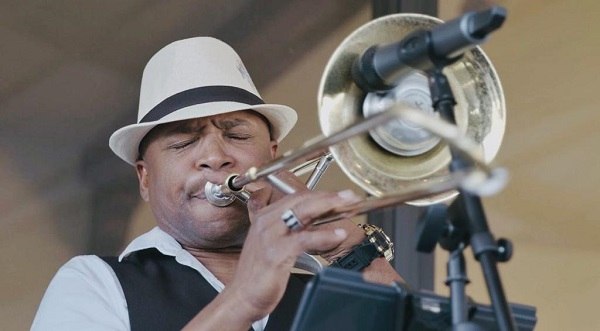

René Latin Soul and his journey into music from his home country

René Latin Soul 

After anything we have yet witnessed in the Latin music scene of the United States, we can say that it is undeniable that Cuba is an endless source of talent and passion for music, so this island can never be missing in International Salsa Magazine. On this occasion, it was the turn of producer, musical director, arranger, composer and trombonist René Latin Soul. 

René is a talented Cuban who has managed to gain a very important place in the music industry in this country and we wanted to know how he managed to get there. Do not miss the fascinating conversation we had with the artist.  

René playing the trombone
René Latin Soul playing the trombone during a performance

Beginnings in Cuba 

René Amet Campos Artigas was born in the province of Camagüey, specifically in the municipality of Nuevitas. He came to music from a very early age, as many of his relatives are musicians, including his father and grandfather. This led him to enroll in the music conservatory when he was only 10 years old. 

He confesses that he always knew he wanted this to be his profession and had no other career in mind for tomorrow, so he always did his best to excel as much as he could in the music business. 

Once he finished school, René entered the military for mandatory service and was part of the general staff band. He was always intended to move to Havana in order to make himself known as an artist and he finally did it to stay for a while and see how he was doing. 

During this time, he was working for several nightclubs that offered live music, but he did it with the trombone given by the army when he was in the staff band, since he just did not have enough money to buy one of his own.  

Unfortunately, the time of the ”Special Period” arrived and this crisis forced him to return to his native Camagüey. However, this was not the end of his dream.   

Upon returning, both René and his father started an artistic project which they named ”Valentín y Los del Caribe” and started working in tourism, specifically in a company called El Cuartón Club which had hotels in Acapulco, Puerto Vallarta and Ixtapa, Mexico.   

Canada and the United States 

While working with El Cuartón, René spent a long spell touring in the Aztec country, which gave him the opportunity to get to know other territories and other ways of doing things. In one of these trips, he made the decision not to return to Cuba and try his luck on new horizons.  

He lived in the capital of the aforementioned country for more than 12 years, during which time he worked as an instrumentalist and worked with several artists belonging to the salsa guild such as La India, Jerry Rivera, Grupo Niche, Oscar D’ León, Los Adolescentes, among many others.   

René on stage
René Latin Soul performing on stage

When he met the woman who became his wife, they started their romantic relationship and began making plans of life in common, between which Mexico fell a long way short, so it was time to put down roots elsewhere. At first, this new place would be Canada, but plans changed and the couple ended up leaving to the United States of America. 

René and his wife spent about eight months living in Canada, but immigration issues became very difficult for them from one moment to another, so it did not take long for them to relocate to the United States.   

René never thought to live here, since the Cuban government instilled an absolutely negative view of what this country represents in children from a very young age and he was no exception. However, all those opinions changed once the musician began to really get to know this nation. Today, he feels he has adapted perfectly and has been here for about six years, when he moved to this country to establish his family and career.  

René Latin Soul & His Quartet 

Once René arrived in the United States with his wife, his situation was very complex as any immigrant’s, so he had to work on things that had nothing to do with music. In fact, he recalls he spent more than a year without playing the trombone because he could not devote himself to music at that time. 

That was it until he started playing trombone with the Kimbalai Orchestra, which he left in December 2021 and went to live in the city of Murrieta, one hour from San Diego. Once there he met Michael Mora, a friend who advised him to exploit the features of the city to start a solo project, which led him to start a solo career, which he finally did. 

As he made a name for himself, he was able to include other musicians in his project, which allowed him to build the quartet he has today. Although René is very happy with what he has accomplished so far, he plans to have a much bigger salsa band in the future.  

René and his piano
René Latin Soul in front of his piano

Music classes 

A very important part of René’s work with music is teaching and this was a point we found interesting to discuss.   

When asked if talent was natural or developed, he said natural. The artist thinks that the ability to play an instrument is innate in the musician, so this person only requires academic training to educate those gifts at a professional level.   

He finishes by saying that ”there is a very particular way of feeling the music and, if you don’t feel it that way, you can’t play it correctly. Time, tuning and melody are essential for anyone who wants to be a professional musician.  

Cuban talent despite the circumstances  

According to one of the descriptions provided by René’s website, the artist is one of the figures who demonstrates the virtuosity of Cuban-born musicians. Of course, considering that the island does not live the same normality as most countries in the world. 

About this, René said that ”clothes don’t make man. The most important thing to a talented person with an instrument is to focus on what he or she has to do and not look at anything around. There may be vicissitudes and shortages, but if you are focused on something you love, you have to find a way to improve and develop yourself in spite of everything”.  

In his case, the musician tells us that he had friends with travel opportunities who brought the most recent findings made in music and he was always interested in knowing these things to apply them to his own technique. 

Read also: Sizzling Summer Nights at the Autry Museum Of The American West 

John Narváez and Elizabeth Rojas from Salsamania

John and Liz from Salsamania  

Between days 23 and 25 March, 2023, the San Francisco Salsa Festival took place, which brought together some of the cream of The Bay Area Latin music scene. One of those attending this great event was the main editor of International Salsa Magazine, Mr. Eduardo Guilarte.   

On site, he had the opportunity to share with other guests and some of the organizers such as Elizabeth Rojas, affectionately known as Liz, and John Narváez. We had the chance to talk with both dance professionals to know more about their beginnings, festivals and projects. Do not miss it!  

John and Elizabeth
Colombian dancers John Narváez and Elizabeth Rojas

Beginnings   

After several attempts to schedule a meeting with John and Liz, we finally managed to talk with these Colombian dancers and entrepreneurs, who began by thanking us for the contact and the opportunity to promote their passion for salsa and the community they represent.   

This love they have for the aforementioned musical genre has much to do with their roots. Both were born in Colombia and left the country when they were 12 years old (they are the same age) because of the violent situation caused by the guerrilla that existed in those years.   

Although those were hard times, John says these were very nice years from which he has fond memories. He remembers almost all his family members singing or playing an instrument, while he was the only dancer. All this influenced him in such a way that Latin music remains his north after so many years.  

Moving to the United States 

Since the social situation did not allow them to live in their country, they decided to move to the United States and apply for political asylum. At the beginning, it was not easy and the focus was on working hard to get ahead in this new country and to learn English. However, all that changed over time. 

With the arrival of economic and family stability, priorities changed. John comments that his interest in music and dance perked back up due to the family gatherings that his relatives celebrated such as birthdays, quinceañeras, weddings, among others. 

Although at the time dancing was not considered a serious profession, both John and Liz began to practice it at amateur level. Once they turned 21, they started going to the most popular salsa clubs, but it was all for recreational purposes. It was years later before they began to analyze all the technical and historical part of dancing to understand it better and take it more seriously.  

John, Liz, and Barbara
John and Liz with Barbara on Despierta América

Dancing as a profession 

John and Liz started to take dancing seriously in 1999. They both attended a three-day salsa event in Los Angeles, but what they did not know is that this was the first world salsa congress in America.   

This gave them the opportunity to share with the best salsa dancers in the world and they saw such impressive things that they were inspired to return next year with a well-established dance team with which they could participate fully in these activities. 

Being full of motivation, they decided to create Salsamania Dance Company and performed with their team at the festival. They started doing the same thing every year, which helped them gain experience and evolve their styles. 

After earning the trust of the festival organizers thanks to their talent and professionalism, they were given the opportunity to start teaching salsa workshops at the aforementioned congress. This is how little by little John and Liz began to build the reputation and credibility they have today.   

 In 2004, it got to a point where John took the important decision to quit his job to devote himself to dancing and Liz was quick to do the same. His resignation came with the opportunity to take a three-month trip to Hong Kong to teach salsa in a community where people did not dance it. 

They managed to build a community from nothing, since at that time, Hong Kong was not a place where people listened to salsa. However, everything went well and the dancers managed to seamlessly connect with the local audience. As John rightly said, ”salsa is a universal language and you don’t have to speak that language to feel the music”. 

On returning to the Bay Area, they began to practice dancing as a profession in the United States. 

On this point, Liz commented that her parents became very upset with her when she quit her job because of dancing, but today, they admit that it was the right decision and support her totally.  

Liz and John dancing
Liz and John during a social dance in Boston

Salsamania Dance Company 

Liz told us that it was difficult to create Salsamania Dance Company because it requires a lot of discipline and healthy coexistance between different types of personalities to create a group like this and keep it together. Fortunately, John is an industrial psychologist, so he helped to prevent these aspects to be a problem. 

Basically, Liz is responsible for the company’s management and John is the one who takes care of the human part of all the staff. 

They started the whole process like any regular company and drew up the contracts for all those who were going to work with them, making Salsamania a much more established, structured and serious project in the eyes of everyone else. Today, it is one of the largest companies in the Bay Area.   

They also took it a step further and built a salsa academic program with a thoroughness and detail that has not been seen in other projects of this kind.   

San Francisco Salsa Festival  

San Francisco Salsa Festival is one of the biggest salsa events in California and the United States in general and we were fortunate to have representation there with our editor Eduardo Guilarte.  

It began to be celebrated in 2008 with the support of international salsa promoter Albert Torres, who was a fundamental piece in the development of the festival and talent recruitment for an event of this size, as there were many things John and Liz had to learn. That is why they are both incredibly grateful for what the congress organizer did for them back then.  

To recruit artists, the dancers only require candidates to be good teachers, to share with the salsa community and to put on a good show for the audience. 

They also often invite colleagues they have known for years and some recommended to whom they give them the opportunity to shine and make themselves known during those days. 

Every year, they look for dancers, dance instructors, DJs and live orchestras. For Liz and John, the thing about live bands is very important, as they are concerned that there are so many clubs and venues that no longer hire these talents. This year, they focused on local bands that play on Thursdays and Fridays in San Francisco and were very happy with the results.  

It is expected that the next San Francisco Salsa Festival is scheduled between days 22 and 24 March, 2024 at the same venue, which is the Marriott Waterfront Hotel.   

The orchestras hired to perform for next year are Cabanijazz, The Latin Rhythm Boys and Orquesta Boyacán. The dancing couples are Alex and Judy from Colombia, Colombians Felipe from Colombia and Kathe and Mauricio and Danny from Mexico.   

John, Liz, and Oscar D’ León
John and Liz with Venezuelan singer Oscar D’ León

Difficulties in the pandemic 

As dancing is an activity with a lot of physical contact and closeness, we were curious to know how they lived the pandemic and what they did to keep their project afloat in this situation. 

Though they admit that those months were not easy, they have always been very disciplined with their money and had enough to resist as long as possible without working.   

They tried to make up for lost time by teaching classes via Zoom as did most of their colleagues and designing new choreographies to apply when they went back to their usual activities. 

In addition to this, both had not spent time with their respective families in a long time, so they also took advantage of the absence of work to reunite with their loved ones and take up those important contacts that were lost due to stress and routine. 

Read also: Here we have Salseros With Attitude 

Son Rumbero, Colombia Offers You Authentic Salsero Tourism

Norte America / Colombia / Bogota

Son Rumbero, Colombia Offers You Authentic Salsero Tourism

“Come and enjoy classes, dance and local tourism”

Jose Perez - Son Rumbero, Colombia
Jose Perez – Son Rumbero, Colombia

The Son Rumbero Academy continues to focus on salsa tourism in Colombia. This prestigious academy offers us the opportunity to unite the tourism of this beautiful country with the best classes of Latin rhythms that you are looking for, all nested in a single package, an opportunity to schedule 24 hours a day in activities willing to know, enjoy and above all. all dance.

The offer is made to enjoy the service in the main cities of the country since they have qualified personnel who provide classes from the capital Bogotá, passing through Cali, Barranquilla, Cartagena, Medellín, Pereira, Popayán among other cities.

The cycle of classes ranges from 2, 4, 6, 8 or more hours of personalized instruction, with qualified and highly experienced professionals, this leads to an almost guaranteed successful result, live the experience of learning salsa in any of its styles, Merengue, bachata, urban rhythms, a little bit of everything, only you have the power to determine the line you want to take, all these dance activities taught in ideal spaces, from discos, classrooms to hotels in the cities.

This cycle of classes is nested in the visit to the best nightclubs in the city where you are, this to take the classes to the practical cycle, an idea that allows you to learn much more effectively by sharing with the same teachers who instruct you.

Class in Son Rumbero, Colombia

We have a unique salsa tourism program in the country, the academy offers you the opportunity to get to know the most emblematic tourist sites in the area where you are, whether historical, cultural, social, recreational or other that interests the client.

The classes are scheduled weeks in advance where the academy sends you the itinerary of classes and walks in a tourist guide that organizes the days of your visit, always leaving a space for those interested to also determine the activities you want to do, it is like have a tourist assistant who additionally dances.

For more information on plans and costs, be sure to contact them at the numbers +573022582306 and +573196432329, through their social networks @sonrumbero on Instagram and Facebook, email [email protected] or [email protected] and through their website www.sonrumbero.com

Here we have Salseros With Attitude

Alex, Jairo, and Andrés in Canadá 

Salseros With Attitude is a salsa band based in Toronto, Canada, whose Latin music scene is gaining strength as the years go by.   

We got to work and contact these talented young people to learn about the band’s history and what their lives have been in the North American country with the profession they are in. 

We spoke with Alex Naar, Jairo Acuña and Andrés Magno, who had a lot of highly valuable information to provide to this conversation about music and Latin culture in general. Here are the most relevant details of the interview with three of the main members of Salseros With Attitude.   

Alex Naar from Salseros With Attitude
Saxophonist and vocalist Alex Naar performing on stage

How Alex and Jairo started in music 

August 10, 2023 was the day chosen to meet with these musicians via Zoom and the first to speak was Alex Naar, saxophonist and vocalist of Salseros With Attitude, who greeted us and welcomed the opportunity to talk to International Salsa Magazine. 

When asked about the group’s beginnings and how its members met, Jairo Acuña, the orchestra’s conguero and percussionist, indicated that, in his own personal case, his first steps in music were through the saxophone, an instrument that brought him closer to what would become his great passion decades later. 

The musician said that he always liked rumba and salsa percussion, which led his parents to believe that a pair of conga drums would be a very fitting present for their young son, and well, they were right. In addition to the congas, there were other percussion instruments he learned to play in church, which served as stepping stones for Jairo to further advance his career. 

Another great stepping stone in his musical growth was the Cuban teacher and musician Jorge Luis Torres ”Papiosco”, who was one of his great mentors and taught Jairo everything he knew, to the point that today he still has much respect for him and considers him an important reference to follow 

As was the case with Jairo, Alex also learned a lot about music in church, but he turned to guitar playing. His big leap to professional music was a friend of his who invited him to join a merengue group, a genre he had never played before in his life. However, he accepted the challenge with the best of mind and began formally studying music to acquire the academic knowledge he knew he would need later on. 

Later, Alex made the leap to playing and doing backing vocals in the salsa genre, which is still his greatest specialty. He said laughing that many of those who know him would never think that he started in this world with merengue, but he is very glad he did, since today his greatest passion is also his profession.  

Alex, Andrés, and Jairo from Salseros With Attitude
Andrés Magno, Alex Naar, and Jairo Acuña from Salseros With Attitude

Beginnings of Salseros With Attitude 

As for the beginnings of Salseros With Attitude, Alex let us know that a DJ who was a great friend of them, Oscar Betancourt, connected them with the hip-hop group Los Poetas, which offered them to serve as a backing band for some of its live events.   

By having to play together with this and other bands, Alex, Jairo and Andres noted that they had much chemistry between them and got along very well musically speaking, so they decided to form their own group to see how it went. 

Then, Andres, who had just joined the Zoom meeting, was the one who gave the band the name of ”Salseros With Attitude”. The Uruguayan-born Canadian drummer and multi-percussionist, who inherited Uruguayan music and values from his parents, entered the artistic world with typical and folkloric orchestras during his teenage years, until he discovered that his thing was Latin American tropical music, more specifically salsa. 

After traveling to several stages and performing in activities together, they ended up being part of an orchestra and a very strong brotherhood that holds them together.  

Why Canada? 

When we wanted to know why they chose Canada as the place to establish their orchestra, Andrés laughs and says that he had no choice, since his parents moved there. It was the country where he was born and where he has always lived. 

Jairo, for his part, was born in Panama, but he had no choice either because his parents moved to Canada when he was only seven years old. Although he is extremely proud of both nations and always mentions them when asked where he is from, he emphasizes that he was raised in a Latino household with Latino values in which the Spanish language was never lost. 

Alex was born in Panama, but also points out that his parents decided to move to Canada and he has been living there ever since. 

while the decision to make life in Canada was not taken by them, the three artists keep living there by choice and every day they thank their parents for choosing this destination, otherwise they would not have had the opportunities they have both personally and professionally.   

Jairo, Andrés, and Alex at The Lula Lounge
Jairo, Andrés, and Alex from Salseros With Attitude outside the Lula Lounge

Original music and covers 

Most of the time, the music and arrangements come from Alex’s ingenuity, but there is no lack of good ideas and contributions from Jairo and Andrés in order to beautify and improve the work already done. However, there are times when the last two can have a specific idea with which Alex, in his words, ”plants the seed” to grow a beautiful oak tree. 

The Panamanian artist highlighted Andres’ role with regard to covers and they two make the necessary arrangements so that their versions are not remotely similar to the original songs. 

He also revealed that one of the soon-to-be-released songs was written by the singer of Salseros With Attitude, Venezuelan Albany Caldera. The lyrics are hers and it was Alex who created the musical arrangement.   

Event planning and music classes 

The planning of events has not been a simple matter, since the members of Salseros With Attitude know that they are in a very competitive environment with many groups and few festivals and places to play. That is why they are always in search of opportunities outside those spaces such as corporate events, weddings and other shows not included in the world of entertainment. That has led them to opt for the production of events focused on these more private activities. 

As regards the teaching of music, they have been blessed with the possibility of going to schools to perform for children in a dynamic and interactive way. They also get used to covering children’s songs in salsa and cha cha chá so that the little ones feel connected and identified with what they hear and, therefore, learn in a simpler and more friendly way.   

Conclusions 

After having listened carefully to each of the interventions, it is evident that these young musicians have a very powerful brotherhood and are in sync with one another.   

It is really admirable that they know and feel how special they are compared to other groups of this kind and that trust has led them to the success and popularity they have achieved over the years. 

From International Salsa Magazine, we wish them the best and hope that Salseros With Attitude keeps growing to infinity in all possible areas and takes Latin culture to the top. 

Salseros With Attitude and Adonis Puentes 
Salseros With Attitude accompanying Cuban singer Adonis Puentes

Read also: Founder and owner of Guapacha Productions Gil Tower 

  • « Go to Previous Page
  • Page 1
  • Interim pages omitted …
  • Page 14
  • Page 15
  • Page 16
  • Page 17
  • Page 18
  • Interim pages omitted …
  • Page 41
  • Go to Next Page »

International Salsa Magazine (ISM) is a monthly publication about Salsa activities around the world, that has been publishing since 2007. It is a world network of volunteers coordinated by ISM Magazine. We are working to strengthen all the events by working together.