• Skip to primary navigation
  • Skip to main content

International Salsa Magazine

  • Home
  • Previous editions
    • 2025
      • ISM / November 2025
      • ISM / October 2025
      • ISM / September 2025
      • ISM / August 2025
      • ISM / July 2025
      • ISM / June 2025
      • ISM / May2025
      • ISM / April 2025
      • ISM / March 2025
      • ISM / February 2025
      • ISM / January 2025
    • 2024
      • ISM / December 2024
      • ISM / November 2024
      • ISM / October 2024
      • ISM / September 2024
      • ISM / August 2024
      • ISM / July 2024
      • ISM / June 2024
      • ISM / May 2024
      • ISM / April 2024
      • ISM / March 2024
      • ISM / February 2024
      • ISM / January 2024
    • 2023
      • ISM / December 2023
      • ISM / November 2023
      • ISM / October 2023
      • ISM – September 2023
      • ISM – August 2023
      • ISM July 2023
      • ISM Edition June 2023
      • ISM – May 2023
      • ISM April 2023
      • ISM March 2023
      • ISM February 2023
      • ISM January 2023
    • 2022
      • ISM December 2022
      • ISM November 2022
      • ISM October 2022
      • ISM September 2022
      • ISM August 2022
      • ISM July 2022
      • ISM June 2022
      • ISM May 2022
      • ISM February 2022
      • ISM January 2022
    • 2021
      • ISM December 2021
      • ISM November 2021
      • ISM October – 2021
      • ISM September 2021
      • ISM August 2021
      • ISM July 2021
      • ISM May 2021
      • ISM April 2021
      • ISM June 2021
      • ISM March 2021
      • ISM February 2021
      • ISM January 2021
    • 2020
      • ISM December 2020
      • ISM November 2020
      • ISM October 2020
      • ISM September 2020
      • ISM August 2020
      • ISM July 2020
      • ISM June 2020
      • ISM May 2020
      • ISM April 2020
      • ISM March 2020
      • ISM February 2020
      • ISM January 2020
    • 2019
      • ISM December 2019
      • ISM November 2019
      • ISM October 2019
      • ISM Septembre 2019
      • ISM August 2019
      • ISM July 2019
      • ISM June 2019
      • ISM May 2019
      • ISM April 2019
      • ISM March 2019
      • ISM February 2019
      • ISM January 2019
    • 2018
      • ISM December 2018
      • ISM November 2018
      • ISM October 2018
      • ISM September 2018
      • ISM August 2018
      • ISM July 2018
      • ISM June 2018
      • ISM May 2018
      • ISM April 2018
      • ISM March 2018
      • ISM February 2018
      • ISM January 2018
    • 2017
      • ISM December 2017
      • ISM November 2017
      • ISM October 2017
      • ISM September 2017
      • ISM August 2017
      • ISM July 2017
      • ISM June 2017
      • ISM May 2017
      • ISM April 2017
  • Download Salsa App
    • Android
    • Apple
  • Spanish

Search Results for: Cuba

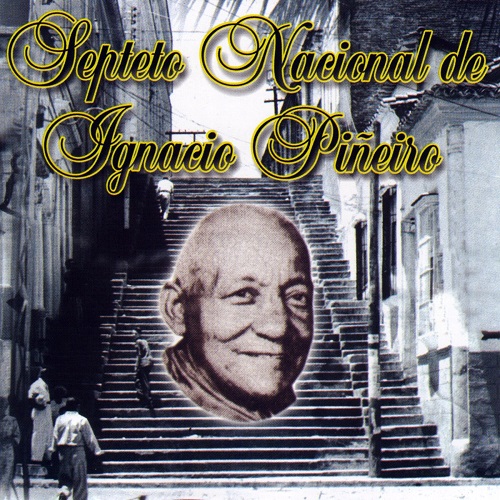
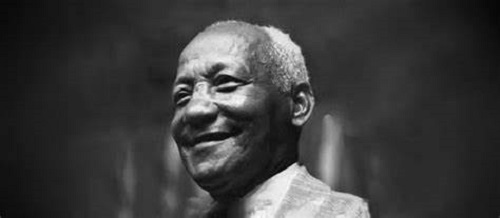
Ignacio Piñero Septeto Nacional has played an important role in Cuba’s music for more than seven decades

Founded by Havana-born bassist and vocalist Ignacio Piñero in 1927, the Septeto Nacional De Ignacio Piñero has played an important role in Cuba’s music for more than seven decades.

Fundado por el bajista y vocalista nacido en La Habana Ignacio Piñero en 1927

Pioneers of son, a rhythmic blend of African and Cuban music that evolved into salsa, mambo and Latin jazz, the group was the first son band to incorporate the trumpet as the main instrument.

Ignacio Piñero’s Septeto Nacional gained worldwide recognition with its performance at the 1928 Universal Exposition in Seville, and was reportedly the first group to mention “Salsa” in a song “Echale Salsita” recorded in 1933. The song composed by Piñero, was adapted by George Gershwin for the opening theme of his “Cuban Overture”.

Since Piñero’s death in 1968, after 41 years at the helm of the band, the Septeto Nacional De Ignacio Piñero has been led by a series of leaders.

Guitarist and composer Rafael Ortiz, who took over after Piñero’s death, bequeathed the position to vocalist Carlos Embale in 1982.

After leaving the group due to illness in 1998 Embale’s leadership was inherited by guitarist Richard Aymee Castro. True to their original musical roots, Ignacio Piñero’s Septeto Nacional continues to offer a danceable blend of montano, merengue, bolero, rumba and cha cha cha. Craig Harris.

Ignacio Pineiro
Ignacio Pineiro

Ignacio Piñero was one of the Pioneers of Son Cubano

In 1906 he already knew and had assimilated the different toques of the African cabildos that existed in the neighborhood of Pueblo Nuevo, which he later incorporated into some of his creations.

He began his artistic career with the group claves and guaguancó El Timbre de Oro, later he directed Los Roncos de Pueblo Nuevo, in which he developed as a decimist and director, at the same time he took his first steps as a composer.

From this stage are: Cuando tú, tu desengaño veas, Dónde estabas anoche, El Edén de Los Roncos, Mañana te espero, niña. Later he joined the group Renacimiento de Pueblo Nuevo.

To the folkloric values that Piñeiro cultivated in these groups, he contributed a wider melodic-harmonic development and a greater depth and poetic flight.

In 1926 he was one of the founders, together with María Teresa Vera, of the Sexteto Occidente, with which he made his first tour to the United States in order to record an album with this group.

In 1927 he founded the Sexteto Nacional, formed by Ignacio Piñeiro, director and double bass; Alberto Villalón, guitar; Francisco González Solares, tres; Abelardo Barroso, lead vocals; Juan de la Cruz, tenor; Bienvenido León, baritone and maracas, and José Manuel Carrera Incharte (El Chino), bongo; that same year trumpeter Lázaro Herrera joined the group. With this septet he traveled to New York, where he recorded his first works.

In 1929 he participated with the Septeto Nacional in the Fair-Exposition of Seville, Spain; in that country they were hired as exclusive artists by the company SEDECA, and toured other cities of that country: Vigo, La Coruña, Santander, Madrid and Valladolid; in addition, they performed in the theaters Torero, Jovellanos, the Cine-Teatro Grado, and the cabaret Maicú, all in Madrid. In 1930 he was one of the founders of the National Association of Cuban Soneros.

Pioneros del son, una mezcla rítmica de música africana y cubana

They performed at the Sans-Souci cabaret (1930); in 1931 they performed at the Lavín and CMCG radio stations; in 1932, at the Dos Hermanos Hotel, he premiered Buey viejo; that same year the American composer George Gershwin came to Havana, at the CMCJ radio station he listened to Piñeiro’s son Échale salsita, from which he later used the theme played on the trumpet in his Cuban Overture.

In 1933 he performed at the Fair-Exhibition A Century of Progress, held in Chicago, United States.

In 1934 Piñeiro retired from the septet, which from 1935 was directed by trumpeter Lázaro Herrera. In 1954, Piñeiro reappeared as leader of the septet, with which he appeared on the television program Música de Ayer y de Hoy.

As a composer, Ignacio Piñeiro broke, although he took elements from the form of the oriental son, in which its creators used the quatrain and the tenth; an example of this break is his son Buey viejo, from 1932:

Carretero no maltrates a ese pobre buey tan viejo, que ya doblbla la cabeza por el peso de los tarros, y por senda de guijarros va tirando la carreta, y nunca llega a la meta, término de su dolor.

Piñeiro was one of those synthesis cases that managed to capture, develop and express the full richness of the son.

The structural modifications, the cadence, the rhythm and the use of refined melodies and lyrics, achieved by this creator and interpreted by the Septeto Nacional, make it possible to say that the work of this singular artist, although he did not mark the boundaries of son (which corresponded to the Sexteto Habanero), he did turn it into a son that today we can call classic, which became a model for its further development.

When Ignacio Piñeiro founded the Septeto Nacional, his purpose was to be a high exponent of the Cuban son and its various variants, he himself made use of those variants, composing guajira-son, canción-son, afro-son, so he worked with the elements offered by the oriental son, to which he gave a broader treatment, both musically and literary.

According to Miriam Villa: “If we analyze the organization of the literary text, we observe in his work the formal use of metrically heterogeneous links subjected to rhythm, characterized by the presence of accented and unaccented elements within the system of units that are repeated at intervals between them.

Piñeiro must not have been concerned about the meter in the text as a pattern, since through the rhythm of the composition he achieves the contrast relations, making the change of meter express a change in the thematic movement, either from intermittences or accentuations or sometimes both, which give it different semantic nuances and alternations of tensions and distensions.

And elsewhere Villa states: “Another aspect that in relation to the literary text is reflected in Piñeiro’s creative work is that of the thematic contents; these are shown from a diversification with greater scope in relation to his contemporaries.

His work can be divided into multiple themes among which are love, homeland, philosophical reflection, politics, the bucolic, the infantile, expressed in a variety of forms: satirical, apologetic, humorous and with greater depth than in the sonorous production that preceded him and even with which he shared.

With the Septeto Nacional, Piñeiro appears in the musical short El frutero, and in the film Nosotros la música, by director Rogelio París.

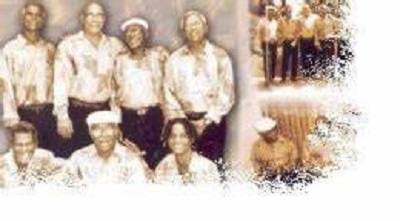
Ignacio Piñeiro Septeto Nacional

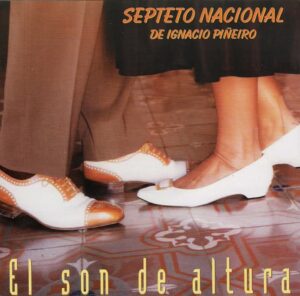
Septeto Nacional de Ignacio Piñero El Son de Altura

El Son de Altura (1998)

Tracks:

  1. Mayeya – No Juegues Con Los Santos (Son) (I. Piñeiro)
  2. Bardo (Bolero-son) (I. Piñeiro)
  3. Lejana Campiña (Guajira-son) (I. Piñeiro)
  4. Canta La Vueltabajera (Guajira-son) (I. Piñeiro)
  5. Guanajo Relleno (Guaracha-son) (I. Piñeiro)
  6. Esas No Son Cubanas (Son) (I. Piñeiro)
  7. Suavecito (Son) (I. Piñeiro)
  8. Alma Guajira (Guajira-son) (I. Piñeiro)
  9. Castigador (Son) (I. Piñeiro)
  10. Échale Salsita (Son-pregón) (I. Piñeiro)
  11. EI Viandero (Son-pregón) (Ernesto Muñoz)
  12. Son De La Loma (Son) (Miguel MGllamoros)
  13. Trompeta Querida (Boleró-son) (Lózoro Herrera)
  14. La Mujer De Antonio (Son) (Miguel Matamoros)
  15. La Cachimba De San Juan (Son) (l. Plñeiro)
  16. EI Alfiler (Son) (l. Plñeiro)
  17. Noche De Conga (Son) (l. Plñeiro)
  18. EI Paralitico (Son) (Miguel Matamoros)

By:

EcuRed

Dj. Augusto Felibertt

L’Òstia Latin Jazz

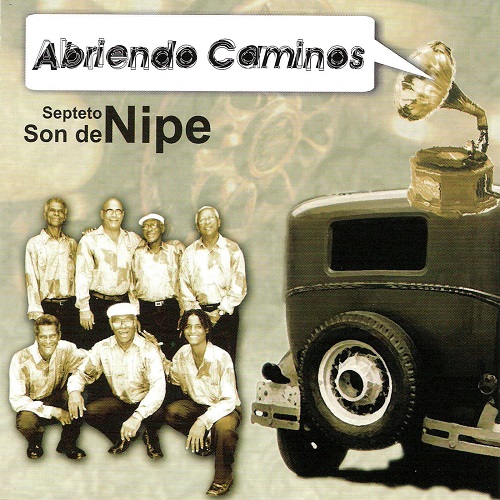
Also Read: From Cuba El Septeto Son de Nipe vienen Abriendo Caminos

From Cuba El Septeto Son de Nipe come Abriendo Caminos (Opening Paths)

Son de Nipe. A musical septet born in the municipality of Antilla, it burst into the cultural world with an album of the In Situ label of the Colibri Record Production Company.

Antilla is the smallest municipality of the province of Holguin in Cuba and one of the smallest of Cuba, it was founded on January 21, 1925, it is famous from distant times for its beauty, legends and original aspect.

De Cuba El Septeto Son de Nipe vienen Abriendo Caminos

The group is formed by former musicians of the orchestra Brisas de Nipe of this municipality.

This project was born from the hands of Porfirio Núñez Cruz (Firo) who as Art Instructor at the Casa de Cultura Adelaida del Mármol of Antilla had experimented with other amateur groups, but not with the same results, because the members did not have the necessary musical training.

The album Abriendo Caminos includes 14 songs, 10 of which belong to Antillean authors.

“The value of Abriendo Caminos also lies in the fact that it helps Antillean composers and arrangers to open up to the recognition of their work and ways of doing things”.

From the singer and percussionist of the septet Son de Nipe, Alejandro Arencibia appears the guaracha Esa muchacha quiere bailar and the son, Honor al Guayabero; from Edalio Espinosa Alayo (Pupi), former member of the Brisas de Nipe orchestra, the son, Es caliente como el sol (It’s hot like the sun).

The songs A mi Antilla (bolero-son) and, Y no me niegues el beso (son) by José James Pinder, singer of the septet. By Oscar Fernández, former singer of the Brisas de Nipe Orchestra, the disc offers the themes Rebozo de amor (guaracha) and the son Que lástima.

Septeto Son de Nipe
Septeto Son de Nipe

From the director of the septet Son de Nipe Porfirio Núñez Cruz, Mi son tradicional.

And the guaracha Olvídate de esa nena by the Antillean composer Nemesio Palacio.

The remaining four musical numbers are; De que callada manera by Nicolás Guillén and Pablo Milanes, Culpable by Pepe Delgado, Rabo de nube by Silvio Rodríguez and Una alborada de amor by Ariel Dotres Zaldivar, these songs were arranged by Porfirio Núñez Cruz.

In the septet’s album Son de Nipe Abriendo Caminos “the guaracha, the bolero, the bolero-son and the genuine son are retaken with originality and revalued”.

The latter is due to the fact that the musical criteria followed by its director was the respect for traditional music, its deep knowledge, but imbuing it with very contemporary nuances, which results in a seal that distinguishes the septet Son de Nipe.

“We use the son, but more updated because we make innovations, harmonizing it in a more modern way, without losing its roots”.

The selection of the songs that made up the album Abriendo Caminos was in charge of the septet’s management, since the Casa Discográfica Colibrí wanted originality and the authentic exhibition of the work that has been developed with traditional music in the eastern part of the country.

Son Cubano de Nipe en Holguin

The graphic image of the disc, worked in sepia and black colors fundamentally manage to set the atmosphere that is offered to us with a vintage flavor and invites us to listen to these 14 songs full of tradition and contemporaneity.

“It will be a delight for the listener and the dancer, the good function of the tres in its solos and “entregas”, the beautiful and ingenious introductions, the exquisite mixture between text and music of the boleros, the harmonic patterns of the soneros that not for conventional reasons give up a significant finish, without neglecting, on occasions, the voices replacing wind instruments”.

The selection of the members was meticulous. Porfirio had in his favor the prestige he possessed and the convening power among his former colleagues of the Orquesta Brisas de Nipe, so much so that in the list of his group he planned to include Reyes Cástulo Urgellés Fáez, better known as Lulú as bassist and José James Pinder (Joseíto) as singer, both retired from the Orquesta Brisas de Nipe and linked to the Casa de Cultura in occasional activities.

The septet still needed to be completed with a key piece, the tres, for which the prestigious Mario Arencibia Rodríguez, one of the best tres players in Antilla, was summoned.

In the Arencibia family, musicians abound, that is why the group was completed with them: Alejandro, singer and Rafael on the tumbadora.

Alejandro and Mario had been part of an amateur group called Renovación Antillana for more than 20 years, which was very famous in its time and where a great number of aficionados were formed.

Alejandro sometimes played the tres in other groups, but in Son de Nipe he remained as a singer, he also had a work relationship that did not allow him to devote himself entirely to music; His nephew, trained at the Casa de Cultura and under the musical influence of the family, had taken over the tumbadoras, so Rafael Arencibia was the youngest of the group, he was barely 25 years old and at this young age he had already played in several amateur groups and got the Brisa de Nipe orchestra out of trouble, due to the unexpected absence of its percussionist.

Rafael Arencibia Rodríguez joined the project with enthusiasm despite the fact that the genre and style of the repertoire were not those used by the amateur groups of his contemporaries.

Iro had obtained the desired musicians, but he still had a big step to climb, his musicians were not professionals, they all had work commitments and he needed to prepare the project for the right day…(ecured).


Septeto Son De Nipe – Abriendo Caminos (2006)

Temas:

  1. Esa Muchacha Quiere Bailar (Alejandro Arencibia)
  2. Es Caliente Como El Sol (Edalio Espinosa Adayo)
  3. A Mi Antilla (José James Pinder)
  4. Rebozo De Amor (Oscar Fernández Paz)
  5. De Qué Callada Manera (N. Gillén / Pablo Milanés)
  6. Honor Al Guayabero (Alejandro Arencibia)
  7. Culpable (Pepe Delgado)
  8. Mi Son Tradicional (Porfirio Núñez Cruz)
  9. Y No Me Niegues el Beso (José James Pinder)
  10. Clodomiro (Oscar Fernández Paz)
  11. Rabo De Nube (Silvio Rodríguez)
  12. Qué Lástima (Oscar Fernández Paz)
  13. Una Alborada De Amor (Ariel Dotres Zaldívar)
  14. Olvídate De Esa Nena (Nemecio Palacio)
Septeto Son De Nipe - Abriendo Caminos (2006)
Septeto Son De Nipe – Abriendo Caminos (2006)


Research Sources:

L’Òstia Latin Jazz

Dj. Augusto Felibertt

Also Read: Virgilio Martí was an excellent rumbero and composer of the classic “Cuba Linda” where he was vocalist and percussionist in Grupo Folklorico Experimental Newyorkino

Sitara Son Cuban – Latin Band

North America / USA / Angeles
Sitara Son - Integrants
Sitara Son – Integrants

Master percussionist and singer, Maestro Lázaro Galarraga is a native of Havana, Cuba, now living in Los Angeles. He was a founding member of the premier Cuban music troupe, Conjunto Folklorico Nacional de Cuba (1961-62, 1977-82) A world-renowned teacher, performing artist, choreographer and writer of Afro-Cuban music, culture and folklore, he has recorded, performed and taught across the U.S. and worldwide. He is also regarded as one of the great ‘Akpons’ or lead singers in the Afro-Cuban religious traditions and a master of the bata drums.

Guitarist/Vocalist, Jon-Oliver Knight is an accomplished classical guitarist who has toured extensively throughout the US, Central America, Mexico and Europe. He has played countless wedding ceremonies, cocktail hours and receptions and epitomizes the flexibility required to be a wedding guitarist. Jon-O is also in demand for his Vocals and plays sitar (Indian) and cuatro (Puerto Rican) in the band as well.

Sitara Son - Photo
Sitara Son – Photo

Bobby Wilmore’s is an incredibly well seasoned percussionist. From drum set to congas, bongos, or anything that Bobby can find that will make a noise, he is sure to captivate with his precision and creativity behind the drum. Bobby is one of the busiest percussionists in California with his unique “good vibes” personality and his astounding rhythmic ability and passion.

Pianist extraordinaire, Matt Amper is not only one of the most sought after Latin pianists on the west coast, but is also an accomplished Jazz and Classical pianist. Matt’s musicality is preceded by his need to dive deeper and deeper into exploring and perfecting his craft which many would say has already reached perfection!

Josiel Perez has performed and toured all over the world with some of the best bands out there. He currently plays Trumpet with SitaraSon among other La based bands. A wizard with his countless percussion instruments, Josiel brings that same skill and creativity to the Latin side.

Together these accomplished musicians form a Band that will astound and captivate you, leaving you wanting more.

Sitara Son Collash
Sitara Son Collash

Songoyó the perfect idea Experimental Cuban Son Group with its own style

Songoyó is an experimental musical group of the Cuban son genre with a particular style, since it fuses many musical rhythms, born on the initiative of Professor John “Goyo” Useche, on November 11, 2021 in La Victoria, Aragua State, Venezuela.

Songoyó the perfect idea Experimental Cuban Son Group with its own style

In order to unite Victorian musicians and start putting together songs by the remembered Madera Group, icon of the Caracas parish of San Agustín in Marín, and thus present themselves at the Guataca Salsera, which takes place every December 31 at the Madera 15 court, located in the Las Mercedes urbanization of the same town.

The idea immediately begins to take shape and that is when Professor John “Goyo” decides to communicate his project to Shinaury Rojas, a personal friend of many years, who at that time was based in Argentina, then informs the poet guitarist Rafael Pérez who was in Brazil and knew by reference of salsa groups via the web. Communication was fluid and accepted, regardless of the distance. John, Rafael and Shinaury embody everything that Songoyó is today.

It should be noted that the first name of the Victorian group was Son Madera 15, due to the loyalty that is maintained with the Madera 15 foundation, then it was changed to Sabor Madera 15 and finally they decided to name it “Songoyó” as the definitive name.

Songoyó is an experimental musical group of the Cuban son genre.

The communication was continuous and they immediately began to organize the activities that had to be carried out to group the musicians who were willing to belong to the group, musicians were contacted by phone and in person, finally the interested parties were grouped and the rehearsals began in an accelerated manner at Professor John’s house, to fulfill the main objective which was the presentation at the Guataca Salsera at the end of the year, in that 2021.

From that moment until the present, there have been many musicians who have passed through the son group, including the young music teacher Willian Herrera who is assigned the task of directing the group, the rehearsals are given and four songs are put together that were played at the Guataca Salsera achieving total success in said presentation causing the acceptance and applause of all those present.

Our Sonero Machado Noel the indigenous salsa singer and our General Manager John Goyo

By January 2022, the creator of the group calls the musicians and proposes to continue the project, achieving the acceptance of all. In the following months they contacted maestro Fael Alvarado, an expert musician who knows the TRES very well, the base instrument of the Cuban son, who agreed to join the project and professor William Herrera gave the musical direction to maestro Fael.

In February of that same year, the second presentation was made before a large audience at the Juventud de la Victoria festivities on Paseo La Juventud and Songoyó was again liked by the public.

The rehearsals continued, and it was maestro Fael himself as musical director, who proposed to everyone to create their own style with songs that belonged to the group and to have a unique sound in order to accept more contracts from then on.

In January 2024, the recording of the first and unpublished production of Songoyó “EL NEGRITO BEMBA” began under the creation and pen of the poet Rafael Pérez and the general recording direction of maestro Fael, in the recording studio “Fael Alvarado” in San Mateo, Aragua State. This recording was a huge success and can be found on various digital platforms,  Its release took place in January 2025, with a great acceptance.

Songoyó
Songoyó

From that moment on, the group began to be sold and promoted for public and private events inside and outside Venezuela.

Currently, there are 8 musicians that make up the group: Norberto Machado, güiro voice, Noel Machado, clave voice and percussion direction, Rafael Pérez, maracas voice, Alexis Tovar, tres, Edwin González, bass, Jonhy Vergara, tumbadoras, Fael Alvarado, tres, piano, violin and musical director, and John Goyo, bongo and general direction.


“SONGOYÓ, THEY ARE AS WE ARE”

For hiring, contact Professor Useche by phone at

+58 424-3212762

Instagram: Songoyo

Facebook: Songoyo

Research and Writing Source:

Djane. Shina Rojas

Also Read: Cuban Son is one of the most popular musical styles in Cuba and Kiki Valera is one of its greatest exponents.

Damian Ballester and the transformations of Cuban Folk Dance

Latin America / Cuba
Photo 3- Damian Ballester on stage

The relationship of Africa within the musical and dance culture in Latin America is notorious when we see the cultural expressions of the peoples of this continent, it is easy to see how similar they are, the use of percussion is one of the most relevant topics, in itself a mixture of cultural customs, religion, musicality, dance, in itself all the elements of the black race.

America, one of the main destinations of the ships with black slaves from many areas of Africa, caused our culture to be armed with a bit of each custom, therefore, we can say that in America there is a bit of each African people, this relationship of variety of slaves focused on dividing the forces of the race so as not to make it powerful, divided languages, customs, words and religions only left the marginalized population to communicate through percussion, an element that made the system improve at times of understanding within the fences where they lived.

Due to the above, African religions and customs are born in Cuba but, adopted by those already existing on the island, this combination gives us a rich variant of movements from three continents, Europe through Spain and Africa in all its splendor.

To clarify some topics of the folklore of the Caribbean island and its current dance transformations, we had to contact a great teacher, Damian Ballester, director of Iya Aye, one of the best folklore groups on the island of Cuba, to speak with this professional of the dance is necessary if we want to obtain real information about Cuban traditions, a great teacher who has left his teachings in many Spanish-speaking countries, among which Venezuela, Colombia, Ecuador, Mexico and now in the United States stand out…

we begin by greeting him and opening a pleasant conversation, to which we got an original response “Greetings acere, what was it”, calling him opens up a range of questions on the subject in question, here is an extract of the most common doubts generated around the relationship with salsa, its festivals and diffusion in the world.

Greetings Prof. Damian, grateful for your receptivity, we want to give information to our readers about the relationship of Cuban folklore within our world, Salsa, to begin with, what is defined as Cuban Folkloric dances?

Grateful for the opportunity and sure, that if we report on the case, folk dances are nothing more than the set of cultural goods or phenomena that constitute a cultural complex with manifestations of all aspects of popular life. It is the sum of the manifestations acquired by experience, by inheritance, by tradition, by the satisfaction of biological or sociological needs, among other things. This lasts through several generations and almost always undergoes transformations.

They will get compound terms in the word folklore, which speaks of people or people, popular knowledge, together with the popular knowledge of the people. It is a very long topic, because I should talk about so many things about my culture, better let’s leave the definition until here and thus add flavor to the interview.

Much better, we continue then, do African dances have any impact on Cuban folk dances?

Yes, of course, it is the root, the exercise of dance has always characterized my land and has suffered the same processes of contagion and transculturation between the ways of dancing of the colonizer and the styles introduced by African ethnic groups since the 16th century, in fact, the colonizers brought romance, active in the Cuban countryside for several centuries, with its couplets and their ways of singing and founding alegrías, while the black slaves included their ancestral rites, their drums, and their particular sense of rhythm and movement. bodily.

Given this brief explanation, we can say that not only dances of African origin contributed or influenced Cuban folklore, we can say that there is also an incidence from Spain, France and the Caribbean, but its main axis was born from the Spanish and the African.

We know the extent of Cuban folklore, for how long should a person prepare to be called a professor in this branch?

First of all, to carry the name, whether it is a teacher or instructor of Cuban folklore genres, there are two factors that are very important, the first is study, since Cuban folklore is made up of a very wide range of genres divided into different styles, I could mention some examples: Peasant, popular, Afro-Cuban and Franco-Haitian folklore.

Within the styles of peasant folklore, examples could be given of the Cuban zapateo, the ripiado parakeet, the chidonga, the hawk, the caringa, the son montuno, among others.

Within the styles of popular folklore, the Complex of the rumba, the mambo, the chachachá, the danzón, the dance, the pilón, the congas and the comparsas, the casino can be mentioned, within the Afro-Cuban folklore the Bantú cycle can be mentioned, the Yorubas, the Arara, the Abakua, within Franco-Haitian folklore we can mention the French tomb, the Haitian merengue, the gaga, the vodu among others, if I continue we will not finish today. (laughs to close)

Of the folkloric dances, which are the most outstanding or spread worldwide?

It could be said that there are several, examples are the popular folkloric ones, one could say the casino, the mambo, the chachachá, the son, the rumba complex, that the latter people tend to say are African or Afro-Cuban dances, that have African influence does not mean that they are classified within Afro-Cuban dances because this genre emerged in Cuba, was used as an object of protest against the government of that time and was eradicated in the essence of Cuban. In the same way, the one that has had the most impact and remained in the whole world are the Yoruba dances or dances of the orishas.

Should we open another interview to just talk about the many genres that the island embraces, what institutions correctly form the folkloric traditions in Cuba?

There are many institutions in Cuba, from the community point of view what is named in Cuba as amateur dancer are the community projects and actions that are nothing more than groups created in the communities, all of these supervised technically and methodologically by specialists from the houses of culture of each area by provincial and national methodologists governed by the Ministry of Culture.

From a professional point of view, there are art schools such as the ENA (NATIONAL SCHOOL OF ART) and the ISA (SUPERIOR INSTITUTE OF ART) all governed by a logical curriculum organized by specialists and connoisseurs of the genres.

Photo 2- Damian Ballester on stage

Other institutions that could be mentioned, is the little school of the national folkloric group of Cuba with 56 years of creation in charge of rescuing and safeguarding the traditional Cuban musical and dance traditions.

Wao, Enough, Do you know if there is any similar institution in the world?

In the world there are countless schools that are training dancers with the Cuban style and technique, whether they are Cuban or foreign teachers, but nothing like the preparation of art schools in Cuba that work with a logical and well-prepared program, in some schools around the world it could be said that they do not work under a logical methodological program for the teaching of these genres due to the commercial and monetary part, unfortunately there are many dedicated to commerce, to money and not to the necessary dedication.

This dissemination has been achieved while respecting the roots and traditions of the farmers? The root? The original essence?

Unfortunately, it could be said that a good diffusion of Cuban genres worldwide has not been respected or achieved, of 100% of the performers, it could be said that only 10% are protecting Cuban traditions, it is sad to say, but trade and populism it is destroying the folklore of an entire country.

Have these changes in traditions positively or negatively impacted Cuban culture?

First of all, traditions do not change if they are not passed down from generation to generation. In terms of their impact, I see it negatively because the dissemination that is taking place is incorrect and worst of all, there is no organization, which was of Cuba, can follow up on the program that is being given to Cuban genres, in itself, many see the commercial and hence they do not care about the poor distribution of what is taught.

What is the reason that so many dancers seek to perform Cuban dances? It is notorious to see it at festivals and congresses.

There are two very important factors: 1 Cuban music, which has been evolving in an incredible way, fusing Cuban rhythms within its repertoire, and the other factor is not because I am from Cuba, Cuban folklore could be said to be the most complete genre available. world level from the point of view of dance, is that it has a history, virtuosity is varied, it could be said that it is well complemented, due to its complexity and interpretive difficulty, it is what attracts attention, additionally, salsa comes from us, from these roots is born what now wants to be denied.

Teacher and the Cubans? Have Cubans spread their dance correctly?

It could be said that the vast majority of Cubans have disseminated the genres well, why do I say that the vast majority?

Because there is another small group that deforms it, money changes everything, foreigners think that all Cubans They dance, it has happened that they say Cuban and quickly you think he is a dancer, he knows everything, he is good, and no, that is not reality, one thing must be clear about being an opportunist, not a dancer, being a dancer by hobby and another is being one by profession or for being a teacher.

There are Cuban teachers who are hurt by the deformation that is happening with what has been studied so much, but there are others who only care about getting paid and do not care if their students do it well or badly.

How has the interpretation of Cuban roots impacted the so-called Salsa Casino in the world? Has the original and real spread of traditions been respected?

Look, since Cuban music began to evolve inside the casino, it began to undergo a series of transformations from movements to choreography due to the musical style that Cuban orchestras began to spread, known as TIMBA, which was well accepted by the public, If we talk about the impact from the traditional point of view, it could be said that there is no original interpretation of the Cuban roots because they are not executing a specific traditional genre, but rather what they are using different styles of the traditional folk dances that all this could be called Variety.

Have Cuban music and dance festivals or congresses devoted time and effort to improving these transformations? Have they worried about minimizing the damage?

In most cases, very few, first of all, if it is a competitive event, the organizers make the mistake of hiring unqualified personnel to evaluate genres of Cuban origin, and that is where the serious faults come from. There have been cases where there are groups , couples or soloists who perform a good technique within normal limits and the jury evaluates for a taste problem if they see it as beautiful and give it less points, or disqualify it, it is not about beauty, it is about correctness, the organizers should be more careful about these things.

What recommendations would you give to our dancer readers on this controversial topic?

The dancer must be clear about four aspects that are fundamental to his artistic life and entire career: dedication, love of dance and, most importantly, study.

Do only what you love and you will be happy, the one who does what he loves is blessedly condemned to success, which will come when it should come, because everything that should be, will be, and will come naturally.

Photo 1- Damian Ballester on stage

Let’s spend time respecting the roots and cultures of peoples, and above all, let’s take a good look at who we entrust our desire to learn, there are thousands of ways to learn correctly, everything is in the research, knowing who we contact and why There are hundreds of excellent instructors in the world, not to mention the many means of learning today.

I invite you to learn a little about this and other topics, I have a virtual classroom where I teach a lot of the theoretical and practical content online, I do it through the son rumbero academy and its virtual classroom format, follow the @sonrumbero accounts on Instagram and Facebook.

  • « Go to Previous Page
  • Page 1
  • Page 2
  • Page 3
  • Page 4
  • Page 5
  • Interim pages omitted …
  • Page 129
  • Go to Next Page »

International Salsa Magazine (ISM) is a monthly publication about Salsa activities around the world, that has been publishing since 2007. It is a world network of volunteers coordinated by ISM Magazine. We are working to strengthen all the events by working together.