• Skip to primary navigation
  • Skip to main content

International Salsa Magazine

  • HOME
  • Previous editions
    • 2026
      • ISM / March 2026
      • ISM / February 2026
      • ISM / January 2026
    • 2025
      • ISM / December 2025
      • ISM / November 2025
      • ISM / October 2025
      • ISM / September 2025
      • ISM / August 2025
      • ISM / July 2025
      • ISM / June 2025
      • ISM / May2025
      • ISM / April 2025
      • ISM / March 2025
      • ISM / February 2025
      • ISM / January 2025
    • 2024
      • ISM / December 2024
      • ISM / November 2024
      • ISM / October 2024
      • ISM / September 2024
      • ISM / August 2024
      • ISM / July 2024
      • ISM / June 2024
      • ISM / May 2024
      • ISM / April 2024
      • ISM / March 2024
      • ISM / February 2024
      • ISM / January 2024
    • 2023
      • ISM / December 2023
      • ISM / November 2023
      • ISM / October 2023
      • ISM – September 2023
      • ISM – August 2023
      • ISM July 2023
      • ISM Edition June 2023
      • ISM – May 2023
      • ISM April 2023
      • ISM March 2023
      • ISM February 2023
      • ISM January 2023
    • 2022
      • ISM December 2022
      • ISM November 2022
      • ISM October 2022
      • ISM September 2022
      • ISM August 2022
      • ISM July 2022
      • ISM June 2022
      • ISM May 2022
      • ISM February 2022
      • ISM January 2022
    • 2021
      • ISM December 2021
      • ISM November 2021
      • ISM October – 2021
      • ISM September 2021
      • ISM August 2021
      • ISM July 2021
      • ISM May 2021
      • ISM April 2021
      • ISM June 2021
      • ISM March 2021
      • ISM February 2021
      • ISM January 2021
    • 2020
      • ISM December 2020
      • ISM November 2020
      • ISM October 2020
      • ISM September 2020
      • ISM August 2020
      • ISM July 2020
      • ISM June 2020
      • ISM May 2020
      • ISM April 2020
      • ISM March 2020
      • ISM February 2020
      • ISM January 2020
    • 2019
      • ISM December 2019
      • ISM November 2019
      • ISM October 2019
      • ISM Septembre 2019
      • ISM August 2019
      • ISM July 2019
      • ISM June 2019
  • Spanish
  • Download Salsa App
    • Android
    • Apple

Search Results for: Cuba

Know the connections of tropical dances

Latin America / Venezuela /Caracas

Tropical Dances:

Did you know that people have several ways of communicating?

Oral communication is what we normally use to communicate in such a way to establish and maintain personal relationships, and to show not only words and express emotions and/or feelings, body communication is used, which can be said in a few words that it is a form creatively expressing through gestures, eye contact, poses, and arm and leg movements; turning this form of communication into something more intimate and accurate without the need for the use of words.

Salsa dancers

In social activities, one of the most popular is dancing, where body communication is very important since the couple or group needs to know certain signs that indicate “when” or “how”, in order to perform the steps and how. As a result, the success of said interpretation will test the quality, maturity and growth of the dancers in the rhythms they dance.
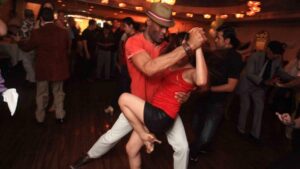
dancers dancing in a club tropical

Of course, it should be noted that each musical genre has its own rules, especially in the counting of steps in music, which gives grace, stability and rhythm to the dancers in the song played either in a musical event and is of vital importance not only for a casual event but for a competition. For this reason, it is important to know the steps and turns to perform and have excellent body communication (especially if it is as a couple) to know what they are going to do.
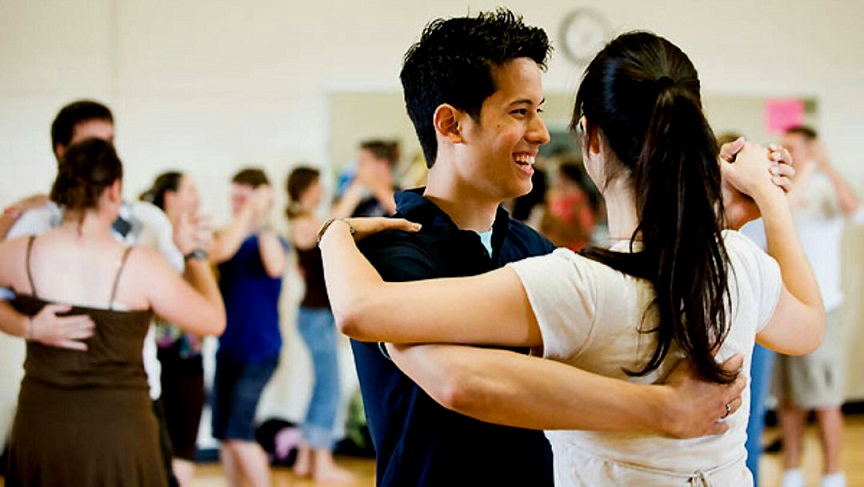
dancers dancing salsa, bachata and other tropical dances

In Latin rhythms, this type of communication is really important, otherwise the grace of the dance is lost. Among the most important Latin rhythms that are essential and/or significant are:

  • Salsa: a Latin tropical rhythm that, although it was born in Cuba due to the mixture of “Guaracha”, “Son”, “Mambo”, “Cha Cha Chá” with a unique style, through time several types emerged ( Salsa Cubana, Salsa en Linea, Salsa Casino, Salsa New York or Mambo style, Salsa Cali style, Salsa Puerto Rican and Venezuelan sauce). In this dance it is very important to pay attention to the look, the hands and arms (the latter in the case of the man since with him he dominates and/or controls the woman in the dance and she must interpret what the next movement is) to thus being able to perform either a simple step or a few laps, of which there is a great variety of them.
  • Bachata: is a danceable musical genre originating in the Dominican Republic, within what is called urban folklore. It is considered a derivative of the rhythmic bolero, with influences from other styles such as the Cuban son and merengue. This dance has great sensuality like the rest of the Caribbean rhythms, where it requires an unbeatable appearance on the part of the dancers when performing it, where that connection with the couple is important so that it can impress the public.
  • Merengue: is a dance music genre originated in the Dominican Republic at the end of the 19th century. It is very popular throughout the American continent, where it is considered, along with salsa, as one of the great dance musical genres that distinguish the Latin American genre.
  • Kizomba: a very sensual rhythm that emerged in Angola, which resulted from the mixture of 3 cultures (Angolan colony, Portuguese colony and part of Cape Verde “Brazil” as well as the French Caribbean of Martinique and Guadeloupe.). In this rhythm, the connection of the couple, especially the woman, is of vital importance, since the movement of the hips is slow and sensual, as are their steps. Did you know that many people have the prejudice that it is a very sensual dance, however, it is as sensual as you want to project it, in the same way it happens with Bachata and Merengue, they can be as sensual as you want to project them or as normal how you want to do it.”

So, if you want to give life, grace, elegance and popularity to your dance, keep in mind, keep in mind these characteristics and how you manage to synchronize with your partner and show your spectators either in a personal party, competition, event and/or or congress, whether national or international, which is a true dance.
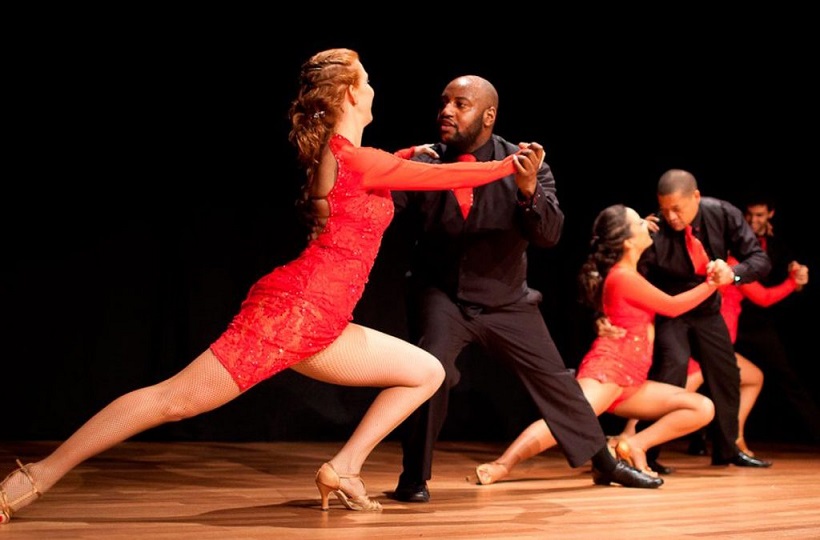

dancers pre-performing tropical dances

Jorge Bautista

Latin America/ Mexico / Mexico City

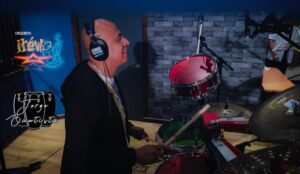
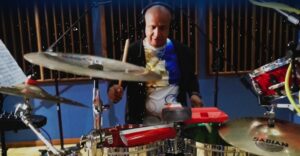
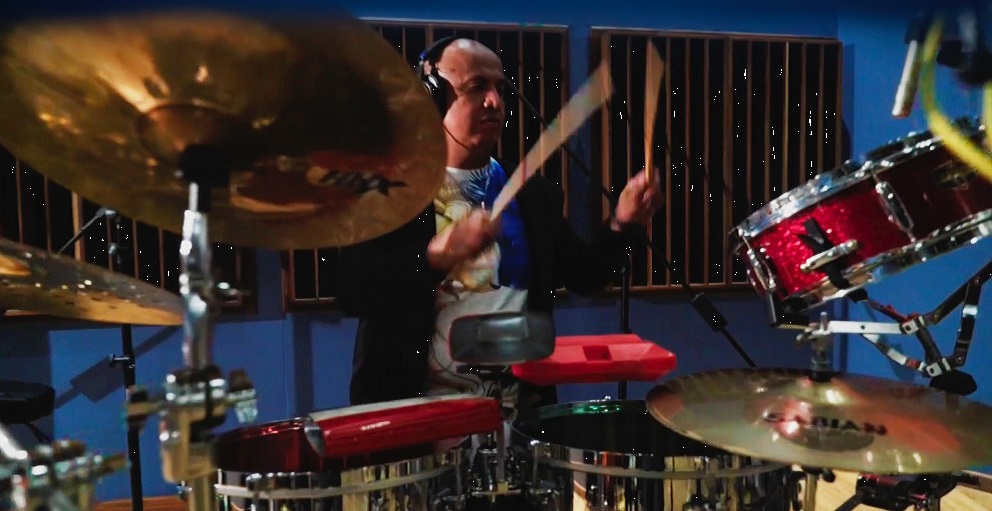
Jorge Bautista, Musical director and percussionist of the Irawo Orchestra

Jorge Bautista is a musician from Mexico City, he began his percussion studies at the age of 5 due to family tradition.

Jorge Bautista
Jorge Bautista and his Congas

The timbal, conga and bongo are the first percussion instruments that he studies empirically until at the age of 15 he studies at the autonomous music school for 5 years and then diversifies his knowledge in percussion from various places in Latin America such as : Colombia, Dominican Republic, Cuba, Peru and Brazil among others as well as in Africa.

Accompaniments Sauce

The experienced percussionist musician Jorge Bautista has performed important musical accompaniments with great exponents of our Afro-Caribbean music such as: Jerry Rivera, Maelo Ruiz, Tito Nieves, Willie González, Alfredito de La Fe, Oscar D`León, Larry Harlow, Ismael Miranda. , Ritchie Ray, Bobby Cruz, Roberto Roena, Oscar Hernández, Alberto Barros, Arturo Ortiz, Arturo Ortiz, Jimmy Bosch, Tito Allen, Viti Ruiz, Ray Sepúlveda, Herman Olivera and among others.

Jorge Bautista
Jorge Bautista

Latin Jazz Accompaniments

Among the stars of Latin Jazz, percussionist Jorge Bautista has performed accompaniments, among them we have: Arturo Sandoval, Ed Calle, Waney Bergeròn, Hector Infanzòn, Ola Onabule, Tlaxcatecalt Latin Jazz, Papo Sánchez, Ofunan, Daniel López, Latin Jazz On, Latin Hot Band, Density 6 and among others.

Other accompaniments

The Mexican multi-instrumentalist has also accompanied great music performers such as: Armando, Manzanero, Susana Zabaleta, Emmanuel, Kalimba, Samo, Víctor García, Carlos Cuevas, Alexander Acha, María León, Lisset, Aleks Syntek, Maria del Sol and Raul D’blasio.

Jorge Bautista and his musical instruments

Due to his great versatility, he has been invited to give clinics in different cities of the Mexican Republic as well as in several countries in the United States, Honduras, Colombia and Guatemala.

Currently the musician is sponsored by several major instrument brands worldwide: Gon Bops, Tama, Sabían, Promark, Remo, Rockears, GR, NND Percusión, and Veerkamp.

North America – July 2023

This musician is Juan Carlos Formell

Thumbnail for Andrea Chaparro and Lulada Club

Jake Jacobs and VibraSÓN

Carlos Medrano from Sabor De Mi Cuba

Robert y Ricardo

Thumbnail for Johnny Cruz and all his articles


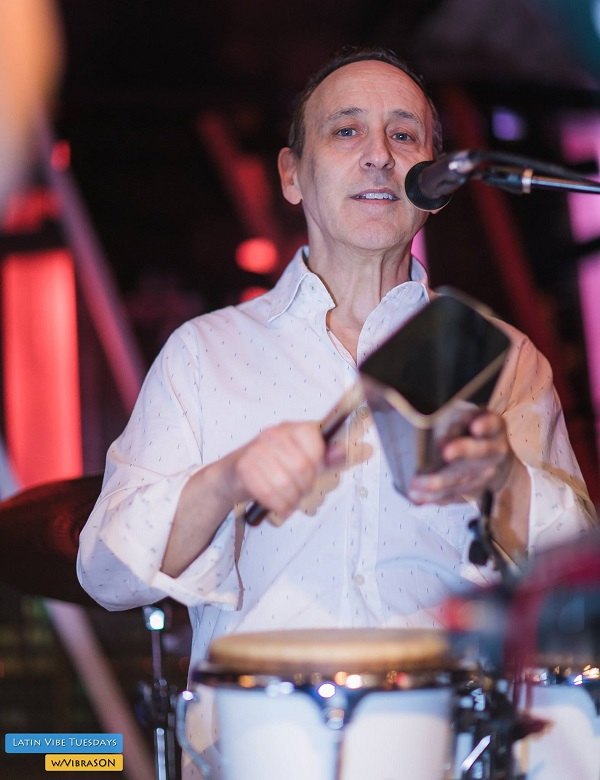
Musical director of VibraSÓN Jake Jacobs is here

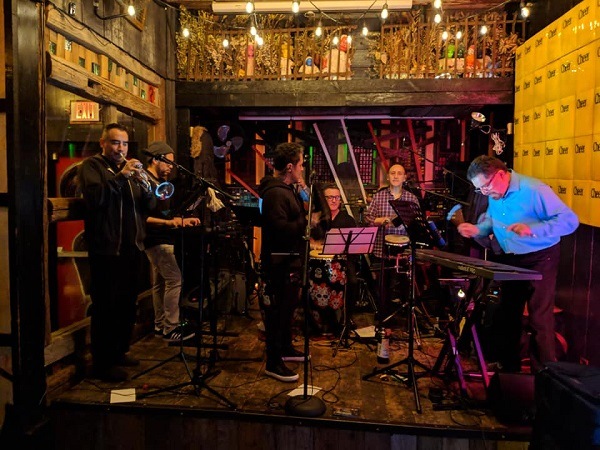
VibraSÓN is a musical group that makes life in the state of California, specifically in the San Francisco Bay Area, which has become one of the best options for festivals and nightclubs seeking fresh sounds in terms of salsa, swing and Latin music in general.    

I was pleased to know about this great orchestra, its members and sound thanks to its work at Charley’s LG, Bar and Nightclub where Eduardo Guilarte, our editor, was working and directing everything related to the lineups and musical programming for Latin music nights, more specifically on Tuesdays.   

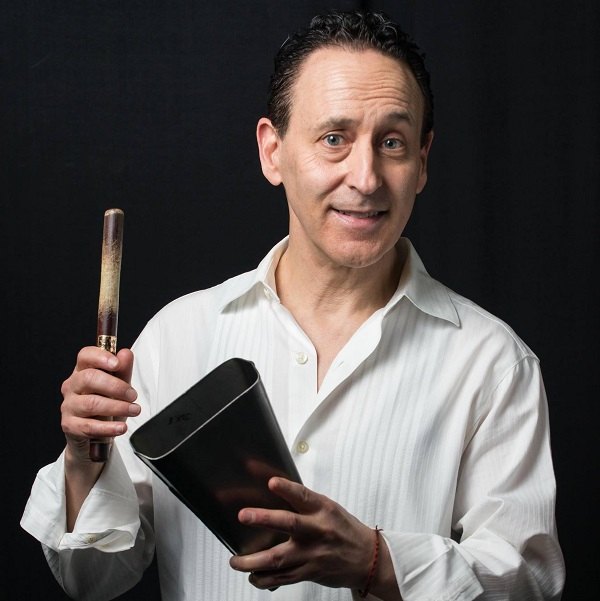
When I made contact, the person who was kind enough to reply was musical director of VibraSÓN. Jake Jacobs, who at the same time works as a producer, percussionist and backing vocalist.    

Jake Jacobs from VibraSÓN
Jake Jacobs, musical director of VibraSON

Talk with Jake Jacobs from the group VibraSÓN   

Jake Jacobs comes from a very interesting background. His first contact with music took place with his father and uncle, both of whom were professional musicians, but Jake says he has always been interested in this world.   

He studied classical piano and music theory at the University of Illinois and took some jazz piano lessons in his passage through the University of California. During these years, the musical director spent roughly 13 hours a day practicing with this instrument to master it as well as possible. 

With time, he became interested in Latin music and dance, which also led him to take dance classes at university. With that knowledge acquired up to that moment, he went to visit New York and his trip coincided with the National Puerto Rican Day Parade (an event held annually in New York and other states to celebrate Puerto Rico and its traditions in the United States). 

This event inspired Jake so much that he returned to the Bay Area with the intention to switch his dance classes to salsa classes. He became so good that he began to teach salsa dance classes himself to numerous students interested in learning these rhythms, something he has been done for over 20 years in widely recognized clubs and dance studios.   

He used to provide these classes twice a week at the Cocomo Club, which was very important at the time and attracted more than 600 people every day. When bands performed live, the future leader of VibraSÓN began to know musicians, who, in turn, gave him music lessons and his first opportunities to play in bands.   


Jake Jacobs with VibraSÓN
Jake Jacobs and the other members of VibraSÓN

Apprenticeships and classes with great musicians 

One of the most impressive credentials that Jake can have is to have studied with some of the best musicians in the San Francisco Bay Area such as Edgardo Cambón, Karl Perazzo, Michael Spiro, Louie Romero, among others. 

Evidently, all these luminaries have taught the producer much of what he knows and applies today, but he ensures that it was not easy to learn from so many ”teachers” at the same time, in both dancing and music performance.   

Ensures that some of the most important things he learned have to do with technique and tips to be applied such as how to play the drums, the notes at the right times, silences and much more. 

He points out that they all taught him valuable and important things, which are still very useful to this day. One of those great lessons was to practice and practice until he achieved the sounds he wanted, especially in Latin music. 

VibraSÓN 

Finally, in 2014, Jake decided it was time to put into practice everything he learned and create his own musical group with his own original details. This is how VibraSÓN came about.    

The origin of his band’s name came from Luis Morales, one of its members. It is based on vibraphone, which is not widely used by the orchestras from the San Francisco Bay Area, but by the dancers and by this new group in their performances. As for the end of the name, it comes from ”son cubano”, a typical genre of the island Jake likes very much.   

Although Club Cocomo unfortunately closed the following year, that didn’t stop VibraSÓN from making its way and becoming one of the most demanded groups in the Bay Area in recent years.   

One of the things that Jake thinks makes his group unique is that there are very few people who use the vibraphone and, due to his training as a dancer, he is always looking to make the most appropriate music for that part of the audience for whom dancing is very important.   

Jake Jacobs in San Francisco
Jake Jacobs performing on stage in San Francisco

How Jake and VibraSÓN read the crowd   

For Jake and the rest of the band, it is very important to read the crowd and see how people react to the music they play at any time. They pay a lot of attention to the dance floor to see what works and what doesn’t with the people they play for that night.   

Having played at clubs such as Charley’s, Bar Fluxus, La Peña Cultural, The Cigar Bar and Space 500, they have prepared a very generous repertoire for each performance. Just as they have written original music, they have also dedicated themselves to perform covers of the most buzzed-about artists in recent times in certain contexts, something that worked out for several orchestras when they need to draw on these resources to entertain the audience.   

This wide repertoire that they now enjoy is what has allowed them to make diverse shows with lots of variety so that those present never get bored, even if they usually go to the same place.   

Another thing they tend to do is add new arrangements and change genres to the covers they do so that they do not sound exactly like the originals and they can inject some of their essence, even if they are not songs written or sung by them originally. ”Even if they are covers, we always try to add our original arrangements so that the dancers enjoy them that much more” said Jake.   

They have also learned to connect with the audience and know what the dancers and the general public want in order to give them exactly what they want. And they did not learn this overnight, but have observed in detail what other orchestras do to imitate what is good and useful.    

Jake and VibraSÓN on stage
VibraSÓN performing on stage

Tours and future plans of VibraSÓN

At the end of the interesting talk, Jake told us that, for now, they only plan to record new music and other activities that are comfortable for all the members, since many of the musicians are in other orchestras and record for other people, so it is too complicated for them to tour with VibraSÓN. In addition to that, several of them have small children to care for, so it is impossible for them to travel for a long time.   

He is so considerate because he always tries to keep the same members and preserve the unity of the group above all else. It has worked for them, as they have managed to made a name, which will continue to become popular over time. 

Read also: Fausto Cuevas Y La Moderna in International Salsa Magazine 

Jerry Rivas, career, and support for the Spaha Salsa Gallery Museum

The Spaha Salsa Gallery Museum has been the recipient of a good number of objects donated by artists and their families after they had died. This time, it is the turn of Jerry Louis Díaz Rivas, better known as Jerry Rivas in the music scene, who is one of the main singers of El Gran Combo de Puerto Rico.   

We want to use his pleasant visit to our museum and his forty-sixth anniversary with El Gran Combo to talk a little about his great career and everything achieved in his long musical career over the past decades.   

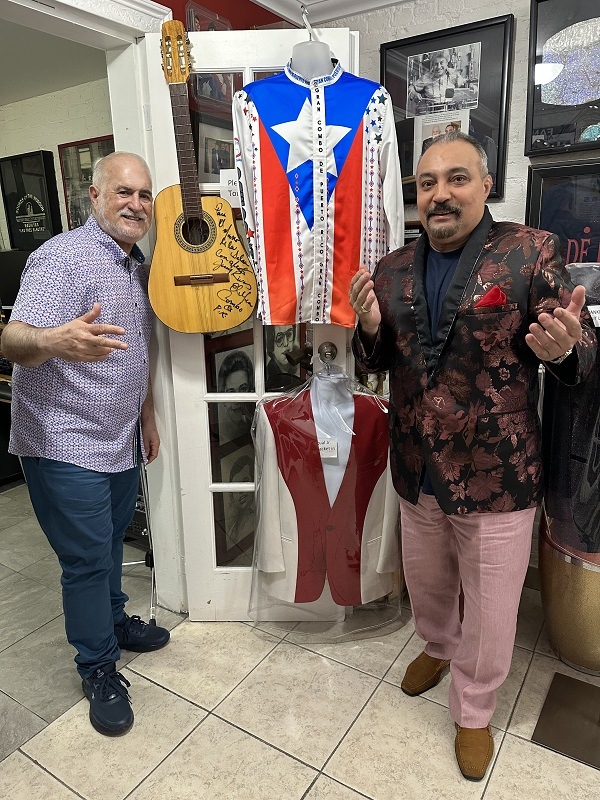
Jerry with Johnny
El Gran Combo De Puerto Rico singer Jerry Rivas and Johnny Cruz

Life and career of Jerry Rivas   

Jerry Diaz was born in the city of Tampa, United States, on August 25, 1955 and his parents were of Puerto Rican origin, so it is undeniable that Puerto Rican heritage greatly influenced the path he would take later on.   

About five years later, Jerry and his family moved to the city of Bayamón, Puerto Rico, where he began to take his first steps in the world of music with the guitar, the Puerto Rican cuatro and the Cuban tres, counting on the support of professor Carlos Seguí to learn to play the latter. However, shortly after, he would decide that singing was his thing. 

While still a young teenager, he was part of various groups such as Grupo Complicación, Conjunto Cojoba and Grupo Chaney, being in all cases a very important part of the body of musicians who were in these bands.   

His big great came in 1976 when Don Rafael Ithier, who was interested in the artist to be part of El Gran Combo De Puerto Rico, after he was recommended by Don Quique Lucca, who thought of this boy as replacement of the legendary Andy Montañez, singer of the group for more than 14 years.   

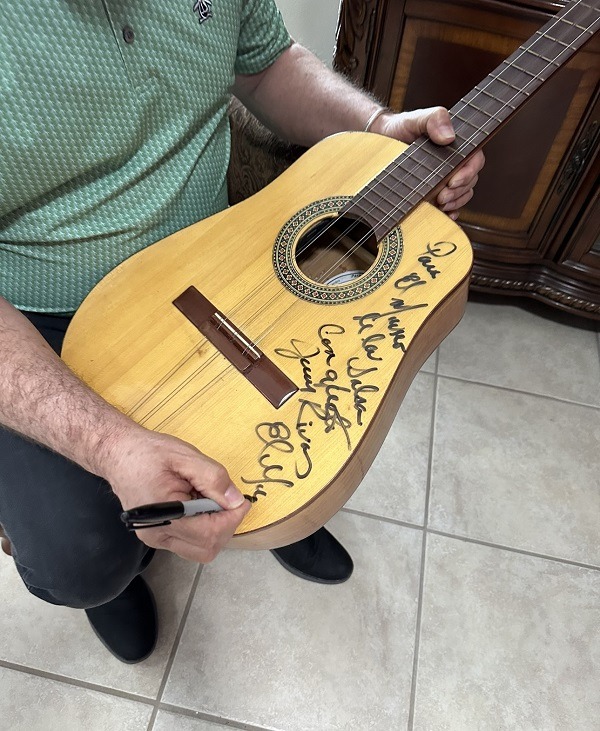
Jerry signing a tres
Jerry Rivas signing the Cuban tres he donated

Although it was not believed that Jerry could fill the shoes of his predecessor, his talent, effort and support from the music director of the orchestra, made him consolidate in the institution along with the rest of his colleagues and become one of the longest-serving members of El Gran Combo. 

International fame came with the album ”El Gran Combo En Las Vegas” thanks to the song ”La Clave”, in which he proved his vocal abilities to new levels. After that, he achieved his consecration as an international star with the album ”Happy Days” thanks to the song ”El Menú”.   

After that, everything that followed for Jerry was success with the orchestra, which resulted in approximately 30 recordings in a span of 45 years with El Gran Combo de Puerto Rico, his musicians and the extraordinary team behind the group.    

Other details of his life and support to the Salsa Museum  

In addition to being a vocalist for El Gran Combo de Puerto Rico, Jerry also participated in backing vocals with other great musicians for their respective musical works such as Willie Rosario, Bobby Valentín, Yuri Buenaventura, Gilberto Santa Rosa, La Sonora Ponceña, Adalberto Santiago and many others.   

Jerry with Johnny and the tres
Jerry and Johnny with the tres and the jacket Jerry donated to the museum

In each of these projects, the Puerto Rican artist has always given his personal touch and his unmistakable vocal chords, so it is normal that he is considered a legendary voice within the salsa movement not only in his country, but also worldwide.   

Due to all of the above, it is a true honor for the Spaha Salsa Gallery Museum to receive this great musical luminary in its facilities, where he was welcomed by its president and founder, Mr. Johnny Cruz. 

Some photos on the Cruz’s official Facebook page, it is evident that both shared a very pleasant time remembering things from the past and talking about music. In addition, Jerry donated one of his shirts and a Cuban tres to the museum so that they can be exhibited to the public along with the rest of the objects in its collection.   

We thank Jerry for his kindness, generosity and great talent, which we hope will continue to accompany us in the years to come. 

Read also: Tommy Olivencia Jr’s career and support for the salsa museum 

  • « Go to Previous Page
  • Page 1
  • Interim pages omitted …
  • Page 78
  • Page 79
  • Page 80
  • Page 81
  • Page 82
  • Interim pages omitted …
  • Page 138
  • Go to Next Page »

International Salsa Magazine (ISM) is a monthly publication about Salsa activities around the world, that has been publishing since 2007. It is a world network of volunteers coordinated by ISM Magazine. We are working to strengthen all the events by working together.