• Skip to primary navigation
  • Skip to main content

International Salsa Magazine

  • Home
  • Previous editions
    • 2025
      • ISM / November 2025
      • ISM / October 2025
      • ISM / September 2025
      • ISM / August 2025
      • ISM / July 2025
      • ISM / June 2025
      • ISM / May2025
      • ISM / April 2025
      • ISM / March 2025
      • ISM / February 2025
      • ISM / January 2025
    • 2024
      • ISM / December 2024
      • ISM / November 2024
      • ISM / October 2024
      • ISM / September 2024
      • ISM / August 2024
      • ISM / July 2024
      • ISM / June 2024
      • ISM / May 2024
      • ISM / April 2024
      • ISM / March 2024
      • ISM / February 2024
      • ISM / January 2024
    • 2023
      • ISM / December 2023
      • ISM / November 2023
      • ISM / October 2023
      • ISM – September 2023
      • ISM – August 2023
      • ISM July 2023
      • ISM Edition June 2023
      • ISM – May 2023
      • ISM April 2023
      • ISM March 2023
      • ISM February 2023
      • ISM January 2023
    • 2022
      • ISM December 2022
      • ISM November 2022
      • ISM October 2022
      • ISM September 2022
      • ISM August 2022
      • ISM July 2022
      • ISM June 2022
      • ISM May 2022
      • ISM February 2022
      • ISM January 2022
    • 2021
      • ISM December 2021
      • ISM November 2021
      • ISM October – 2021
      • ISM September 2021
      • ISM August 2021
      • ISM July 2021
      • ISM May 2021
      • ISM April 2021
      • ISM June 2021
      • ISM March 2021
      • ISM February 2021
      • ISM January 2021
    • 2020
      • ISM December 2020
      • ISM November 2020
      • ISM October 2020
      • ISM September 2020
      • ISM August 2020
      • ISM July 2020
      • ISM June 2020
      • ISM May 2020
      • ISM April 2020
      • ISM March 2020
      • ISM February 2020
      • ISM January 2020
    • 2019
      • ISM December 2019
      • ISM November 2019
      • ISM October 2019
      • ISM Septembre 2019
      • ISM August 2019
      • ISM July 2019
      • ISM June 2019
      • ISM May 2019
      • ISM April 2019
      • ISM March 2019
      • ISM February 2019
      • ISM January 2019
    • 2018
      • ISM December 2018
      • ISM November 2018
      • ISM October 2018
      • ISM September 2018
      • ISM August 2018
      • ISM July 2018
      • ISM June 2018
      • ISM May 2018
      • ISM April 2018
      • ISM March 2018
      • ISM February 2018
      • ISM January 2018
    • 2017
      • ISM December 2017
      • ISM November 2017
      • ISM October 2017
      • ISM September 2017
      • ISM August 2017
      • ISM July 2017
      • ISM June 2017
      • ISM May 2017
      • ISM April 2017
  • Download Salsa App
    • Android
    • Apple
  • Spanish

Search Results for: Cuban music

Once again, maestro Bobby Valentín delivers a very daring and innovative musical theme

While it is true that salsa is very much alive, it is also true that it has been enriched through fusions and transformations.  Of course, this is not the first time we see that the salsa sound is transformed to give way to increasingly daring musical themes.   

I’ve said it before and I’ll say it again: “I’m glad there are collaborations where the wallet of other sounds invests in producing music that I enjoy.  Note that the only music I enjoy with the passion I enjoy nothing else is salsa.  This salsa I’m talking about also includes fusions and other inventions, as long as I like them.”

Well, let’s get to the mambo….

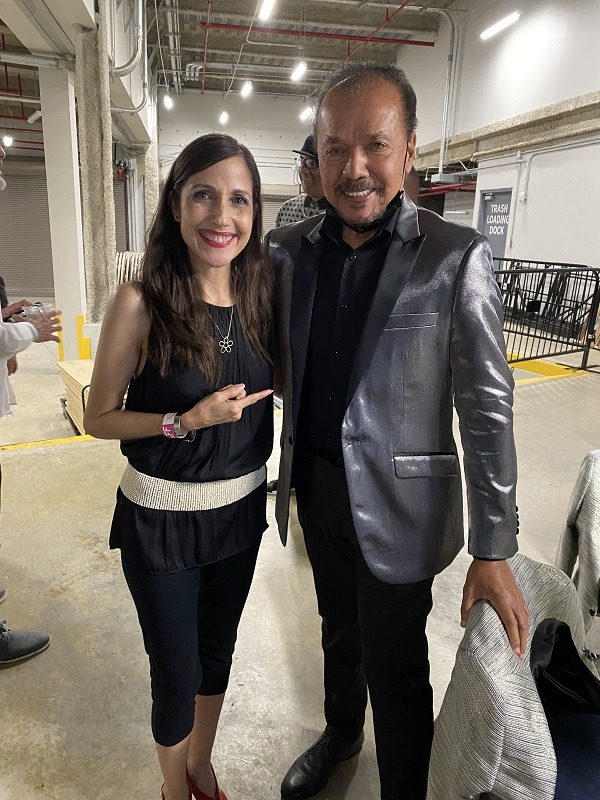
During the “Tropical Music Festival” I was backstage and was able to share with the musicians before and after their performances.  That privilege gave me the opportunity to talk to them about their projects, among other things.  On a side note, Oria Rivera graciously let me know about the release that same day of Bobby Valentin’s latest single.  As soon as I got home I listened to the song via You Tube.

Once again, maestro Valentín delivers a very daring and innovative song. I know that “chinchas” are going to fall on me as usual; but without being repetitive, you know that I am one of those who believe that Valentin is never wrong. 

Let’s establish that boogaloo or bugaloo is a Latin music and dance genre that was popular in the United States in the 1960s. It originated in New York City, mainly among Hispanic and Latin American teenagers. The style was a fusion of popular African-American rhythm and blues (R&B), in turn combining soul music with mambo and son montuno.

In the 1950s and 1960s, African Americans in the United States listened to various styles of music, including jump blues, R&B and doo-wop. Latinos in New York City shared those tastes, but also listened to genres such as mambo and cha-cha-chá. There was a mix of Puerto Ricans, Cubans and African-Americans in clubs, whose groups tried to find common musical ground. In the end, boogaloo or bugaloo was the common musical ground, a fusion of many styles cooking American son montuno, guaguancó, guajira, guaracha, mambo, R&B and soul on the same stove.  That must have been the reason why the boogaloo or bugalú allowed Spanish and English on equal terms.

As you can see, fusions are not a recent fad.

Well then.  The time has come to tell you what my salsa ears have heard, since there will be those who say that this is not a salsa song.  Well, the truth of the matter is that it is not suitable for salseros without musical appreciation skills.

From the first bars of this song, Bobby Valentín’s musical arrangement highlights the bass, accompanied by trumpets and saxophones in an arrangement that sounds great.  In the first thirty seconds of the song you can appreciate the vocal part of the composer -Bobby Valentín- ultra well accompanied by his most recent acquisition for the front of his orchestra: Leró Martínez. And for the most skeptical, Bobby and Leró sing in impeccable English.

The song is perfect, since in three minutes it opens up a range of musical possibilities in “English without barriers”.  Despite the brevity of the song, it lacks nothing.  Nor does it feel or sound like musical creativity was curtailed by trying to shorten the time.  The track flows naturally from the prelude, to the mambo, to the closing. At one and a half minutes, the saxophones provide the melody and the trumpets the breaks.  At the fiftieth minute, the trumpets play challenging the rhythm section, formed by:  Victor Roque on the tumbadoras, Kevin Vega on the timbal and Javier Oquendo on the bongo. Ceferino Cabán’s piano complements the “king’s” bass in a masterful way.

Shortly after the second minute (2.19), Victor “Yuca” Maldonado’s baritone saxophone sets the stage for Julito Alvarado and Angie Machado’s trumpets to firmly establish their presence.  This second minute also highlights the dynamism of the trombone by Eliut Cintrón. Let’s not forget that the composer, arranger, producer and bassist of this song was a trumpet player in his beginnings. At exactly 2.40 the bass takes command of the orchestra with more forcefulness, melodically allying itself with the sound of the trumpets and saxophones. Well into the second minute (2.44) the electric guitar in command of Javier Perez begins a correspondence with the bass, which is maintained until the closing of the song.

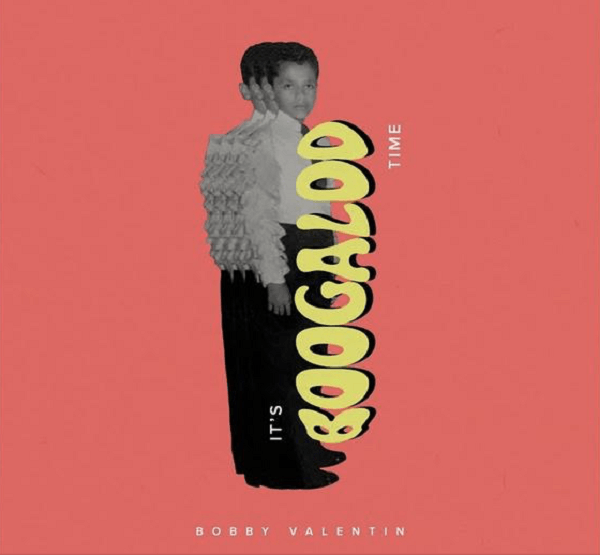
As for the cover art, it features a childish Bobby Valentine dressed as a musical celebrity.  The boy wears dark pants and a white shirt with those stylish puffed sleeves that scream mambo.  The title letters, which read It’s Boogaloo time are superimposed over the child’s image.  The style of the yellow letters that inscribe the word Boogaloo over the image described above make me imagine letters in some liquid material. The composition of the artwork rests on a rather garish salmon-colored background. According to the credits, both the graphic design and art direction were created by Orialis Valentin. Brava!

If you are one of those who say you are tired of the same old same old, I challenge you to listen to this gem, just as I recommended El Twist a while back. 

Salsa lives! I hope I have dispelled your doubts, if you had any.  If you still have any doubts, I confirm that you are not ready for this salsa conversation.

Musical Director: Bobby Valentín

Audio Recording & Mixing: Play Bach Studio

Engineer Carlitos Velázquez and Ramón Martínez

Mastering: WAVEM Acoustic LLC; Eduardo Ramos

Producer: Bobby Valentín

© 2022, Bronco Records, Inc. (Artist: Bobby Valentín)

Cuban singer Daymé Arocena and her pride of being Afrocuban

This is our conversation

Here we are with Cuban artist Daymé Arocena who lives now in Canada. How are you, Daymé? Nice to meet you and great to have you here today.

Hello, nice to meet you. Thank you very much for the invitation. It is my pleasure to be here talking to you.

I understand that your musical career started at the age of eight. What made you start walking this path? What was the experience that made you make that decision?

I never made the decision to become a musician. I think it was part of the package. I never said that this is what I wanted to do because I’ve always done it. From the age of eight, my parents began taking me to music lessons and preparing me to came to the art and music school and the conservatory of music. I started singing with the choir in the community of 10 de octubre, where I came from. That’s how I started performing and getting up on stage as a soloist of a choir.

Daymé Arocena was born in Havana, Cuba

Considering that you come from a musical family and that music was always present at home, I imagine that also influenced your interest in making a career of it.

My family is profoundly musical, but they are not professional musicians. My dad is a music lover, but he is not a musician. My mother is a health care worker, qualified as a child cardiovascular surgeon. Actually, these are people who have a very nice sensibility for music, but they are not professionally dedicated to it.

I grew up in an intense environment. My house had many people; when I was born, there were already 22 people living at home, but some of them found more comfortable spaces to move and we became a family of 14. I was born in the 90’s, which was when the big crisis occurred and big power cuts were more frequent. There were electricitiy for very few moments during the day, so we couldn’t listen to the radio or TV. Then, my uncles and cousins kept singing, so I grew up watching the family sing and dance. In fact, several of my cousins today are folk musicians who went on to play in various traditional musical groups. It was a deeply spontaneous issue. I saw people enjoying and trying to alleviate the sufferings and shortages they were experiencing.

I imagine that musical and artistical growth in this context was very difficult. What challenges did you face in Cuba in becoming the artist you are today?

The mere fact of being born in Cuba is a challenge, but I had to face things beyond the fact that I was born on an island ruled by a dictatorial regime and all that that means. There was a lot of deep racism and a way to slyly to deal with social classes. For all these years, I have tried to purge my energy of resentment and pain caused by the situation and turn all these feelings into light and creativity. In my case, A lot of things happened like feeling uncomfortable in my own skin and not knowing how to deal with my skin color, my hair and my race. Today, I am deeply proud of my blackness and defend it to the death, but I went through a very hard and aggressive process before that.

The young and not so young prople have to know that you can make art and music through your own essence without having to please the eyes of a few.

So you would say that those things that were an obstacle are now part of your cover letter.

Totally. And proudly, too.

Daymé is deeply proud of her blackness

After leaving Cuba

When you left Cuba, what kind of support did you receive? What was the hardest moment?

Although I’ve spent years touring and working for years, I made the decision to leave Cuba a couple of years ago. I received a lot of international support that made my music visible, but it started playing long before I left my country. In Cuba, there is a control mechanism for artists consisting on a permit issued by the minister of culture to be able to practice that profession.

You can graduate from art school with full honors in the world, but that’s irrelevant because you graduate to be a music teacher, not a musician as such. In order to go on stage and get paid for your work, you need a permit issued by the Minister of Culture himself. To get it, you have to go through a lot of bureaucratic barriers such as commissions, auditions, among others. I didn’t have that permit to sing and profit from my singing when I met the record label that launched me as an artist. One day, I was singing in a deeply underground space without anyone’s permission. When I started to sneak into those spaces, my mom always told me to sing with energy because I never knew who was going to listen to me.

One day of those, a person named François Renié was watching me from the audience. This man was the creative director of the Havana Cultura platform. At that moment, they asked me to make a record with international DJs and singers. They invited me to do a casting, I showed up there, was selected and recorded the album despite not having permission to sing. When I was invited to the realease of the record in England, I showed them the music I Wrote and they offered me to sign with them officially.

You have been compared to Celia Cruz, Nina Simone and other artists of this stature because of your style, what do you have to say?

I had no idea who Celia Cruz was and it’s something I’m ashamed of. When I was compared with Celia Cruz, I wondered who she was. I think I really knew her following those comparisons.

Daymé thinks new generations have to know who Celia Cruz was

I think it has to do with that idea of homogenizing Cuban music into one thing. It was when I was compared with Celia that I started to find out about her and knew that she was the most universal of Cuban artists. She had a phenomenal way of petforming, transmitting, impacting and being as authentic. Musicians who do have access to Celia must do their utmost to let the new generations know who she was. If they can’t listen to her on the radio or TV, they can go online to listen to her and find out who La Guarachera de Cuba was.

How do you think Canadians perceive your music? 

I have done very few concerts in Canada as a soloist. In fact, I’m not even there at the moment, but in Puerto Rico. I can’t provide an overview of how Canadians perceive me, but I do think that they are super friendly, docile and open to all kinds of music. They appreciate, dance and enjoy whatever you play. I must thank my ancestors for the expansion of my music beyond the Canadian framework, so I don’t rely on that market for a living.

Do you plan to stay in Puerto Rico permanently?

I came to Puerto Rico to record my next album. I’m super happy and honored to be able to do it on this island so similar to mine because it has so much culture and colorful art. Here, I found the industrialization and visibility that Cuba doesn’t have. I still don’t know if I’m going to stay here for the rest of my life, since Canada enters into my plans in some way, but this is the stage I must live now.

Daymé Arocena is now living in Puerto Rico and recording her new album

Panama, its music and performers and its best places for Salsa dancing

Panama is a country located on the isthmus linking Central and South America. The Panama Canal, a famous landmark of human engineering, crosses its center and links the Atlantic and Pacific oceans to create an essential maritime route.

In the capital, Panama City, modern clubs, casinos and skyscrapers contrast with the colonial buildings of Casco Viejo and the jungle of the Metropolitan Natural Park.

As every country also has its native music, La Murga is a musical genre performed by street groups, used mainly in carnivals in different provinces of Panama. La Murga was created by local musician Manuel Consuegra Gómez.

Murgas generally include the interpretation of songs in chorus, with voices accompanied by percussion instruments. These groups also have dancers who perform steps characteristic of the genre, including jumps and other acrobatics.

“Hey, let’s dance the murga

The murga of Panama

This is an easy thing

And very good for dancing

Ay tu tienes un caminao

That has me upset

And when you dance La Murga

Hey mamita how good you are

Murga pa’quí, murga pa’llá

(This is the murga of Panama)” Composers: Willie Colon / Hector Lavoe.

Panamá, its music and performers and its best places for Salsa dancing

This country has produced important musicians, singers, composers and sportsmen linked to Latin music.

Camilo Azuquita, Gabinete Pampini, José Luis Gracia “Chino Garcia”, to name a few.

To name a few.

Composer Aceves Núñez, accordion player and singer of typical Panamanian music.

Ricardo Fábrega composer of “Taboga”, Carlos Almarán composer of the song “Historia de un Amor”, Erika Ender author of the song “Despacito”, renowned composer Omar Alfano, Franciasco Buckley, Busch y sus Magníficos, pioneer of salsa in Panama.

Raúl Gallimore, Rubén “Yindo” Rodríguez, Manny “Bolaños, Papi Arasomett.

Some years before Blades arrived in New York (the city where he became known), figures such as Miguel Barcasnegras better known as Meñique, Victor Paz, Emilio Reales, Mauricio Smith and many others were struggling among the greats of this type of music in the big city.

All of them, making their way and making a breakthrough to achieve, based on pure talent, a privileged place for Panamanians in the musical environment, where at that time the Cuban and Puerto Rican presence dominated.

Roberto Delgado, Salsaswing, who recently recorded with Rubén Blades, is also Panamanian.

Later on, already in the movement of what was officially baptized as salsa, the most outstanding names are Francisco Buckley, better known as Bush, Roberto y su Zafra and Toti Pino’s Los Excelentes; Orlando Barroso and Los Salvajes del Ritmo, the group where Rubén Blades’ career began, also have their distinction.

All of them, making their way and making a breakthrough to achieve, based on pure talent, a privileged place for Panamanians in the music scene, where at the time the Cuban and Puerto Rican presence dominated. The future of salsa in Panama is promising.

Cartographer Ernesto Jiménez points out that the combination of music, talent, promotion and public acceptance opened the door for maestro Omar Alfano to become, without a doubt, one of the most successful composers. La Kshamba, Sociedad Anónima, Orquesta Yaré, Roberto Delgado, Soundcheck, La 507, are just some of the good salsa orchestras in Panama.

Women are not left behind, singer Anita Barroso stands out with her talent and defends the place of women in the Panamanian salsa scene; while singers Luis Lugo, Tony Flores and Victor Jaramillo, are making their way in their careers choosing salsa as their source.

Musicians like Ricky Salas and maestro Danilo Pérez found in salsa and in their country, the ideal base to develop their successful careers. Others became allies of salsa; announcers such as El Capitán Luis Gooding, Erick de Icaza, El Gigante de la Salsa; Jimmy Dawson; Moisés Rodríguez; El Lobo Edy Molina; Johnny Salsa; Eddie Vázquez and Valentín Ortega, among others, have defended the genre through the radio waves and, in some cases, venturing out as entrepreneurs.

The initiative to talk about Panama and its people linked to salsa is great and I know that it is not easy to touch on several aspects in an article.

One of them is the Barrio El Chorrillo, for all that it represented for Ismael Rivera, practically to turn his life around.

Sorolo was a protagonist of this, famous for his fried fish and his friendship with Maelo.

Sorolo, Mery and Cuñón, people named by Maelo in his proclamation of El Nazareno, who accompanied him to carry the Negrón.

Another important character of El Chorrillo is Mano’e Piedra Duran, who thanks to fame and money, made an orchestra, “Alegria”. Where he has an active business where salsa is always present.

External references:

Sources consulted

WhatsApp group: SalsaGoogle

Lluís Enric Mayans

@lluísenricmayans

Dumas

Lo Mejor de Panamá 

EL KARAOKE 50
EL KARAOKE 50


Website: El Karoeke 50

Facebook: El Kareoke 50

Article of Interest: Anacaona Areito de Anacaona ‘Flor de Oro’ (Golden Flower)

Casa de la Música, Playa / Miramar in Havana Cuba

The month of January 2022 in this prestigious and exclusive place in Havana the best talents, orchestras, singers of the island are being presented, every weekend a different artist with the musical quality that characterizes the Cubans.

Aila Mompie, Asi Son, Tanin Pantoja, Quinteto Maden, Lazarito Valdez y Bamboleo, Papucho y Manana Club, El Hijo de Teresa y la Llegada, Leonel Limonta y Azúcar Negra, Yvan y la Leyenda, La Octava Nota, Zule Guerra, Maykel Hores y RB Salsa, Charanga Latina, Waldo Mendoza, Yordano y el Hermano, Giraldo Piloto y Klimax, Vania, Ronny, Casabe, Max Max, Pascualito Cabrejas y Tumbao, among others.

Since it opened in the mid-nineties, this concert hall has consolidated its position as the temple of salsa and Cuban son in the capital.
a de la Música, Playa / Miramar in Havana Cuba

Since it opened in the mid-nineties, this concert hall has consolidated itself as the temple of salsa and Cuban son in the capital. The best bands have played on its stage and the programming continues to be irreproachable.

It is a beautiful place in Havana, where orchestras from different artistic catalogs of the country perform, a spectacular place to enjoy good popular dance music in its halls.

The house was built in the 40’s in one of the most aristocratic neighborhoods of the capital and was the headquarters of a lodge of the Masonic Foundation. It had two floors of masonry and tiles and included in its ample distribution a party room, stage, and auditorium, a premonition of what it would be half a century later. The Irrumpe Theater Group and the Fondo Cubano de Bienes Culturales (Cuban Fund of Cultural Goods) also passed through it, then sadness came over every corner of the House until EGREM knocked on its doors to break the silence and turn it into the House of Musicians and Cuban Music.

It began with the EGREM Award Gala in April 1995 and in October of the same year, with the concert of the great Cuban musician Chucho Valdés and the group Irakere, it passed the test of fire because this concert was recorded live in the memory of the House thanks to the latest technology equipment it has.

The House was created to exhibit and commercialize the Cuban discography in different media and to promote the recognition of the work of our artistic talents through live presentations, and as a complement to this, the gastronomic offer, always preserving the most genuine values of the national culture.

“International Salsa Magazine is SalsaGoogle.com“.

We are an organization that from the hand of its Founder, Director, and Editor Eduardo Guillarte, in force since 2007 has been working nonprofit helping to promote:

Orchestras, Singers, DJs, Clubs, Plastic Artists in North America, Europe, and Latin America and Asia and with the contribution of volunteers in various parts of the world, which at the same time invite and recommend all lovers, dancers of our Latin music to visit the Casa de la Musica, Playa / Miramar in Havana Cuba.

How to get there: Dale Click Aqui

Calle 20# 3308 cya Havana, Cuba 10400orner of 35 Miramar Pla

+53 7 2026147

Facebook: Casa de la Música de Miramar Playa

Fuente: www.ecured.cu

Aila Mompie, Asi Son, Tanin Pantoja, Quinteto Maden, Lazarito Valdez y Bamboleo, Papucho y Manana Club, El Hijo de Teresa y la Llegada, Leonel Limonta yAzúcar Negra, Yvan y la Leyenda, La Octava Nota, Zule Guerra, Maykel Hores y RB Salsa, Charanga Latina, Waldo Mendoza, Yordano y el Hermano, Giraldo Piloto y Klimax, Vania, Ronny, Casabe, Max Max, Pascualito Cabrejas y Tumbao, entre otros.
Casa de la Música, Playa / Miramar Beautiful place in Havana

Long live music and its unique and great protagonist, La Salsa y  el Son Monte Adentro.

Article Interest: Quinteto D’Amore of Havana – Cuba

Live music and other news in the SF Bay Area

Renowned timbalero, composer, bandleader and vocalist Mario Solomon is the leader of one of the hottest groups performing modern Cuban Dance music in the US: Mario Y Su Timbeko.  Although Mario moved from Oakland to Austin, Texas during the pandemic, he hasn’t stopped his original music from coming out.  His latest single “Sola Te Quedaste” follows three singles that he has released during the pandemic: “Llego Lo Que Te Esperabas”, “Lo Mas Grande” and “Nadie Sabe Nada”.  These songs are to be released as an EP in the first quarter of this year.  Mario Y Su Timbeko consisting of bassist Ayla Davila, guitarist David Lechuga, vocalist and keyboardist Jordan Wilson, pianist and recording producer Jason Moen and conguero Carlitos Medrano will be performing a special concert “Timbeko By The Bay at La Peña Cultural Center, 3105 Shattuck Avenue in Berkeley on Saturday, February 12 starting at 8 pm.

Mario explained that the show is like taking a trip with the history of Cuban Music featuring traditional rhythms of Danzon, Cha Cha Cha, Boleros and Changui which will be the focus of the first set.  The second set will feature original music with selections from the new EP.  Many Bay Area-Northern California dancers and listeners alike are big fans of Timbeko’s infectious timba sound which contains elements of RnB, Gospel and Funk.  Mario hopes to have copies of the EP ready to sell at the dance/concert.  There will also be a dance after party with DJ Antonio included in the admission to the show.  For more information on the concert, visit lapena.org.  For more information on Mario Y Su Timbeko, check out their page on Facebook and Instagram.

Mario Mayito Salomón

Montuno Productions will be presenting a Valentine’s Day Concert as part of their Bay Area Latin Jazz Series at Oakland’s fine art deco California Ballroom located on 1736 Franklin Street.  This triple billed show will feature the debut of Cuban jazz vocalist Jessy Diaz accompanied by 4 time Grammy award winner Oscar Hernandez of Spanish Harlem Orchestra, Edgardo Cambon and Candela and ending the show with be the MP All Star Salsa Project directed by pianist Israel “Izzy” Tannenbaum (formerly of Grupo Niche).  I will be your Master of Ceremonies and DJ for the entire evening.  Cuban food will be available for hungry patrons at the concert/dance.  For more ticket information on this dance/concert, you can visit montunoproductions.com

Major cancellations and postponements continue due to the latest Omicron variant of the Coronavirus pandemic.  The Victor Manuelle concert/dance scheduled for the Hyatt Regency in Burlingame has been postponed until Saturday, April 9th per show producers JC Coral and Bosco Vega.  Cuban born Brother-virtuosos violinist Ilmar and pianist Aldo Lopez-Gavilàn protagonists of the film documentary Los Hermanos/The Brothers cancelled their scheduled January 23rd concert at U.C. Berkeley’s Zellerbach Auditorium.  There is no rescheduled date for that show.

On the local club front, Oakland’s own Fresquecito Timba DJ monthly at La Furia Chalaca near Jack London Square produced by DJ Walt Digz was cancelled as well at the beginning of January but the event will be back in February.  The Ramp in San Francisco has temporarily suspended their live and DJ music shows per order of the San Francisco Port.  The Ramp is hoping to resume their live music dates in March.  Other venues such as Space 550 just didn’t reopen in January but will reopen on February 11th with Julio Bravo y Salsabor headlining their Valentine’s Day weekend party.  You may want to double check that the venue is still open and that live music is still going to be presented on the night that you are planning to go out.

This is Julio
Julio Bravo

A scene of many a popular, crowded club night, Lukas on West Grand and Broadway in Oakland the home of Thursday Cuban nights will close at the end of January.  Ahi Na Ma, the production company in charge of the popular Cuban dance night featuring DJ’s Leydis and Antonio have announced that their weekly event will move to a new location soon to be announced.

Ex El Gran Combo vocalist Charlie Aponte will be visiting the SF Bay Area on Friday, April 1 at Roccapulco, 3140 Mission St. in San Francisco.  Jaffe Events will be presenting the show.  Look for Aponte to feature original material from his recordings as well as the many hit songs he recorded with El Gran Combo during his tenure with this great musical institution.  It promises to be a smokin’ show!!

The Seahorse in Sausalito continues to buck the trend and continues to present live music on their outdoors patio stage on Saturday and Sunday evenings starting around 5 pm.  They are featuring Orquesta Taino Feb 6, Karabali with Karl Perazo of Santana and Michael Spiro Feb 12, Louie Romero & Mazacote Feb 13, Salsa Caliente w/Gary Flores Feb 19, Edgardo Cambon & Candela Feb 20 and Braulio Barrera’s Somos El Son on Feb 27th.  KPOO/KPFA DJ Jose Ruiz is the house DJ behind the decks.

Another venue that has stayed open for business in spite of this tough COVID time is the Cigar Bar, 850 Montgomery St. in San Francisco.  You can still enjoy good drinks, fine food and a selection of cigars for your enjoyment.  They have a full schedule on Fridays and Saturdays for February which includes Somos El Son Feb. 4, N’Rumba Feb. 5, Manteca,  Feb. 11, Josh Jones Latin Jazz Ensemble, Feb. 12, La Clave Del Blanco, Feb. 18, Edgardo Cambon y Candela Feb. 19, The Latin Rhythm Boys Feb. 25 and Pacho Y Orquesta Evolution on Feb. 26.  Schedule subject to change due to COVID so check their calendar to confirm acts.  Visit their website at www.cigarbarandgrill.com

This is Edgardo Cambón
Edgardo Cambón

BY LUIS MEDINA, PRODUCER AND HOST OF CON SABOR ON KPFA 94.1 FM AND SABIDURIA CON TUMBAO ON WORLD SALSA RADIO.COM

  • « Go to Previous Page
  • Page 1
  • Interim pages omitted …
  • Page 14
  • Page 15
  • Page 16
  • Page 17
  • Page 18
  • Interim pages omitted …
  • Page 97
  • Go to Next Page »

International Salsa Magazine (ISM) is a monthly publication about Salsa activities around the world, that has been publishing since 2007. It is a world network of volunteers coordinated by ISM Magazine. We are working to strengthen all the events by working together.