• Skip to primary navigation
  • Skip to main content

International Salsa Magazine

  • HOME
  • Previous editions
    • 2026
      • ISM / April 2026
      • ISM / March 2026
      • ISM / February 2026
      • ISM / January 2026
    • 2025
      • ISM / December 2025
      • ISM / November 2025
      • ISM / October 2025
      • ISM / September 2025
      • ISM / August 2025
      • ISM / July 2025
      • ISM / June 2025
      • ISM / May2025
      • ISM / April 2025
      • ISM / March 2025
      • ISM / February 2025
      • ISM / January 2025
    • 2024
      • ISM / December 2024
      • ISM / November 2024
      • ISM / October 2024
      • ISM / September 2024
      • ISM / August 2024
      • ISM / July 2024
      • ISM / June 2024
      • ISM / May 2024
      • ISM / April 2024
      • ISM / March 2024
      • ISM / February 2024
      • ISM / January 2024
    • 2023
      • ISM / December 2023
      • ISM / November 2023
      • ISM / October 2023
      • ISM – September 2023
      • ISM – August 2023
      • ISM July 2023
      • ISM Edition June 2023
      • ISM – May 2023
      • ISM April 2023
      • ISM March 2023
      • ISM February 2023
      • ISM January 2023
    • 2022
      • ISM December 2022
      • ISM November 2022
      • ISM October 2022
      • ISM September 2022
      • ISM August 2022
      • ISM July 2022
      • ISM June 2022
      • ISM May 2022
      • ISM February 2022
      • ISM January 2022
    • 2021
      • ISM December 2021
      • ISM November 2021
      • ISM October – 2021
      • ISM September 2021
      • ISM August 2021
      • ISM July 2021
      • ISM May 2021
      • ISM April 2021
      • ISM June 2021
      • ISM March 2021
      • ISM February 2021
      • ISM January 2021
    • 2020
      • ISM December 2020
      • ISM November 2020
      • ISM October 2020
      • ISM September 2020
      • ISM August 2020
      • ISM July 2020
      • ISM June 2020
      • ISM May 2020
      • ISM April 2020
      • ISM March 2020
      • ISM February 2020
      • ISM January 2020
    • 2019
      • ISM December 2019
      • ISM November 2019
      • ISM October 2019
      • ISM Septembre 2019
      • ISM August 2019
      • ISM July 2019
      • ISM June 2019
    • 2016
      • ISM December 2016
  • Spanish
  • Download Salsa App
    • Android
    • Apple

Search Results for: Cuban music

Musical director of VibraSÓN Jake Jacobs is here

VibraSÓN is a musical group that makes life in the state of California, specifically in the San Francisco Bay Area, which has become one of the best options for festivals and nightclubs seeking fresh sounds in terms of salsa, swing and Latin music in general.    

I was pleased to know about this great orchestra, its members and sound thanks to its work at Charley’s LG, Bar and Nightclub where Eduardo Guilarte, our editor, was working and directing everything related to the lineups and musical programming for Latin music nights, more specifically on Tuesdays.   

When I made contact, the person who was kind enough to reply was musical director of VibraSÓN. Jake Jacobs, who at the same time works as a producer, percussionist and backing vocalist.    
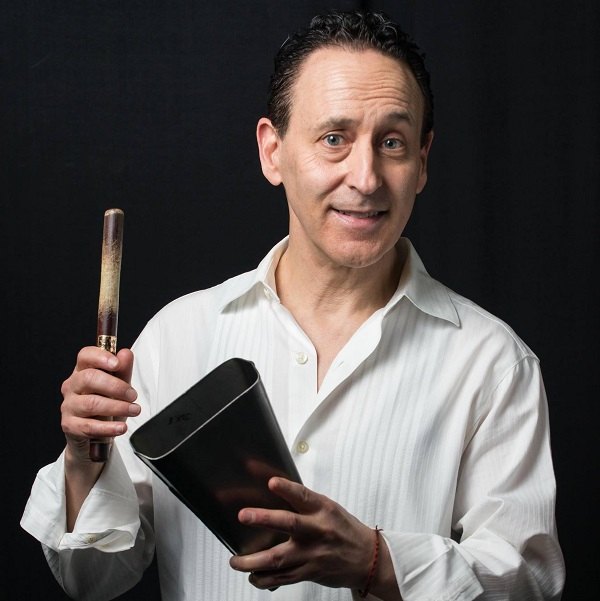
Jake Jacobs from VibraSÓN
Jake Jacobs, musical director of VibraSON

Talk with Jake Jacobs from the group VibraSÓN   

Jake Jacobs comes from a very interesting background. His first contact with music took place with his father and uncle, both of whom were professional musicians, but Jake says he has always been interested in this world.   

He studied classical piano and music theory at the University of Illinois and took some jazz piano lessons in his passage through the University of California. During these years, the musical director spent roughly 13 hours a day practicing with this instrument to master it as well as possible. 

With time, he became interested in Latin music and dance, which also led him to take dance classes at university. With that knowledge acquired up to that moment, he went to visit New York and his trip coincided with the National Puerto Rican Day Parade (an event held annually in New York and other states to celebrate Puerto Rico and its traditions in the United States). 

This event inspired Jake so much that he returned to the Bay Area with the intention to switch his dance classes to salsa classes. He became so good that he began to teach salsa dance classes himself to numerous students interested in learning these rhythms, something he has been done for over 20 years in widely recognized clubs and dance studios.   

He used to provide these classes twice a week at the Cocomo Club, which was very important at the time and attracted more than 600 people every day. When bands performed live, the future leader of VibraSÓN began to know musicians, who, in turn, gave him music lessons and his first opportunities to play in bands.   

 

Jake Jacobs with VibraSÓN
Jake Jacobs and the other members of VibraSÓN

Apprenticeships and classes with great musicians 

One of the most impressive credentials that Jake can have is to have studied with some of the best musicians in the San Francisco Bay Area such as Edgardo Cambón, Karl Perazzo, Michael Spiro, Louie Romero, among others. 

Evidently, all these luminaries have taught the producer much of what he knows and applies today, but he ensures that it was not easy to learn from so many ”teachers” at the same time, in both dancing and music performance.   

Ensures that some of the most important things he learned have to do with technique and tips to be applied such as how to play the drums, the notes at the right times, silences and much more. 

He points out that they all taught him valuable and important things, which are still very useful to this day. One of those great lessons was to practice and practice until he achieved the sounds he wanted, especially in Latin music. 

VibraSÓN 

Finally, in 2014, Jake decided it was time to put into practice everything he learned and create his own musical group with his own original details. This is how VibraSÓN came about.    

The origin of his band’s name came from Luis Morales, one of its members. It is based on vibraphone, which is not widely used by the orchestras from the San Francisco Bay Area, but by the dancers and by this new group in their performances. As for the end of the name, it comes from ”son cubano”, a typical genre of the island Jake likes very much.   

Although Club Cocomo unfortunately closed the following year, that didn’t stop VibraSÓN from making its way and becoming one of the most demanded groups in the Bay Area in recent years.   

One of the things that Jake thinks makes his group unique is that there are very few people who use the vibraphone and, due to his training as a dancer, he is always looking to make the most appropriate music for that part of the audience for whom dancing is very important.   
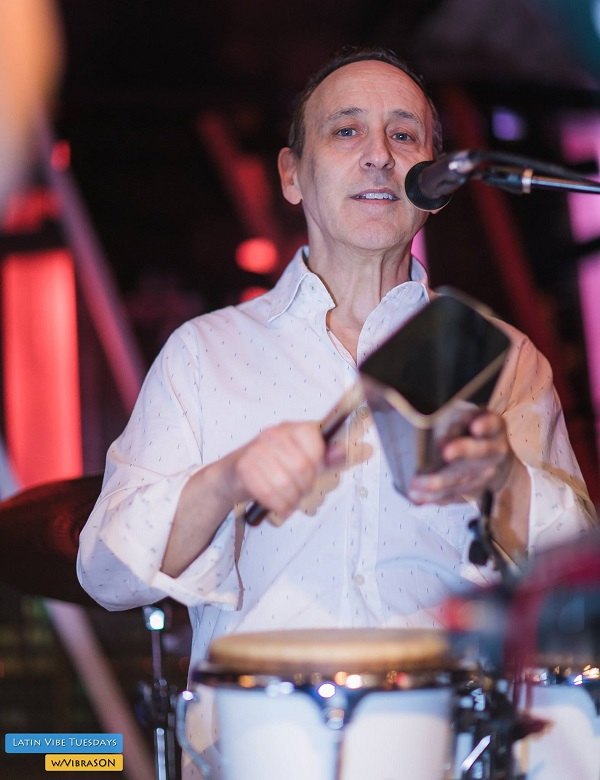
Jake Jacobs in San Francisco
Jake Jacobs performing on stage in San Francisco

How Jake and VibraSÓN read the crowd   

For Jake and the rest of the band, it is very important to read the crowd and see how people react to the music they play at any time. They pay a lot of attention to the dance floor to see what works and what doesn’t with the people they play for that night.   

Having played at clubs such as Charley’s, Bar Fluxus, La Peña Cultural, The Cigar Bar and Space 500, they have prepared a very generous repertoire for each performance. Just as they have written original music, they have also dedicated themselves to perform covers of the most buzzed-about artists in recent times in certain contexts, something that worked out for several orchestras when they need to draw on these resources to entertain the audience.   

This wide repertoire that they now enjoy is what has allowed them to make diverse shows with lots of variety so that those present never get bored, even if they usually go to the same place.   

Another thing they tend to do is add new arrangements and change genres to the covers they do so that they do not sound exactly like the originals and they can inject some of their essence, even if they are not songs written or sung by them originally. ”Even if they are covers, we always try to add our original arrangements so that the dancers enjoy them that much more” said Jake.   

They have also learned to connect with the audience and know what the dancers and the general public want in order to give them exactly what they want. And they did not learn this overnight, but have observed in detail what other orchestras do to imitate what is good and useful.    
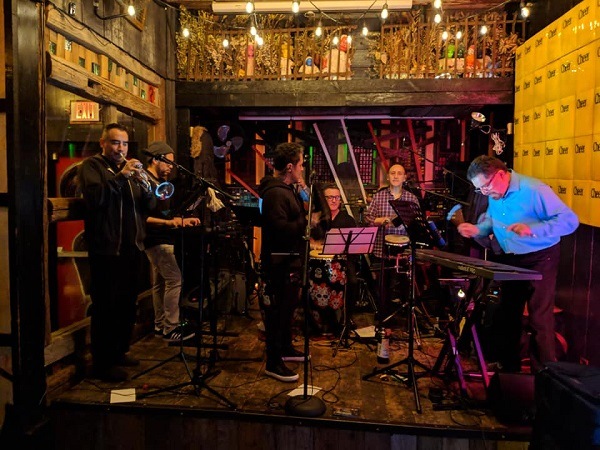
Jake and VibraSÓN on stage
VibraSÓN performing on stage

Tours and future plans of VibraSÓN

At the end of the interesting talk, Jake told us that, for now, they only plan to record new music and other activities that are comfortable for all the members, since many of the musicians are in other orchestras and record for other people, so it is too complicated for them to tour with VibraSÓN. In addition to that, several of them have small children to care for, so it is impossible for them to travel for a long time.   

He is so considerate because he always tries to keep the same members and preserve the unity of the group above all else. It has worked for them, as they have managed to made a name, which will continue to become popular over time. 

Read also: Fausto Cuevas Y La Moderna in International Salsa Magazine 
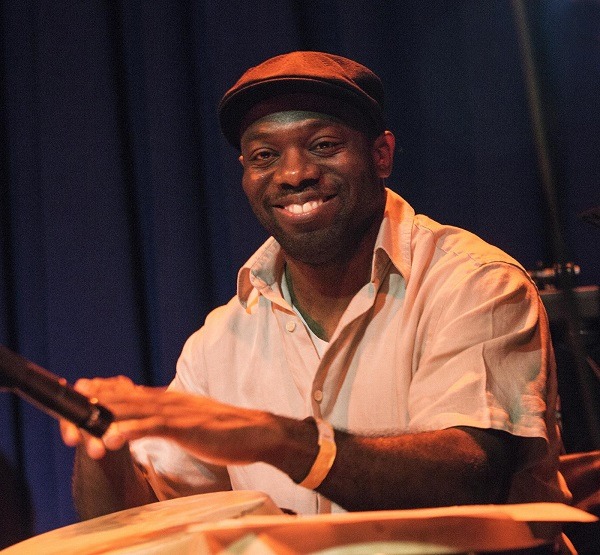
Carlos Medrano from Sabor De Mi Cuba tells us abut his long musical history

There is a tremendous amount of Cuban artists who have had to fight against economic adversity there is in their country, but this has not prevented them from getting ahead and fulfilling their dream of making a living from their art. One of them is the bandleader of Sabor De Mi Cuba Band, Carlos Medrano, with whom we had the pleasure to talk for this report.    

Carlos Medrano was born in the city of Havana, Cuba, and became interested in music when he was very young. The first instruments with which he began experimenting were the bongo and the conga, which had a huge importance in the training the artist would follow until he became the professional musician he is today. Here are some of the topics we cover in a long but pleasant conversation via Zoom.   

Bandleader Carlos Medrano
Carlos Medrano, bandleader of Sabor De Mi Cuba

Topics covered with Carlos Medrano 

When talking about his first experiences with music, Carlos told us he has always been surrounded by musical sounds since his childhood, which was spent in the neighborhoods of El Vedado and Old Havana.    

When he lived in El Vedado, his grandfather used to make poetry and do recitations, while he accompanied him with the drum, but he was in more direct contact with the musical world in Old Havana, a place where there were many rumberos and renowned musicians who were always playing in those parts.   

A very young Carlos always saw comparsas and street concerts from her home window and people always joined them making sounds with bells, pans or anything they had. 

During the decade of the 90’s, Cuba saw a big boom in tourism, resulting in the appearance of numerous traditional Cuban music groups and the cafes and clubs in the area were filled with sextets with professional musicians. They were looking to play in these places to get tips from tourists and have travel and employment opportunities,” said Carlos.    

I always looked at the work these artists were doing, especially tres players and bongos players. That’s how I learned to play the bongo: by watching and listening to what others were doing. I tried to imitate the sounds they made with a metal bucket or whatever I had at home to learn”, he continued.    

Carlos Medrano on stage
Carlos Medrano performing on stage with his band

Professional training of Carlos Md¡edrano and and limitations found 

After junior high school, he met a friend of his father who would be key in his training as an artist and his name is José Antonio Oviedo. Although his father saw no problem in this fascination of Carlos with music, he always told him not to drop out of school and to pursue a university career. 

When he began taking lessons with José Antonio, the level of demand was such that he felt he was in a formal school. He taught him to read music in a way that had nothing to envy to an art institute, which Medrano will always be very grateful for. 

In addition to that, near his home, there is a sector called ”Cueva De Humo” where there are excellent musicians and rumberos. It was there that Carlos got to meet Juan Ernesto Santana, Ernesto Gatel Coto from Rumberos de Cuba and many more. ”I was lucky that most people liked me and they always explained to me everything I needed to play as it should be” he added.   

With all these insights, there came a point when he decided to devote himself to the world of music and put aside other ambitions he had such as studying law, which was a shock to his family at the time. 

That is when his mentor José Antonio did the necessary procedure for him to present the Escuela de Superación Profesional de Arte “Felix Varela y Morales” admission exam, which he passed without major setbacks thanks to his training up to that point. 

Although his admission to the institution was relatively simple, it was not long before Carlos faced another equally difficult challenge: getting the necessary resources and instruments to receive a good training. 

”I didn’t have my own instruments until I started playing professionally with maestro Orlando Sánchez. I had my first bongo thanks to my father’s friends, who helped me to have my own things, but that never limited me” said the percussionist on this topic. 

In a time of so many shortages, it was clearly not easy to study, but Carlos was always looking for ways to fulfill his activities, whether it was raising money, borrowing instruments, practicing with other similar implements, sharing school instruments with his classmates, among other things.    

Carlos Medrano paying the drums
Carlos Medrano playing the drums on stage

Great inspirations and mentors   

One of his biggest inspirations was his cousin Stanley, who was a professional percussionist. He always advised Carlos to never classify himself in one instrument, but to always learn to play a little bit of everything to become a needed man, so that bands would always consider him for their tours and projects.    

Another of the great mentors he had has been Ignacio Jarabe, who has taught him many of the best ”tricks” a percussionist may need when playing one of these instruments. ”I still have solo sheet music that he wrote and some of his book manuscripts, which I don’t know if they were ever published, but they are still important reference sources for me”, said Carlos about Jarabe. 

We cannot forget to mention percussionist Eliel Lazo, with whom Carlos had amazing chemistry from the beginning. Lazo had contact with the best AfroCuban jazz musicians of the time and came to travel to many places thanks to his training in percussion instruments, which inspired Medrano to follow in his footsteps. After about one year of studying with this great musician, he was able to perform at La Fiesta Del Tambor and went on to be a finalist in several categories.   

Once he started plating professionally, the first person to call him was the maestro Orlando Sanchez, who in addition to offering him his first formal opportunity in this field, taught Carlos many other things which he had not learned so far. He has him up on a pedestal and thanks him for everything he has learned. 

Another person to whom the artist is very grateful is José Luis Quintana, better known as Changuito, who told him that ”the good conga player has to listen to the orchestra. You have to be able to hear the piano, the bass and the other instruments. You have to look for your space between the rest of the musicians”.   

Another important figure who cannot be left out is Yaroldy Abreu, a mmusician who spent hours rehearsing with Carlos at his house. They focused a lot on technical and creative resources during these classes. Medrano considers him one of the best percussionists and musicians in the world due to his extensive knowledge in every field of music.  

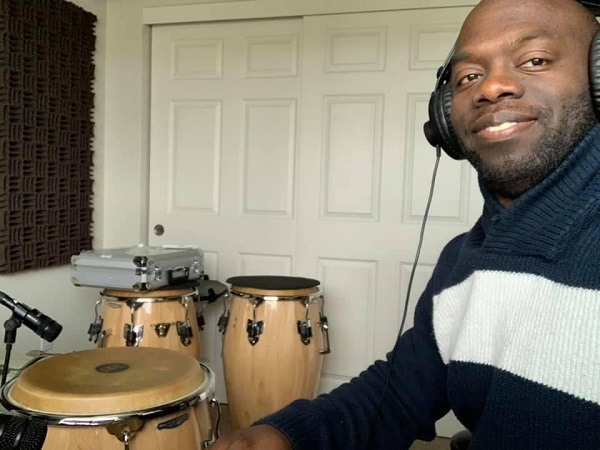
Carlos recording at home
Carlos Medrano recording music at home

Sabor De Mi Cuba   

It all started with a contest called ”Joyas” which specializes in promoting young Cuban talents who present their art to a qualifying jury and seek to carve a name for themselves in the industry.    

Carlos was fortunate that one of the judges told him and drummer Pablo Calzado ”you two shall go along with me”. The artist spent some time working with this person, who took him to play in other orchestras so that he could learn from the best until developing his own style.  

This happened after he moved to the United States and was still acquiring experience with other musical groups. That is when he realized he wanted to do things in a different way and get involved in other genres and rhythms that he had not tried before.    

There came a day when a bass player friend of his told him that if he wanted to come up with his original ideas, he had to embody them himself and not wait for others to do it. Carlos never saw himself creating his own band, but he decided to began composing his own music and he succeeded. 

Then, he started writing usic, contacting great arranger friends of his who helped him reassemble the idea of what he wanted to do. Once he had a repertoire, they advised him to record an album and give life to everything he had done, which gave birth to his first album ”Sabor De Mi Cuba”. 

The first song he wrote in his life was called ”La Habana” and was basically inspired by everything Carlos lived in his country and the longing he feels for not being able to be in his country, walk its streets, party with his friends, visit its special places, among other things. What he relates there is his life in the city where he was born and his desire to be able to go back there. 

His main motivation to make the album was the possibility of doing something different from anything he saw in the music scene around him at the time.   

Carlos does not think of himself as a professional composer, far from it, as he feels he still has a lot to learn in that field, but he hopes to reach the level of the artists who inspired him in his youth.   

Read also: Héctor “Rudy” Regalado and his great career 

Azúcar Club Cubano of São Paulo

Latin America / Brasil / São Paulo

Get to know the Azucar Club Cubano of São Paulo

Azúcar Club Cubano
Azúcar Club Cubano

In Brazil there is a great variety of Latin clubs where you can enjoy pleasant music, if what you want is to dance Merengue, Salsa and Cumbia, you can go visit the “Azúcar Club Cubano” which is located at Rua Dr. Mário Ferraz, 423 Itaim – Bibi , São Paulo, Brazil; which was inaugurated in August of the year 2000; being the first Latin house in Sao Paulo at that time thanks to the Latin inspiration with its coquettish and great Caribbean music. It is currently recognized for being very cheerful and with excellent service where it had great successes and that to this day opens its doors to all people who like Latin rhythms.

Inside of Azúcar Club Cubano

They also have a bar where the most requested drinks are Rum and Tequila and among their cocktails are “El Margarita”, “El margarita con Tequila” and “Mojito”, the latter known as the best in all of Sao Paulo; They also have a varied menu.

Rumba inside the Azúcar Club Cubano

The Club opens its doors to the public from Tuesday to Friday from 19:00 hrs (7:00 pm) and Saturdays at 20:00 hrs (8:00 pm) and there one can pay with any credit or debit card.

For more information:

  • Website: http://www.azul.com.br
  • Facebook: https://www.facebook.com/azulclubcubano/
  • E-mail: [email protected]
  • Telephone: +55 11 3074.3737

Luis “Papo” Marquez, Musician, singer, songwriter and producer

North America / Miami / Florida

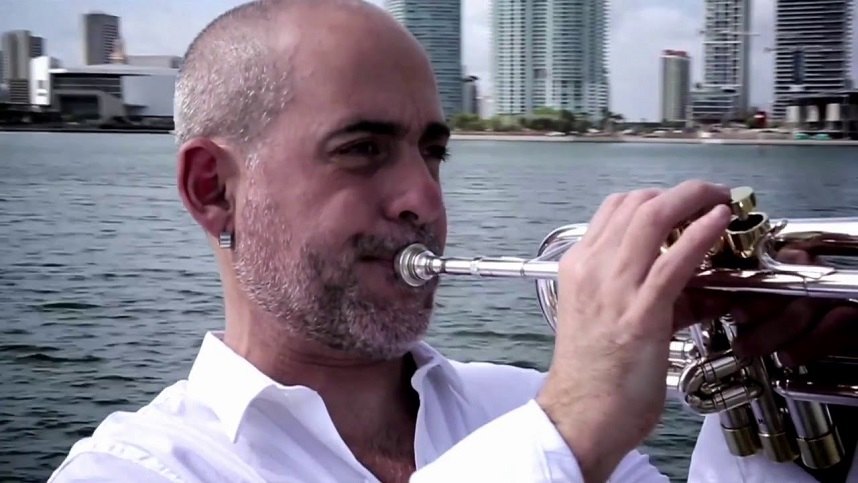
This son of music, born on December 18, 1972, in the Pinar del Río Cuba Province, was raised between notes and chords that led him to be the artist he is today, known as Luis “Papo” Marquez, and considered a complete musician: trumpeter, composer, arranger, singer and music producer.

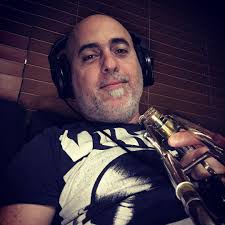
Luis Papo Márquez in the studio

As a child, he contemplated music as his environment, profession and way of life, thanks to his family who instilled in him all the passion for art and provided him with the tools to develop his knowledge. He began his trumpet studies at the age of 8 (eight) and, at 15 (fifteen), he already practiced professionally as a trumpet player in groups such as the Bella Mar Orchestra, Grupo Cumbre, musical grouping Los Trimmers, Grupo Íreme and Ricardo Hechemendía, in Pinar del Río and Havana.

Luis Papo Márquez
Luis Papo Márquez

At 19 (nineteen) he emigrated with his family to Venezuela, a country that opened the doors for his artistic consolidation, where he managed to make art on a large scale with the execution of his instrument and took the first steps within the world of composition and production.

“In Cuba, love and passion for music through the trumpet was born from me, but it was in Venezuela where I had, for the first time, the opportunity to look closely at how the art of composition worked. Suddenly, I was sitting in front of a piano and reading music sheet, trying to understand how they worked and falling in love with the trade. ” LPM

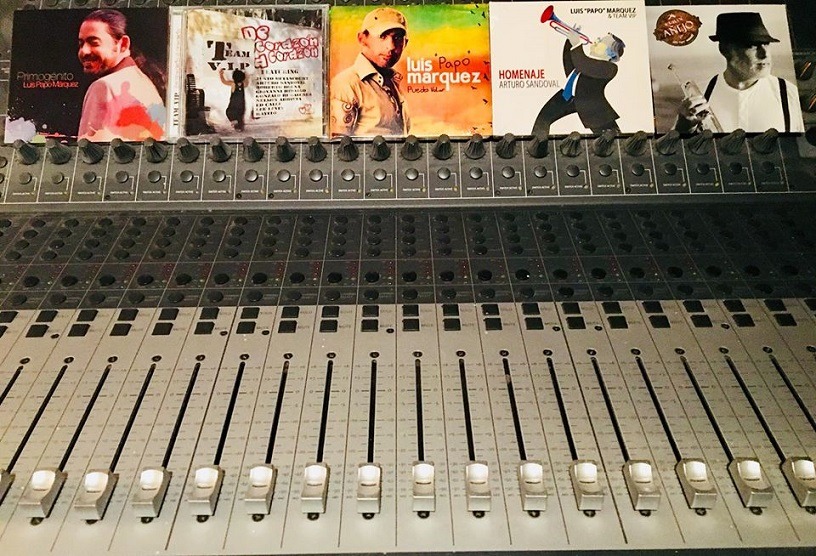
the equalizer equipment

This is how he started a successful career, thanks to his perseverance and permanent study, having the opportunity to play his trumpet with Venezuelan orchestras such as Mauricio Silva, Erick Franchesky, Naty and his Orchestra, Biella Da Costa, Ilan Chester, Sergio Pérez, Porfi Jimenez , Alfredo Naranjo, Orlando Poleo, Los Incorregibles, Mulato, Repicao and Guaco.

He continues forging his path and arrives in Miami, where he expands his international path with artists such as Jon Secada, Bacilos, Willy Chirino, Oscar D ‘León, Juan Gabriel, Gilberto Santa Rosa, Jerry Rivera, Celia Cruz, Cheo Feliciano, Chayanne, José Luís Quintana “Changuito”, Jose Alberto “El Canario”, Víctor Manuel, among others, with whom he has the opportunity to present himself as a trumpeter and in some cases, as arranger and producer.

Luis Papo Márquez playing trumpet

One of his biggest recognitions has been the delivery of an American Grammy Award for best music producer with the album “Son del Alma” by Willy Chirino; however, for LPM, the recognitions come day by day with the opportunity to make the music that moves and elevates them in their personal and artistic satisfaction.

Luis Papo Márquez defines himself as a “citizen of the world” born in Cuba and with a Cuban-Venezuelan heart. Work and discipline are his pillars to get ahead and his greatest passion will always be “creating music that makes the world move”.

Participation as Trumpeter and Arranger: Jon Secada, Bacilos, Willy Chirino, Juan Gabriel, Gilberto Santa Rosa, Jerry Rivera, Celia Cruz, Guaco, Cheo Feliciano, Chayanne, Edwin Bonilla, Luis Enrique, Victor Manuel, Rafael “El Pollo” Brito, Oscar D´León.

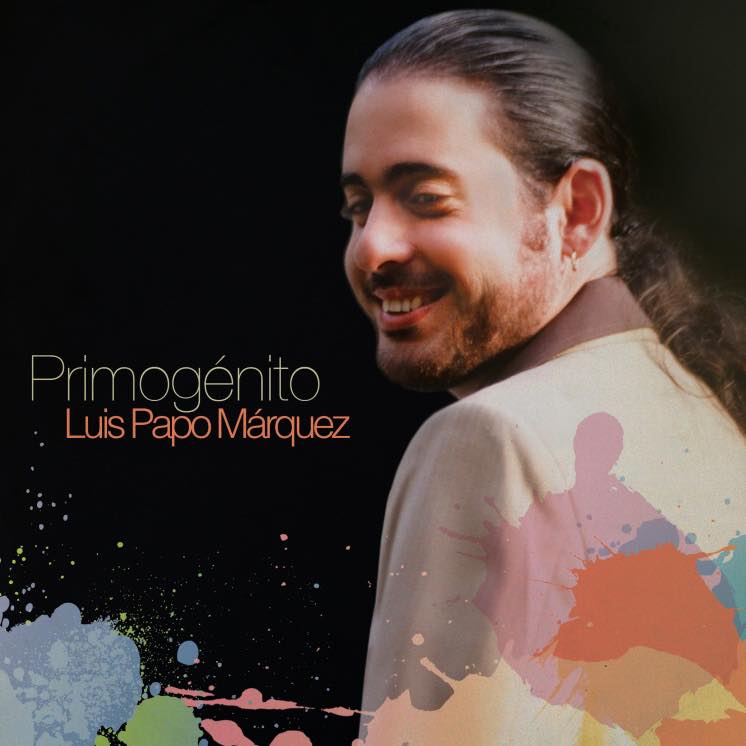
Primogénito Luis Papo Márquez

Record Productions:

  • Son del Alma (The rhythm of the soul). Willy Chirino. 2004. Grammy winner.
  • De corazon a corazon (From heart to heart). Team VIP. Luis Papo Marquez. 2007
  • Wireless Telegraphy. José Luis Quintana “Changuito”. 2007
  • Puedes volar (You can fly). Luis Papo Marquez. 2011
  • Arturo Sandoval tribute. 2016
  • Cuban Añejo. 2017
  • Firstborn. 2019

Wilmer Sifontes “Music is one of the most important things in society”

Music has no boundaries, it has the magical power to bridge social and cultural divides. Such is the case of percussionist Wilmer Sifontes, born in Caracas on March 21, 1968, a year of great events worldwide, a native of the parish of La Vega.

In 1992 he travelled to the United Kingdom for the first time to participate with the Entreverao Group in the World Music Festival “Spirit of The Earth” of the BBC in London.

Thanks to his (Wilmer Sifontes) participation with this group, he got several offers to return to the United Kingdom, so from 1996 he decided to settle down definitively in that country.

His musical duality has allowed him to work with different musical groups and bring the intoxicating rhythms of the American continent to those latitudes. He tells us that; “Fortunately, music is a universal language, it is the flag that one carries and allows you to make your way in other spaces”.

Wilmer, sometimes we imagine that the passion for music comes from a family inheritance, I see that this is not the case with you, how were your musical beginnings?

“In my family there are no musicians, however, as a child I always listened to music, on the way to my house there were places where the orchestras rehearsed, and that I liked it, I started playing salsa, it was always my forte, the music worm began at 10 years old, when the theme of Pedro Navaja with Ruben Blades and Willie Colon was in fashion, in the classroom a classmate imitated that little grave on the desk, this impressed me so much that from that moment the message came to me and I said -this will be my thing-“.

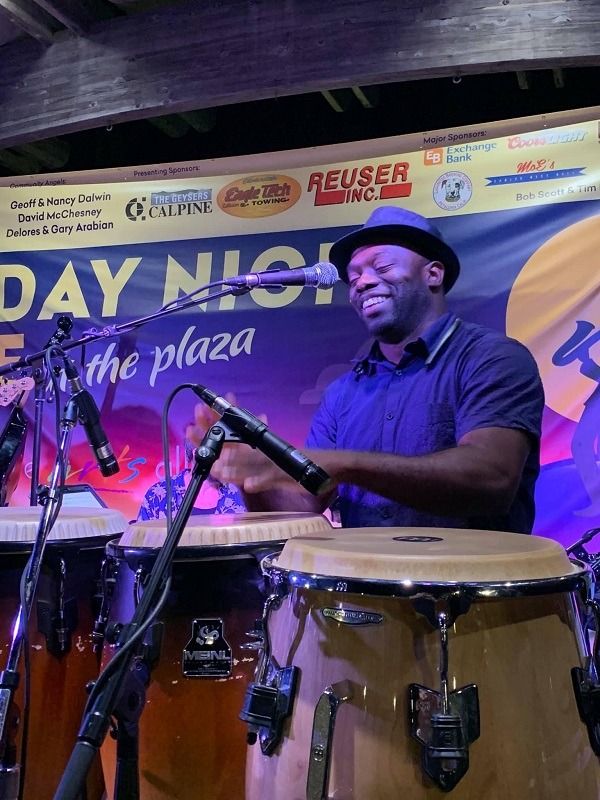
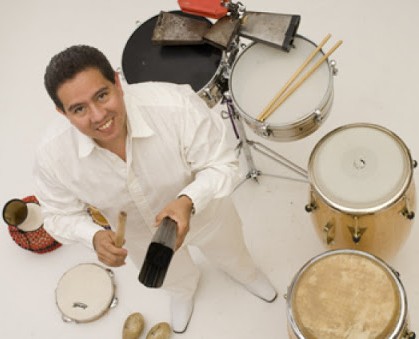
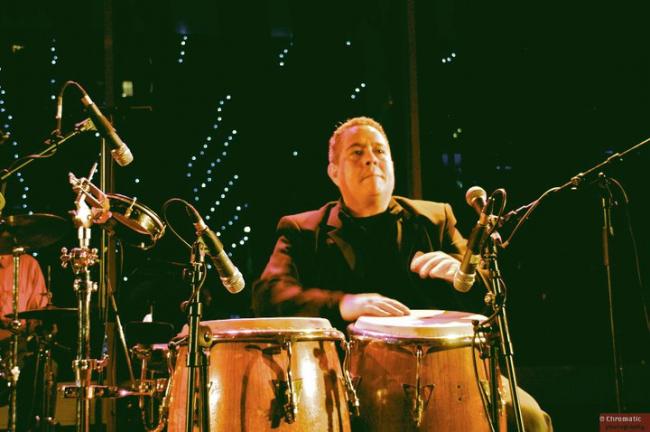
Wilmer Sifontes and his drums

That would be his entrance to the world of music

 “Yes, that was a message -but look at it-, I was a sportsman -I played Volleyball and Basketball-, and my sportsman friends wanted to be musicians, they were all adults and I was always with them as a boy, but they had no musical skills, no instruments, this prompted me to look for someone who would help me get into music, so, through my cousin I met the bassist José Machado

-he belongs to a family of musicians from La Vega-, they were my first teachers, they were always rehearsing and I saw, -a visual teaching – because I was a kid, they had a Cuban Son group called “Los Machados”.

At some point he played with them

 “After a while we started playing with the “Machados”, people were impressed to see such young boys playing, from him I received my first drumsticks, although I wanted to play bongo”.

How was that evolution?

 “In the neighborhood I continued with different groups, then with my cousin we created the “Orquesta La Conclave” and here we developed, we played in all the cultural events”. “We were rehearsing at Catia and Jesús Gómez -one of the singers of Sonero Clásico del Caribe- was always passing by and one day he told us that he needed a timbalero and a pianist, that if we wanted to work with him and we said yes, they played every night at La Caneca, a very famous place that was on Sucre Avenue in Catia”.

“This was my first night job, then I went to Silencio and played in different clubs”.

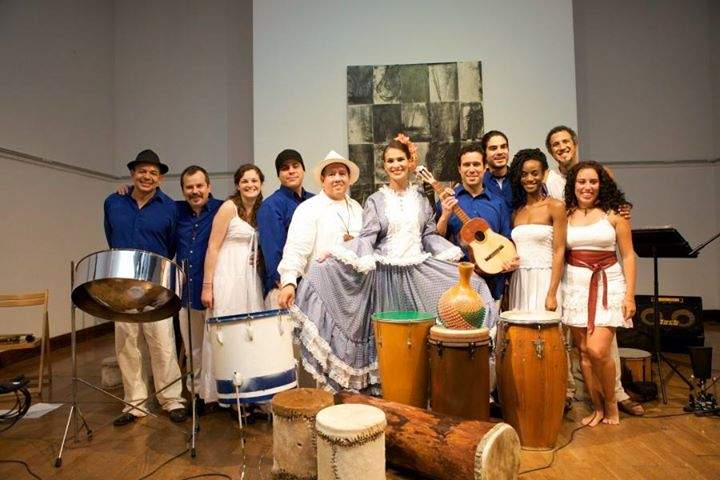
Wilmer Sifontes in the company of various artists

He is an empirical musician

“I made several attempts to study but… It was a little difficult, there were very rigorous classical schools at the time and I could not enroll, in one I went – La Lamas- together with my cousin, we took the exam and they scratched us (laughs), it is a very nice anecdote, we both sang without knowing the Black Tomasa”.

How does it come to perfection then?

 “I was playing by ear, it wasn’t something formal, as he already works in the nights in the clubs, a friend told me that in the Central University of Venezuela, Alberto Borregales and Orlando Poleo were giving classes, when I arrived I saw a great amount of people and I said: -whoa, here they are not going to accept me with that crowd- by chance, the teacher Borregales, makes a small group due to the little space that there was in the classroom, and at that moment I was going to evaluate them to decide who was left and who was not, fortunately I passed the test and I stayed”.

The experience of the street helped him

“(laughs), yes.”

Formally, Borregales was their teacher

 “Yes, but my first teachers were the Lp, besides the radio, I listened to a program called “Latin America the Cosmic Race”, with Borregales I entered with a greater discipline, he taught me to analyze, he indicated us what to read, what to listen. Later I was with Poleo in Caricuao, then in San Agustín and eventually went to Sarria. In the neighborhood I learned from Carlos “Tabaco” Quintana, he was one of my favorites, he was my inspiration, he was a timbalero with a terrible swing, excellent, in the neighborhood there were many good ones”.

“Apart from them I also learned from; Daniel Milano Mayora, Jesus Milano Palacios, in the Aquiles Nazoa Library -of Caricuao-, the Bigott Foundation and the Grupo Autóctono de la Vega”.

How was that jump from salsa to folklore?

 “I was offered to join the Grupo Autóctono de la Vega, with a great trajectory -it must be 40 or 50 years old by now- there is no role for the amount of people who have passed through there, it is the first group that makes the San Juan demonstrations in Caracas, this is from the Rivas and Ochoa family, it was my first school of folklore, they did dances, sports and then it was dedicated only to folklore music, both have been my teaching, I did not leave either of them”. “Then I played with many other folk and salsa groups, music is one of the most important things in society.”

The Grupo Autóctono de la Vega opened its doors to him, but the Agrupación Entreverao marked his future

“Yes, Entreverao marked my future, let’s say it was a show group, a quartet, its musical structure was very particular, harp, bass, drums and singer, then the percussion was introduced, the percussionist Rhay Herrera was their Director, I got a lot of experience with this group, we had a lot of work and learning, with them we made the first trip to the UK in 92”.

Wilmer Sifontes on stage

How did you decide that London would be your destination, why not another place more tropical, warmer, you did not think that you would face another culture, another language, another climate?

 “I was playing with Erick Franchesky, at that time he had 3 songs stuck in New York, we were going to go four or five of the band, it was almost confirmed, but it didn’t happen, music is like that, sometimes it offers you villas and castles and tomorrow you have nothing.” “I also had other proposals to come to the United Kingdom, the first thing that came out was this, that is, my destiny wanted me to come here”.

“Being out of your country, you learn other things, and that’s one of the particularities of my work, you learn to be more tolerant with people, as I know a lot of folklore from other places has allowed me to arrive, the culture is different to ours, is strong above all if you do not master the language, even if it is the basics, the climate if it was a shock, this is a fridge, (laughs)”.

I can’t imagine the English dancing and listening to Salsa, do they like the genre?

 “In the 90’s Salsa was very fashionable around here, there were many places to play, the acceptance of the music is excellent, when the Salsa boom, everyone wanted to learn to dance it, there are clubs to learn to dance, they have fallen in love with Latin American culture, they have been very receptive to those we have come to work with”. “I am the first Venezuelan to make a legal Folkloric Group in this country”.

Tell us a little about that project; AfroAmerica Project

 He founded it in 2007, it is an official group of typical and traditional Afro-Venezuelan music, people love Latin American music, they receive it very well, the name is due to a magazine that Jesus “Chucho” Garcia made, which speaks of Afro-Cuban music”.

 He continues to work with this project

“Yes, it is a group like Un Solo Pueblo, 90% is Venezuelan music, fulia, tambor, parranda, Calipso, Larense music, there are people who are outside Venezuela and do not know their music, then, we must show what we are, show our culture”.

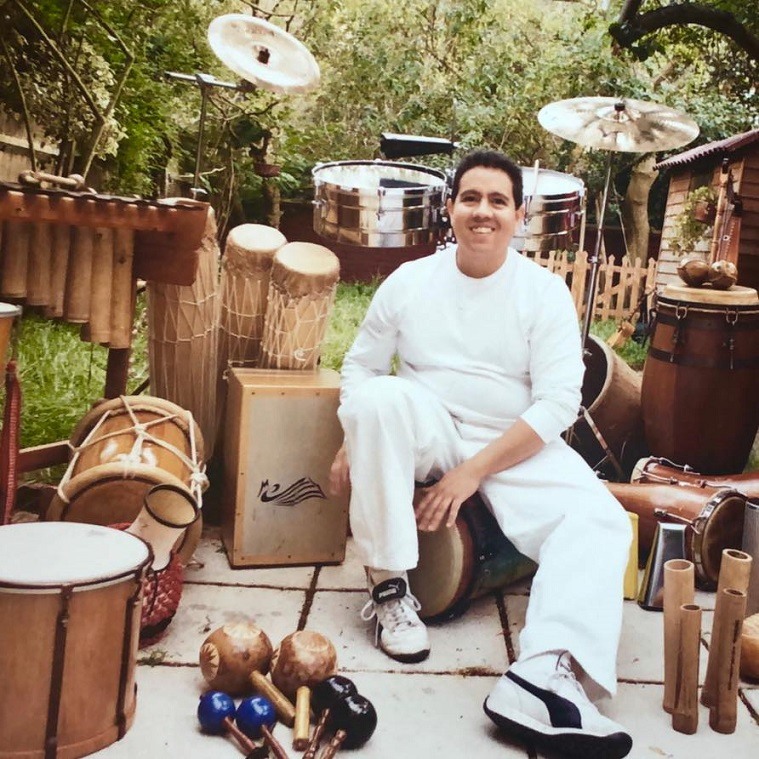
Photo of Wilmer Sifontes and his instruments

What groups have you worked with in the UK?

 “Any number of bands, when I arrived in the UK I started with a man named Kora, he played an African harp, his band was World Music, his music was a mix of African rhythms and the idea was to play Latin American percussion, as I have the virtue of playing different styles of music work with him”.

“Although I did a lot of Salsa in the early years, the other bands I remember are Conjunto Sabroso, Hussein Zahawy, Tumbaito, Ensamble Criollo, La Papayera, Salsa Nueva, The Voices of Naturale, La Charanga Rivera, Tango Tierra, Ensamble Criollo, Clara Rodríguez, Ola Onabule, AfroAmerica Project, Cubanito, Chacón y Su Timba, Bahareque, Salsa Céltica, Kora Colours, Los Charlys Orchestra, Classico Latino, Bilongo all Stars, among others”.

It’s easy for him to move through different genres

“Yes, I owe this to my country, thanks to all that learning I have been able to do so many things and share with so many people in different parts of the world.”

Thanks to this duality you have worked with and accompanied different artists, which ones do you remember?

“Among those I remember are Herman Olivera, Willie González, Maelo Ruiz, José Mangual Jr, Luisito Carrión, Roberto Torres,Tony Vega, Pedro Brull, Tito Gómez, Tito Nieves, Cano Estremera, Giovanni Hidalgo, Andrés Cepeda, Aterciopelados, Leroy Burges, Rodolfo Arcardi, Henry Fiol, Alci Acosta, and the Bands and groups in Venezuela are; Orquesta la Grande, Catatumbo, Entreverao, Criollo y Sabroso, Orquesta la Raza, and with whom I have participated are; Grupo Cosecha, Grupo Autóctono, Jesús Ruiz, La Gran Compañía and Eric Franchesky -who- among many others”.

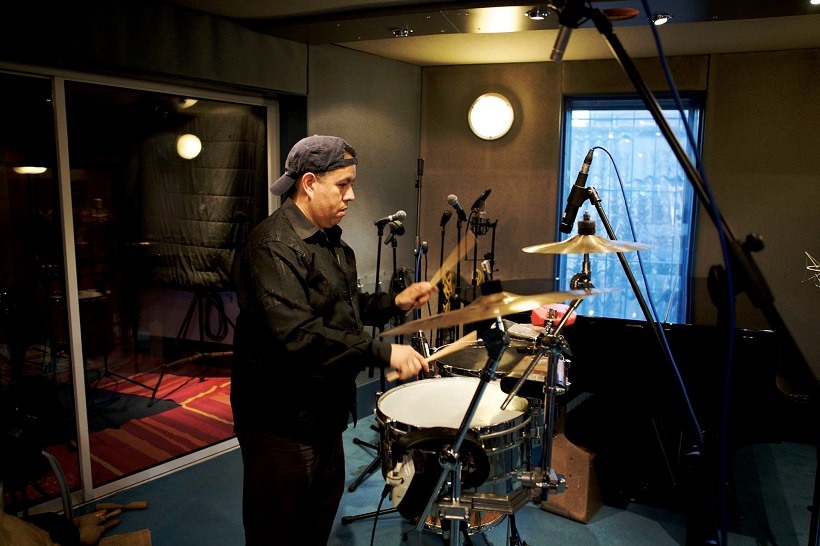
Wilmer Sifontes in the studio with his instruments

Celtic Sauce, explain that to me, it sounds a little strange

“It’s a Scottish group that mixes Celtic music with Salsa, with them I started doing substitutions for the timbalero, it’s very nice and interesting, they use the traditional instruments of Scottish Folk and the instruments of Salsa and Latin Jazz, they have also mixed it with pop, with rock, with Indian music, that gives them a unique and characteristic sound to this group, with this group I have traveled the world”.

Another band you have worked with is Sidestepper, very famous for fusing elements of Antillean and Colombian music with electronic music.

“Yes, the band was formed in Colombia, by the English producer Richard Blair, he revolutionized the traditional sounds of the region by mixing them with avant-garde sounds, with them I made an interesting work”.

Tell us about the Salsa Nueva Project

“That is the project of the Venezuelan pianist Elena Riu, is the fusion of Salsa with classical arrangements, you can be listening to a kind of montuno, a tumbao’ on the piano and the minute it disappears and leaves a passage well classic, is Latin in classical music, had original themes, is a theme that is called sal-si-ta -so separated-, had songs by Ruben Blades, Ismael Rivera, very cool.

“She needed a rhythmic element and invited me to accompany them, two months later we recorded an album in a church”.

 How do you feel about conducting one of the most popular bands in London, El Conjunto Sabroso?

“It has given me a lot of foundation and satisfaction, it was founded by Mrs. Luisa Elena Caicedo, since I arrived here I started to work with them, she listened to my references and called me to make substitutions, then I was their director and assistant director”.

Wilmer Sifontes in the studio

With you, the saying goes… No one is a prophet in his own land

“I think that yes, many people have been prophets, but… after death or after many years -laughs-, I don’t know, at this moment it is so difficult to put a definition to this, although I believe that nobody is a prophet in his land”.

From whom or from whom has he taken his musical influence?

 “There are several, the list is long, Carlos “Tabaco” Quintana, Orlando Poleo, Alberto Borregales, Alfredo Villamizar, Orestes Vilato, Tito Puente, Dave Wackel, Ray Barreto, Un Solo Pueblo, Guaco, Paquito de Rivera, Giovanni Hidalgo, Paoli Mejias whom I had the pleasure to meet and accompany, El Trabuco Venezolano, La Fania All Star, Irakere Orchestra, and Puerto Rican and New York Salsa, among many others”.

How has your musical growth been?

 “I have learned a lot from each culture, from the Colombian, Cuban, Argentinean, African, knowing the folklore of other places teaches you a lot, sharing with people from all over makes you grow and learn every day, this is part of the particularity of my profession.”

How do you see the market right now, there is a great variety of music, everyone has their own style, what do you think of all this new, but sometimes not good?

 “I don’t know if it’s taking a turn or not, the truth is that Europe is different, it has another kind of market, which is not that I’m involved, previously there were many festivals, pop and rock are the popular music of this country, but, reggaeton has been influenced by society, it has been injected with a lot of money, apart from the impact of social networks, it reaches more people, social networks have changed the way music is sold in the world.

“People are scared of reggaeton, for me it depends on who is doing it, the market has changed because of the networks, anyone makes music, anyone plagiarizes music from others, we are in a time of change and music does not escape from it.”

What do you think about tributes and copies, is the musician’s creativity running out?

“When people are alive it is always good to highlight their contribution to the world, there will always be a reference to someone, but it is good that people are creative, and there are the brazen ones who shoot the songs and put other lyrics on them, it is like winning people over with other people’s work”.

“The musical genius has not declined, what happens is that there are no promotions, people who do not do commercial work, it costs a little more to reach, fight against the great machines that bet on other things, musical geniuses are born for generations, are counted.”

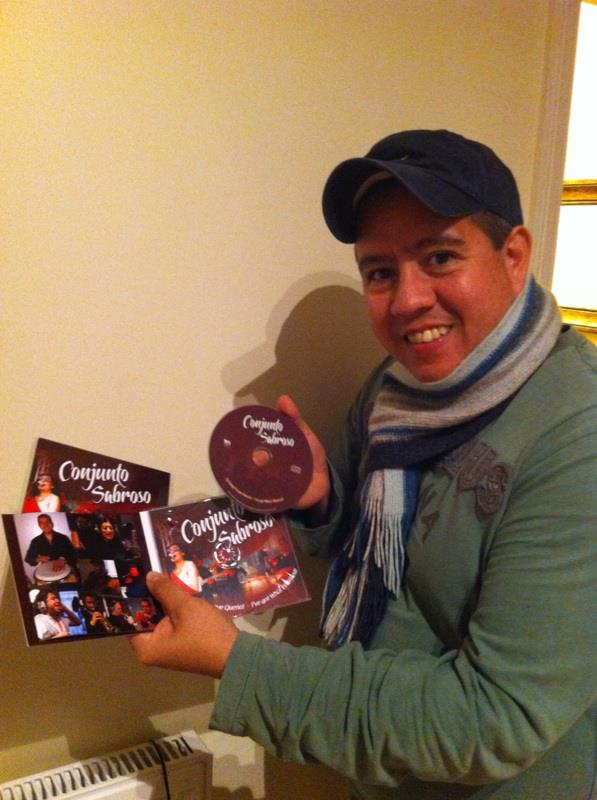
Wilmer Sifontes and his records

The first production of the Conjunto Sabroso is entitled “Ya tengo lo que quería, realmente”

 “You never get to have everything you want, but at that moment, we had what we wanted, in that production there are arrangements by Naty Martínez”.

Among your personal projects, which ones would stand out and what new proposals do you bring to the public?

“I was the founder of Ensamble Criollo, we still work with this, AfroAmerica Project, Wilmer Sifontes y Su Combo Caribe, Will Sifontes and his Latin Sound and I’m still working with Conjunto Sabroso as musical director, besides, I’m making a solo album, -let’s say it’s called Latin Jazz- it’s a mix of everything, of my musical career, I already have 3 numbers, there will be duets, quartets, guests, the production is going to be called “Handmade”.

If you were to choose between folklore and salsa

“I’ll take them both, they’re different loves, I still do folklore, salsa and fusions.”

What recommendation do you have for the relay generation

“My recommendation is that they prepare themselves, musically, but first of all their idiosyncrasy, we have to have very clear the bases of what we are and develop them with modern techniques and other elements from other countries, to have discipline, today it is easier to have the information, there are more institutes, the internet”.

Wilmer Sifontes
Wilmer Sifontes


By Eling Blanco, ISM Journalist Correspondent, Caracas, Venezuela


  • « Go to Previous Page
  • Page 1
  • Interim pages omitted …
  • Page 12
  • Page 13
  • Page 14
  • Page 15
  • Page 16
  • Interim pages omitted …
  • Page 103
  • Go to Next Page »

International Salsa Magazine (ISM) is a monthly publication about Salsa activities around the world, that has been publishing since 2007. It is a world network of volunteers coordinated by ISM Magazine. We are working to strengthen all the events by working together.