• Skip to primary navigation
  • Skip to main content

International Salsa Magazine

  • HOME
  • Previous editions
    • 2026
      • ISM / March 2026
      • ISM / February 2026
      • ISM / January 2026
    • 2025
      • ISM / December 2025
      • ISM / November 2025
      • ISM / October 2025
      • ISM / September 2025
      • ISM / August 2025
      • ISM / July 2025
      • ISM / June 2025
      • ISM / May2025
      • ISM / April 2025
      • ISM / March 2025
      • ISM / February 2025
      • ISM / January 2025
    • 2024
      • ISM / December 2024
      • ISM / November 2024
      • ISM / October 2024
      • ISM / September 2024
      • ISM / August 2024
      • ISM / July 2024
      • ISM / June 2024
      • ISM / May 2024
      • ISM / April 2024
      • ISM / March 2024
      • ISM / February 2024
      • ISM / January 2024
    • 2023
      • ISM / December 2023
      • ISM / November 2023
      • ISM / October 2023
      • ISM – September 2023
      • ISM – August 2023
      • ISM July 2023
      • ISM Edition June 2023
      • ISM – May 2023
      • ISM April 2023
      • ISM March 2023
      • ISM February 2023
      • ISM January 2023
    • 2022
      • ISM December 2022
      • ISM November 2022
      • ISM October 2022
      • ISM September 2022
      • ISM August 2022
      • ISM July 2022
      • ISM June 2022
      • ISM May 2022
      • ISM February 2022
      • ISM January 2022
    • 2021
      • ISM December 2021
      • ISM November 2021
      • ISM October – 2021
      • ISM September 2021
      • ISM August 2021
      • ISM July 2021
      • ISM May 2021
      • ISM April 2021
      • ISM June 2021
      • ISM March 2021
      • ISM February 2021
      • ISM January 2021
    • 2020
      • ISM December 2020
      • ISM November 2020
      • ISM October 2020
      • ISM September 2020
      • ISM August 2020
      • ISM July 2020
      • ISM June 2020
      • ISM May 2020
      • ISM April 2020
      • ISM March 2020
      • ISM February 2020
      • ISM January 2020
    • 2019
      • ISM December 2019
      • ISM November 2019
      • ISM October 2019
      • ISM Septembre 2019
      • ISM August 2019
      • ISM July 2019
      • ISM June 2019
  • Download Salsa App
    • Android
    • Apple
  • Spanish

Search Results for: Cuban

Luis Conte: The Cuban-American percussionist who fuses Cuban son with global music

Luis Conte is a renowned Cuban-American percussionist who has left an indelible mark on the music industry. His talent and versatility have led him to collaborate with an impressive list of world-class artists.
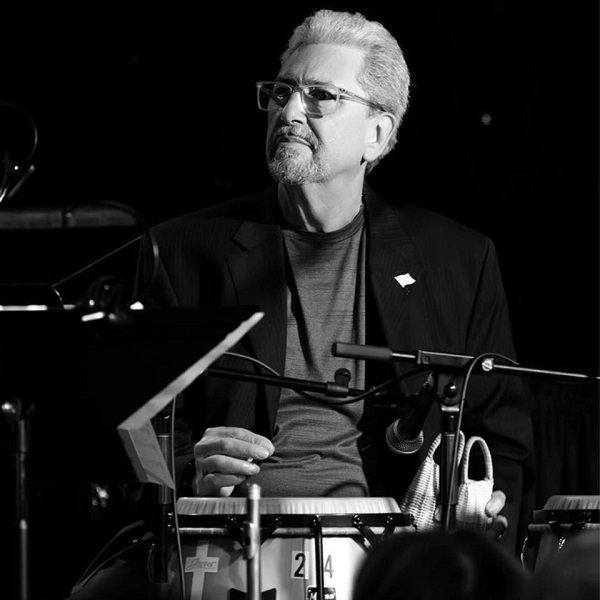
Luis Conte, the percussionist who fuses Cuban son with global music.

Born in Santiago de Cuba, Conte emigrated to Los Angeles in 1967. Throughout his career, he has been honored multiple times as “Percussionist of the Year” by specialized magazines like Modern Drummer and Drum Magazine.

Luis Conte has been the percussionist for some of the biggest names in commercial music, including James Taylor, Phil Collins, Jackson Browne, Madonna, Sergio Mendes, Ray Charles, Pat Metheny, Beck, Shakira, Sade, and Herb Alpert.

In this first HD-Audio Latin recording, his talent, along with that of pianist David Garfield and the recently deceased bassist Dave Carpenter, comes to life through the magic of 96 kHz/24-bit, 5.1 channel surround sound. The music is mixed to maximize individual musical lines and timbres. Bob Stuart, the founder and chairman of Meridian Audio, described the sound as “incredible,” adding that it was one of the best recordings he had ever heard.

The difference lies in the use of new technology, strict adherence to signal purity, and a willingness to experiment with instrument placement. Finally, you have the opportunity to hear authentic HD-Audio with performers who know how to create wonderful music.
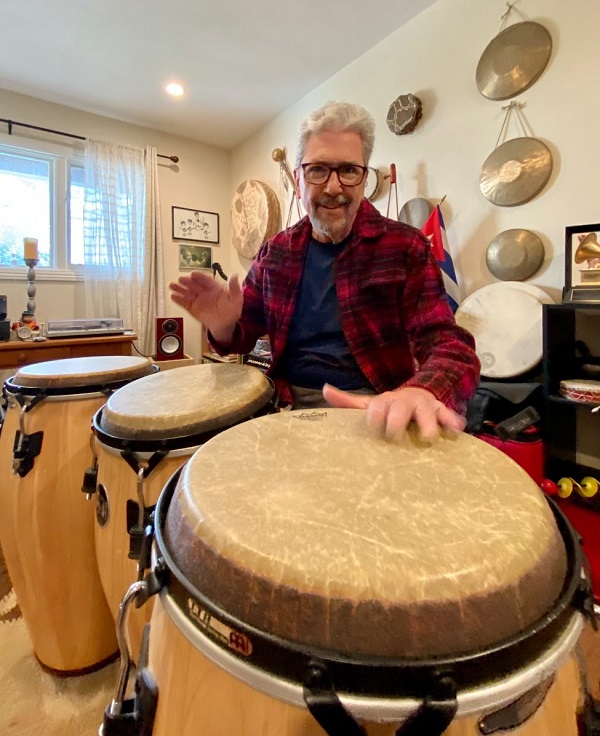
Being a percussionist is like being a geographer. These instruments come from all over the world: Africa, Brazil, Colombia, the Middle East. I try to cover everything.

Luis spent the first 15 years of his life absorbing the rich musical heritage of son and carnaval. “Life in Cuba is about enjoying it, and music is fundamental to that lifestyle,” says Luis. “Music is almost like food for Cubans.” Immersed in the music of his native Cuba, Luis also developed a passion for rock & roll, R&B soul, jazz, and The Beatles.

At age 15, in search of freedom, Luis emigrated to Madrid, Spain. He soon had another opportunity to travel, this time to Hollywood. In California, Luis stayed with a cousin and attended Hollywood High School, where he played guitar in numerous rock bands during his teenage years.

After high school, Luis met John Monteallegre, who reconnected him with Cuban drumming at L.A. City College. By age 18, Luis had a strong interest in drumming and took every opportunity to play and learn, drawing inspiration from a deep well of rhythm he absorbed during his youth in Cuba.

David Garfield’s mission is “I make music.” And “make music” is what he does, as a world-renowned keyboardist, producer, and composer. Whether it’s jazz, rock, funk, or world beat, he is the creative force behind the production of numerous internationally acclaimed recordings.

Conte is a renowned Cuban-American percussionist

After studying music at Ohio State University, the late Dave Carpenter started his professional career playing with three jazz giants: Buddy Rich, Maynard Ferguson, and Woody Herman. More recently, Carpenter was part of drummer Peter Erskine’s trio, which also included pianist Alan Pasqua. A veteran of the Woody Herman and Bill Holman big bands, he also worked with Bill Perkins, Jack Nimitz, Herb Geller, Herbie Hancock, Jack Sheldon, Al Jarreau, Bill Cunliffe, Jan Lundgren, Terry Gibbs, Buddy DeFranco, and Richard Stoltzman, among others.

As sought-after in Los Angeles studios as he was in clubs, Carpenter has an extensive list of recording credits. He participated in more than 200 recordings and composed dozens of themes and scores for television and film.

Sadly, Dave passed away from a heart attack in June 2008. The music world lost a truly wonderful musician and person. The premium DVD-Audio/Video discs from AIX Records are two-sided: one side is an interactive DVD-Video disc, and the other is a DVD-Audio disc (which requires DVD-Audio compatible equipment for playback).

The sound of this recording brings these incredible instrumentalists into your listening space. The HD audio surround mixes immerse you in the musical interplay with a full-range frequency and dynamic response. Discover how good Latin jazz can sound! When I’m asked at trade shows what my favorite discs are, I always include The Latin Jazz Trio.

Dave Carpenter, Luis Conte & David Garfield – The Latin Jazz Trio (2002-R2018)
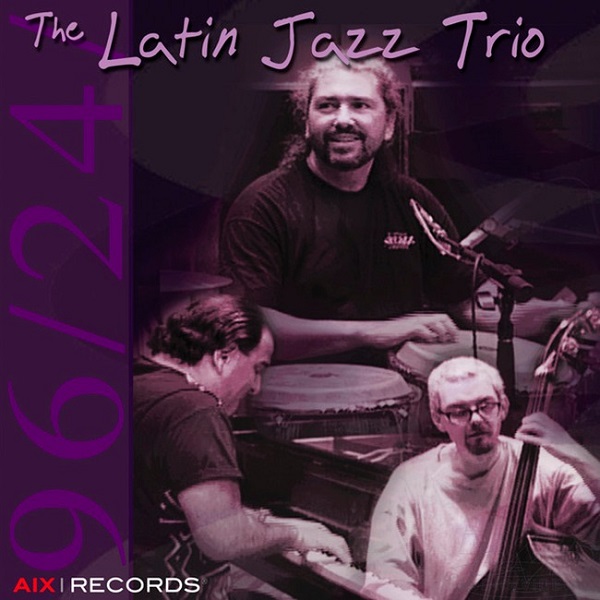
Dave Carpenter, Luis Conte & David Garfield - The Latin Jazz Trio
Dave Carpenter, Luis Conte & David Garfield – The Latin Jazz Trio

Tracks:

  1. Luisongo
  2. Doña Olga
  3. Memories Of Rio
  4. Mujaka
  5. Song For My Father
  6. Future Generations
  7. Pools
  8. Rumba Del Cielo
  9. Kumbisa / Cuba

Musicians:

  • Dave Carpenter (Bass)
  • Luis Conte (Percussion)
  • David Garfield (Piano)

Recorded at the Zipper Auditorium at The Colburn School of Performing Arts, 2000.

By: L’Òstia Latin Jazz

Dj. Augusto Felibertt

Also Read: Israel “Cachao” López, a Cuban musician and composer, has been hailed as “the Inventor of Mambo”
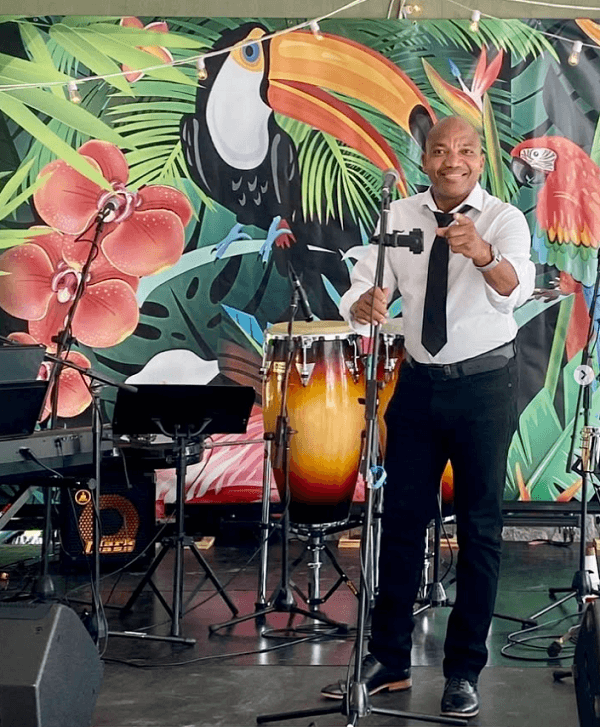
Cuban singer-songwriter Osmay Calvo shows his versatility in the New Jersey music scene

Osmay Calvo is just one of many examples of why Cubans have triumphed so many times in the United States, which is why his story and that of many of his compatriots always serve as inspiration for those seeking a career in the music industry but who do not dare to do it because of the misfortune of being born in a place that did not offer them the necessary opportunities for this.

Calvo was kind enough to take a few minutes of his time to talk about all that had happened to his career to date, so it is an honor for us to describe what was discussed in the following lines.

Osmay performing
Singer Osmay Calvo performing during a birthday

How Osmay became interested in music

Osmay tells us that, from an early age, he loved popular music, so he began to participate in school music events when he was just six years old in Tarará, east of the city of Havana. At the same time, his mother enrolled him in singing lessons and he spent much time with his family musicians, including his uncle, singer Pedrito Calvo, who was a member of Los Van Van.

A few years later, he began to attend various types of contests and joined the Mariana de Gonitch Singing Academy, directed at the time by maestro Hugo Oslé, thanks to which he met Pacho Alonso, Ela Calvo, Mundito González, and many other important figures of Cuban popular music.

Official beginning of his professional life

Osmay’s professional start was in Cuba when he joined the Adolfo Guzmán company in 1995, which is when he had his first paid job in music. Although it is true that the Cuban government got a huge percentage of the money earned by the artists, Osmay appreciates the experience and the chance to know other countries through his activities with the company.

Some time later, he had the opportunity to travel to Spain and then to Mexico, where he participated in a music competition and won first prize with the song “La Bamba.” He then spent another month in Spain for an event until returning to Havana and winning the Mariana de Gonitch Singing Contest, obtaining the prize for the great popular generation of national music award, which led him to travel through the 14 provinces of Cuba to offer his services and make himself better known.

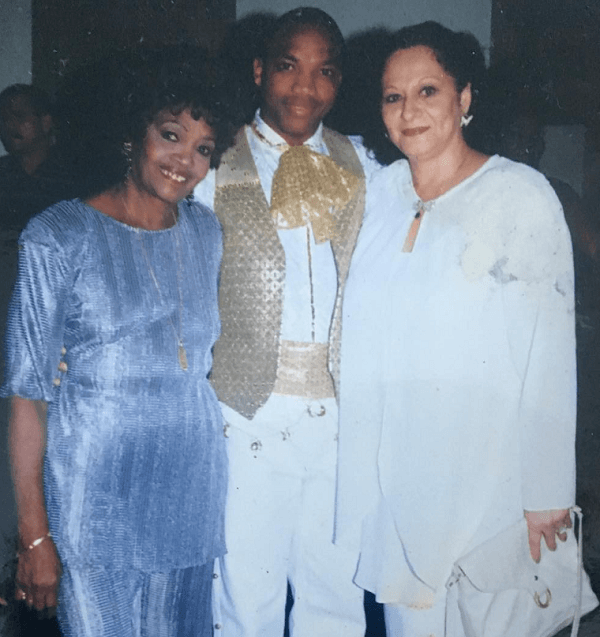
Osmay, Ela, and Beatriz
Singer Ela Calvo, Osmay Calvo, and ”La Musicalísima” Beatriz Marquez

Moving to the United States

It was in 2002 that Osmay finally decided it was time to look for other roads and leave Cuba to no longer return. He was going to sign a contract with Mambo Records in Miami, but things did not go according to plan, so he started recording his own music and went to New Jersey, where he began to organise his own orchestra with which he has 16 original songs written by himself, but also numerous covers of hits by other artists.

He has not been back to his native country for about 24 or 25 years. In fact, most of his family also lives in the United States and Canada, except for his uncle Pedro Calvo, some cousins, friends, and his music teachers.

However, after all the time he has been gone, things have not been entirely easy for Osmay, especially in the beginning. The hardest thing for him was language learning and how little he knew about his new place of residence, but the artist quickly learned and was gradually integrated into this new music scene, thanks to which he was able to play with many orchestras and meet great figures such as Oscar D’León at the Coco Bongo Club in Elizabeth, New Jersey, and Fernandito Villalona, for whom he opened one of his shows.

In New York, he played with many bands and learned a lot of music that was played locally. Osmay brought an academic background in lyrical and symphonic singing from Cuba, but New York has mostly restaurants, nightclubs, and fairs, so he had to adapt to a completely new format and audience. 

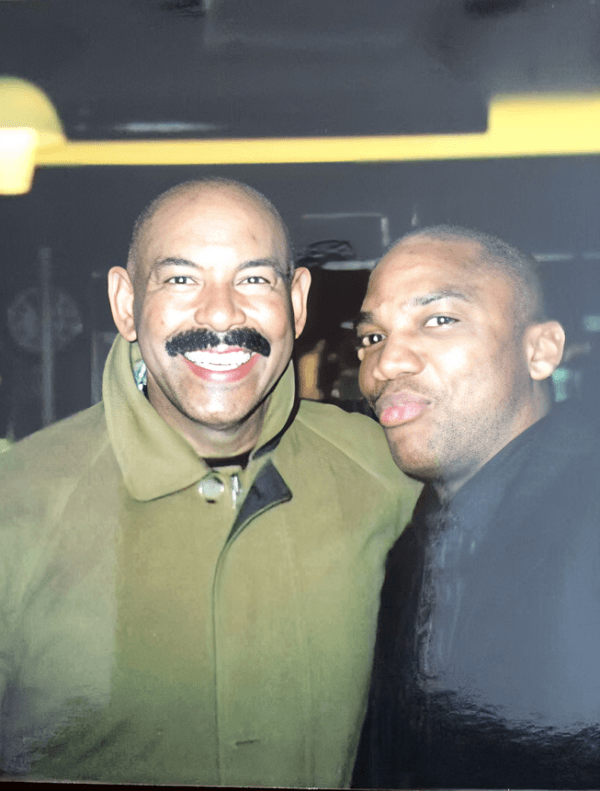
Osmay, and Oscar
”El Sonero del Mundo” Oscar D’ León and Osmay Calvo

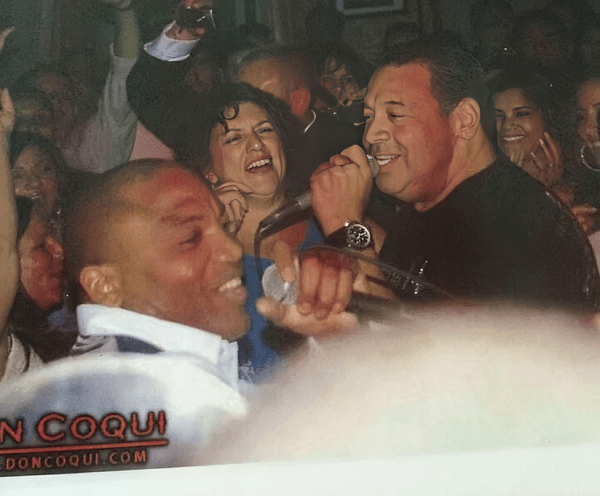
Fortunately, he got it and was recommended by other musicians to play in many places until one night he was asked to play at Don Coqui and was told that Tito Nieves would be there. Then, when it was time for Osmay and nine other musicians to perform on stage, Jimmy Rodríguez, the owner of Don Coqui, approached them to say that Nieves might come and play with them later. A little while later, the Puerto Rican actually did approach with a microphone in his hand, and both he and Osmay began to improvise, and the show lasted until two o’clock in the morning. For the Cuban, it was an exceptional experience and an unforgettable moment in his career.

Haberte Conocido

After all the progress made, in 2021, Osmay felt ready to release his first independent album, which he titled “Haberte Conocido”. This was a goal to fulfill since Hugo Oslé, who was also his singing teacher, told him and the rest of his students that it was very important to be an independent artist who wrote and recorded his own songs. 

In addition to that, he remembers that everyone in the class was a bolero singer, so he wanted to do something that would set him apart from the rest, and that is how he began to turn to salsa and other genres. This made him a much more versatile artist who could sing almost any genre coming his way. From then on, he stopped learning the original soneos of the songs and started to improvise on many occasions, which eventually led him to compose. Finally, in 2021, he wrote “Haberte Conocido,” which he put together from ideas that came to his mind and that he saved on his mobile phone during rehearsals. Then, stanza by stanza, he created the first song of his own. 

Osmay and Tito
Osmay Calvo singing with Tito Nieves at Don Coqui

Read also: Multi-instrumentalist Ian Dobson talks about his trips and academic background

Israel “Cachao” López, a Cuban musician and composer, has been hailed as “the Inventor of Mambo”
Born in Havana on September 14, 1918, and passing away in Coral Gables, Miami, on March 22, 2008, Israel “Cachao” López, often known simply as “Cachao,” was a Cuban musician and composer.

Israel Cachao López musico y compositor cubano, ha sido definido como el Inventor del Mambo

He became a legend in Cuban music with his masterful handling of the double bass and was renowned for his performances in mambo and Latin jazz.

His talent earned him two Grammy Awards (in 1995 and 2005), a Latin Grammy in 2003, an honorary doctorate from Berklee College of Music, and a star on the Hollywood Walk of Fame.

He has been described as “the inventor of mambo” and is considered a master of descarga (live improvisations).

He began by playing various instruments until he settled on the double bass, which allowed him, as a teenager, to join the Havana Philharmonic Orchestra, where his father and older brother also played.

“Cachao” left Cuba in 1962 with a long list of successes and stated in a 2007 interview that if it weren’t for his compatriot and colleague Dámaso Pérez Prado, “mambo would not have been heard worldwide.”

Israel Cachao López nacido en La Habana, un 14 de septiembre de 1918 y falleció en Coral Gables un 22 de marzo de 2008 en Miami

His first stop was Madrid, where he stayed for a year before emigrating to the United States. In the U.S., he resided in New York City, Las Vegas, and Miami.

López also played acoustic bass with his brother, the multi-instrumentalist Orestes López. They literally composed over 3,000 songs together and were highly influential in Cuban music from the 1930s to the 1950s.

They created the “nuevo ritmo” (new rhythm) in the late 1930s, which transformed the danzón by introducing African rhythms into Cuban music, ultimately leading to mambo.

He won several Grammy Awards for both his own work and his contributions to albums by Latin music stars, including Gloria Estefan. In 1995, he won a Grammy for Master Sessions Volume 1.

In 2003, he won a Latin Grammy for Best Traditional Tropical Latin Album alongside Bebo Valdés and Patato for El Arte Del Sabor. He won another Grammy in 2005 for his work ¡Ahora Sí!

His nephew, Orlando “Cachaíto” López, became one of the pillars of the famous Buena Vista Social Club.

Cachao performed with artists such as Tito Puente, and his music has been featured in films like The Birdcage and the soundtrack of the video game Grand Theft Auto: Vice City.

The Actor Andy Garcia produced a documentary titled Cachao… “Como Su Ritmo No Hay Dos” in 1993 about his music. He also shared stages with Celia Cruz and her husband Pedro Knight, as well as with trombonist Generoso Jiménez.

Leyendas de Nuestra Musica Latina Pacheco, Puente y Cachao

His last musical collaboration was with Gloria and Emilio Estefan on the singer’s album titled 90 Millas.

López passed away on the morning of March 22, 2008, in Coral Gables, Florida, at the age of 89, due to complications following kidney failure.

Cachao y Su Ritmo Caliente – Monte Adentro (2000)

Tracks:

  1. Monte Adentro (Cógele el golpe) (A. Castillo Jr.)
  2. Goza Mi Trompeta (O. Estivill)
  3. Guajeo de Saxos (E. Peñaver)
  4. Estudio en Trompeta (I. López)
  5. Gozar Timbero (O. Estivill)
  6. Trombón Criollo (O. Portillo)
  7. Malanga Amarilla (S. Contreras)
  8. Controversia de Metales (I. López)
  9. Descarga Cubana (O. Estivill)
  10. Pamparana (A. López)
  11. Sorpresa de Flauta (O. Estivill)
  12. Oye Mi Tres Montuno (A. Echevarria)
  13. La Floresta (O. López)
  14. Avance Juvenil (B. López)
  15. Redención (O. López)
  16. Descarga Mambo (D.P.) 

Musicians:

  • Israel López “Cachao” (Double Bass)
  • Guillermo Barreto (Timbales)
  • Tata Güines (Tumbadora)
  • Rojelio “Yeyo” Iglesias (Bongos)
  • Gustavo Tamayo (Güiro)
  • Alejandro “El Negro” Vivar (Trumpet)
  • Armando Armenteros (Trumpet)
  • Generoso “El Tojo” Jiménez (Trombone)
  • Oreste López (Piano)
  • Enemelio Jiménez (Alto Sax)
  • Emilio Peñalver (Tenor Sax)
  • Virgilio Lisama (Baritone Sax)
  • Richard Egües (Flute)
  • Niño Rivera (Tres)
  • Roliyo y Reyes (Chorus)

Recorded in Havana, 1957-1958

Cachao y Su Ritmo Caliente - Monte Adentro (2000)
Cachao y Su Ritmo Caliente – Monte Adentro (2000)


The tradition of being musicians comes from grandparents and great-grandparents, all the Cachaos are musicians.

By:

Dj. Augusto Felibertt

L’Òstia Latin Jazz

Also Read: Israel “Cachao” Lopez Sobrado in fame and respect in the seventies was dedicated to maintain the tradition at the highest level

Caesar Vera Y Su Sexteto NuevoSon, traditional Cuban music with a touch of modernity

It is very important for us to show and provide coverage to the most important Latin music artists of today in the United States and now it is the turn of Chicagoan musician Caesar Vera, who very kindly accompanied us in this edition of International Salsa Magazine.

Caesar is the current director of Caesar Vera Y Su Sexteto NuevoSon, which we will talk about later along with other equally important issues for the musician’s career.

Caesar with a bongo
Caesar Vera with his bongos some years ago

How Caesar began his journey in music

Although Caesar has developed his professional life in Miami and currently lives there, he was actually born in Chicago and spent the early years of his life there. His parents arrived from Cuba in 1966 in the freedom flights and, once in the United States, the Catholic Church helped them and placed them in Chicago, where he was born and lived until 1978. Later, the couple divorced and his father went to live in Miami, so Caesar spent long holiday periods together with him in that city.

The path with music for Caesar began in high school, when he became very interested in rock music, to the point of creating a band with some of his classmates. He played the drums and was a huge fan of Led Zeppelin, Kiss, Van Halen, and other groups of that style. 

The only connection the young man had with Latin music was his grandfather, who loved to dance danzón and always played Orquesta Aragón records so that they could both move to the beat music in the living room of his house. Although these moments with his grandfather were very pleasant, he did not yet like this kind of music, but that would change over the years.

In Miami, there was a time when there were many Latin bands playing, and every corner had a nightclub with orchestras playing. Caesar and his friends used to attend these places a lot, which led the young man to finally become interested in these genres. This coincided with the arrival from Cuba of his uncle who was a musician and had a band there, which they talked about constantly, and he even taught his nephew to play instruments such as the tumbadora, bongos, timbales, and all minor percussion.

In 1987, what happened was a turning point for Caesar musically speaking, as he finally decided to take Cuban music more seriously and study its history to understand it better.

Caesar Vera and Luis Bofill
Singer and bandleader Luis Bofill and Caesar Vera

Groups prior to Caesar Vera Y Su Sexteto Nuevo Son

Before creating his own group, the wife of a friend who had a group invited him to play percussion with them, a proposal Caesar accepted, and he started playing the tumbadora with the orchestra. Something new in this case was that he had never played with an established band in formal performances, so it was something new for him.

By 1992, he had met the famous Cuban bongo player Juan Méndez, who had played with the Roberto Faz Orchestra, Roberto Torres, and Luis Santi Y Su Conjunto. Méndez told him that he needed a bongo player in an orchestra he was forming at the time and asked Caesar to fill the vacancy, to which he answered yes and remained in the group until 2003, that is, for around 11 years.

In addition to that, he was a replacement in various orchestras in Miami for a while, one of which was Gilberto Díaz Y Su Conjunto Los Profesionales. He was with them for two years, but by then traditional Cuban music, more specifically Cuban son, had captured his full attention. It just so happens that one of his orchestra fellows told him that Norberto from the group Norberto Y Marcela Y El Septeto Caribe called him because they needed a bongo player and asked if he was interested in the vacancy. Caesar did not think twice and went to play with the orchestra even though he did not have much experience with the bongos, but he took the risk anyway. It was with this group that he started playing traditional Cuban music and prepared to do the same once he became independent.

Caesar and his bandmates
These are the band members from left to right: bongo player Caesar Vera, singer Billy Velazquez, tres player Roberto Acosta, bassist Arturo Senti, conga player Hebert Garcia, and trumpet player Orlando Fraga

Foundation of Caesar Vera Y Su Sexteto NuevoSon

Still playing with Norberto and Marcela, Caesar started having his own creative ideas on how to lead an orchestra, but he could not carry them out because he was only a musician who collaborated with the orchestra, which started to bother him and cause him enormous dissatisfaction. One day, his wife saw him stressed and frustrated by the situation, leading her to ask him why he did not become independent and create his own project. 

That is when he started thinking about it seriously until, in early 2007, he finally founded the group Fusión 4 with Carlos Alberto “El Flaco”, who had previously sung with Fajardo Y Sus Estrellas, Larry Harlow, and La Fania. They managed to play every Saturday at the Deauville Jazz Club for a year.

However, the sextet as we know it today was created just two years ago because it was costing to Caesar much to find work for such a large orchestra, especially after the pandemic when much of the live music scene fell off a cliff. 

Today, some of its members are tres player Roberto Acosta, bassist Arturo Santi, conga player Hebert García, trumpeter Orlando Fraga, and singer Billy Velázquez. 

Read also: Young promise of music Sofia Grace Doellefeld tells us about her dreams

The best of Cuban music in Tampa with Cuband Son Band

We are very happy to be able to talk with Lizandro Muñoz, Liaudriz Fuentes, and Alfredo Sotolongo, who are part of the Cuban music group Cuban Son Band. We will know a little about each of them and the orchestra as such so that the public can get to know them and identify them.

Although all the musicians are coming from Cuba such as the genres they play, they met in Tampa, Florida, where they currently reside and have developed their respective musical careers.

Lizandro playing
Lizandro Muñoz playing at Water Street Tampa in April

How Lizandro, Liaudriz, and Alfredo became interested in music

Lizandro was the first who talked a little about himself and started by describing how his father played the guitar and began teaching his son to do the same. After attending the pre-university studies and playing guitar along with a group for about four years, he did his military service and moved to Spain to work with a number of groups at many Latin music events, especially Cuban music, which was what he played most.

Itis at this point in the conversation that Liaudriz, the group’s keyboardist, joined the meeting. After saying hello and introducing himself, he began to explain that he started in music at a very young age in Cuba, more specifically on the Isle of Youth or the Isle of Pines, as it was known before. As a child, he already had a lot of affinity for the guitar just like Lizandro, but also for everything related to percussion, which led him to take the respective tests to enter a music school.

That was when he went through the elementary, middle, and part of the upper levels. He did not complete the latter, as he got the opportunity to move to the United States. 

When Alfredo, Cuban Son’s violinist, slipped into the conversation, he and the boys joked about whether he remembered how he started in music due to his age. He then relates starting in music at about 10 and is now 66, so much water has flowed under the bridge since then. He studied at the National School of Art up to the fifth level for five years, where he trained as a percussionist, singer, and violinist, but had to withdraw due to family problems. However, his great strength helped him keep the lights on.

By not being enrolled in any institution, he began his training at home. Several members of his family were helping him to continue his dream and one of whom was his uncle, a flutist who played in Los Van Van, who inspired him to follow his path in the world of music. This is how he resumed his academic training and received an A grade in singing and an A grade in violin lessons. 

Liaudriz playing
Liaudriz Fuentes playing the keyboard live

He was in the Cuban Institute of Radio and Television Orchestra, better known as ICRT for its acronym in Spanish, and made some recordings with Los Van Van as a violinist. In 1998, he emigrated to Israel, where he worked as a musician for 10 years and even played in an orchestra known as Jerusalem Salsa Band, in which he alternated with several great artists such as Alfredo de La Fe, Buena Vista Social Club, and many others.

After those 10 years, he moved to the United States in search of new opportunities, which led him to make contact with Lizandro and Liaudriz from Cuban Son, which he joined about two years ago.

Alfredo added that one of the things that brought them together was that his now bandmates were following the way of son, the same path as their ancestors, who were soneros. It is in their blood and they had that in common.

How Cuban Son Band got started

Liaudriz again takes the floor and assures that the affinity between them was also due to the need Cubans feel to continue making music from their native land despite the distance and the way many of them come together to do this work. This is something that has mushroomed in Tampa in recent years due to the large number of Cubans who have arrived there.

“Cuban Son Band emerged from our need to share the music of our country not only here in Tampa, but also in other cities in Florida,” said the young keyboardist on this subject.

Lizandro added that several members of the group came from a much larger orchestra, but for economic and practical reasons, they left it and opted for a smaller, more compact format. This also gave them the freedom to make the music they wanted without consulting many people. 

Alfredo playing
Alfredo Sotolongo playing the violin during a concert

The biggest challenges Cuban Son faced at first

Regarding the receptivity of the people to Cuban Son Band’s work, Alfredo pointed out that they always try to make their music as traditional as possible so that the audience may know it. What has made things easier for them was his senior audience that misses these genres and enjoys listening to them, even if they are not what is trendy right now. There are many new genres in Cuba, such as reggaeton and cubatón, but the audience between 30 and 40 years old are not fans of that kind of music, but of more traditional genres such as bolero, bachata, changuí, and others.

Lizandro also added that as long as they offer something traditional, original, and authentic, language barriers should not be a problem, even though most of their fans are American. One of the biggest challenges for the group has been communication, precisely because of the language of their lyrics, but that has not prevented them from being listened to and fervently supported. 

In addition to that, they rely on covers of well-known English songs to connect even more with their non-Latin listeners, which has made them accept their work even more willingly. Their traditional foundation and open mind to new things have been the key to their progress.

Lizandro, Liaudriz, Alfredo, and Raysel
Trumpet player Raysel Reyes, keyboardist Liaudriz Fuentes, Violinist Alfredo Sotolongo, and guitarist Lizandro Muñoz

Current members of Cuban Son Band

Alfredo pointed out that they always try to be as loyal as possible to their main project, which is Cuban Son Band, but they are also aware that it will not always be possible for them to play only with their main orchestra, as they will have to work on other projects due to their economic situation.

Liaudriz also said that something that benefits them is that Tampa is a city that is growing a lot as for the Latin music scene, resulting in more and more work for them and groups with the same characteristics. This allows them to call each other and help each other without egos or pettiness.

Inspirations for each one

Alfredo was inspired as a singer by artists such as Ibrahim Ferrer, Pacho Alonso, Felix Chappottín, Pedrito Calvo, Oscar D’ León, Gilberto Santa Rosa, among others. in one way or another, all of them have honored Cuban music and that makes them bastions of what Cuban Son wants to achieve.

For his part, Lizandro mentioned Buena Vista Social Club, Omara Portuondo, Compay Segundo, Adalberto Álvarez, Chucho Valdez, Juan Formell, Bebo Valdéz, and Benny Moré.

Read also: Tito Planas talked to us about his Orquesta Afinke and its members

  • « Go to Previous Page
  • Page 1
  • Page 2
  • Page 3
  • Page 4
  • Interim pages omitted …
  • Page 114
  • Go to Next Page »

International Salsa Magazine (ISM) is a monthly publication about Salsa activities around the world, that has been publishing since 2007. It is a world network of volunteers coordinated by ISM Magazine. We are working to strengthen all the events by working together.