Search Results for: Cuban
Venezuela violinist and former musician in El Sistema Ali Bello has many interesting things to say
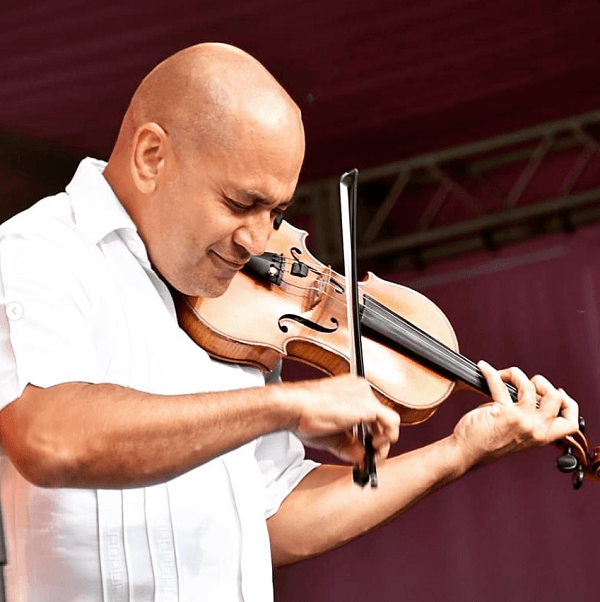
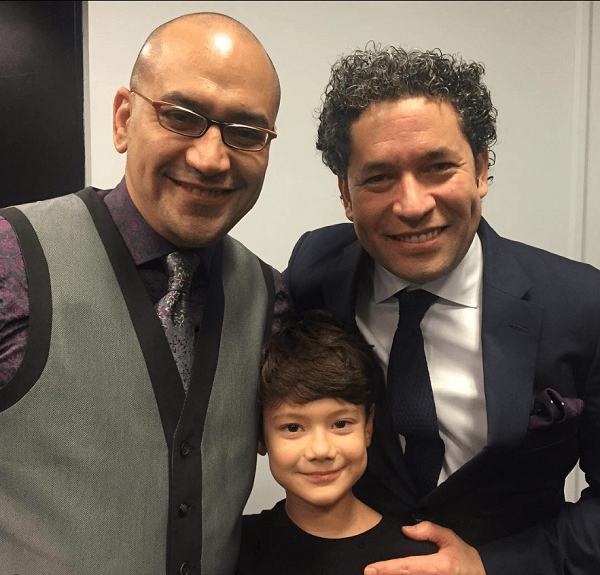
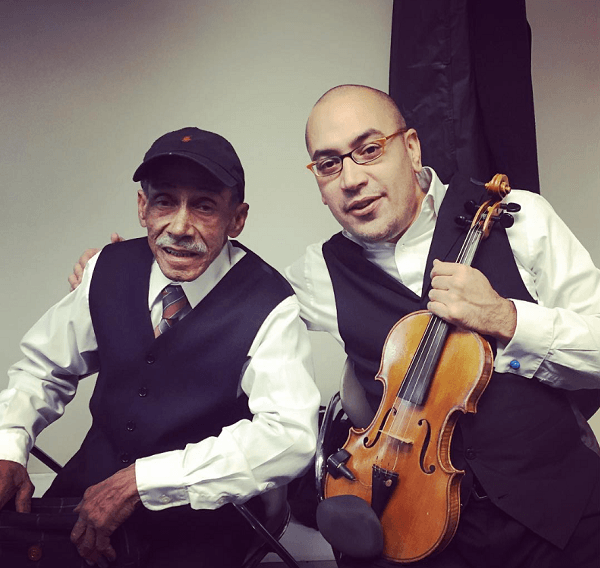
Venezuelan musician Alí Bello has become one of the best Latin music violinists in New York, so we could not miss the opportunity to talk to him and learn as much as we could about his fascinating story. The young man has given his best to become a true icon of Latin Jazz in his current city of residence, so do not miss this great conversation.

Alí’s beginnings in the world of music thanks to El Sistema
From a young age, Alí became interested in music, which led him to join the National System of Youth and Children’s Orchestras and Choirs of Venezuela, where he studied classical music as an extracurricular activity. This in order for Alí and his classmates to be busy in any activity until their parents came to pick them up after work.
This was when an orchestra or school of music was formed clase to his father’s work, so Bello was enrolled in these classes from 2 to 5 p.m. after school. So it went for him since he was in kindergarten, and he learned to play the xylophone and the recorder. When the boy was seven years old, the school orchestra located in La Rinconada, Caracas, was officially created, but due to how small Ali was, the only instrument the school could assign him according to his size was the violin, which he keeps playing diligently to this day.
After many years of being part of the National Youth Orchestra, he got ahead with his musical career and decided to go to the United States to continue his university studies and train as a professional musician.
Other instruments besides the violin
In addition to the violin, Alí also plays a lot of percussion, since he considers it very important. He thinks every folk and Latin musician must handle percussion as efficient as possible and each of its rhythms in order to internalize the style they want to play on any instrument.
“Percussion and singing have always fascinated me, so I try to devote myself to both even a little bit, but it is undeniable that the violin has always been my main instrument. I’ve tried to focus all styles and everything I work on towards the violin to turn it into the main element,” the musician added on this subject.

How the opportunity to study in the United States came about
Initially, Alí was supported by his violin teacher Margaret Pardee, who taught at the Juilliard School and went to Venezuela to give master classes. It was Pardee who encouraged Alí to continue his education in New York, which he finally achieved thanks to the Gran Mariscal de Ayacucho scholarship fund and the Simón Bolívar Musical Foundation.
This is how the Venezuelan artist obtained his bachelor’s degree, master’s degree, and PHD.
At college, he met Johnny Almendra, thanks to whom he discovered genres other than classical music, in which he was not only the performer of melodies but could also create his own music. He then discovered styles of Venezuelan and Latin music that inspired him to explore more varied rhythms different from what he had known before.
He played regularly with Johnny Almendra and his modern charanga group Los Jovenes del Barrio for a time and subsequently played for La Típica Novel and other orchestras. As Alí gained experience in the world of charanga and Latin music in general, he started having opportunities to learn and explore other genres such as Brazilian music, Afro-Cuban music, Latin jazz, and many more.
Collaborations with major artists in the industry
All this hard-won ground gave Alí the opportunity and the honor to collaborate with great artists in the industry such as Tito Puente, Eddie Palmieri, Johnny Pacheco, Rudy Calzado, Pedro Cortés, José Fajardo senior, Pupi Legarreta, and many more. All these figures helped him not only to have a better understanding of the Afro-Cuban style and tradition, but also of the influence of New York on music.

Thanks to this knowledge base, he had the courage to release a record album, La Charanga Syndicate, in which, as the name suggests, he uses charanga and all the influences coming from the musicians he has known and continues to know. For this reason, he feels he now has something to say and bring to the style.
Another important thing for his career was his participation in Jay-Z’s concert to celebrate the anniversary of the release of his first album. The rapper wanted to mark the occasion by playing with a symphony orchestra, so hired many musicians of all kinds to make a great show at Radio City Music Hall in New York. Fortunately for Ali, he was well-known in the music scene at the time, so he was contacted to participate in the event.
In that sense, the violinist is very happy to be in New York, as the world’s greatest artists always take this city into account for their concerts, which gives musicians like him the opportunity to have access to these great figures in the industry.
Ali as an arranger
In addition to being a percussionist and violinist, Ali has also ventured into musical arrangements quite successfully thanks to all the academic training he had received up until then. However, as he became a more experienced professional, he began to notice that his own ideas and thoughts came to life in his work. So, having the theory in his head, he could take those ideas he had had and develop them within the rhythmic and stylistic elements which are willing to use on each occasion.
In addition to that, the artist also works on production and mixing a bit to achieve the necessary sound. He even has his own studio where he plays for his own productions and other artists’ records as a freelancer.

Read also: Omar Ledezma Jr. shares with us the new from his project with Azesu
Julio Albino Y Su Secreto A Voces released ‘‘Pasaporte A Rumbero’’
After a few months of absence, we’re finally back with the batteries recharged to put a magnifying glass on the current projects of the best soneros right now. Today it is the turn of percussionist Julio Albino, who, as usual, delights us with every project he releases.
But before that, we are going with a bit of the artist’s story so that everyone can know him better.

A little bit about Julio Albino’s beginnings
Julio Albino, also known artistically as Junito, became interested in music in his homecity of New York, and after his subsequent return to Puerto Rico, this curiosity did nothing but grow as time went by. It was then that he started listening to the music of legendary names in the industry such as “El Rey de Los Timbales” Tito Puente and Oreste Vilato, who inspired him to join the San German’s school band to some extent. He would later pursue an artistic career through collaborations with more experienced artists.
He ventured into this world professionally in the 1960s, when he began to be taken into account by several of the greatest salseros of the time, such as Frankie Ruiz, Hector Tricoche, Marvin Santiago, Paquito Guzman, Junior Gonzalez, Los Hermanos Colon, Joe Quijano, among others.
There is no denying that each of these collaborations contributed to Julio making known his great talent as a percussionist, but he would not rest until he was able to form his own project, which he eventually achieved. That was how he founded his own orchestra, Julio Albino Y Su Orquesta Secreto A Voces.
Secreto A Veces
Thanks to all the effort invested in his career, Julio has managed to secure a place for his orchestra in the salsa scene, and his best-known musical works are proof of this. His big debut came in 2005 with the album ‘‘Bailalo’’, which ranked high on the charts in countries such as Italy.
Ten years later, he also released the album “Haciendo Ruido” and, the following year, he came with his single “Chachara Con Cua” and the promise of a new album. In 2018, he released “Edén Borinqueño” as his second promotional single, and shortly after, Julio released the full album, which he named “El Secreto Ya No Es Secreto”.

Pasaporte de Rumbero
In 2025, Julio once again showed why he deserves the place he has earned and released his new single “Pasaporte de Rumbero”, with which he looks to consecrate himself as a worthy heir to the soneros who previously gave him the opportunity to join their ranks. Similarly, he shows absolute respect for Afro-Caribbean culture and its deepest roots.
This joyful and energetic piece is not only a reflection of the Puerto Rican artist’s talent, but also of the strength and modernity of his orchestra, which is deeply connected to the Cuban musical tradition. From the very first seconds of the song, listeners can appreciate a festive street atmosphere, but at the same time with sophisticated percussion led by Julio himself, who boasts incredible technique that serves as a guide for the rest of the musicians accompanying him.
Among the members of the orchestra, we can mention trombonist Juan Colón, trumpeter Juan “Junito” León, saxophonist Ricardo Dávila, pianist Gabriel Rodríguez, and bassist Luis Rodríguez. Likewise, the lead vocalist is the charismatic singer Ángel Ríos, who contributes his exquisite phrasing and an enviable dominance of the clave at all times.
Omar Ledezma Jr. shares with us the new from his project with Azesu
Today’s guest needs no further introduction because you know him very well. This is the talented Venezuelan percussionist and singer Omar Ledezma Jr., with whom we have been able to talk about his latest projects, one of which gets him focused and excited in equal parts.

What is Omar Ledezma Jr. up to now?
After showing his gratitude for the latest of many invitations we have made to him in International Salsa Magazine, Omar went on to describe the new phase of his career, in which production plays a major role. We are talking about a project he has been involved in since 2011 called Azesu, which includes great musicians and is led by Cuban percussionist Orestes Vilato.
Although the initiative had progressed considerably, Omar and the rest of the group are still waiting for official communication from the social media of the organization that will fund the project by the artists who have applied for it. The group is awaiting approval, although they already have promotion, photos, and a series of details ready to be released once the financing becomes a reality.
What was required of Omar and the rest of the team to present the project
At the beginning, the idea of a recording was floated because this was one of the categories in which artists could apply for funding, so Omar and the others chose to pay tribute to Orestes Vilato. The organization loved the idea, which led them to be one of the groups chosen to receive this financial aid, and they are very happy about that.
However, not everything was rosy, as the members of Azesu could not find the right moment to start recording due to personal situations of some of them and the arrival of the pandemic. After overcoming all that, Jonathan Alford, the group’s pianist and overall director on the project, came to Omar with the idea of recording a second album (they had already recorded one in 2011, also called Azesu) to resume the project they had left behind.
It was then that the Venezuelan artist came up with the idea of paying tribute to Orestes and, in turn, bringing to life some of the lyrics written by his father, who passed away two years ago.
The material also seeks to be a tribute to that generation that is quickly departing, which is why Azesu tries to recreate those concepts and that way of making music, but at this time.

Timeline and objectives for the project
When Azesu released his first album in 2011, it all started with Orestes calling some of the group’s members, who were pianist Jonathan Alfort, Venezuelan singer María Fernanda Vázquez, Peruvian bassist David Pinto, and American saxophonist Sheldon Brawn.
The project is not conceived as a commercial album in every sense of the word, but as a hymn to Las Americas that has a little bit of everything, including jazz, folklore, popular music, dance music, and many more elements coming together to create a unique and different result.
It is also important to note that Azesu’s new album, next to release in 2016, will feature new tracks and covers with completely new versions in the style of Azesu, some of which will be sung and others instrumental. In addition, the new music was composed and arranged by Jonathan and David, although Omar also played an important role in the creative process when it comes to lyrics and melody. It is anticipated that they will enter the studio to start recording in about three weeks, and the album is expected to be released before the summer of 2026.

Omar and teaching
We have already addressed the issue of Omar and his role as a teacher in previous editions, so we wanted to know if he is still teaching and which capacity he is using. The musician replied that the teaching part has been and will remain very important in his overall project as an artist, as he believes that, due to his profession, he has a great responsibility to showcase the music he grew up with and the instruments that have allowed him to develop his career.
He currently teaches Latin percussion at the California Jazz Conservatory at Berklee, which is basically a summer ensemble where students learn to play congas, timbales, and bongos. During the rest of the year, he focuses on specific instruments and developing the tumbadora curriculum.
He also offers private lessons in which students can enjoy a much wider range of instruments to learn, such as drums, cajón, bongos, timbales, and much more.
Omar concluded this important topic by saying, “I always take on the idea of remaining a student. Just as I teach classes, I want to continue acquiring knowledge and taking classes with teachers who know many things I don’t.”
Read also: Caesar Vera Y Su Sexteto NuevoSon, traditional Cuban music with a touch of modernity
Dance With Joy Studios
North America / USA /
Dance With Joy Studios was created to be a positive force in your world by adding joyful moments to your day!

They are a movement art and activity center dedicated to making the world better one smile at a time!
Offering daily dance & fitness classes, group and private instruction, dance party socials, workshops and special event rentals!
Their programs are designed to support success for students of all levels, in an inspiring and encouraging atmosphere. Offering daily activities that enrich the mind, doby and spirit, we provide a wide variety of educational, cultural and physical activies for students of all ages. We offer excellent instruction in a community of passionate students and professionals who make it their goal to experience greater health and well being, present moment connection and joy, sharing the art of movement and music, fun and friendship.
With a lot a options of dancing, Dance with Joy Studio offers you…
Staying Healthy and Fit Should be Fun!
Dance with Joy provides many wonderful options for fun fitness for all ages and levels, 7 days a week. Which means you’ll be able to find the fitness call that’s just right for you!
Connect with yourself & others through Dance!

Dance With Joy Studios offers a wide range of fun partner dancing classes for all levels, 7 days a week! From West Coast Swing to East Coast Swing, Salsa, Ballroom, Argentine Tango, Rueda de Casino, Brazilian Zouk, and much more!
From Flamenco Dancing to Hip-Hop, Jazz and Tap, they have something for you!
Solo dancing classes for ALL ages and levels abound at Dance With Joy Studios! Whether you’re looking for a fun Hip-Hop, Jazz, Belly Dance, Flamenco, Brazilian Samba, Hula, Tahitian, or Tap class, Dance with Joy Studios has you covered.
Dance With Joy offers a wide spectrum of fun youth classes for students ages 1 to 18 years!
Dance with Joy Studios offers a youth program focused on the joy of movement and dance, community building, kindness, and the development of self-confidence and self-esteem in a supportive, fun environment. Our youth program is divided into three categories: Tiny Toes, Kids, and Teens.
Private Lessons
Private lessons (1 or 2 students with a teacher) are an opportunity for one-onone coaching from one of our wonderful teachers. Students often learn faster in a private lesson than in a group class with this opportunity for individual attention, learning at their own pace. Teachers make it fun and easy for beginners and advanced dancers alike. Recommended for all dancers, private lessons, when used in conjunction with group classes and practice, can speed up a student’s progress exponentially.

Private lessons address and improve the following important areas:
- Skills of Leading and Following ~ Connection & Communication
- Technique ~ Footwork, Styling, Spins/Turns, Cuban Motion, Body Isolations
- Timing & Rhythm ~ Music Education
- Dance Etiquette ~ Tips for Social Dancing Success!
- Ways of Learning ~ Kinesthetic, Visual, Auditory