• Skip to primary navigation
  • Skip to main content

International Salsa Magazine

  • HOME
  • Previous editions
    • 2026
      • ISM / March 2026
      • ISM / February 2026
      • ISM / January 2026
    • 2025
      • ISM / December 2025
      • ISM / November 2025
      • ISM / October 2025
      • ISM / September 2025
      • ISM / August 2025
      • ISM / July 2025
      • ISM / June 2025
      • ISM / May2025
      • ISM / April 2025
      • ISM / March 2025
      • ISM / February 2025
      • ISM / January 2025
    • 2024
      • ISM / December 2024
      • ISM / November 2024
      • ISM / October 2024
      • ISM / September 2024
      • ISM / August 2024
      • ISM / July 2024
      • ISM / June 2024
      • ISM / May 2024
      • ISM / April 2024
      • ISM / March 2024
      • ISM / February 2024
      • ISM / January 2024
    • 2023
      • ISM / December 2023
      • ISM / November 2023
      • ISM / October 2023
      • ISM – September 2023
      • ISM – August 2023
      • ISM July 2023
      • ISM Edition June 2023
      • ISM – May 2023
      • ISM April 2023
      • ISM March 2023
      • ISM February 2023
      • ISM January 2023
    • 2022
      • ISM December 2022
      • ISM November 2022
      • ISM October 2022
      • ISM September 2022
      • ISM August 2022
      • ISM July 2022
      • ISM June 2022
      • ISM May 2022
      • ISM February 2022
      • ISM January 2022
    • 2021
      • ISM December 2021
      • ISM November 2021
      • ISM October – 2021
      • ISM September 2021
      • ISM August 2021
      • ISM July 2021
      • ISM May 2021
      • ISM April 2021
      • ISM June 2021
      • ISM March 2021
      • ISM February 2021
      • ISM January 2021
    • 2020
      • ISM December 2020
      • ISM November 2020
      • ISM October 2020
      • ISM September 2020
      • ISM August 2020
      • ISM July 2020
      • ISM June 2020
      • ISM May 2020
      • ISM April 2020
      • ISM March 2020
      • ISM February 2020
      • ISM January 2020
    • 2019
      • ISM December 2019
      • ISM November 2019
      • ISM October 2019
      • ISM Septembre 2019
      • ISM August 2019
      • ISM July 2019
      • ISM June 2019
  • Download Salsa App
    • Android
    • Apple
  • Spanish

Search Results for: Cuban

Roberto Rodríguez was a Cuban trumpet player and composer, author of Ray Barreto’s hit song “Que viva la Música” (Long Live Music)

Roberto Reimundo Rodríguez (Cienfuegos, January 23, 1936 – April 18, 1988), was a Cuban trumpeter and composer, who belonged to Ray Barreto’s orchestra, which he would later leave to belong to Fania All-Stars, as lead trumpet player.

Roberto is the author of Ray Barreto’s hit “Que viva la música”.

Roberto was born in 1938, in Cienfuegos (Cuba). He began his musical career at the age of 12, in his native province; cradle of the world famous Orquesta Aragón.
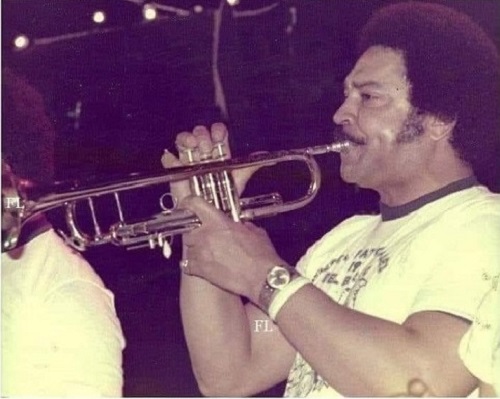
 

Roberto Rodríguez
Roberto Rodríguez

From an early age he participated in “Las Comparsas de Cuba” and with the orchestra “La Unión Fraternal de Cienfuegos”.

In 1955, he emigrated to the United States and in 1957 he married Nancy Zayas, with whom he had three sons: Roberto Jr., William and Richard.

While growing as an artist, Roberto co-founded the orchestra “Los Jóvenes Estrellas de Cuba” with his long-time friend Ernie Stairs. He later moved on to Wilfredo Figueroa’s orchestra and “Ritmo Swing”.

In 1965, Roberto was recommended to Ray Barreto by Eddie Martinez. Eddie was a pianist for both the TataVazquez and Ray Barretto orchestras.

After listening to Roberto, Ray Barretto recognized that he was in contract with Vivar, one of his former colleagues and musicians, and brought him on board. Roberto remained in Ray’s orchestra for 11 years.

His performance as first trumpet soloist was extraordinary. While in Ray’s orchestra, Roberto composed several famous songs such as: “Yo Soy La Candela”, “Fuego y Pa’Lante”, “Invitación al Son”, “Cienfuegos, Perla del Sur”, “Se Traba”, “El Tiempo lo Dirá”, “O’Elefante”, and the worldwide hit: “Que Viva la Música”.

Roberto Rodríguez
Que viva la música

In 1972, Roberto became a member of the Fania All-Stars as first trumpet and soloist. The documentary “Our Latin Thing” launched Roberto along with the other members of the All-Stars to international fame.

Our Latin Thing

On August 26, 1971 New York City gave birth to a sound that would change Latin music forever. That night at the renowned Cheetah nightclub, the Fania All Stars took the stage with their unique sound that echoed across all borders and reached every country. Fania Records re-releases “Our Latin Thing” on DVD, the film that sparked the salsa movement of the seventies.

Roberto Rodríguez
Our Latin Thing (Nuestra Cosa)

From the concert came a double LP entitled “Live At The Cheetah” and the historic film “Our Latin Thing”. Its director, Leon Gast, documented the events at the Cheetah with the addition of footage of the musicians in the recording studio and scenes of New York’s Spanish Harlem.

The 40th anniversary edition of “Our Latin Thing” includes a DVD with the remastered film, and two CDs with the music from the film and some additional tracks, which can be purchased on the label’s official website.

In 1975, Ray decided to take a turn towards a new musical facet and Roberto became part of the group “Los Kimbos”.
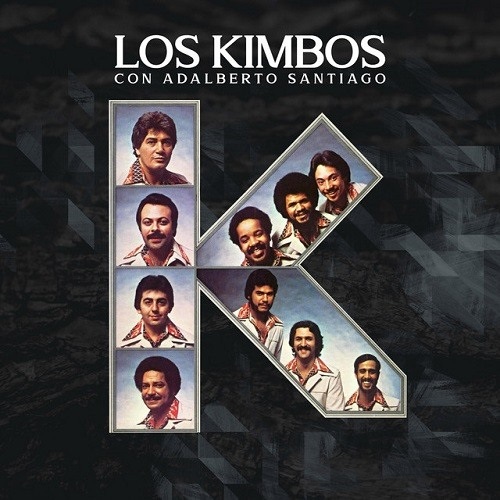
Roberto Rodríguez
Los Kimbos

Two years later, in 1977, Roberto joined the charanga band “Orquesta Broadway”. In this group he not only excelled as a trumpet soloist but also as a vocalist. Here he composed new hits, including: “No Se Va a Poder” and “Como Nueva York no Hay”.

In 1982, Roberto decided to assist his sons in their desire to continue their musical journey and produced the album: “Roberto Rodríguez Presenta a Los Rodríguez”, under the “Combo Records” label.
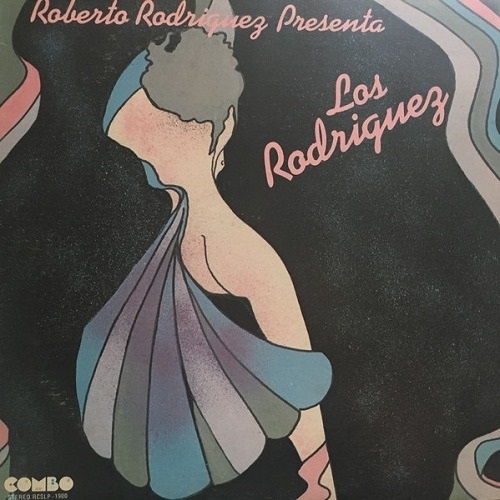
Roberto Rodrígue
Roberto Rodríguez Presenta a Los Rodríguez

In 1983, Roberto joined the “Los Rodriguez” Orchestra, to perform with his sons Roberto Jr (trumpet player) and Willie (bass player).

His health deteriorated in early 1988, and he finally passed away in April of that year, victim of skin cancer. His son Roberto Rodriguez Jr. followed in his footsteps and has excelled in salsa orchestras in New York.

 Roberto Rodríguez was a Cuban trumpet player and composer

Read Also: Miguelito Cuní recognized among the best soneros of Cuba


Francisco Aguabella “El Tamborero de Cuba” Bravo and Virtuoso Percussionist of Afro-Cuban Ritual Music

Aguabella was born on October 10, 1925 and grew up in the drumming tradition of Matanzas in Cuba.

On May 8, 2010, Francisco Aguabella “El Tamborero de Cuba” passed away in Los Angeles, United States. Bravo and virtuoso percussionist of Afro-Cuban ritual music, Latin/jazz and jazz.

Of remembered links to Tito Puente’s band, Mongo Santamaría, Cachao López, Eddie Palmieri, Dizzy Gillespie, Frank Sinatra, Jorge Santana’s group “Malo” and his own “Latin Jazz Emsemble”.

Aguabella nació el 10 de octubre de 1925 y se crio en la tradición de los tambores de Matanzas en Cuba

In 1953 he emigrated to the United States and settled in California as an olu batá (bata drummer).

Batá drumming is a ceremonial musical style that plays an integral role in the African-derived Santeria religion practiced in Cuba, Puerto Rico and since the 1950s in the United States.

No other music of the Americas bears a more striking similarity to West African music than the batá. Its set of three double cone drums reproduces the Nigerian Yoruba drum set of the same name.

Francisco Aguabella “El Tamborero de Cuba” Bravo y Virtuoso Percusionista de la música ritual afrocubana

Many of the rhythms closely resemble their African prototypes, and the Afro-Cuban language of Lucumí, in which Aguabella sings, is clearly a derivation of Yoruba.

Prior to 1980, Aguabella and Julito Collazo were the only olu batá in the United States who had been initiated into a secret society of drummers designated to perform a very sacred type of batá known as batá fundamento .

The batá fundamento is an integral part of Santeria ceremonies in which an individual’s initiation into the religion cannot be consecrated unless he or she has been presented before this sacred ensemble.

Each year Aguabella builds a shrine for his patron saint, Santa Barbara (Changó), and plays music at a birthday party held in her honor.

Francisco Aguabella “El Tamborero de Cuba”

It’s an all-day celebration for invited friends who are primarily but, not exclusively members of the Santeria sect “Santa Barbara knows it’s her birthday,” Aguabella said, “I know how she feels.

She feels happy if I honor her, I feel bad if I don’t so on St. Barbara’s day every December 4 whatever work I am doing today I don’t do for anyone, I love this saint very much and I promised her I was going to have a party every year.

Se recuerda sus vinculaciones a la Banda de Tito Puente, Mongo Santamaría, Cachao López, Eddie Palmieri, Dizzy Gillespie, Frank Sinatra, el grupo Malo

Although Aguabella is widely respected for his sacred drumming he is also known for his virtuosity in the secular forms of Afro-Cuban music.

Choreographer Katherine Dunham was so impressed with Aguabella’s drumming that she invited him to join her company for tours of South America and Europe.

The most influential of Aguabella’s secular styles is rumba, a complex of several musical genres that evolved in Cuba in the early 20th century.

Rumba was the basis for much of the Cuban dance hall music that in turn helped shape American popular music through dance bands based throughout the United States.

However Afro-Cuban rumba bears little resemblance to the ballroom dance rumba that inspired Francisco. Rumba as Aguabella said is part of daily life for many Afro-Cubans, it doesn’t have to be a special day to play rumba, we could start a rumba here without a drum.

You could play it here or there on the wall, in Cuba rumba is 24 hours a day, we gather in a corner and have a glass of rum…. And someone says: Why don’t we play a little rumba?  Some people touch the wall and someone else plays a bottle and maybe takes a cap off the bottle and ‘ca ca ca ca ca ca ca ca ca’ and the Rumba.”

Aguabella’s goal has long been to maintain the integrity of the tradition he so respects, while incorporating it into “crossover” music aimed at a wider audience.

It was his superior musical ability and commitment to tradition that led musicians such as Mongo Santamaria, Malo and Carlos Santana to bring him into their groups.

Cubacan Francisco Aguabella Año 2002

Aguabella lived in Los Angeles; where he continued to performand exert a great influence on Latin American music.

Afrontilas Music

Read Also:  Tata Güines known as Manos de Oro, Cuban rumbero and percussionist

Azúcar Club Cubano of São Paulo

Latin America / Brasil / São Paulo

Get to know the Azucar Club Cubano of São Paulo

Azúcar Club Cubano
Azúcar Club Cubano

In Brazil there is a great variety of Latin clubs where you can enjoy pleasant music, if what you want is to dance Merengue, Salsa and Cumbia, you can go visit the “Azúcar Club Cubano” which is located at Rua Dr. Mário Ferraz, 423 Itaim – Bibi , São Paulo, Brazil; which was inaugurated in August of the year 2000; being the first Latin house in Sao Paulo at that time thanks to the Latin inspiration with its coquettish and great Caribbean music. It is currently recognized for being very cheerful and with excellent service where it had great successes and that to this day opens its doors to all people who like Latin rhythms.

Inside of Azúcar Club Cubano

They also have a bar where the most requested drinks are Rum and Tequila and among their cocktails are “El Margarita”, “El margarita con Tequila” and “Mojito”, the latter known as the best in all of Sao Paulo; They also have a varied menu.

Rumba inside the Azúcar Club Cubano

The Club opens its doors to the public from Tuesday to Friday from 19:00 hrs (7:00 pm) and Saturdays at 20:00 hrs (8:00 pm) and there one can pay with any credit or debit card.

For more information:

  • Website: http://www.azul.com.br
  • Facebook: https://www.facebook.com/azulclubcubano/
  • E-mail: [email protected]
  • Telephone: +55 11 3074.3737

Bebo Valdés is considered one of the central figures of the golden age of Cuban music

On March 22, 2013 in Stockholm, Sweden, Dionisio Ramón Emilio Valdés Amaro, better known as Bebo Valdés, died.

He was an excellent musician of Cuban music and Afro-Cuban jazz, considered one of the central figures of the golden age of Cuban music.

In addition to being a pianist, his best known facet, he has been a composer, arranger and orchestra conductor.

He was born in Quivicán, Cuba, on October 9, 1918. He was the father of the Afro-Cuban jazz pianist Chucho Valdés (b. 1941). From 1931 to 1935 he studied piano in his hometown with Moraima González; in 1936 he moved with his family to Havana, where he studied music theory, harmony and composition with Oscar Bofartigue.

In 1938 he made his professional debut with Happy D’Ulacia’s orchestra. He played in Havana, since the 1940s, in the orchestras Ulacia, García Curbelo, Julio Cueva and Orquesta Tropicana, and recorded albums with groups dedicated to performing Afro-Cuban jazz.2

Known among his family and friends by the affectionate nickname of Caballón because of his considerable stature, he composed mambos, such as La rareza del siglo, which covers the genre recently introduced by Pérez Prado and which would change the course of Cuban music. From 1948 until 1957, he worked at the Tropicana cabaret as pianist and arranger for Rita Montaner.

The Sabor de Cuba orchestra, of Bebo Valdés, and that of Armando Romeu, made the show of this night club, in which Valdés stopped performing in 1957, when he was hired by Ernesto Roca, of the Peer International Music Publishers, to make arrangements for Xiomara Alfaro and Pío Leyva; at the same time, he joined Guillermo Álvarez Guedez, of the Panart and Rolando Laserie in Radio Progreso. With his orchestra Sabor de Cuba, he accompanied singers Reinaldo Henríquez, Orlando Guerra (Cascarita), Pío Leyva and Ada Rex; Beny Moré also sang with this group, and Chucho Valdés made his debut.

About the descarga or jam session, there are multiple versions, this is the one by Bebo Valdés which, due to the concreteness of data, dates and record labels that made the recordings, is the most objective: “One night in October 1952, I was resting in a cabaret in Havana with members of the Tropicana orchestra.

Bebo Valdés Fue un excelente músico de música cubana y jazz afrocubano, considerado como una de las figuras centrales de la época dorada de la música

It is important to know that since 1948, Cuban, Mexican or even American musicians used to meet on Sunday afternoons at the Tropicana to play descarga, in the course of which we mixed jazz and Cuban rhythms.

Sometimes the descargas were held at four o’clock in the morning, at the end of the [Tropicana] show. The percussionist Guillermo Barreto was the one who animated them; we had received Roy Haynes, Kenny Drew, Sarah Vaughan, Richard Davis and many other musicians passing through; in fact, all the great names of jazz paraded through the Tropicana.

All of that could have been recorded, but no one was interested. So, that night Irving Price, the owner of a record store on Galiano Street, announces to me that producer Norman Granz is in town and that he can’t believe that Cuban musicians are capable of playing jazz.

Granz and Price ask me to go to the studio to record. It was September 16, 1952. So, I called some musicians, but I myself was late for the session, because in the morning I had another recording for RCA: I was going to accompany a singer! When I finally arrived at Panart’s studio, Granz had already left for the United States.

We called the orchestra The Andre’s All Star, after the name of Irving Price’s record store. We had decided to play classic jazz tunes, such as Distrust, Taboo, Sleep and Blues for Andre. At the end of the session, as there were still a few minutes available for the record, I started playing a riff, from which we improvised. We called that track “Con poco coco.”

The record was titled Cubano! and the participating musicians were all from the Tropicana cabaret: Gustavo Más, tenor saxophone; Alejandro Vivar (El Negro Vivar), trumpet; Kiki Hernández, double bass; Guillermo Barreto, timbal; Rolando Alfonso, tumbadora and Bebo Valdés, piano.

The works it contains are the same as those mentioned by Bebo Valdés, and the label, Mercury. In 1955, Bebo Valdés recorded, in the studios of Radio Progreso, Holiday Habana and She Adores the Latin Type, for the Decca label, which contained mambo, chachachá, bolero, jazz descarga, even jazz with bebop tendencies.

According to Luc Delannoy, in 1956 the Panart recorded Cuban Jam Session, with Julio Gutiérrez and Pedro Jústiz (Peruchín), as directors, and the musicians Alejandro Vivar (El Negro Vivar), Edilberto Escrich, Osvaldo Urrutia (Mosquifin), Emilio Peñalver, José Silva (CHombo), Juan Pablo Miranda, Salvador Vivar, Jesús Esquijarrosa (Chucho), Oscar Valdés, father, Marcelino Valdés, Walfredo de los Reyes and José Antonio Méndez. The participation of Israel López (Cachao) in a descarga did not occur until 1957, when the Panart recorded Descargas cubanas, with the participation of Cachao himself, Guillermo Barreto, Gustavo Tamayo, Rogelio Iglesias, Richard Egües, Andrés Hechavarría (El Niño Rivera), Rolito Pérez, Alfredo León, Arístides Soto (Tata Güines), Alejandro Vivar (El Negro Vivar), Generoso Jiménez, Orestes López (Macho), Emilio Peñalver and Virgilio Vixama. In other years, there were also recordings of downloads, and some unrecorded ones, such as those recalled by Leonardo Acosta at the Cuban Jazz Club, held between 1958 and 1960, with the participation of Pedro Jústiz (Peruchín), piano; Guillermo Barreto, drums and pailas, and Arístides Soto (Tata Güines), tumbadora (drums). This proves -or at least shows another side of the coin- that Bebo Valdés was one of the initiators of descarga in Cuba, a resource used by Cuban musicians in the most diverse instrumental formats, genres and styles of our popular music, as, for example, did the composers of the filin movement.

On June 8, 1952, with a band of twenty musicians, Bebo unveiled the batanga rhythm in the studios of RHC Cadena Azul; among the three singers in the orchestra was Beny Moré.

Bebo Valdés un virtuoso de la música cubana

That same year he travels to Mexico with the purpose of recording a disc with this new modality of Cuban music, which also included a new choreography; they were not successful, and, according to Bebo Valdés, “the batanga died a natural death”.

When he left Cuba in 1960 due to disagreements with the Cuban government, Bebo also abandoned his family, his wife Pilar Valdés and his five children (including Chucho). Bebo Valdés goes to Mexico, then moves to Los Angeles, California, where he works with singer Miguelito Valdés; from there he travels to Spain, where he records two albums as director of the orchestra that accompanies Chilean singer Lucho Gatica.

Later he toured England, France, Holland, Germany and Finland with the Lecuona Cuban Boys. In 1963 he settled in Sweden, and worked with the Hatuey Orchestra, a Swedish group playing Cuban music. In Sweden he formed a new family when he married in 1963.

International career

After thirty years of relative anonymity, on November 25, 1994, Valdés received a call from Paquito D’Rivera, who invited him to record a new album in Germany for the Messidor label. A new beginning in his career took place at the age of 76 with the recording of Bebo Rides Again.

He participated in Fernando Trueba’s film Calle 54, along with, among others, pianist and composer Chucho Valdés, Paquito D’Rivera, Elaine Elías, Chano Domínguez, Jerry González, Michel Camilo, Leandro J. Barbieri (Gato Barbieri), Ernesto Antonio Puente (Tito Puente), Arturo O’Farrill (Chico), Israel López (Cachao), Orlando Ríos (Puntilla) and Carlos Valdés (Patato).

In 2004 he traveled to Salvador de Bahia, Brazil, to participate in Trueba’s film El milagro de Candeal, along with Carlinhos Brown, Marisa Monte, Mateus Aleluia and César Mendez.

Bebo y Chucho Valdés una verdadera dinastía de la Música Cubana

An integral musician capable of tackling the most diverse genres and styles of music, not only as a pianist and composer, but also as an orchestrator and orchestra conductor of sublime values; of solid technical training, both theoretical and pianistic, Bebo Valdés is one of the all-time greats of Cuban music. He was, with Israel López (Cachao) and Patato Valdés, nominated for the Latin Grammy Award for El arte del sabor, best traditional tropical album 2002.

In 2002, Fernando Trueba produced Lágrimas negras, an album that unites flamenco singer Diego el Cigala with Bebo Valdés on piano.

After its release in 2003, it became an international success, recognized with a Grammy, three Music Awards, an Ondas Award, five Amigo Awards, three Platinum Discs in Spain and one each in Argentina, Mexico and Venezuela. The New York Times praised the album as Best Latin Music Album of the Year and opened the doors to a tour of Paris, New York, London, Havana, Buenos Aires, Tokyo, Mexico City, Madrid and Barcelona, among others. By the end of 2004 the album had sold more than 700,000 copies worldwide.

He retired to Benalmádena, a village in the province of Málaga (Spain), until his death in Stockholm (Sweden).

Chucho Valdés

Read also: Carlos “Patato” Valdés one of the best percussionists in the history of Latin Jazz

Tata Güines known as Manos de Oro, Cuban rumbero and percussionist

Known as Manos de Oro, he modernized the tumbadoras and played with the most important musicians of the island of Cuba.

He was born in Güines, Havana on June 30, 1930, in the bosom of a family of musicians, son of Joseíto “El tresero” and Niñita, who from a very young age used to play a boot-cleaning box in the corner of the Chapel of Santa Bárbara, in the legendary neighborhood of Leguina, where so many congas and bembés have been made and will continue to be enjoyed.

Artistic trajectory

Saying Federico Arístides Soto Alejo may not say anything to some music neophytes, but when you say Tata Güines, things change radically and everyone thinks: That is the tumbadora made soul and flavor.

Tata Güines conocido como Manos de Oro, modernizó las tumbadoras y tocó con los más relevantes músicos de la isla de Cuba

He became attached to percussion instruments, especially the tumbadora, which, as a Cuban, groaned under the effect of his prodigious hands. Under the influence of Chano Pozo, whose touches bewitched him and gave him the key to create his own style.

He was formed as a musician among the drums and the religious festivities of his neighborhood. He adopted his nickname as a child -el Tata-, and as a surname the name of the town where he grew up. Music was in his blood: his father and uncles made music with their hides.

He played double bass in the group Ases del Ritmo. He was part of the Partagás group, led by his uncle Dionisio Martínez, and later founded the Estrellas Nacientes orchestra and performed with the Swing Casino orchestra in Güines.

In 1946 he performed in his hometown with the Conjunto de Arsenio Rodríguez.

Tata Güines, rumbero y percusionista cubano

}In 1948 he moved to Havana, where he was a member of the orchestras La Nueva América, led by Pao Domini; La Habana Sport led by José Antonio Díaz, Unión, led by Orestes López, La Sensación led by Belisario López, and in 1952 he joined Fajardo y sus Estrellas, with which he traveled to New York in 1956.

He joined Los Jóvenes del Cayo, with which he appeared on the radio station La Voz del Aire; later he performed with the ensembles Camacho and Gloria Matancera.

He accompanied the trio Taicuba as a bongo player, and worked with Guillermo Portabales, Celina y Reutilio, and Ramón Veloz. He participated, along with Chano Pozo, in the comparsa Los Dandys de Belén; also, Los Mosqueteros del Rey, Los Mambises and Las Boyeras.

He recorded with Arturo O’Farrill (Chico) and with Cachao y su Ritmo Caliente, Frank Emilio, Guillermo Barreto, Gustavo Tamayo and others. He was part of the Quinteto Instrumental de Música Moderna (later Los Amigos), led by pianist Frank Emilio; Guillermo Barreto, timbal, Gustavo Tamayo, güiro, Israel López (Cachao) and Orlando Hernández (Papito), double bass.

In 1955 he travels to Caracas, Venezuela, to participate in the carnivals of that city. He traveled to New York with the Fajardo y sus Estrellas orchestra, with which he performed at the Palladium, where he coincided with Machito y sus Afro-Cubans and Benny Moré, whom he accompanied on the tumbadora; he also performed at the Waldorf Astoria Hotel, where he worked for the first time as a soloist.

Tata Güines nació en Güines, La Habana

He prepared a show and shared the stage with Josephine Baker, Frank Sinatra, Maynard Ferguson and Los Chavales de España, with whom he recorded the piece “No te puedo querer”.

In 1960 he returned to Cuba. Four years later he founded Los Tatagüinitos. He offered a concert with the National Symphony Orchestra, conducted by Manuel Duchesne Cuzán, with which he performed his work Perico no llores más. He accompanied the guitarist and composer Sergio Vitier in his work Ad Libitum, danced by Alicia Alonso and Antonio Gades.

International tours

He toured California, Chicago, Miami, Puerto Rico, Panama, Venezuela, Colombia, Mexico, Martinique, Monte Carlo, Switzerland, Bulgaria, Hungary, where he participated in the Jazz Festival; Soviet Union, Finland, Spain.

Musical Validity

Tata Güines was a master of masters of Cuban percussion. His death represents a notable loss for Cuban culture. Nobody like him in Cuba to make percussion an art.

In front of Tata Güines, the leather of the drum seemed the most delicate and expensive silk. He would place his agile hand on the tanned skin stretched by the fire, and with his fingernails he would achieve the saddest of laments as well as the most contagious smile.

Few knew him as Federico Arístides Soto Alejo, but everyone knew that he had modernized the tumbadoras, that he was a master at placing the “loose” beats in a song, as if “carelessly”, but that the piece could not survive if it lacked that imprint of someone who let himself be carried away by the rhythm of the claves, by his very fine ear and by the demands of a body accustomed, since he was almost a child, to music.

He died on February 4, 2008 in Güines, Havana.

Federico Arístides Soto Alejo Tata Güines

Awards and recognitions

National Music Award 2006

Félix Varela Order 2004

Alejo Carpentier Medal 2002

Tataguines Soto Martinez

Read also: Carlos “Patato” Valdés one of the best percussionists in the history of Latin Jazz

  • « Go to Previous Page
  • Page 1
  • Interim pages omitted …
  • Page 4
  • Page 5
  • Page 6
  • Page 7
  • Page 8
  • Interim pages omitted …
  • Page 114
  • Go to Next Page »

International Salsa Magazine (ISM) is a monthly publication about Salsa activities around the world, that has been publishing since 2007. It is a world network of volunteers coordinated by ISM Magazine. We are working to strengthen all the events by working together.