• Skip to primary navigation
  • Skip to main content

International Salsa Magazine

  • HOME
  • Previous editions
    • 2026
      • ISM / April 2026
      • ISM / March 2026
      • ISM / February 2026
      • ISM / January 2026
    • 2025
      • ISM / December 2025
      • ISM / November 2025
      • ISM / October 2025
      • ISM / September 2025
      • ISM / August 2025
      • ISM / July 2025
      • ISM / June 2025
      • ISM / May2025
      • ISM / April 2025
      • ISM / March 2025
      • ISM / February 2025
      • ISM / January 2025
    • 2024
      • ISM / December 2024
      • ISM / November 2024
      • ISM / October 2024
      • ISM / September 2024
      • ISM / August 2024
      • ISM / July 2024
      • ISM / June 2024
      • ISM / May 2024
      • ISM / April 2024
      • ISM / March 2024
      • ISM / February 2024
      • ISM / January 2024
    • 2023
      • ISM / December 2023
      • ISM / November 2023
      • ISM / October 2023
      • ISM – September 2023
      • ISM – August 2023
      • ISM July 2023
      • ISM Edition June 2023
      • ISM – May 2023
      • ISM April 2023
      • ISM March 2023
      • ISM February 2023
      • ISM January 2023
    • 2022
      • ISM December 2022
      • ISM November 2022
      • ISM October 2022
      • ISM September 2022
      • ISM August 2022
      • ISM July 2022
      • ISM June 2022
      • ISM May 2022
      • ISM February 2022
      • ISM January 2022
    • 2021
      • ISM December 2021
      • ISM November 2021
      • ISM October – 2021
      • ISM September 2021
      • ISM August 2021
      • ISM July 2021
      • ISM May 2021
      • ISM April 2021
      • ISM June 2021
      • ISM March 2021
      • ISM February 2021
      • ISM January 2021
    • 2020
      • ISM December 2020
      • ISM November 2020
      • ISM October 2020
      • ISM September 2020
      • ISM August 2020
      • ISM July 2020
      • ISM June 2020
      • ISM May 2020
      • ISM April 2020
      • ISM March 2020
      • ISM February 2020
      • ISM January 2020
    • 2019
      • ISM December 2019
      • ISM November 2019
      • ISM October 2019
      • ISM Septembre 2019
      • ISM August 2019
      • ISM July 2019
      • ISM June 2019
    • 2016
      • ISM December 2016
  • Spanish
  • Download Salsa App
    • Android
    • Apple

Search Results for: Cuban

Yilian Cañizares, an excellent Cuban musician, studied in her hometown in the strictest tradition of the Russian school of violin

Yilian Cañizares is a Cuban and Swiss musician. She has lived in Switzerland since 2000.

Born in Havana, Yilian Cañizares began studying violin in her hometown, in the strictest tradition of the Russian violin school.

At the age of 14 she obtained a scholarship in Caracas and in 2000 she moved to Switzerland to complete her studies at the Freiburg Conservatory.

Soon after, the main orchestras in the area began to contact her and once settled in Lausanne, she collaborated for six years with different ensembles.
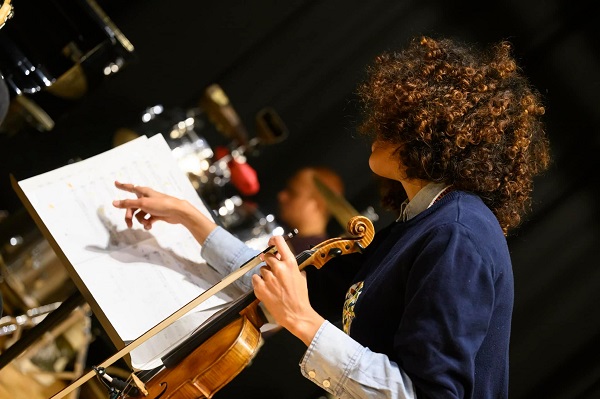
Yilian Cañizares excellent Cuban musician

In Switzerland, she opened up to jazz and decided to embark on a new musical path, including singing in her career as a professional artist.

It was during this period that the artist decided to form a quartet with musicians from Germany, Venezuela and Switzerland (and later Cuba), and the group “Ochumare” was born, with which, just six months after its creation, in 2008, she won the prize of the Montreux Jazz Festival Competition.

From that moment on, his career has been growing steadily. In recent years, she has shared the stage with Ibrahim Maalouf, Omar Sosa, Youn Sun Nah, Richard Bona, Chucho Valdés, Roberto Fonseca, Dhafer Youssef, the Lausanne Chamber Orchestra and El Comité.

She also teaches violin at the Ecole de jazz et de musique actuelle de Lausanne (EJMA).

The success of her albums “Ochumare”, an independent production released in 2013, followed by “Invocación”, under the direction of Alê Siqueira (who has collaborated with Roberto Fonseca, Omara Portuondo), has consolidated her notoriety as an innovative artist, capable of venturing and transcending musical boundaries.

Yilian Cañizares, an excellent Cuban musician, studied in her hometown in the strictest tradition of the Russian school of violin.

She was listed by the French weekly Le Nouvel Observateur as “revelation artist of the year” for her great virtuosity and charisma with which she is able to sing and play the violin.

“My sound reflects the richness and mix of cultures that I carry with me to this day and represents who I am: woman, Cuban, musician and citizen of the world”, said the artist.

Her second album “Invocación” reached the top of the Qobuz – World Music chart and was re-released in a Deluxe edition.

“Aguas”, the album produced in collaboration with Omar Sosa, saw the light of day in October 2018.

Accompanied by another compatriot, Inor Sotolongo on percussion, the duo created an intimate and personal album that reflects the views of two generations of Cuban artists living far from their homeland.

This album is a mix of energetic rhythms and emotional ballads that clearly reflect the unparalleled musical chemistry that exists between the two artists.

It constitutes a powerful and unique fusion of Afro-Cuban roots, classical music and jazz.

On November 15, 2019 was released the new album “Erzulie”, with its new formation Yilian Cañizares & The Maroons and dedicated to the Haitian deity of love and freedom.

This album was recorded in New Orleans and features the participation of numerous guests such as Christian Scott (trumpet), Michael League (double bass), Bill Laurance (piano), Bobby Sparks (organ) and Justin Stanton (keyboards).

Yilian Cañizares es una música cubana y suiza. Vive en Suiza desde 2000.

His style reflects the variety of his influences, with touches of jazz, classical music, Cuban music, with a large space left to improvisation.

The French magazine Les Inrockuptibles speaks of a jazz orchestration mixed with Yoruba ritual percussions.

She sings in Spanish, Yoruba and French and one of her distinctive features is that she sings and plays the violin at the same time.

There are so many influences on this album; Cuban, jazz, Venezuelan, Swiss, that it is difficult to pinpoint in each song which track falls into which category. In fact, they don’t.

Today it is too easy to want to pigeonhole music into one category: this is jazz; this is soul; this is funk. Yilian Canizares, in this wonderful album, breaks the stereotypes and that is why it is a pleasure to listen to it.

Sweet musical outbursts, explosions of improvisation that jump all over the place. He even finds a place to rap on “Iya Mi” and, obviously, it’s brilliant!

If we had to put a label on it, which I’m not thrilled about, I’d say this is a warm jazz album with Latin infused touches and tricks.

The meandering melody of “Beroni Abebe Osun”, the first track on the album, is a good indicator of this.

The throbbing bass, the heartbeat of the track, with its plucked violin, the blood pumping through his veins.

Cañizares is also a linguist, in case that wasn’t enough for us all to admire her.

The way he transitions from Spanish to perfect syllable-perfect French in his version of Edith Piaf’s “Je Ne Regrette Rien” (a beautiful version, by the way) is seamless and you could be forgiven for thinking it’s his first language.

It’s not easy to cover songs as big as Piaf’s classic, but Cañizares does it with style, class and, most importantly, grace.

Anything less than grace in a song like this makes it a bad version. It could be its own track, the strings perfectly light to complement the calmness of the voice and the ease with which Piaf’s lyrics take the weight of the world off our shoulders. I don’t regret a thing.” So simple. Yilian Canizares, we salute you.

And we’ll be on the lookout for the next album. 

(kreolmagazine)

Yilian Cañizares – Invocación (2015).

Musicians:

Yilian Cañizares (Violin and vocals).

Daniel Stawinski (Piano)

David Brito (Double bass and electric bass)

Cyril Regamey (Drums and percussion).

Guests:

Akua Naru on Iya Mi

Gabi Guedes Gã & atabaques Rum, Pi, lé

Blaise Lambelet English horn on Laïla

Caxeiras do Divino da Família Menezes, Graça Re Reis & Bartira Menezes Caxeiras & Bartira Menezes &

Brazilian choir in Beroni

Julia Stuller, Gàbor Barta, Ivan Zerpa strings in Non je ne regrette rien

Luis Carbonell Voice in Canciòn de cuna para dormir a un negrito (Lullaby to put a little black boy to sleep)

Juan Carlos Toca Voice in Mapucha

All the songs by Yilian Cañizares except Beroni Abebe Osun (traditional/ Y. Cañizares) and

Non je ne regrette rien (Vaucaire/Dumont)

String arrangement (Non je ne regrette rien ) by André Mehmari

Cyril Regamey uses exclusively Istambul cymbals, Vater drumsticks and Aquarian drumheads.

Information provided (December 30, 2023)

New CD AfroCuban & World Music HABANA BAHIA YILIAN CAÑIZARES 2023 2024

Yilian Cañizares

Also Read: José Alberto “El Canario” and his orchestra enjoy a great international reputation in the Latin music scene.

Betsy Colombian Salsa, Bolero and Son Cubano Singer

Betsy, Colombian singer who began her career at the age of 17, in Bucaramanga in the tropical genre.

She is part of the most recognized orchestras of her region, standing out as one of the most powerful voices of the genre.

Betsy Colombian Salsa, Bolero and Son Cubano singer

She recorded with local orchestras, tropical productions and at the same time consolidated as a commercial voice.

Her love for salsa, bolero and son has led her to belong to important orchestras such as RUMBATA directed by maestro Edwin Rey and LA JOHND BAND directed by JOHN DENNIS ESCOBAR from Cali.

Betsy records with the maestro Edwin Rey, the album “SINCERIDAD”, interpreting in the single PROMESAS, she a song called MI CUMBIA, composed by MARIO ENCALADA, CHILENO and Colombian folklor is heard again with a young and modern oxygen.

In 2020, she recorded the single “SENTIR”, original arrangements of You Salsa de Perú, generating a very positive result to the ear of the public lover of romantic salsa.


In 2021, with the help of producer ALBERTO RUEDA and MS PRODUCCIONES, he releases the album “Una vida de Son”, composed of 10 salsa hits, among which stand out: (Los olores del amor, Siempre Seré, Si te Preguntan, Caretas), in a new, fresh version with that wonderful Cuban touch.

Betsy, Colombian singer who began her career at the age of 17 in Bucaramanga in the tropical genre.
Betsy Colombian singer who began her career at the age of 17 in Bucaramanga in the tropical genre.

With this album, she was nominated as best female singer SALSA, in the last edition of the CRISTO REY Awards, in the city of CALI, which took place on October 21, 2021.

In 2022, she released the album esencia, sabor y son, which contains 10 tracks of emblematic salsa songs, in Cuban son version, such as DIME POR QUÉ, CASI TE ENVIDIO and with an interesting bet on the songs YA LO SE and UN SUEÑO y NADA MÁS, by Calle Real and Polo Montañez respectively.

At the end of 2022, she won the PANORAMA DE PLATA AWARD, as PERSON OF THE YEAR IN SANTANDER, for her outstanding musical performance during the year and for taking the Department to other regions of the country.

Betsy At the end of 2022, she was awarded the SILVER PANORAMA AWARD.

For 2023, the album “YO SOY” is released, which contains the title “Si ya no estás”, written by maestro Jorge del Valle, Cuban composer, with arrangements by maestro Alberto Ardila Rueda and recorded in the studios of MS PRODUCCIONES in Bucaramanga.

In addition, this musical cut is part of the new record production entitled “Yo Soy Betsy”, which has several songs such as: “Caballo Viejo”, “Cuando”, “El Me Mintió”, “Manantial de Corazón”, “Mentira”, “No Sabes Como Duele”, “Que Suene Mi Campana”, “Que Vas Hacer”, “Yo Quisiera” and “Si Ya no Estas”.

Betsy, Colombian singer of SALSA, BOLERO Y SON CUBANO presents her album “YO SOY BETSY”.

By 2023, the album "YO SOY" is released, which contains the title "Si ya no estás".
By 2023, the album “YO SOY” is released, which contains the title “Si ya no estás”.

Betsy Moreno, Colombian singer, specialist in Bolero, Salsa and Son Cubano, launches her album: “YO SOY”, which contains the title: “Si ya no estas”, written by maestro Jorge del Valle, Cuban composer, with arrangements by maestro Alberto Ardila Rueda and recorded in the studios of MS PRODUCCIONES Bucaramanga – Santander – Colombia.

“Si Ya No Estas” is a romantic song arranged by Alberto Ardila Rueda, a song for lovers of romantic son.

In addition, this song is part of the new record production called “Yo Soy Betsy”, which has several songs such as: “Caballo Viejo, “Cuando”, “El Me Mintió”, “Manantial de corazones”, “Mentira”, “No Sabes Como Duele”, “Que Suene Mi Campana”, “Que Vas Hacer”, “Yo Quisiera” and “Si Ya No Estás”. This is a highly recommended production for lovers of good music and is already available on all streaming platforms.

Follow BETSY MORENO’s career on her social networks and all digital platforms.

Instagram: @betsycantanteoficial

Facebook: betsycantantebucaramanga

Youtube: Betsy Cantante Oficial

Tik Tok:   @betsycantanteoficial

Twitter:  @betsycantanteoficial

E-mail:  [email protected]

Contacts and Bookings: + 57 316 6348316

Also Read: Henry Benavides surprises with “Por Cuenta Propia,” his new project

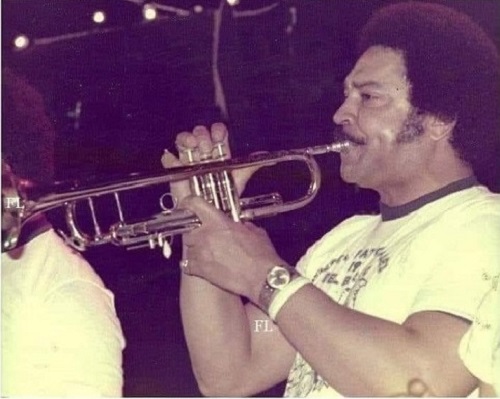
Roberto Rodríguez was a Cuban trumpet player and composer, author of Ray Barreto’s hit song “Que viva la Música” (Long Live Music)

Roberto Reimundo Rodríguez (Cienfuegos, January 23, 1936 – April 18, 1988), was a Cuban trumpeter and composer, who belonged to Ray Barreto’s orchestra, which he would later leave to belong to Fania All-Stars, as lead trumpet player.

Roberto is the author of Ray Barreto’s hit “Que viva la música”.

Roberto was born in 1938, in Cienfuegos (Cuba). He began his musical career at the age of 12, in his native province; cradle of the world famous Orquesta Aragón.


Roberto Rodríguez
Roberto Rodríguez

From an early age he participated in “Las Comparsas de Cuba” and with the orchestra “La Unión Fraternal de Cienfuegos”.

In 1955, he emigrated to the United States and in 1957 he married Nancy Zayas, with whom he had three sons: Roberto Jr., William and Richard.

While growing as an artist, Roberto co-founded the orchestra “Los Jóvenes Estrellas de Cuba” with his long-time friend Ernie Stairs. He later moved on to Wilfredo Figueroa’s orchestra and “Ritmo Swing”.

In 1965, Roberto was recommended to Ray Barreto by Eddie Martinez. Eddie was a pianist for both the TataVazquez and Ray Barretto orchestras.

After listening to Roberto, Ray Barretto recognized that he was in contract with Vivar, one of his former colleagues and musicians, and brought him on board. Roberto remained in Ray’s orchestra for 11 years.

His performance as first trumpet soloist was extraordinary. While in Ray’s orchestra, Roberto composed several famous songs such as: “Yo Soy La Candela”, “Fuego y Pa’Lante”, “Invitación al Son”, “Cienfuegos, Perla del Sur”, “Se Traba”, “El Tiempo lo Dirá”, “O’Elefante”, and the worldwide hit: “Que Viva la Música”.

Roberto Rodríguez
Que viva la música

In 1972, Roberto became a member of the Fania All-Stars as first trumpet and soloist. The documentary “Our Latin Thing” launched Roberto along with the other members of the All-Stars to international fame.

Our Latin Thing

On August 26, 1971 New York City gave birth to a sound that would change Latin music forever. That night at the renowned Cheetah nightclub, the Fania All Stars took the stage with their unique sound that echoed across all borders and reached every country. Fania Records re-releases “Our Latin Thing” on DVD, the film that sparked the salsa movement of the seventies.

Roberto Rodríguez
Our Latin Thing (Nuestra Cosa)

From the concert came a double LP entitled “Live At The Cheetah” and the historic film “Our Latin Thing”. Its director, Leon Gast, documented the events at the Cheetah with the addition of footage of the musicians in the recording studio and scenes of New York’s Spanish Harlem.

The 40th anniversary edition of “Our Latin Thing” includes a DVD with the remastered film, and two CDs with the music from the film and some additional tracks, which can be purchased on the label’s official website.

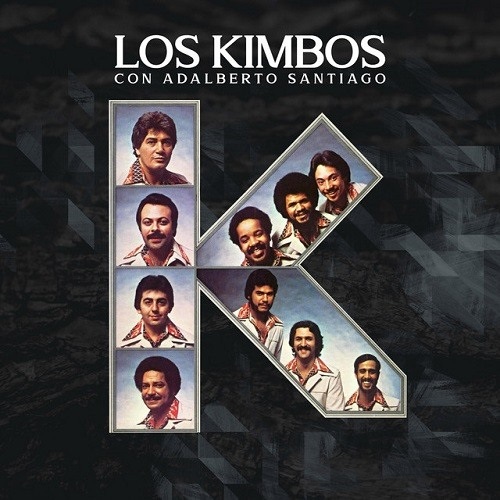
In 1975, Ray decided to take a turn towards a new musical facet and Roberto became part of the group “Los Kimbos”.

Roberto Rodríguez
Los Kimbos

Two years later, in 1977, Roberto joined the charanga band “Orquesta Broadway”. In this group he not only excelled as a trumpet soloist but also as a vocalist. Here he composed new hits, including: “No Se Va a Poder” and “Como Nueva York no Hay”.

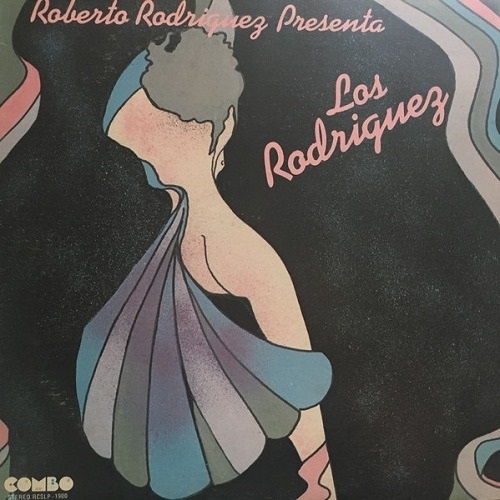
In 1982, Roberto decided to assist his sons in their desire to continue their musical journey and produced the album: “Roberto Rodríguez Presenta a Los Rodríguez”, under the “Combo Records” label.

Roberto Rodrígue
Roberto Rodríguez Presenta a Los Rodríguez

In 1983, Roberto joined the “Los Rodriguez” Orchestra, to perform with his sons Roberto Jr (trumpet player) and Willie (bass player).

His health deteriorated in early 1988, and he finally passed away in April of that year, victim of skin cancer. His son Roberto Rodriguez Jr. followed in his footsteps and has excelled in salsa orchestras in New York.

 Roberto Rodríguez was a Cuban trumpet player and composer

Read Also: Miguelito Cuní recognized among the best soneros of Cuba


Francisco Aguabella “El Tamborero de Cuba” Bravo and Virtuoso Percussionist of Afro-Cuban Ritual Music

Aguabella was born on October 10, 1925 and grew up in the drumming tradition of Matanzas in Cuba.

On May 8, 2010, Francisco Aguabella “El Tamborero de Cuba” passed away in Los Angeles, United States. Bravo and virtuoso percussionist of Afro-Cuban ritual music, Latin/jazz and jazz.

Of remembered links to Tito Puente’s band, Mongo Santamaría, Cachao López, Eddie Palmieri, Dizzy Gillespie, Frank Sinatra, Jorge Santana’s group “Malo” and his own “Latin Jazz Emsemble”.

Aguabella nació el 10 de octubre de 1925 y se crio en la tradición de los tambores de Matanzas en Cuba

In 1953 he emigrated to the United States and settled in California as an olu batá (bata drummer).

Batá drumming is a ceremonial musical style that plays an integral role in the African-derived Santeria religion practiced in Cuba, Puerto Rico and since the 1950s in the United States.

No other music of the Americas bears a more striking similarity to West African music than the batá. Its set of three double cone drums reproduces the Nigerian Yoruba drum set of the same name.

Francisco Aguabella “El Tamborero de Cuba” Bravo y Virtuoso Percusionista de la música ritual afrocubana

Many of the rhythms closely resemble their African prototypes, and the Afro-Cuban language of Lucumí, in which Aguabella sings, is clearly a derivation of Yoruba.

Prior to 1980, Aguabella and Julito Collazo were the only olu batá in the United States who had been initiated into a secret society of drummers designated to perform a very sacred type of batá known as batá fundamento .

The batá fundamento is an integral part of Santeria ceremonies in which an individual’s initiation into the religion cannot be consecrated unless he or she has been presented before this sacred ensemble.

Each year Aguabella builds a shrine for his patron saint, Santa Barbara (Changó), and plays music at a birthday party held in her honor.

Francisco Aguabella “El Tamborero de Cuba”

It’s an all-day celebration for invited friends who are primarily but, not exclusively members of the Santeria sect “Santa Barbara knows it’s her birthday,” Aguabella said, “I know how she feels.

She feels happy if I honor her, I feel bad if I don’t so on St. Barbara’s day every December 4 whatever work I am doing today I don’t do for anyone, I love this saint very much and I promised her I was going to have a party every year.

Se recuerda sus vinculaciones a la Banda de Tito Puente, Mongo Santamaría, Cachao López, Eddie Palmieri, Dizzy Gillespie, Frank Sinatra, el grupo Malo

Although Aguabella is widely respected for his sacred drumming he is also known for his virtuosity in the secular forms of Afro-Cuban music.

Choreographer Katherine Dunham was so impressed with Aguabella’s drumming that she invited him to join her company for tours of South America and Europe.

The most influential of Aguabella’s secular styles is rumba, a complex of several musical genres that evolved in Cuba in the early 20th century.

Rumba was the basis for much of the Cuban dance hall music that in turn helped shape American popular music through dance bands based throughout the United States.

However Afro-Cuban rumba bears little resemblance to the ballroom dance rumba that inspired Francisco. Rumba as Aguabella said is part of daily life for many Afro-Cubans, it doesn’t have to be a special day to play rumba, we could start a rumba here without a drum.

You could play it here or there on the wall, in Cuba rumba is 24 hours a day, we gather in a corner and have a glass of rum…. And someone says: Why don’t we play a little rumba?  Some people touch the wall and someone else plays a bottle and maybe takes a cap off the bottle and ‘ca ca ca ca ca ca ca ca ca’ and the Rumba.”

Aguabella’s goal has long been to maintain the integrity of the tradition he so respects, while incorporating it into “crossover” music aimed at a wider audience.

It was his superior musical ability and commitment to tradition that led musicians such as Mongo Santamaria, Malo and Carlos Santana to bring him into their groups.

Cubacan Francisco Aguabella Año 2002

Aguabella lived in Los Angeles; where he continued to performand exert a great influence on Latin American music.

Afrontilas Music

Read Also:  Tata Güines known as Manos de Oro, Cuban rumbero and percussionist

Azúcar Club Cubano of São Paulo

Latin America / Brasil / São Paulo

Get to know the Azucar Club Cubano of São Paulo

Azúcar Club Cubano
Azúcar Club Cubano

In Brazil there is a great variety of Latin clubs where you can enjoy pleasant music, if what you want is to dance Merengue, Salsa and Cumbia, you can go visit the “Azúcar Club Cubano” which is located at Rua Dr. Mário Ferraz, 423 Itaim – Bibi , São Paulo, Brazil; which was inaugurated in August of the year 2000; being the first Latin house in Sao Paulo at that time thanks to the Latin inspiration with its coquettish and great Caribbean music. It is currently recognized for being very cheerful and with excellent service where it had great successes and that to this day opens its doors to all people who like Latin rhythms.

Inside of Azúcar Club Cubano

They also have a bar where the most requested drinks are Rum and Tequila and among their cocktails are “El Margarita”, “El margarita con Tequila” and “Mojito”, the latter known as the best in all of Sao Paulo; They also have a varied menu.

Rumba inside the Azúcar Club Cubano

The Club opens its doors to the public from Tuesday to Friday from 19:00 hrs (7:00 pm) and Saturdays at 20:00 hrs (8:00 pm) and there one can pay with any credit or debit card.

For more information:

  • Website: http://www.azul.com.br
  • Facebook: https://www.facebook.com/azulclubcubano/
  • E-mail: [email protected]
  • Telephone: +55 11 3074.3737

  • « Go to Previous Page
  • Page 1
  • Interim pages omitted …
  • Page 4
  • Page 5
  • Page 6
  • Page 7
  • Page 8
  • Interim pages omitted …
  • Page 116
  • Go to Next Page »

International Salsa Magazine (ISM) is a monthly publication about Salsa activities around the world, that has been publishing since 2007. It is a world network of volunteers coordinated by ISM Magazine. We are working to strengthen all the events by working together.