• Skip to primary navigation
  • Skip to main content

International Salsa Magazine

  • HOME
  • Previous editions
    • 2026
      • ISM / March 2026
      • ISM / February 2026
      • ISM / January 2026
    • 2025
      • ISM / December 2025
      • ISM / November 2025
      • ISM / October 2025
      • ISM / September 2025
      • ISM / August 2025
      • ISM / July 2025
      • ISM / June 2025
      • ISM / May2025
      • ISM / April 2025
      • ISM / March 2025
      • ISM / February 2025
      • ISM / January 2025
    • 2024
      • ISM / December 2024
      • ISM / November 2024
      • ISM / October 2024
      • ISM / September 2024
      • ISM / August 2024
      • ISM / July 2024
      • ISM / June 2024
      • ISM / May 2024
      • ISM / April 2024
      • ISM / March 2024
      • ISM / February 2024
      • ISM / January 2024
    • 2023
      • ISM / December 2023
      • ISM / November 2023
      • ISM / October 2023
      • ISM – September 2023
      • ISM – August 2023
      • ISM July 2023
      • ISM Edition June 2023
      • ISM – May 2023
      • ISM April 2023
      • ISM March 2023
      • ISM February 2023
      • ISM January 2023
    • 2022
      • ISM December 2022
      • ISM November 2022
      • ISM October 2022
      • ISM September 2022
      • ISM August 2022
      • ISM July 2022
      • ISM June 2022
      • ISM May 2022
      • ISM February 2022
      • ISM January 2022
    • 2021
      • ISM December 2021
      • ISM November 2021
      • ISM October – 2021
      • ISM September 2021
      • ISM August 2021
      • ISM July 2021
      • ISM May 2021
      • ISM April 2021
      • ISM June 2021
      • ISM March 2021
      • ISM February 2021
      • ISM January 2021
    • 2020
      • ISM December 2020
      • ISM November 2020
      • ISM October 2020
      • ISM September 2020
      • ISM August 2020
      • ISM July 2020
      • ISM June 2020
      • ISM May 2020
      • ISM April 2020
      • ISM March 2020
      • ISM February 2020
      • ISM January 2020
    • 2019
      • ISM December 2019
      • ISM November 2019
      • ISM October 2019
      • ISM Septembre 2019
      • ISM August 2019
      • ISM July 2019
      • ISM June 2019
  • Download Salsa App
    • Android
    • Apple
  • Spanish

Search Results for: Dance Company

God and Salsa: the rhythm with purpose

European Union
God and Salsa: the rhythm with purpose

Dancing has a special characteristic; it makes the dancer have total concentration in the moment. No past, no future, no problems, just the joy of the present, music and movements. That’s one of the therapeutic reasons to join the salsa movement.

Dancing has changed the life of many people, with this begins the journey of “God and Salsa”, mixing two worlds that are usually separated: faith and dancing.

A project created with love in the core, Jess and Anayancy Thomas, writers and producers of God and Salsa, they want to spread a message of love, faith and awareness.

Anayancy Thomas
Anayancy Thomas

Jess Thomas
Jess Thomas

Jess Thomas, writer, producer and director has enjoyed a career in both the technical side of Broadcast TV, which included Project Management and the production side of video and film as a Producer, Director and Final Cut Pro editor. He brings a high level of enthusiasm to any task at hand. Jess is an excellent communicator and tends to get along well with everyone. He understands the ground up nature of the work and has an uncanny knack for seeing the big picture. These traits have proven themselves essential when managing a project or Producing a low budget film.

Jess is excited at the prospect of taking on the nuts and bolts activities necessary to maintain a high level of excellence. He would be honored to be a part of an entertainment or broadcast companies staff and would take great pride in having the opportunity to be a part of a company that brings quality entertainment to millions of satisfied customers.

The project begins with the desire of talk about an important issue: How children are affected by divorces in families.

With her personal experience, Anayancy created the story of Raquel, a 40-year-old therapist and divorcee is trying to cope with the loss her daughter to suicide. Her trust in God has suffered because of it. Matt, 45 asks her to see his son Shane 17 who has attempted suicide due to depression brought on by the conflictive divorce of his parents. Shane’s mother, Monica 40, is self-absorbed and has turned Shane and her other children against Matt.

Raquel struggles to regain her faith, but in the meantime Salsa dancing is her only solace. Against Monica’s will, Raquel takes on the challenge of trying to help a belligerent yet severely depressed Shane and prevent him from successfully killing himself. What follows is an intense emotional struggle that Raquel is only able to overcome with the help of God & Salsa.

Jess and Anayancy Thomas

The goal for this film is to stop the terrible situation that many children go through their early years. There are different levels of damage: family dissolution, emotional damage, self-blame, depression, etc. The child always suffers the consequences of separations.

The Thomas knows that personal experiences are very powerful to pursue a goal and getting people’s empathy. The film goes with the character-story line, going through all the darkness, how Raquel takes the personal tragedy that she was going through with salsa dancing to redeem herself, with a very dark beginning she overcomes everything to change her life.
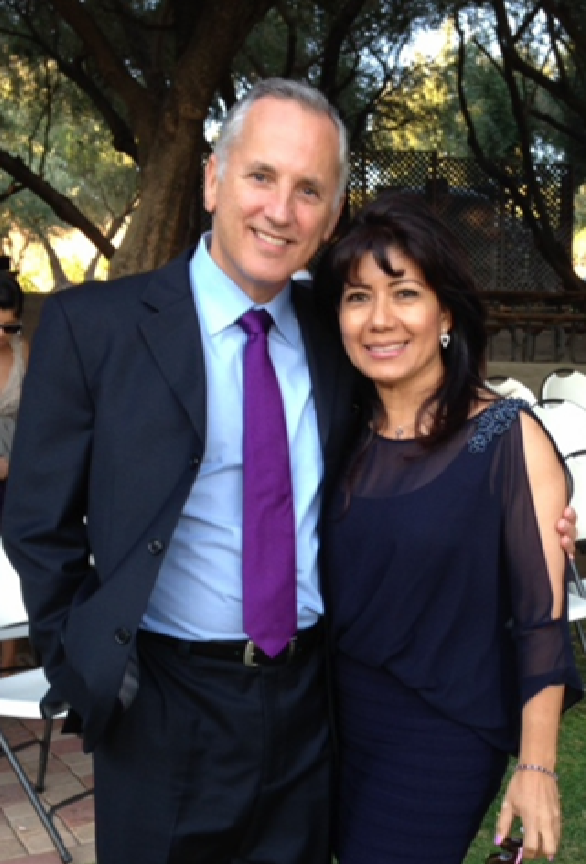
Photo: Jess and Anayancy Thomas

The film is the combination of different stories and experiences. The salsa is on the story thanks again to Anayancy’s personal experience. When she decided to explore other parts of her life and herself, salsa dance was the best option, because she could get away from all the troubles, getting the mind occupied with an incredible activity. “When I dance, I’m in a bubble” she say, a proof of how dancing gets you in the present.

With a special air of a fairytale story, Jess and Anayancy met at the Presbyterian Church in Bel-Air, here their journey begin. Jess told International Salsa Magazine why you should go and watch the film: because every family member can relate with an aspect of the story, parents, teenagers, seniors, etc. Faith, love, drama and a lot of salsa dancing make this film so amazing. This film will touch a special part of everyone’s heart. Don’t miss it!

God and Salsa
God and Salsa

Bandleader and bongosero Ray Degaldo is here to talk about his life and career

The talented percussionist Ray Delgado has made room in his schedule to share some time with us and talk about some of the most curious details of his artistic career, which fills us with pride and gratitude in equal measure. The founder of the Ray Delgado Project has many interesting things to say, and we are more than willing to listen.

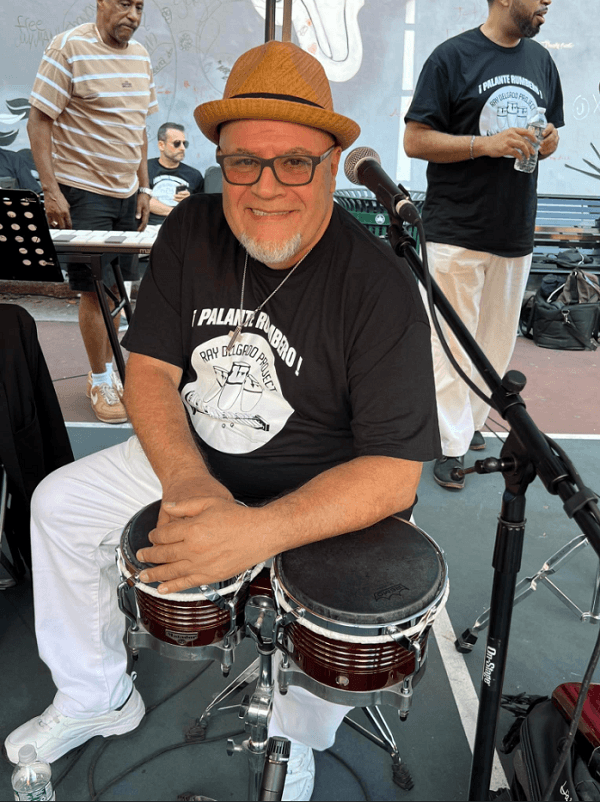
Ray playing the bongo
Ray Delgado playing the bongo live

Ray’s inspirations to become an artist

Ray grew up in a family with deep Puerto Rican roots and was raised between Puerto Rico and New York because his parents constantly moved from one place to another, which made him feel very fortunate because he was being formed between two cultures that allowed him to listen to all kinds of music. In his time, radio remained extremely popular, so this was his vehicle to travel just by listening to certain songs.

Music in English came from the United States and Europe, while music in Spanish came from Cuba, Venezuela, Puerto Rico, the Dominican Republic, Jamaica, and many other countries. Delgado was exposed to all genres, but as a New Yorker, the one that resonated the most with him was salsa and the atmosphere that it brings with it. In fact, he remembers having the joy of seeing the Machito Orchestra, Johnny Pacheco, Héctor Lavoe, Willie Colón, Pete Conde, and many others live.   

These great exponents were the ones who sparked off the young man’s desire to pursue music at some point, but his father did not like the idea at all, as he saw the men in this business as womanizers, drunks, and irresponsible. Obviously, no father wants his son to end up like that, so Ray had to wait to become a responsible adult with a steady job to finally realize his aspirations as a kid.

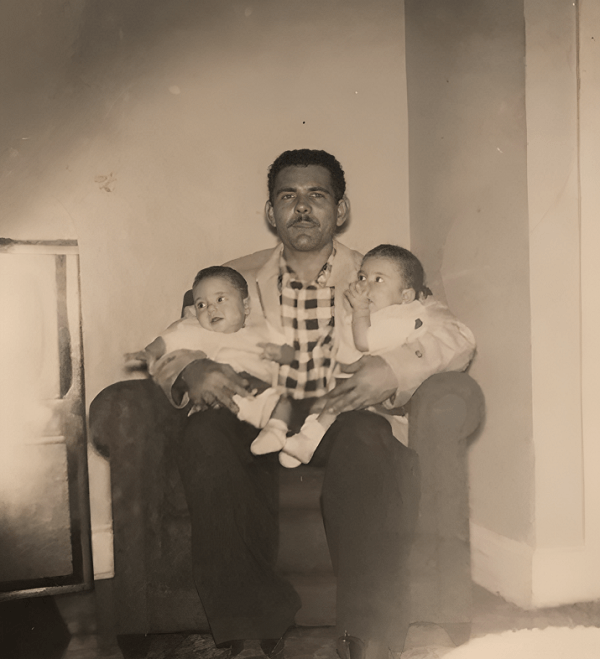
Ray and his father
Ramón Delgado Castro holding his son Ray Delgado and his brother when they were babies

It all started when some older men invited him to play with them, so he found an old bongo drum he kept in his closet and accepted the offer without a second thought.

That was the point of departure for him to play with many other bands in New York, and his consistent work led him to want to be better, to study hard and prepare himself much more.

Ray’s music education

Ray studied at the East Harlem Music School founded by legendary musician Johnny Colón in Manhattan, and focused on timbales with teacher Ray Cruz, but he left the instrument aside for a while when he moved back to Puerto Rico. When returning from the Island of Enchantment, he enrolled at the Harbor Conservatory for the Performing Arts. He also studied with Professor George Delgado, who is the current conguero for the Spanish Harlem Orchestra. He describes him as an excellent teacher and musician from whom he learned so much.

Additionally, he had the support of many musician friends who also helped him and taught him many things that are not learned in an educational institution, including Luis Rivera, Radamés Rojas, Eric Rivera, and many others. Close contact with other artists and groups made him see that many sounded exactly the same and there was little variety, so he decided to form his own orchestra.

In this way, he also learned percussion, which is the area by which he is best known today.

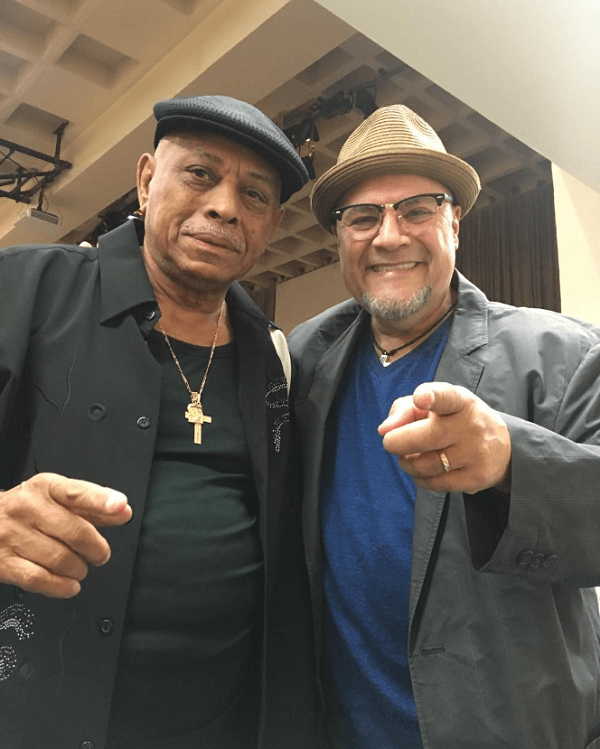
Joe and Ray
Joe Bataan and Ray Delgado

Ray Delgado Project’s birth

Driven by the lack of musical variety in his environment, he wanted to create his own musical project that included vibraphone, percussion, piano, bass, and vocalist. It all started with a workshop for musicians offered by Ray himself in a community room in the building where he lived and he was allowed to use it. After having played and experimented with different styles, the group was getting smaller until all the musicians who signed up ended up leaving.

From there, at every show and opportunity he had to meet new musicians, he would ask for their numbers to recruit them and achieve a chemistry and combination, resulting in the sound he wanted. Ray was in that process from 2009 until now. About three years ago, in 2023, he finally got what he was looking for. 

This group was called Ray Delgado Project, which takes up a huge amount of time and effort. However, the musician says that the New York where his youth was spent, which offered lots of places to go dancing, no longer exists, so there is not much work as back then.

Today, they play many covers of great hits from the 1970s, but they add their own touch to stand out with completely new arrangements. Not so long ago, they released their new version of “Lo Que Traigo es Sabroso,” a hit by Eddie Palmieri, and adapted it to their own style and arrangements. It can be found on Spotify and the main digital platforms. 

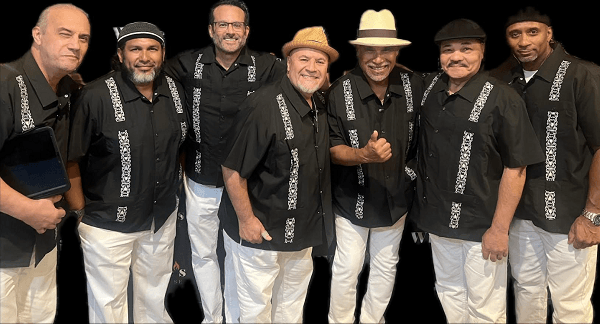
Ray and his orchestra
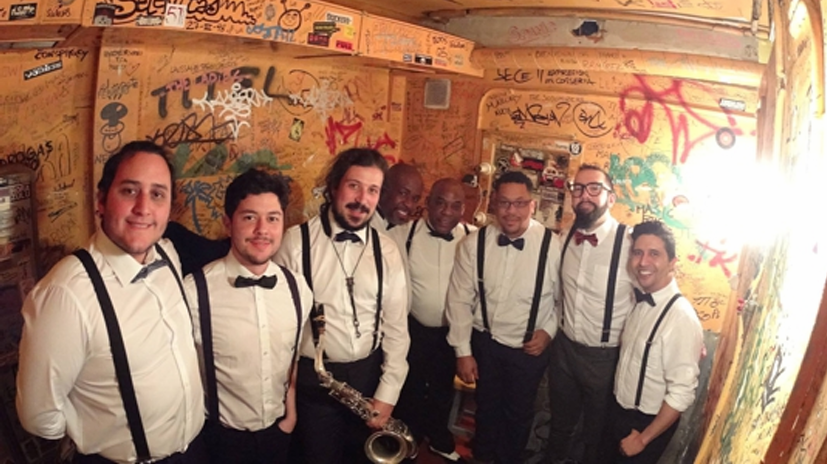
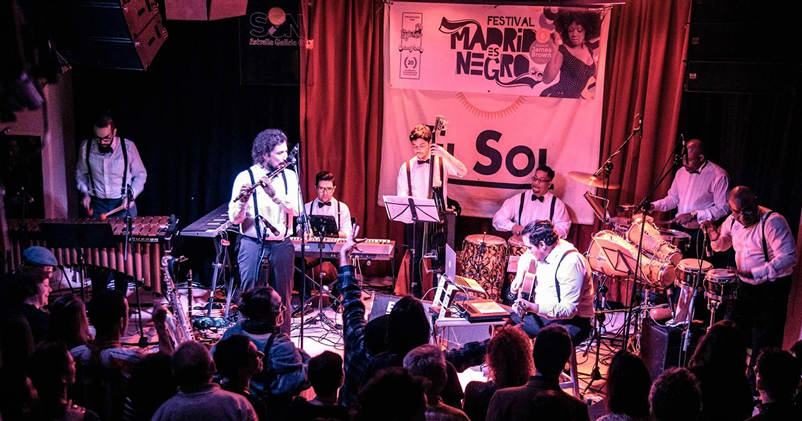
Ray Fuentes (piano), Abraham Saenz (bass), Danny Sieber (vibraphone), Ray Delgado (director and bongo), Rhadames ”Randy” Rojas (lead vocals) Izzy Diaz (congas), and José ”Cheo” Colón (timbales)

Ray is so happy with what he has achieved so far with their orchestra that ensures that when God calls him, he will be calm and happy to have been able to play and make audiences dance during his lifetime. God willing, we wish him many more years playing with the Ray Delgado Project, enjoying life and bringing joy to those who have the pleasure of listening to him. 

Read also: Leader of K’ndela Salsa Band Eric Cabanilla and all his entertainment company has to offer

Jorge Duran

Europe / Germany

Interview to Jorge Duran & his Jalea de Mambo

Now settled in Europe, venezuelan vibraphonist Jorge Duran is leading Jalea de Mambo band which mix musicians from different nationalities recovering the swing and mambo of the 50s with the smart flavor of the New York Palladium, the famous Broadway dance-hall, and the color of the best Latin Jazz that can be heard in Europe right now. Its characteristic vibraphone sound makes this band a unique and raw example in the current music panorama.

Recently documentary “We Like It Like That” has been released worldwide http://latinboogaloo.com/ emphasizing that cultural revolution where boogaloo, mambo, among other genres, were considered the so-called “Latin Soul” creating that cultural movement which day by day takes more strength everywhere.

Jorge Duran
Jorge Duran

1) Jorge, tell us a little bit about your background, your roots, and your musical influences.

Well, I started playing Latin American percussion in Venezuela (Caracas) having the chance to share with great musicians beside studying with amazing percussion players but my degree was focus in composition. Then I begun to play jazz vibraphone and it took me a few years to play again Latin American Music although here I am ready to give my very best.

2) How did you come to the idea of Jalea de Mambo?

The idea of Jalea de Mambo came to me long time ago (10 years ago or more) when I first heard the album Cal Tjader Modern Mambo Quintet, quite old album indeed (1955). That record change everything for me and blew my mind up focus then on mambo, latin jazz and what so called “Latin Soul”.

3) Mambo, Boogaloo, what many people called “Latin Soul” was a revolution during the 50s. Do you think that nowadays these genres could reach something similar?

I really think everything is possible if you work hard, I’m not trying to make a revolution my idea is that every single person come to see us playing, enjoying magic music, having a great time. Obviously that “revolution” happened once but its essence has come along the years in all musicians who play caribbean rhythms. Nowadays, this genre is getting popular again but honestly I believe it has never lost validation.

Photo of Jorge Durán and his band members in the music world

4) What are your feelings coming from Venezuela performing in Europe and worldwide? Is the musical movement opened and active enough over there?

My feeling is that in Europe we, musicians, have more opportunities to show our culture and most of the people here are opened enough to hear or see our projects.

Beyond Europe is quite the same because I have Heard about concerts with more tan 100.000 audiences in Arab Countries, for instance. It simply means that latin and caribbean music “hook” people hearts so they enjoy it full.

5) Now that you are settled in Europe tell us a bit more about your projects and expectations.

I’m living in Germany now and it is a huge challenge for me as it is a real different culture and language but my idea is to spread the Latin American culture and music not only in Europe but worldwide. We are living very tough moments at this very moment and firmly believe that músic and culture are more needed than ever because music tame the beasts, as people usually say, and that’s what we need now, I mean, peace, calm and mainly love.

Photo of Jorge Durán and his team at the live concert

6) Looking for these goals, are you working on your own or you are supported by a company, agency or similar.

Now I have the great pleasure to say that I’m not alone in this business because Cat 7 Production is my new family and they are really focused in spreading my music to reach more people. I think this is the idea, music is a language we need to be heard as I said before.

7) Finally Jorge, let’s share a message for all your fans beside colleagues who work hard to achieve similar goals you are looking for.

Well, I’m always very grateful when some one takes time to send emails or messages after watching us in a concert, I love it and love fans who give me strenght to keep doing what my heart says. My humbly advice to all musicians who have an idea or project is that never stop making music because everything is possible in life and the real power is inside us. This is one of more beautiful and hard profession but sure worth it!

Jorge Duran in concert

Music reviewer and photojournalist Ricky Ricardo describes his work from the last 35 years

Ricky Richardson, better known as Ricky Ricardo, is one of those important figures who should be taken notice of for his significant contribution to Latin music, even if it is often not quite appreciated by the public. The Tampa-born photographer, writer, and music reviewer has honoured us by talking about his career and experience covering events related to Latin culture and music, so we invite our readers in the beginning of the year to enjoy the revelations of our talented guest.

Ricky Richardson at the festival
Ricky Richardson at the New Orleans Jazz & Heritage Festival entrance

How Ricky got started in the coverage and review to Latin music and cultural events

First of all, Ricky thanked us for the interview and went on to tell us that he started as a photographer for a local newspaper called California Crusader News. Over time, his superiors asked him to start writing articles to accompany his photographic work, resulting in music reviews based on his attendance at numerous events and festivals throughout Los Angeles and beyond.

His work also included meetings with newspaper and magazine publishers who were always searching for content for their own publications, which led Ricky to send reviews and photos to all kinds of publications.

Major publications Ricky has worked with

Among the most important publications Ricky has collaborated with is Latin Beat, which was the main means of communication related to Afro-Cuban music. The photographer met Rudy and Yvette Mangual many times at various concerts and festivals. They met backstage at the Hollywood Bowl during the Blue Note Jazz Festival, an event he covered just like all the artists who performed there.

He also covered events in other parts of the United States, such as the New Orleans & Jazz Heritage Festival and the French Quarter Fest.

Kathy, Lázaro, and Nelson. Photo by Ricky
Kathy “La Rumbera” Diaz, Lázaro Galarraga and Nelson Rodriguez (Photo by Ricky Richardson)

In the case of Vidasalsera, Ricky first heard that name coming out of a musician’s mouth at a Puerto Rican festival in Long Beach, where he often ran into Cal Sakaniwa, the photographer and videographer for this media outlet. That is when he reached out to the webmistress of Vidasalsera.com Dena Burroughs and began providing photo galleries for her website, even though they have never met in person.

What made Ricky fall in love with Afro-Cuban music

During his childhood and youth in Tampa, Ricky was very exposed to Latin music due to the large Cuban population living in the Ybor City area, and he and several of his friends used to frequent many places and stores where this music was played. 

When the young man heard Afro-Cuban music for the first time on radio stations KACE and KKGO (nowadays known as KJAZZ) was a point of no return for him. His love for this kind of music was greatly strengthened by radio programs such as Alma Del Barrio, Jazz on the Latin Side, Canto Tropical, Groove Time, and Canto Sin Fronteras. Not to mention that many international artists were constantly giving concerts at venues and festivals. 

Events covered by Ricky to date

Throughout his career as a photographer, Ricky covered a huge number of events, including the Long Beach Jazz Festival, Monterey Jazz Festival, Central Avenue Jazz Festival, Los Angeles Street Scene, San Diego Street Scene, Simon Rodia Watts Towers Jazz Festival, Watts Towers Day of The Drum Festival, Cuban-American Festival, Puerto Rican Festival, and many others. 

When we wanted to know more about his experiences at these events, he replied that he felt very honored to have been able to share with established and emerging artists over the past 35 years. He also feels very lucky to have been able to witness such wonderful performances by artists who always greet him and spend warm smiles at him whenever they meet him.

Kathy, Lázaro, and Nelson. Photo by Ricky
Kathy “La Rumbera” Diaz, Lázaro Galarraga and Nelson Rodriguez (Photo by Ricky Richardson)
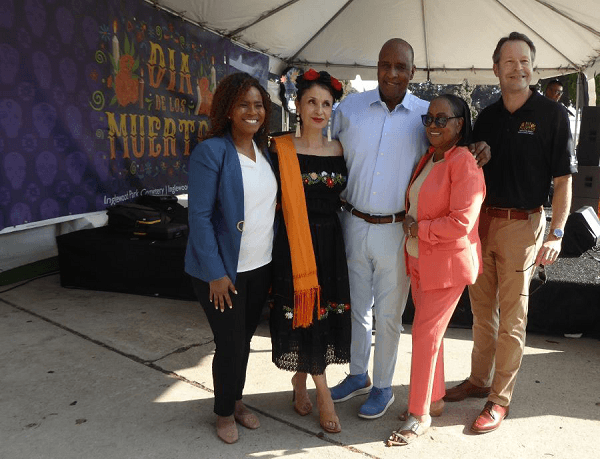
Dionne, Monica, and James. Photo by Ricky
Councilwoman Dionne Faulk, Monica Bracho, Mayor James T. Butts Jr., Councilwoman, and Brendt Stallings, Chief Executive Officer & Chief Investment Officer-Inglewood Park Cemetery (Photo by Ricky Richardson)

Alma Del Barrio Fest 2025

Ricky told us that he had the honor of attending the first and second iteration of the Alma Del Barrio Salsa Festival, which took place at different locations at Loyola Marymount University. Future attendees got really excited about the current venue chosen by the organization to host the event, which is Lawton Plaza with its amphitheater, seating arrangement, abundance of grass, and the dance floor. 

“I love the fact that many people get to meet and greet some of Alma Del Barrio Program Hosts (DJ’s) in person. I like the fact that Alma Del Barrio Salsa Festival attracts several generations of salseros, that are diverse, multi-cultural, and from all walks of life.,” Ricky said on the subject.

Why Ricky retired last year

Last year, Ricky finally made the decision to retire from music critics and photography after covering the Latin music scene for so many years in order to allow new generations of talented journalists to take over and keep Afro-Cuban music alive. 

He is currently looking for opportunities to work in public relations and marketing for sporting events that will be held in the next three years such as the NBA All-Star Weekend, the FIFA Worzld Cup, the Super Bowl, and the Olympic Games. 

Read also: Cache Live Music puts Miami to dance to traditional Latin music

The Cajón throughout history

The main artists who put on a show always get the lead on stage, but nothing much is being said about the instruments accompanying them, which are a fundamental part of music as we know and enjoy it. One of these is the cajón, which has a most interesting and a little bit controversial origin, so there are certain considerations to express this regard.

This is the cajón
This is how the cajón looks today

What is the cajón?

The cajón, also known as the Paruvian cajón or flamenco cajón, is a percussion instrument consisting of a wooden box on which the musician sits and taps with his fingers and palms to produce the desired sounds, whether bass or treble. On certain occasions, it is used as a substitute for the drum kit and has gained popularity in jazz, flamenco, and some Latin genres. 

One reason it is so popular is because of its versatility, transportability, and ease to be played, even if the musician does not have much experience. Therefore, many prefer it to the drum kit, which is bigger and more cumbersome in certain cases.

Origins of the cajón

What is known about the origin of the cajón is that by the end of Spanish colonization, African slaves bound for America were not allowed to use their drums because the Catholic Church saw them as sinful and pagan tools. Not to mention that these prisoners also used these drums to communicate with each other, which is why the Spanish nicknamed them “talking drums.”

This led to the aforementioned instruments and several of their musicians being burned. Not to mention that slavers wanted to ban black songs that sent messages about slavery through their melodies. 

By the early 1800s, there was absolutely no record that the drum had existed in what we now know as Peru, and any viceregal document mentioning it disappeared. However, there is evidence of the existence of the cajón from 1840, and it is believed that the first to use it were Afro-Peruvians. 

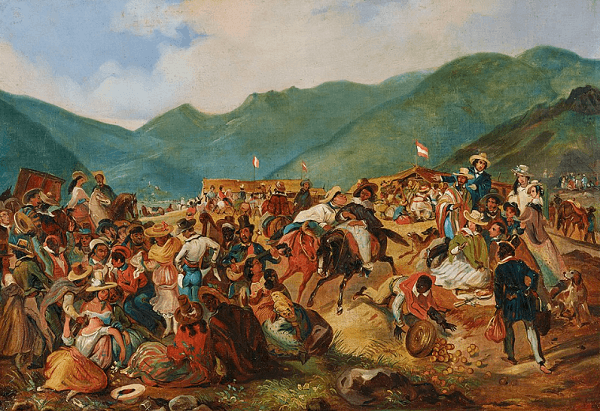
fiesta de amancaes with the cajón
Painting by the German Painter Mauricio Rugendas on the occasion of the “Fiesta de Amancaes”

Afro-Peruvians encompass a collection of African ethnic groups who, unable to express themselves through music as they did before, had no choice but to find other instruments with which they could do so. They then saw wooden crates used to transport goods as a way to do percussion and thus continue to practice their sacred rites and play their music.

Initially, the cajones were used to play coastal and traditional dances to central and north Peru, which gradually popularized them. They also began to be used to play the “Fiesta de Amancaes,” which is a Limean festival held during the time of the Viceroyalty. This event usually brought together horse breeders, artisans, and bohemian musicians from the north and center of the country.

The arrival of the cajón in Spain

Many years later, specifically the year 1977, the cajón arrived in Europe. It was Spanish flamenco composer and guitarist Paco de Lucía who discovered the instrument during a tour of Latin America when he attended a reception hosted by the Spanish ambassador at the time. On that occasion, Paco heard Brazilian musician Rubem Dantas play it during a show by singer-songwriter Chabuca Granda, and he instantly realized that those sounds combined very well with flamenco percussion, which was always done with the palms, although it was not as consistent and precise as required. The cajón achieved this without a hitch. 

It is for this that Paco decided to take the cajón to his country and only added some inner strings to adapt it and tinge its sounds, thus becoming one of the most important elements of a flamenco show today. Both Paco and Rubem decided to release it at an open-air concert at the Parque de Atracciones de Madrid of the Casa de Campo, and the Peruvian instrument was a resounding success, marking the beginning of its addition to flamenco guitarists’ shows.

At the time, Paco said that this contribution to flamenco culture in his country made him very proud and with good reason, as it was a great revolution that continues to bear fruit.

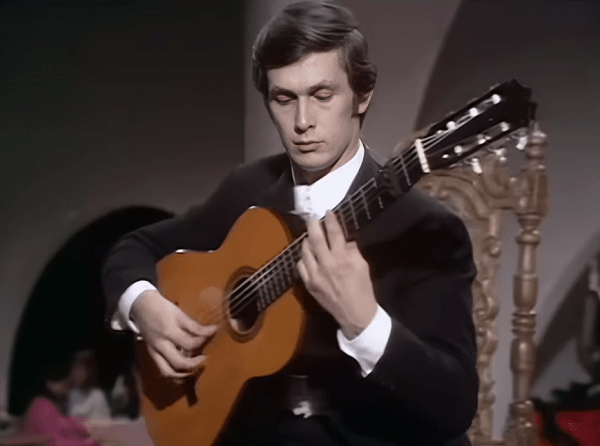
Paco de Lucía playing
Paco de Lucía playing a guitar solo

The cajón today

Today, the flamenco cajón has three screws that allow the musician to adjust the tone and a system of strings that gives the Peruvian version a different resonance and offers a range of many different sounds in which the musician’s body plays a very important role. The Peruvian version remains the most traditional of all because it gets no strings and its sounds are deeper, while the Spanish version incorporates strings or bourdons in order to make more tearing and vibrant sounds.

There are also more modern versions that include the use of drumsticks and pedals to expand their sound range a lot further.

Read also: Creator of Salsa Vida Takeshi Young graced us with his presence in International Salsa Magazine

  • « Go to Previous Page
  • Page 1
  • Interim pages omitted …
  • Page 9
  • Page 10
  • Page 11
  • Page 12
  • Page 13
  • Interim pages omitted …
  • Page 39
  • Go to Next Page »

International Salsa Magazine (ISM) is a monthly publication about Salsa activities around the world, that has been publishing since 2007. It is a world network of volunteers coordinated by ISM Magazine. We are working to strengthen all the events by working together.