• Skip to primary navigation
  • Skip to main content

International Salsa Magazine

  • HOME
  • Previous editions
    • 2026
      • ISM / March 2026
      • ISM / February 2026
      • ISM / January 2026
    • 2025
      • ISM / December 2025
      • ISM / November 2025
      • ISM / October 2025
      • ISM / September 2025
      • ISM / August 2025
      • ISM / July 2025
      • ISM / June 2025
      • ISM / May2025
      • ISM / April 2025
      • ISM / March 2025
      • ISM / February 2025
      • ISM / January 2025
    • 2024
      • ISM / December 2024
      • ISM / November 2024
      • ISM / October 2024
      • ISM / September 2024
      • ISM / August 2024
      • ISM / July 2024
      • ISM / June 2024
      • ISM / May 2024
      • ISM / April 2024
      • ISM / March 2024
      • ISM / February 2024
      • ISM / January 2024
    • 2023
      • ISM / December 2023
      • ISM / November 2023
      • ISM / October 2023
      • ISM – September 2023
      • ISM – August 2023
      • ISM July 2023
      • ISM Edition June 2023
      • ISM – May 2023
      • ISM April 2023
      • ISM March 2023
      • ISM February 2023
      • ISM January 2023
    • 2022
      • ISM December 2022
      • ISM November 2022
      • ISM October 2022
      • ISM September 2022
      • ISM August 2022
      • ISM July 2022
      • ISM June 2022
      • ISM May 2022
      • ISM February 2022
      • ISM January 2022
    • 2021
      • ISM December 2021
      • ISM November 2021
      • ISM October – 2021
      • ISM September 2021
      • ISM August 2021
      • ISM July 2021
      • ISM May 2021
      • ISM April 2021
      • ISM June 2021
      • ISM March 2021
      • ISM February 2021
      • ISM January 2021
    • 2020
      • ISM December 2020
      • ISM November 2020
      • ISM October 2020
      • ISM September 2020
      • ISM August 2020
      • ISM July 2020
      • ISM June 2020
      • ISM May 2020
      • ISM April 2020
      • ISM March 2020
      • ISM February 2020
      • ISM January 2020
    • 2019
      • ISM December 2019
      • ISM November 2019
      • ISM October 2019
      • ISM Septembre 2019
      • ISM August 2019
      • ISM July 2019
      • ISM June 2019
  • Download Salsa App
    • Android
    • Apple
  • Spanish

Search Results for: Dance Company

We welcome Patricio Angulo from Rumbaché to ISM

The San Francisco Bay Area, California, has a lot of talented artists, many of which we have had the privilege to interview in this section to learn all kinds of details about the Latin music scene in this area of the United States. This time, we managed to have an interesting conversation with Patricio Angulo, leader and founder of the orchestra Rumbaché, who kindly answered all the questions we had.

Rumbaché is one of the most important salsa and timba bands in the Bay Area and has a varied repertoire of salsa and contemporary Cuban music that enchants any audience that hears the group perform. 

The following are some of the most important issues related to this Latin band and its history.
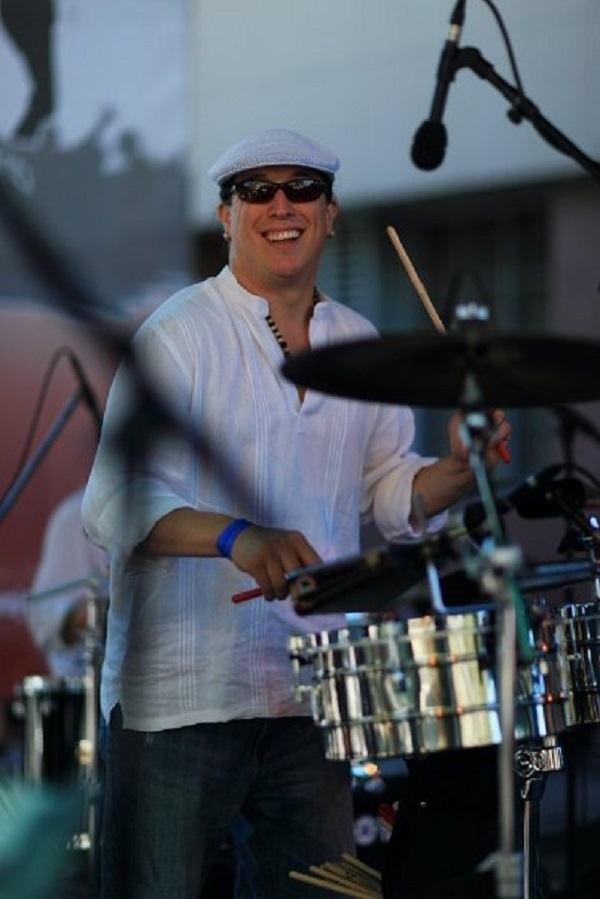
Patricio playing the timbales
Patricio Angulo playing the timbales on stage

Patricio Angulo’s beginnings in the music world

Patricio has had a long interest in music, which he developed by himself, since he did not have family musicians to encourage these activities in the little boy.

He started playing violin and trumpet, but it was not long before the young boy found he liked drums and orchestral percussion better. He also played some classical music and learned a lot about instruments used in this genre.

When he went to high school, there were several music programs from which Patricio could choose to develop this branch of art depending on his tastes and finally decided on a jazz group with which he started learning to play congas and timbales. This group wanted an extra Latin touch in their music and the boy was chosen for the role. 

The musician was very inclined to Latin Jazz at the time, but then, he was listening to other Latin genres until he discovered Cuban and Caribbean Salsa, which would be very important in the musical future of the artist.

Recruiting talent for Rumbaché

For years, he group Rumbaché, previously called Quimbombó, was forming from musicians Patricio considered played well, since for him this is most important. 

However, he emphasized that each orchestra has its own needs and highlighted the vocals as an example of that, as they are very necessary for dance music like the one they play. Likewise, professionalism and experience are two aspects taking into account by him when evaluating a candidate. 

In another order of ideas, the musician considers that Latin roots are not a key element in playing salsa or other genres of this type very well, since there are many singers and musicians who have never had contact with Latin genres or instruments can learn to play them without any problem. It is a matter of effort and discipline. 

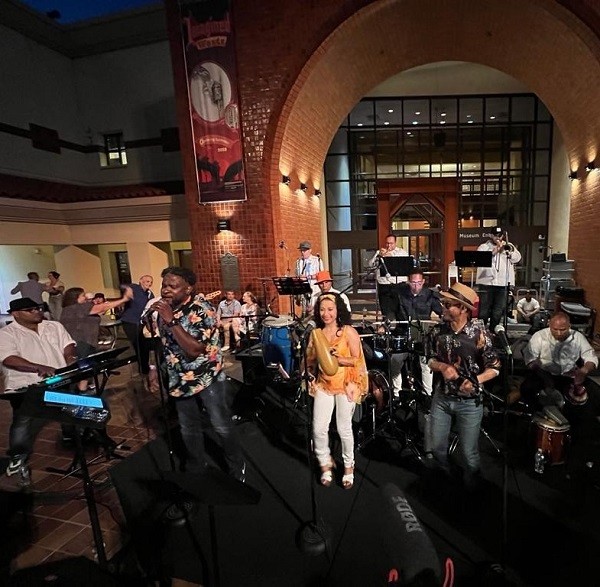
Whole orchestra Rumbaché
This is the whole orchestra Rumbaché posing for the camera

Origin of the name Rumbaché and the Yoruba Religion

From what we have read about Rumbaché, the origin of the name and its relation with the Yoruba religion caught our attention. Rumbaché is a combination of the words ”rumba” (This word can mean ”party” and ”celebration”) and ”ache” (in the Cuyuní language, ”ache” is something very good and pleasant).

Something that Patricio wanted to clarify is that the music of his orchestra is not religious and has nothing to do with the Yoruba religion beyond some choruses and words as there are in many Cuban songs. In fact, they try to have a varied repertoire so as not to bore the audience.

Rumbaché’s activity in clubs

Rumbaché has featured heavily in festivals and renowned clubs in the San Francisco Bay Area such as Sausalito Seahorse, The Cigar Bar & Grill, Rassela’s Jazz Club, Moe’s Alley, Blue Note, among others. It is undeniable that the group has ample experience in performing in these types of venues. 

That is why we took this opportunity to ask Patricio how the movement is going in these places when it comes to hiring orchestras in recent years, to which he replied that the presence of orchestras in local venues has decreased dramatically in recent years, especially after the pandemic.

Likewise, because of this same situation, there were many clubs that began to close their doors indefinitely, making it very difficult for Rumbaché to play live regularly. 

Once the pandemic was relaxed, Patricio says that a few venues survived, but there were too many orchestras for the few available stages. This led them to opt for festivals, concert series and private shows. 

Every night there was a pen club, but that has changed radically and Patricio and the other members of Rumbaché have had to adapt to the circumstances. 
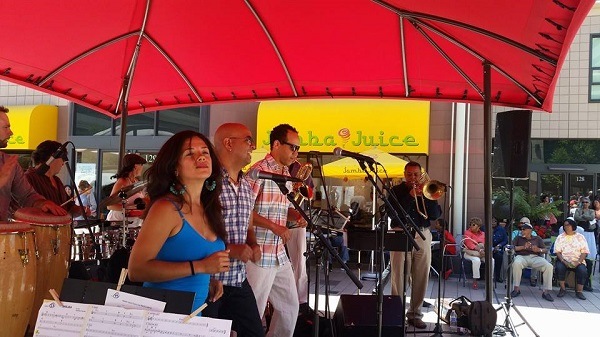
Rumbaché live
Rumbaché performing live

Oye Productions

In addition to Rumbaché, Patricio also has his own entertainment company called Oye Productions, with which he is responsible for providing live music for all kinds of events. Obviously, he gives priority to Rumbaché, but he also offers the services of guitarists, trios and all sorts of musicians.

What the company seeks to focus on is providing musical entertainment for private parties such as a business meeting or something more personal such as a wedding.

He always tries to hire musicians who play all kinds of instruments and genres to perform varied shows for each event. He also seeks to look for artists he knows beforehand and who he is sure will do an excellent job. 

Activities outside Rumbaché

Patricio also indicated that one of his most important occupations outside Rumbaché was teaching congas, timbales and drums. He also teaches drums to children once a week. 

These activities bring happiness to the musician and he always looks for the opportunity for these youngsters he teaches to have some knowledge of Latin percussion and get to know our music much better.

Read also: René Latin Soul and his journey into music from his home country

California Directory 2023

Ballet Hollywood

El Floriidta
Crystalarts Dance Academy

Sprectrum Dance Center
Wursthaus Stages

The Cigar Bar & Grill

Sizzling Latin Dance Studio
Just Dance Ballroom

Allegro Ballroom and club 12012 San Pablo Ave, Richmond, CA 94805 Sausalito Seahorse
Aura Kitchen + Bar 389 S First St, San Jose, CA 95113  San Jose Center for the Performing Arts 255 S Almaden Blvd, San Jose, CA 95113
Studio M Ballroom Club 3550 Stevens Creek Blvd Suite 130, San Jose, CA 95117 Dance Boulevard 1824 Hillsdale Ave, San Jose, CA 95124 Starlite Ballroom 5178 Moorpark Ave #60, San Jose, CA 95129
Stone Stew 1 4233 Moorpark Ave, San Jose, CA 95129  Wave Lounge Blue Lake 777 Casino Way, Blue Lake, CA 95525 Cantina Azteca 6400 Fair Oaks Blvd, Carmichael, CA 95608
Eagles Hall Aerie 9FOE 4401 Fruitridge Rd, Sacramento, CA 95820 Sacto by Night Bar & Restaurant 7121 Governors Cir, Sacramento, CA 95823

Eddie Ortiz & Son Caribe here in ISM

Eddie and his story 

Latin talent has expanded all over the world to the point that there is a significant presence of these groups in Hawaii. Today we have talked to Eddie Ortiz, one of its leaders, who tells us his interesting story. 

Eddie Ortiz, a New Yorker of Puerto Rican descent, began his journey through music when still a child, which led him to become the musical director of one of the main Latin orchestras in Honolulu.  

The following are the most salient aspects of his life and musical career.   

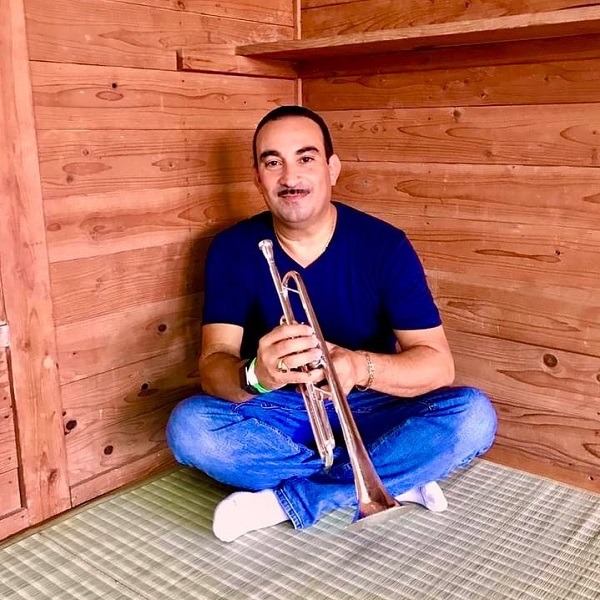
Eddie and his trumpet
Eddie Ortiz with his trumpet

The Armed Forces and moving to Hawaii   

Eddie’s first contact with music was in school, when he began taking trumpet lessons for a few years until he moved with his family to Tampa, Florida, where his life would change radically.   

While there, he joined the Navy and served for more than 20 years, time in which the artist took the opportunity to join the Marine band and hone his skills as a musician. 

It was in those years he served as a trumpet player and played for several military bands being in the armed forces.   

During his military career, he was forced to visit many countries and Hawaii was his last stop. About three years before retiring, he decided to create Eddie Ortiz & Son Caribe, a group he still plays with today.    

As for Hawaii, he liked the place, the weather and the people so much that he did not want to return to the United States. That was over 27 years in total. He still thinks it was the best decision he could have made personally and professionally.    

Eddie Ortiz & Son Caribe 

Something very interesting about Eddie Ortiz & Son Caribe is that they play Latin music, but most of the members are not Latino. The group has people from Japan, China, Portugal and Hawaii. In fact, some of them were with Eddie in the navy and, today, support him in this great project.   

A very particular case is that of Cynthia Romero, the band’s vocalist, who was born in Manila, Philippines, and speaks six languages, but Spanish is not one of them. However, she is perfectly capable of singing in that language without any problem, since she practices a lot the songs at the phonic level to avoid mistakes.   

Whenever there are original songs, Cynthia usually asks Eddie what a song is about and he explains it to her in detail so she can perform it and live out it properly. She also takes the trouble to translate all the content and learn it to avoid any failure in the studio or on stage.    

In the case of the genres, a different level of preparation for each one is always required, so Eddie and Cynthia always rehearse alone at first, while the musicians prepare themselves separately. It is then that they all join together to see how the band sounds as a whole.    

Eddie in a studio
Eddie Ortiz playing his trumpet in a studio

Learning from other artists on stage 

The members of Eddie Ortiz & Son Caribe have had the opportunity to share the stage with Ismael Miranda, Celia Cruz, Johnny Polanco, Tito Puente Jr, Luisito Rosario, and many more. When asked what he and his musicians have learned from these great artists, Eddie replied that the opportunity to accompany these personalities and open their shows have been a blessing and an immense honor.   

”Each one of these artists has a very unique style and, whenever we accompany one of them, there are always new things to learn in order to be able to interpret those styles in the future. All of these things that we see in others are incorporated into our own music as we see fit” said Eddie.   

The media’s role in his career   

With respect to the media, Eddie Ortiz & Son Caribe has had a presence in various magazines and channels such as Honolulu Magazine, KS TV, 88 Tee, University of Hawaii Sports Television, among others.    

Eddie said they did not expect this media exposure, but it has been very well received. They have been asked to make music for one or two radio stations or channels, which has given them the opportunity to demonstrate their talent and be known among a wider audience.   

The best thing is that this gave them the opportunity to explore other genres, as the aforementioned media have asked for pop, traditional Hawaiian music and other genres requested at that time.    

Original music and covers 

Eddie also told us that his band usually performs live on various entertainment places about four times a week, so they should try to have a repertoire as different as possible every night so as not to bore the audience. 

Regarding covers, there are always certain songs that people usually ask for, so the band always takes them into account to satisfy those attending. 

They also try to make a balance of all the genres they play such as salsa, bachata, merengue, cha cha chá, cumbia, Latin pop and many more.   

Eddie and his band
This is Eddie Ortiz & Son Caribe, the whole band

Tours 

Although the band’s strength is in Hawaii, their audience is not centred on the island and they have also managed to tour Asian countries such as Japan, Korea and the Philippines. In those places, the reception of the public towards Eddie Ortiz & Son Caribe has been phenomenal because there are many lovers of Latin music and culture in general there.   

Because of this, these countries usually have relatively large salsa events and festivals where they always take this band and other groups of this kind into account. Of course, they are also supported by dancers and DJs in order to liven up the atmosphere even more.   

Eddie remembers attending an event called ”Isla De Salsa”, which featured El Gran Combo De Puerto Rico, Juan Luis Guerra, Havana De Cuba and many others. This shows how much Latin music is valued in those places and the large number of followers it gathered. 

To end the conversation, Eddie pointed out that they have a large audience in Colombia, Ecuador and Mexico, so they also have plans and are making the appropriate arrangements to go there soon and meet their fans. They will also perform an anniversary concert to celebrate the 25th anniversary of the foundation of the orchestra and will have Luisito Rosario as a guest. 
Read also: Jimmy Rodríguez ”El Salsero Mexicano” talked to ISM about his career 

Sizzling Summer Nights at the Autry Museum Of The American West

Salsa shows at the Autry Museum

The vibrant salsa nights in Los Angeles offer countless events that make the most unsociable leave home and put the most serious to dance, but there are always some that stand out among the rest for the quality of the groups and shows offered to the public. The case in question is about the series of concerts performed by the Autry Museum, which has been baptized as Sizzling Summer Nights.  

After a break due to the pandemic and without the possibility of enjoying good live music, there is still an anxiety to making up for lost time and dancing to the sound of the best hits of the bands preferred by the public from the area. 

In the year 2023, the Sizzling Summer Nights are back thanks to some of the best orchestras in California and have proven to be a real success, even more than in previous years.   

Join us to see the details of this weekly night of Latin music at the Autry Museum of The American West and the great success it has been since its first day on August 3.   

Chino Espinoza on The Sizzling Summer Nights 
Chino Espinoza y Los Dueños Del Son on The Sizzling Summer Nights

Chino Espinoza Y Los Dueños Del Son on Sizzling Summer Nights 

The first group to play in the series of performances offered by the Autry Museum was Chino Espinoza Y Los Dueños Del Son, which had already been there in previous years before the pandemic. This means that its members already know perfectly well how things have been handled at the museum with respect to this type of event. 

In the previous days, it could be seen how Chino Espinoza, the central figure in the orchestra, was inviting the public to join the event across the institution’s social media platforms while he was wearing a white shirt with black pants and an enthusiastic smile on his lips. 

In any orchestra’s performance, it can be seen that Chino and the rest of his musicians always give the best of them, so we knew that August 3 was not going to be an exception. Hopefully, it will be repeated for other opportunities.  

Son Y Clave Orchestra on Sizzling Summer Nights 

The second date of this series of shows hired a friend from house: Carlos Navarro and his Son Y Clave Orchestra. The artist and the rest of the accompanying musicians have been in charge of sprucing up the night of August 10 this year with their great flavor. 

In talks with Carlos, we have learned that the sound quality offered by the venue was simply extraordinary, which made the experience even better for them and those attending the show. The crowd was delighted and wanting more for the coming weeks.  


Carlos Navarro en las Sizzling Summer Nights
Carlos Navarro from Son Y Clave performing on stage

Colombian Latin Sould Band on Sizzling Summer Nights 

For August 17, Colombian Latin Soul Band was chosen to liven things up and keep the audience engaged at the Autry Museum every week throughout the month.   

In the social networks of the group, you can see some photos of the band members while performing on the stage assembled by the Autry Museum for the show they were about to give surrounding themselves with dancing fans eager to see them play on a beautiful, sunny summer afternoon.   

Leading up to the show, they also shared a bit of their rehearsals to make sure everything was in place for the special occasion.  

Colombian Latin Soul on The Sizzling Summer Nights
Colombian Latin Soul Band performing at the Autry Museum of The American West

Vibroso ”Salsa With Vibes” on Sizzling Summer Nights  

Vibroso ”Salsa With Vibes” is the orchestra that will be performing on the afternoon of August 24 to delight all those present with their talent. As of writing this article, the show had not yet taken place, so we cannot give further details. However, we have no doubts that it will be as successful as the other three salsa afternoons at the museum. 

The schedule is expected to be exactly the same under the same protocol. 

Ricardo Lemvo & Makina Loca on Sizzling Summer Nights 

As was the case of the previous group, this orchestra has not yet performed, which will happen on August 31 at the same time as the previous ones. However, we can highlight that Makina Loca is a group founded in 1990 by Congolese musician Ricardo Lemvo, who came to the United States a few decades ago to pursue a college career and ended up working on Latin music.   

Lemvo has said that he seeks to celebrate life and make people forget their worries with his music, so we do not doubt that his show at the Autry Museum will be what many need to relieve themselves of their troubles and daily stress.   

Ricardo Lemvo on The Sizzling Summer Nights
Ricardo Lemvo, leader and founder of Makina Loca

Details of Sizzling Summer Nights 

As regards details on all these events, they were taking place every Thursday in August from 6 pm to 9 pm at the Autry Museum of The American West. These performances were accompanied by dance classes with the professional instructor April Connella who taught her best moves to the attendees during these days. 

In addition, the cost of each general ticket is $25, but members have the opportunity to pay only $5. On this point, it is important to stress that no cash is not accepted at the door, so the best option is to buy directly from the museum’s official website and, thus, avoid bad times when attending any of the concerts.  

Finally, attendees are allowed to access the museum galleries and there is a special dance floor, especially for children, so there is entertainment for everyone.   

From International Salsa Magazine, we invite the entire Los Angeles community to continue supporting all these Latin music activities so that the Autry Museum and other such institutions can continue to offer activities like these in the future. 

Read also: The void left by Felix ”Pupi” Legarreta 

José Madera Niño & his 3rd his World

Latin América / Venezuela / Caracas

José Madera Niño “The records and the radio were my first teachers”

Soon he will premiere his second production entitled Matices, with the promotional song Canta Sonero.

José Madera Niño
José Madera Niño

A creator, a great human being, this is José Madera Niño, this Colombian-Venezuelan musician, self-taught, percussionist, composer and plastic artist; who after participating in different groups decides to form his own Orchestra, José Madera Niño & 3er Mundo, assures that his passion for music began when he was very young, following the example of his father, uncle and his older brothers, defines his songs as “simple and diaphanous”. He confesses that our salsa genre, “needs to feed on new things, unpublished songs, in short, proposals, and that the music lover is the one who decides if it is good or not”; As the chorus of one of their songs says, let them be the ones to speak and express their emotions.


His first record production De amor, desamor y rumba, contains 8 songs, of which 6 are his own, with the participation of leading Venezuelan musicians; in this work he presents us with an innovative style, where he sings to love, to spite and invites us to dance to the rhythm of the conga that is in fashion. In each composition, everyday life is reflected, the adventures and misadventures that music lovers make their own, a work made of guava trees and poetic joys.

Soon he will launch his second record production with a very striking name; Nuances, something that in his words “makes him very happy”, where there is no doubt, his gift as an artist will be present and a motley of musicians with a great career who will put the final touch on his new production.


How did you start in music?


“I remember that at the age of seven, I was drawing a lot, on paper, on the walls and on whatever came my way. My older brothers already showed an interest in music, so instruments began to arrive at the house. While I drew they practiced and when they went to school I took possession of a drum and a radio, I tried to accompany all the rhythms I heard on the stations”.

Was your training professional or are you a self-taught musician?


“Autodidact. I entered the school of plastic arts, to study drawing and painting, at the age of fourteen. There I saw nine subjects, also I started at the high school where I saw nine more subjects, so there was no space to study music. I listened to a lot, yes. Records and the radio were my first teachers”.


Tell us about your experience with Orlando Poleo?


“In a self-taught way, almost without realizing it, I began to play with different groups and orchestras, I was already in trouble, so on the fly, I decided to take theory and solfeggio classes at the headquarters of the Musical Association. On a Caracas night I was playing with La Orquesta Ideal and there I met Williams Hernández -Percussionist and manufacturer of Latin percussion instruments-. It was he who recommended that I attend the workshop in Sarria where the teacher Orlando Poleo taught. The experience there at the beginning was a bit traumatic because although I already had time playing congas, I didn’t have the ideal technique. I had to get rid of what I learned on my own and put new ways into practice. It was not easy but I am very grateful to have passed through the school of Grand Master Poleo”.


Where does your musical vein and passion for painting come from?


“My father was a bolero singer back in his native Colombia, my uncle was a guitarist. That’s where the taste for music comes from.”


What motivated you to make your first production, in a market so Competitive and often poorly supported by the media?


“I was motivated by a passion for music and by that need to contribute at least one point of view, a way of doing things. For example, I think that this genre that we love, called Salsa, needs to feed on new things, unpublished songs, in short, proposals and that it is the music lover who decides if it is good or not”.


What is the reason for the name of the group; 3rd world?


“That’s where we are, that’s where we come from. This is how they classified the countries of our region and we assumed them without complexes or pride. I think it’s just a title that doesn’t detract from our ability to do great things. Baptizing the band with that name was an act of rebellion, it shows a little that despite many limitations we are capable of making quality music”.


Why the name De Amor, Desamor y Rumba?


“There were many hours of recording, then editing, then came the art of the album and when we were already finalizing details, a doubt assailed me, I thought: Isn’t the selection going to be very rockolera? I started to review the production and I realized that it was balanced. We sing to spiteful love and I think it’s very danceable. From there the title was born: “Of love, lack of love and rumba”.


What inspired you to write 6 songs of your first production?


“The need to do unpublished things, on the other hand I didn’t know so many composers who wanted to risk their songs in a novel production. The language of my songs is simple and diaphanous”.


Which of the themes do you identify with, and why?


I like them all.


How would you define the 3rd world style and how do you get there?


“It’s just Salsa, without a “surname”, as it was before. It’s not erotic Salsa or hard Salsa or Nothing Salsa… Just dance music”.


Any relationship with the percussionist José Madera -the one from Tito Puente-?


“Only immense admiration for his work and the fact that like him I play percussion and have the same first and last name.”


Have you ever been interested in another musical style?


“I listen to almost everything and in my career I have had the opportunity to play other popular music rhythms such as merengue, cumbia, vallenato.”


An artist you admire?


“There are many whom I admire, it would be unfair to name just one.”


What inspires you to write a song about love or heartbreak?


“Both, in addition to the simple, everyday things.”


Define yourself in one sentence?


Creator


How does the soul see through painting or music?


The soul sees and manifests itself in the purest and most honest way through art. Call it painting, music or another related manifestation.


Tell us about your 2nd production, who participates in it?


This is something that makes me very happy because we are giving the last brushstrokes, soon, very soon my dear friends will know about this work. There are many guests.


Why nuances?


Precisely because of the variety of its guests.

  • « Go to Previous Page
  • Page 1
  • Interim pages omitted …
  • Page 19
  • Page 20
  • Page 21
  • Page 22
  • Page 23
  • Interim pages omitted …
  • Page 39
  • Go to Next Page »

International Salsa Magazine (ISM) is a monthly publication about Salsa activities around the world, that has been publishing since 2007. It is a world network of volunteers coordinated by ISM Magazine. We are working to strengthen all the events by working together.