• Skip to primary navigation
  • Skip to main content

International Salsa Magazine

  • HOME
  • Previous editions
    • 2026
      • ISM / March 2026
      • ISM / February 2026
      • ISM / January 2026
    • 2025
      • ISM / December 2025
      • ISM / November 2025
      • ISM / October 2025
      • ISM / September 2025
      • ISM / August 2025
      • ISM / July 2025
      • ISM / June 2025
      • ISM / May2025
      • ISM / April 2025
      • ISM / March 2025
      • ISM / February 2025
      • ISM / January 2025
    • 2024
      • ISM / December 2024
      • ISM / November 2024
      • ISM / October 2024
      • ISM / September 2024
      • ISM / August 2024
      • ISM / July 2024
      • ISM / June 2024
      • ISM / May 2024
      • ISM / April 2024
      • ISM / March 2024
      • ISM / February 2024
      • ISM / January 2024
    • 2023
      • ISM / December 2023
      • ISM / November 2023
      • ISM / October 2023
      • ISM – September 2023
      • ISM – August 2023
      • ISM July 2023
      • ISM Edition June 2023
      • ISM – May 2023
      • ISM April 2023
      • ISM March 2023
      • ISM February 2023
      • ISM January 2023
    • 2022
      • ISM December 2022
      • ISM November 2022
      • ISM October 2022
      • ISM September 2022
      • ISM August 2022
      • ISM July 2022
      • ISM June 2022
      • ISM May 2022
      • ISM February 2022
      • ISM January 2022
    • 2021
      • ISM December 2021
      • ISM November 2021
      • ISM October – 2021
      • ISM September 2021
      • ISM August 2021
      • ISM July 2021
      • ISM May 2021
      • ISM April 2021
      • ISM June 2021
      • ISM March 2021
      • ISM February 2021
      • ISM January 2021
    • 2020
      • ISM December 2020
      • ISM November 2020
      • ISM October 2020
      • ISM September 2020
      • ISM August 2020
      • ISM July 2020
      • ISM June 2020
      • ISM May 2020
      • ISM April 2020
      • ISM March 2020
      • ISM February 2020
      • ISM January 2020
    • 2019
      • ISM December 2019
      • ISM November 2019
      • ISM October 2019
      • ISM Septembre 2019
      • ISM August 2019
      • ISM July 2019
      • ISM June 2019
  • Download Salsa App
    • Android
    • Apple
  • Spanish

Search Results for: Dancing

Milonga’s contribution to Latin music in general

There are many Latin genres that have managed to find a place in the USA music scene thanks to the constancy of many of its great exponents, salsa being the genre we talk about the most. However, today we want to change the subject a little bit and analyze what is milonga and how popular it has become in recent years.

Malevo y su dama
Recreation of ”Malevo y Su Dama” in Buenos Aires, 1970

Definition of milonga

The milonga can be defined as a folkloric musical genre coming from the Rio de la Plata region, which is usually performed with a guitar accompaniment in 6/8 time. Usually, it is divided in two modalities that are the milonga campera (the genre in its purest form) and the city milonga (style subsequent to the milonga campera).

Etymology of ”milonga’’

Although the musical genre is known for being originally from Argentina, Uruguay and certain parts of Brazil, ”milonga” means ”word” in the Quimbundu language (a language of Angolan origin that corresponds in several expressions with Portuguese). It is important to mention that this is the language used by some tribes from Angola, which was a colony of Portugal, and that many of the slave population of those lands was transported to Brazil, Uruguay and Argentina.

According to information received from some scholars, after the defeat suffered by the Argentine founding father Juan Manuel de Rosas in Caseros at the hands of Entre Rios Governor Justo José de Urquiza, the Brazilian soldiers caught the porteños off guard while singing guajiras in mockery, at the same time that the porteños sang milongas.

In the ears of Brazilians, these songs sounded like gibberish they could not understand. In the end, as a result, the term had such an impact that locals began referring to their own creolized guajiras as milongas.

La milonga de buenos aires
Yanina Quiñones and Neri Piliu dancing “La milonga de Buenos Aires” at the 4th TangoLovers Festival 2018 in Athens, Greece

A little history of milonga

Milonga is known for its joy, speed and sensuality at the time of being performed by its dancers. Its binary rhythm is of great simplicity, so it is in stark contrast to the four beats of the guitar that gives the melody to the dance and is usually accompanied by lyrics occasionally.

It has always been closely related to paya and tango. In the case of paya, milonga used some of its elements specifically for the dance, while tango uses some details of the rhythm and the melody in milonga for its own dance. Today, the three genres are considered a very important part of the Rio de La Plata music scene and each of them has their own characteristics that distinguish one from another.

Milonga had much to do with the birth of tango, but at the same time, it evolved and maintained its independence. In fact, there is some sort of mix of the two called tango milonga that is almost extinct, although it is known that many musicians wanted to use it to give the rhythm of the tango more strength and sustainability. 

As for the places where milonga could be danced, the genre used to be found in neighborhood clubs, dance halls, tearooms and boites. The music used was usually recorded, although the venue owners hired small bands occasionally to change the modality. The popularity of these groups was so great that several of their musicians managed to join highly recognized orchestras at the time. 

Couples who went to milonga clubs to dance ballroom tango and outskirts tango. The first only consisted of beat and elegance, while the second had beat, elegance and figure. Among the most famous places to dance milonga that remain active to this today, we can mention El Barracas Central, Unidos en Pompeya, El Sunderland and many others.

Se dice de mi in milonga
Theddy Lizama and Pamela Ramos Aracena dancing ”Se dice de mí” in Santiago de Chile, November 2022. Source Fuente General de la Nación Argentina

Milonga at present

Today, milonga has become a genre of big importance for people eager to learn to dance things other than salsa, bachata or merengue. This genre offers them the opportunity to try something completely different thanks to which they can connect with others in ways they would not have imagined due to its peculiar rhythm and overflowing sensuality.

In addition to that, every day there are more and more events also called milongas, which consist of massive dances where couples show their best moves to the rhythm of various genres, such as milonga, tango, and vals criollo. In general, the scheduling of a milonga is divided into blocks of three, four or five dances that are separated by short pieces of light music. Apart from that, each block contains a sort of rhythm that is grouped by orchestra, singer or composer.

These events were very typical in Argentina, but have been gradually spreading throughout various parts of the world, including the United States. Nowadays, it is fairly common to find restaurants, night clubs and academies that offer this kind of entertainment to their attendees such as Alberto’s Night Club (San Francisco), The Tango Room (Los Angeles), Milonga La Paz Tango Club (San Francisco), Tango De Rey (San Diego), Tango La Nacional (New York), Fairmont Tango Club (Philadelphia), Dance Fire Studio (New York), and many more.

Read also: The best marimba band found in Los Angeles

Cultural impact of Edwin “El Calvito” Reyes and his management of the “salsa nueva”

On November 9, 2024, the second edition of the International Bailable in Honor of Our Heroes was held in Orlando, FL. The first edition of what is already shaping up to be an annual activity was held in November 2023. This unprecedented initiative is the brainchild of U.S.-based Puerto Rican salsa artist Edwin “El Calvito” Reyes. During both editions of the bailable, personalities within the music scene have been recognized for being pillars in the production, promotion and dissemination of the salsa sound.

El Calvito Reyes
El Calvito Reyes

The night before the bailable, a press conference was held in Kissimmee, FL. Afterwards, the five salsa generals of the year 2024 were named: Carmen Aguilar, Bella Martínez, Migdalia Sánchez, Herman Olivera and Richard Román. The ceremony was framed by the protocol and discipline characteristic of the civilian and military decorations that exalt with seriousness the personnel who fulfill the mission entrusted to them. In the first collation of salsa generals, invested in the 2023 ceremony, the work of the following was recognized: Chamaco Rivera, Eduardo Robles, Joey Hernandez, Luis Gonzalez and Richie Sanchez.

“The idea arose from the need to recognize the sacrifice of our heroes,” said ‘El Calvito’, adding: ‘I wanted to create a space where veterans could feel valued and celebrate with their loved ones’.

Since its first edition, the bailable and the activities surrounding it seek to acknowledge the commendable work and dedication of veterans, active duty military and other heroes of the community whose mission is to maintain the integrity and security of our nation, our communities and our families.

The bailable featured a good balance of established and emerging artists. Attendees enjoyed performances by Chamaco Rivera, Edwin “El Calvito” Reyes, Izis “La Enfermera de la Salsa”, Ivan Cacu and Christian Ray. Fernandito Rentas, Jai Ramos, José Cheo Torres, Harold Montañez and Wiki González were the evening’s special guests. Last year, the artists who also celebrated with “El Calvito” the 5th anniversary of his so-called salsa nueva were: Melina Almodovar, Kharim Santos, David Atanacio, Christian Ray, Fabian Rosales and the ensemble Reunidos por la salsa.

El Calvito Reyes e Izis La enfermera de la salsa

The production of Con Clase Media Group and La Feria Salsera, with the collaboration of Taíno Shirts and Latinos in uniform was at the level of any concert of international stature. Thus, “El Calvito” has materialized an unprecedented idea, achieving the recognition of the sacrifice of the heroes of the nation, in the key of salsa. For the second consecutive year, the novel initiative brought together a large number of veterans, family members and members of the community, who are also followers of salsa. This staging, at the initiative of “El Calvito” promotes respect and gratitude to those who have served the nation from different trenches.

Having been more than pleased, we have reserved in our agenda the weekend of November 7-9, 2025, to go to Orlando, FL to celebrate the third “wikén de sabrosura para nuestros héroes”. Once again, the team led by Reyes will aim to pay tribute to U.S. military veterans, as well as police officers, firefighters and first responders who have dedicated their lives to protecting and serving the nation. November 8 already promises to be a night full of music, dancing and recognition.

Grupo
Grupo

Images: Jefferson López

Bella Martinez Puerto Rico

Also Read: Sessions from La Loma brings together salsa fans from all over the world in Puerto Rico

Elizabeth and her Timbales

Latinoamerica / Colombia / Cali

Elizabeth

Latin percussionist born in Cali, Colombia. Since she was little she felt passion for music, singing, dancing and playing percussion. At the age of 17, she was invited by her cousin to a rehearsal and since she saw the Timbal she knew she had to undertake ‘the conquest for him’.

Elizabeth and her Timbale

The first orchestra with which he worked was called Tumbadora, made up of women. Three years later she joined the Canela Orchestra, made up of 13 women and internationally recognized. Thanks to the tutelage and trust of percussionists from the most important groups in Colombia, such as Grupo Niche, Orquesta Guayacán, la Identidad and others, she was able to move forward and thus demonstrate that women, with effort, passion and dedication can conquer any instrument of percussion.

Photo by Elizabeth
Photo by Elizabeth

Elizabeth has had the opportunity to travel the world and share the stage with renowned artists such as Gilberto Santarosa, Andy Montañez, la Sonora Ponceña and the Gran Combo de Puerto Rico. With the latter two, he had the opportunity to share Timbal solos at the Bacardi Salsa Congress in Puerto Rico.

Elizabeth
Elizabeth

She recorded on the first album of Grupo Kemade Colombia directed by one of the most important musical producers in Colombia, José Aguirre, former director of Grupo Niche, Son de Cali and Yuri Buenaventura. In the educational field, Elizabeth founded the Percussion Academy in Cali which she directed for four years. In it children and adults received instruction.

Elizabeth at the concert

Elizabeth has been based in Tampa, Florida for four years, where she develops as an independent musician. There he has shared the Timbal with renowned musicians such as Chago Martínez (timbalero and musical director of Víctor Manuelle), La India, Isidro Infante, Ramón Sánchez, Jerry Rivera and Michael Stuart. He is currently part of the Sol Caribe Orchestra.

Photo 2 of Elizabeth
Photo 2 of Elizabeth with her timpani

Elizabeth has always proudly played the Timbale LP ‘Stainless Steel’, model Tito Puente. In her own words “I’m happy with my Timbale! I feel safe, calm and I love its sound”.

Elizabeth practicing with her Timbale
Elizabeth on stage
Elizabeth on stage

Facebook: https://www.facebook.com/pg/elisabethtimbal/posts/?ref=page_internal


Betty Zapata ¨The Lady of Salsa¨

Latin America / Venezuela / Caracas

In Venezuela, Caracas, the neighborhood is a way of life with its own identity. The neighborhoods of the entire National Territory, its inhabitants, become outstanding characters. Such is the case of Betty Zapata who was born in the emblematic La Pastora Parish located in the Capital (Caracas). There he spends his childhood in a neighborhood of colonial and historical houses of Venezuela.

Betty Zapata ¨The Lady of Salsa¨

There are many memories of that legendary Zone, they are inevitably built by those associated with survival, preparation, development, work, love, struggle and family formation, its magic and what marked it for life… . “Music”.

My connection with music is due in part to the fact that I live in a popular area where the music that was heard was Afro-Caribbean (mostly Salsa), the parties or meetings in my house and the neighborhood were always enlivened by that type of music, the most rooted and sticky collectively, originating the most varied dancers.

In the Carnestolendas festivities, improvised platforms (Templetes) were installed to stage the most varied costume and dance contests. Leaving my childhood and beginning my adolescent stage, I participated in dance competitions, obtaining recognition and prizes that were awarded to the young people of my generation.

I attended festive celebrations (dance meetings) with my older sisters at the age of 12, not because I was a dancer, but to not leave me alone, since I was the youngest of 3 sisters, this allowed me to share with people older than me and which I was learning the different dance styles “remembering with great affection the Cayender family, made up of excellent dancers” they are part of my school and love for dance. My cadence, flavor and body movement also allowed me to learn until I had my own dance style.

The music of the moment was the Danzones, Billo’s, Melodicos and in my house my sisters listened in the 70’s to Joe Cuba, Ricardo Rey and Bobby Cruz, Eddie Palmieri, the Latin Dimension prevails, Grupo Mango, Salsa Mayor, La Banda and his Young Sauce. That stuck with me forever and I felt drawn to Salsa.

That gave me the basis to fully incorporate myself into the exciting world of music. In the Barrio salsa is something essential, if you don’t dance it, enjoy it, feel it, you’re nothing.

Attending a meeting, an event, a concert, a presentation, a party or a meeting and there is no salsa, you feel an emptiness since with it we enjoy, we share, we dance and it definitely puts us to enjoy.

Photo - Betty Zapata ¨The Lady of Salsa¨
Photo – Betty Zapata ¨The Lady of Salsa¨

In the course of my 6 decades of existence, I have not ceased to be linked to it in different facets: as an audience, spectator, guest, contestant, jury, organizer, producer and director of events.

Each of these participations has allowed me to stand out, stand out and be a well-known, popular and loved person, a reference in the organization of a good party, night events, presentations of representative groups of the world of Salsa such as:

Ray de La Paz, Herman Olivera, Frankie Vásquez, Bobbie Valentin, Willie Rosario, Spanish Harlem Orchestra, Sonora Ponceña, La Selecta, Mulenze, Carlos Cano Estremera, Julio López, Yolandita Rivera, Mambo Legends among others, and for those from the Patio: Bailatino, Rumberos del Callejón , Ensamble La Calle, Albondiga y su Pandilla, Repicao, Tributo, On Fire, La áquina de la Salsa, La Negramenta, Gerardo Rosales, Javier Plaza’s Son Risa Orchestra among others.

This has allowed me to be an obligatory reference when it comes to producing and making an event of great importance and musical quality where the Dancing Public is respected and appreciated, providing them with the comforts to enjoy an excellent show and Latin music is seen as an element of identity that belongs to all of us to live it and feel it.

I am (Betty Zapata) currently planning and developing projects in the short, medium and long term and to give you a heads-up I am giving you the scoop: I am here with my radio program to promote, support, disseminate and promote our exciting and magical world of Caribbean music.

Yasser Peralta and his musical experience

Latin America / Argentina / Buenos Aire

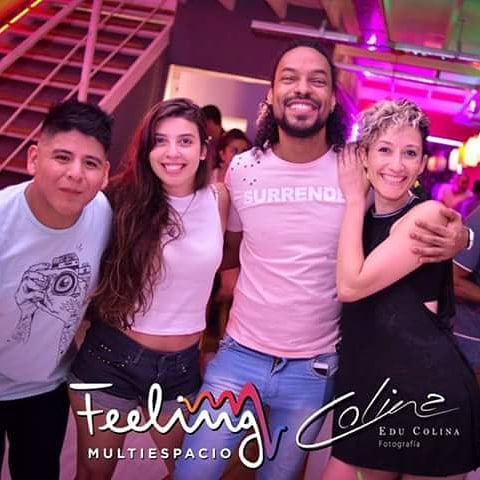
We have the opportunity to meet the dancer and teacher Yasser Peralta, who is dedicated to teaching Son and Rumba in the Cuban style, being something very striking due to the naturalness of his classes and we can believe that it is because his Cuban blood flows through his veins, giving the essence and flavor to the dance. He tells us that the development of his profession as a dancer and instructor began when he was little, since he was dedicated to dancing at parties, being a very common characteristic for most Cubans.

Yasser Peralta
Yasser Peralta

When he moved to Argentina, that did not stop him and in order to maintain his firm roots in his native land and to have his beloved culture very close, he went dancing, where he took advantage of every trip to Cuba to take classes, of which he was with:

  • Julia Fernández Regisseur of the National Folkloric Ensemble.
  • The Aspirins: Rumberos majors of Regla.
  • Luis Roblejo, professor of Modern Cuban Dance.
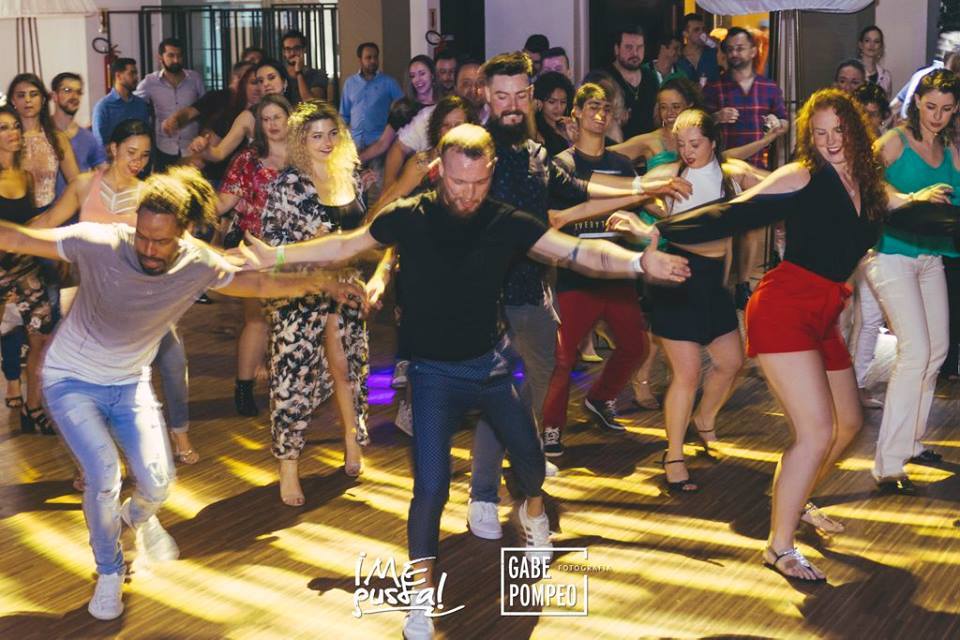
Yasser Peralta and his students

He tells us that he not only took classes, he also took training courses in both Cuba and Argentina; in Cuba he was in Cubadanza and in FolkCuba. In Argentina he was with two great dance masters of various genres and musical styles including the Cuban style such as the Mambo in 2 L.A. styles. All this made him increase his knowledge and resume of his musical career, being expanded by studying music, where he learned to play piano, guitar and percussion. And over time he began to organize events through his production company “AhíNaMá!”.

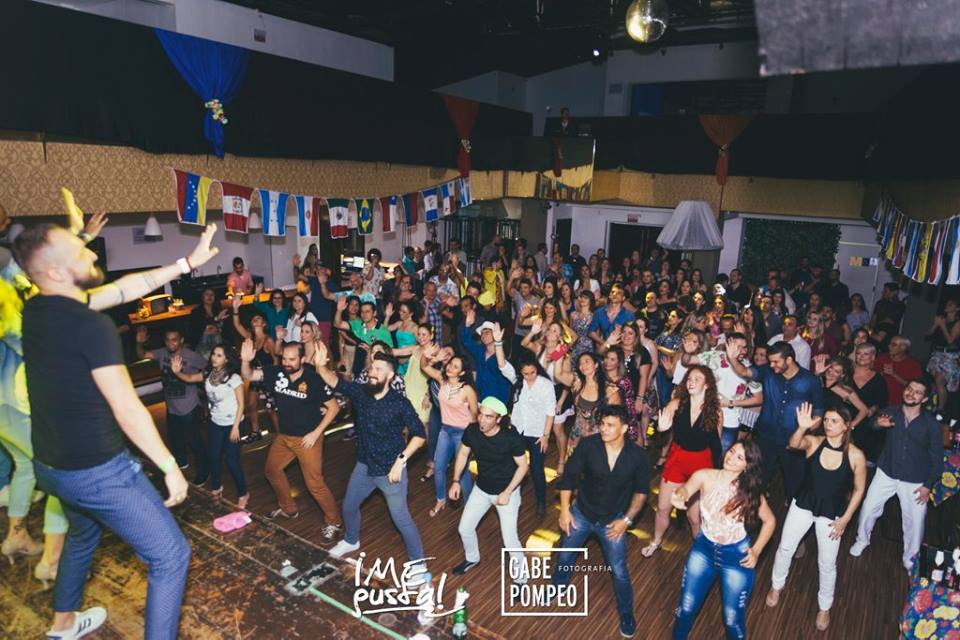
Workshop with Yasser Peralta

Of all his life journey, he tells us that “it was not only learning and having a profession, he enjoys dancing and teaching the genres of popular Cuban roots such as Afro-Cuban dances, Son and Rumba, because I understand that you have to go to the basis to better interpret current Cuban music…

On the other hand, I am from the Timba generation and I apply all of the above”, that is, dancing and teaching Cuban popular root genres are 2 of the things that I enjoy a lot, especially since In the future, he sees the possibility of traveling to, meanwhile, dedicate himself more to the production of cultural events of these Latin genres.

Photo - Workshop with Yasser Peralta
Photo – Workshop with Yasser Peralta

Yasser tells us that he has an event production company called “AhíNaMá!” where they hold workshops and teach at other academies:

La Viruta AhíNaMá! Vibra Dance
Tuesday: 20.30hs. $140

Thursday: 20.30hs $150

Wednesday: en Feeling 21.30hs más baile Social $120 Friday: 21.30hs más baile Social $150

Yasser expresses himself to all of us and above all recommends that lovers of Latin rhythms, whether they are dancers or artists who want to expand in the artistic area, “open your studio to other genres, other styles.” “Everything nourishes and gives resources to personal dance and there is nothing more difficult (but sublime) than achieving one’s own style; especially that they study the music they dance to, understand its structure and the “root” sub-genres that make it up. That is what makes the detail, and the difference is in the detail”.

Salsa Casino with Yasser Peralta

For more information:

  • Facebook:
    • https://www.facebook.com/yasser.peralta/
    • https://www.facebook.com/ahinamaproducciones/


  • Class:
    • Cuban Style : https://m.facebook.com/story.php?story_fbid=822097507972681&id=402506703265099
    • AhíNaMá en Feeling: https://m.facebook.com/story.php?story_fbid=877213132439763&id=739677559526655
    • Son: https://m.facebook.com/story.php?story_fbid=886905821470494&id=739677559526655
    • Rumba: https://youtu.be/BiTCxVsVeag
    • Musicality: https://youtu.be/ypUe_CYHRfk
    • La Viruta: https://m.facebook.com/story.php?story_fbid=809590925890006&id=402506703265099
    • Vibra: https://youtu.be/yRo9ZI1D1r0


  • « Go to Previous Page
  • Page 1
  • Interim pages omitted …
  • Page 19
  • Page 20
  • Page 21
  • Page 22
  • Page 23
  • Interim pages omitted …
  • Page 65
  • Go to Next Page »

International Salsa Magazine (ISM) is a monthly publication about Salsa activities around the world, that has been publishing since 2007. It is a world network of volunteers coordinated by ISM Magazine. We are working to strengthen all the events by working together.