• Skip to primary navigation
  • Skip to main content

International Salsa Magazine

  • Home
  • Previous editions
    • 2025
      • ISM / November 2025
      • ISM / October 2025
      • ISM / September 2025
      • ISM / August 2025
      • ISM / July 2025
      • ISM / June 2025
      • ISM / May2025
      • ISM / April 2025
      • ISM / March 2025
      • ISM / February 2025
      • ISM / January 2025
    • 2024
      • ISM / December 2024
      • ISM / November 2024
      • ISM / October 2024
      • ISM / September 2024
      • ISM / August 2024
      • ISM / July 2024
      • ISM / June 2024
      • ISM / May 2024
      • ISM / April 2024
      • ISM / March 2024
      • ISM / February 2024
      • ISM / January 2024
    • 2023
      • ISM / December 2023
      • ISM / November 2023
      • ISM / October 2023
      • ISM – September 2023
      • ISM – August 2023
      • ISM July 2023
      • ISM Edition June 2023
      • ISM – May 2023
      • ISM April 2023
      • ISM March 2023
      • ISM February 2023
      • ISM January 2023
    • 2022
      • ISM December 2022
      • ISM November 2022
      • ISM October 2022
      • ISM September 2022
      • ISM August 2022
      • ISM July 2022
      • ISM June 2022
      • ISM May 2022
      • ISM February 2022
      • ISM January 2022
    • 2021
      • ISM December 2021
      • ISM November 2021
      • ISM October – 2021
      • ISM September 2021
      • ISM August 2021
      • ISM July 2021
      • ISM May 2021
      • ISM April 2021
      • ISM June 2021
      • ISM March 2021
      • ISM February 2021
      • ISM January 2021
    • 2020
      • ISM December 2020
      • ISM November 2020
      • ISM October 2020
      • ISM September 2020
      • ISM August 2020
      • ISM July 2020
      • ISM June 2020
      • ISM May 2020
      • ISM April 2020
      • ISM March 2020
      • ISM February 2020
      • ISM January 2020
    • 2019
      • ISM December 2019
      • ISM November 2019
      • ISM October 2019
      • ISM Septembre 2019
      • ISM August 2019
      • ISM July 2019
      • ISM June 2019
      • ISM May 2019
      • ISM April 2019
      • ISM March 2019
      • ISM February 2019
      • ISM January 2019
    • 2018
      • ISM December 2018
      • ISM November 2018
      • ISM October 2018
      • ISM September 2018
      • ISM August 2018
      • ISM July 2018
      • ISM June 2018
      • ISM May 2018
      • ISM April 2018
      • ISM March 2018
      • ISM February 2018
      • ISM January 2018
    • 2017
      • ISM December 2017
      • ISM November 2017
      • ISM October 2017
      • ISM September 2017
      • ISM August 2017
      • ISM July 2017
      • ISM June 2017
      • ISM May 2017
      • ISM April 2017
  • Download Salsa App
    • Android
    • Apple
  • Spanish

Search Results for: Danzón

Oscar D’ León. Confessions by Oswaldo Ponte by William Briceño Part II

Latin America / Venezuela / Caracas

“Continuing the musical biography of Oscar D’ León. He moved on to new horizons, new learnings, difficult experiences, and decisions, as life always holds a wide variety of surprises over time. One of those changes was his breakup with Dimensión Latina due to various internal group problems.
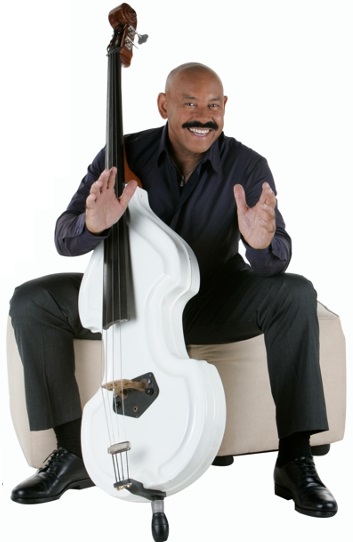
Photo 1: Oscar D' León
Photo 1: Oscar D’ León

Oscar’s departure caused issues for the group, as several of their scheduled performances in other countries were canceled, and over time, they lost audience, leading most of their members to split up and leave. Nevertheless, the group managed to carry on successfully but without the unique touch or ‘sazón’ that Oscar D’ León provided.

After leaving Dimensión Latina, Oscar ingeniously created La Salsa Mayor in 1976 and was able to release his first discography with his new group, thanks to the record label TH, which provided it because they were very interested in his new project, naming it ‘Con bajo y to’.’ From that moment, Oscar knew that he could consolidate himself with this group or any other, as his exceptional and unparalleled talents, so much originality, had never been witnessed”

“In any generation of Venezuelan artists. He also created another group called ‘La Crítica’ with the purpose that if any member of the Salsa Mayor Group was absent, one of them would substitute. However, the orchestra ‘La Salsa Mayor’ lasted only 4 years due to a strong disagreement Oscar had with his band on stage because the songs played during those two performances ‘were not accepted,’ leading to the closure of ‘Salsa Mayor.’ From that moment, he began to practice with his orchestra ‘La Crítica’ before his performances in Curaçao, where his songs, ‘Suavecito,’ ‘No ha pasado nada,’ served as a way to allude that everything had been overcome.”

“With this group, he achieved significant success. From that era, Oscar D’ León was known as the leading artistic figure in the country and on the American continent, with his music being heard in various homes in Venezuela and other Latin American countries. During that time, he traveled throughout the Latin American continent, the Caribbean islands, and the United States. From that moment, he leveraged his figure as he ventured into artistic promotion. He did so with Daniel Santos, Héctor Lavoe, El Gran Combo de Puerto Rico, and Celia Cruz.

If we have to mention which country Oscar liked or idolized the most, it was Cuba, because ever since he was very young, he loved the music played there, which over the years underwent various transformations in different stages, such as ‘La inmortal guaracha Celia Cruz’ which brought glory to the island; ‘la sonora Matancera’ carried the name of Martí’s land around the world; ‘Dámaso Pérez Prado,’ among other artists who contributed to the origin of Cuban music.”

“When Oscar D’ León first visited Cuba, it was an unforgettable experience and held extraordinary significance not only for the young artist but for the country itself. Its magnitude was such that, first and foremost, the ministers of culture and foreign affairs welcomed him, and every time he performed, large numbers of fans awaited to see and hear him. The respect and admiration for him were immense. In fact, this book mentions that ‘Cuban music,’ among other things, made Oscar D’ León’s existence as an artistic figure and as a person possible.”

Photo 2: Oscar D' León presenting his bibliography
cccc

“For Cubans, Oscar D’ León’s arrival had a profound effect; it was the rebirth of existing music. In short, he rescued it, causing Cuban music, ‘son,’ the central show, and entertainment venues to become their activities for relaxation and fun.

Oswaldo Ponte, in his research, mentions that when he looked for everything related to Oscar D’ León, there was immense admiration for him. Everyone he interviewed, even if they knew he was his manager and his biographer accompanied him, always said incredible things about Oscar. He not only rescued Cuban ‘son’ but also taught them to dance Cuban music, opening the minds and perspectives of Cubans, as Cuban ‘son’ continued to be known internationally. Everyone mentions what a good musician he is, that they can’t believe he isn’t Cuban and has that ‘sazón’ (flavor/charisma).

He was famous not only in Cuba but also in other countries. An example of this was Oscar’s participation in the Rome Festival when he sang a song by Adalberto. Mr. Adalberto Álvarez passed backstage and commented: ‘Cuba will never be able to repay Oscar for what he has done for Cuban music. He has kept it alive; if it hadn’t been for him, for Johnny Pacheco, for Celia Cruz, for La Sonora Ponceña and others who took it upon themselves to keep ‘son’ alive outside our country’… ‘and of all of them, the fundamental leader was Oscar D’ León because he is the most connected to authentic Cuban musical roots.'”

“In short, every time Oscar goes out to sing and dance, he is representing Cubans. For Cubans, dancing is almost a ritual. In 1950, they danced ‘son,’ ‘danzón,’ ‘mambo,’ ‘chachachá,’ ‘rumba,’ and other dances, some of which lasted a very short time, such as ‘dengue,’ ‘monzambique,’ ‘pilón,’ ‘carioca’; and others transcended time, like ‘conga’ and ‘rumba.’ Salsa is the continuation of, or the same as, ‘son,’ which can be danced with the same style or with different styles.
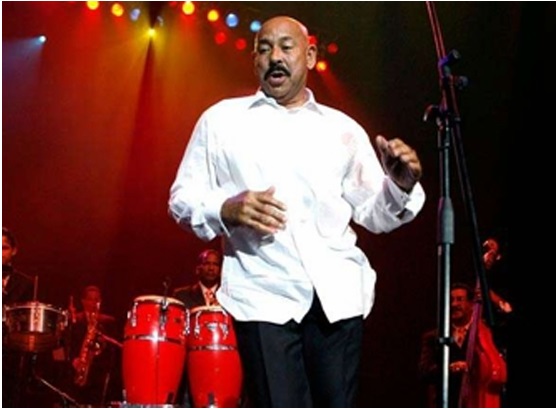
Photo 3: Oscar D' León in concert
Photo 3: Oscar D’ León in concert

Oswaldo Ponte began his promoter plan by hiring figures, among whom was Oscar D’ León. Becoming a serious entertainment promoter, he took the risk of doing it internationally (outside Venezuela) where he bought a contract from Guillermo Arena to present Celia Cruz with La Sonora Matancera. He also partnered with Juan Caravallo and managed to present the biggest show in Higuerote, Venezuela; with this great step, he was becoming a potential successful entrepreneur in international shows.”

“In 1983, he hired Oscar for 3 performances with ‘Roberto Blades,’ two at the Ávila Hotel and one at San Jacinto Park (both in Venezuela). At that time, Oscar was returning from Cuba, and with a new event, Oswaldo, upon seeing the show, pondered the difference between the two artists.

The Panamanian star was well-managed by his team. However, when it came to judging which was the better show, it was Oscar D’ León’s. When Ponte went to talk with him, he proposed becoming his manager on the condition that Oscar follow his instructions, as he always directed everything, which Oscar accepted. From that moment, many things changed not only artistically but also personally, offering the public not just Oscar D’ León and his orchestra, but Oscar D’ León himself, giving more charm and charisma to his audience.

One of the challenges he had to face was a stagnation in record sales. His new record productions weren’t taking off, so he decided to rely on television. Venezuela was both a recipient and a transmitter country, so his performances were broadcast on different television channels that gave great musical importance, such as ‘Siempre en Domingo,’ which covered the center and north of the American continent, and ‘Sábado Gigante,’ which covered South America, thus giving him international exposure.

One of his best and most unforgettable collaborations was with singer Celia Cruz, who was a great friend of Oscar’s. They participated in many events, one of which was in 1993, where Ralph Mercado did what he called ‘The Perfect Combination,’ which consisted of combining stars for public performances.

Participants included Oscar D’ León, Celia Cruz, Marc Anthony, La India from New York, Tito Nieves, Tony Vega, Cheo Feliciano, José Alberto El Canario, and Domingo Quiñones, of which the most recommended songs were ‘El Son de Celia y Oscar’ and ‘Vivir lo nuestro’ by Marc Anthony and La India. At that time, Oscar had left the TH label and was now with Ralph Mercado; his colleagues were Tito Puente, Celia Cruz, Sergio George, Cheo Feliciano, Tito Nieves, La India, José Alberto El Canario, and other significant stars.

There are many other details and more events up to the present day, but it would be too much to explain in one article. What is very clear is that Oscar D’ León has conquered countless goals in his life, and we can all do the same in the different areas in which we operate, if we set our minds to it with determination and an iron will.

Photo 4: Oscar D' León and his bibliography
Photo 4: Oscar D’ León and his bibliography

To learn more about this, we recommend reading ‘Oscar D’ León, Confesiones De Oswaldo Ponte’ by William Briceño, published by Fundación Simón Bolívar.”


Israel “Cachao” López, a Cuban musician and composer, has been hailed as “the Inventor of Mambo”

Born in Havana on September 14, 1918, and passing away in Coral Gables, Miami, on March 22, 2008, Israel “Cachao” López, often known simply as “Cachao,” was a Cuban musician and composer.

Israel Cachao López musico y compositor cubano, ha sido definido como el Inventor del Mambo

He became a legend in Cuban music with his masterful handling of the double bass and was renowned for his performances in mambo and Latin jazz.

His talent earned him two Grammy Awards (in 1995 and 2005), a Latin Grammy in 2003, an honorary doctorate from Berklee College of Music, and a star on the Hollywood Walk of Fame.

He has been described as “the inventor of mambo” and is considered a master of descarga (live improvisations).

He began by playing various instruments until he settled on the double bass, which allowed him, as a teenager, to join the Havana Philharmonic Orchestra, where his father and older brother also played.

“Cachao” left Cuba in 1962 with a long list of successes and stated in a 2007 interview that if it weren’t for his compatriot and colleague Dámaso Pérez Prado, “mambo would not have been heard worldwide.”

Israel Cachao López nacido en La Habana, un 14 de septiembre de 1918 y falleció en Coral Gables un 22 de marzo de 2008 en Miami

His first stop was Madrid, where he stayed for a year before emigrating to the United States. In the U.S., he resided in New York City, Las Vegas, and Miami.

López also played acoustic bass with his brother, the multi-instrumentalist Orestes López. They literally composed over 3,000 songs together and were highly influential in Cuban music from the 1930s to the 1950s.

They created the “nuevo ritmo” (new rhythm) in the late 1930s, which transformed the danzón by introducing African rhythms into Cuban music, ultimately leading to mambo.

He won several Grammy Awards for both his own work and his contributions to albums by Latin music stars, including Gloria Estefan. In 1995, he won a Grammy for Master Sessions Volume 1.

In 2003, he won a Latin Grammy for Best Traditional Tropical Latin Album alongside Bebo Valdés and Patato for El Arte Del Sabor. He won another Grammy in 2005 for his work ¡Ahora Sí!

His nephew, Orlando “Cachaíto” López, became one of the pillars of the famous Buena Vista Social Club.

Cachao performed with artists such as Tito Puente, and his music has been featured in films like The Birdcage and the soundtrack of the video game Grand Theft Auto: Vice City.

The Actor Andy Garcia produced a documentary titled Cachao… “Como Su Ritmo No Hay Dos” in 1993 about his music. He also shared stages with Celia Cruz and her husband Pedro Knight, as well as with trombonist Generoso Jiménez.

Leyendas de Nuestra Musica Latina Pacheco, Puente y Cachao

His last musical collaboration was with Gloria and Emilio Estefan on the singer’s album titled 90 Millas.

López passed away on the morning of March 22, 2008, in Coral Gables, Florida, at the age of 89, due to complications following kidney failure.

Cachao y Su Ritmo Caliente – Monte Adentro (2000)

Tracks:

  1. Monte Adentro (Cógele el golpe) (A. Castillo Jr.)
  2. Goza Mi Trompeta (O. Estivill)
  3. Guajeo de Saxos (E. Peñaver)
  4. Estudio en Trompeta (I. López)
  5. Gozar Timbero (O. Estivill)
  6. Trombón Criollo (O. Portillo)
  7. Malanga Amarilla (S. Contreras)
  8. Controversia de Metales (I. López)
  9. Descarga Cubana (O. Estivill)
  10. Pamparana (A. López)
  11. Sorpresa de Flauta (O. Estivill)
  12. Oye Mi Tres Montuno (A. Echevarria)
  13. La Floresta (O. López)
  14. Avance Juvenil (B. López)
  15. Redención (O. López)
  16. Descarga Mambo (D.P.) 

Musicians:

  • Israel López “Cachao” (Double Bass)
  • Guillermo Barreto (Timbales)
  • Tata Güines (Tumbadora)
  • Rojelio “Yeyo” Iglesias (Bongos)
  • Gustavo Tamayo (Güiro)
  • Alejandro “El Negro” Vivar (Trumpet)
  • Armando Armenteros (Trumpet)
  • Generoso “El Tojo” Jiménez (Trombone)
  • Oreste López (Piano)
  • Enemelio Jiménez (Alto Sax)
  • Emilio Peñalver (Tenor Sax)
  • Virgilio Lisama (Baritone Sax)
  • Richard Egües (Flute)
  • Niño Rivera (Tres)
  • Roliyo y Reyes (Chorus)

Recorded in Havana, 1957-1958

Cachao y Su Ritmo Caliente - Monte Adentro (2000)
Cachao y Su Ritmo Caliente – Monte Adentro (2000)


The tradition of being musicians comes from grandparents and great-grandparents, all the Cachaos are musicians.

By:

Dj. Augusto Felibertt

L’Òstia Latin Jazz

Also Read: Israel “Cachao” Lopez Sobrado in fame and respect in the seventies was dedicated to maintain the tradition at the highest level

Caesar Vera Y Su Sexteto NuevoSon, traditional Cuban music with a touch of modernity

It is very important for us to show and provide coverage to the most important Latin music artists of today in the United States and now it is the turn of Chicagoan musician Caesar Vera, who very kindly accompanied us in this edition of International Salsa Magazine.

Caesar is the current director of Caesar Vera Y Su Sexteto NuevoSon, which we will talk about later along with other equally important issues for the musician’s career.

Caesar with a bongo
Caesar Vera with his bongos some years ago

How Caesar began his journey in music

Although Caesar has developed his professional life in Miami and currently lives there, he was actually born in Chicago and spent the early years of his life there. His parents arrived from Cuba in 1966 in the freedom flights and, once in the United States, the Catholic Church helped them and placed them in Chicago, where he was born and lived until 1978. Later, the couple divorced and his father went to live in Miami, so Caesar spent long holiday periods together with him in that city.

The path with music for Caesar began in high school, when he became very interested in rock music, to the point of creating a band with some of his classmates. He played the drums and was a huge fan of Led Zeppelin, Kiss, Van Halen, and other groups of that style. 

The only connection the young man had with Latin music was his grandfather, who loved to dance danzón and always played Orquesta Aragón records so that they could both move to the beat music in the living room of his house. Although these moments with his grandfather were very pleasant, he did not yet like this kind of music, but that would change over the years.

In Miami, there was a time when there were many Latin bands playing, and every corner had a nightclub with orchestras playing. Caesar and his friends used to attend these places a lot, which led the young man to finally become interested in these genres. This coincided with the arrival from Cuba of his uncle who was a musician and had a band there, which they talked about constantly, and he even taught his nephew to play instruments such as the tumbadora, bongos, timbales, and all minor percussion.

In 1987, what happened was a turning point for Caesar musically speaking, as he finally decided to take Cuban music more seriously and study its history to understand it better.

Caesar Vera and Luis Bofill
Singer and bandleader Luis Bofill and Caesar Vera

Groups prior to Caesar Vera Y Su Sexteto Nuevo Son

Before creating his own group, the wife of a friend who had a group invited him to play percussion with them, a proposal Caesar accepted, and he started playing the tumbadora with the orchestra. Something new in this case was that he had never played with an established band in formal performances, so it was something new for him.

By 1992, he had met the famous Cuban bongo player Juan Méndez, who had played with the Roberto Faz Orchestra, Roberto Torres, and Luis Santi Y Su Conjunto. Méndez told him that he needed a bongo player in an orchestra he was forming at the time and asked Caesar to fill the vacancy, to which he answered yes and remained in the group until 2003, that is, for around 11 years.

In addition to that, he was a replacement in various orchestras in Miami for a while, one of which was Gilberto Díaz Y Su Conjunto Los Profesionales. He was with them for two years, but by then traditional Cuban music, more specifically Cuban son, had captured his full attention. It just so happens that one of his orchestra fellows told him that Norberto from the group Norberto Y Marcela Y El Septeto Caribe called him because they needed a bongo player and asked if he was interested in the vacancy. Caesar did not think twice and went to play with the orchestra even though he did not have much experience with the bongos, but he took the risk anyway. It was with this group that he started playing traditional Cuban music and prepared to do the same once he became independent.

Caesar and his bandmates
These are the band members from left to right: bongo player Caesar Vera, singer Billy Velazquez, tres player Roberto Acosta, bassist Arturo Senti, conga player Hebert Garcia, and trumpet player Orlando Fraga

Foundation of Caesar Vera Y Su Sexteto NuevoSon

Still playing with Norberto and Marcela, Caesar started having his own creative ideas on how to lead an orchestra, but he could not carry them out because he was only a musician who collaborated with the orchestra, which started to bother him and cause him enormous dissatisfaction. One day, his wife saw him stressed and frustrated by the situation, leading her to ask him why he did not become independent and create his own project. 

That is when he started thinking about it seriously until, in early 2007, he finally founded the group Fusión 4 with Carlos Alberto “El Flaco”, who had previously sung with Fajardo Y Sus Estrellas, Larry Harlow, and La Fania. They managed to play every Saturday at the Deauville Jazz Club for a year.

However, the sextet as we know it today was created just two years ago because it was costing to Caesar much to find work for such a large orchestra, especially after the pandemic when much of the live music scene fell off a cliff. 

Today, some of its members are tres player Roberto Acosta, bassist Arturo Santi, conga player Hebert García, trumpeter Orlando Fraga, and singer Billy Velázquez. 

Read also: Young promise of music Sofia Grace Doellefeld tells us about her dreams

Ilhe Habana

Latin America / Colombia / Bogota

Ilhe Habana. Little Havana in Colombia

Ilhe Habana
Ilhe Habana

The Macarena Sector in Bogotá – Colombia offers us a great variety of gastronomic spaces, a reference sector for international food, for this reason we could not help but bring us closer to the best Cuban food space in the city, the great Ilhe Habana, a space of great tradition that takes you to enjoy a themed plaza of old Havana.

Ilhe Habana - inside
Ilhe Habana – inside
Ilhe Habana - inside - 2
Ilhe Habana – inside
– 2

From Sunday to Sunday from 12:00 to 4:00 pm, it opens its doors to a particular base of high caliber typical Cuban foods, we can get a great gourmet line, it is easy to get dishes such as old clothes, black beans, Moorish rice and Christians, yucca with mojo, habanero mincemeat, habanero shrimp, sea bass, squid rings, among others that delight your palate, arrival night from Wednesday to Saturday from 6:30 p.m. to 10:00 p.m.

Ilhe Habana - Cymbals
Ilhe Habana – Cymbals

It offers us a space decorated with groups and singers of the music of the island, letting the enjoyment roll until 12:00 am on Fridays and Saturdays to enjoy boleros, sones, danzones and even guarachas of this Latin American musical icon.

Ilhe Habana - live music
Ilhe Habana – live music
Ilhe Habana - live music - 2
Ilhe Habana – live music – 2

Ilhe refers to the word house or land according to the Yoruba language, something well defined with the Afro-Cuban culture, for this reason Ilhe Habana seeks a concept of old Havana, with a cozy space with brightly colored walls, wooden furniture and a house facade taken of the best Cuban roots.

Ilhe Habana - the kitchen
Ilhe Habana – the kitchen

During our visit we were able to talk with… the owner and cause of this gastronomic fever, he allowed us to enjoy the house specialty, the much-followed Roast Pork, although we noted that the fried cow was highly requested, as was the pork escalope. Located near the city center, on Carrera 3A, # 26B – 72, this Caribbean center offers us a space full of delicious dishes, visit www.ilhehabana.com and find out about a whole world of flavors, surely during your visit to Bogota you will not be able to forget going through this great restaurant.

Los Boleros Latin Band Bandleader Rudy Furlan kindly talked to us

Cuban music has managed to conquer so many hearts around the world that even many who were not born on the island have come to feel a great fascination for it. Such is the case of the bandleader and leader of Los Boleros Latin Band, Rudy Furlan, with whom we were able to talk for a few minutes about his career and his band.

Rudy playing the guitar
Rudy Furlan playing the guitar for the camera

How Rudy got started with music

Although Rudy was born in Guatemala, he moved to the United States when he was just three months old and has lived in the country ever since. His parents loved music and having parties at home, where various members of the family brought out guitars and broke into song to lighten the mood.

Most of his parents’ friends loved to sing boleros and the Latin classics of the time, which Rudy found pleasant and enjoyed musical activities of the adults around him to the point that he wanted to participate in those impromptu gigs within his means.

Soon after, he started taking guitar lessons at the age of nine, but it was at 16 that he started to take music more seriously and realized that he wanted to play the genres his parents always listened to such as bolero, cumbia, Cuban son, danzón, among others. Only drawback he found was that he could not find boys his age who wanted to play that kind of music, added to the fact that the communication possibilities that we enjoy today did not exist. 

So, Rudy had no choice but to start forming small bands with kids who lived on his block and play rock and other local genres that were normally played back then. However, this whole situation changed when he placed an ad on Craigslist (online classified company). That is when he finally managed to get the people he needed to play what he finally wanted to play and how he wanted to play it.

Rudy at the museum
Rudy Furlan at the Motown Museum in Detroit

Los Boleros Latin Band

Rudy finally fulfilled his dream of playing his parents’ favorite music as an adult and managed to recruit a group which he named Los Boleros Latin Band. The artist chose this name as a tribute to the genre he liked to listen to since his childhood, plus he likes how the name sounds.

In the early 2000s, he set up the band’s website to have an internet presence, which was not very common for Latin bands in Northern California in those years. There was so much rock and soul in that area, but Latin music did not have the boom that it has acquired today.

Practically from day one, they managed to have a lot of work in many events, which led several talented musicians to contact Rudy to work with him. One of them is vocalist Felix Samuel, who comes from Cuba and joined Los Boleros Latin Band in 2009. Felix comes from a family of professional musicians, so it was easy for him to integrate into his family’s craft and exercise it with the same talent and momentum as his relatives.

Something interesting to say about Samuel is that his talent began getting noticed, so he was recruited by an HBO producer to soundtrack the film ‘‘Hemingway & Gellhorn’’ with Nicole Kidman and Clive Owen.

Another important member of the band is Zareen Tangerine, who is also a vocalist in the group and joined it in 2000, making her one of the first to join Los Boleros Latin Band.

Another fundamental part of the band is David Somers, who is currently the group’s saxophonist, although he also plays the flute to perfection. 

Among other members, we can also mention bassist David Pinto, percussionist Dominic Cabrera and Oswaldo Carvajal, who also plays for La Moderna Tradición. 

Dominic, David, Felix, David, Rudy, and Zareen
Percussionist Dominic Cabrera, singer Felix Samuel, saxophonist David Somers, bandleader Rudy Furlan, and singer Zareen Tangerine

Great references and inspirations for the music Los Boleros Latin Band makes

A few years ago, Rudy bought an album by Buena Vista Social Club, which he says changed his life completely and made him change direction in terms of the music. He listened to the material every day for months, to the point that he even memorized the songs and started playing them with his guitar.

When forming Los Boleros Latin Band, his musicians played many songs from that album and other great artists such as Eliades Ochoa, Ibrahim Ferrer, Compay Segundo, Omar Portuando and many others. 

Those already mentioned were some of the greatest inspirations Rudy and the members of the band had for their project, this being the vision with which the artist wants to go on through time as far as possible.

Read also: Producer, composer, and guitarist Oscar Almonte innovates with Dominican music

  • Page 1
  • Page 2
  • Page 3
  • Interim pages omitted …
  • Page 9
  • Go to Next Page »

International Salsa Magazine (ISM) is a monthly publication about Salsa activities around the world, that has been publishing since 2007. It is a world network of volunteers coordinated by ISM Magazine. We are working to strengthen all the events by working together.