• Skip to primary navigation
  • Skip to main content

International Salsa Magazine

  • Home
  • Previous editions
    • 2025
      • ISM / November 2025
      • ISM / October 2025
      • ISM / September 2025
      • ISM / August 2025
      • ISM / July 2025
      • ISM / June 2025
      • ISM / May2025
      • ISM / April 2025
      • ISM / March 2025
      • ISM / February 2025
      • ISM / January 2025
    • 2024
      • ISM / December 2024
      • ISM / November 2024
      • ISM / October 2024
      • ISM / September 2024
      • ISM / August 2024
      • ISM / July 2024
      • ISM / June 2024
      • ISM / May 2024
      • ISM / April 2024
      • ISM / March 2024
      • ISM / February 2024
      • ISM / January 2024
    • 2023
      • ISM / December 2023
      • ISM / November 2023
      • ISM / October 2023
      • ISM – September 2023
      • ISM – August 2023
      • ISM July 2023
      • ISM Edition June 2023
      • ISM – May 2023
      • ISM April 2023
      • ISM March 2023
      • ISM February 2023
      • ISM January 2023
    • 2022
      • ISM December 2022
      • ISM November 2022
      • ISM October 2022
      • ISM September 2022
      • ISM August 2022
      • ISM July 2022
      • ISM June 2022
      • ISM May 2022
      • ISM February 2022
      • ISM January 2022
    • 2021
      • ISM December 2021
      • ISM November 2021
      • ISM October – 2021
      • ISM September 2021
      • ISM August 2021
      • ISM July 2021
      • ISM May 2021
      • ISM April 2021
      • ISM June 2021
      • ISM March 2021
      • ISM February 2021
      • ISM January 2021
    • 2020
      • ISM December 2020
      • ISM November 2020
      • ISM October 2020
      • ISM September 2020
      • ISM August 2020
      • ISM July 2020
      • ISM June 2020
      • ISM May 2020
      • ISM April 2020
      • ISM March 2020
      • ISM February 2020
      • ISM January 2020
    • 2019
      • ISM December 2019
      • ISM November 2019
      • ISM October 2019
      • ISM Septembre 2019
      • ISM August 2019
      • ISM July 2019
      • ISM June 2019
      • ISM May 2019
      • ISM April 2019
      • ISM March 2019
      • ISM February 2019
      • ISM January 2019
    • 2018
      • ISM December 2018
      • ISM November 2018
      • ISM October 2018
      • ISM September 2018
      • ISM August 2018
      • ISM July 2018
      • ISM June 2018
      • ISM May 2018
      • ISM April 2018
      • ISM March 2018
      • ISM February 2018
      • ISM January 2018
    • 2017
      • ISM December 2017
      • ISM November 2017
      • ISM October 2017
      • ISM September 2017
      • ISM August 2017
      • ISM July 2017
      • ISM June 2017
      • ISM May 2017
      • ISM April 2017
  • Download Salsa App
    • Android
    • Apple
  • Spanish

Search Results for: Dj

ISM presents 2 Venezuelan DJ with a great passion for Salsa

Latin America / Venezuela / Caracas

DJ Katiuska Oropeza

Katiuska Oropeza. Born in Caracas, the capital of salsa in Venezuela, currently based in the Carabobo State, Valencia – Venezuela.

DJ Katiuska Oropeza
DJ Katiuska Oropeza

He mentions “My passion for salsa began at the age of 3, influenced by my father who was a great connoisseur of this genre and at the age of 7 I already wanted to learn to play the timbal since I love percussion.

Over the years and by chance I got to know the salsa movement produced by a number of virtual collection salsa stations where a number of music lovers gather to enjoy and keep alive what is the essence and basis of salsa, I become passionate and I begin an incredible learning about everything that Venezuelan salsa is and that is when I become a programmer for the pioneering station on the Internet called www.rumbayguateque.com through this I was the representative in Venezuela of Mr. Alfredo Maleta Torres, the last singer who had the Joe Cuba sextet.

Today I try to spread the little that I have learned from this genre that has an endless history and from time to time participating as a musicalizer in different salsa events.” “Long live salsa forever.”

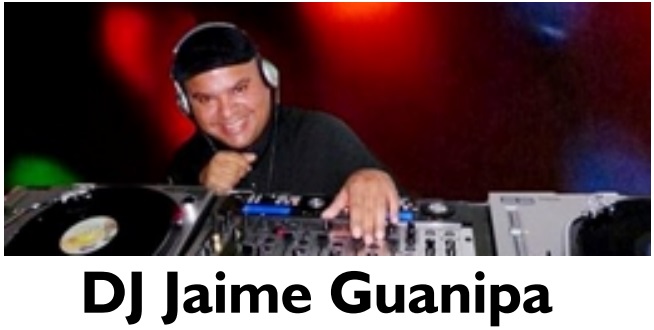
DJ Jaime Guanipa

During his interview on La Maceta radio conducted by me, Jaime mentioned that he was born in December 1966 in Caracas Venezuela, a native of Sarria belonging to the La Candelaria parish, where he grew up in two aspects in his early years, between Sarria and Alta Vista. in Catia parish Sucre also in Caracas.

His first tangible experience within Latin music called “SALSA” was thanks to the Venezuelan “PHIDIAS DANILO ESCALONA” who gave him this label that has immortalized the genre, and for Jaime’s memory it was in 1973 with the premiere of the movie “Nuestra Cosa Latina” and The SALSA Movie in different theaters in Caracas, and through its soundtrack I was shocked, and began to develop a definitive taste within the musical field, nurturing and wanting to be more extensive…

In this way, through the years, I achieved a broader knowledge within the Latin American culture, where it was enriched by absorbing like a sponge everything related to the environment and listening to Radio where they moderated great knowledge to which I can name our Venezuelans and connoisseurs. and moderators in different Radio stations in Modulated Amplitude for the time in Caracas such as Phidias Danilo Escalona, ​​Floro Manco, Enrique Bolívar Navas, Héctor Castillo, Rafael Rivas, among other great broadcasters, achieving a very solid understanding within the majesty of salsa , but…
DJ Jaime Guanipa
DJ Jaime Guanipa

As of 1979 he has the concern to share and listen to the coarsest of our Latin music, beginning with family parties and friends, then he made comments and selected music from the acetate discs that were in said meetings, being this a cult and from 1982 he defined himself as a DJ. Salsero, enriching the technology and the true art of the moment, which is research, the study of the genre and the credits of his albums that logically were and are in LP format.

Generating in this way a breeding ground for experimentation and musical selection, it is from this moment referring to the date in which his experience and exchange of criteria between friends who throughout these years have followed and accompanied him within this passion, having successes as Salsero Musicalizer in extinct venues in the city of Caracas for the years 1985 to 1990, was triggered.

Later, in 1993, he temporarily retired due to family responsibilities, but without ever abandoning my passion for music and genre research both here in my country Venezuela and abroad, and in 2008, he decided to resume after a reasonable time. my most significant taste for salsa musicalization, already for the moment obtaining many valuartes but with its due time within the genre, evolving distinctively in terms of its versatility and exponents, highlighting that for me it is not a challenge since due to the concept earned and maintained has given me a preferential position within the taste of the salsero and the dancer that…

I call demanding, experience experience gained due to the fact that at the time I was surrounded by great friends who love the salsa genre that many of them share today, which is why and subscribed to current technology and its ease of access, it means that in a masterly way I can give the what the dancing public really wants and desires in each meeting, event and party, without a doubt, before it I expose an interactive referential synthesis of my time in this exciting world as it is and I define “Salsa musicalization in Caracas nightlife ”.

So that you know something more about the DJ. Jaime Guanipa, the Vinyl of Salsa

Jaime Guanipa was born in December 1966 in Caracas, Venezuela, originally from Sarria, belonging to the parish of La Candelaria, growing up in two areas in my early years, between Sarria and Alta Vista in Catia, Parish of Sucre, also in Caracas.

Dj. Jaime Guenipa el Vinilo de la Salsa

His first tangible experience within Latin music called “Salsa” thanks to the Venezuelan “PHIDIAS DANILO ESCALONA” who gave him this label that has immortalized the genre.

For my memory it was in 1973 with the premiere of the film “Nuestra Cosa Latina” and the SALSA Movie in different movie theaters in our city, where through its soundtrack I was impacted, thus generating a definitive taste in the musical field, fertilized by it wanting to be more extensive and thus achieving in subsequent years a broader knowledge within the Latin American Culture in this concept.

Subscriber to absorb like a sponge everything related to the environment and listening to the Radio where greats of knowledge moderated, to which I can name our Venezuelans and experts and moderators in different AM Radio stations for the time in Caracas such as, Phidias Danilo Escalona, ​​Floro Manco, Enrique Bolívar Navas, Héctor Castillo, Rafael Rivas, among other great broadcasters, achieving a very solid understanding within the majesty of salsa.

He was able to define that by 1979, already having the concern to share and make the most of our Latin music heard within parties both family and friends, he made comments and selection of music from the acetate records that were in said meetings, this being a cult for the distinctive passion for what was already defined as the path to being a Salsa DJ in 1982.

Subscribed to technology and the true art of the moment, which is the research, the study of the genre and the credits of his albums, which logically were and are in LP format.

Dj. Jaime Guanipa Sincé 1982

Generating in this way a breeding ground for musical experimentation and selection, it is from this moment referring to the date that my experience and exchange of criteria between friends who throughout these years have followed me and accompanied me within this passion was unleashed, having successes as a salsa musician in extinct venues in the city of Caracas for the years 1985 to 1990.

Then later in 1993, I temporarily retired due to family responsibilities, but without ever abandoning my passion for musicalization and research of the genre both here in my country Venezuela and abroad, by the year 2008, I decided to resume after a very reasonable time my most significant taste for salsa music, by the time obtaining many new bastions but with their due time of seniority within the genre, evolving distinctively in terms of its versatility and exponents.

I would like to point out that for me it is not a challenge, since due to the concept gained and maintained, it has given me a very preferential position within the taste of the salsa dancer and the dancer that I call demanding.

Experience gained due to being surrounded at the right time by great friends who love the salsa genre, many of whom I share today, reason for this and subscribed to current technology and its ease of access makes it possible for me to masterfully give the dancing public what they really want and desire at each meeting, event and party.

Dj. Jaime Guanipa Sincé 1982

Without a doubt, before this I present an interactive referential synthesis of my passage through this exciting world as it is and I define “Salsa Musicalization in the Caracas nightlife. Thank you for your interest in this humble servant.

It is not just a photo with an LP, it is an image with a history, in 1981, I remember when I rode my bike in Sarria and many times in Guaicaipuro, where two friends Sergio and Napoleon lived. The latter had Sansui sound equipment in his house that sounded excellently well, we listened to endless hours of irreverent Salsa full of rhythmic diversity.

It's not just a photo with an LP, it's an image with a story Orquesta La Critica
It’s not just a photo with an LP, it’s an image with a story Orquesta La Critica

One day he said to me “Gordo” let’s go to Paradise and we went to listen to where Oscar D’Leon has his house and they rehearse there, so I told him let’s go and we listened in Machado alley not only to the regular rehearsals of Oscar’s Orchestra but one day in particular it was “LA ORQUESTA LA CRITICA”.

I particularly heard two songs that I remember with great specialness, such as “A EL” and MONTA MI CABALLO, where the quality and function of the ensemble were majestic, full of cadence, exceptional harmonics, the brass voices and the accompaniment between bass and piano were evident.

I remember seeing Larry Machado, Teo Hernández, José “Cheo” Navarro, and Flaco Bermúdez on several occasions during a chronologically dispersed period of time. I never saw Oscar, I never saw this character despite hearing his voice on several occasions.

In conclusion, an anecdotal experience that I will never forget, since it is not only having a record, but the history and the experience that it contains, which is what remains and is transmitted, the passion and the good fellowship before the Demanding Dancer, I hope you liked this little anecdote that I share with you, dear friends. Demanding, I hope you liked this little anecdote that I share with you, dear friends.

Dj. Jaime Guanipa Since 1982

Caracas – Venezuela.

Jaime Guanipa passed away in Caracas on February 27, 2023.

Excellent Venezuelan music lover, researcher, disseminator and DJ of Afro-Caribbean music.

I contribute in a simple way the best of the true art of entertainment and salsa music in the city of Caracas-Venezuela.

Also Read: “Djane Shina” a passion turned into reality

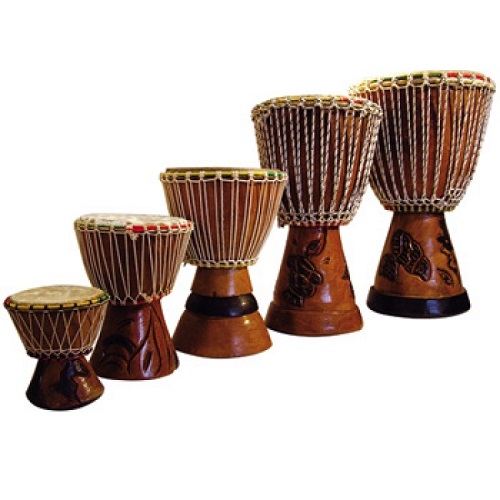
The Djembe is a percussion instrument belonging to the family of membranophone instruments

It originated in the ancient Mandinga Empire, approximately between the towns of Bamako (Mali) and Kankan (Guinea), from where it later migrated to Senegal, Ivory Coast and Burkina Faso, forming an integral part of the music and traditions of the area.

Africans playing Djembe

It is believed that this migration was due to the Numu, who were (and still are) blacksmiths [[professionals considered guardians of certain powers.

They were in charge of making the Komo masks, performing circumcision and ablation of adolescents to mark their passage to adulthood, as well as sculpting and playing the yembes.

As a result of differences in shape, wood density, internal engravings and skin, there is a wide range of tones that can be emitted by the yembe.

Striking the skin near the center produces lower notes, striking it near the edge.

It is struck with the fingers together and stretched, but without leaving them glued to the drumhead, so that the sound comes out.

On the other hand, to produce the highest pitched sound, the slap is used.

The palm of the hand is slightly curved and the membrane is hit with the fingertips.

It is estimated that the djembe was invented approximately 3000 years ago by the African Maninka tribe, who used it as a ceremonial instrument.

The Djembe originated in the former Mandinga Empire, approximately between the towns of Bamako (Mali) and Kankan (Guinea).

The word yembé comes from the Bambara language and means together in peace.

Membranophones are musical instruments that produce sound through the vibration of a taut membrane or drumhead.

The membranes can be made of animal skin or synthetic material and the instruments can be mounted on wooden cylinders, ceramic vessels or gourds.

Membranophones can be played by percussion or rubbing and can have one or two membranes, closed or open bottoms.

Some examples of membranophones are:

– Bombo: A direct hit membranophone whose sound is extracted by striking it with a wooden striker.

– Snare: A membranophone instrument

– Drum: A percussion instrument with a resonance box, which is usually cylindrical, and a membrane called a drumhead that covers the opening of the box.

– Zambomba: A friction drum.

– Cuica: A friction drum

– Juque: A Costa Rican instrument that is a friction drum

– Mirlitón: A blown membranophone instrument.

Membranophone Africa This percussion instrument is of African origin, but its antecedents are Asian (Japan and China) places where it is widely spread and is known with the names “Kelontonga” and also known as “Den-Den Daiko”.

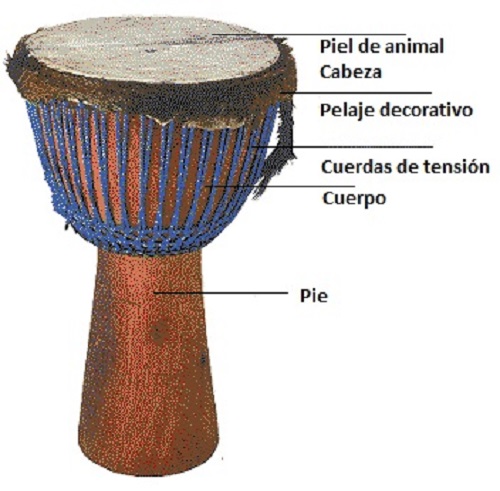
Djembe parts
Djembe parts

Membranophones. The membranophones produce the sound by means of the vibration of a tensed membrane. The vibration of this membrane can be provoked by hitting it, rubbing it or by voice (humming).

The castanets or “palillos” are a percussion instrument created by the Phoenicians three thousand years ago.

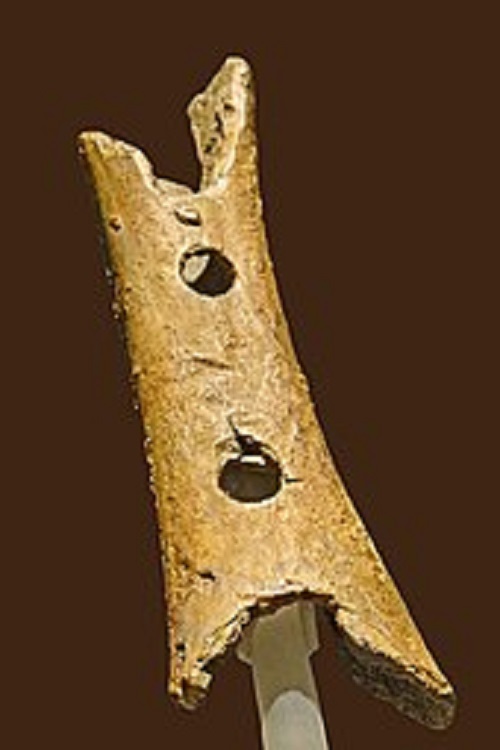
The oldest instrument is the flute, invented by Homo habilis in the Paleolithic and made of bird bone and mammoth ivory, this instrument is about 42 000 years old.

The oldest instrument is the flute, invented by Homo habilis in the Paleolithic period and made of bird bone and mammoth ivory, this instrument is about 42 000 years old.dor de 42 000 años
The oldest instrument is the flute, invented by Homo habilis in the Paleolithic period and made of bird bone and mammoth ivory, this instrument is about 42 000 years old.

The Divje Babe flute is the oldest instrument in the world and is currently in the National Museum of Slovenia.

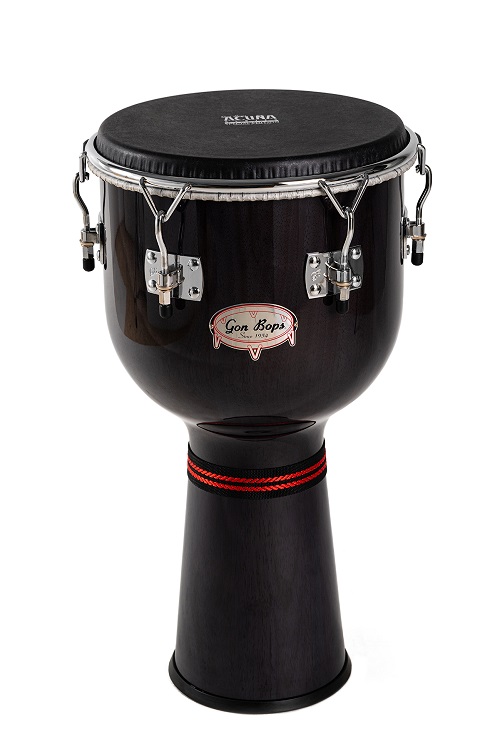
Alex Acuna Special Edition Djembe.

The combination of Asian Oak shell, Remo Skyndeep Natural head and premium Gon Bops hardware produces massive bass and impressive volume on Alex Acuna’s Signature 14″ Djembe.

Alex Acuna Special Edition Djembe

Source: Gon Bops

Also Read: Orestes Vilató es una de las figuras más influyentes en el mundo de la percusión Latina

International Salsa Magazine presents the Dj, Jeferson Flores, triumphing in Europe

Currently, they are known through the abbreviation “Dj” or the term “deejay” respectively, and in previous times, they were called “disc jockey”, to those people, which select and mix recorded music and thus be heard by a certain audience, thus issuing its sound in locations such as: discos, mini clubs, clubs, dances, events, concerts, bars, restaurants and rumbas, demonstrating their versatility, knowledge and bringing joy to their followers, listeners and dancers.

In this issue of International Salsa Magazine, we present a Venezuelan musician, selector or dj, who is currently triumphing outside our borders and extolling the name of our country.

Jeferson Flores, born in Caracas in 1992.

We refer to Jeferson Flores, born in Caracas in 1992, and from a very young age he was inclined to music, because his father, also worked as a professional dj of salsa music rhythm and this somehow influenced Flores to learn the trade and legacy acquired thanks to his father.

Beginning with only 15 years of age to musicalize, using in first place the formats of compact discs “cds” and “cuatromil quinientos”, in the Caracas saraos known as “Picoteros” and in the remembered “Minitecas”, and in second place demonstrates his skill in the “plates”, when using the formats of discs in acetates or vinyl, selecting salsa for the dancer and he also commented us that with the passing of the years and until the present time, he stands out and characterizes himself for being a professional salsa dj; he stands out and is characterized for being a “dj crossover”, that is to say, what it means in the Spanish language, dedicated to “mix” with the use of “controllers” his excellent musical repertoire. International Trajectory.

The performance abroad of our guest of this month in International Salsa Magazine, has been quite extensive and successful, beginning to work in Colombia, where he worked as a “resident dj” for five years in a prestigious nightclub in Bogota, then began his period, musicalizing in Ecuador, Poland, Germany and is currently based and makes professional life in Barcelona, Spain, being described by specialists as one of the “Dj Crossover” more complete and versatile, placing Latin music in their dances. And as a result of his excellent performance in the Iberian country, he was the winner last year of the “Latino de Oro” award, in the categories: Salsa Dj and Dj Crossover, respectively, and by the way, in this year’s edition 2024, he has been nominated again in both categories for this award, considered one of the most important of the music in the European continent.

As for his most recent performances as a “musical selector”, last Saturday, June 28, he was mixing salsa at a location in the city of Marbella, Spain, in an event called “Venezuelan Night”, and next Saturday, July 6, he travels to Madrid to make the rumberos of the “mother country” enjoy, integrating the line-up of the Dj show, the “Fiesta Blanca”, alternating in this opportunity with the musicalizers: Reni Herrera, Ditxon Mercado, Dj Argenis and Dj “El Negrito Caliente”.

Finally – he told us – Jeferson that his work in Spain has been very well liked and he is one of the most requested Djs in the rumbas every weekend. His social networks and contacts are, instagram: jefersonfloresoficial2, facebook: Yeferson Flores, Tik tok: @jefersonflores457, Youtube: jefferson flores.

Dj. Jeferson Flores
Dj. Jeferson Flores

Email: [email protected], Booking: +34691292564. From International Salsa Magazine in Palo Alto, CA www.salsagoogle.com, we wish Dj Jeferson Flores, the best of success and continue to succeed in Europe for the pride of Venezuelans, always putting good salsa for the dancer …! Until next time and let’s keep on salsaing. Dj. Augusto Felibertt and Carlos Alberto Colmenárez Oropeza.

The first DJ was British radio engineer Ron Diggins.

Contrary to what many may imagine, it was not a bohemian musician in a garage or some friends in a ghetto. The first DJ was British radio engineer Ron Diggins, who in 1949 invented the Diggola, which today is considered the first “mixing desk” in the history of music. The home-built Diggola had two turntables, lights, microphones, amplifier, speakers and was built on a wooden coffin (yes, coffin) base.

With his Diggola at the ready, and like a good DJ, he loaded his equipment into a van and began playing records at the hundreds of UK events where he was hired, causing the crowd to go wild. “I didn’t invent anything, I just put the same things to a different use,” he commented in the magazines of the time, never imagining that his creation would be the beginning of a revolution in music, where DJ’s and beatmakers would take beats to every corner of the planet.

Ron Diggins, throughout his life, played records in more than 20 thousand parties, retiring only in 1995, after 46 years of career in front of the decks. Passionate about music, he passed away in 2011 at the age of 91, leaving an eternal legacy.

Dj. Ron Diggins
Dj. Ron Diggins

In 2020 it will be 25 years since Diggins retired from the dancefloors. And we commemorate it with music, without a minute of silence, because a life with silence is the last thing the first DJ in history wanted.

Article written by @comte_con_eme, member of the Urban Roosters Army.

Also Read: Djane Shina una Pasión Convertida en Realidad

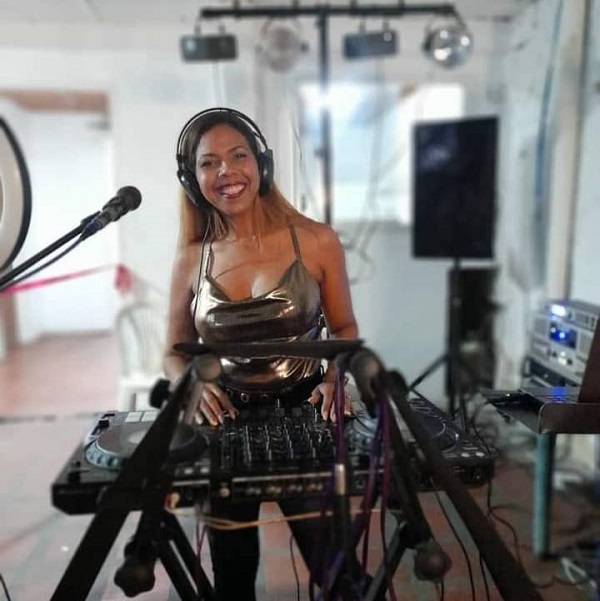
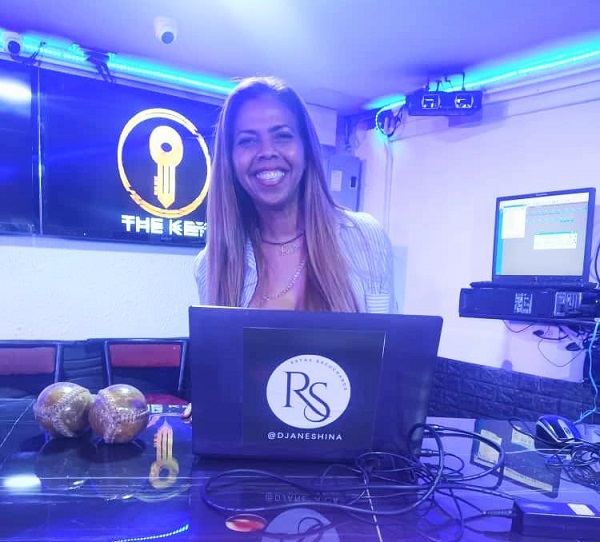
“Djane Shina” a passion turned into reality

Since I can remember my passion is music expressed in all its forms, I was always surrounded by family and friends musicians, who contributed to increase my love for it, said Djane Shina.

My surnames Rojas Salazar, both symbolize flavor; rumba; happiness; love; humility and dedication, with my families I learned everything I know about the rhythms especially Salsa, my parents Jaime and Ligia, my 5 brothers, my uncles and cousins are a part of what I am today …. “Djane Shina, the queen of Salsa.

Djane Shina a Passion Turned into Reality

Shinaury Thais, the queen, because that’s what my mother called me (R.I.P), the queen of the house, the little monkey among her monkeys.

I was born on October 28th, caraqueña and caraquista, I am from the most beautiful parish “23 de Enero” in the Mirador sector, and even though I only lived there for 2 years I always kept its essence, in February of 73 we moved to my beloved town ‘La Victoria’ in Aragua State, to the urbanization Las Mercedes, in the most salsa area that exists “Madera 15”, named after the Madera Group of San Agustin.

I grew up surrounded by neighbors all music lovers and parties, almost all organized by my brothers at home, Vinyl parties, which scratched so much to put them and to leave them out of their cover, a girl surrounded by people with different orchestral tastes but all of Salsa, there I learned to dance, sing and play instruments, were unique moments, to see those gatherings and end up picking up and cleaning everything so my parents would not be upset.

As soon as I grew up and became a teenager I took charge of the parties as Djane Shina inviting my people and their friends, who became my brothers in life and now my fans.The sound systems were several, one better than the other as the years passed, and manipulated by me, I began to share my tastes and my ability to put people to enjoy a whole night, the “Pioneer” equipment was everyone’s, I took it to every house I could, along with my LPs and cassettes, and at the time the CD case.

Djane Shina the Salsa Queen

A very nice experience as a Djane because people knew that when I was one of the guests at their meetings I took control of the music, always as a contribution to the celebration, there was never any charge, as I said at the beginning this is my passion and I do it from my heart.

When I was a child I practiced the cuatro, I was in the show band of my school “Unidad Educativa Colegio Brito” directed by the teacher Carlos Gonzalez, I started with the cymbal, followed by the grenadier, then the redoblante to finish with the trombone.I

Received lessons with my teacher Williams Puchi (R.I.P), it should be noted that my greatest inspiration to play this instrument was my brother Oscar Bauter Salazar, military musician, and for me, the best trombonist in Venezuela.

Djane Shina de La Victoria para el Mundo

When I was 18 years old, apart from sports (athletics, cycling, aerobics and power), I practiced percussion with my friends and teachers Humberto Rodriguez and Boris Pedra, playing the congas, bongo, timbal, and minor percussion clave, maracas, güiro, among others, here my inspiration was my beautiful uncle Oscarcito Rojas, for me the best conguero in the country.

Throughout my life I saw the formation of different orchestras and salsa groups by my brothers and neighboring friends, in them I participated in rehearsals and learned a lot to sing, over the years I could participate and organize groups of Christmas music and bagpipe as a soloist and with the minor percussion in the companies where I worked.

My life has always revolved around music and art and in the midst of that, wanting to be a professional musician I became a graduate in Business Administration, I had two beautiful daughters Yaima and Victoria, which are my greatest pride and motivation to move forward bringing happiness to the world with my talent.

Currently Shinaury Thais Rojas Salaza Lcda. in Business Administration works as a Publicist in the digital newspaper “Salsa Escrita”.

Currently Shinaury Thais Rojas Salaza Lcda. in Business Administration works as a Publicist in the digital newspaper "Salsa Escrita".
Currently Shinaury Thais Rojas Salazar Lcda. in Business Administration works as a Publicist in the digital newspaper “Salsa Escrita”.

Shinaury Rojas

Contact: +058 4244009655

Shinaury Rojas (shina

Read also: Salsa and its detractors “Caiga quien Caiga”

  • Page 1
  • Page 2
  • Page 3
  • Interim pages omitted …
  • Page 69
  • Go to Next Page »

International Salsa Magazine (ISM) is a monthly publication about Salsa activities around the world, that has been publishing since 2007. It is a world network of volunteers coordinated by ISM Magazine. We are working to strengthen all the events by working together.