• Skip to primary navigation
  • Skip to main content

International Salsa Magazine

  • HOME
  • Previous editions
    • 2026
      • ISM / April 2026
      • ISM / March 2026
      • ISM / February 2026
      • ISM / January 2026
    • 2025
      • ISM / December 2025
      • ISM / November 2025
      • ISM / October 2025
      • ISM / September 2025
      • ISM / August 2025
      • ISM / July 2025
      • ISM / June 2025
      • ISM / May2025
      • ISM / April 2025
      • ISM / March 2025
      • ISM / February 2025
      • ISM / January 2025
    • 2024
      • ISM / December 2024
      • ISM / November 2024
      • ISM / October 2024
      • ISM / September 2024
      • ISM / August 2024
      • ISM / July 2024
      • ISM / June 2024
      • ISM / May 2024
      • ISM / April 2024
      • ISM / March 2024
      • ISM / February 2024
      • ISM / January 2024
    • 2023
      • ISM / December 2023
      • ISM / November 2023
      • ISM / October 2023
      • ISM – September 2023
      • ISM – August 2023
      • ISM July 2023
      • ISM Edition June 2023
      • ISM – May 2023
      • ISM April 2023
      • ISM March 2023
      • ISM February 2023
      • ISM January 2023
    • 2022
      • ISM December 2022
      • ISM November 2022
      • ISM October 2022
      • ISM September 2022
      • ISM August 2022
      • ISM July 2022
      • ISM June 2022
      • ISM May 2022
      • ISM February 2022
      • ISM January 2022
    • 2021
      • ISM December 2021
      • ISM November 2021
      • ISM October – 2021
      • ISM September 2021
      • ISM August 2021
      • ISM July 2021
      • ISM May 2021
      • ISM April 2021
      • ISM June 2021
      • ISM March 2021
      • ISM February 2021
      • ISM January 2021
    • 2020
      • ISM December 2020
      • ISM November 2020
      • ISM October 2020
      • ISM September 2020
      • ISM August 2020
      • ISM July 2020
      • ISM June 2020
      • ISM May 2020
      • ISM April 2020
      • ISM March 2020
      • ISM February 2020
      • ISM January 2020
    • 2019
      • ISM December 2019
      • ISM November 2019
      • ISM October 2019
      • ISM Septembre 2019
      • ISM August 2019
      • ISM July 2019
      • ISM June 2019
  • Spanish
  • Download Salsa App
    • Android
    • Apple

Search Results for: Dj

The 5 most famous Latin music DJs in USA

Latin music is characterized by its incomparable rhythm. Those who have Latin blood vibrate when listening to songs that remind them of their roots. However, Latinos are not the only ones who enjoy them, audiences of all ages and nationalities end up trying to dance to the tune of salsa, merengue or bossa nova.

Its growth has been increasing over the years and more and more Latino artists are performing on large stages; Important events in the United States and become the favorites of non-Hispanic people.

For this reason, it is very common to listen to these types of songs in different bars and clubs. Some DJs based in the US have wanted to enhance their roots and, even when they dabble in other genres, they are still famous for their Latin mixes .

Famous DJs of Latin music

DJ Deorro

Erick Orrosquieta, is a DJ and music producer, born in California but to Mexican parents. It is characterized by its inclination towards electro house. However, it does not neglect the Latin music sets. To his credit he has pieces such as “Bailar” with Elvis Crespo, where he did not hesitate to place his personal stamp.

Dj Deorro
Dj Deorro

He is working on a new album where he plans to gather more Latin songs and songs in Spanish. Even when he tours different countries, he always plays in his native USA again.

“I want to grab the sounds we used to hear when we were little, cumbia, merengue, mariachi, everything, in order to give them new music”

DJ Louie Vega

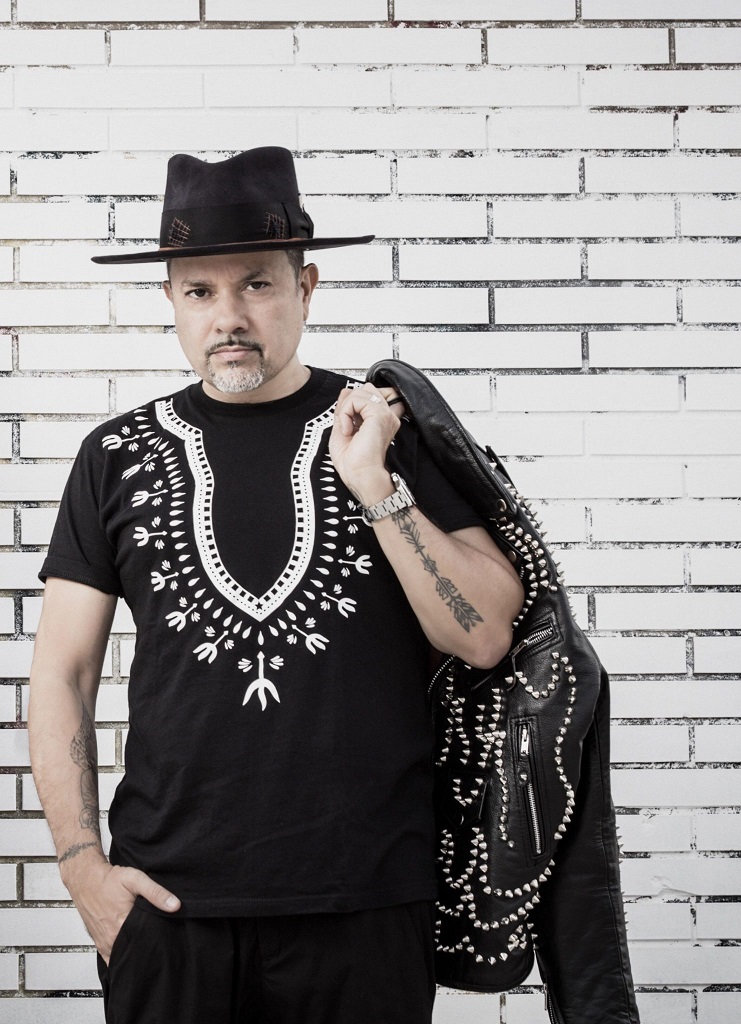
Luis Ferdinand Vega Jr. is an American with Puerto Rican roots. His uncle was nothing more and nothing less than the famous singer Héctor Lavoe. Little Louie Vega, as he is also known, grew up surrounded by Latin music. For this reason, his training and his passion for music of this style have always been noticed.
Dj Louie Vega
Dj Louie Vega

He is one of those artists who enjoy each show and immerse themselves in what they do. Dj Louie had his beginnings at parties in the Bronx and has not neglected his Hispanic side. Making different Latin mixes that he does not stop taking advantage of in many of his presentations. One of his most requested songs is “My people by Héctor Lavoe”. He has also participated in songs with a tropical rhythm like “Starring” with Roberto Roena and performed live with the accompaniment of different percussionists.

“Music comes from our hearts and we try to express it. We don’t look at the others, we just follow what we think is our path, ”  he told ­estaybullshit.com.

DJ Buddha

Dj Buddha
Dj Buddha

Urals Vargas, born in the United States, is a renowned DJ, songwriter, producer and music publisher who has earned a good place in the industry. Recognized for including Latin music and dancehall among his mixes. He is one of the critics’ favorites and remains in constant innovation. DJ Buddha has an album called “Ultra Latino” that contains some of his most requested Latin tracks. In addition, it has countless tracks produced, remixed or written that today belong to renowned Latino artists.

“For me, success has been not putting myself alone in a genre because I make electronic music, … and yet, I have also made songs in the Latin market,” he said in an interview with Deyanira Martínez.

DJ Alex Sensation

Dj Alex Sensation
Dj Alex Sensation

He is a Colombian who grew up in the United States and from an early age began mixing at nightclubs. He also worked at the station La Mega 97.9 Fm, walking through different musical genres but not forgetting where he came from.

“I grew up listening to salsa and cumbia because of my roots. One of the fi­rst clubs where he played on the weekends was a Dominican club. There, I learned about the Dominican culture Bachata, Merengue, typical merengue when I was still very young. I made many Dominican friends and fell in love with their culture. I mix everything under that genre,” he commented for an interview.

He is considered a very valuable artist for music. In fact, he has participated in different festivals, parades in the Dominican Republic and Puerto Rico and has been awarded the ACE, an award from the Association of American Entertainment Critics.

DJ Cristhian Terán

Dj Cristhian Terán
Dj Cristhian Terán

This is a Venezuelan who has positioned herself in the city of the sun. Its proposal is based on Latin rhythms and is the favorite of most nightclubs. He has a history that has accompanied her since its inception in Venezuela. Caramelos de Cianuro, Chyno, Nacho and Guaco are some of the artists from her country with whom she has shared the stage. However, he has also managed to rub shoulders with singers such as Maluma, Alexis and Fido and Arcangel. Cristhian is one of the DJs who has managed to get the most out of the Latin genres and keep them present in the United States. His music is usually heard in the different clubs in Miami.

International Salsa Magazine presents “El Cangri de la Salsa” Dj. Caramelo after triumphing in Lima Peru

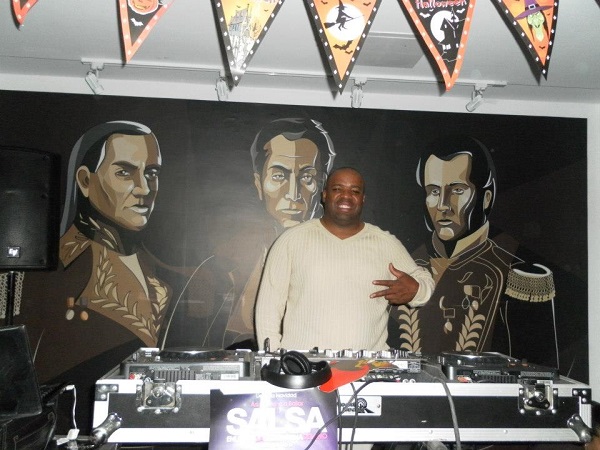
On October 2, 1974, Jesús Rafael Torres Caldea, nicknamed “El Cangri de la Salsa” and also known as “El Caramelo de la Salsa”, was born in the populous parish of El Cementerio, son of Candelario Torres, the popular “Robinson” and Doña María de Jesús Caldea, In addition to his biological parents, life also gave him two foster parents who gave him all the love, affection and values, they were Emilio Torres, younger brother of the percussionist musician and Orchestra Director Lisandro Torres, and his wife Alicia Castillo.

Since his childhood he felt great interest in Salsa music and with the help of his childhood friend Oscar Madrid Colina “NENE” they began to buy his first vinyl records without realizing that from that moment on he would begin his career as a collector, musicalizer and producer of events, being today recognized as one of the best music lovers in Caracas and Venezuela.

Dj. Caramelo
Dj. Caramelo

Although he was raised in the parish of El Cementerio, part of his youth was spent in the Marín neighborhood of San Agustín in the home of the Pino and Palacios families, where he was influenced even more by this tasty musical genre.

He rubbed shoulders with other excellent musicians such as Augusto Felibertt, Alfredo Lozada from whom he learned many things and also with Ivan Piñero, Jonathan Castillo and Ivan Walcott among others.

He ventured as a producer of events with Alejandro Tovar and Betty Zapata, whom he baptized as “The True Lady of Salsa” nothing more and nothing less than with the presentation of Ray De La Paz at the Lido Center in Caracas.

Dj. Caramelo y Dj. Augusto

Among the places where he had the opportunity to provide the best of the artillery of his musical collection for music lovers and dancers we can name the Gran Salón Cedro Líbano (La Mezquita), JABEGUERO, La Pachanga among others, reaching his musicality to events where prominent artists such as Herman Olivera, Tito Allen, BAILATINO have participated and also had the honor of being the official musicalizer in the debut of the great Venezuelan orchestra Rumberos del Callejón.

Caramelo was one of the founders of the Online Program via Facebook “Bloque de Salseros de la Mata” which is transmitted every Sunday by the hand of the Master of Masters Mr. Ali Delgado with Junior Villasmil and Alfredo Lozada.

“El Cangri de la Salsa“

Among his favorite artists and orchestras we can mention the Great Carlos “Cano” Estremera, the Bobby Valentin Orchestra, the Willie Rosario Orchestra and the Yambó Orchestra among others; He is currently living in Lima, Peru but has plans to return to Venezuela very soon, to return to the arena of musicalization and production of events again and already has an excellent proposal to participate as a musicalizer in an event where an international artist will participate later this year, from Salseros de la Mata we wish our pana Caramelo a happy birthday and the greatest of success and happy return to his homeland Venezuela.

You can read: The owner of the Soneo’s solo career Cano Estremera

Dj. Caramelo

Perspectives of our senses in being an excellent Dj. and or Musicalizer

It is known as Disc Jockey (also known with the abbreviation of DJ, and its Anglo-Saxon pronunciation of Deejay) or disyóquey to “the person who selects and mixes recorded music of his own or of other composers and artists, to be listened to by an audience”.

Musicalizador: is that person who can extract a periodic and varied list of an equis amount of songs of proven success loaded in the storage system.

Many people and/or dancers express the controversy of the musicalizadores and Dj’s. Of the rumbas salseras of all the times nowadays that call it of (Salsa Guateque and Baúl).

With respect to the content or musical selection that they place or propose each one to give to understand to the public rumbero dancer.

Today there are many musicalizers and above all self-appointed “Dj`s” and they use to call themselves from one day to another and what they do not know that to reach this art they must study and know the art of basic music such as harmonies, theory and solfeggio, to be more complex.

First, one thing is to be a Dj and another musicalizer, both have to know music, but the Dj is responsible for making the mix of one over the other in couplings of the song without distorting the original revolutions or Bpm that makes you feel the harmony of both in one. Making the dancers flow and make the place feel good and cool.


The Djs and musicalizers have a difficult task to bring the creativity and the magic to put to dance to their public some traditional and others demanding to be able to over carry a rumba or danceable night.

This work has been difficult, but also easy to have an ear to select a song with a good sense of lyrics and above all with a harmonious and contagious arrangement that gives pleasure at the time of dancing. Making of them the work of how and when to place the melody to make the hook between the public/dancer.

The public rumbero, dancer…It is hard to understand that going out one night and feeling the atmosphere with something musical that not only you like, but also your partner or whoever you ask to dance likes the theme. Remember that not only the song makes the night enjoyable, but also the sound of the song and the people around you.

On the other hand, there is the audience that is not even a dancer. Many have the bad sense to bother with a drink in hand, dance alone, even take pictures and record the musicians and / or DJs. They get in the way of those who really want to enjoy the dance floor.

The criticisms are constructive to be better for the next dance, remember that there is a lot of music from the older music stirring memories of the public. As well as the newest, given that the music is modern and evolving.

With this I do not mean that all are bad, on the contrary there are good musicians and DJs par excellence that I follow for many years. But there is a large group that is coming out in this that lacks some of the conditions mentioned above.

For DJ’s

  1. If you are going to play a number, play the original. The musicians, composers, arrangers and dancers will thank you for it.
  2. Music with instrument downloads are UNCOMFORTABLE FOR DANCING. Know how to choose which solos are danceable. Give swing to the dancer.
  3. Don’t cut the end of the music, or mix it up. It takes away the happy moment of that final punch.
  4. Just because it’s fast doesn’t mean it’s danceable; listen and see how people enjoy the different tempos in the music.
  5. Hey…the guajira, the son montuno, the chachacha…whatever you call it, it’s part of the genre. Why do you have to ask for it and they look at you funny? Out of every three to four salsas, a chacha goes down very well.

Luis Medina as a master of ceremonies, broadcaster, DJ and much more

Incredible conversation with Luis Medina

Luis Medina on the radio
This is Luis Medina on the radio

Good afternoon, everyone. We are here with broadcaster, DJ and event producer Luis Medina. Mr. Medina, how are you today?  

I am well and ready to talk to you right now.

Mr. Medina, you have a very long career as a radio presenter. You got started in this business in 1974. What led you to spend so much time in your career on the radio? 

In 1971 I was studying architecture at San Francisco State University, but in 1974 I changed my major to broadcasting and communications in the Department of Radio and Television. When I was a kid, I was always fascinated by broadcasters on TV with their microphones. My parents gave me a toy microphone, and I always imagined I was broadcasting. At the time I was accepted in the broadcasting program, I already loved salsa because my cousin  Stella played popular music for me since I was about 8 years old. I loved all kinds of music. At home, we always had the radio on, and my parents always listened to tropical music, which was very common at that time.

In 1974 my cousin Eduardo invited me to go to a radio station called KBRG to visit some friends who had a program called Venezuela Suya. In another studio in the station, there was a radio producer named Arturito Santiago, who was the master of ceremonies for the Gran Combo de Puerto Rico when they did dances in San Francisco hotels. When I saw him doing his job, I was intrigued. Two months later, my cousin called to tell me that he’d gotten involved in a community radio station called KPOO San Francisco and asked me if I wanted to help him with the show. I brought a stack of LPs, and we did the show from midnight until 6 am. I went a few times to help, but I could not maintain that pace because I was still in college.

A few months later, he called me to tell me that he had a show from 3pm to 6pm on Sundays. He told me he was talking to other people I knew in order to do the show together. I got a segment of 45 minutes to an hour to do whatever I wanted, so I decided to start programming salsa. I helped produce several programs until I had my own show. In 1979, while I had a four-hour show on Saturdays on KPOO, KBRG’s program director, Al Carlos Hernandez, called me. KBRG was a powerful FM station at that time. That gave me the opportunity to do a commercial show.

DJ Luis Medina
Broadcaster Luis Medina with two maracas

I am part Venezuelan and part Mexican, but I grew up in the United States. I spoke Spanish perfectly until I was five years old, but when I started school, I just wanted to speak English in school and at home. When I turned 18, I decided to get my culture back and relearn to speak Spanish again. However, I’m wasn’t completely fluent in Spanish because I have to translate mentally from English. I explained the situation to Al Carlos, and he told me that he did not care. That’s how I became the first radio announcer to do salsa programming in English on a Spanish-speaking station. The program was called Sabor Caliente and it lasted about a year and a half, until they let me go due to philosophical differences. After that, I did specials in KPFA, until Víctor Castro, who produced the program Ahora, invited me to alternate weeks with him. I produced salsa shows on KPFA from 1983 to 1995.

What Medina has to say about all his combined activities

How do you balance your radio activities and event production and your job as a DJ?  

When I was a student at San Francisco State University, I became co-director of the university’s productions to present musical acts. From 1974 to 1976 I presented acts from various genres such as rock, R&B, and jazz, among others. I also presented some salsa and Latin jazz shows, including Pete and Sheila Escovedo, who were part of Roger Glenn’s band, Benny Velarde and others. I became friends with Pete and Sheila before Sheila became Sheila E and I also worked with Pete’s brother, Coke Escovedo in the 70s.

Then I met Roberto Hernandez, who had an organization that helped produced the first major street fairs in the San Francisco Mission district together with a coalition of community agencies. I got involved with the fairs, which presented the famous singer Joe Bataan among others. It was the era of Latin rock, but salsa was also booming. I was part of the renaissance of salsa music that occurred on the radio, but I also had the opportunity to play an influential role in the community in the Mission. In 1977, the Mission Cultural Center opened in a furniture store ran by artists that were organizing it. I became part of the music committee and we presented performances and salsa groups that were growing in fame at that time. I was involved on the activities of the center until the 1980s, when some of us created a production group called CMP (Cultural Music Productions). During the 80s we did a series of dances, in which I worked as master of ceremonies. I already had experience as master of ceremonies because when I was at KBRG, they gave me the opportunity to introduce some great shows with Celia Cruz, La Sonora Matancera, Oscar D’ León, Cal Tjader and La Orquesta Broadway. I was also master of ceremonies for Brazilian carnivals for about five years. With CMP I was involved in dances with Willie Colón, Bobby Valentín, Oscar D’ León, and boxing champion Roberto Durán (who at the time wanted to be a salsa singer).

Eventually I left CMP, and I was contacted by Roberto Hernandez, who offered me the position of entertainment director of his new organization, MECA. I accepted and started to help him program the schedule for events such as the San Francisco Carnival, and the 24 Street Fair. I worked with Roberto until 1994 and we presented Santana, Los Lobos, Eddie Palmieri, Luis Henrique, Willie Colón, Yomo Toro, Mighty Sparrow, The Neville Brothers, Shaggy, and many more. When Roberto Hernandez left the organization, I stayed for four more years and worked with Manny Oquendo and Libre, John Santos, Pete Escovedo and Pancho Quinto. In 1998, the president of the organization Patricia Aguayo and I had some problems, so we stopped working together.

A radio DJ and a party DJ are two completely different things. It took me a little while to adjust to being a live DJ. In the early 1990’s, the producers at the Alta Vista club hired me from time to time. Then, they moved to a ship called Alta Vista del Mar in Pier 3, and occasionally hired me as their DJ.

Event producir Luis Medina
Event producer Luis Medina posing for or the camera

In 1994 I met a very ambitious young Venezuelan by the name of Adrian Goddard and started working with him at his club, 330 Ritch. It was a winning combination of Adrian’s talent as an event producer and my talent as a DJ and MC. I worked there for about nine very successful months, but then I had an opportunity with KPFA and I was forced to leave the club because the schedule conflicted. My priority was to produce my own salsa show (ironically, this program didn’t last long, but in 1997 they offered me the same slot, which would become the program Con Sabor, which I still produced today, 25 years later, at KPFA, on Saturdays from 9-11pm.)

A little later, Kimballs Carnaval hired me as a Latin House DJ, as this rhythm was very popular at that time. I wanted to please them, but it wasn’t a good fit. Eventually I was hired as a salsa DJ by the club Kimballs West. This opened other opportunities and I became the DJ in residence at the most prominent salsa clubs in San Francisco at the time, the legendary Jelly’s Cafe, where I DJ’d until it closed in 2010 and the popular Café Cócomo, which closed in 2014. I now DJ and MC primarily for special events and private parties.

Something very important in my story is that in 1997 I worked with Bill Martinez and Arturo Riera  and they both gave me the opportunity to be master of ceremonies for a very important series of concerts featuring Cuban musicians who were allowed into the States for the first time. I was the first master of ceremonies for a Los Van Van concert in San Francisco and I also represented my show and KPFA for their concert at Stern Grove in 2019. That was one of many times that I worked with that group.  I also was the MC   for Orquesta Aragon, Cubanismo, NG La Banda and other Cuban acts.

During the pandemic, I was offered a show with an online radio station called World Salsa Radio. I started the show Sabiduría con Tumbao on Wednesdays from 5 to 7 pm. What makes this show different from Con Sabor is that Sabiduría Con Tumbao is a conceptual program that focuses on certain musicians, musical themes and movements within salsa and Afro-Latin music. On the other hand, Con Sabor offers a broader perspective of salsa, Latin Jazz and música cubana from the classics to the latest.

Since the pandemic started, I produce all my radio shows at home. I managed to master the technology and built my own home studio. I am not afraid of technology or modern things. I go with the flow because I’ve learned that I should be at the forefront of technology and music. If I do not know something, I am going to research it right away. I keep an open mind and ears and I appreciate and listen to all kinds of music, something that was key when I was music director at KPFA from 2001 through 2014. In terms of my own programs, I really love salsa from the 70s, but I’m not stuck in any time period.

Eduardo and Luis
Our editor Eduardo Guilarte and Luis Medina


Dj. Elvis Abello “El de la Salsa Dura en Caracas”

Since 2021, he has been vice-president of the Olimpiada Salsera Internacional de Venezuela Foundation.

He was born on July 3, 1982, in the city of Caracas, with only eight years old, and led by the hand of his father Carlos Abello, his uncles, Hector Diaz, Jhon Abello, Ali Abello, would discover his love for salsa, surrounded by acetates, parties, and stereo.

At the beginning of the 89’s, at his grandmother Crucita’s house, the whole family and friends would gather to share and dance a good salsa, his father would place a plastic box so that it could reach the turntables since at that time his father used vinyl.

Elvis, feeling attracted by the rhythm, already knew some singers, looked for the songs and musicalized those parties, being this way his debut in the world of salsa.

He was born on July 3, 1982, in the city of Caracas, with only eight years of age, and led by his father Carlos Abello, his uncles, Hector Diaz, Jhon Abello, Ali Abello, he would discover his love for salsa, surrounded by acetates, parties and music equipment.
Elvis Alberto Abello Guerrero (El de la Salsa Dura)

In 1996, as a teenager, he began his foray into the music scene in the company of his friend and compadre Jesus Manuel Diaz Mendez, the product of brotherhood and the interest that united them mutually for salsa decided to venture into the world DJ, formed a mini-teque called “Eskpe Display”, They formed a miniteca called “Eskpe Display”, making it known in several popular areas of the capital, especially in the “Paramoconi Park” located in San Bernardino, Caracas, where the popular matinees were held, with a mixed audience from the west of the city, this project would give them the recognition of the dancers and salsa fans in several parishes of Caracas, for several years.

ELVIS, dedicated several years of his life influenced by his family, in this case by his cousins; Ivan Guerrero and Julio Fernandez, to collect discography of his favorite artists, such as: Gilberto Santa Rosa, Ruben Blades, Lalo Rodriguez, Alex de Castro, Tito Allen, Luis Enrique, Hildemaro, Rey Ruiz, Roberto Roena, Cano Estremera, Domingo Quiñonez, Luisito Quintero, Orlando Poleo,Kenny Cruz, Pimi Cruz, Rafael de Jesus, Paquito Guzman, Tito Nieves, Celia Cruz, Oscar de León, Alfredo Naranjo, Marcial Isturiz, Pupy Santiago, Carlos de Castro, Yomar Caballo Mendez, Adalberto Santiago, Jhonny Colón, The Lebron Brothers, Natividad Martínez, Tommy Olivencia, Pete Conde, Sonora Ponceña, Orqueta Tokun, Orqueta O. S, Orqueta Pumaband, Orqueta Mulenze, Wichy Camacho, Pedro Brull, Dimensión Latino, among others. He was a faithful dancer at La Asunción, City Day, Rumbero, Status, Extremo Latino and a fan of the events organized by Betty Zapata together with Juan Carlos Ríos, such as La Noche del Bronx, Orquesta de Willie Rosario, Charanga 90, La Negramenta, Bobby Valentín, among others, always getting infected and betting on the salsa scene.

Thank you for being part of this project ? In this link you will find all the information: https://bailopinto.com/esta-salsa-me-gusta-dj-edition/ Guest Dj @elvisaag Best regards! Saul Delhom @bailopinto
Dj. Elvis Abello “Esta salsa me gusta – DJ’s Edition”.

During the stage of the beginning of the pandemic, a new boom was born for live broadcasts on Instagram Live and Facebook Live, being this an opportunity for Elvis Abello (El de la Salsa Dura) to work as a musicalize in the events of Salsa Dura, known in Venezuela as salsa guateque.

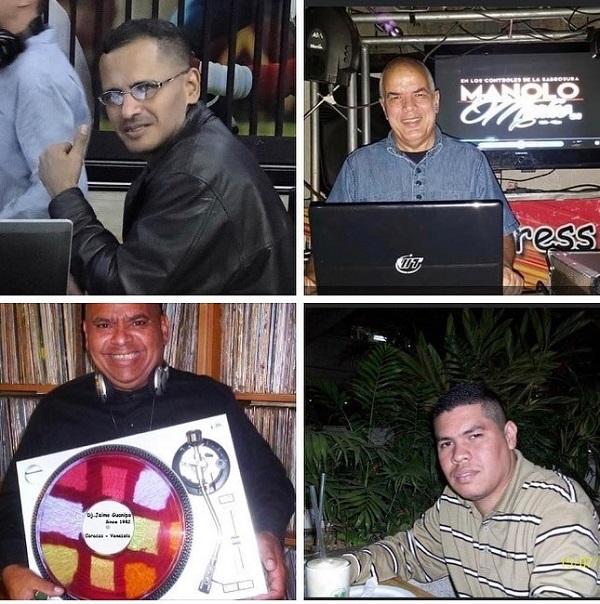
Hand in hand with great DJs such as; Manolo Mariño, Luis Flores, Ruben Arias, Jeferson Parra, Jesus Manuel Diaz, Dervy Palace, Zulay Millan, Susana Calderin, Augusto Felibertt, Edward Alberto, Francisco The Dj Latino, Alan Marriaga, Jaime Guanipa, Rey Salsamania, Edgar Mendoza, Carlos El Latino, Alfredo Lozada, Sol Graffe, Franklin Espinoza, Jheison Parra, Chachito Blanco, Junior Oriak, Kituku Sanchez, Roberth Hidalgo, Nery Jones, David Ferrer, Jesus Jaspe, Felix Valderrama, Andres Hernandez, Cesar Sonero, Jordan Moreno, each one of them, gives their best on stage so that the Salsera nights in Venezuela are of excellent quality.

Since the year 2021, he is vice president of the Olimpiada Salsera Internacional de Venezuela Foundation, this foundation works to project the different DJs and Musicalizadores existing in the whole world, through digital platforms, such is the case of Instagram and Facebook, in the same way the foundation delivers donations in order to help those most in need.

Since October 26th of this year, Saul Delhom and bailopinto.com publishing house, has invited Elvis Abello and several DJs to participate in the digital project called, “Esta Salsa me Gusta- DJ^s Edition”. The book contains a selection of songs associated with tastes, stories, and anecdotes told by each of the interviewees. It is worth mentioning and taking advantage of the essence of this book that talks about the melody as an anchor in certain moments of life; Elvis recalls moments lived with his daughter Madeleine Abello with the song “Al Pasar Los Años” by the Mulenze Orchestra, and his son Samuel Abello, with the song “Y Vuelvo a Fallar” by the same orchestra.

DJ Elvis Abello, for his professionalism, creativity, and charisma, has led him to be recognized as “El De la Salsa Dura”, in various clubs and discotheques in the capital.  At the present time, Resident DJ of Café Latino, in the city of Caracas and Director of EA Productions; taking the best Salsa events throughout Venezuela.

Facebook: Dj. Elvis Abello

Article of Interest: Saúl Delhom “Esta Salsa me gusta” one of the things I like the most is to learn, create and share

  • « Go to Previous Page
  • Page 1
  • Page 2
  • Page 3
  • Page 4
  • Interim pages omitted …
  • Page 73
  • Go to Next Page »

International Salsa Magazine (ISM) is a monthly publication about Salsa activities around the world, that has been publishing since 2007. It is a world network of volunteers coordinated by ISM Magazine. We are working to strengthen all the events by working together.