• Skip to primary navigation
  • Skip to main content

International Salsa Magazine

  • Home
  • Previous editions
    • 2025
      • ISM / November 2025
      • ISM / October 2025
      • ISM / September 2025
      • ISM / August 2025
      • ISM / July 2025
      • ISM / June 2025
      • ISM / May2025
      • ISM / April 2025
      • ISM / March 2025
      • ISM / February 2025
      • ISM / January 2025
    • 2024
      • ISM / December 2024
      • ISM / November 2024
      • ISM / October 2024
      • ISM / September 2024
      • ISM / August 2024
      • ISM / July 2024
      • ISM / June 2024
      • ISM / May 2024
      • ISM / April 2024
      • ISM / March 2024
      • ISM / February 2024
      • ISM / January 2024
    • 2023
      • ISM / December 2023
      • ISM / November 2023
      • ISM / October 2023
      • ISM – September 2023
      • ISM – August 2023
      • ISM July 2023
      • ISM Edition June 2023
      • ISM – May 2023
      • ISM April 2023
      • ISM March 2023
      • ISM February 2023
      • ISM January 2023
    • 2022
      • ISM December 2022
      • ISM November 2022
      • ISM October 2022
      • ISM September 2022
      • ISM August 2022
      • ISM July 2022
      • ISM June 2022
      • ISM May 2022
      • ISM February 2022
      • ISM January 2022
    • 2021
      • ISM December 2021
      • ISM November 2021
      • ISM October – 2021
      • ISM September 2021
      • ISM August 2021
      • ISM July 2021
      • ISM May 2021
      • ISM April 2021
      • ISM June 2021
      • ISM March 2021
      • ISM February 2021
      • ISM January 2021
    • 2020
      • ISM December 2020
      • ISM November 2020
      • ISM October 2020
      • ISM September 2020
      • ISM August 2020
      • ISM July 2020
      • ISM June 2020
      • ISM May 2020
      • ISM April 2020
      • ISM March 2020
      • ISM February 2020
      • ISM January 2020
    • 2019
      • ISM December 2019
      • ISM November 2019
      • ISM October 2019
      • ISM Septembre 2019
      • ISM August 2019
      • ISM July 2019
      • ISM June 2019
      • ISM May 2019
      • ISM April 2019
      • ISM March 2019
      • ISM February 2019
      • ISM January 2019
    • 2018
      • ISM December 2018
      • ISM November 2018
      • ISM October 2018
      • ISM September 2018
      • ISM August 2018
      • ISM July 2018
      • ISM June 2018
      • ISM May 2018
      • ISM April 2018
      • ISM March 2018
      • ISM February 2018
      • ISM January 2018
    • 2017
      • ISM December 2017
      • ISM November 2017
      • ISM October 2017
      • ISM September 2017
      • ISM August 2017
      • ISM July 2017
      • ISM June 2017
      • ISM May 2017
      • ISM April 2017
  • Download Salsa App
    • Android
    • Apple
  • Spanish

Search Results for: Dj

Master Timbalero Luisito Quintero

North America / United States / New Jersey

Master Timbalero Luisito Quintero hails from Caracas, Venezuela.

Where his father, a respected percussionist in his own right, tutored and encouraged his son to become one of music’s best percussionists.

Luisito comes from a long line of outstanding musicians including his uncle, Carlos Nene Quintero and cousin Robert Quintero.

He studied at the respected Orquesta Sinfonica de Venezuela (The Symphonic Orchestra of Venezuela) and his percussion technique soon garnered attention from his colleagues.
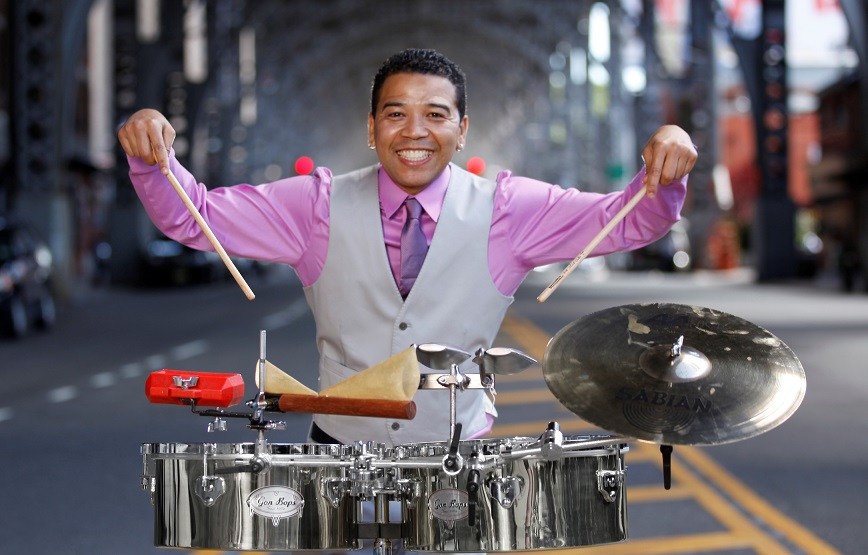
Master Timbalero Luisito Quintero
Master Timbalero Luisito Quintero – Photo

Luisito joined the popular music ensembles Grupo Guaco and Oscar D’Leon, where he enjoyed worldwide acclaim.

Luisito Quintero has worked and recorded with many of music’s legends including The Rolling Stones, Vanessa Williams, Paul Simon, Santana, Jack De Johnette, David Sanborn, George Benson, Joe Sample, Bill Cosby, the late Celia Cruz and Tito Puente, Cachao, Eddie Palmieri, Marc Anthony, Gloria Estefan, Richard Bona, Ravi Coltrane, Nathalie Cole, Diana Krall, Giovanni Hidalgo, Toshiko Akiyoshi, Spanish Harlem, Willie Colon and countless others.  One of his recent projects finds him as musical director for Louie Vega and the Elements of Life Band, as well as extensive work with Jack DeJohnette’s Latin Project.  He has also had the privilege to tour and record with the Tony & Grammy award winning Jazz artist, Dee Dee Bridgewater.

Quintero himself has earned more than thirteen Grammy certificate awards for his participation in numerous recordings.

Luisito Quintero has two solo projects under Vega Records/BBE, entitled “Percussion Maddness” and “Percussion Maddness Revisited”.
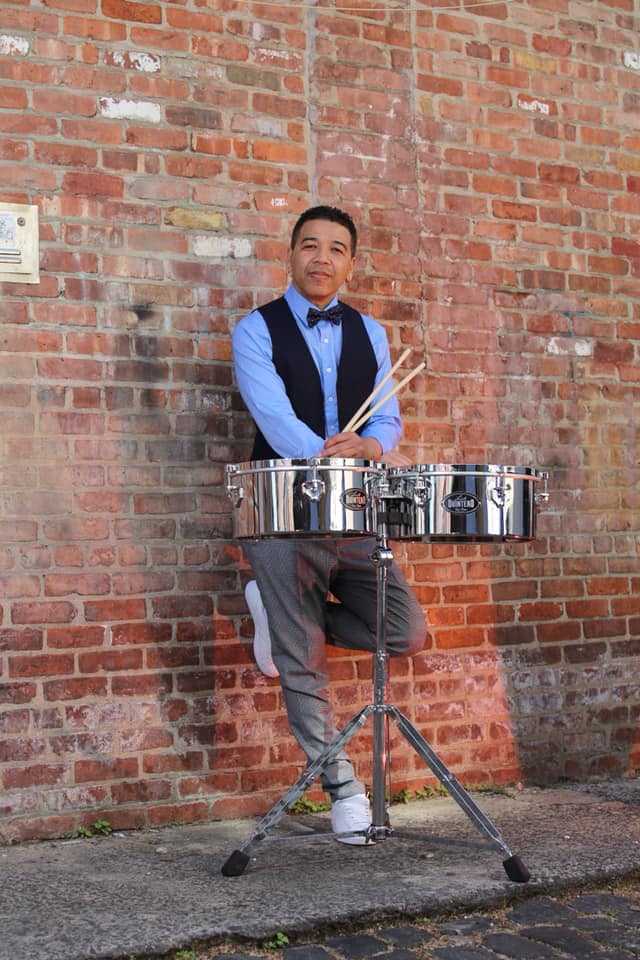
Timbalero - Luisito Quintero
Master Timbalero Luisito Quintero – Photo

Scheduled for release in the spring of 2013, his upcoming production entitled “3rd Element”, features guest artists Gato Barbieri, Oscar Hernandez, Doug Beavers, Richie Flores, Steve Khan, Reynaldo Jorge and his cousin Roberto Quintero.  Currently, Luisito is the touring & recording percussionist for the legendary jazz pianist Chick Corea and for Spanish Harlem.


Carlos “Nene” Quintero comes from a family of musical prodigies

Carlos Vicente Quintero De Jesús, better known as Nene Quintero, was born on October 21, 1946 in the Caracas neighborhood of Marín (a neighborhood of percussionists par excellence), in San Agustín del Sur.

In a family that has produced several musicians, among them his brothers the former “Madera”, Ricardo and Jesús “Chu” Quintero, who died in the Orinoco tragedy; Rafael who lives in Marseille or his nephews Luisito (the “chamo Candela” of Daiquirí), Robert and Chuíto, who live in New York.

During his adolescence he was in several groups and then he played with Los Dementes, the Venezuelan group Pan suerte de Santana with César Monge (Dimensión Latina) and Alfredo Padilla (La Salsa Mayor), Porfi Jiménez, Frank Quintero and Los Balzehaguaos, Yordano and many others.

Carlos "Nene" Quintero comes from a family of musical prodigies
Carlos “Nene” Quintero comes from a family of musical prodigies

-What would be the five main moments of his career?

Nené lists them:

1- Having worked with people I went to see at a radio station and then I got to play with them. That was in the 70’s, in a place called Playboy in Altamira, with their bunnies and everything.

I worked with Lewis Vargas and Rafael “Gallo” Velásquez on trumpets; Moscatt was the saxophonist; Willy Pérez, pianist; Jorge Romero, bassist of Aldemaro Romero’s Onda Nueva; and Marcelo Planchart on drums.

2- When I heard on the radio a song I recorded with Los Dementes: “Rómpelo”, which was very popular. I saw myself as a very famous person, I was heard on the radio for the first time.

3- When Eumir Deodato came and proposed me to go with him to the United States.

I was not in conditions to go because I was working very well, I was doing a lot of jingles, I had two children who were starting to study.

I was sacrificing something that was taking shape: my family. I told him I could go, work and come back. The surprise was when a letter arrived for a tour of Mexico and the United States.

Deodato is a very kind person, he gives you freedom to work, we communicated in “Spanglish” and “portuñol” and he loved beer.

Carlos Nene Quintero

4- Seeing Celia Cruz when I was a kid in Marin, going to visit friends like Johnny Perez, from Sonora Caracas, and some time later working with her, even in her last shows, in Montreal.

Celia’s birthday was the same day as mine, and she looked older, but as soon as she started the music and said “sugar!” she was different, she was transformed.

5- Working lately with my nephews Robert and Luisito gave me a lot of emotion: The three of us on the same stage in New York with Celia Cruz.

But there are more experiences. Eros Ramazzotti, for example. “I chose to go to New York and Miami when things got tough here. I worked with Gato Barbieri and with salsa people.

I would go back and forth, two months out and back. I was recording with a saxophonist who worked with Eros and, the following year while I was in Miami he called me for a six-month tour.

I said yes, they called me the following year again and I spent three years with Ramazzotti touring all over Europe, Brazil, Puerto Rico, Central America, Mexico and Miami.

-Any anecdotes with Ramazzotti? –

Once on his birthday he rented a track where they raced cars. We were drinking, driving, talking, talking, listening to music and they brought a cream cake for Eros.

At one point when he was very close to me with the cake in his hand, I put it in his face. It was a mess with everyone throwing things and pieces of cake at each other.

But I got the impression that he was upset and I went over to apologize and explain to him that it was something that could happen on any South American birthday, especially with a cream cake. He told me not to worry, that it was fine.

Other jobs came through Ramazzotti, such as with Jovanotti and Lucio Dalla.

-And how was it with Little Louie Vega, one of the producers and DJs of the moment?

-I met him through Luisito. We have been touring Europe, the United States and Japan for the last three years, and we recorded with Pushim, a Japanese woman, a song that was in the Japanese top ten.

Meanwhile, “Nené’s” routine continues to be more international than ever between the United States, Europe and especially France, where he has been working with a group that bears his name: Nequin Group, with whom he recorded an upcoming album.

“Working abroad is like working here, but in another language”, he reflects on the matter and says that he is preparing a method for percussionists to work with their feet as well as with their hands.

Carlos Nené Quintero con mi Signature congas (Roberto Quintero)

-What has seemed new to you lately in Europe or in these parts?

-Those jazz works in which there is no conventional group with drums or bass, like what I did with Gerry Weil and Pablo Gil at the Corp Group Cultural Center.

THE BATICONGA AND THE “MCGIVER SET”.

The baticonga is a hybrid: drums with conga. I use bass drum, hi-hat, cimbals, toms, snare and cymbals of various thicknesses.

It has a special redoblante with a rim that does not protrude from the leather so that it does not bother when hitting it like a tumbadora.

It is an idea that I have been maturing. It was born because of Yordano’s album that made him famous, Manantial de corazón, there I recorded all the percussion and when it was time to play it live we needed a drummer and two percussionists. We got the drummer, but things were missing and I started to add electronic pedals, electronic drums, octapads and to use feet and hands.

Then we did an unplugged set and it had to be acoustic with congas, bass drum, snare drum, hi-hat, cymbals.

The McGiver set is a djembe with brushes, cymbals with rivets, a conga that is just like a lid, like a tambourine, and I mount it on top of a snare drum stand and a cowbell. A set that does it all.

SIX INFLUENTIAL PERCUSSIONISTS

Alejandro Blanco Uribe and Airto Moreira: “I saw a lot of Gerry Weil with La Banda Municipal in the 70s and Alejandro as a multi-percussionist with effects and accessories.

That led me to look at Airto’s proposal and to fall in love with percussion at a time when I was playing guitar”.

Trilok Gurtu: “For his fusion of oriental music with rock and jazz. I’ve been hearing him since Oregon, and when I heard him with John McLaughlin on the live album in London my jaw dropped.”

Jack DeJohnette: “As a drummer he has a very floaty groove, he can do with the beats what he wants and the rhythm is always there.”

Tony Williams: “Another drummer. I saw a video that aroused my interest because his technique is like the one I use with the baticonga”.

Carlos Nené Quintero con mi Signature congas (Roberto Quintero).

Giovanni “Mañenguito” Hidalgo: “Since he came out the thing changed, he gave another level to the congas or tumbadoras, with him there has been a ‘before and after'”. – with Roberto Quintero and Luisito Quintero.

Also read: Argenis Carruyo is known in the music scene as “El Volcán de América” (The Volcano of America) due to the power of his voice

John Narváez and Elizabeth Rojas from Salsamania

John and Liz from Salsamania  

Between days 23 and 25 March, 2023, the San Francisco Salsa Festival took place, which brought together some of the cream of The Bay Area Latin music scene. One of those attending this great event was the main editor of International Salsa Magazine, Mr. Eduardo Guilarte.   

On site, he had the opportunity to share with other guests and some of the organizers such as Elizabeth Rojas, affectionately known as Liz, and John Narváez. We had the chance to talk with both dance professionals to know more about their beginnings, festivals and projects. Do not miss it!  

John and Elizabeth
Colombian dancers John Narváez and Elizabeth Rojas

Beginnings   

After several attempts to schedule a meeting with John and Liz, we finally managed to talk with these Colombian dancers and entrepreneurs, who began by thanking us for the contact and the opportunity to promote their passion for salsa and the community they represent.   

This love they have for the aforementioned musical genre has much to do with their roots. Both were born in Colombia and left the country when they were 12 years old (they are the same age) because of the violent situation caused by the guerrilla that existed in those years.   

Although those were hard times, John says these were very nice years from which he has fond memories. He remembers almost all his family members singing or playing an instrument, while he was the only dancer. All this influenced him in such a way that Latin music remains his north after so many years.  

Moving to the United States 

Since the social situation did not allow them to live in their country, they decided to move to the United States and apply for political asylum. At the beginning, it was not easy and the focus was on working hard to get ahead in this new country and to learn English. However, all that changed over time. 

With the arrival of economic and family stability, priorities changed. John comments that his interest in music and dance perked back up due to the family gatherings that his relatives celebrated such as birthdays, quinceañeras, weddings, among others. 

Although at the time dancing was not considered a serious profession, both John and Liz began to practice it at amateur level. Once they turned 21, they started going to the most popular salsa clubs, but it was all for recreational purposes. It was years later before they began to analyze all the technical and historical part of dancing to understand it better and take it more seriously.  

John, Liz, and Barbara
John and Liz with Barbara on Despierta América

Dancing as a profession 

John and Liz started to take dancing seriously in 1999. They both attended a three-day salsa event in Los Angeles, but what they did not know is that this was the first world salsa congress in America.   

This gave them the opportunity to share with the best salsa dancers in the world and they saw such impressive things that they were inspired to return next year with a well-established dance team with which they could participate fully in these activities. 

Being full of motivation, they decided to create Salsamania Dance Company and performed with their team at the festival. They started doing the same thing every year, which helped them gain experience and evolve their styles. 

After earning the trust of the festival organizers thanks to their talent and professionalism, they were given the opportunity to start teaching salsa workshops at the aforementioned congress. This is how little by little John and Liz began to build the reputation and credibility they have today.   

 In 2004, it got to a point where John took the important decision to quit his job to devote himself to dancing and Liz was quick to do the same. His resignation came with the opportunity to take a three-month trip to Hong Kong to teach salsa in a community where people did not dance it. 

They managed to build a community from nothing, since at that time, Hong Kong was not a place where people listened to salsa. However, everything went well and the dancers managed to seamlessly connect with the local audience. As John rightly said, ”salsa is a universal language and you don’t have to speak that language to feel the music”. 

On returning to the Bay Area, they began to practice dancing as a profession in the United States. 

On this point, Liz commented that her parents became very upset with her when she quit her job because of dancing, but today, they admit that it was the right decision and support her totally.  

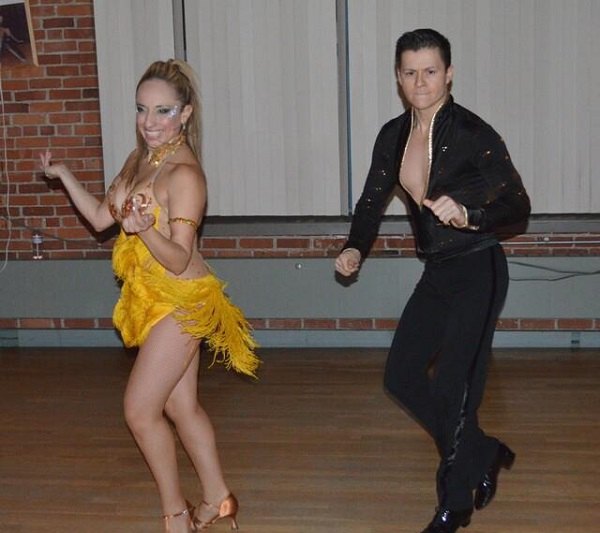
Liz and John dancing
Liz and John during a social dance in Boston

Salsamania Dance Company 

Liz told us that it was difficult to create Salsamania Dance Company because it requires a lot of discipline and healthy coexistance between different types of personalities to create a group like this and keep it together. Fortunately, John is an industrial psychologist, so he helped to prevent these aspects to be a problem. 

Basically, Liz is responsible for the company’s management and John is the one who takes care of the human part of all the staff. 

They started the whole process like any regular company and drew up the contracts for all those who were going to work with them, making Salsamania a much more established, structured and serious project in the eyes of everyone else. Today, it is one of the largest companies in the Bay Area.   

They also took it a step further and built a salsa academic program with a thoroughness and detail that has not been seen in other projects of this kind.   

San Francisco Salsa Festival  

San Francisco Salsa Festival is one of the biggest salsa events in California and the United States in general and we were fortunate to have representation there with our editor Eduardo Guilarte.  

It began to be celebrated in 2008 with the support of international salsa promoter Albert Torres, who was a fundamental piece in the development of the festival and talent recruitment for an event of this size, as there were many things John and Liz had to learn. That is why they are both incredibly grateful for what the congress organizer did for them back then.  

To recruit artists, the dancers only require candidates to be good teachers, to share with the salsa community and to put on a good show for the audience. 

They also often invite colleagues they have known for years and some recommended to whom they give them the opportunity to shine and make themselves known during those days. 

Every year, they look for dancers, dance instructors, DJs and live orchestras. For Liz and John, the thing about live bands is very important, as they are concerned that there are so many clubs and venues that no longer hire these talents. This year, they focused on local bands that play on Thursdays and Fridays in San Francisco and were very happy with the results.  

It is expected that the next San Francisco Salsa Festival is scheduled between days 22 and 24 March, 2024 at the same venue, which is the Marriott Waterfront Hotel.   

The orchestras hired to perform for next year are Cabanijazz, The Latin Rhythm Boys and Orquesta Boyacán. The dancing couples are Alex and Judy from Colombia, Colombians Felipe from Colombia and Kathe and Mauricio and Danny from Mexico.   

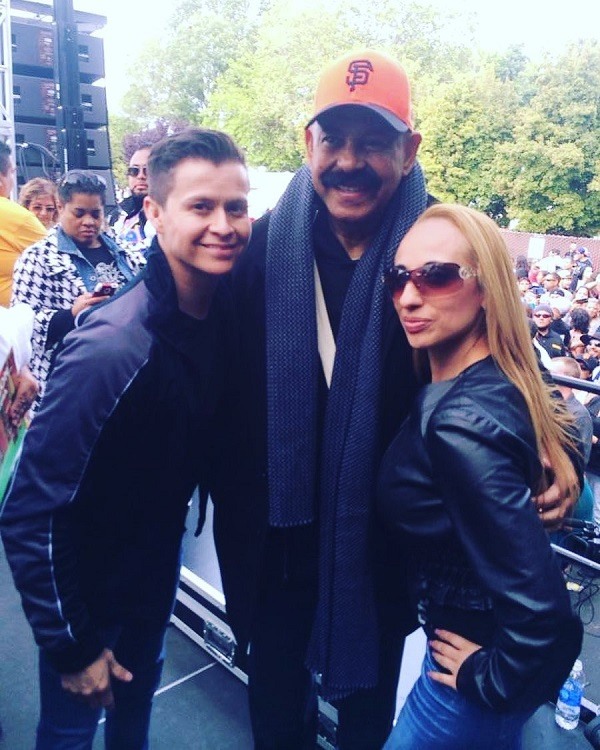
John, Liz, and Oscar D’ León
John and Liz with Venezuelan singer Oscar D’ León

Difficulties in the pandemic 

As dancing is an activity with a lot of physical contact and closeness, we were curious to know how they lived the pandemic and what they did to keep their project afloat in this situation. 

Though they admit that those months were not easy, they have always been very disciplined with their money and had enough to resist as long as possible without working.   

They tried to make up for lost time by teaching classes via Zoom as did most of their colleagues and designing new choreographies to apply when they went back to their usual activities. 

In addition to this, both had not spent time with their respective families in a long time, so they also took advantage of the absence of work to reunite with their loved ones and take up those important contacts that were lost due to stress and routine. 

Read also: Here we have Salseros With Attitude 

Germany Festivals / October 2023

Bachata festival Hamburg 2023
Oct 06 / 08 2023
Edvardsson – The dance School Kehrwieder 5, Hamburg, Germany, 20457

Euro Sensual Festival
Oct 06 / 08 2023
Edvardsson – The dance School Kehrwieder 5, Hamburg, Germany, 20457

Bacha Royale 2023
Oct 20 / 22 2023
M.A.K StudiosKaiser-Joseph-Straße 268, Freiburg , Germany, 79098

Festival de Cuba in Germany 2023
Oct 20 / 22 2023
Sängerhalle Untertürkheim Lindenschulstr. 29, Stuttgart, Germany, 70327

Son Latino Tanzschule Dance StudioGablonzer Str. 9, Karlsruhe, Germany, 76185
Oct 27 / 29 2023 –
Son Latino Tanzschule Dance StudioGablonzer Str. 9, Karlsruhe, Germany, 76185

Zouk & Lambada Congress Frankfurt
Oct 27 / 30 2023
Offenbach am MainChristian-Pleß-Straße 11-13, Offenbach am Main, Germany, 63069

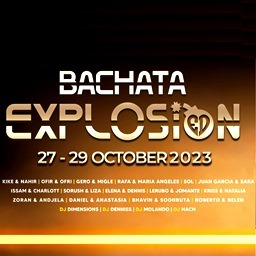
Bachata Explosion Germany 2023
Oct 27 / 29 2023
Dance Hall / Ballroom Wilkestraße 1 13507 Berlin, Berlin, Germany

Roberto Quintero

North America / United Stated / New York

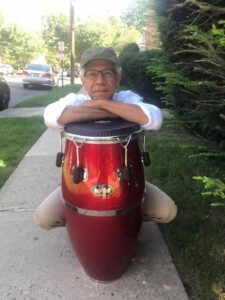
Roberto Quintero, The Master in the Congas, Bongo & Timbales NY

Roberto Quintero was born in Caracas, Venezuela, surrounded by Afro-Venezuelan and Afro-Cuban rhythms and music.

Roberto Quintero
Roberto Quintero – New York

His father, a respected composer, singer and percussionist, tutored and encouraged Roberto Quintero on percussion throughout his adolescent years.

Roberto Quintero comes from a long line of outstanding musicians, including his Uncle Carlos Nene Quintero and cousin Luisito Quintero.

Roberto Quintero and his congas

Roberto Quintero studied at the Conservatory of Music in Caracas, Venezuela and Sinfonica Orchestra Juvenil from Venezuela.

Besides his skillful Congas work, Roberto is also well known for his work on Bongos, Drum set, Djembe, Timbales and a wide variety of assorted percussion instruments.

He (Roberto Quintero) has played with Dave Samuels, Dave Weckl, Chicago, Gato Barbieri, David Sanchez, Roy Hargrove, David Sancious, Eddie Palmieri, Jack DeJohnette, Roy Haney, Marc Anthony, Timbalaye, Celia Cruz and countless other high-profile music acts in all genres, from symphonic to Jazz, Latin Jazz and Latin House.

Roberto Quintero
Roberto Quintero
  • « Go to Previous Page
  • Page 1
  • Interim pages omitted …
  • Page 28
  • Page 29
  • Page 30
  • Page 31
  • Page 32
  • Interim pages omitted …
  • Page 69
  • Go to Next Page »

International Salsa Magazine (ISM) is a monthly publication about Salsa activities around the world, that has been publishing since 2007. It is a world network of volunteers coordinated by ISM Magazine. We are working to strengthen all the events by working together.