• Skip to primary navigation
  • Skip to main content

International Salsa Magazine

  • HOME
  • Previous editions
    • 2026
      • ISM / March 2026
      • ISM / February 2026
      • ISM / January 2026
    • 2025
      • ISM / December 2025
      • ISM / November 2025
      • ISM / October 2025
      • ISM / September 2025
      • ISM / August 2025
      • ISM / July 2025
      • ISM / June 2025
      • ISM / May2025
      • ISM / April 2025
      • ISM / March 2025
      • ISM / February 2025
      • ISM / January 2025
    • 2024
      • ISM / December 2024
      • ISM / November 2024
      • ISM / October 2024
      • ISM / September 2024
      • ISM / August 2024
      • ISM / July 2024
      • ISM / June 2024
      • ISM / May 2024
      • ISM / April 2024
      • ISM / March 2024
      • ISM / February 2024
      • ISM / January 2024
    • 2023
      • ISM / December 2023
      • ISM / November 2023
      • ISM / October 2023
      • ISM – September 2023
      • ISM – August 2023
      • ISM July 2023
      • ISM Edition June 2023
      • ISM – May 2023
      • ISM April 2023
      • ISM March 2023
      • ISM February 2023
      • ISM January 2023
    • 2022
      • ISM December 2022
      • ISM November 2022
      • ISM October 2022
      • ISM September 2022
      • ISM August 2022
      • ISM July 2022
      • ISM June 2022
      • ISM May 2022
      • ISM February 2022
      • ISM January 2022
    • 2021
      • ISM December 2021
      • ISM November 2021
      • ISM October – 2021
      • ISM September 2021
      • ISM August 2021
      • ISM July 2021
      • ISM May 2021
      • ISM April 2021
      • ISM June 2021
      • ISM March 2021
      • ISM February 2021
      • ISM January 2021
    • 2020
      • ISM December 2020
      • ISM November 2020
      • ISM October 2020
      • ISM September 2020
      • ISM August 2020
      • ISM July 2020
      • ISM June 2020
      • ISM May 2020
      • ISM April 2020
      • ISM March 2020
      • ISM February 2020
      • ISM January 2020
    • 2019
      • ISM December 2019
      • ISM November 2019
      • ISM October 2019
      • ISM Septembre 2019
      • ISM August 2019
      • ISM July 2019
      • ISM June 2019
  • Download Salsa App
    • Android
    • Apple
  • Spanish

Search Results for: El Gran Combo

Wilmer Sifontes “Music is one of the most important things in society”

Music has no boundaries, it has the magical power to bridge social and cultural divides. Such is the case of percussionist Wilmer Sifontes, born in Caracas on March 21, 1968, a year of great events worldwide, a native of the parish of La Vega.

In 1992 he travelled to the United Kingdom for the first time to participate with the Entreverao Group in the World Music Festival “Spirit of The Earth” of the BBC in London.

Thanks to his (Wilmer Sifontes) participation with this group, he got several offers to return to the United Kingdom, so from 1996 he decided to settle down definitively in that country.

His musical duality has allowed him to work with different musical groups and bring the intoxicating rhythms of the American continent to those latitudes. He tells us that; “Fortunately, music is a universal language, it is the flag that one carries and allows you to make your way in other spaces”.

Wilmer, sometimes we imagine that the passion for music comes from a family inheritance, I see that this is not the case with you, how were your musical beginnings?

“In my family there are no musicians, however, as a child I always listened to music, on the way to my house there were places where the orchestras rehearsed, and that I liked it, I started playing salsa, it was always my forte, the music worm began at 10 years old, when the theme of Pedro Navaja with Ruben Blades and Willie Colon was in fashion, in the classroom a classmate imitated that little grave on the desk, this impressed me so much that from that moment the message came to me and I said -this will be my thing-“.
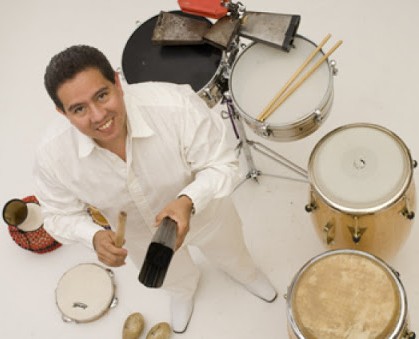
Wilmer Sifontes and his drums

That would be his entrance to the world of music

 “Yes, that was a message -but look at it-, I was a sportsman -I played Volleyball and Basketball-, and my sportsman friends wanted to be musicians, they were all adults and I was always with them as a boy, but they had no musical skills, no instruments, this prompted me to look for someone who would help me get into music, so, through my cousin I met the bassist José Machado

-he belongs to a family of musicians from La Vega-, they were my first teachers, they were always rehearsing and I saw, -a visual teaching – because I was a kid, they had a Cuban Son group called “Los Machados”.

At some point he played with them

 “After a while we started playing with the “Machados”, people were impressed to see such young boys playing, from him I received my first drumsticks, although I wanted to play bongo”.

How was that evolution?

 “In the neighborhood I continued with different groups, then with my cousin we created the “Orquesta La Conclave” and here we developed, we played in all the cultural events”. “We were rehearsing at Catia and Jesús Gómez -one of the singers of Sonero Clásico del Caribe- was always passing by and one day he told us that he needed a timbalero and a pianist, that if we wanted to work with him and we said yes, they played every night at La Caneca, a very famous place that was on Sucre Avenue in Catia”.

“This was my first night job, then I went to Silencio and played in different clubs”.
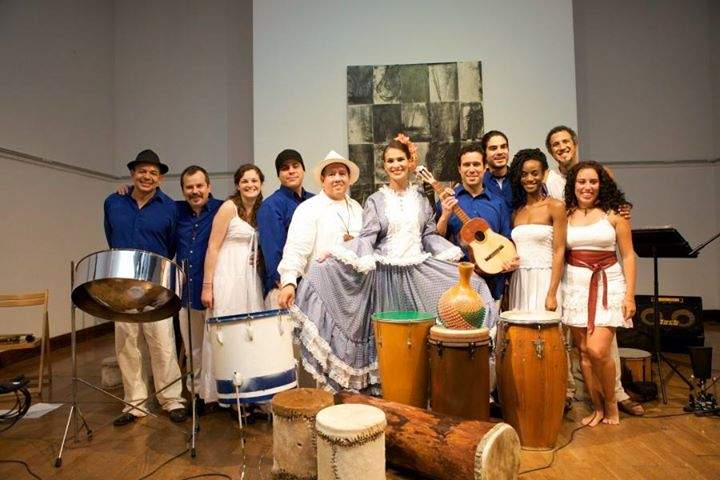
Wilmer Sifontes in the company of various artists

He is an empirical musician

“I made several attempts to study but… It was a little difficult, there were very rigorous classical schools at the time and I could not enroll, in one I went – La Lamas- together with my cousin, we took the exam and they scratched us (laughs), it is a very nice anecdote, we both sang without knowing the Black Tomasa”.

How does it come to perfection then?

 “I was playing by ear, it wasn’t something formal, as he already works in the nights in the clubs, a friend told me that in the Central University of Venezuela, Alberto Borregales and Orlando Poleo were giving classes, when I arrived I saw a great amount of people and I said: -whoa, here they are not going to accept me with that crowd- by chance, the teacher Borregales, makes a small group due to the little space that there was in the classroom, and at that moment I was going to evaluate them to decide who was left and who was not, fortunately I passed the test and I stayed”.

The experience of the street helped him

“(laughs), yes.”

Formally, Borregales was their teacher

 “Yes, but my first teachers were the Lp, besides the radio, I listened to a program called “Latin America the Cosmic Race”, with Borregales I entered with a greater discipline, he taught me to analyze, he indicated us what to read, what to listen. Later I was with Poleo in Caricuao, then in San Agustín and eventually went to Sarria. In the neighborhood I learned from Carlos “Tabaco” Quintana, he was one of my favorites, he was my inspiration, he was a timbalero with a terrible swing, excellent, in the neighborhood there were many good ones”.

“Apart from them I also learned from; Daniel Milano Mayora, Jesus Milano Palacios, in the Aquiles Nazoa Library -of Caricuao-, the Bigott Foundation and the Grupo Autóctono de la Vega”.

How was that jump from salsa to folklore?

 “I was offered to join the Grupo Autóctono de la Vega, with a great trajectory -it must be 40 or 50 years old by now- there is no role for the amount of people who have passed through there, it is the first group that makes the San Juan demonstrations in Caracas, this is from the Rivas and Ochoa family, it was my first school of folklore, they did dances, sports and then it was dedicated only to folklore music, both have been my teaching, I did not leave either of them”. “Then I played with many other folk and salsa groups, music is one of the most important things in society.”

The Grupo Autóctono de la Vega opened its doors to him, but the Agrupación Entreverao marked his future

“Yes, Entreverao marked my future, let’s say it was a show group, a quartet, its musical structure was very particular, harp, bass, drums and singer, then the percussion was introduced, the percussionist Rhay Herrera was their Director, I got a lot of experience with this group, we had a lot of work and learning, with them we made the first trip to the UK in 92”.
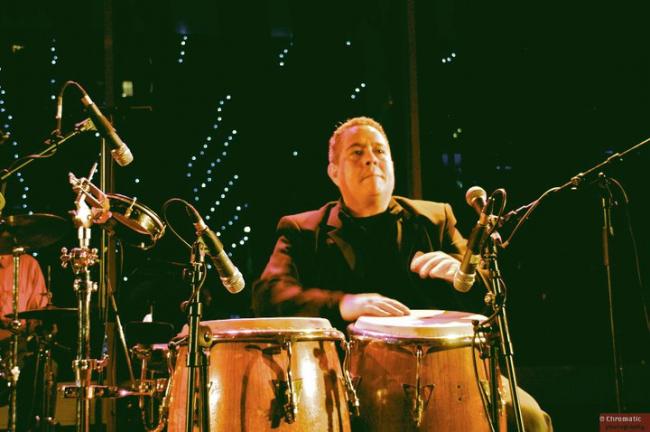
Wilmer Sifontes on stage

How did you decide that London would be your destination, why not another place more tropical, warmer, you did not think that you would face another culture, another language, another climate?

 “I was playing with Erick Franchesky, at that time he had 3 songs stuck in New York, we were going to go four or five of the band, it was almost confirmed, but it didn’t happen, music is like that, sometimes it offers you villas and castles and tomorrow you have nothing.” “I also had other proposals to come to the United Kingdom, the first thing that came out was this, that is, my destiny wanted me to come here”.

“Being out of your country, you learn other things, and that’s one of the particularities of my work, you learn to be more tolerant with people, as I know a lot of folklore from other places has allowed me to arrive, the culture is different to ours, is strong above all if you do not master the language, even if it is the basics, the climate if it was a shock, this is a fridge, (laughs)”.

I can’t imagine the English dancing and listening to Salsa, do they like the genre?

 “In the 90’s Salsa was very fashionable around here, there were many places to play, the acceptance of the music is excellent, when the Salsa boom, everyone wanted to learn to dance it, there are clubs to learn to dance, they have fallen in love with Latin American culture, they have been very receptive to those we have come to work with”. “I am the first Venezuelan to make a legal Folkloric Group in this country”.

Tell us a little about that project; AfroAmerica Project

 He founded it in 2007, it is an official group of typical and traditional Afro-Venezuelan music, people love Latin American music, they receive it very well, the name is due to a magazine that Jesus “Chucho” Garcia made, which speaks of Afro-Cuban music”.

 He continues to work with this project

“Yes, it is a group like Un Solo Pueblo, 90% is Venezuelan music, fulia, tambor, parranda, Calipso, Larense music, there are people who are outside Venezuela and do not know their music, then, we must show what we are, show our culture”.
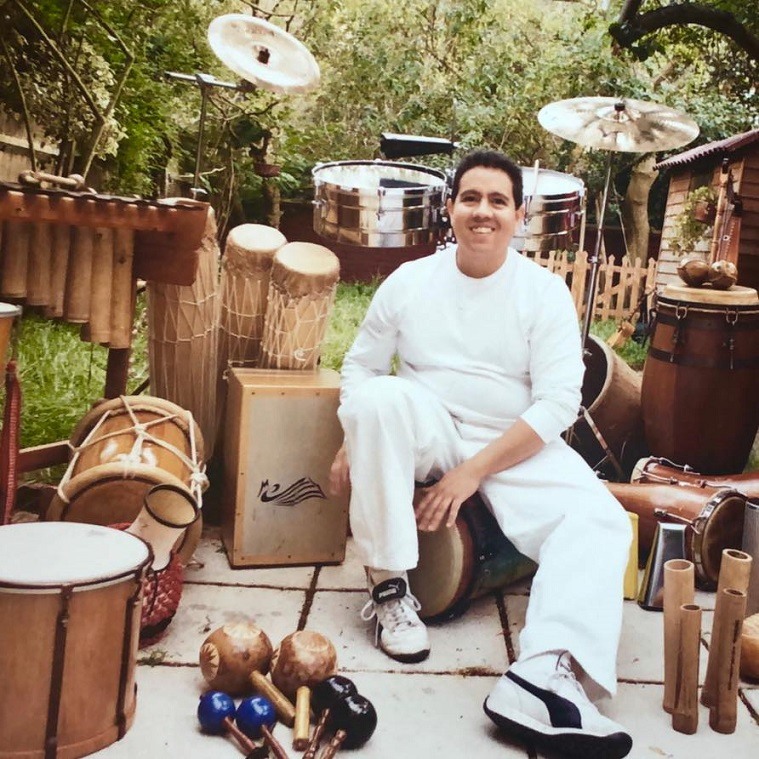
Photo of Wilmer Sifontes and his instruments

What groups have you worked with in the UK?

 “Any number of bands, when I arrived in the UK I started with a man named Kora, he played an African harp, his band was World Music, his music was a mix of African rhythms and the idea was to play Latin American percussion, as I have the virtue of playing different styles of music work with him”.

“Although I did a lot of Salsa in the early years, the other bands I remember are Conjunto Sabroso, Hussein Zahawy, Tumbaito, Ensamble Criollo, La Papayera, Salsa Nueva, The Voices of Naturale, La Charanga Rivera, Tango Tierra, Ensamble Criollo, Clara Rodríguez, Ola Onabule, AfroAmerica Project, Cubanito, Chacón y Su Timba, Bahareque, Salsa Céltica, Kora Colours, Los Charlys Orchestra, Classico Latino, Bilongo all Stars, among others”.

It’s easy for him to move through different genres

“Yes, I owe this to my country, thanks to all that learning I have been able to do so many things and share with so many people in different parts of the world.”

Thanks to this duality you have worked with and accompanied different artists, which ones do you remember?

“Among those I remember are Herman Olivera, Willie González, Maelo Ruiz, José Mangual Jr, Luisito Carrión, Roberto Torres,Tony Vega, Pedro Brull, Tito Gómez, Tito Nieves, Cano Estremera, Giovanni Hidalgo, Andrés Cepeda, Aterciopelados, Leroy Burges, Rodolfo Arcardi, Henry Fiol, Alci Acosta, and the Bands and groups in Venezuela are; Orquesta la Grande, Catatumbo, Entreverao, Criollo y Sabroso, Orquesta la Raza, and with whom I have participated are; Grupo Cosecha, Grupo Autóctono, Jesús Ruiz, La Gran Compañía and Eric Franchesky -who- among many others”.
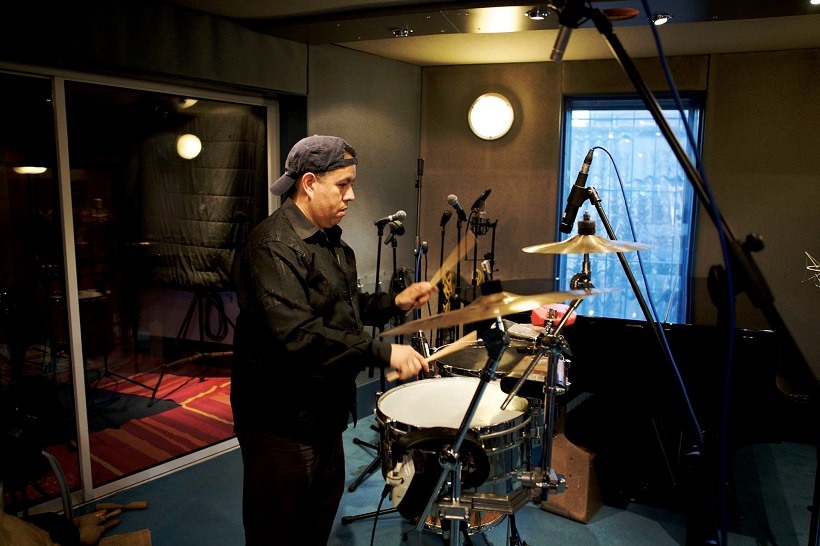
Wilmer Sifontes in the studio with his instruments

Celtic Sauce, explain that to me, it sounds a little strange

“It’s a Scottish group that mixes Celtic music with Salsa, with them I started doing substitutions for the timbalero, it’s very nice and interesting, they use the traditional instruments of Scottish Folk and the instruments of Salsa and Latin Jazz, they have also mixed it with pop, with rock, with Indian music, that gives them a unique and characteristic sound to this group, with this group I have traveled the world”.

Another band you have worked with is Sidestepper, very famous for fusing elements of Antillean and Colombian music with electronic music.

“Yes, the band was formed in Colombia, by the English producer Richard Blair, he revolutionized the traditional sounds of the region by mixing them with avant-garde sounds, with them I made an interesting work”.

Tell us about the Salsa Nueva Project

“That is the project of the Venezuelan pianist Elena Riu, is the fusion of Salsa with classical arrangements, you can be listening to a kind of montuno, a tumbao’ on the piano and the minute it disappears and leaves a passage well classic, is Latin in classical music, had original themes, is a theme that is called sal-si-ta -so separated-, had songs by Ruben Blades, Ismael Rivera, very cool.

“She needed a rhythmic element and invited me to accompany them, two months later we recorded an album in a church”.

 How do you feel about conducting one of the most popular bands in London, El Conjunto Sabroso?

“It has given me a lot of foundation and satisfaction, it was founded by Mrs. Luisa Elena Caicedo, since I arrived here I started to work with them, she listened to my references and called me to make substitutions, then I was their director and assistant director”.

Wilmer Sifontes in the studio

With you, the saying goes… No one is a prophet in his own land

“I think that yes, many people have been prophets, but… after death or after many years -laughs-, I don’t know, at this moment it is so difficult to put a definition to this, although I believe that nobody is a prophet in his land”.

From whom or from whom has he taken his musical influence?

 “There are several, the list is long, Carlos “Tabaco” Quintana, Orlando Poleo, Alberto Borregales, Alfredo Villamizar, Orestes Vilato, Tito Puente, Dave Wackel, Ray Barreto, Un Solo Pueblo, Guaco, Paquito de Rivera, Giovanni Hidalgo, Paoli Mejias whom I had the pleasure to meet and accompany, El Trabuco Venezolano, La Fania All Star, Irakere Orchestra, and Puerto Rican and New York Salsa, among many others”.

How has your musical growth been?

 “I have learned a lot from each culture, from the Colombian, Cuban, Argentinean, African, knowing the folklore of other places teaches you a lot, sharing with people from all over makes you grow and learn every day, this is part of the particularity of my profession.”

How do you see the market right now, there is a great variety of music, everyone has their own style, what do you think of all this new, but sometimes not good?

 “I don’t know if it’s taking a turn or not, the truth is that Europe is different, it has another kind of market, which is not that I’m involved, previously there were many festivals, pop and rock are the popular music of this country, but, reggaeton has been influenced by society, it has been injected with a lot of money, apart from the impact of social networks, it reaches more people, social networks have changed the way music is sold in the world.

“People are scared of reggaeton, for me it depends on who is doing it, the market has changed because of the networks, anyone makes music, anyone plagiarizes music from others, we are in a time of change and music does not escape from it.”

What do you think about tributes and copies, is the musician’s creativity running out?

“When people are alive it is always good to highlight their contribution to the world, there will always be a reference to someone, but it is good that people are creative, and there are the brazen ones who shoot the songs and put other lyrics on them, it is like winning people over with other people’s work”.

“The musical genius has not declined, what happens is that there are no promotions, people who do not do commercial work, it costs a little more to reach, fight against the great machines that bet on other things, musical geniuses are born for generations, are counted.”
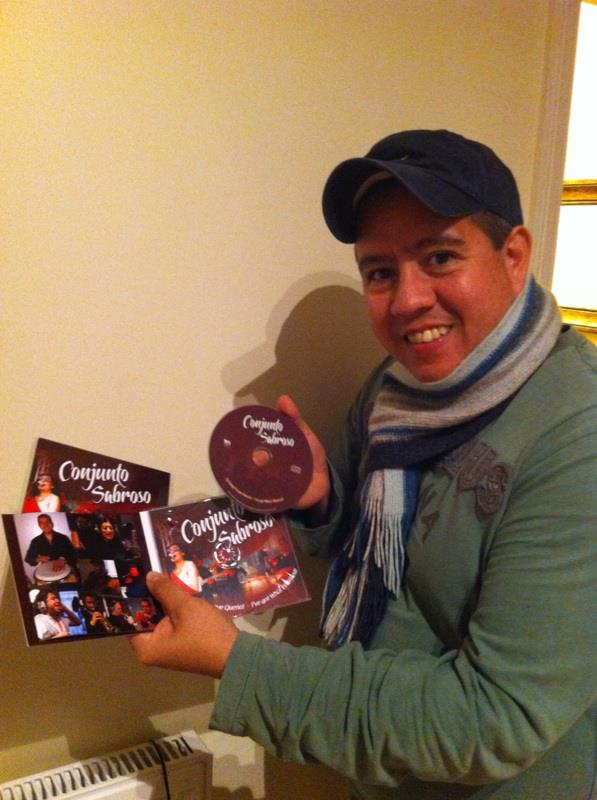
Wilmer Sifontes and his records

The first production of the Conjunto Sabroso is entitled “Ya tengo lo que quería, realmente”

 “You never get to have everything you want, but at that moment, we had what we wanted, in that production there are arrangements by Naty Martínez”.

Among your personal projects, which ones would stand out and what new proposals do you bring to the public?

“I was the founder of Ensamble Criollo, we still work with this, AfroAmerica Project, Wilmer Sifontes y Su Combo Caribe, Will Sifontes and his Latin Sound and I’m still working with Conjunto Sabroso as musical director, besides, I’m making a solo album, -let’s say it’s called Latin Jazz- it’s a mix of everything, of my musical career, I already have 3 numbers, there will be duets, quartets, guests, the production is going to be called “Handmade”.

If you were to choose between folklore and salsa

“I’ll take them both, they’re different loves, I still do folklore, salsa and fusions.”

What recommendation do you have for the relay generation

“My recommendation is that they prepare themselves, musically, but first of all their idiosyncrasy, we have to have very clear the bases of what we are and develop them with modern techniques and other elements from other countries, to have discipline, today it is easier to have the information, there are more institutes, the internet”.
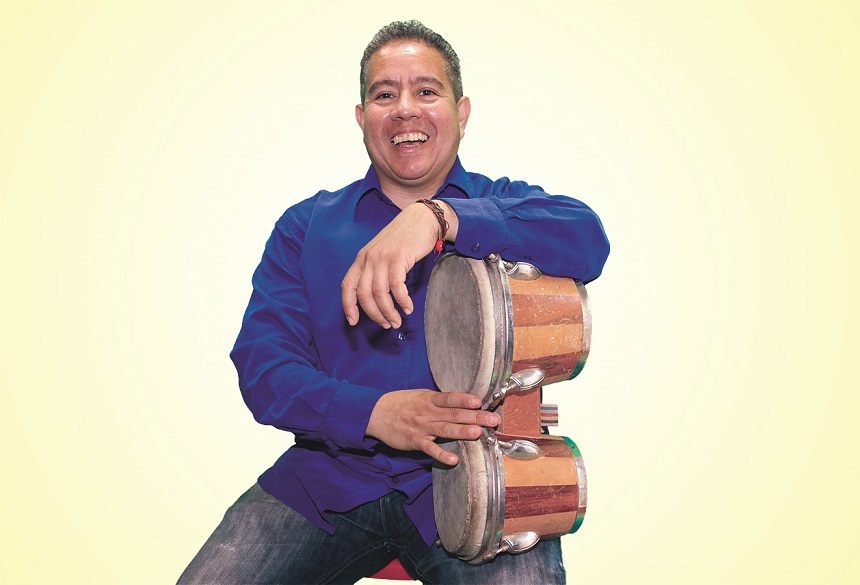
Wilmer Sifontes
Wilmer Sifontes


By Eling Blanco, ISM Journalist Correspondent, Caracas, Venezuela


To speak of Leonardo Ortiz Chacón is to speak of a musical institution of Mexico

Performer of the tres, composer, arranger, music and radio producer, director and founder of Combo Ninguno since 1983.

He studied at the Faculty of Music of the UV, in JAZZUV, in Musinetwork in Boston MA and with teachers Luis Martinez, Carlos Tercero and Edgar Dorantes, he is a teacher of Musical Education in the Ministry of Education of Veracruz and since January 2019 participates in the direction of the Papakilistli Orchestra of the same Secretariat.

He has collaborated in television as musical director of the program “Cómo suena la clave” in TV Más. He is currently producer and host of the program “Cadencia Caribe”.

Since 1983 in Xalapa, the members of Combo perform dance music from the Antilles, integrating a repertoire with their own creations and original arrangements to themes of other authors in different musical genres such as son, guaracha, mambo, merengue, danzón, bolero, etc, achieving in their thematic diversity, a unique sound full of references to their native state of Veracruz.

He has taught workshops of appreciation and execution of Caribbean music and has participated as a lecturer and speaker on this subject in countless events, have been presented in Spain, Cuba, United States and Canada.

Accessing different forums from the small and improvised street space to large venues with capacity for tens of thousands of spectators such as the Azteca stadium or the Salsa Fest in Boca del Rio.

He has performed at prestigious cultural festivals such as the Cervantino, the Quimera, the Afro-Caribbean of Veracruz, the Vancouver Folk Festival and the International of Houston, at Fairs such as the San Marcos and the Expo Sevilla, Carnivals such as the one of Veracruz, Havana and the Mardi Gras in New Orleans and Galveston Texas.

Maestro Leo, how can you define yourself in the music scene?

Leonardo Ortiz Chacón is to speak of a musical institution in Mexico.
Leonardo Ortiz Chacón Tres player, composer, arranger, music and radio producer

I see myself as someone captivated by this music since I heard it for the first time, thanks to it I have been able to enjoy unforgettable moments and for many years I have not had a day in my life without doing something related to music. Be it as a performer, manager, broadcaster, props man, audio manager, producer, etc.

I understand that you have had many presentations abroad?

For me there have been many and I would like to have more. I think I have been fortunate to take advantage of the opportunities that have presented themselves with Combo Ninguno. I must say that personally I would never have been able to be in the places where music has taken me.

As part of your presentations you toured the U.S. How pleasant was the experience?

At one time we participated in a project to promote tourism in the State of Veracruz and we continually visited the State of Texas and then extended to Louisiana and Colorado, thanks to this an American promoter invited us to tour from coast to coast presenting a show of music and dance that began in New Hampshire and continued in New York, Pennsylvania, Illinois and other states to conclude in California after performing in New Mexico and Arizona. The program of the presentations was with original repertoire and Mexican authors.

What did it mean to you to perform for the first time in such a musical country where many great exponents of the island of Cuba came from?tional in 1989 at the Na Theater of Cuba

For me this was one of the memorable moments that I thank to music, the fact of participating with Combo Ninguno in a Gala dedicated to Mexico, in such an important place in Cuba, the country where this music was born.

I tell you that my emotion was so great that at the beginning of our performance, I could not complete the first verse of the song with which we opened, it was El jarocho by Lino Carrillo, I had to sing: Jarocho yo soy señores and I only said Jarocho, the rest was a sort of incomprehensible sounds that I could emit with a lump in my throat.

Have you had an endless number of participations in Cultural Festivals, which is the one that leaves a mark on you in your own country?

I can’t say one in particular, I remember presentations at anti-nuclear rallies where there were children, young people, adults and elderly people that were not festivals strictly speaking, a Cervantino festival where in the middle of a downpour people danced in the Alhóndiga de Granaditas under an impressive downpour, the Festival de la Nueva Canción Mexicana where we performed for the first time in 1983. And I could go on mentioning many more.

How did the Como Suena La Clave Festival come about?

 Combo Ninguno
Combo Ninguno

This festival arises with the intention of being a showcase where to make visible and position the Mexican orchestras with original proposal. Trying to promote, preserve and spread salsa music made in Mexico.

At first the orchestras were invited to play original arrangements of songs by other composers, then they were asked to play music by national composers and nowadays they are asked to play original music complemented of course with songs by national composers.

You don’t stop, you continue harvesting and now the project Coloquio Musical Afroantillano is born, why make this new proposal?

I think that in Mexico little is reflected and little is written about this genre. It seems that when we take the music out of the dance floor, we lose the rhythm and also the step.

For some time now, most of the debates on this subject have taken place backstage and in the places where musicians and some dancers gather to refresh themselves after the events. Recently, social networks have continued with this exercise, I must point out that for decades the main topic to be discussed has been: Does salsa exist or not? Should it be called salsa or son? And I believe that among other issues, we have left aside fundamental matters such as the creative part, the economic aspect and the diffusion.

Based on this consideration and thanks to the support of Rafael Figueroa, the Festival Como suena la clave, the Centro de Estudios de la Cultura y la Comunicación of the Universidad Veracruzana and the Red de estudios de la Música Afroantillana en México convened the Colloquium La música afroantillana en México: confluencias y divergencias where the participants in a framework of cordiality and respect have made valuable contributions that will be included in a report that will be released as a digital multimedia document for free distribution.

Do you think that the music called salsa is evolving worldwide?

I don’t have the slightest doubt about it, just as I don’t hesitate to mention that due to diffusion factors we only know a small part of the new salsa music that is being made in many places and that perhaps most of the music that is more accessible to us on digital platforms is not the best.

Have you experienced the best times in music today, and what do you think is missing?

Among other things, today and always it will be necessary to contribute new music that increases the cultural heritage of this genre. We need to talk about our present without forgetting the past, about our environment and our daily life in a globalized world. We need to speak our own language and disseminate these productions in the best possible way, trying to overcome the reluctance of many towards what is new and what does not come from the places where this music has traditionally been produced.

Already with seventeen record productions, now that you have worked on them, which is the production that has marked the history of Combo Ninguno? What has been the one that has left the greatest mark on you?

Undoubtedly the most significant record production is the first one, in it, as in each of the subsequent ones, our desires and also our possibilities and limitations are recorded musically. The most present record you have now is the one you are making or that you intend to make. Each record becomes a part of your musical history and your own life.

Have I heard salsa with the jalapeño touch mentioned because of that phrase?

In our case it is an advertising phrase that alludes to the hot sauce.  Salsa with jalapeño flavor. Initially it was used for our presentations in the United States where the chili peppers are called jalapeños. Today we use it by writing jalapeños with an x.

Combo None other cultural heritage that we have while we are still alive that you feel after 39 years in the music industry?

I’m looking forward to at least as many more. Looking back I realize that Combo Ninguno became a life project that has filled my days with music, so there will always be little I can do for music.

What do you expect from Leonardo Ortiz Combo Ninguno?

I have two record productions pending with Combo Ninguno, one of them is already quite advanced and I hope to finish both this year. I hope to give continuity to the Festival Como suena la clave and continue participating and enjoying everything that has to do with salsa made in Mexico.

Maestro, what would you like to say goodbye with and what message would you like to leave to the new generations?

I would invite them, besides the musical study, to try to make their contribution and leave their name in the salsa made in Mexico, to document their creativity in our reality and then communicate it in their creations, I would also ask them to debate and collaborate with their colleagues.

DISCOGRAPHY

 In their discographic work we can see a style that can be projected without problems towards the universal, but that does not cease to feed on their own Veracruz identity by offering us a combination of traditional and original pieces that exude Veracruz and Afro-Hispanic Caribbean flavor.

 To date they have made seventeen recordings, seven exclusively of combo none:

– Tumba Verde (1987)

– Traigo este son (1990)

– Son de amor (1994)

– Carnaval Veracruzano (2001)

– Con Sabor a Veracruz (2005)

– La Bruja recorded at the 17th Afro-Caribbean Festival Veracruz 2011 (2012)

– Inventario- Combo Ninguno, of which the singles Descarga de las flores, Calaveritas de Azúcar and Alambre, cuero y madera have been presented.

 And ten productions in which they intervene with other groups:

– Son 13 rolas antinucleares (1989).

– Somos indios (1995)

– Homenaje a Luis Martínez, recorded live at Barlovento de Xalapa in the 1st.

Festival Como Suena la Clave 1997 (1998)

– Tribute to Carlos Pitalúa, recorded live at Barlovento de Xalapa in the 2nd Festival Como Suena la Clave 1998 (1998).

Festival Como Suena la Clave 1998 (1999)

– From Son to Danzón (2000)

– Tribute to Emilio Domínguez, recorded live at Barlovento de Xalapa in the 3rd Festival Como Suena la Clave 1998 (2000)

3rd Festival Como Suena la Clave 2004 (2010)

– Con sabor a Veracruz-RTV music (2012)

– Tribute to Toña la Negra, a recording that records the V Festival Como Suena la Clave

Clave Festival held in Veracruz, Veracruz, Ver (2013)

– Salsa a la veracruzana, recording of the VI Festival Como Suena la Clave held in Veracruz, Veracruz, Veracruz, Veracruz (2015).

Veracruz, Ver (2015)

– Al Son del Covid, record of the VII Festival Como Suena la Clave held in Veracruz, Veracruz, Veracruz (2015).

virtual way in December 2020.

Erika Muñoz (La Mulata Rumbera)

Article of Interest: Maestro Jorge Anselmo Barrientos Silva, conductor, arranger and composer

Henry Valladares, a brilliant, versatile, and disciplined percussionist

Our special guest this week is Henry Valladares, a brilliant, versatile, and disciplined percussionist, born on October 22nd in Barquisimeto, Lara State, to a mother from Caracas and a father from Yaracuyo.

Welcome Henry to Salsa Escrita, we would like to know how were your musical beginnings? Thank you Professor Carlos for your invitation to your well-read column. My interest in music began when I was 6 years old since I was very young I listened to salsa records by artists such as Héctor Lavoe, Willy Colón, Rubén Blades, Gran Combo, Sonora Ponceña, and all those acetate records of the time that arrived from Caracas, thanks to my mother who bought them, and in particular the record by José Mangual Jr. (Tribute to Chano Pozo) where at the end of the record there were some tracks where they taught the basic rhythms of salsa percussion (conga Milton Cardona, timbal Jimmy Sabater and the bongo José Mangual Jr.)

That would be my first influence in percussion. I remember that in those years there was a church very close to my house and I listened to the drums and bagpipe drums and I wanted to play and I built my own drum, I made it with a paint dipper and I put a piece of plastic with wick string (that was my first instrument hahaha).

born on October 22nd in Barquisimeto, Lara State, to a mother from Caracas and a father from Yaracuyo
Henry Valladares, a brilliant, versatile and disciplined percussionist

Very good maestro Valladares and at what age did you begin to acquire musical knowledge in a formal way?

At the age of 8, I started my first percussion classes formally dictated at the CEPAS cultural center in San Jacinto, with professor Francisco Escalona in congas and for bongo with professor Wálter Yaguas, later I received training at the BIGOTT foundation (Afro-Venezuelan percussion) in the city of Caracas with professor Jesús Paiva and music and rhythmic reading classes with professor Jesús Blanco (Totoño), as well as different workshops and courses.

I remember one in particular dictated by the percussionist Wílmer Albornoz from Caracas and the percussionist, Pausides Jiménez, from Barquisimeto, there I learned a lot and in the Conservatory of Music Vicente Emilio Sojo of Barquisimeto with professor Tonny González, without forgetting the videos made for the years 1996, 1997 and 1998 by the teachers Giovanni Hidalgo and José Luis Quintana (Changuito), who raised my level of knowledge in the conga, timbal, and bongo.

Much of the training of a percussionist is by his own research and the training is never lost, you continue learning every day.

In what year did you start playing at the orchestral level?

Professor Carlos, in 1994 I started playing in nightclubs with regional groups, playing in groups such as Orquesta la Playa, Nino y su Orquesta, Orquesta Líder, and with most of the dance groups in the city.

Have you accompanied national artists?

Yes, friend Colmenárez, I have accompanied artists such as Billo Caracas Boys, Wladimir Lozano, Néstor Rivero (former teenagers), Betsy Núñez (bolerista), Eli Méndez, Rafa Galindo, Verónica Rey, Memo Morales, Édgar Rodríguez (El Abuelo), Wílmer Lozano, Rodrigo Mendoza, Benjamín Rausseo (Conde del Guacharo), Fabián Santa María, among others.

Have you recorded? I have recorded in different musical productions and artists of different genres.

Henry Valladares, a brilliant, versatile and disciplined percussionist
His interest in music began at the age of 6

Since 2003 to date I am a percussionist and assistant musical director of the Latinocaribeña orchestra, belonging to the Maestro Antonio Carrillo Concert Band, the heritage of the state of Lara (135 years old) making presentations in theaters and different places inside and outside the city.

I continue to study Afro-Caribbean instruments and teach in-person and online classes, also giving workshops.
In 2019 I celebrated my 25 years of a musical career, which I celebrated with a very special workshop held at the Conservatory of Music in Barquisimeto.

Henry, what are your next goals? To finish putting together my Latin jazz group.
Well Henry Valladares, for us it was an immense pleasure to have you in our salsa column praising your dedication and discipline in the Afro-Caribbean genre in the percussive part.

And on behalf of International Salsa Magazine www.salsagoogle.com, we congratulate you for your performance representing Barquisimeto.

Thank you very much Professor Carlos for the invitation, long live percussion, and keep on supporting musicians from Barquisimeto and Venezuela.

What are your social networks? Email: [email protected]; Facebook: Henry Valladares and Instagram: @valladarespercusion.

See you next time and let’s keep salseando!

Article of Interest: Cheo Valenzuela, “El Sonero de la Dulzura”

Luis Medina as a master of ceremonies, broadcaster, DJ and much more

Incredible conversation with Luis Medina

Luis Medina on the radio
This is Luis Medina on the radio

Good afternoon, everyone. We are here with broadcaster, DJ and event producer Luis Medina. Mr. Medina, how are you today?  

I am well and ready to talk to you right now.

Mr. Medina, you have a very long career as a radio presenter. You got started in this business in 1974. What led you to spend so much time in your career on the radio? 

In 1971 I was studying architecture at San Francisco State University, but in 1974 I changed my major to broadcasting and communications in the Department of Radio and Television. When I was a kid, I was always fascinated by broadcasters on TV with their microphones. My parents gave me a toy microphone, and I always imagined I was broadcasting. At the time I was accepted in the broadcasting program, I already loved salsa because my cousin  Stella played popular music for me since I was about 8 years old. I loved all kinds of music. At home, we always had the radio on, and my parents always listened to tropical music, which was very common at that time.

In 1974 my cousin Eduardo invited me to go to a radio station called KBRG to visit some friends who had a program called Venezuela Suya. In another studio in the station, there was a radio producer named Arturito Santiago, who was the master of ceremonies for the Gran Combo de Puerto Rico when they did dances in San Francisco hotels. When I saw him doing his job, I was intrigued. Two months later, my cousin called to tell me that he’d gotten involved in a community radio station called KPOO San Francisco and asked me if I wanted to help him with the show. I brought a stack of LPs, and we did the show from midnight until 6 am. I went a few times to help, but I could not maintain that pace because I was still in college.

A few months later, he called me to tell me that he had a show from 3pm to 6pm on Sundays. He told me he was talking to other people I knew in order to do the show together. I got a segment of 45 minutes to an hour to do whatever I wanted, so I decided to start programming salsa. I helped produce several programs until I had my own show. In 1979, while I had a four-hour show on Saturdays on KPOO, KBRG’s program director, Al Carlos Hernandez, called me. KBRG was a powerful FM station at that time. That gave me the opportunity to do a commercial show.

DJ Luis Medina
Broadcaster Luis Medina with two maracas

I am part Venezuelan and part Mexican, but I grew up in the United States. I spoke Spanish perfectly until I was five years old, but when I started school, I just wanted to speak English in school and at home. When I turned 18, I decided to get my culture back and relearn to speak Spanish again. However, I’m wasn’t completely fluent in Spanish because I have to translate mentally from English. I explained the situation to Al Carlos, and he told me that he did not care. That’s how I became the first radio announcer to do salsa programming in English on a Spanish-speaking station. The program was called Sabor Caliente and it lasted about a year and a half, until they let me go due to philosophical differences. After that, I did specials in KPFA, until Víctor Castro, who produced the program Ahora, invited me to alternate weeks with him. I produced salsa shows on KPFA from 1983 to 1995.

What Medina has to say about all his combined activities

How do you balance your radio activities and event production and your job as a DJ?  

When I was a student at San Francisco State University, I became co-director of the university’s productions to present musical acts. From 1974 to 1976 I presented acts from various genres such as rock, R&B, and jazz, among others. I also presented some salsa and Latin jazz shows, including Pete and Sheila Escovedo, who were part of Roger Glenn’s band, Benny Velarde and others. I became friends with Pete and Sheila before Sheila became Sheila E and I also worked with Pete’s brother, Coke Escovedo in the 70s.

Then I met Roberto Hernandez, who had an organization that helped produced the first major street fairs in the San Francisco Mission district together with a coalition of community agencies. I got involved with the fairs, which presented the famous singer Joe Bataan among others. It was the era of Latin rock, but salsa was also booming. I was part of the renaissance of salsa music that occurred on the radio, but I also had the opportunity to play an influential role in the community in the Mission. In 1977, the Mission Cultural Center opened in a furniture store ran by artists that were organizing it. I became part of the music committee and we presented performances and salsa groups that were growing in fame at that time. I was involved on the activities of the center until the 1980s, when some of us created a production group called CMP (Cultural Music Productions). During the 80s we did a series of dances, in which I worked as master of ceremonies. I already had experience as master of ceremonies because when I was at KBRG, they gave me the opportunity to introduce some great shows with Celia Cruz, La Sonora Matancera, Oscar D’ León, Cal Tjader and La Orquesta Broadway. I was also master of ceremonies for Brazilian carnivals for about five years. With CMP I was involved in dances with Willie Colón, Bobby Valentín, Oscar D’ León, and boxing champion Roberto Durán (who at the time wanted to be a salsa singer).

Eventually I left CMP, and I was contacted by Roberto Hernandez, who offered me the position of entertainment director of his new organization, MECA. I accepted and started to help him program the schedule for events such as the San Francisco Carnival, and the 24 Street Fair. I worked with Roberto until 1994 and we presented Santana, Los Lobos, Eddie Palmieri, Luis Henrique, Willie Colón, Yomo Toro, Mighty Sparrow, The Neville Brothers, Shaggy, and many more. When Roberto Hernandez left the organization, I stayed for four more years and worked with Manny Oquendo and Libre, John Santos, Pete Escovedo and Pancho Quinto. In 1998, the president of the organization Patricia Aguayo and I had some problems, so we stopped working together.

A radio DJ and a party DJ are two completely different things. It took me a little while to adjust to being a live DJ. In the early 1990’s, the producers at the Alta Vista club hired me from time to time. Then, they moved to a ship called Alta Vista del Mar in Pier 3, and occasionally hired me as their DJ.

Event producir Luis Medina
Event producer Luis Medina posing for or the camera

In 1994 I met a very ambitious young Venezuelan by the name of Adrian Goddard and started working with him at his club, 330 Ritch. It was a winning combination of Adrian’s talent as an event producer and my talent as a DJ and MC. I worked there for about nine very successful months, but then I had an opportunity with KPFA and I was forced to leave the club because the schedule conflicted. My priority was to produce my own salsa show (ironically, this program didn’t last long, but in 1997 they offered me the same slot, which would become the program Con Sabor, which I still produced today, 25 years later, at KPFA, on Saturdays from 9-11pm.)

A little later, Kimballs Carnaval hired me as a Latin House DJ, as this rhythm was very popular at that time. I wanted to please them, but it wasn’t a good fit. Eventually I was hired as a salsa DJ by the club Kimballs West. This opened other opportunities and I became the DJ in residence at the most prominent salsa clubs in San Francisco at the time, the legendary Jelly’s Cafe, where I DJ’d until it closed in 2010 and the popular Café Cócomo, which closed in 2014. I now DJ and MC primarily for special events and private parties.

Something very important in my story is that in 1997 I worked with Bill Martinez and Arturo Riera  and they both gave me the opportunity to be master of ceremonies for a very important series of concerts featuring Cuban musicians who were allowed into the States for the first time. I was the first master of ceremonies for a Los Van Van concert in San Francisco and I also represented my show and KPFA for their concert at Stern Grove in 2019. That was one of many times that I worked with that group.  I also was the MC   for Orquesta Aragon, Cubanismo, NG La Banda and other Cuban acts.

During the pandemic, I was offered a show with an online radio station called World Salsa Radio. I started the show Sabiduría con Tumbao on Wednesdays from 5 to 7 pm. What makes this show different from Con Sabor is that Sabiduría Con Tumbao is a conceptual program that focuses on certain musicians, musical themes and movements within salsa and Afro-Latin music. On the other hand, Con Sabor offers a broader perspective of salsa, Latin Jazz and música cubana from the classics to the latest.

Since the pandemic started, I produce all my radio shows at home. I managed to master the technology and built my own home studio. I am not afraid of technology or modern things. I go with the flow because I’ve learned that I should be at the forefront of technology and music. If I do not know something, I am going to research it right away. I keep an open mind and ears and I appreciate and listen to all kinds of music, something that was key when I was music director at KPFA from 2001 through 2014. In terms of my own programs, I really love salsa from the 70s, but I’m not stuck in any time period.

Eduardo and Luis
Our editor Eduardo Guilarte and Luis Medina


Johnny Vega Musical legend Composer and Vocalist

Born in Santurce, Puerto Rico, veteran songwriter, and singer Johnny Vega grew up surrounded by music and relatives with the same natural talent he discovered in himself at an early age.

It wasn’t long before his obvious gift of writing accompanied by strong vocals was in demand.

Many salsa greats highlighted Johnny Vega, as a songwriter and vocalist at an early age New York was the vanguard of his success.

Relocating as a teenager, with his family, he mastered his craft in both Spanish and English being one of the first Puerto Rican musicians to compose and sing a bilingual hit, singing with Cortijo for the legendary band “Cortijo y su Combo” in the early 70s.

His musical career as described here gave him the notoriety that follows today, currently involved in multiple projects, Johnny continues to write and often performs at sold-out venues in his hometown.

It wasn't long before his obvious gift of writing accompanied by strong vocals was in demand. Many great salseros highlighted Johnny Vega, as a songwriter and vocalist at an early age New York was the vanguard of his success.
Johnny Vega veteran Puerto Rican singer and songwriter Born in Santurce, Puerto Rico

Johnny Vega has participated with a myriad of orchestras to name a few:

Trio Las 3 Voces

Jóvenes Del Ritmo

Gil Suarez Y Su Orquesta Latin Highs

Sonora Casino

Cortijo Y Su Combo

Kako And His Trabuco

Conjunto Los Imposibles

Orquesta Sabor

Conjunto Antonetti

Orquesta La Muralla

Conjunto La Villa Arecibo

Paquito Guzman Y Su Orquesta

Conjunto Santurce

Los 7 Gatos

Renovación 90

Hermanos Gonzalez (Help Yourselves 2015)

Noel Quintana & Latin Crew Popeye Y La Flaca 2016

Soloist Tribute To Celia

From this era of inspiration, Johnny gives the master Tommy Olivencia the song "Pancuco", especially for Frankie Ruiz.
Johnny Vega has participated with countless orchestras.

Some of his compositions:

Popeye – Ay Caray – Adalberto Santiago

Pancuco – Frankie Ruiz

Tú y tu novela – Pasado, presenté y futuro – Mike Cora

Avísale – Clown – incredulous – La Muralla

I’m dying inside – Rafi Marrero

Volver- Tito Rodriguez Jr. Singing Gilberto Santa Rosa

My Salsa is my Cura- Josean Rivera

Hermano Cortijo- Josean Rivera

Sueño de un Borincano- Willie Morales “El Piloto de la Salsa”.

Que le Pasa al Cielo- Chevy El Pitirre de la Salsa

Aquí Mando Yo- Chevy El Pitirre de la Salsa

From that moment on Johnny began to write and share his compositions with local bands so that they could establish their own musical identity.

From that era of inspiration, Johnny gave the maestro Tommy Olivencia the song “Pancuco”, especially for Frankie Ruiz.

Also “Ay Caray” & “Popeye el Marino” for Adalberto Santiago. Many of the musicians who grew up under the supervision of maestro Johnny Vega initially, went on to form part of the orchestras of Celia Cruz, Sonora Ponceña, Héctor Lavoe and many other high caliber bands.

In Rochester, Johnny sang with Orquesta Sabor, Antonetti, and Mike Rosario’s Muralla with whom he formed a solid partnership which included great productions, one of them being “Avísale” a collector’s item for which royalties are still being paid three decades later.

Songs by Johnny Vega-

Father and Son

Compañera Mía

Tribute To Celia

Listen To My Message

Born To Sing

Johnny Vega lives in Rochester NY with his wife of 56 years, 5 children, grandchildren, and great-grandchildren.

He continues to leave his great musical legacy.

Contact:

Facebook: Johnny Vega

https://www.facebook.com/johnny.vega.7503

Instagram: @vjohnny220

https://instagram.com/vjohnny220?utm_medium=copy_link

If you require Vega’s pen write to email.

[email protected]

Por: Erika Muñoz 

La Mulata Rumbera

Erika Muñoz 

“Se Armó la Rumba en México”

Corresponsal de International Salsa Magazine

Article of Interest: Willie Morales The Salsa Pilot Taking off with force… New, Tasty and Danceable Salsa!


  • « Go to Previous Page
  • Page 1
  • Interim pages omitted …
  • Page 24
  • Page 25
  • Page 26
  • Page 27
  • Page 28
  • Go to Next Page »

International Salsa Magazine (ISM) is a monthly publication about Salsa activities around the world, that has been publishing since 2007. It is a world network of volunteers coordinated by ISM Magazine. We are working to strengthen all the events by working together.